

 Explore Worlds
 Find Life
 Defend Earth

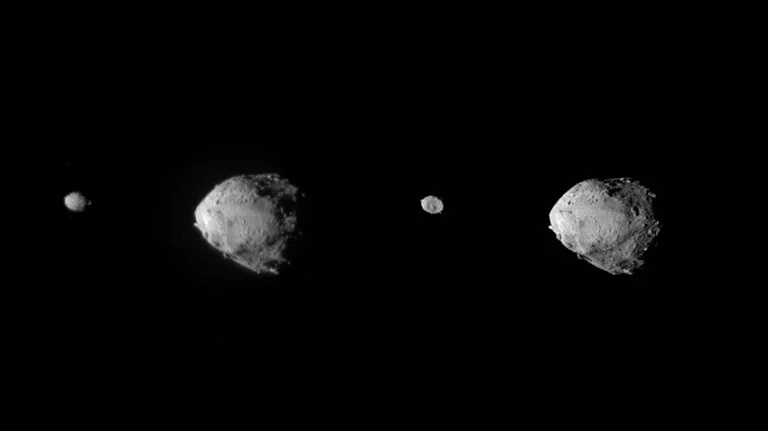
Hera's first close-up images of Didymos and Dimorphos

Written by
Asa Stahl, PhD
Public Outreach Astronomer, The Planetary Society
November 25, 2026
The European Space Agency has just released the Hera spacecraft's first close-up images of the asteroid Didymos and its moonlet Dimorphos, the targets of NASA's 2022 Double Asteroid Redirection Test (DART) mission.
These close-up views show the aftermath of DART's intentional impact into Dimorphos, which was a test of the kinetic impactor asteroid deflection technique. The results from Hera could help scientists defend Earth from asteroid impacts in the future.

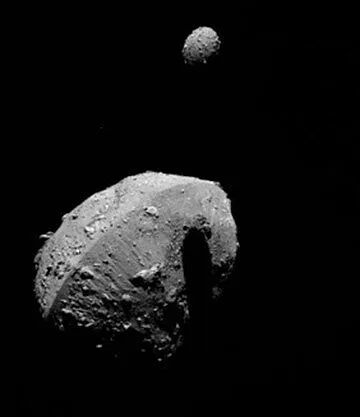
Hera will continue to study the Didymos-Dimorphos system for several months, measuring the impact crater left behind by the DART impactor and mapping the surface of Dimorphos. About six weeks from now, Hera will deploy two CubeSats called Milani and Juventas. These CubeSats will help Hera measure the chemical makeup of Dimorphos’ surface and probe its subsurface.
Powered by people like you
Together, we make space exploration and discoveries possible. Please make your gift today to keep that work going strong into 2027 and beyond.
Donate