

 Explore Worlds
 Find Life
 Defend Earth


Planetary Radio • Jul 03, 2026
Space Policy Edition: What's going on with commercial space stations?
On This Episode

Clayton Swope
Deputy Director of the Aerospace Security Project and Senior Fellow for The Center for Strategic and International Studies

Casey Dreier
Chief of Space Policy for The Planetary Society
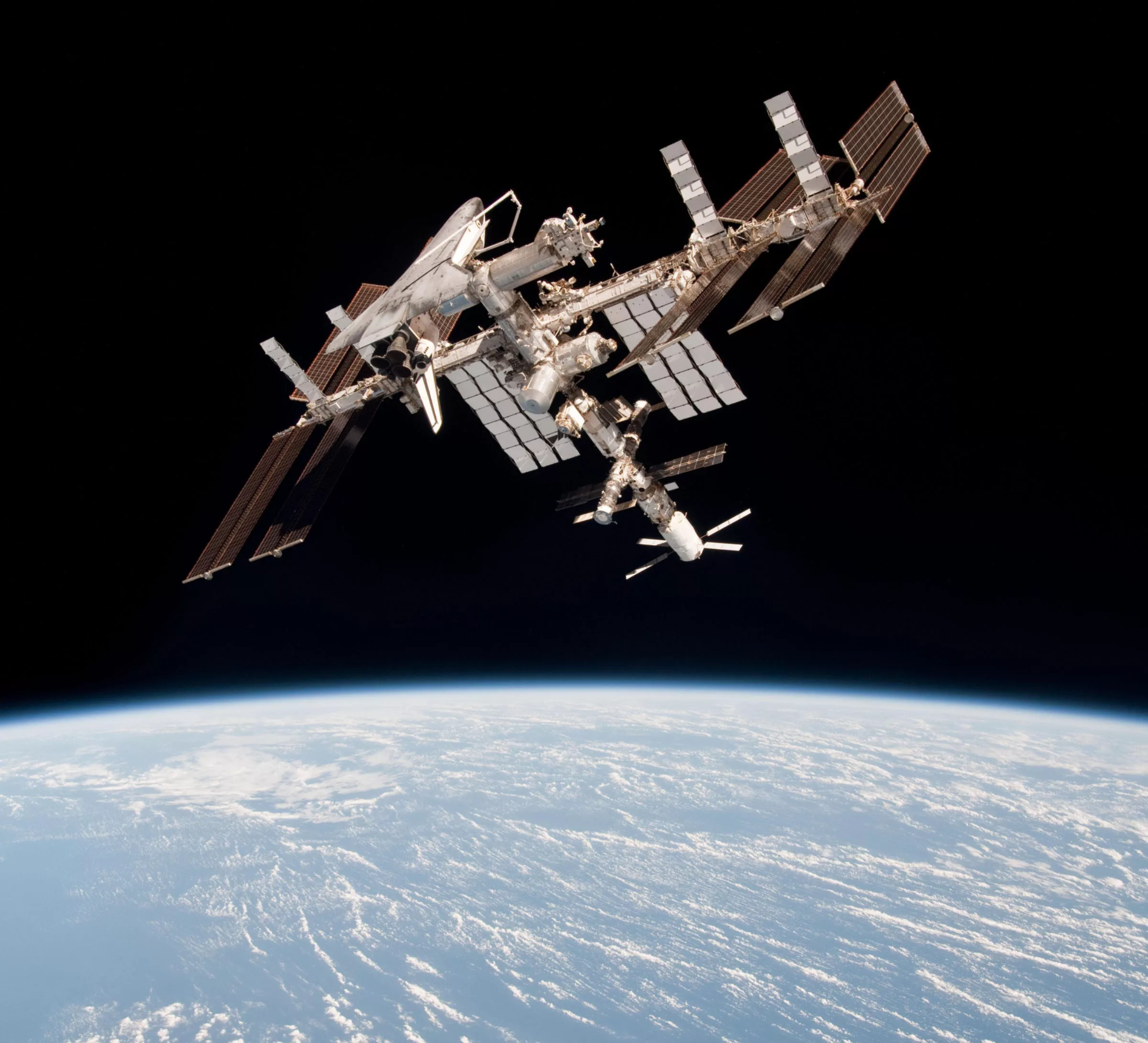
NASA's plan for what comes after the International Space Station (ISS) has been anything but stable. Since 2019, the agency's commercial space station strategy has shifted from free-flying vendor-operated stations to a government-owned module attached to the ISS, and back again, all while the clock ticks toward the ISS's expected retirement around 2030.
Clayton Swope, deputy director of the Aerospace Security Project and senior fellow at the Center for Strategic and International Studies, joins Planetary Society Chief of Space Policy Casey Dreier to unpack this saga and weigh whether NASA can realistically select and fund a commercial successor to the ISS in time.


Related Links
- Clayton Swope
- NASA Changes Course on Commercial Space Stations
- Commercial Space Stations - NASA
- The International Space Station (ISS), humanity's shared orbital laboratory
- How NASA plans to deorbit the International Space Station
- A company you've never heard of plans to build the world's first private space station
- NASA Selects First Commercial Destination Module for International Space Station
- NASA Selects Companies to Develop Commercial Destinations in Space
- Seven US Companies Collaborate with NASA to Advance Space Capabilities
- NASA Adjusts Agreements to Benefit Commercial Station Development
- Travel with The Planetary Society
- Subscribe to the monthly Space Advocate newsletter
Transcript
Casey Dreier:
Hello and welcome to the Space Policy Edition of Planetary Radio. I'm Casey Dreier, the chief of Space Policy here at The Planetary Society, welcoming you to another episode that explores the politics and processes behind space exploration. This month we look at commercial space stations, commercial LEO development, or at least the promise of the plans for, the hopes of that are currently going through let's say some turbulence, though those seem to have smoothed out by the time we have released this. NASA, looking at the post-International Space Station future, what takes its place?
To talk about this with me, I welcome Clayton Swope. He's the deputy director of the Aerospace Security Project and a senior fellow at the Center for Strategic and International Studies in Washington, DC, former congressional staff member, general space expert, who has written on this topic and a bunch of other topics and he will give me kind of the generally pro version of commercial space station development.
I come at this a bit more skeptical. There are numerous reports that show the lack of an existing commercial or market interest in human-tended space stations. There are major questions about the feasibility, financial stability, capability of commercial space stations and whether they can or will work. Nonetheless, NASA and the US government are dumping in decent amounts of money, hundreds of millions to support at the moment two companies, potentially more in creating a post-ISS future. But even NASA itself seems to be having second thoughts. At its Ignite event earlier this year, the head of the Space Station program, Dana Weigel, said some things that are relatively rare for a NASA official, saying that the commercial impact of the space station is limited, that there is no real viable budget level that NASA can support to enable multiple independent commercial stations and time for the end of the ISS just a few years away and proposing a radically different idea of extending the ISS, building out a commercial module that commercial stations could attach to.
That idea died within about a month of that proposal, but nonetheless, it's very instructive that there are some serious second thoughts about the viability of this program. I'm also a skeptic on the idea of the what's called continuous heartbeat policy, that the United States needs to maintain continuous occupation of low Earth orbit to some degree for reasons that Clayton will try to convince me of and other people may still yet, but that drives a lot of the higher level and more challenging requirements about having to continue to maintain a relatively expensive low Earth orbit program for astronauts while we're going to the Moon. So I'll bring my open-minded skepticism to this discussion, but before we get there, I'd like to remind you that this show and The Planetary Society itself that enables it is member supported. So if you like the show, if you like what we do at The Planetary Society, please, please consider joining us at planetary.org/join.
Literally without you, we cannot do the show. We cannot do our great work here in educating and getting people excited about space, about promoting a science-driven approach to space exploration, doing policy, advocacy, all the incredibly important things that we need to be doing right now to support a space program that answers to and is responsible to and serves value to the broad public. That's planetary.org/join to join us. If you remember already, thank you so much. If you donated, consider donating again, planetary.org/join and now Clayton Swope.
Clayton, thanks for joining me this month on Space Policy Edition.
Clayton Swope: Sure. Casey, thanks for the invite.
Casey Dreier: One of the reasons I wanted to have you was this interesting drama that we just went through. You characterized it as a Greek tragedy, but hopefully a comedic one of the commercial LEO Destinations program, commercial space stations program at NASA. You covered lots of other things, but I thought you had a great piece about this on your CSIS website that we'll link to in the show notes, but very briefly, why don't you catch us up to speed about what were you writing about? What just happened? And I think we even have some very recent updates as we're recording this that puts a little cap on this story and we'll go from there.
Clayton Swope:
Yeah, I think if you go back to the start of this saga, I go back to 2019 when NASA rolled out a commercial LEO development strategy and the idea here was looking over the horizon to when we wouldn't have the International Space Station anymore, what comes next? So at this stage or at that stage, the idea was that there'd probably be some opportunity to use a service, a commercial service, a station in some shape or form that would be operated by a company NASA could buy a service from. Maybe not initially, but maybe down the road, NASA wouldn't be the only customer. It would be one of many.
But at that point, 2019, there was a recognition that NASA was probably going to be an important customer for whatever commercially operated station existed. So strategy was laid out, how they would get there, that included concepts like free-flying space station, so that is like the International Space Station and then other ones that maybe weren't free flying.
They maybe started out attached to the International Space Station. And then eventually this transitioned to something that we knew as CLD. So the other commercial LEO development, you could say that was CLD too, but the real CLD was commercial LEO destinations. This is essentially the program that we've had now for about, let's see, about five years. And the idea here was that you'd have a free-flying commercially-operated space station. You'd have a number of vendors maybe that NASA could choose from. NASA may narrow it down to a few from many that it was looking at. There are a variety of ways that NASA was encouraging that development, both through agreements that had funding and others that were referred to as non-funded Space Act agreements.
And then fast-forward to last year when we were expecting NASA to announce a new phase of that initiative of CLD, NASA changed it a bit. This is in November of last year, but kind of stuck with the original idea of these free-flying space stations. And then all of a sudden in March, NASA took a big U-turn and came up with a different way that it wanted to do the successor to the ISS. So this was a entirely new plan that would have a government owned and operated module that would be attached to the International Space Station. You would attach commercially operated modules to that station, the module, and then that module would eventually become a free-flying space station on its own. And then somewhere down the road you could maybe envision, which was originally the CLD plan, these free-flying commercially operated space stations, but that was somewhere off into the distant future. So really in the course of, it's 2026 right now, since 2019, it's about seven years.
We had a variety of things on the table from NASA about how they wanted to pursue a successor to the ISS. And all along though, we all knew we're really getting close to when that space station would have its end of life around 2030. We may extend it a few years, but really it's already 25 years old, would be 30 years old at that point, kind of a question of how much more you could keep adding on a couple more years to it before really you have unacceptable safety risk to the astronauts and to the mission itself. So we are really approaching that end and getting close now with these changes over the last seven years to just not being able at all to be able to have a station operating when the ISS retires.
Casey Dreier:
You mentioned this reformulation of the CLD program, or at least proposed back in March with this ignition discussion. I just want to go back to that because I think I found that extraordinary, frankly. There was a moment in there where you had Dana Weigel, who's the program director of the ISS, go publicly and in front of, I think, a lot of the representatives of these companies with the CLD program and say, "This market does not work. This program is not working. We don't have enough money." She said, "We haven't seen evidence of scaled space-derived product that manufacture on Earth or in space. We've had a lot of technologies that have been adapted, but there's no commercialization. You see these stories, but there's no continued demand for access to space. Tourism is fizzling out. International partners are not interested in long-terms." Basically undermining the entire conceit of the CLD program. And I just rarely see that much honesty from NASA program officers in that context.
But here we are just a few days ago, NASA basically said, "Well, we call backseats on that. We're going to keep going forward with this program that we just outlined all the ways in which we expect it to fail." Your piece came out before that return, but after the ignition event. So what did you see as important from what Dana was saying and did you find that accurate or was there some other fundamental aspect that was missing from this argument that makes this program viable in your opinion?
Clayton Swope:
I go back to the original strategy in 2019, which was pretty clear that NASA is the customer right now for at that time Commercial LEO Development. And the idea that there would be many customers was one that NASA could envision in the future, but it didn't seem to be one that it was basing as a foundational assumption for the plan. That's not unique to CLD. There's a lot of things that NASA does today as a service where it's hard to think of another customer outside of NASA. I think of the Eclipse program for transportation service to the Moon. Sure, there's customers on those missions that are not NASA that are not government customers, but NASA's really subsidizing what they're doing. So without NASA subsidizing those visions, they wouldn't be flying on those spacecraft. We wouldn't have commercial landers on the Moon. The same could be said of what NASA is doing for Mars communications right now.
NASA's even talking about doing science as a service. NASA's just kind of gone in big time on this notion that we could do things where we use a service model. Essentially, instead of building a system that NASA then owns and operates, it's going to have a company build and operate that system. NASA will buy it as a service. That's not unique to NASA either for space. You see this a lot at the Pentagon. You see a lot of what SpaceX is doing now in Space, it's doing it as a service. So it's not surprising that you might have these capabilities that a company's developing that they're selling to the government as a service. And in many cases, though, the government doesn't like to admit it, it is the core customer. The remote sensing industry would not exist today if there was not a government customer.
The only part of the space economy independent of the government customer is SATCOM, and it's always been that way. So everything else is dependent on the government as a customer. So I hear that. I hear the statement you just read and I thought, well, that's obvious. That's space. That's doing business in space right now. Without the government, everything goes away that it's literally a house of cards that falls apart and commercial space stations are no different than anything else other than SATCOM, including launch, which is essentially an enabler for SATCOM. So without the SATCOM business, you wouldn't see as many launches. You wouldn't see nearly as many SpaceX launches as you do today, which are mostly Starlink.
Casey Dreier:
Yeah, exactly. And their one profitable area of the company right now is basically their SATCOM business. I mean, I think that's an important perspective and it's just interesting that it gets mixed together because I think there has been, as you said, the shift towards services model. It's all, I'd say, predicated or built on this wild success of launch shifting to that. And I guess you could say commercial crew to a degree, even though the desired market never really, or even multiple providers has not appeared. You just have on very capable provider and it's being applied everywhere. And I think that the clips examples you gave are an interesting one to me because I'm still kind of on the fence whether that's going to work. And there's a number of experiments going on, but it still strikes me that NASA went back to this fundamental claim of, and I think maybe it's the broader claim of CLDs that this is something that's going to live on its own, that NASA's kind of bumping it up, helping develop it to this broader market.
And she just goes back and NASA just says like, "Well, there is no market. We don't see any feasible market. The tests we've done don't exist." And that's valid.
Clayton Swope: Right. And I think that's true. NASA is the market.
Casey Dreier: Right. Maybe that's the misnomer of Commercial LEO Development. Maybe they shouldn't have called it that then.
Clayton Swope: Right. And I think the companies building commercial space stations, they haven't helped themselves in a lot of cases where they have implied that, "Well, it's not really that we need the NASA business alone. We have all these customers lining up to buy time on our space issue. We just need the certification that we'd get out of the next phase of the CLD program." So I think you had this, you could say, kind of facade of maybe this perception that there was this market outside of NASA that could really drive the commercial space station business or that NASA would be buying on the margins that that existed today or that would exist the moment that these stations are flying in orbit. But still...
Casey Dreier: Do you think that's a narrative that's required for these programs though? It's almost like a political narrative that be maintained. It's a fiction that everyone politely agrees to hold together.
Clayton Swope:
Yeah, I think everyone has a reason to have that perception that there is this broader space economy that is not dependent on the government customer. And again, I don't think this is just NASA. I want to point out, I think government customers at large want to believe that. And you do hear it, I think in consistencies when even someone in the Pentagon talks about this that when we talk commercial, this is why I think the term commercial is really not useful in the conversations that we have today. But when I hear commercial, sometimes a Pentagon official might say, "Well, this is something that we're buying where we're just one of many customers so that we're not the dominant one. We're not the core customer. We're not the anchor customer." I hear that and I think, well, that's just flat out not true. I don't know how you could even believe that, but I hear it so often that there seems to be more like a trend in this belief that space is this broader ecosystem of not just investors.
So private investment, that's one thing on one side of the inputs. But the customer side, again, the facade to me is that there's this customer set that's really diverse and broad and not just anchored around the governments.
Casey Dreier: Right. I mean, I think to the extent that there's markets and space, it seems to be for things that go up and point back down. And whether that's government or is it primarily SATCOM, which most you've done, if I remember correctly, a decent amount of spectrum work, policy work in spectrum, which is the incredibly important but not what most people think about when they think about space. Right. Well,
Clayton Swope: Spectrum is a limited natural resource that is entirely a state-directed, administratively directed process. Zero property rights, it's very different than anything else we think of when we have a valuable natural resource.
Casey Dreier: And a source of revenue too.
Clayton Swope: Absolutely.
Casey Dreier: And it's one of those things though that I think people, as you said, they hear commercial. And again, I kind of keep going back. There's this polite fiction. I think that's what NASA popped a little bit. But then remarkably, I mean, at the end they say, "We can't go forward with this because this is going to fail. We need independent data showing that this is not going to work." And then just days ago as we record this, they say, "Well, we've heard back from our commercial partners and apparently everything's hunky-dory, so no changes." We go forward as like, "You said all this stuff, where's this coming from?" And I'm not naive. I mean, I imagine, and you point out that there's a core here, a challenge has been funding from NASA to these commercial stations. If I recall off the top of my head, I think the first year was at 2019 that they did request money for this program. Congress provided 10%, so like 15 million.
Clayton Swope: I think they gave zero. I think NASA ask for money, Congress said zero, goose egg.
Casey Dreier: Yeah. So that's a rough start. Actually, kind of very familiar sounding story to commercial crew actually, where they underfunded that for many years. But yes, and I think that's undeniable. It has been underfunded. And you point out another issue that NASA has been kind of shifting the goalposts on what they even need to provide. So I mean, just going back to that, what do you think is fair to lay blame at from a government perspective here in terms of why we're not seeing, as you said, seven years and it's not like we have stations about to launch, we're still pretty far away from those?
Clayton Swope: What is NASA one? I think that's been the big question that I've tried to figure out myself of why are we doing this? Why do we need a station in LEO, commercial or otherwise? And I do think when we say commercial, and I was thinking about this as you were talking too, why do we all believe in this fiction? I think the root of it is that the reason why government wants commercial in today's day and Asia, why they say so much that we're going to have more commercially oriented acquisition processes and development mindsets is that that seems to be what we think is innovative, that when we say commercial, that means innovation. So it's kind of synonymous with innovation. So we want to maintain this idea that we want commercial and then at the end it just means we're looking for innovative solutions and out-of-the-box thinking. So the Henry Ford apocryphal quote, "If I had asked people what they wanted, they would've said faster horses." The government wants someone to help them figure out so they're not just buying faster horses anymore. They're buying something else. So I think the garments is commercial.
Casey Dreier: Can I add something to that though? I think that's an interesting framing. I think you're right. And I would also say though that there's when people say commercial, they say free money, that then suddenly someone else is footing a large portion of the bill and therefore we don't have to... I think all of Artemis is predicated on the hope that someone else puts in a good chunk of the money, which to some extent we're seeing. I mean, and that's paying off and you even quote or reference congressional testimony from, I think, was it Mary Lynne Dittmar at Axiom who's building-
Clayton Swope: Very small percentage of government money.
Casey Dreier: Yeah. It's like they're putting in five to one of their private money.
Clayton Swope: It's crazy.
Casey Dreier: Yeah. And so there is some truth to that.
Clayton Swope: Yep, I agree. And they're doing that because they think there's going to be payoff. Let me point that out. The recognition in this case is probably these savvy investors. They do think we need the NASA money. We are expecting a government customer, but at the same time, maybe down the road, there'll be non-government customers too. But no one that is smart that's putting money into these companies would bet on that non-government market as the first customers out the door.
Casey Dreier: Yeah. They want a long-term... It's like with SpaceX that they've had $20 billion in NASA contracts give or take since becoming building the Falcon 9.
Clayton Swope:
Yeah. So why I also was thinking about that with your question about why are we doing this commercial, this is where you have to really wrap your head around this. So I do think there are requirements that the government might have, the Pentagon might have, NASA might have. There's absolutely zero non-government interest in that. This is not something that's going to create... And when I say non-government interest, I mean as a customer, there's no other customer waiting to buy space exploration, for example.
I might put forward though that for the most part, maybe there aren't non-government customers waiting to buy time on a human-operated space station. There's probably some, but a lot of what could be done and included in the microgravity strategy from NASA a year or two ago, a lot of that could be done by robots, full stop. So this idea that we're answering the question of why we need a commercially operated space station or space station in general in terms of things that I look at that and I say, "Well, a lot of that could be done by robots."
To me, I'm still left scratching my head, "Well, why are we doing this?" And that I think was part of the issue with the funding throughout the last seven years. Why are we in LEO? So I mean, to me, I just tried to answer that question. I'm just like, "Well, I have this vision in my head. We're going to have humans living on a place that's not Earth in the future. Is that five years from now, 10 years, 20, 50? I don't know. But on the road to that, the journey to get to that vision, the destination there, you got to have people living in LEO. You got to have a LEO space station. So that's it, boom." And that may be a requirement that has no non-government customers. NASA may be the one who should be paying for that. I'm fine with that. I mean, that's to me why we're going to space for a vision like that and the government should subsidize that. I'm sorry, that flat out. And that's the market maybe for LEO human-occupied space stations.
Casey Dreier: Yeah. I want to key on this because I think that was... I appreciated your honest assessment of that because I think this is why it can feel so discordant and unreliable. And you even say it's like a dogmatic belief.
Clayton Swope: It's a dogmatic belief.
Casey Dreier: Yeah. Which listeners of the shows have heard me talk about this for many years, this kind of pseudo religious faith-based system of humans, which I share, which I'm a proud member of. But I have to admit that it's-
Clayton Swope: You were before I was.
Casey Dreier: Yeah. It's a feeling and it's fundamentally does not map well onto a policy sphere because it is more of this kind of a belief system expressed through policy rather than serving a policy need. That's why you tend to, I think you see people bending over backwards and saying, "Oh, well, they'll invent and have some kind of microgravity-"
Clayton Swope: Right, I know. Another justification.
Casey Dreier: Crystals or something. Yeah. You can read back to Space Station Freedom documents in 1984 and '85.
Clayton Swope: Crystals are great, but Varda can do that and there's no people on their capsules.
Casey Dreier: Right. Yeah.
Clayton Swope: And now SpaceX wants to do it with Skyfall.
Casey Dreier: It's very little you can uniquely do it. Well, there's very little that-
Clayton Swope: There's probably something.
Casey Dreier: ... you can uniquely do in space that requires people. And I would even say that that goes back that the role of people goes back to the establishment of space as a concept, particularly in this country to the mid 20th century that predates the existence of computation and computers where you could not have viable any other way any sort of operational station or activities because the computers just, unless they were represented as robots, which then they were kind of presented in this Edwardian servile subservient attitude towards what a human was, humans were the centered thing. And I'd say even the vast majority of early to mid-20th century science fiction is even about space as a means of transcendence for the human into something. We were centered ourselves in it, this whole thing.
Clayton Swope: Oh, yeah. You've read the Foundation Trilogy and then I think it's the next one is called Foundation's Edge or is it which one where they say, "Well, robots." And they're like, "We've never heard of that term." I think it's Foundation's Edge. So essentially, "Oh, it's this and it kind of looks like a person." I think it's Foundation's Edge. It's the next book after the trilogy. So there's a big gap after he wrote the trilogy and I think he wrote Foundation's Edge late '70s or early '80s. So the earlier books, to your point, they don't really talk about automation in the way that we talk about, the computers and the way that we talk about. But all of a sudden, fast-forward to the '80s or late '70s when he wrote the next book, we're talking about that. So he introduces that, but it's interesting to see how he tries to mash it together and make it somewhat consistent with the trilogy, which there were no robots.
Casey Dreier: Right. Well, I mean, it even goes back to, I mean, you see Apollo itself was like the big actual technology miracle was like making a computer small enough to fit in the module on top of that. But you go back to the von Braun descriptions of a space station and it's like, "Oh, you have astronauts on there taking weather reports for Earth as if that's the required thing." And so I feel like that has infused so deeply the role of why we need, and I think this is where it's become this kind of difficult policy because if you can't quite say that, which it isn't by definition justifiable in a policy sense, it's a belief system or-
Clayton Swope: It's a belief.
Casey Dreier: ... a value assertion, right?
Clayton Swope: Right.
Casey Dreier: Then you have to back it up and say, "Okay, well, now our policy is continuous heartbeat and lower Earth orbit," which NASA put out at the end of the [inaudible 00:24:42].
Clayton Swope: But you think you just have to answer the why. So there's another thing I ran across Agrippa's Trilemma, it's some ancient Greek philosophers, it's hard to prove a truth and answer the why question. And there's really only three ways to do it, dogma, which I'm accepting here, a never ending series of why questions, which you could also, or circular reasoning. And if you try to think about why you believe suddenly, why?
Casey Dreier: Yeah.
Clayton Swope: I found like, wow, that's true. It's usually one of those three things. There's really no way to actually, "Oh, it's that." It's anchored. The anchor is usually dogma. Why is the Moon strategic?
Casey Dreier: Yeah.
Clayton Swope: Because China. Why is China interested in the Moon? Because it's strategic.
Casey Dreier: And damn it, we're not going to be more strategic. Well, I mean, that's such a great context because you're right and it's particularly now as a father of a toddler, I get the why questions I'm establishing.
Clayton Swope: I have a five-year-old and six-year-old. No, I hear you. Yeah, I've been there.
Casey Dreier: The dogmatic aspect. But I think it's because you're a domain era where it's taking a belief and an emotional kind of almost an internalized belief and then applying it to a rational structure, which it's not really apt for, right?
Clayton Swope: No.
Casey Dreier: You can't then that way, right?
Clayton Swope: A budget justification is not apt for dogma.
Casey Dreier: But I think you can lead down into traps this. So I mean, I guess I feel this much more strongly the belief side of it with not hanging out in lower Earth orbit, but I say doing the Moon thing as if that's like going to the Moon and going beyond. And the LEO thing I've just never got on board with in that terms of belief. That's hard for me to accept why that needs to be the continuous heartbeat, which this is where I think we go back to these changing... The practical consequence of this is that NASA is unable to create a set of requirements and they've been shifting for what they actually need from these commercial stations because I think tracing back that this is a dogmatic belief with no necessarily immediate practical need. You actually create the policy implementation creates a conditions for failure here.
Clayton Swope: Yeah. Well, I think they also haven't tried to make that case. This is a step on that journey. They made the case for Artemis. I don't think the case has been made for humans in LEO. It also just sounds like it's got an acronym in it. It's just like, LEO, what is that? Basically, I'm just saying humans in orbit closer to Earth. I think if we even look at things like situations that could arise from a medical standpoint or just a learning how peoples are in space standpoint, to me, it makes no sense to do that on the mood. Just people are going to die a lot.
Casey Dreier: Yeah, but haven't we had 25 years to do that already?
Clayton Swope: I don't think we've answered all the questions. I mean, even just the medical, we've just seen medical events on the ISS and just how quickly we can respond to that and things that we can't really do in space. So until we can smooth out those rough edges, meaning the rough edge, meaning like, oh, that happens. We have to immediately get that person back to Earth. I just don't feel comfortable giving that up until we figure that out, how to do stuff that keep people healthy in space. I don't know how we just jump straight to the lunar surface or something in the lunar orbit because it's too far away. If there's an emergency, I don't think we'll be able to handle it.
Casey Dreier: Yeah. So you spent a number of years working in the private sector in a, I'd say, space business as part of Amazon's... Is it Kuiper, Kuiper? What's the right way?
Clayton Swope: Kuiper.
Casey Dreier: Kuiper?
Clayton Swope: But it's Amazon Leo now, Casey, so you're lucky.
Casey Dreier: Amazon Leo. Well, you could just say Leo.
Clayton Swope: But I still say Kuiper because that's who I work for. But yeah, it's Amazon Leo now.
Casey Dreier: How did you see the decision process there? Was that just a much more relentlessly practical relationship about what the requirements were, what we were trying to do, or was there a core of this romanticism dogma of pushing this forward?
Clayton Swope:
I would say definitely less dogma, more just you're thinking about the dollars and cents of the space economy. And to me, that's just the same dollars and cents everywhere. It doesn't matter if you're on Earth and you're in space. So really it's just what is the product you're selling? Who's going to buy it? And then you build that product around that customer and that market and then you try to do that as quickly as you can to reach scale. And as much as you can provide a... Amazon would say minimal lovable product, not minimal viable product, but just the sense that you could get something out the door that satisfies that customer and you could start selling it. So anything that takes away from that, essentially that's a distraction. And this is where you just have to have really good discipline to be like, "Eh, no."
"Oh, if we just modify it this and then someone else will buy it." No. You're focused on what you think is going to sell because the time you get off of that, that's a delay. That's cost and delay and you're further away from getting to where you want to get. That is what we have had the exact opposite with CLD. So it's just that.
I think the discipline piece you're getting at too that, and I've tempted to say, "Keep your eye on the prize," but it could shift too. You could say, well, when we started the Project Kuiper, didn't think there was the direct-to-device market, didn't really think about that. Things have changed now. So things do change in the market and you have to adapt to that, but that doesn't, I think, take away from the main point that you're really disciplined about what you're trying to do and you're trying to build that capability at scale to do that and you're trying to keep yourself away from distractions as much as possible.
Casey Dreier: Well, I guess that's where you're starting with a practical, probably measurable. I mean, that's the thing with business. I guess you can count dollars in and dollars out at the end of the day. I mean, that's a core. It's quantized and for something the value of keeping humans in LEO, that's not a countable thing really beyond-
Clayton Swope: Yeah, that's true.
Casey Dreier: ... you can count the number of people there. It's harder to then-
Clayton Swope: Science isn't either.
Casey Dreier: Well, in what sense? I think it is in some ways. I mean, there's countable data, I suppose, but you're saying motivations behind scientific exploration?
Clayton Swope: I just be like, "When is it done?" In the case of a company, to me you're like, "We got there, we're profitable," for example. There's a north star, if you will, that you can be pointed at and you at least get over that hump and you're like, "We got there." My only analogy there with science and discovery is that sometimes you don't really know when you get there and you keep trying or it's just you may never get there in your lifetime or where you wanted to get. And it's not because you didn't try hard, it's just because you never quite knew what the discovery was that you missed out on, I guess, is my best way to put it, but you keep trying.
Casey Dreier:
There's a great book by Bruno Latour that I love called Laboratory Life where he was a sociologist and he embedded himself in a biology laboratory. This is back in the '70s. And he had this great way of explaining science as this. You look backwards and you can see a path to where you got to. But if you put yourself at any point in that path in the past, it's not directional. People are just grabbing like, "Is it this versus this?" And there's so many dead ends, there's so many things that don't pan out that narrative collapses though into that linear path to where understanding came from.
And so at any given moment, you don't even know necessarily. You can maybe have a directionality, but you don't know what's going to pay off by definition almost. And you have no idea if there's something that you just missed that would've given you some big answer or not necessarily. It's a strange and frustrating process, which I think is, again, why science is a fundamental public good rather than a generally R&D program.
Clayton Swope: Well, I would say it is an R&D, but I mean, I look at spectrum, so wireless technology. Think how important that is today. We mentioned it earlier. Did Maxwell, when he was coming up with his equations that predicted essentially electromagnetic spectrum and waves, did he have any idea? And then Hertz comes along and proves the existence of these things. And then later Marconi comes along and makes wireless technology at the end of the 19th century. And here we are 100 and whatever, 27 years later. There's no way Maxwell knew that, but that doesn't mean we shouldn't spend on it is what I'm getting at.
Casey Dreier: Yeah. I guess that's not the directed... In terms of a private R&D program, that tends to be applied research and development. Is that true?
Clayton Swope: I would say no. I mean, I'm saying the Maxwell stuff, that's not applied at all.
Casey Dreier: Well, I'm saying, yeah, that's like why you have... I think that's the core of why you have at least some level of public investment.
Clayton Swope: Oh, I agree. But I'm just saying to me, that's comparable to this vision of people living... Because I'm like, "No, I'm not saying the payoff is anytime soon. I'm not saying that we're going to have a return on that." The US government certainly isn't going to have a return in the sense that you've unlocked the potential of spectrum and wireless technology for economic development and general good. No, I'm not saying we're going to see that, but to me it's comparable because it's an investment I think the government should be making.
Casey Dreier: Yeah. Is Maxwell like a caveman inadvertently digging up an oil well and just like, "Oh, well, I don't [inaudible 00:33:37]."
Clayton Swope: Yeah, right. Well, he's probably a really smart guy. I assume he was a really smart guy.
Casey Dreier: Well, yes. Beyond caveman, even. But just in terms of like-
Clayton Swope: Well, maybe I'm a smart caveman too.
Casey Dreier:
Yeah, that's true. Just knowing that didn't have the superstructure of other things.
We'll be right back with the rest of our Space Policy Edition of Planetary Radio after this short break.
Kirby Runyon: Hi, I'm Kirby Runyon, planetary geologist at the Planetary Science Institute and founder of Planetary Experience Consulting. Think of your favorite photograph from the Moon or Mars. Have you ever wanted to read the stories recorded in those rocks? You can learn how. This October, I'm co-leading a three-day expedition to some of New Mexico's finest planetary geology analog site. And I'd love for you to join me. From October 15th through 19th, we'll explore tube-fed lava flows at Carrizozo. Soak in the volcanic desolation of Kilbourne Hole volcanic crater and stand at sunset over the sublime White Sands National Park. These are some of the same landscapes where Apollo and Artemis astronauts have trained. We'll also visit Spaceport America, the New Mexico Museum of Space History and the Las Cruces Challenger Learning Center. Space is limited to just 20 people and for every person who registers, The Planetary Society will receive a donation. Head to planetary.org/travel to learn more and save your spot. I hope to see you there.
Casey Dreier: I mean, I'm still fascinated though in terms of what you saw in terms of how the policy then this proposal comes out from NASA. It seems to take a lot of the companies themselves by surprise and we were just talking about this idea of being kind of nimble, private companies being nimble, really focused on what they want and you can see this kind of classic distinction in particularly a democratic system where you have the companies wanted what was maybe not the most rational thing from a policy perspective because they wanted their CLD funding to continue. They wanted programs to continue. And so they were highly incentivized to stop it.
Clayton Swope: All that private investment that you pointed out.
Casey Dreier: Because again, I would imagine you'd have to go back to your investor and say like, "I know NASA said there's literally no other market here, but we have to convince you that NASA was wrong or that as you say, maybe the only market is the NASA market."
Clayton Swope: Or main market. It's the anchor. For sure.
Casey Dreier: The main, the anchor market. Yeah. I was just, again, fascinated how that came out because how quickly of a turnaround it was or just maybe that the other pathway wasn't feasible to begin with because as you point out, ISS is, it's leaking again, which is never a good thing you want to hear from a space station. It's still old.
Clayton Swope: Or a submarine.
Casey Dreier: Yeah. But that issue I think of just how quickly the industry itself tamped down this claim, which I don't know if you have any insight into how that process unfolded or developed, but where do you see this and from a policy framing about, did NASA just really mess up here and create a mess for themselves?
Clayton Swope: Well, one thing that stood out to me, and I think I might've alluded to this, is that it did seem counter to where NASA was going with a lot of other acquisitions.
Casey Dreier: There's an interesting substory that NASA's kind of undermining its entire claim for every other-
Clayton Swope: That's what I thought.
Casey Dreier: ... commercial services.
Clayton Swope: I was like, "I don't get it." So that one didn't fit. So I'm like, "I don't understand the message there." So outside of the criticisms that you pointed out for CLD, I did think, well, this is definitely an outlier. I don't understand how that's really sustainable to have this one program where you're having this burden on it to have a market outside of just the NASA customer when that's all these other programs including... And the same thing, I think at Ignition or subsequently, maybe it was the Moon base announcement, but we're talking about the lunar landers, which are being purchased as a service.
Casey Dreier: Yeah. So we're going to double down on clips, which definitely has not really worked.
Clayton Swope: Yeah. Or I was thinking of service vehicles too. Those are acquired, I think if I'm not mistaken, that contract is like a services contract. Eclipse too, you're right.
Casey Dreier: Pretty much everything.
Clayton Swope:
So to me, I was like, "Well, that just seems weird, but that's not sustainable." So I did think that. And then the other thing, I think you pointed out that the critique was the business model, but I think it was deeper too. It was that you can't do what you say you're going to do. You can't deliver what you say. You're going to deliver when we want it. We don't trust you to deliver. We think there are a lot of technical things you haven't figured out yet and you're not going to be able to build this thing and operate it the way that you say you are. So that was the thing that to me was the bigger critique outside of the business model. To me, the obvious answer, well, duh, NASA is the market.
The technical piece, I was like, "Well, that is an interesting critique because for one thing, that has a lot to do with the changing requirements and the funding piece." If you have everyone on a starvation diet, I don't know how you can expect, and you're trying to have a lot of companies that they're all essentially begging for scraps. No, I don't think you're going to have something that really develops the way you want it to do. And then I think the other side of that was that, well, okay, well, if there is a technical challenge, I've heard the ECLIS system mentioned a lot, so the environmental system and life support. So okay, if that's really hard and NASA, you're like, "We just don't think they've been able to figure it out, help them." But also, I mean, is it essentially the same stuff we're already using on the ISS?
And if it's that hard, obviously some companies have figured it out because they're building human landing systems for the Moon and one of them is the same company that's trying to-
Casey Dreier: Or have they?
Clayton Swope:
So I mean, it's all these things that it's all interrelated, but again, if you're critiquing one, I guess you're critiquing the other, but at the same time, if you're saying it's really hard, these companies can't figure out, but we know as NASA help the companies. I think I kind of implied that in my article too, just help them out. And then the other thing that I'm like, I didn't quite get was that there's no international market for this and that other countries just want to barter. I'm like, I guess that's true, but the way I understand it is that in a lot of cases, these companies are figuring out how to work within that system, meaning, "Okay, ESA, you don't want to pay us to do something commercially in our station or JAXA, but what you would do is maybe we'll have some infrastructure within Europe that can support European astronauts. We'll have cargo supply from a European company."
So it's not necessarily just, "Here's some money, operate this for us as a service." There are some trades in there that allow that economic development piece to happen in these other countries, but it doesn't look like the regular barter mechanism that NASA has used before with the ISS and it takes NASA out of the picture.
So to me, it seemed like there were workable ways around that one too. So just from a variety of angles, I looked at this decision and I thought, something just doesn't add up here. So it's less in my mind that NASA just something changed and more just that the pieces of the puzzle that NASA put together one way that led to the Ignition announcement with all the feedback that they were getting from external stakeholders, they said, "Oh, maybe we looked at it slightly wrong and let's try that again." And we're like, "Okay, got it. That makes sense. We maybe should stick with this." So to me, it wasn't that there was a lot of new information out there. It was just sometimes I think when you look at a set of information and you can look at it one way and then you move the pieces around and you can look at another way and maybe you're like, "Okay, that makes sense."
But at the end, it's like I'm not saying anyone can have a fully operating space station by the sunset of the ISS if we're looking at 2030. I think we've gotten to this point and that a lot of it has to do with the funding piece and the requirements that have kind of shifted. I'm worried about if we're not going to have anything after ISS deorbits, but if you switch now this drastically, you're delaying it more and it's probably going to cost more money. And I guess my analogy, I was thinking about this, my spouse and I, we've been like, I'm not even joking, five years renovating this cabin in West Virginia.
We put in a lot of time into it. It's been slow. We've changed our mind on a lot of things, but if we just decided now we're like, "Eh, let's just knock it down and build something new," that's going to be really expensive and everything that we've done in the last five years basically goes out the window and it's probably going to take longer. So you could do that, but that's pretty drastic and I don't think it's going to save you any money or any time.
Casey Dreier: I wonder, and this is just speculation just to be clear, but if they were almost getting too smart for themselves and saying like, "Well, this will make us happy with the Texas contingent to keep ISS going as long as possible through that alternative plan." And because there's a lot more money, there's a lot more institutional inertia, there's a lot more built-in coalition about just keeping ISS going because it's been a roughly $4 billion program for almost more than 30 years now. And I believe pretty deeply that the ISS will never end until there's a calamity because Congress will just never let it end. I mean, you saw this with Shuttle, that even after Shuttle only barely ended, they extended it and they kept wanting to extend it, even it was clearly unsafe and they didn't have any need for it. And ISS I think is a very similar thing and I wondered if they was thinking, "Oh, we just gotten a bunch of-"
Clayton Swope: Just add a couple more years.
Casey Dreier: Yeah. We had just gotten into a bunch of trouble with a '26 budget request that proposed to stop rotating crews to ISS and stop doing all activities and science up there. Basically, maybe this is a way to buy some goodwill. I wonder if that was a factor in. And they said, "Oh..." And the CLD companies, they got some other contracts, they're smaller. It won't be as much of an issue. But I wonder if there was an aspect. I mean, just institutionally, NASA is also going to go what it knows with.
Clayton Swope: Yeah. And I mean, I've thought along those lines too. I think one thing to think about is that it rewind like a year ago, Johnson Space Center would've had Gateway around the Moon. Now there's no gateway. Now if there's no ISS, what about those people that are working at Johnson? So I do see an impact to the NASA workforce and...
Casey Dreier: For sure. I mean, they're trying to take the money that they specifically gave to Gateway and do a completely different-
Clayton Swope: Right. So that to me though, that's not the fault of CLD. I just want to point that out.
Casey Dreier: Yeah. Oh, yeah, exactly. Yes, that is true. You've been in various aspects of government, your national security side, you worked a member of Congress, you worked in now a private industry and now you're working for a think tank. Do you see a throughline in terms of how non-space people see space activities like this that how much do they depend on or how do they queue in their decision? Because most people don't have degrees or with orbital mechanics, mathematics or understand spectrum allocation or the fact that you can't just... The space is anything but sci-fi movies and you can just fly around wherever you want. How do you best engage with folks like that who don't have a deep understanding of the domain that they're making decisions on?
Clayton Swope:
Yeah, this is where the dogmatic belief sometimes is not helpful, but at the same time, sometimes it's the only thing that you can lean on. And what I mean is that if outside the economic benefits, which there are, including in things that don't have government as a customer like SATCOM, there are national security benefits which I talk about. Then I go back to things that kind of the science piece and I group that in with the prestige and national honor. So in some ways I'm talking about it in a way that I would be talking about watching the Olympics and a US team win the Olympics.
We should do it because it's important for our country. But at the same time, the Olympics are something that brings everyone together in a way that I think kind of speaks to the come together, we compete and we all want to be part of something together as a planet and all the countries get together and we all enjoy the Olympics, even though it's a very competitive environment. So I guess space is like that. I try to say that at the same time we do have competition, but there is opportunities for cooperation.
I think I often point to Apollo-Soyuz in 1975. So looking at this vision of the future where we do have this competition between the US and China and space and potentially in a lot of different areas in space, including the Moon, but then at the same time, just thinking about a day when maybe we start with something like consultation today, I'm not saying we're ready for cooperation, but where countries do have a more collaborative way that they work together in space. And this is essentially captured in NASA's mission in legislation and statutes. So this dual mission to cooperate, but at the same time compete and be a leader. I guess I talk about it in that sense that the US has always been a dominant force in the world for 250 years and that I expect for that to continue into space and it's so different than any other activity or domain that we've engaged in.
But I think the costs are what really is kind of going back to why we need to really think about why we're in LEO. It's just that costs money and it is very hard to tie that in that cost when you were talking about this broader narrative of what the government should be spending money on. So I do find that very difficult to try to tie that together. Science and research, I think it's the same thing in general, but that's where I say this is really just the, it's the seed, it's the fuel that powers everything that has made America successful over 250 years and that without that investment from the government, no one else is going to do that. And we won't see the effects next year or five years from now, but we will in 10 and 15 and 20 years when we didn't make those investments today. So I do think there is a way to get beyond that dogma a bit, but it's hard. I mean, I'm assuming you probably find that true. You've been doing this a very long time.
Casey Dreier:
It absolutely is. And I think what it is, I've gone back and forth, but I do think that developing... Dogma's obviously got a lot of connotations to it that aren't great, but just in terms of a leaning into the more experiential, or I've been talking about the sublime and just like it's a way to access the sublime and do something that does, as you said, feel good or inspiring. And that's actually, I think, a real social need, particularly right now. Unifying things are incredible, important social need about binding a society together.
Apollo, there's a great article about Apollo as a civic religion, right? And it's not something you pray to or worship, but there's a reverence you hold and it's part of a common story that a culture and a society tells itself. Space is perfect for that. But yeah, good luck. And it's not even so much, you don't have to convince everybody.
I think that you found particularly a lot with space as well is that you just have to convince enough people to push on it. You don't need to get 90% buy-in. You just need a couple of people in the right places because there's usually not a ton of opposition. It's more about the effort to push it forward and who's going to be going to bat for it that I think makes the most difference. And so in that sense, you can find converts who will proselytize to go [inaudible 00:48:17] on the language.
Clayton Swope: Yeah, it's an inspirational story. It's a story about cooperation, unity. I do think though the yang to that is it is a story about competition.
Casey Dreier: Do you think the competition is what is driving it all right now? Is it purely China, but only in seems like in human space flight, is that a strong enough narrative? Have you seen that shift in the last five to 10 years? Because I feel like I have.
Clayton Swope: Yeah. Well, I think when-
Casey Dreier: You testified on this just last year.
Clayton Swope: Yeah. When George W. Bush talked about going back to the Moon, I don't think anyone was thinking of that in terms of a competition with China at the time.
Casey Dreier: That's right.
Clayton Swope:
What do we do now? We just said we're coming off the Columbia disaster. Things have changed. So in some ways, I guess the case is a little easier to be made like it could have been in the 1960s. Would we have landed on the Moon in 1969 if we weren't in the geopolitical competition we were in with the Soviet Union? I don't see any chance and really the kind of space investment from government and even in missiles really atrophied right after the end of World War II. Why? Why do we even need any of this technology? And it really only took off again in the '50s. So you could see outside of that competition, really the justification, just the raison d'être kind of goes away.
So in some ways, yeah, that competition does help see why it's important. But I think maybe to, I don't want to put words in your mouth, but to both of our points, I think always that consistent undercurrent that we should not forget about is that more inspirational side where this is something that we're doing for humanity and it's not something that is just, even though competition is a part of it, it's not just a competition where you have winners and losers.
Casey Dreier: What are you looking for next in the CLD world now that NASA's kind of backtracked a little bit, what needs to happen for this to be successful?
Clayton Swope:
So the House appropriations, the subcommittee that funds NASA, Commerce, Justice, and Science, they've put out a marker 400 million for CLD. There's been some public chatter from the companies, the vendors who say, "That's good. That could support two commercial space stations." Okay, let's see if that happens. So to me, that's just 2027. We're still going to have 2028, 2029. I want to see what happens with some of these tests of maybe incremental capabilities. A lot of the companies had an idea of what the first phase would look like and then we have more of a free fly and space station. So that all should happen pretty soon. Things that I don't know how it will impact this. Things like we still have an operational star ship. I'm pretty sure at least one of the vendors architectures, assuming there's a star ship, I don't know how much the New Glenn was baked into this.
Maybe it could certainly affect Blue's plans. If there are technical challenges associated with some of the systems that would be needed, how much is NASA willing to help a lot of vendors who maybe haven't won the contracts yet, but maybe need that help to get to where they could? So this is where I don't know exactly how that's going to play out, but I would hope that there is a willingness to try from NASA's standpoint to help as many companies as they can mature these technologies to have an operational system. But I think in the end it will come down to, can NASA afford more than one commercial space station?
One thing I just want to throw out here is does NASA need two Cadillac human-rated space stations? Does it need just on that maybe is rated to NASA standards similar to the ISS where you could have that continuous presence, that heartbeat and another that maybe is somehow used only more sporadically but still could house humans for a bit of time, not all the time, but maybe that's where you have more of the experiments? So you're trying to have the two, well, we want humans to be able to be there a lot of the time, also recognizing that a lot of things could happen without humans there all the time.
So you're trying to do both. So one could be more expensive than the other. I have the Honda Civic. I also have the BMW X5 and I don't use them for the same purpose, but I have both. I don't have two X5s. I can't afford it. I actually don't have either of those type of cars. I just want to have a 20-year-old car. But in that theoretical case, I could see a scenario where... But again, that's going to require a little bit of out-of-the-box thinking to do this in a way that fits the budget.
And I think the big thing is though to get to what I just said, you really have to figure out what... Are those your requirements? And if you change them too much, you're going to get to the same problem we just had over the last two months. You've made it hard for the vendors to build what you say you want. And in the end, NASA's going to have to pick who it wants to pay. I think that's going to be a hard thing too.
Casey Dreier: And again, I think just even I'd say more fundamentally, just what exactly do you want to do? And I keep going back to that beyond the intent, if you can't clarify that, it's not easy to say that tells you something about why and how effective we can do this. I like your idea though, or maybe we have two Civics and we're having continuous heartbeat because we're just going back from one to the other, we're launching to one, then one goes down. We have another crew to the other one. But you're right, that probably introduced all sorts of complexities about what happens in the interim period. Though I guess we've got some Soviet stations.
Clayton Swope: Who you pick is going to be a bit, because right now there are four companies or groups of companies doing this and for a variety of reasons, the US government has a hard time picking and I think it doesn't like to be perceived as picking the winner, but that's what's going to have to happen now. I guess I just look back just one quick historical analogy. World War I, the US government needed, I think it was like a turbo supercharged engine for airplanes. They knew the French could build it. We couldn't build one. They just literally went to, they said, "Oh, this company, General Electric, it was Thomas Edison's power company, they made turbines, gas turbines for power. Maybe they can figure it out. Hey guys, hi, can you do this?" "Sure, we'll try." But I just don't see that, "We just don't like to do that anymore." Basically, I'm just going to pick, "Oh, Axiom and Vast, we're just going to pick you. Sorry, Voyager, sorry, Blue. We're just going to pick you. And you all guys are having a hard time. You have a little different ways you want to do it. We're just going to pick two." That's really hard for the US government to do something like that today, even though I do feel like they're going to be confronted with that situation now.
Casey Dreier: Eventually, they'll have to. Yeah. I mean, I don't think there will be the resources for that. Or maybe there'll be an economic downturn and suddenly some of that investment money dries up that could also select-
Clayton Swope: That's true too.
Casey Dreier: Right? I mean, I think there's market cycle issues here and how well-capitalized. I guess Blue is infinitely capitalized effectively as long as Jeff Bezos wants to.
Clayton Swope: They got their attention on other stuff right now.
Casey Dreier: Clearly.
Clayton Swope: And that's where they want to put it and I think it's totally logical for them.
Casey Dreier: Yeah. All right. Well, if any of those things happen, Clayton, we'll have you back and we'll check in on this. Where can people find you or your writings online?
Clayton Swope: Go to the CSIS website for the Aerospace Security Project and find me under staff.
Casey Dreier: We'll put a link there for folks, but you put out a lot of great content and interviews and other things, and I very much appreciate your insights. And again, I think that it's rare and frustratingly rare to have people to say what they think, make good arguments in the space world, which is why working for think tanks is great. So I'm happy to have you.
Clayton Swope: Well, you don't have to do anything, you just get to opine. It's not too bad.
Casey Dreier: There you go.
Clayton Swope: Try it sometime.
Casey Dreier: Clayton Swope, thank you so much. We will have you on again.
Clayton Swope: No, thanks, Casey. Great chatting.
Casey Dreier:
We've reached the end of this month's episode of the Space Policy Edition of Planetary Radio, but we will be back next month with more discussions on the politics and philosophies and ideas that power space science and exploration. Help others in the meantime learn more about space policy and The Planetary Society by leaving a review and rating this show on platforms like Apple Podcasts or Spotify or wherever you listen to this show. Your input and interactions really help us be discovered by other curious minds and that will help them find their place and space through Planetary Radio.
You can also send us, including me, your thoughts and questions at [email protected] or if you're a Planetary Society member and I hope you are, leave me a comment in the Planetary Radio Space in our online member community.
Mark Hilverda and Rae Paoletta are our associate producers of the show. Andrew Lucas is our audio editor. Me, Casey Dreier, and Merc Boyan, my colleague, composed and performed our Space Policy Edition theme. The Space Policy Edition is a production of The Planetary Society, an independent nonprofit space outreach organization based in Pasadena, California. We are membership-based and anybody, even you can become a member. They start at just $4 a month, that's nothing these days. Find out more at planetary.org/join. Until next month, ad astra.