

 Explore Worlds
 Find Life
 Defend Earth


Planetary Radio • May 15, 2026
Book Club Edition: Diane Ackerman and “The Planets: A Cosmic Pastoral”
On This Episode

Diane Ackerman
Poet, Author, and Science Communicator
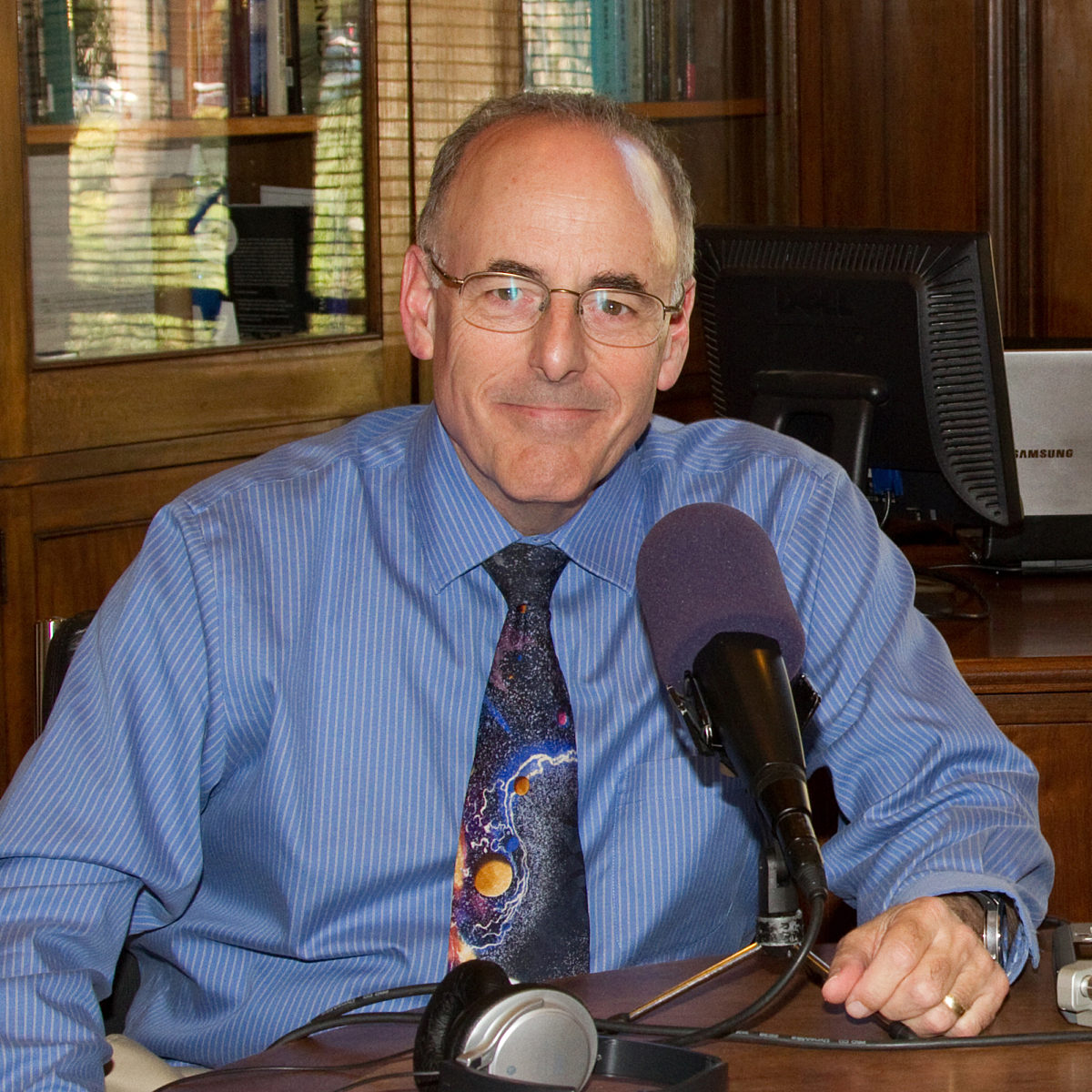
Mat Kaplan
Senior Communications Adviser and former Host of Planetary Radio for The Planetary Society
Author, poet, and science communicator Diane Ackerman is our guest. Her wonderful collection of poems, with one devoted to each of the worlds in our Solar System, was first published in 1976. Carl Sagan said she had produced, “...a stunning book of poetry in The Planets. The work is scientifically accurate and even a convenient introduction to modern ideas on the planets, but much more important, it is spectacularly good poetry, clear, lyrical, and soaring. . . One of the triumphs of Ackerman’s pastoral is the demonstration of how closely compatible planetary exploration and poetry, science and art really are.” “The Planets” is now available in a brand new edition, and is as sublime, entertaining, and enlightening as it was half a century ago.


Transcript
Mat Kaplan:
Poet Diane Ackerman considers The Planets, this time on Planetary Radio: Book Club edition. Welcome to our monthly visit with creators who share their passion for space science and exploration. I'm Mat Kaplan, senior communications advisor for The Planetary Society with more of the human adventure across the solar system and beyond. Great poetry delivers the essence of both the human experience and the wonders of nature as no other creative medium can. When I hosted Planetary Radio, I was always delighted to welcome poets who have written about the infinite diversity and beauty of the cosmos. So I was thrilled to discover a new edition of The Planets: a Cosmic Pastoral. The 1976 collection by our deeply talented guest, author, poet, and science communicator, Diane Ackerman. You may know her other work including The Zookeeper's Wife, the chilling yet inspiring and true World War II tale that became a great movie starring Jessica Chastain.
And then there's the one I'm reading now, 100 Names For Love, a finalist for both the Pulitzer and the National Book Circle Critics Award. I counted 24 books on her website, dianeackerman.com. Three are for children and seven are poetry collections like the one will consider today. When it first appeared, Planetary Society co-founder Carl Sagan said, "Diane Ackerman has produced a stunning book of poetry in the Planets. The work is scientifically accurate and even a convenient introduction to modern ideas on the planets. But much more important, it is spectacularly good poetry. Clear, lyrical, and soaring. One of the triumphs of Ackerman's pastoral is the demonstration of how closely compatible planetary exploration and poetry, science, and art really are." I couldn't agree more. As you'll hear, Carl had a significant role in the creation of the book. Diane and I talked on the evening of April one, 2026.
Just hours earlier, we had watched the Artemis 2 mission begin its journey to the moon. That spectacular launch set the stag for our live conversation in the society's online member community. Ladies and gentlemen, Diane Ackerman. Diane, welcome to the Book Club.
Diane Ackerman: Thank you. I'm delighted to be here.
Mat Kaplan: I learned from you as we keep plugging The Planetary Society here that you go back with us to the very beginning.
Diane Ackerman: The very beginning. I was one of Carl's students when The Planetary Society was founded, and he put me on the advisory board with all kinds of wonderful people. That's where I first met Louis Thomas, someone whose work I've loved. I got to know so many people who were involved with The Planetary Society and all of the beginning works. It was really wonderful.
Mat Kaplan: It turns out, I think we figured out, and I haven't heard back from Bill yet, but apparently you were at Cornell at roughly the same time Bill Nye was there as an undergrad.
Diane Ackerman: I think so.
Mat Kaplan: And you were both students of Carl and both got to know him. And in fact, Carl gave him advice on how to do the Science Guy show.
Diane Ackerman: I didn't realize that. Yeah. I was a graduate student in the Masters of Fine Arts program and the PhD program. And even though I was technically getting a degree in English and comparative literature, I was always poaching in the sciences. And with Carl on my committee and also a poet, I could take any course I wanted to. I could study whatever I wanted to. It was great.
Mat Kaplan: Well, let's start talking about this wonderful collection of poetry by opening with a quote from our co-founder, Carl Sagan. He said of it, "One of the triumphs of Ackerman's pastoral is the demonstration of how closely compatible planetary exploration and poetry, science and art really are." Not a bad place to start.
Diane Ackerman: Carl understood that wonder is not the enemy of scientific rigor and that it's the engine of it really. He never asked me to choose between beauty of language and scientific accuracy. He assumed as I did that they were both essential parts of the quest that I was on. And so to have him taking the book that seriously, both the science and poetry, felt to me like I was being recognized in both of the fields that I love so much.
Mat Kaplan: A little bit more about you. I counted 24 books and collections on your new website, dianeackerman.com. It looks great, by the way.
Diane Ackerman: Thank you.
Mat Kaplan: Three of those books are for children. Seven are poetry collections, including of course, here's the hard copy, the printed one of The Planets: a Cosmic Pastoral that we'll be talking about this evening. But it also includes The Zookeeper's Wife, which I just finished. Absolutely delightful nonfiction tale taken from World War II, chilling and inspiring. And I guess you thought that they did a decent job with Jessica Chastain in the central role?
Diane Ackerman: Yeah, I think they did a fine job on the movie. They asked if I wanted to take part in writing the script. And I said, "No, you should have somebody who does that for a living do it. I don't really have experience" but I did have the opportunity to review the script and to go on set and watch what was happening. It was really fascinating.
Mat Kaplan: So then there's the book of yours that I'm now reading 100 Names for Love.
Diane Ackerman: Oh, yes.
Mat Kaplan: Became a finalist for the Pulitzer and the National Book Circle Critics Award. We will return to that because of a passage I want to read from The Planets that it will be well in-
Diane Ackerman: [inaudible 00:06:35]
Mat Kaplan: ... the conversation. Good. Yeah. And so touching that you begin with this dedication to your mentor, or at least one of them, Carl Sagan, who you said about him, "How I envy his light touch on Earth's magnetic bridal." May I just say for the first time of probably many, my you have a way with words.
Diane Ackerman: Oh, thank you.
Mat Kaplan: There are way too many memorable and even awe-inspiring passages in this collection than we'll be able to call out here. They're there right from the beginning, like this lovely sentence that your friend Maria Popova also called out. Here it is. "Knee-deep in the cosmic overwhelm, I'm stricken by the ricochet wonder of it all, the plain everythingness of everything in cahoots with the everythingness of everything else."
Diane Ackerman: Doesn't it just seem like that to you all the time?
Mat Kaplan: Oh yeah.
Diane Ackerman: Every place you look, there's just untold marvels. And the minute you look closer, they just fan out and become more and more. Yeah.
Mat Kaplan: So that leads directly to asking you about how this new edition of a book that first came out just over half a century ago.
Diane Ackerman: Yeah, it was that long.
Mat Kaplan: How this happened, and it was largely due to Maria Popova, right?
Diane Ackerman: Yeah. Maria lives in the same internal country that I inhabit, where a scientific fact can crack your heart open, and where a poem can feature something about the physical world that you didn't know. This was my first attempt to find my way into this extraordinary world of the planets. And that it should be reissued by someone who spent her life also exploring the intersection between science and art. That feels like not a coincidence, but a really faded, wonderful, long conversation with a friend. And indeed she has become one.
Mat Kaplan: And I'm a proud subscriber to her weekly newsletter, The Marginalian. She has a lot of fans including our new CEO, my great colleague, Jennifer Vaughn, who we follow her very closely. I love the story of how Maria discovered your work and that it happened really because of Carl Sagan and his life partner, our good friend Ann Druyan at the Library of Congress.
Diane Ackerman:
Yes. He was looking through letters and of course he found the one in which Carl sent a poem from The Planets to Timothy Leary. I later heard from Timothy Leary who phoned to tell me that he had seats available on a ship to Proxima Centauri if I wanted to go. Yeah. So anyway, Maria from the get go has had this just luminous interdisciplinary spirit. And she decided at some point to establish her own imprint in which she would bring back into print some of her favorite out of print books. And I couldn't be more grateful because when The Planets came out originally, it just hadn't been done and people thought it was very, very odd that I should be including science in poetry.
In fact, I had a senior critic in the English department, Cornell, take me aside and say, "What's a nice girl like you doing writing about amino acids? What are you doing? Talking to scientists, constant appointments with Carl Sagan, it's tough. Don't you know they have no feelings? And I thought, "Boy, you don't know anything. You really don't about that world." So it took a while for it to catch on.
Mat Kaplan: You remind me of that great, the Walt Whitman line and I love Walt Whitman, but he got it so wrong describing scientists as only caring about-
Diane Ackerman: Only the numbers.
Mat Kaplan: ... the numbers. Yeah.
Diane Ackerman: Not just him, Keith and lots of other people foolishly did. They didn't understand that science is not the spoil sport of any real emotions or feelings, that both the science and the arts have something to contribute, and especially if you bring them together at that intersection, they have light that they can throw on each other.
Mat Kaplan: Yeah. Well put. And I will mention, of course, the book is published collaboratively by Marginalian Editions, which is Maria's imprint, and McNally Jackson books. So for those of you who have not already picked it up one way or another, I've also already recommended to our members that they not close the book before they review your closing notes, which are extremely helpful. There were a couple of things that I had already looked up on my own, which you explained in the notes, but there are others that may still come up today. Also, the notes included this revelation that you began creation of The Planets, this collection, on the 500th birthday of Copernicus, which gosh, talk about cosmic serendipity.
Diane Ackerman: I was just a little bit OCD, I guess, about it. If you look at the planets, the poems all have things in common with the actual planets. And even Jupiter, for example, is written in Alexandrine. At the time we thought there were 12 moons, so there are 12 stresses in the lines. It helped me. It was a secret, but it helped me bring order to what I was doing.
Mat Kaplan: Before I go on, and I have a lot to cover with you, we'll do as much as we can. Let me share a few of the comments that we're getting from some of our members like Andreas, who says, "Space inspired some of my poems on my end." He was responding to Kareem who said, "I create music based on my passion for astronomy and physics." Andreas also said, "I also love science and literature." Kareem said, "It has been a mind-blowing day. I can't capture my thoughts and feelings, and mind-blowed apart," says Andrew on today's launch, "Super hyped to see how Artemis four goes in two years pending the success." Don't hold your breath Andrew, they have to get those [inaudible 00:13:36].
Diane Ackerman: Can we volunteer?
Mat Kaplan: I would love to help. I'd love to go. It's a lot easier to reach than Proxima Centauri. You told me that you were watching the launch today.
Diane Ackerman: I was watching the launch and I was so envious. I was in the Journalist in Space project before it was canceled because of the very tragic event. It was terrible, the Challenger event. But I really wanted to go so much. I wanted to look down and be able to see everyone I've ever known, everything I've ever loved all in one place and watch the day changing, the hours changing. Yeah.
Mat Kaplan: It sounds like you're describing our friend and fellow author, Frank White, and his overview effect a little bit, which I think a lot of us have a little piece of down here on Terra Firma. Here's something from the close of your prologue. "I'm young as I write this and green, yet in my lifetime, we'll never sail beyond Pluto or cut time on the bias in a black hole in space. Even leave the twirl of wood ash, that's our Milky Way. For me, the crab nebula will never be made real. So I'm lighting out for the planetary wilderness, a gambler for whom it's either a surfeit or famine, the planets are nine dice rolling in the dark."
Diane Ackerman: Well, now that I've learned so much more in these recent years about what the possibilities are, maybe we'll find life elsewhere in our solar system. I hope so.
Mat Kaplan: And your focus there on our local neighborhood. Because it is so much more easily in reach, I assume.
Diane Ackerman: Yes, yes. Although I am going to be very excited to see some of the telescopes going up. And maybe the moon colony will be putting up scopes on the dark side of the moon that will get much better visuals of the extraterrestrial planets. That would be wonderful. Wonderful. I don't mean of the landscape, I wish. Of the atmospheres. Yeah.
Mat Kaplan: And before Andrew and others out there immediately ask about your mention of the dark side, of course you mean the far side. Because-
Diane Ackerman: I mean the far side. Yeah, of course.
Mat Kaplan: Well, I knew that you knew that, but let's get on to Mercury. Your first work devoted to one of the planets. And I thought at first that you had written this little tribute prior to the discovery that it's not tidally locked like our moon is. But then toward the end of the poem, you mentioned that yeah, it just has a 30-day day and that was a more recently discovered truth. That must have been relatively new at the time you wrote this.
Diane Ackerman: I think it was, but remember I was meeting with Carl almost every week. And I went to fly-bys and had access to a lot of NASA stuff. Thank heavens, I was able to find out things that were just coming to be known. But that doesn't mean that it wasn't still a time when we knew so little about the planets. The best pictures in the original version of the out planets are little balls of light, fuzzy balls of light with arrows pointing to them. That was it.
Mat Kaplan: Yeah. And certainly even less than that of Pluto, which we will come to. Here's one of your many wonderful wince-free puns in the book. Mercury wound down to a breezy mambo at first, then adopted a tune with new reticence. Reticence for resonance?
Diane Ackerman: Yeah.
Mat Kaplan: Bravo.
Diane Ackerman: Thank you. I loved playing with words. I still do, but I was impenitent when I was writing this, bear in mind I was in my early 20s. And as a result, there's some pretty body sections in here too.
Mat Kaplan: There are. There is that limerick about Amelia Earhart, which is actually not as body as some [inaudible 00:18:01].
Diane Ackerman: That's a well known limerick among pilots.
Mat Kaplan: Oh is it?
Diane Ackerman: Yes.
Mat Kaplan: Well, it was still enough to shock another one of your astronomers in that wonderful chapter about [inaudible 00:18:12]. We'll get to that as well. Let's go on to Venus and here's what-
Diane Ackerman: Okay. One more thing though about Mercury is that I had the chance to offer names for a couple of craters.
Mat Kaplan: Oh, of course.
Diane Ackerman: So one was Lady Murasaki and then Genji, her lover. They're not too far apart.
Mat Kaplan: That's wonderful. Yeah. Which I hope that people out here know, our members are pretty savvy, that Mercury is the most artistically named, or at least cartographically artistic among the planets. So you could explore that on your own folks. Now let's go on to Venus. Here's a great phrase, Wasp Star to Mayan Galileos. First, what a great turn of phrase. But it was also one of the things that I had to look up and sure enough, Wasp Star to the Mayan people, that was one of the ways they thought about this wandering star, right?
Diane Ackerman: Yeah. It was fascinating to discover all the different ways in which people all over the world saw things in the heavens. The Milky Way as a backbone of light. Just so many different things when they looked up. It was like looking at Rorschach's, I think.
Mat Kaplan: Yeah. Fascinating. Here's another bit from Venus. "One atmosphere, lots of sun, a no man's land where one day archipelago space labs called aerial sleuths will string along like Japanese lanterns, gaily bobbing in the cytherean pink." Well, one can hope, I guess.
Diane Ackerman: One can hope. But after all, the cloud's been there for a long time. Maybe it's a kind of ocean.
Mat Kaplan: Yeah. I think you could certainly think of it that way. And who knows, the jury is still out and the argument continues. There might just be some other little critters waiting for us at that high up point in the atmosphere of Venus.
Diane Ackerman: I would not care how little the critters were. And bear in mind, I'm someone who has about a hundred pets. In fairness, they're microscopic. They're tardigrades.
Mat Kaplan: Yes. We sent some tardigrades into space once, tried to do it twice.
Diane Ackerman: Yes.
Mat Kaplan: Here's another great line. "Venus neither in furs nor attached to her prey, but gamey flat chested and covered with scurf."
Diane Ackerman: Yeah. I was not flattering to Venus there.
Mat Kaplan: Well, it's a tough little world. We'll go on to Earth because there's so much here. Cosmogony, the study of first beginnings, which is how you opened your section about Earth. You talk about at one point trying to understand that you are on a planet. And I wonder if any of us really get that. I think some of us do.
Diane Ackerman: Almost every day when I'm out taking a walk, I look up at the sky. And I picture where it bleeds into space and I remind myself you are on a planet, a planet in space. And one time, a very long time ago, life happened to evolve on this planet. And how astonishing that is, what a privilege it is just to be here. And I always see the curvature of Earth. I went up on when they were still flying the SSTs, I went up and went to France. And you could see the curvature of the Earth. It goes up into a purple sky, and it was thrilling just to see the curve.
Mat Kaplan: Certainly you're a mentor, our co-founder, Carl, even from a grand distance where Earth became a pale blue dot, this was also something he sensed, obviously.
Diane Ackerman: Yes. Yes, indeed. From space, you see Earth as it really is. And I think that's part of the reason that I wanted to write this book. You see the planet looking back at it as a wet, improbable, heartbreakingly beautiful jewel that is solid with life. And I needed that perspective. I was young and the world felt both too large and too small at the same time. And the planets, thinking about them and my place in the universe really steadied me. They were indifferent and magnificent in equal measure and somehow that combination was exactly what I needed.
Mat Kaplan: And what a pin to life you've given us. But let me read this time a somewhat longer passage from the book if you'll allow. And I hope everyone will bear with me. Here goes. "I have so much invested in your Earth, whose dust I was born out of and will bleach into. And yet I'm lame to sing of all the cloud tufts, the rivers and oceans and aprons of land, the volcanic spasms and the crimped sierras, the plants and animals, and above all the motion. Imagine we live in a world so riotously packed with buzz, bloom, burn and fidget. We actually tend to find quiet, freakish, calm, ominous, prolonged stillness, death defying. Why you'd think one would never cotton to anything, never grow bored nor succumb to habit, but only craze slowly from terminal surprise. A cool lot, aren't we? On this rickety oasis, whirling men on a whirling planet whose organs slosh right along with the seas, four billion salt licks of muscle and blood dissolving in on prominence of one sun, as the life were motion unrelieved."
Diane Ackerman: Thank you. You took me right back to how I felt when I was writing it. I was just riddled with wonder.
Mat Kaplan: You also wrote, "I'm full of useless information. For example, Galileo contemplating the earth once muttered under his breath, it moves." How could something that Earth-shattering, that Earth rotating be useless, that knowledge?
Diane Ackerman: I know, but what I meant was in a daily way from somebody else's perspective, I seem to have absorbed so many miscellaneous details. There's a line in Shakespeare where a character is called an Autolycus, a snapper up of unconsidered trifles and sometimes it felt like that.
Mat Kaplan: Poet Diane Ackerman will take us next to Mars. Stay with us as we share her loving and gorgeous rendering of the red planet. That's right after this brief break.
Bill Nye: Greetings, Bill Nye here, chief ambassador of The Planetary Society. Last year you showed up and it made all the difference. Tens of thousands of you sent messages to Congress, you traveled to Washington, you made your voices heard, and together we stopped nearly 50% in cuts to NASA science. That victory, that was you. But the fight isn't over. New challenges are here. Your gift today keeps our advocacy efforts going strong so that next time we can act fast, fight hard and win again. Together, we're not just saving NASA's science, we're protecting humanity's greatest adventure. So please check out planetary.org/takeaction and together we can carry on, keep exploring and change the world. Thank you.
Mat Kaplan:
I don't believe I've ever read a more beautiful description of Mars than the on Diane Ackerman penned for her collection titled The Planets. I told her I considered it a love sonnet. It brought to mind when I finished it that other master of sonnets, Will Shakespeare. So here goes. Love fly with me to utopia, three majestic snow cowled volcanoes poking up through the sockeye dust. Like sherpas, a straddle or mechanical goats will guide parties all across the chapped terrain, early sea cliffs and ochre pastures, tending our rock leeches that suck mineral and water till gorged. They thud like geckos to the ground. Come away to the highlands of Tharsis, and watch the red world simmer below, teaming with dust devils and stiff black shadows, towering sand dunes, lava plugs. Once in a blue sun when volcanoes heave up grit, regular as pearls and light runs riot, we'll watch the sun go darker than the sky.
Violet dust tufts wheel on the horizon, amber cloud banks pile and the whole of color crazed Mars ignite. Come make a done mare of a wind carved arch and as the rusty sand blows past, we'll dream ourselves a gallop, this side of tranquility just beyond utopia and through the Martian moors.
Diane Ackerman: I love the names. They were so romantic, so playful. And I had visions of, I guess the Utah-like structures of rock that could be there and you could get up and ride.
Mat Kaplan: But you also transported me to the red planet, much as Ray Bradbury once did except that yours is Mars as we know it to actually be, and Ray was disappointed to find out
Diane Ackerman: For me that was the real challenge. I was listening originally to Holst's, gorgeous suite The Planets. And I thought, oh my gosh, it's so sad that we have to convert Mars to a war god and Venus to a femme fatal in order to find them of any interest. That's just crazy. When I looked at the real planets and when I read about them, they were utterly fascinating and startlingly beautiful, and mysterious and magical. And I wanted to write about the real planets because nature as it is beautiful. We don't have to pretend that it's something else.
Mat Kaplan: No, no indeed. Just one more bit of ours. You wrote, "In the Hellas Basin, I prefer to call it Hell's Kitchen, a dust cauldron boils over to storm wreck the planet. Poor Phobos, the battered child of Mars Looms overhead gouged out and broken." I'm sure glad that we knew at least this much about Mars that you could come up with this wonderful verse.
Diane Ackerman: I suppose people know that Carl had a car whose license plate said Phobos.
Mat Kaplan: I did not. No, that's news to me. I'm not going to say much about Jupiter, partly for lack of time, but also because it's such a big bully in the solar system. But hopefully, not in the section about Jupiter but about Earth, you included this great line, "Cyclops Jupiter in a pinstripe suit." Absolutely marvelous. And I hate to even ask, but Cyclops, right? Because of that big red eye?
Diane Ackerman: Yes, exactly. That's it. And I've seen some of the recent NASA pictures of Jupiter at the Poles, Southern Pole. Oh my gosh. Gorgeous.
Mat Kaplan:
Yeah. Those amazing pictures that are being taken by the Juno spacecraft. Let's go on to Saturn where you provide a not so lonely planet guide, though I guess you prefer Fodor's Guide to Saturn. And then right at the end of that section, there's this wonderful recollection of an evening with your late husband, the writer and teacher, Paul West. I think you know the one I'm about to get to. About whom you wrote that Pulitzer Prize finalist memoir, 100 Names for Love, and that I'm currently reading. But this passage, it goes way beyond Saturn. I just wonder, well, I'll read it first and then I'll ask you about it. Here goes. "Often I dwell on the big bang, find my heart levied high and the vision electric, am wowed by that arch creativity. When I tell people they flinch with terror, want no part of the [inaudible 00:31:58] inferno will not truck with apocalypse, but Paul at the scope, one finger on the clock drive tunes in the universe with the affectionate curiosity of a naturalist.
And I know if I trigger the mental clock drive, his mind will gingerly backtrack and zoom, run rings around the spectral notion of Saturn. I say, "After the never ending gas cloud coalesced, the universe was all in one place and solid, a hard, local object in an endless ether." He smiles, says," Wonderful plot. In the beginning was the word, and the word was a tough silky ball of hydrogen." He splits the double star Albireo then pulls back a moment, says, "Just imagine the commotion of the big bang. We huddle in the breathtaking dark and imagine. Tonight what with the moon keeping so low a profile, the stars are bright as campfires waltzed around by how many planets drenched in how many groundswells of life." Okay, now I regret not having you read that one because-
Diane Ackerman: Oh no, you've been reading them so beautifully. Thank you.
Mat Kaplan: Well, thank you. But this is so first person that I really wish. Anyway [inaudible 00:33:25].
Diane Ackerman: As you were reading it gave me chance to remember that evening. It was Paul's telescope. He was the first one to get it, a Criterion Dynascope, for those of you who have them, and I still have it. We used to go out and look at the universe and the first time I looked through the scope at Saturn and it looked exactly like what I had seen in books, I almost fainted. There it was. It was extraordinary. Or saw Jupiter's moons. And yes, we used to just sit there with wonder and imagine. Of course, we've learned so much more now about the origins of the universe. At least there's been so much speculation. And was it all in a tight silky ball of hydrogen? Oh, probably not. But anyway, it was just wonderful to know so little and dream so large about being able to find life elsewhere. And I always assumed that we would and that we will.
Mat Kaplan: And I still do as well, as do I bet you almost all of the members of The Planetary Society. We are continuing to hear from them. The information about the planets is a lot. However, they are fascinating as well, says Andreas. Jamie says, "Okay, if I'm ever asked to compile a list of humans to bring with me and establish an interstellar society, she's on it."
Diane Ackerman: I'm going. Okay. So based on that, I'm going to confess something. When I was growing up, one of my fantasies, I was very little, but one of my fantasies was that I belonged to an intergalactic group, a civilization of artists and scientists that were putting together a library. And our job was to be born into the life of each planet that we came to and to create art through the feelings and the thoughts of the people on those planets without knowing at the time. At a certain point somebody would come and say, "Come to the window. I have something to tell you." And you would learn that you're going to have to return to the mothership and be born into another civilization. But in the meantime, you spent your life trying to record what it was like to have been alive on this planet, what it felt like, what it hurt like, everything.
Mat Kaplan: What a wonderful way to be reincarnated on different worlds.
Diane Ackerman: Wouldn't it be great?
Mat Kaplan: And I imagine in between, because you would have done such a good job on earth that they'd give you some kind of award. It does remind me that in 2022, it's an earthbound award, but you received the Stephen Hawking Award for science communication.
Diane Ackerman: And what a great festival that was, the Starmus Festival.
Mat Kaplan: Starmus, right?
Diane Ackerman: Oh, yes. Wonderful.
Mat Kaplan: I would love to go someday. What a collection of great minds. Speaking of great minds, I don't usually use the last names, but he's pretty well known. Our friend Andrew Fraknoi says, "I'm so glad to see that when the renowned astronomer, Jocelyn Bell Burnell published her book Collecting Poems of Space, one of Diane Ackerman's was included."
Diane Ackerman: I'm a big fan of hers. Yes. And Andrew, I remember from way back. So hello to you. Hope you're thriving.
Mat Kaplan: All right. I'm going to go on to, because if you put a gun to my head and said you have to pick a favorite poem in this book, a favorite section, I would only pick Uranus because it's so entertaining. And I know because a lot of people said that, I wonder if I can find the comment here. I read these pretty cold, but I know here it is. Craig said, Uranus was my favorite. I love the way it was oriented in the book. Because if you have, not on the Kindle, but in the printed copy it turns and you get to [inaudible 00:37:43]-
Diane Ackerman: On it's side. Yes. Like Uranus.
Mat Kaplan: ... like a scroll. Yeah, it's brilliant, which I didn't know because I was reading the Kindle because that's where I make my notes. He says, "It also appealed to my sense of humor/" you and me both, Craig. "However, I went back and read The Asteroids and realized the text was fractured and scattered like the asteroids themselves. So amazing to see how you related the text to the celestial bodies."
Diane Ackerman: Yeah. I tried to do that. I really had fun doing that.
Mat Kaplan: Yeah, that was fun too. For those who haven't read it, we need to talk a little bit about what you did with Uranus because you turned it into this great little one act play starring some of humanity's greatest astronomers and scientists. And I have to single out the witches, little tribute to the aforementioned Will Shakespeare here, those three witches, Caroline Herschel, Annie Jump Cannon and Angelina Sticknew, very entertaining and brilliant.
Diane Ackerman: Thank you. And yes, and body, but I had so much fun putting together all of these famous astronomers. I figured if they were all in the same room, they'd be very competitive maybe. And especially the astronomers royal and be taking shots at each other, but also it gave me chance to play with astronomy puns and I really liked doing that. So I think there was... Was it [inaudible 00:39:14], who died at the scope and he was curled up like a prawn. But thank heavens, he died with his boat that he's on.
Mat Kaplan: That boat he's on, right?
Diane Ackerman: I couldn't register that kind of nonsense.
Mat Kaplan: Oh, I'm glad you didn't. Yeah, it's really fun. And just the characterizations of Newton, who's a bit with the nose up in the air, I think, but as I believe he actually was. Here's a passage from your wonderful treatment of Pluto that I suspect still describes what drives you. Here it is, those whom the darts of wonder never fret may think it odd that on a vapory midday in July, a young woman might take to the stars. To these poorer souls, how can I explain what their own hearts refuse? My need to know yammers like a wild thing in its den. I think I know what you mean, and you still feel that way, don't you?
Diane Ackerman: I really still do. That is the great joy for me of writing all of my books. I get to create my own astonishment and never stop learning about things. Yeah. I have a book coming out next January that is revisiting our senses. And oh my gosh, just to be able to learn everything that has been going on in our sensory lives since I wrote the first senses book, it's just a thrill for me.
Mat Kaplan: And that is one of yours that I want to read, your renowned book about the senses, the name of which escapes me right now. I put it in my notes somewhere.
Diane Ackerman: It was A Natural History of the Senses.
Mat Kaplan: Thank you.
Diane Ackerman: Well, I've been obsessed with that my whole life and I'd very much like to know what the senses of other extraterrestrials life form would be because they'd have to have adapted to their own planets, of course. So how would they sense their worlds? I'd love to know that.
Mat Kaplan: Yeah. This is so clear from your other writing, at least the small portion of it that I've read so far, but even in The Zookeeper's Wife, this horrifying tale, which as I said, does end up to be very inspiring, the heroism that you document that actually took place in Warsaw is an incredibly... Not incredibly, a very credibly and wonderfully sensual book. The explorations that you made that complimented the story of The Zookeeper's Wife, the explorations of the flora and the fauna and the seasons, all of which it seems that your protagonist also deeply appreciated.
Diane Ackerman: Yes. I read her diary, and that was how I first discovered that she wasn't just adopting endangered animals, but also endangered people and protecting them. What I always try to do in my books is recreate the sensory experience that I'm going through so that my readers can experience it on their senses too. Because that's how I find when I'm reading books that I really can become immersed in what I'm reading about. It has to trigger the senses in different ways.
Mat Kaplan: One more line about Pluto before we wrap up, because I think it hearkens back to what you were saying earlier when you wrote the book, our images, literal images of so many of the planets in our neighborhood were so sketchy, minimal. And so there's this line about Pluto, "We've only the odd hunch and inkling theories pale as the wings of a linet." We know a lot more now.
Diane Ackerman: And look at us now.
Mat Kaplan: And look at us now, and yet we still have so much to learn.
Diane Ackerman: Exactly, exactly. I would like to come back every 50 years, and see what's changed and what we've learned.
Mat Kaplan: Well, this is why we need that near light speed trip to Alpha Centauri and beyond, so that we can slow down local time and come back every 50 or 100 years.
Diane Ackerman: Works for me.
Mat Kaplan: Yeah. Here's another beautiful line from very near the end, but imagine a brand spanking new biology. Just as when a window abruptly flies open, the room grows airy and floods with light. So awakening to an alien life form will transfigure how we think of ourselves and our lives.
Diane Ackerman: It will. It really will. And I hope that it will bring us more together, make us treasure the world that we have more. Yes.
Mat Kaplan: And very much quoting something that our former CEO for, was it 15 years, I think, and now Chief Ambassador Bill Nye, your fellow alumnus.
Diane Ackerman: Yes.
Mat Kaplan: He likes to say that when we, or if we and when we discover life and he wants to be around for it, it will change everything. It'll change our concept of ourselves.
Diane Ackerman: I believe it will absolutely. We will discover there are other ways of knowing. We already know that from watching the animals on our planet, but if we find intelligent life form, and I'm sure we will at some point, that will be a revelation.
Mat Kaplan: I think of Carl and other folks, I think including Timothy Leary, getting together with the dolphin researcher who-
Diane Ackerman: Yes, I've forgotten his name too.
Mat Kaplan: He went a little bit off the deep end, so to speak, eventually. And actually said to me, as he said to many people, "Thank you, John Lilly. Thank you Andrew [inaudible 00:45:20]." Said to me, as he said to many people when I visited his facility and got to swim with one of his dolphins, that he actually liked dolphins a lot more than people, which I can kind of understand, but went a little bit too far. Because he was part of that group that believed so strongly and wanted so much to find another intelligence that we could share the universe with, I believe, right?
Diane Ackerman: Yes, I believe he was. And it's probably littered with life. We just have to find it.
Mat Kaplan: And hopefully in our time. Here's the line, the last one I'll quote, "I knew the trail blazed out was the way home too." I was immediately reminded of that great passage from T.S. Elliot, "We shall not cease from exploration and the end of all our exploring will be to arrive where we started and know the place for the first time."
Diane Ackerman: Yes, I love that.
Mat Kaplan: Except you did it in one line.
Diane Ackerman: Oh, but yes, he wrote so beautifully.
Mat Kaplan: I certainly don't want to put down to Elliot. There are so many other wonderful passages in this book. Thank you for allowing me to read so many of them. I would love-
Diane Ackerman: Thank you for sharing the reissue of it with me, and letting me hear you read it. And then as I say, I could then have the freedom to go back in memory to those times. Thank you.
Mat Kaplan: Thank you. I have to mention one more mutual friend, and that's our friend, Dava Sobel, who-
Diane Ackerman: Oh yes, indeed.
Mat Kaplan: ... has also done such wonderful lyrical work, received our Cosmos Award and apparently, I miss this, she edits the poetry page in Scientific American each [inaudible 00:47:21].
Diane Ackerman: Oh yes. Read her column.
Mat Kaplan: And it featured one of your works, right? Yeah.
Diane Ackerman: She started the column with one of my works. It was really lovely of her. Dave and I met because I was writing the planets. We met in college and have been close friends, such loving friends ever since.
Mat Kaplan: Because she was yet another of these Cornell people who hovered around, orbited around Carl Sagan.
Diane Ackerman: Well, that's true. And Frank Drake.
Mat Kaplan: And Frank Drake, the wonderful dear Frank Drake.
Diane Ackerman: Yes.
Mat Kaplan: Kareem says, "I've seen 1960s era space documentary hosted by top scientists like Carl Sagan. The science is pretty much completely wrong." I don't know about completely. "Is the science we know now going to be seen as completely wrong in 50 years?" Kareem, I'll answer first. I doubt it, but wouldn't that be amazing and wonderful if it was?
Diane Ackerman: Yes, that's exactly how I feel about it. That's the whole point of science, isn't it? That you can ask questions, and they will be tested. And they may be found wrong and other things will be found to be true, and the quest will continue. Yes. But a lot of the things were also right. We just were very limited in the information we had and the vantage point that we had.
Mat Kaplan: But science builts on science and it will continue to do so.
Diane Ackerman: Exactly.
Mat Kaplan: I will leave it at that. That's our book for the month and we have lots more great stuff lined up for all of you in the book club. All of you, thank you for your membership. Thank you for enabling us to do what we do in The Planetary Society. And of course, those of you who are not yet members, I will say planetary.org/join, that's where you can learn about all the benefits and about the good work we do. And how you can help enable conversations like this wonderful conversation we have just held with the wonderful Diane Ackerman. Diane, thank you so much. This has been even more lovely than I had expected.
Diane Ackerman: And for me too, thank you so much for having me.
Mat Kaplan:
Thanks for joining us for the Planetary Radio Book Club Edition. Sarah will be back with another weekly installment of the show this coming Wednesday. Want to wear your love of our solar neighborhood? There's no better way to do this than getting your own Planetary Radio T-shirt. It's at planetary.org/shop with all of our other great merch. While you wait for it to arrive, help others discover the PB&J, the passion, beauty, and joy of space science and exploration. By leaving a review and a rating on Apple Podcasts, Spotify and many other podcast providers, you can send us your thoughts, questions, and yes, even poetry to [email protected]. Or if you're a Planetary Society member, leave a comment in the Planetary Radio space within our member community, where members join our live monthly book club conversations with great authors. Planetary Radio is produced by The Planetary Society in Pasadena, California and is made possible by our rhyming members.
You can become one of us at planetary.org/join. Sarah Al-Ahmed is the host and producer of Planetary Radio, Mark Hilverda and Rae Paoletta, our associate producers. Casey Dreier is the host of the monthly space policy edition. Andrew Lucas is our audio editor. Josh Doyle composed our theme, which is arranged and performed by Pieter Schlosser. I'm Mat Kaplan. Ad astra.