

 Explore Worlds
 Find Life
 Defend Earth


Planetary Radio • Jul 15, 2026
Sian Proctor and John Read on teaching babies to love the Cosmos
On This Episode
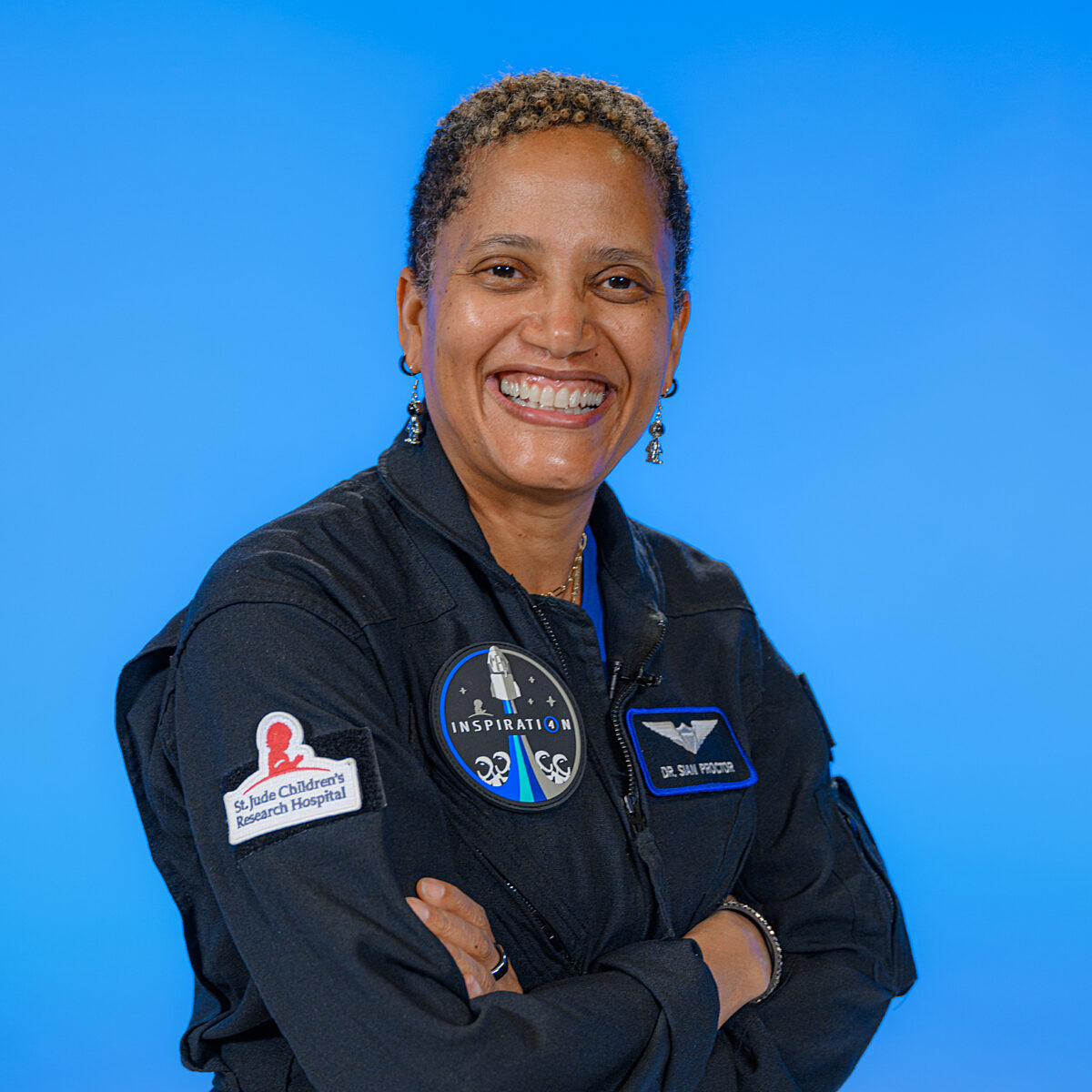
Sian Proctor
Artist, Poet, Inspiration4 Astronaut and Mission Pilot

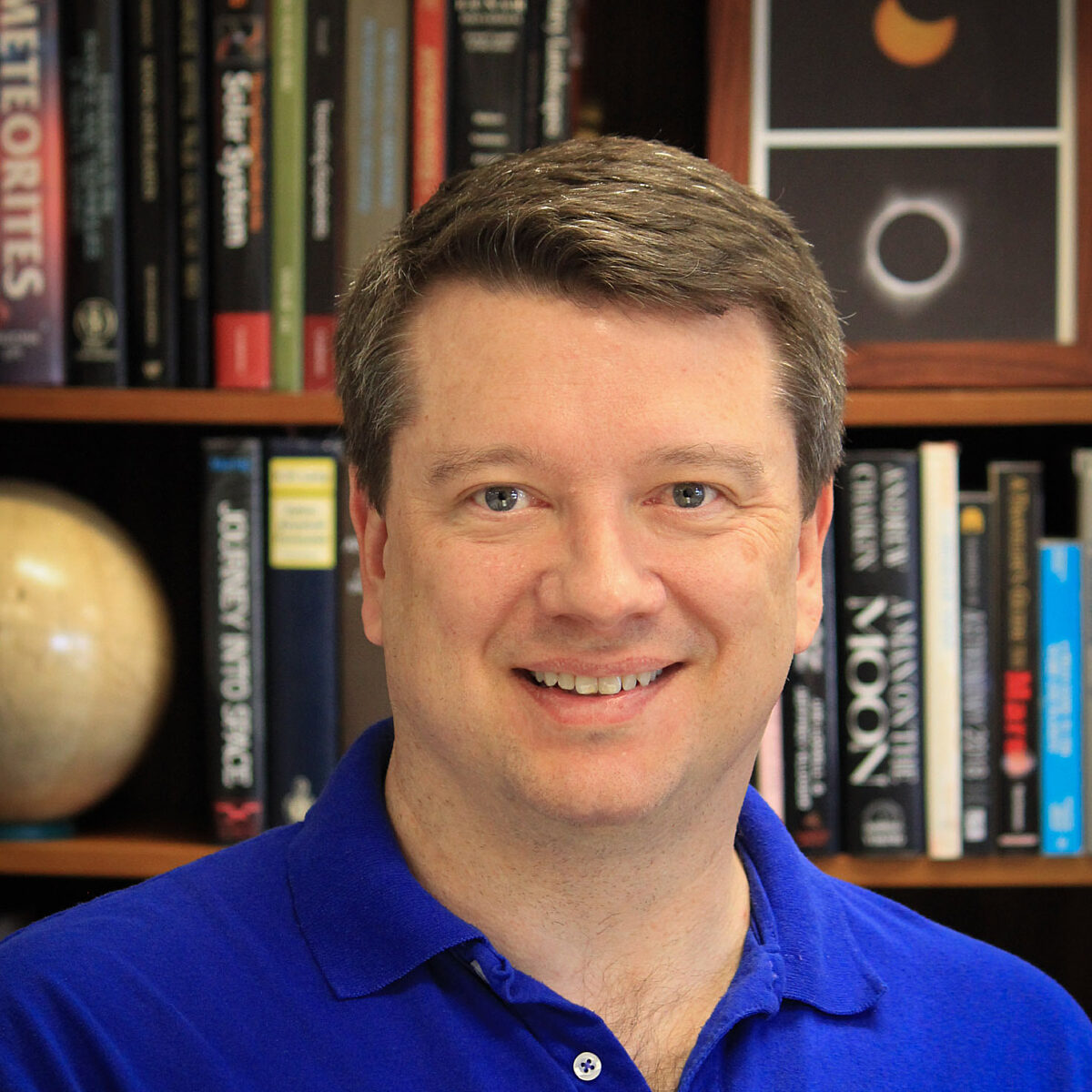
John Read
Astronomer and Author, Learn to Stargaze
Bruce Betts
Chief Scientist / LightSail Program Manager for The Planetary Society
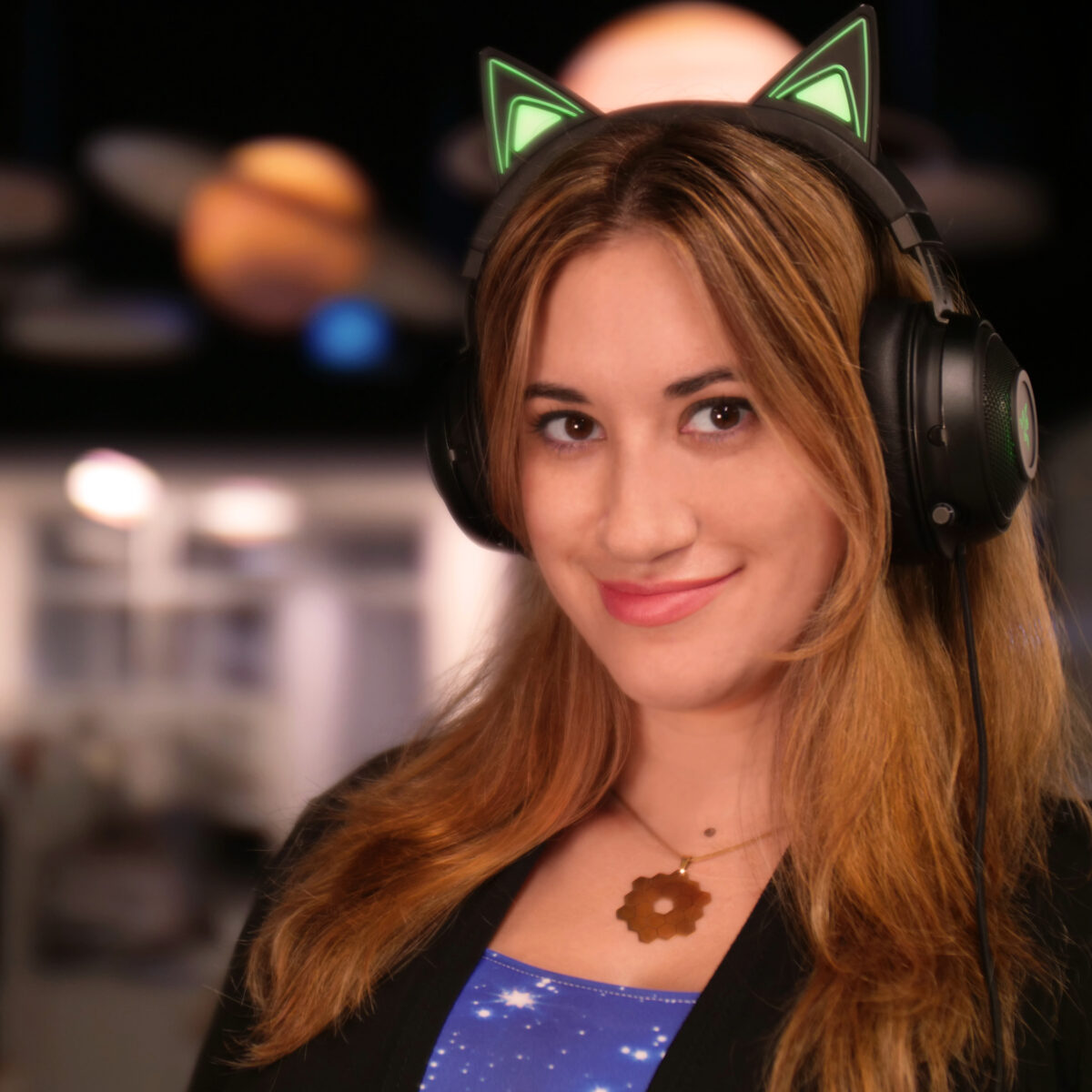
Sarah Al-Ahmed
Planetary Radio Host and Producer for The Planetary Society
“Baby's Guide to the Night Sky” introduces the youngest kids — down to newborns — to constellations and the wonders of the Cosmos. It comes from two people who've spent their lives chasing that same wonder in very different ways.
This week, we are joined by authors Sian Proctor and John Read. Sian Proctor is a geoscientist, artist, poet, and commercial space astronaut who served as pilot of Inspiration4 in 2021, becoming the first Black woman to serve as a mission pilot in space. John Read is an astronomer and science communicator who left a career in corporate finance after a single look through a telescope changed his life. He now hosts the YouTube channel LearnToStargaze and has authored several astronomy books, including “A Kid's Guide to the Night Sky.” We'll talk about how the two of them met, how they turned a lifetime of expertise into something a baby can enjoy, and why it's never too early to start looking up.
Stick around after the interview for What’s Up with Bruce Betts, our chief scientist, to review the book and walk through some of the night sky objects it features.


Related Links
- Baby's Guide to the Night Sky
- Space2inspire
- LearnToStargaze - YouTube
- Learn To STARGAZE
- A Kid’s Guide to the Night Sky: Simple Ways to Explore the Universe
- The Ultimate Beginner Telescope Guidebook
- 50 Things to See with Binoculars in Space
- 110 Things to See with a Telescope
- Stargaze Nova Scotia
- PASSAGE
- Earthlight World: An Astronaut’s Journey
- Earthlight: The Power of EarthLight and the Human Perspective
- Planetary Radio: Astronaut Hayley shares her brave adventure
- Planetary Radio: Mat Kaplan’s first flight in zero-G
- SpaceX Inspiration4 mission: Your questions, answered
- Buy a Planetary Radio T-Shirt
- The Planetary Society shop
- The night sky
- The Downlink
Transcript
Sarah Al-Ahmed:
Teaching babies to love the cosmos, this week on Planetary Radio. I'm Sarah Al-Ahmed of The Planetary Society, with more of the human adventure across our solar system and beyond. This week, commercial space astronaut Sian Proctor and astronomer John Read joined me to talk about their new children's book, Baby's Guide to the Night Sky, and why it's never too early to fall in love with the cosmos. And then we'll get Bruce Betts, our chief scientist, take as a kid's author in What's Up. If you love Planetary Radio and want to stay informed by the latest space discoveries, make sure you hit that subscribe button on your favorite podcasting platform. By subscribing, you'll never miss an episode filled with new and awe-inspiring ways to know the cosmos and our place within it.
Inspiring the next generation of explorers is something that we talk about a lot on this show. But what does that actually look like when the audience is still in diapers? It turns out that even the very youngest children can start building a relationship with the night sky long before they have words to describe what they're looking at. That early sense of wonder can plant something that lasts a lifetime. Baby's Guide to the Night Sky, published by Sourcebooks and on sale since July 7th, introduces the youngest kids down to newborns to constellations and the wonders of the cosmos. It comes from two people that have spent their lives chasing the same wonder in very different ways.
Dr. Sian Proctor is a geoscientist, an artist, and a poet. She was also a commercial space astronaut who served as the pilot on Inspiration4 in 2021, becoming first woman commercial space pilot and the only African American woman to be a mission pilot. She flew alongside Commander Jared Isaacman, who's now our NASA administrator, along with mission specialist Chris Sembroski and medical officer Hayley Arceneaux. You'll hear a little bit about each of them in this show. Before that flight, Sian was twice a NASA astronaut candidate finalist, and she spent months in a simulated Mars habitat with HI-SEAS.
John Read is an astronomer and science communicator who left his career in corporate finance after a look through a telescope changed his life. He went back to school and earned a degree in astrophysics, and now he's the host of the YouTube channel, Learn To Stargaze. He's also authored several astronomy books, including A Kid's Guide to the Night Sky. Here's my conversation with Sian Proctor and John Read.
Hey, Sian and John. Thank you for joining me.
Sian Proctor: Hi, thank you for having me.
John Read: Hello.
Sarah Al-Ahmed: I feel like this conversation, it feels like a little bit of a continuation of a conversation that I had last year with Hayley Arceneaux, who was one of your crew mates on Inspiration4, Sian. She wrote a book called Astronaut Hayley's Brave Adventure, which was her kid's book version of her adult book. And now, in my brain, I'm just waiting for Jared Isaacman to drop his own kids book.
Sian Proctor: Yeah. It was so great to watch Hayley on her journey from coming back from space and doing her memoir, and then a young adult book, and then her children's book, and being inspired by her and her story. And of course, I went to space through art and poetry and thinking about like, "Okay. Well, how do I get into the publishing world?" Enter John Read, who we've been friends, and he's like, "Yeah, I publish stuff all the time." I'm like, "Hi, John."
Sarah Al-Ahmed: That's wonderful to hear. Did you guys kind of write those books in tandem? You're separated in publication date by about a year.
Sian Proctor: No, we did not. Hayley kind of had her thing going and I knew that her books were coming out, and I loved the fact that she put a character of me in her book. So that's always nice when your crew member kind of gives you a nod. But John and I... I honestly didn't know how to go about getting a book published when I came back from space, and John was like, "Well, you can self-publish." So he has been the publisher of all my books beginning from the very first one I did, which was Space2inspire: The Art of Inspiration, which was a poetry art book. But I think the most proud I've been about the books we've published together was Earthlight, which is my science book. And then he was like, "Hey, I've got this other book coming down the pipeline, and you're a poet, would you help me on it?" and I was so honored when he asked me to help with the Baby's Guide to the Night Sky.
Sarah Al-Ahmed: You've also written many books, John. Can you tell us a bit about your book series on stargazing?
John Read:
Yeah. I ended up leaving my job 10 years ago in corporate finance in California to do astronomy full-time, and that's all because of the books. I got started in around 2010 when I was given a telescope for Christmas, after picking up a little telescope at the pharmacy, seeing Saturn, getting inspired, and then asking my wife for a bigger telescope. I was also given, and this goes back to a conversation I had with you before the show, a '96 lecture series by an astronomer named Alex Filippenko. Combined the telescope, which was my introduction to amateur astronomy, with the science of astronomy from this class from Alex Filippenko on DVD, that's what ultimately inspired me to go and join a volunteer outreach group at the Mount Diablo Astronomical Society in the East Bay of San Francisco, and then write a book that was effectively for the people that I knew to help them choose targets.
After a couple of years, I realized how to put a book online, I taught myself to self-publish like Sian was talking about, and the book effectively over about two years went sort of viral. And that was enough to quit my job and go get an astrophysics degree, and write more books.
Sarah Al-Ahmed: That's amazing to hear. I mean, for people who don't know this context, I did research with Alex Filippenko when I went to UC Berkeley. And when I graduated with my degree in astrophysics, my mom bought me that exact same DVD lecture series. I think I have it on my shelf upstairs right now. That's amazing.
John Read: Yeah. I often recommend that because Alex is such a great science communicator and a great teacher. And then when I went and taught an online astronomy course, I was very inspired by the work that he did. Yeah.
Sarah Al-Ahmed: That's amazing. It's wonderful how the space community is so large, but also so small. I did want to ask, how did people react when you decided to step away from your finance career and do something like go into astrophysics?
John Read: Two things. My family was like, "Are you kidding?" because I had the house in San Francisco and another house in South Carolina. They're like, "You're going to leave that all to be an author and go back to undergrad?" because I had to go to undergrad before I did grad school. But the people I worked with at Clorox in San Francisco were like, "Well, obviously, his head's been in the clouds for years. This guy's checked out." So they were like, "Go, go follow your dreams, and we wish we could come with you."
Sarah Al-Ahmed: It's funny because I've been reflecting on this a lot as I've kind of taken on Planetary Radio and moved on through my career. People ask me for advice and all I can say to them really is that wanting to do something and having the passion for it doesn't necessarily mean that you're going to succeed, but you are guaranteed to fail if you never try. And if you do succeed, I feel like it is super important for us to then reach out and to uplift and to teach the people around us, so we can elevate their dreams too. I feel like you both have done that in both of your careers and it's really embodied in this book, not just that you're reaching out to people, but trying to inspire even the youngest among us. And I really value that.
Sian Proctor: Yeah. It was a real honor when John reached out to me because I've always reached out to him for help when it came to my own work and publishing. So I felt very honored that he was like, "Hey, I can't get this poetry part correct. Can you help me?" And that was really nice to get that call from him.
Sarah Al-Ahmed: How did you guys originally meet?
John Read: Oh, it was on Tuesday night, space happy hours with the Humans to Mars Society, I believe, was the first time we met. Yeah.
Sian Proctor: Would've been what, 2019? 2020?
John Read: Yeah, late 2019 or early 2020, because it was around the time the pandemic began that happy hour kicked off.
Sian Proctor: And then inviting him to the Analog Astronaut Conference. I think you've come every year? Yeah.
John Read: I've been there. Every year, it's been in person. So the first year, it was online and I was not there. Yeah.
Sian Proctor: Yes.
John Read: But every year after, which is wonderful. If anyone wants the most fun conference in America, four or five days at Biosphere 2, and you get to stay in the casitas, it's an absolute blast. You get to meet Sian and all sorts of other people in the space community, and just party and learn at the same time.
Sarah Al-Ahmed: I was literally just talking about this specific experience recently because I was talking about Asteroid Bennu for Asteroid Day on a live stream. The little kid who named Asteroid Day, Mike Puzio, later on, Matt Kaplan, the creator of Planetary Radio, bumped into Mike Puzio at that exact event where he told them that because of that experience, he wanted to become an astronaut and he was on that path. So it sounds like a really good time. I would love to go see you guys there sometime.
Sian Proctor: Come next year. April, I think, 28th through the first weekend of May.
Sarah Al-Ahmed: Well, John, your YouTube channel at this point has kind of blown up as well, Learn to Stargaze. You have over 81,000 subscribers at this point. What would you say is the most common question that you get from total beginners?
John Read: The most common question is, "How do I get into astronomy?" And that doesn't necessarily mean a telescope, even though most of my videos are about telescopes. So I think going forward, I'm going to make this a lot more broad and take it on a journey, and the goal being how to experience awe of the night sky. And that can come in various different forms.
Sarah Al-Ahmed: You've also built Stargaze Nova Scotia from the ground up. It's a whole side project. Yeah, actually over your shoulder, beautiful image. Can you tell us what that project is and why you decided to take this on?
John Read: Yeah. I have this belief that the stars belong to everyone, which is a quote by astronomer Helen Hogg, and that everyone should be able to experience the wonders of the night sky in an accessible way. I realized after hunting for this comet that should have been visible in the night sky, that I couldn't find any place within an hour drive of our city where the towns hadn't put in a streetlight to sort of block off the view of the sky. And I realized that if anyone was going to create this space, it was probably going to have to be me. So anyway, we looked at this real estate map. It was me and astronomer Tiffany Fields at the Burke-Gaffney Observatory one night, and we're just like, "Wouldn't it be great if there was a piece of property in this blue zone?" If you look at a light pollution map, blue is fairly dark. There's this random blue zone on this peninsula near our city. "Wouldn't it be cool if there was a place for sale there?" And right in the middle of that blue zone, there was a property for sale. It was 26 acres with a thousand-foot of lake frontage on a ridge, and I was like, "No kidding." I went there and I snuck onto the property at night, moved through the trees and underbrush, which is almost entirely impassable, and got to the top. And then at that point, I experienced that feeling that we all long for when we think of astronomy, which is that feeling of awe and discovery. I saw the stars with a clarity that I had never seen before and felt like I had the first time I saw Saturn through a telescope, and that's, "I need to share this with the world." So we, when I say we, my wife and I, immediately called our real estate agent and was like, "We need to buy this property stat," and we made it happen.
Sarah Al-Ahmed: That's so beautiful. I don't know what portion of humanity has never had that experience at this point because we all live in light pollution, but I've seen it time and again. I'm literally going camping this next weekend to get away, so I can go see the stars. But whenever I do that, I try to bring people with me that have never experienced the night sky and I've seen them completely break down. They've never seen the Milky Way with that clarity. So I think it's really important that there are places like that and especially when they can find science educators like you there to help them on that journey. I'm sure that's going to be really meaningful for people.
John Read: Yeah. I'm sure you've seen the entire range of human emotion as you show people the stars. You have some people, they cry. Some people don't believe it, especially if you're looking through a telescope and they're like, "How are you doing this?" But then other people scream with joy and they become giddy. It's so amazing that we can... Sian and I, our job I feel like is to get people to feel those emotions in whatever medium that we choose to express ourselves in. So for me, it's the experience of awe of the night sky. And for Sian, it's the feeling of earthlight, the feeling of being bathed in the light that... Earth takes sunlight and transforms it into earthlight, and that makes us feel a certain way, feel a certain beauty. She can obviously talk a lot more about that.
Sian Proctor: Yeah. When John's talking about those emotions, I get giddy. It's really funny because I was touring the Inspiration4 building yesterday at Space Camp and there's this picture of us about to launch, a launch picture. The guy asked what I felt at that moment, and he was like, "Because Chris Sembroski, my crew member, has a story about you at that moment." I'm like, "Really? Oh, well, I was focused on my screen and being the mission pilot," and he's like, "Well, Chris Sembroski says, a few seconds after liftoff, he hears you on the comms going, 'Weeee!'" I'm like, "Really?" because I don't remember that at all, but that would be me like, "Oh, this is amazing." I saw Chris at the bar last night at the hotel at Space Camp, and he's like, "Yeah, I have the audio. I recorded it." So he shot me the recording. I haven't listened to it yet, but I'm excited, five years later, to find out this little nugget of audio exists.
Sarah Al-Ahmed: Just so overcome with the adventure, you blacked it out. That's amazing.
Sian Proctor:
Yes. Well, that I knew was the case when I experienced pure joy, because we went to see Crew-2 on NASA Crew-2 launch. They were the launch right before ours. They brought us out, SpaceX did. They wanted us to see what it was like to experience a launch on a Falcon 9. There's this video of me that's in, I think, the Netflix series when Countdown hits zero and they're lifting off. I'm literally jumping up and down like, "Oh, my God," like a little kid. Had no memory until I saw the Netflix series. I was like, "Look at me. That's me jumping up and down." Because in the moment, those emotions take over. And I think that that's what... When John's talking about the dark sky in Nova Scotia and wanting to create this experience, it's that where your emotions are so high that you just get this moment of awe and wonder.
I think with Baby's Guide to the Night Sky, the first time you're reading to your little baby and the baby's reacting and looking at the photos with you, I feel like that's the reason. At least for me, when I think about this book, I think about that and the emotions that a parent gets to have with their child through this book.
Sarah Al-Ahmed: What do you feel are the most impactful parts of your experience in space that you wish you could impart on children?
Sian Proctor: Oh, earthlight, 100%. Maybe that's the next babies' book we'll write, John, is an earthlight for babies. But this whole idea of we learn about sunlight and we learn about moonlight at an early age, but we don't learn about earthlight. To me, that's the most significant light there is because it's that transformation of sunlight into earthlight that enables life to exist here on our planet. And really kind of understanding this relationship and us all having a relationship with the term earthlight and what it symbolizes, it would be great to have that from an early age, right?
Sarah Al-Ahmed: Yeah.
Sian Proctor: So that they learn, "Oh, when they walk outside, they're not walking out into sunlight, they're really walking out into earthlight," and what that means for them as a human, but also the relationship we have with our planet.
Sarah Al-Ahmed: One of the things that really got me into space when I was little was going to my local planetarium. I know that you've been working on this earthlight planetarium show, which premiered at Boston Museum of Science, and I love that you're trying in another way to impart this on kids. What do you think that shift in perspective could do for people who are young, getting that into their brain before they even have words to really understand what it means?
Sian Proctor: Well, again, I think a part of that is that emotional connection. And what's fun is that John helped me with the Earthlight book, the science book, beautifully laid out science book, really kind of a coffee table book where him and his wife did all of the illustrations for it. And then because you got your crew, I assembled this crew to help create the planetarium dome show, Earthlight World, based on the science of that book. John came out for the premiere and I would like to hear his perspective, because instead of... I was in it for a while, building it, and seeing the assets, and the music, but he came in kind of cold. He knew about the book Earthlight, because he helped create it and produce it and stuff, and now he's sitting in Earthlight World for the first time having no clue. John, what did you think?
John Read:
Yeah. If I were to travel to space and go up into the cupola, I would expect to feel like I felt watching Earthlight World in the planetarium show. Because it made me feel something that I feel like you could only get by doing it for real, and it made me want to see the world in the way that an astronaut sees it from above. The show is really magical. You have this photo reel version of the Earth that you fly over and sort of experience looking down, but then it turns into art. So you've got this beautiful kaleidoscope Earth that you also see during the show combined with just amazing music, which is done by some of your friends, Mary Liz or Anu. Test Shot Starfish, they're doing the music.
It takes you into this really ethereal state of mind that's almost a pure emotional state of mind when you watch it. It's not like a planetarium show where you're learning about stars and flying through space. No, it's just focused on getting you to feel like an astronaut feels when they're looking down at the Earth, and at the same time appreciating art and music. So that was my first impression.
Sian Proctor: Yeah. I hope you get a chance to see it. Ideally, it will get distributed out. So for the listeners, ask your local planetarium when is Earthlight World coming because you want to see it, you want it to be brought to your community.
Sarah Al-Ahmed: I would love to go see that. I mean, I think one of my first planetariums was at the Air and Space Museum in Washington DC. Now that I'm going there doing space advocacy every year, I would love to see it there and go see it up on that big dome that first kind of inspired me.
Sian Proctor: Me too. And my space suit, Leo, I call her Leo because that's my call sign, is at the Smithsonian Air and Space Museum on display now. She went on display last year.
Sarah Al-Ahmed: I took a picture of it when I was there just a few months ago.
Sian Proctor: Yay.
Sarah Al-Ahmed: But there is so much complexity to the way that you can feel about space, the things you can learn about it. How do you take what's in the night sky and try to distill that down for people who are literally the youngest among us, zero to two years old?
John Read:
Yeah. Well, the nice thing about the night sky is that it changes every season, and there's really only a few prominent constellations that sort of appear at that season at a given point in time. So for anyone that looks up in the sky in the Northern Hemisphere's winter, they're familiar with Orion. Typically, they only identify the three stars in a row, and maybe Betelgeuse above and the bright blue star Rigel below. Having only a few constellations to learn at any one time makes it very digestible. The way when we wrote the kid's book, we organized it by season. So if the kids first look up in winter, they see Orion and, the dog, Canis Major going across the sky, and they see Taurus the Bull. It's done in such a way that the constellations in the book, in the spreads, are laid out exactly as you would see them in the night sky.
So it'll be neat... If a kid reads this many times as we do, our kids read the same books over and over, night after night, eventually that kid is going to go out there, look up into the sky and see exactly what they saw in the kid's book. There, Sian's got the picture of it right there. I know that my kids can identify this stuff now without a problem at all. I have three boys and they live sort of vicariously through me. But the other nice thing about the wintertime is that sunset, at least where we are, at about 45 degrees North Latitude, the sunset is before 5:00. So you're at least a few hours before bedtime. The kids can actually experience the night sky.
In summer, they need to stay up a bit later. But now that my older kids are 11 and 12, they love staying up with me and doing the YouTube videos and things. But they can look up and identify the very few prominent constellations and star patterns like Cygnus, which you can recognize by the Northern Cross, or Scorpius, which I think looks like a big claw, and Sagittarius, which looks like a teapot. You can look in the book and recognize these patterns, and then go out in the night sky and they're right there. So I feel like from that perspective, we've really simplified it to just the few most prominent star patterns and they're just easily digestible for anyone.
Sian Proctor:
I remember, as a kid, teaching myself the constellations because we didn't have this book when I was little, which was a while ago. But really kind of getting connections with certain ones like John was saying. Of course, Orion has always been one of my favorites. I had this magical moment in space where I'm floating up in the cupola. It's nighttime. The sun has not quite come. We haven't come into the sunrise yet, so it's dark. I think we might've been over the Pacific, so it's super dark. And off to the side, you can see the stars and I have this moment where I'm floating there. It's almost like when you go from the Northern Hemisphere to the Southern Hemisphere and you see the night sky, and you're like, "Wait a second," as you orientate yourself.
I had this moment where I'm like, "Is that Orion? Wait." You're floating, so you're like, "Is that Orion? I think that's Orion." And then it clicks, the three stars and you kind of line it. You've got more stars because you're in space and you're like, "This and this, and that..." And then you get again that awe, that feeling of joy. I imagine when kids learn this baby's book and then get old enough to go out and start finding those patterns in the night sky, it's going to be that same kind of awe and wonder I had when I was floating up in space and being like, "Is that Orion? I think that's Orion."
John Read: It feels like coming home after a long trip.
Sian Proctor: I got this great photo of Orion from space as a result of that.
Sarah Al-Ahmed: That's beautiful. When I was a kid, I definitely got my hands on books, but they were for older audience. I would flip through them, trying to memorize them, and then I'd go out and I would just talk my parents' heads off about all the constellations out there in the sky. So I'm sure there are a lot of parents out there that are about to have the exact same experience that my parents did with me, but because of this book, which is beautiful.
John Read: Yeah. They can actually graduate from Baby's Guide to the Night Sky to our previous book, which was A Kid's Guide to the Night Sky as well. So you don't need to stop at just Baby's Guide. As they get a little older, we have the next one in the series as well, but that one's been out for a few years.
Sian Proctor: What I love about this is that, parents, if you don't know anything about the night sky, you can go on this journey with your kids from the moment they're babies and you just starting to share this with them, because you will become familiar with the night sky along with them. And then, hopefully, that will cause both of you to want to go out and see this. And then once you start, again, stargazing, you can go and graduate onto John's next books and keep moving up and up. So as your kid grows and develops and has this love for the night sky and astronomy, you can develop that too with them. And it can be a real family affair. That's what I like about John is that his family, including the dog, are involved in all of his stargazing-
John Read: We actually had a raccoon make a surprise appearance in yesterday's video, if anyone saw that, which was pretty cute.
Sarah Al-Ahmed: That's amazing. Was the dog in this kid's book modeled after your dog, John?
John Read: You know what? Maybe it was. So the artist, Pumudi, is from Canada as well. We sent her so much source material to go off of. And we actually modeled the book to the best of our ability. We put all the constellations in and we put in just a ton of images that I had taken for her to draw from to make these images. So it's very probable that the puppy in the book is actually our golden retriever, Stella.
Sarah Al-Ahmed: I wanted to mention too that I do love the way that you've laid out this book because it not only shows it directly what's on the night sky by season, but you've also included people in both the Northern and Southern hemisphere, which I think is very important for the accessibility of this book. How did you approach that? Because in all likelihood, most of your sales are probably going to be in the Northern Hemisphere.
John Read:
Yeah. I've actually converted several of my books. There's an organization called Passage Flight run by Lee Giat, and he takes a cargo plane and flies school supplies to low-income communities. I'm a pilot from a long time ago, and I was like, "That is the absolute coolest charity that I've ever heard of." It involves planes and space, they take telescopes with them. So I called Lee after hearing about this project, and I was like, "Can I write your textbooks? Can I write your astronomy textbooks?" and he says, "Yes." I'm like, "I'm going to do them at cost, whatever, but I need a month to flip all the star charts." and so we had to go.
Because if you're south of the equator, Orion, for us, looks like a hunter standing up, but for them, it's upside down. And in some cultures in South America, it's not a hunter, it's a cow. So it's other things. Or in the South Pacific, it's a cat's cradle, the rope toy. So not only rotating the star maps, but being aware of the different cultures as well is something that we've had to weave through all our books that, "Hey, these are the constellations that we've chosen, the Western ones, but they also have different names in different cultures." So having done that several times before inspired us to do that for this book as well.
Sarah Al-Ahmed: We'll be right back with the rest of my interview with Sian Proctor and John Read after the short break.
Bruce Betts: Hi. Bruce Betts here, chief scientist at The Planetary Society. Our organization is strongly committed to defending our planet from an asteroid or comet impact. Thanks to the support from our members, we've become a respected, independent expert on the asteroid threat. So when you support us, you support planetary defense. It's a lot to do and your support is critical to power all this work. That's why we're asking for your help as a planetary defender. Together, we're advancing the global endeavor to protect the Earth from asteroid impact. Imagine the ability to prevent a large-scale natural disaster. You can be part of this global effort. A gift of any amount to The Planetary Society helps keep this critical search going, protecting our planet and everyone on it. Visit planetary.org/defendearth to make your gift today. Thank you.
Sarah Al-Ahmed: I didn't really fully comprehend how different the sky was in the Southern Hemisphere until I was literally in Australia, looking up at the moon and seeing it from my perspective as upside down. But understanding that different perspective on space and the different cultures is so important, and you've acknowledged that even here in this baby book. You mention in the book that there are other cultures with different names for these constellations. So I think you're doing a wonderful job of honoring that. It also makes me think of these beautiful little pop-out bits of information that you've seeded throughout the book. They're more complex explanations of what's going on there. I imagine that's probably for the parents who are reading along, not just so they can explain, but so that they can learn more themselves. Was that the intention?
John Read: The editorial process for this book was almost six months long. Going back and forth, making sure that the artist had put the constellations in approximately the right spot, because it's still art. There's not a precision to it, but there's an accuracy to it. And then also making sure that we had call-out for the moon. Some people think the moon's in the sky all the time and that they can always see it. Well, it's important to point out that it's not always there. And that during certain phases, you're going to see more stars because the moon can make the stars appear more dim as the sky gets more bright. So we tried to capture those points in as few words as possible and then put them as fact boxes in the book.
Sarah Al-Ahmed: How do you decide what's too advanced to include in a book like this? Because you went as far as explaining the difference between constellations and asterisms even.
John Read: Yeah. Well, that's easy. I put everything I can in and my editors tell me to cut it. The books go through quite an editorial process. Typically, I use some consultants on my end, like astronomer Dave Chapman, who is also an indigenous consultant. He himself is not an indigenous, but he partnered with an organization called Mi'kmaw Moons, which is very in tune with the different names for the things in the sky, including the names for the monthly moons, which in indigenous culture also are reminiscent of the months and what's happening in nature during the time of that moon. So we consult with Dave Chapman, and then they go to science consultants on the publisher's end as well. And then there are editorial consultants or editors who tell us what we can and cannot include. So it's a pretty intense process.
Sarah Al-Ahmed: Yeah, it is. But I mean, worth it. You want this to be scientifically accurate and accessible enough that it can really resonate with kids. You don't want to start them from a place of incorrect information because there's so much, especially on the internet, that can mislead people these days. But now that this book is in physical form, have either of you had the opportunity to actually see a baby interfacing with this book?
Sian Proctor: I have. I actually just did a book signing last night at Space Camp in Huntsville, Alabama. It was families coming through, and so it was such a fun moment to grab the attention of the family because the little kid or the baby they were holding just wanted to look at the book and the images in the book. We sold a bunch of them because the babies and the little kids were so captivated just by the cover. And what's nice is that when John and I are together, we signed the cover. So it becomes not only a beautiful book, but the cover becomes almost like you want to put it out on display and be like, "Oh, an astronaut signed this and an astronomer signed this." And the ability to talk about the science, the poetry and having it rhyme, and have this kind of fun meter to it, and then the art that's beautifully illustrated to come together.
Sarah Al-Ahmed: I've always been curious about this. Why is it that so many baby books are written in this rhyming form? Is there something about poetry that just speaks to our brains?
Sian Proctor: I think so. I think, for me, I always loved Dr. Seuss and just the rhyming part of poetry. Obviously, poetry doesn't have to rhyme, but it's always been something that I've been attracted to. And then when I won my seat to space with the Prosperity seat, as an artist and a poet, the poem that I wrote was all about rhyming and the fact that you should send a poet who knows how to rhyme to space. So just kind of playing off that whole literary kind of rhythm because a lot of musicians or I should say songwriters or poets, and that the way that you craft the song and how you sing to it, is a lot of times got that same kind of poetic meter or measure. For us and our brains, those rhythms help you, I think, remember. And then of course, if there's music involved, that also helps with the memory. So for babies, when they're learning words and learning to speak, and being able to have something that has some kind of musical meter/measure to it, I think it just helps them make that connection.
John Read: Yeah. We learn better when there's an emotional connection as well.
Sarah Al-Ahmed: Yeah.
John Read: So anytime that you can have that one-on-one time with your child, they're going to feel that. And then they're going to feel the joy of the musical tone to the book as well.
Sarah Al-Ahmed: I bet you wish you had this book when your children were super young, John. It would've been so fun to read that to them.
John Read: Yeah. I think if I had had access to what I had access to later in life, I would've gotten my astrophysics degree right out of high school instead of waiting until I was late 30s.
Sarah Al-Ahmed: What would you say to parents who have zero astronomy background whatsoever? What is the easiest way for them to begin to engage their children in space?
Sian Proctor: Oh, easy. Buy this book.
John Read: Yeah. I think just encouraging people to go to a dark sky site and look up with their family and have a dark sky experience is probably the first thing. Some people rush to buy a telescope not realizing that the most fun you're going to have stargazing is just hanging out and looking up, and having deep conversations. A telescope is often a catalyst for a deeper experience. You'll look up and see Saturn, and then that'll lead you to a half hour conversation about how amazing space travel is and how amazing it is that we've sent robots like Cassini out to Saturn. And then you get to talk about the Dragonfly mission that's up and coming to Titan and stuff like that, if you're knowledgeable about those things. Just getting people outside, getting them experiencing the night sky, and then having those conversations is what really solidifies these memories and these positive experiences.
Sarah Al-Ahmed: I feel like right now is such an important time for us to engage young people in space exploration. We're not only looking at a new era of humans returning to the moon, but hopefully, in the near future, we're going to be able to see people bouncing around up there. And hopefully, the first woman and the first person of color on the moon, so more people can see themselves reflected in that space. But we're also at this moment in the rise of commercial space flight. I mean, Sian, you got to be the first woman to pilot a commercial spacecraft and that's only going to accelerate into the future. So right now, it's just such an important time for us to engage young people because I can't even imagine what they're going to experience when the babies that are reading this book are adults. What kind of space future do you think they're going to be living in at that point?
Sian Proctor:
Well, I know the one that I hope that they're living in is what I call JEDI space. A just, equitable, diverse, and inclusive space for all of humanity. I think that you have to kind of actively work toward that future if that's the one that we want to create. Early access to space, and going out and seeing the night sky, and understanding things like Space Camp, and access to workforce and jobs, and the things that you can do is so important. That's why it's so much fun when you're engaging with little people and you're like, "Well, are you a future moonwalker or a Mars walker?" And you see them thinking and they're like... It's always fun to see what they're going to say because some of them are like, "I'm never leaving Earth," but others are like, "I'm off to Mars. I'm going to Mars." You just want to be able to encourage wherever they are that there is a place for them in space, whether you're doing mission control or building the rockets or doing something here on Earth versus going out and being the first to put footprints on Mars or beyond.
I think having that early on in kids' imaginations is so critical because we all are like, "I want to be an astronaut." But the reality sets in by the time we're leaving high school of like, "Oh, that's probably not realistic of me actually becoming an astronaut." But now, that's changed. I mean, if you look in just the last five years of commercial space, we flew the oldest person to space, Dwight. He was 91 years old. It was suborbital, but he went and he had this experience. The youngest person to go was 18 and then everything in between that. So just this wide range of people from different backgrounds. The first woman from the continent of Africa, Sara Sabry, got to go. Only one woman from the continent of Africa has gone to space so far, but that's happened on the commercial side. So I just love this idea of opening up access and an opportunity for anyone from anywhere around the world, to dream that they can go and literally be bathed in earthlight.
John Read: Yeah. I think a trend we're going to see going forward are people that didn't intend to be astronauts becoming astronauts as well. If we look at those two SpaceX engineers that flew on Polaris Dawn, they were I think spacesuit designers or something like that, mission designers of some sort. But then it just made sense for them within their careers to actually test the hardware for real. So, "All right, go through six months of training and become astronauts now." I think that's going to become more and more common where you'll be, "Oh, you're a satellite engineer on this specific piece of hardware. That piece of hardware flew. Now, it needs to be repaired. You're an astronaut now." I think access to space is going to become so accessible that people, like I said, are going to become astronauts that didn't expect to be in the first place. So that's something I'm really excited for.
Sian Proctor: My crew member, Hayley Arceneaux, never thought she would go to space as a childhood cancer survivor. Can you imagine? One day, she got called, at St. Jude Children's Research Hospital where she works, into the office and they said, "Hey, how would you like to go to space for three days?" and she's like, "Okay."
John Read: Yeah. There's a great part of the Countdown documentary with Hayley. Her instructor at SpaceX is trying to explain to her what low Earth orbit is because she was like, "Oh, are we going to the moon? Can we do that? Where can we go?" He's like, "Well, you're going to be in low Earth orbit." "What does that mean?"
Sarah Al-Ahmed: Talking to her about that experience was just so fascinating because... There was so much about her going to space that not only did she not anticipate, but... I mean, being the only person to go to space with a prosthetic limb meant that there were many, many unknowns, but going through that testing opens up doors for everyone who comes after. Right now, we're still celebrating firsts, the first childhood cancer survivor, the first woman to pilot a spacecraft. But one of these days, it's no longer going to be a list of firsts. It's going to be just the way that it is.
Sian Proctor:
Yeah. I look forward to it becoming like aviation where you've got people buying a ticket and they're going on this experience, and it's just this rainbow of access where anyone from anywhere can access it at a cost that is somewhat reasonable. I think about the fact that I'm at Space Camp and I bring a cohort of eight community college students. I target community college students for this opportunity because they typically don't have a lot of access to internships and things like that, and three of them had never been on a plane before. This is their first time. They're 18 years old, maybe 19, and they're flying to a state they'd never been to. They're eating their first meal out that they've never... not with their family. So they're having this experience...
I think about, when will we get to the point where space is like that? Where you get to buy a ticket and go on an orbital flight maybe. And maybe it's a day where you orbit 16 times in a day. But can you imagine, that you get to go and buy a ticket? For one day, you're going to go up, or for 12 hours or whatever it is, and then you come back down, and it's as easy as flying to Europe.
Sarah Al-Ahmed: I would love to do that so much. And it's not outside of the bounds of reason that someday I could experience that or that any of us could experience that. Thankfully, for the ones who actually want to stay on the ground, they have other opportunities as well.
Sian Proctor: Yeah. People don't realize that, fundamentally, Starship, SpaceX's newest rocket, is a suborbital rocket. You have to refuel it to go and do anything beyond that. But if you look at what opportunities is it in just that capacity for the number of people that can go up for how many hours and then come back down, I just think, "Wow, that's wonderful." As great as it is to go back to the moon and onto Mars, which I truly believe humans need to do, the experience of seeing our planet from low Earth orbit and, again, having that Earthlight experience is so valuable that I look forward to just those types of opportunities for people.
Sarah Al-Ahmed: Well, I wanted to thank you both for not only everything that you're doing just in your everyday lives trying to share space with people, but for taking the time to really think carefully about how we can get the youngest among us into this. You're building the foundation of their brains at an age where they don't even have words to describe the world around them, and I would love to see what that does in 10, 15 years. I'm sure you're going to meet some of these children that read this book when they were babies and hear their experiences, and that's going to be so meaningful.
John Read: I can't wait. I've had that experience a few times teaching astronomy in California, in the Oxnard School District, for an organization called Space Class. I had several students come up to me and they're like, "I have your book, A Kid's Guide to the Night Sky." I was like, "No kidding," and they're like, "Yeah, can you sign it?" I'm like, "This is magical. Thank you so much."
Sian Proctor: Often you don't understand the ripple effect of the things that you do. John and I was able to come together with the illustrator and create something beautiful and special, and put it out there. And I'm excited for the ripple, and seeing what happens as people and young minds develop with this knowledge. That's exciting.
John Read: It is. And it's neat that in the age of social media, we do hear these stories. The feedback does get back to us, which is really neat as well.
Sarah Al-Ahmed: Just another beautiful example of our interconnected world these days. Well, Baby's Guide to the Night Sky is out now. So by the time you guys are listening to this, you can go out and pick it up for your young ones. I'm also going to leave links not only to that book, but to all of the other resources and books and programs that we've spoken about in this episode, so that you can check out more from what John Read and Sian Proctor are doing. Thank you so much you guys for doing this and for coming on the show. I really appreciate it.
Sian Proctor: Thank you.
John Read: Yeah. Thanks, Sarah. This has been amazing. Thank you so much.
Sarah Al-Ahmed:
Now, let's bring in someone else who knows a thing or two about writing for young minds. Dr. Bruce Betts, The Planetary Society's chief scientist. Bruce has written many science books for kids himself, and he's the one behind our night sky articles. I sent him a copy of Baby's Guide to the Night Sky ahead of time, so we can get his take on it and what's up.
Hey, Bruce.
Bruce Betts: Hi.
Sarah Al-Ahmed: Is that you pretending to be a baby? Do you need a baby's guide?
Bruce Betts: Yeah, it was a pretty bad job. Yeah, or a Teletubby. Okay, that's enough of that.
Sarah Al-Ahmed: I had so many kids' books about mostly the planets, honestly, but it was right after all of the images from the Voyager missions came back. So it made sense that we'd have these cool new kids' books. But I'm glad that we're finding new ways to engage young people because, honestly, who would I be without that amount of engagement in science when I was that young?
Bruce Betts: I don't know. Who?
Sarah Al-Ahmed: I don't know. Not me, I guess. But you've written a whole bunch of kids' books about astronomy.
Bruce Betts: I have.
Sarah Al-Ahmed: You actually have one... It's similar in scope, not to this one, not Baby's Guide to the Night Sky, but to A Kid's Guide to the Night Sky that John Read also wrote.
Bruce Betts: Yeah, Astronomy for Kids.
Sarah Al-Ahmed: Yeah.
Bruce Betts: Here, obviously the one you talked about today was for much younger kids, but mine's kind of upper elementary school, middle school. And like theirs, but the next level up to easy ways to find constellations and stars, things to look at whether you have a telescope or not in the night sky.
Sarah Al-Ahmed: It was cool talking to them about it. Sian actually had an instance where she had some young people want her to sign their books, right?
Bruce Betts: Yeah.
Sarah Al-Ahmed: It clearly impacts people. Well, I sent you a copy of this book. What's your take on the way that it's laid out? And just for information, it goes seasonally and they did it all with animated style.
Bruce Betts: The seasonal is nice, of course. Because other than the ones near whatever pole you're in, so the northern constellations, you can get those all year round in the northern latitudes or similarly with the southern latitudes. But otherwise, you see certain constellations certain times of the year because the Earth orbits on our night side, moves around and sees different things. So that's a great way to lay it out. But also they've brought them to life with the drawings and done things that, I think, make sense for the younger crowd. Whereas older, you can go the next step and try to teach them how to find them in the sky, going from one constellation to another, but it's great. I should have just summarized, it's great. There's a dog in one of the images, a cartoon dog, and so I'm on board.
Sarah Al-Ahmed: But other than the constellations that are up right now, I mean, you also write our night sky articles every single month. So what are some things that people can take their families out and look at in the night sky right now that are more planetary?
Bruce Betts:
Planetary? Yeah. In the night sky online, I try to really focus on what you can see just with your eyes. The one thing that's changing all the time is the position of the planets because they go around the sun. Did you know that? That's what these books help with is teaching people those things. And right now, the evening sky, we've got it for a few more weeks. It's been up for a few months. We've got super bright Venus, which is the brightest natural object in the night sky besides the moon and brighter than any of the stars. So look in the evening, west, there'll be a really bright star-like object and that's Venus. It's also hanging out roughly near Leo, which is a fairly easy constellation to identify once you know what it looks like. In fact, pretty sure they've got it in their book, Leo the Lion.
We got Saturn rising in the middle of the night and then high up in the early morning and, of course, rises in the east, and is kind of yellowish and a bright star, but not really, really bright. And then in the pre-dawn, you can check out Mars looking reddish, but we're still a ways away from it, and our orbits that change and the distance changes significantly to Mars. It's not at its brightest, but it's still Saturn bright and looking reddish. So that's your pre-dawn east, if you're looking there. Jupiter will be coming up, getting higher in the pre-dawn east in the next few weeks. Right now, it's kind of playing with the sun. So we are not seeing it, but we'll see that. And that's also brighter than any star. So in a few weeks, look in the pre-dawn east, you'll see a super bright object that will be either an alien spaceship or Jupiter. If it's moving fast, it's an alien spaceship. That's a joke. I'm really funny. Back to you.
Sarah Al-Ahmed: No, it's funny, you're naming some of these objects that you would have to get the kids up at a weird time in order to go see. But when I was maybe about six years old, I learned that exoplanets existed. And I remember telling my mom, "I want to learn more about the night sky. I want to be an astronomer someday." There was a night, I think it was actually during the Perseid meteor shower, we all put our sleeping bags in the backyard and I stayed up all night long staring at the night sky. And I'm never going to forget that because it was probably the first night that I got to stay up past midnight in my entire life.
Bruce Betts: Wow, that's cool.
Sarah Al-Ahmed: It was so cool.
Bruce Betts: Yeah. Perseid's coming around in a month or so. So mid-August, 12th, 13th peak, I believe. And the second best shower, on average, of the year. You can get 50 to 100 meteors per hour from a dark site. You'll get fewer from other sites. So look forward to that. There are other meteor showers going all the time, but if you're not going to a really dark site, focusing on the good ones like the Perseids is nice. We used to go up into the foothills of the Sierras and stare all night when I was a baby. No, when I was a teenager, which was kind of like being a baby.
Sarah Al-Ahmed: Well, I'm about to head out into the Sierras just tomorrow, so I'll report back.
Bruce Betts: Good knowing you, Sarah.
Sarah Al-Ahmed: Yeah. I'm going to escape into the woods and you're never going to see me again.
Bruce Betts: She's going off the grid.
Sarah Al-Ahmed: I'll be screaming ad astra at the top of a mountain somewhere. All right, I think it's time for our random space fact.
Bruce Betts: Random space fact, rewind.
Bruce Betts: The sun, it is really much of our solar system. Our solar system is pretty much the sun. If you look mass-wise, the sun alone, just the sun has 99.8% of the mass of the entire solar system. Everything else is just kind of leftover crap. That's where we live. Anyway, it's impressive. And then if you throw out the sun, you got Jupiter and it has more mass than all the other planets combined. So it's not a very even mass distribution, but kind of cool. There you go.
Sarah Al-Ahmed: That is. But also, I know I've said this a million times, but the scale of stars is just-
Bruce Betts: Yeah, it's wacky.
Sarah Al-Ahmed: Jokey joke, astronomical. It's huge.
Bruce Betts: All right, everybody. Go out there, look up the night sky, and think about dogs and cats living together.
Sarah Al-Ahmed: Mass hysteria.
Bruce Betts: Thank you, and goodnight.
Sarah Al-Ahmed:
We've reached the end of this week's episode of Planetary Radio, but we'll be back next week with more space science and exploration. If you love the show, you can get Planetary Radio t-shirts at planetary.org/shop, along with lots of other cool space e-merchandise. Help others discover the passion, beauty, and joy of space science and exploration by leaving a review or a rating on platforms like Apple Podcasts and Spotify. Your feedback not only brightens our day, but helps other curious minds find their place in space through Planetary Radio. You can also send us your space thoughts, questions, and poetry at our email, [email protected]. Or if you're a Planetary Society member, leave a comment in the Planetary Radio space in our online member community.
Planetary Radio is produced by The Planetary Society in Pasadena, California, and it's made possible by our members of all ages. You can join us at planetary.org/join. Mark Hilverda and Rae Paoletta are our associate producers. Casey Dreier is the host of our monthly space policy edition, and Mat Kaplan hosts our monthly book club edition. Andrew Lucas is our audio editor. Josh Doyle composed our theme, which is arranged and performed by Pieter Schlosser. My name is Sarah Al-Ahmed, the host and producer of Planetary Radio. Until next week, ad astra.