

 Explore Worlds
 Find Life
 Defend Earth


Planetary Radio • Jun 19, 2026
Book Club Edition: “To Be Taught, If Fortunate” with Becky Chambers
On This Episode
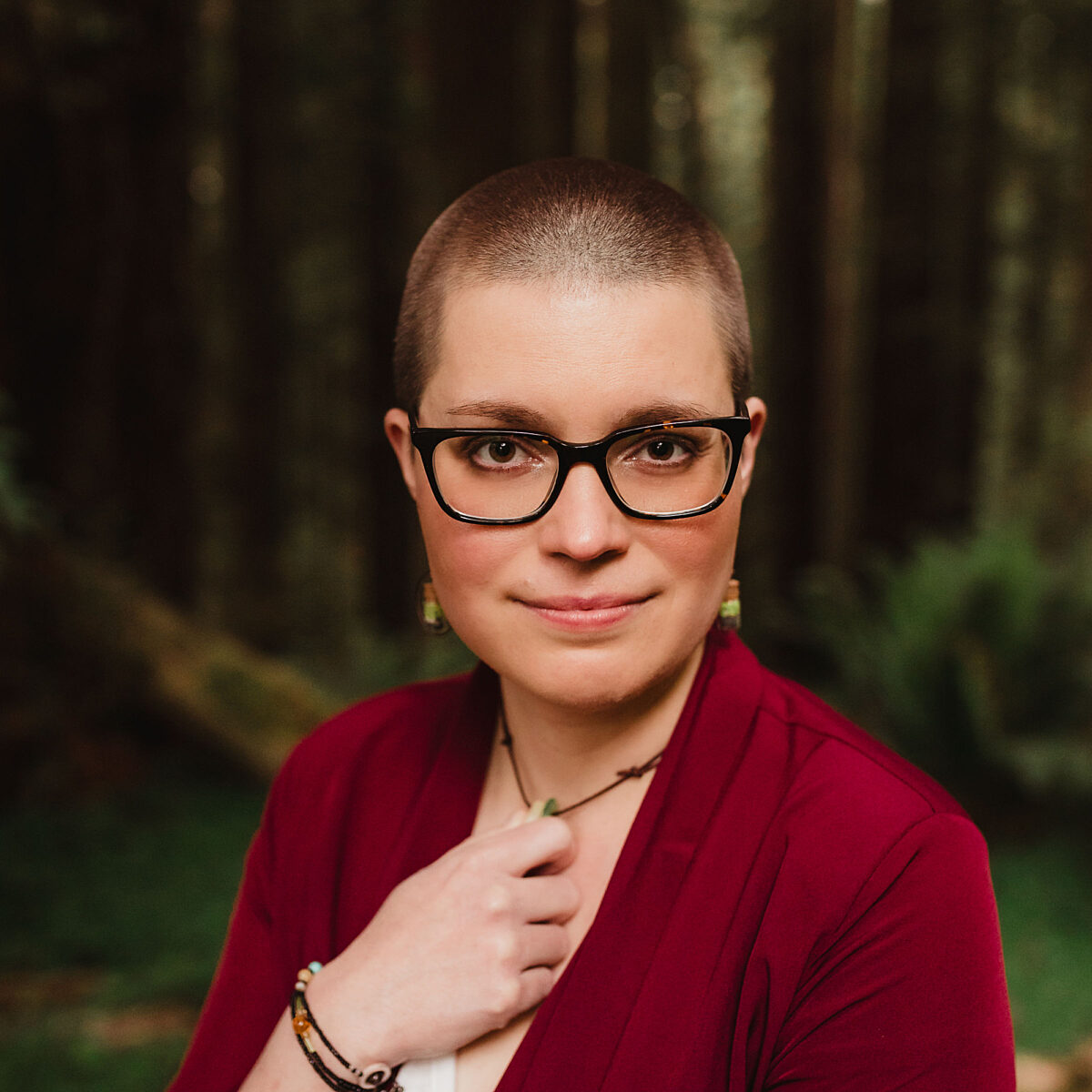
Becky Chambers
Science Fiction Author
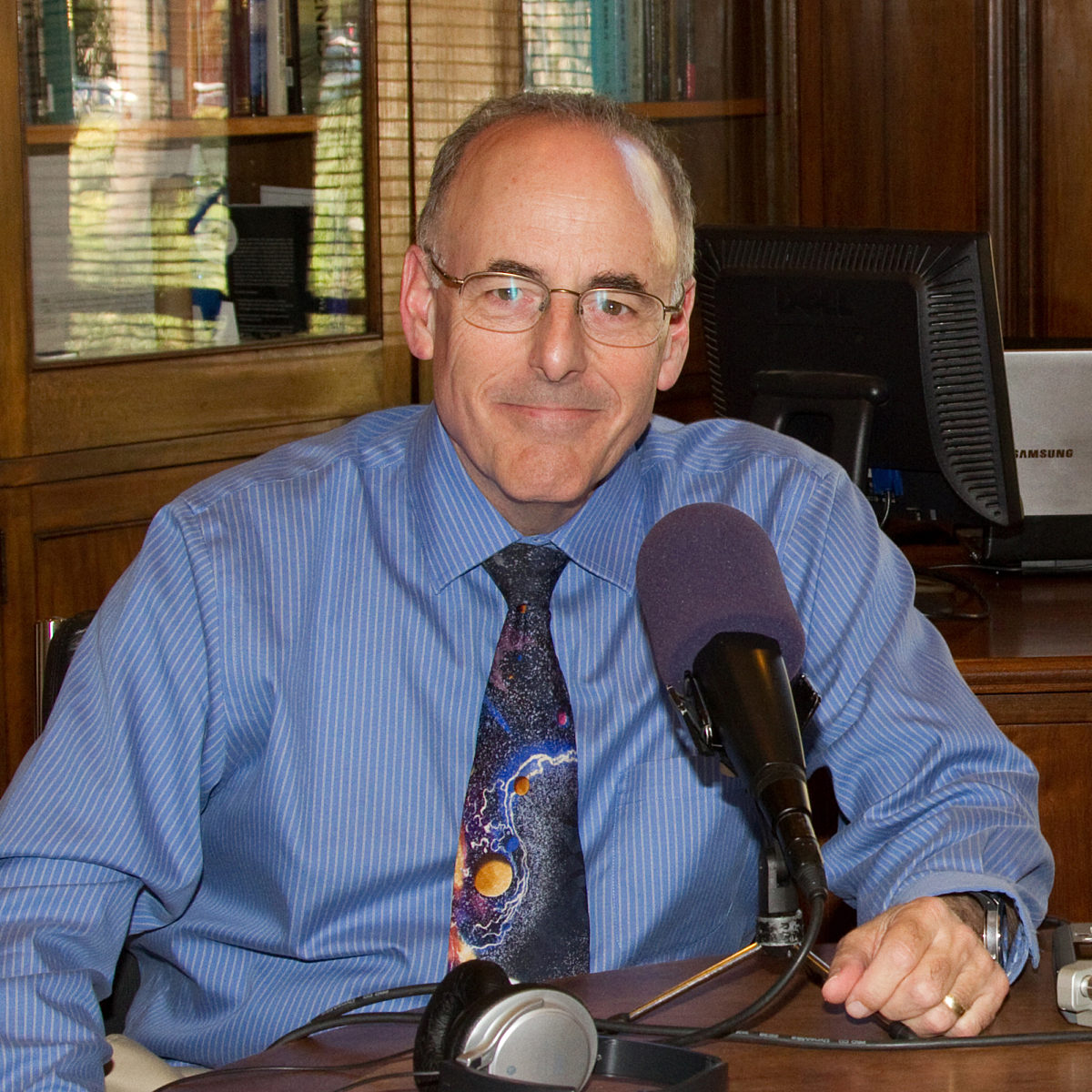
Mat Kaplan
Senior Communications Adviser and former Host of Planetary Radio for The Planetary Society
This outstanding novella, “To Be Taught, If Fortunate” by award-winning science fiction author Becky Chambers, is a passionate argument for the human exploration of space and the wonders we will find there. Kirkus Reviews calls it, “An extraordinary picture of humanity among the stars.” Join host Mat Kaplan for a conversation with Becky in which her personal enthusiasm for space science matches that of her four wandering explorers. The very alien lifeforms they discover amplify their own, very human failings and triumphs. Questions submitted by The Planetary Society’s members were a valuable contribution to this live event presented in our member community.


Transcript
Mat Kaplan: To Be Taught, If Fortunate, this time on Planetary Radio: Book Club Edition. Welcome to our monthly visit with authors and creators who share their passion for space science and exploration and who sometimes do so through superb fiction. I'm Mat Kaplan, senior communications advisor for The Planetary Society with more of the human adventure across the solar system and beyond. This time, well beyond. Back in April, our featured book was a delightful novella by Becky Chambers. That title To Be Taught, If Fortunate, Becky pulled it from the Voyager Golden Record, the message to the stars assembled by Ann Druyan, Carl Sagan and others that is now nearly on light day from earth. The words were spoken by then UN Secretary General Kurt Waldheim. His greeting to whomever might find the recording said in part, "We step out of our solar system into the universe, seeking only peace and friendship to teach if we are called upon to be taught if we are fortunate. We know full well that our planet and all its inhabitants are but a small part of this immense universe that surrounds us and it is with humility and hope that we take this step." And that, dear listeners, could be the theme of Becky's story. As you'll hear, she calls it a love letter to space exploration. Critics and readers have called her work brilliant and have celebrated it with many awards. Becky joined me on May 5th in The Planetary Society's online member community for the conversation you are about to hear. I hope it will leave you feeling as hopeful and inspired as it did me. Here is our special guest, Becky Chambers. Becky, thank you so much for joining us this evening in the book club.
Becky Chambers: Thank you so much for the warm welcome. I'm very happy to be here.
Mat Kaplan: All right, let me tell people just a little bit more about you. Becky is a Locus and two time Hugo award-winning author of Science Fiction. She's probably best known as the author of The Wayfarers Books. Those were also nominated for the Arthur C. Clark Award and the Women's Prize for Fiction. And you told me, won the Hugo Prize for best series as well, which is-
Becky Chambers: That's correct.
Mat Kaplan: Congratulations. She is a Californian, so she's in the same time zone, fortunately. And as we said, To Be Taught, If Fortunate has been around since 2019. Becky, you have many wonderful lines, passages in the book. One of them almost right up front is this, "We're scientists. We live and breathe why," which I think sums up most of the people who call themselves scientists that I've ever talked with. And aren't you the daughter of, if not a scientist, a big fan of science?
Becky Chambers: Yeah. I am the artsy black sheep of the family. Yeah, I come from a family very heavily involved in space science. My parents are both retired now, but my dad was an aerospace engineer and my mother was an astrobiology educator and my grandfather was a mathematician. He was contracted by NASA during the Apollo program. So, yeah, space is something that my family does. And as a kid, growing up, I never really questioned it. That's just what everyone's family does. I couldn't help but absorb that growing up, even though I went in a more creative direction. It was impossible to not grow up with those influences around me and not fall in love with space and the scientific process itself.
Mat Kaplan: Yeah, it's a pretty nice lineage. And you certainly, I think, have made your contributions. You talk in the notes at the end of the book, some of that taken excerpts from a conversation you had with your mom at a recent Worldcon, Science Fiction Convention about the give and take between science and science fiction, which you're certainly very aware of.
Becky Chambers: There has always been, at least as long as the two fields have existed side by side, there's such a beautiful symbiosis between real science and the stories we tell either about science or flavored by science, because of course, not all science fiction is intended to be an exact one-to-one dose of realism, but all science fiction, regardless of where it falls on the spectrum of believability, is inspired by the real thing and pulls from that. And so, I love seeing that back and forth, that give and take, seeing what we build off of each other. It is a really beautiful thing.
Mat Kaplan: That theme, by the way, is one that comes up all the time in these conversations and across many of my conversations for scientists back in my planetary radio hosting days, here's something else you say about scientists or your character, Ariadne says about scientists. "People of science are stubborn beyond the point of sense. The work is tedious. It is slow. It is not for everyone even though the end results are." I don't know how many times I've talked to scientists who just spent endless hours, day and night in their laboratory to try and come up with results that may not always tell them what they want and may not tell them anything at all. It's an interesting game to play, isn't it?
Becky Chambers: It's a labor of love for sure. And in that, I feel like I myself would be very poorly suited to a lab, but I do feel a kinship in that, in that writing a book too is extremely tedious. There's a lot of joy in it. There's a lot of satisfaction, but it also means you are reading the same thing over and over and over again. It means weeks where you spend all your time figuring out a chapter that you end up cutting in the end or even just at the end of the workday, so many times, I'll take my hands off the keyboard and be like, "Well, that's not it. That 2000 words I just wrote, that's not it." I do think there's a parallel there, a little bit of a kindred spirit sort of thing going on, where we do this because we love it, because there's something we want to share with the rest of the world and because we want to find answers. From my point of view, being a fan girl of scientists, I think what they do is all the more admirable because it takes just an incredible amount of attention to detail and patience and diligence and you do it not always to get... As you said, you don't always get the lightning bolt answer from above at the end of the day. Sometimes, you just figure out what to research next and that's the best you can hope for.
Mat Kaplan: I've got so many questions that are more general, really encompass the book upfront. We'll talk a little bit later about some of the plot points in the book as well. So there will be some spoilers, just to warn folks. Also right up front, I was really charmed that as you describe Ariadne's early experiences as a child and her mother is introducing her to the cosmos basically, that the telescope that has finally delivered real evidence of habitable worlds, we now call it the HWO, the Habitable Worlds Observatory, but who knows, you may have precognition here of what it may be called someday. The Tarter Telescope, Jill Tarter, our very, very good friend from the SETI Institute, that really was charming.
Becky Chambers: I'm so happy that you... I would not be surprised that you yourself caught that, but I'm happy that you got that nod. I fell in love with Carl Sagan as a kid thanks to the movie Contact, which came out when I was 11 or 12, somewhere in there. And I went through this whole stretch where I said, if you'd asked me what I wanted to be when I grew up, I would've told you an astronomer. What I really meant was that I wanted to be Jodie Foster in the movie, Contact. That's what I wanted to be when I grew up. And then I found out more about what being an astronomer entails and I'm like, "I'm not bad at math, but that is a lot more math than I think I want to spend my days doing."
Mat Kaplan: Same experience. Yeah.
Becky Chambers: So, yes. So it's one of those things where I'm happy to be on the fringes of it and support it. But yeah, SETI was a huge inspirational spark in my youth and it's something I've carried with me ever since.
Mat Kaplan: Ariadne, I hope I'm pronouncing it correctly. Ariadne?
Becky Chambers: Yeah.
Mat Kaplan: She tells us early in the book, she's born in 2081 and says that this is more than 55 years after the last human was in space, which I am delighted to say you got wrong because-
Becky Chambers: I'm so happy I got that wrong. I'm so happy I got that wrong.
Mat Kaplan: Yeah. Thank goodness, that would really be a long dry spell. And let's hope that it's books like this and the value of this exploration help us avoid that. It's all told by her in the first person, which I thought was a great approach. And where I really think it really served the story well is, and we'll get to this a little bit later and maybe in more detail, is when Ariadne has this huge existential crisis and is narrating her flow of thought or lack of it as she almost ends it all. It works really well to be telling the story from her viewpoint, I think.
Becky Chambers: I'm very happy to hear that because it was something I had a lot of angst over while I was writing it. This is the only book I've written that is in first person. I tend to prefer close third. For those who don't know what that is, that's where you're effectively sitting on the shoulder of the point of view character, right You're looking over their shoulder and watching what they do very closely. But when I sat down to write this, it just kept coming out in first person and I was annoyed by it because it wasn't my intention. I kept trying to switch. I kept trying to switch and be like, "I'm not writing an entire book in first person." I feel like that's going to be too much of a self-insert. I feel like it always ends up there despite your best intentions, but it just kept happening. And so, there was a point at which I gave up that fight and was like, okay, it's in first person. Let's lean into that. And that was actually the sort of pivot moment where it was like, okay, so why are we doing this in first person then? If you're reading something in first person, you are reading a letter of some sort or a document, right? You are reading this thing that somebody else wrote and that led me down the domino chain getting to, this is a message she sent home and that ended up becoming the driving force for the whole book.
Mat Kaplan: Yeah, right to the end of the book. She says that even as a child, here's the quote, "Metamorphosis has always been a thing of beauty to me, the fluidity of form." Am I right that that's a central theme in this book or at least a central motivator for a lot of what Ariadne is... What drives her?
Becky Chambers: Absolutely. I think it pairs really nicely with the idea of somaforming in the book. For those who are listening who haven't read somaforming is this made up thing in which the astronauts are using genetic enhancements that enable them to better survive both on other planets and within a microgravity environment. So, a lot of the issues about exposure to radiation or different sorts of gravity, different types of atmospheres, these sorts of things, instead of there being a mechanical solution for it, they're treating it as a biological problem. And so, that too, I saw them every time they wake up in orbit of a new planet with new enhancements and effect, it did seem to me very chrysalis-like even though the reality of it is... Like chrysalis, there's beauty in it, but there is also goo and a bit of an unpleasant moment at first and then it becomes something wonderful. But I did also see it as, if we're going to get all artsy metaphor about it, these people are permanently changed by the experience of this mission. They cannot go back to the people they were before. They can't go back to the time in which they left, right? They went on this mission knowing full well that by the time they reach the places they're going to, everyone they know back home will already be dead. So I really did see it as this constant marching forward, right? I use that in the book as well, how the butterfly can't turn back into the caterpillar. That was a central image that I hung onto while piecing it all together.
Mat Kaplan: Yeah. You've just said, of course, that they can't go back. They know that they're saying goodbye to all of their loved ones and that's handled really well, I think. Talk about dedication to your work to exploration and to science. You play by the rules as we know them in the universe in this book. It's not like Wayfarers where they get to zip around without going through normal space and for that matter, they don't meet any other intelligent aliens as they visit these four worlds that are documented in the novella. It's an interesting limitation that you put on yourself and of course, it's the most realistic one that we know about right now. The best they can do is what? About half of light speed.
Becky Chambers: Right. Exactly. Exactly. I tried as best as I could and I say this with full acknowledgement that I do not have formal STEM training. I was a theater major back in the day, I will be very upfront about that, but I did try to be as accurate as possible with this one. I may have used this term already here this evening, but I tend to think of science fiction as a spectrum, not in terms of the sort of harsh binary between is it believable or not. There's a wide range of what that can be. I picture it as something where you have something like the Martian on one end and Guardians of the Galaxy on the other and everything else falls in between, right? And you're right, Wayfarers on purpose, is somewhere in the middle. The laws of physics in the universe, biology as we know it's something recognizable, but yes, we're jumping through wormholes. We're talking to bipedal aliens who have opinions about what to have for breakfast. It's very Star Trek-esque, right. With To Be Taught, which I wrote actually while I was still writing Wayfarers, but I needed a break. I'd been working on Wayfarers for a few years and I was like, "I need to cleanse my palate and do something else for a bit before I continue on." And I really just wanted to write a love letter to space exploration. And so, in that, I was like, "Okay, this needs to be as close to the mark as I can make it. I will obviously take some liberties because that's what a storyteller needs to do." But I really wanted it to feel as tangibly real as possible and as reflective of what the daily reality actually is for people who are working not just in space flight, but also, just in laboratory science in general.
Mat Kaplan: Yeah. I wanted to give you a chance to mention the person, the scientists that you spoke to, I think you met in Europe who turned you on to this possibility of somaforming, which really enables these four crewmates to survive in these environments and to spend so much time in space. You speculate that their bodies have even been modified that they cannot just tolerate radiation but turn it into food, into sustenance. It actually gives them energy, which is a pretty cool concept. And that may be about as far out there as you get in the story, but I think it's great.
Becky Chambers: Right. Thank you. That was definitely the biggest flight of fancy I took. But you're right, it was based on a really great chance meeting with a scientist in Hong Kong at a conference I attended there and there was a scientist named Lisa Neff and at this conference, everybody was basically given a few minutes to talk about your field of expertise, right? And it was this very cool mix of science fiction authors and real scientists and people working in tech that the symbiosis made extremely palpable, right? She gave this talk about this idea of not this transhumanist, very dramatic transformation into a post human species, but just this idea of these little genetic tweaks we might give ourselves in order to better survive out there. What if we stopped treating it like an engineering problem and instead looked at the biology of it? And I was on fire over this idea. I thought this was such a cool approach. And so, we had a chat and we hit it off and I ended up calling her a few times. Once I was back home, we would Skype in her lab and I would just ask questions. I would just pick her brain and say, "You know what? Assuming that this technology is mature, let's pretend that you've perfected this method. You've actually figured out how to do this. What sort of biological changes would actually be reasonable to expect?" We're not doing Superman here, nobody's got laser eyes and we're not doing anything that would fall into the realm of unbelievably superhuman. But we talked about things like radiation resistance and temperature tolerances and metabolism, things like that. So, even though I tried to make sure that it wasn't too fantastical, even though it was the biggest leap.
Mat Kaplan: Seems to me that these are things that are reasonably within reach. We're getting great questions for you from our members. Let me turn to some of these, kind of in line with this latest turn in our conversation, from Jacob. "Becky, is there any specific type of advancement in space you'd like to see in the near future? Habitation of another planet, proof of intelligent life elsewhere?"
Becky Chambers: Oh, it doesn't even have to be intelligent life. I want nothing more than just to find a few microbes. If we can find a few microbes in my lifetime, I'd be absolutely thrilled. Anything more than that is just icing. I think it's actually echoed in that book where they find multicellular organisms and they're so excited about it, right? That would be me. That would be me if it's like, "Oh, there's like an alien fish here." Oh my God, I don't need anything else in life. But even if it's just, here's an atmosphere we can't explain any other way, that would be super cool. I would say if it were me funding my own private space program, I would be like, "Let's go check out the icy moons in our own neighborhood. Let's explore those as best as we can because I would love to know what's under that ice," as respectfully as possible.
Mat Kaplan: You and us both. There's so many of us who share that wish that I have, that Bill Nye has. I want to be here when we find that evidence of another genesis on some other world and know that we're not alone. Yeah. Well, here's hoping. Here's something from Alexandra. "Hi, I'm an astronomy PhD candidate. This novella felt like a breath of fresh air in the midst of a science funding crisis and typical graduate student woes. It was a very hopeful read with the space program that is funded by the public, for the public, and I adored the scene at the beginning with the trees. What was it that gave you the hope to write about this very positive take on space travel and science overall and I will only add, it's obvious that you and Ariadne are both nature lovers."
Becky Chambers: Yes, absolutely. I've got redwoods out my window as we speak. So yes, I love to be outside. It's interesting, this question of what gave me the hope. I wrote this book in a fit of peak. I wrote this book very angry about where I saw... Honestly, because I could see the writing on the wall, it does not surprise me where we ended up right now. It breaks my heart, but it's not a surprise to me. I could already see us heading in that direction when I was writing this and I just needed to say something about it. And for me, writing hopeful futures, writing futures that feel like they're full of promise rather than something to be afraid of, that is my way of... It doesn't come from a place of me feeling the hope necessarily. It comes from a place of me needing to give myself that hope. It's my way of resisting the fear, right? It's a way of being defiant about this idea that we might not have futures like this. It's like, well, no, we absolutely can have futures like this. We just have to know what we're pointing our compasses toward. We have to tell those stories. We have to do the work and we have to not give up on it. I'm not so naive as to think that science fiction alone can turn this tide, but I do see it as... I liken myself to the person handing out water bottles and orange slices on the side of the marathon. The actual scientists and the people working on ensuring funding for it, ensuring public support for it, they're the ones who are actually running the race, but I feel like it's important that we tell the stories that keep that hope alive, that keep the vision alive. And so, I'm happy to hear that it came across as a breath of fresh air because at the time, I was grinding my teeth and I still am. Let's be real, but that makes me want to tell stories like this all the harder.
Mat Kaplan: Yeah. I'll only point to exactly what you and your mother recognized, which is that symbiotic relationship once again between science and science fiction and how many great scientists have gone up to people like Gene Roddenberry and said, "You're why I'm in this business." So, it works both ways. Citizens like to support science and you extended that to getting people to exploring the stars with open cluster astronautics or OCA, that citizen funded model for science that enables everything that happens in the book. I got to thank you right now in your notes at the end for the shout-out to The Planetary Society, recognizing our LightSail project as an example of this. Do you see this as something that has an ongoing future to make real contributions?
Becky Chambers: I think if we decide that this is something we want to support, then absolutely, I see no reason why not. I was very inspired by Lightsail and by other citizen science projects. I think there's so much potential in that collective energy and that is actually what gave me hope. That kind of thing is what gave me hope in the midst of despairing over more, I guess, traditional support, more official support, seeing that people still wanted this to happen and were willing to chip in to make it. So, I just wanted to say, what if we scale that up? What if we kept that energy going? Like what couldn't we do if we decided to make it happen? So yeah, I don't see that there's any barrier to that. And I think even small steps are worth taking.
Mat Kaplan: There's a question that came in from Matt, I believe, about your four astronauts, of which Ariadne is, of course, one of them and that they seem to have had good preexisting relationships that probably extended well before we joined them as they arrive at the first world in the book. Is that how you saw it as well? What's the backstory here?
Becky Chambers: I did. I saw these as... I think there is a precedent for stories about astronauts who don't have families, right? That we're going to choose people who are already on their own or loners or people who have had some sort of tragic past and so they don't have anyone to go back to. I wanted to explore the other side of it of no, they have families that they love. They have people who love them. These are people who, if they had stayed on earth would have a very full life with the people around them. And I think that makes their decision to leave all the more powerful because they know they're not going to see these people again. And there is something in that that is... You could look at it as something unforgivable, but you can also look at it as this tremendous sacrifice they're making. I think that's a choice you can only make out of love. It's not so much that they cared about the science more than they cared about these people. It's like, no, we care about you so much that we're going to leave. We're going to leave and send you something amazing back, hopefully, something that will benefit everyone. I think that that speaks to the, not to sound trite, but this spirit of collaboration and community that I wanted to infuse this book with. It's not a story about one man versus the cosmos. This is a story about a group of people who are working for the benefit of people back home. I think that that's a quality that comes through strongest if they are people with their own social ties.
Mat Kaplan: The process of science and the process of observing, which is we know, just the act of observing something changes things and your characters deal with this. They talk about this in some depth, particularly I think it's Ariadne and Chikondi. Do I remember his name correctly?
Becky Chambers: Mm-hmm.
Mat Kaplan: They have this wonderful exchange and Chik has this line, "At some point you have to accept the fact that any movement creates waves and the only other option is to lie still and learn nothing." But I assume that this reflects your own philosophy.
Becky Chambers: Absolutely. I am in a constant ethical crisis over my impact on the world around me and I think it's extremely important to ask these questions about visiting worlds beyond our own. This is what planetary protection is all about is leaving as small a footprint as possible, but you are still leaving a footprint. I mentioned earlier that I've got redwoods outside. I love to go hiking in the woods. I love to look at bugs. I like to see the wildflowers that are coming up. I like to poke at moss and I love being a part of it, but I am also aware that simply going out there, I am making changes, right? Every step I take, I am potentially killing bugs. I'm definitely killing microbes. Maybe I'm startling an animal that was building a nest or screwing up something's hunt. I cannot move through the world without disrupting it. But I think if you go too far down that path, it's paralyzing, right? But I also do think that there are big and in a lot of ways, unanswerable questions about what those boundaries are or should be when we're potentially entering ecosystems that we are not part of, that we didn't evolve for. I think there's no good answer to that, but it's a question that should be perpetually asked every time we think about heading off world and setting foot somewhere else.
Mat Kaplan: And your four astronauts, as Ariadne says, they very much consider themselves observers, not conquerors, which is a refreshing viewpoint.
Becky Chambers: I'm biased, of course, but that too is a quality I really admire in the scientists that I have either rubbed elbows with or whose work I'm familiar with. People who approach any sort of field work, any sort of observational science, doing it from a place of humility as a quality I deeply respect.
Mat Kaplan: Yeah. Let's talk about these worlds. There was a question here from someone who wanted to know, "As you wrote about them, which was your favorite?" And we're talking about the moon, the Icy Moon Acor. I hope I'm pronouncing them correctly once again. Then the three planets, Mirabilis, Opera, and Votum. I'm going to guess it wasn't Opera.
Becky Chambers: It was not Opera. Opera is not where I would want to end up and it was a difficult place to write. I was glad when I was done with that portion. The Icy Moon would be my pick even though there are perhaps more engaging creatures to look at elsewhere. I love Icy Moons. I love Icy Moons with my whole heart and I just wanted to write the most beautiful one that I could. And I think because it's a less dramatic ecosystem there, I think that makes me feel a little safer as well. As amazing as it would be to step out of your spacecraft and just see this... I imagined Mirabilis being those '1800s illustrations of these lakes filled with dinosaurs, like a dinosaur swamp sort of things where you have 50 different species all in the same place in a completely unbelievable way. But that's what I imagined. You open the door and it's just this lush biological paradise. My Icy Moon, I felt so at peace imagining that place. And I think I could spend a lot of time there very happily.
Mat Kaplan: I absolutely see your point, but I have to say, just the wonder of Mirabilis. You know what it made me think of? And I didn't think of it the first time I read the book, but when I came back to it in this rereading just in the last few days, I suddenly thought of when, as a little kid, I saw the Disney version of Alice in Wonderland for the first time. And there are all these creatures in that movie that Lewis Carroll never thought of, which blew me away. It was just so thrilling to me that I think that I hadn't had this thought before, but I suspect that that made me, to a large degree, the bio curious person that I am today and why I love to talk about this stuff with scientists and with people like you. And your creatures go way beyond anything that came out of that Disney film, at least the ones on Mirabilis. Was it a lot of fun creating these critters?
Becky Chambers: Oh, it's a blast. I love inventing aliens. It's so much fun. I could do it all day long. There is actually always a point with any of my books where I do have to wrap myself by the scruff and be like, "That's enough world building now. We've got enough aliens. We've got enough going on," because it's so fun. It's so much fun. But thank you also for the incredible compliment of bringing Disney's Alice in Wonderland in because I too loved those strange creatures when I was a kid. So, that's wonderful to hear.
Mat Kaplan: When we return in a minute, Becky Chambers will take us back into her own lands of wonder. Please stay with us.
George Takei: Hello, I'm George Takei. And as you know, I'm very proud of my association with Star Trek. Star Trek was a show that looked to the future with optimism, boldly going where no one had gone before. I want you to know about a very special organization called The Planetary Society. They are working to make the future that Star Trek represents a reality. When you become a member of The Planetary Society, you join their mission to increase discoveries in our solar system, to elevate the search for life outside our planet and decrease the risk of earth being hit by an asteroid. Co-founded by Carl Sagan, The Planetary Society exists for those who believe in space exploration, to take action together. So join The Planetary Society and boldly go together to build our future.
Mat Kaplan: The Planetary Society lets me now and then host as a volunteer another podcast for another nonprofit, The National Center for Science Education. And we frequently talk about evolution in that podcast. Your explanation of some of the key concepts in evolution that come out in this book, to be fortunate, are really great, like survival of the fittest and convergent evolution. They're really good examples. And then to be able to talk about these examples of, as an example, convergent evolution taking place on a world that has never come anywhere near the life that developed on earth. It's really fascinating.
Becky Chambers: Thank you. I'm an absolute fiend for the idea of convergent evolution. I think it's such a beautiful phenomenon of how if you end up with certain environmental conditions, biological life responds in similar ways. It finds the same solution to the problem over and over again. And so, that too was part of the love letter I wanted to write, not just to space flight and to exploration itself, but just to the biological world and to the wonder of that. It was also fun to pick and choose the traits that I wanted to see surviving out there. Convergent evolution being one of them. I was just like, "Yeah, that's still out there. That's the thing." And that is part of the joy of science fiction is in the end, I get to decide what discoveries I would like to see most.
Mat Kaplan: At the end of their stay on Mirabilis, there is this devastating event, which changes a lot. Key plot point. I had my own phrasing of the question, but we also got it from Robin. "Was it very emotional to write about the scene where the crew member has to end another being's life?" Robin says, "It was extremely touching," and I entirely agree.
Becky Chambers: Thank you. That scene was difficult to write. That scene is my personal nightmare. And I say this as an omnivore and I say this as someone who understands the biological reality of not just ending lives for the sake of predation but also, out of mercy. It is often the kinder thing to do or the responsible thing to do. I can actually give you a parallel in my own life to that scene in the book that happened just a couple of months ago. I was in Iceland visiting my in laws and I unpacked my snow boots from my suitcase and I found, because I don't typically have cause to use snow boots here in coastal California, I hadn't used them in a while and there was a spider inside my boots that had hitched a ride across the Atlantic and I knew I had to kill it because I can't do what I would normally do, which is put it in a cup and take it outside. I don't want to be the one to introduce new species and I hated doing it. It made my stomach hurt to do it. I hated doing it. And so, similarly, I hated writing that scene, even though I wasn't actually hurting anything, but I didn't want to have to put anyone, my astronauts or the creature... I didn't want to have to put anyone through that because it wasn't fair to any of them, but unfortunately, that is life sometimes.
Mat Kaplan: Do you think other than the excellent sensible justifications and the philosophical reasons for ending a life like that, that to some degree, that this was just an expression of the empathy of this crew, particularly the Chikondi who was the one who had to do the deed, toward the living things that they were there to study?
Becky Chambers: I think so. I think there is, uncomfortable as it makes us. There can be a great amount of empathy and compassion involved in the act of ending a life. That's not something any of us should take lightly, but absolutely. The entire reason he carried it out was because he knew it's cruel for the animal to stay and we have no idea what effect it will have to release it. We have no idea what kind of damage that might do to everything else out there. And so, you do sometimes have to put up with the smaller scale discomfort or disgust out of love for the bigger thing. And I think if you wanted, you could draw a line between that and the thing we were talking about earlier too of all these people have individual relationships back on earth, but what they're actually prioritizing is the species of a whole, not from a place of pragmatism, but from a place of compassion. It's tricky and it's nuanced, but I don't think it has to be cold.
Mat Kaplan: Well, you answered a question that was submitted ahead of time by a member, Andreas who was wondering why they couldn't just keep it. And I said to Andreas, "I think I could answer that, but I think Becky will probably do a better job." And I believe you did. Let's roll onto Opera, that far less pleasant place and very, very different experience and those creatures that as soon as they arrive, decide that hanging onto the spaceship will be a nice place to hang out. Your character, Jack, called them rats. The crew gives them the formal name Fortisostium horribilis. Horribilis. I immediately thought Mynocks, which is not just Star Wars. They're in the original Star Wars, episode four, but I couldn't find the reference, but I was sure that those were a Kurt Vonnegut novel as well. And that must have been where George Lucas got it, but I couldn't find the reference. But Mynocks-
Becky Chambers: That may well be. And this is one of those wonderful moments where I hadn't ever considered Mynocks as a precursor to this, but I also don't remember life without Star Wars. So now that you've said it and I have the image in my head, I'm like, "Oh yes, of course." I can see where this creative blueprint may have originated from. So, that's super fun.
Mat Kaplan: Right. Finally, they can't wait to get off of this fairly awful world to apply a subjective judgment against it. So when they finally lift off, Ariadne, this wonderfully sensitive scientist and astronaut, I know she's an engineer, but I'll call her a scientist. She's really beyond caring about the terrible deaths that these creatures that they can't get off of the ship are going to suffer as they head back into space and she hates them, but there's so much more that has happened to her. And I think of that key sequence of what follows immediately, the one I had particular kudos for you for, by doing it in the first person when she doesn't realize how really affected and ill she has become. Would you remind us of what takes place in that scene?
Becky Chambers: Absolutely. So spoilers, of course, but the crew has been stuck on this planet for months and they haven't been able to do any real work and these animals that have attached themselves to the ship are keeping them from being able to sleep. They are massively sleep-deprived. The crew is massively sleep-deprived. They can't get out of here. It's just this very hellish situation. All of them are sort of drifting around and not realizing just how bad each of them are becoming individually, they're all getting into these really dark places. And Ariadne, once they finally are able to leave the planet, she's so relieved to be out of there. She heads into the airlock and almost lets herself out and it takes a lot of coaxing from the other crewmates to get her to understand that she does need to come back in. It's not that she doesn't understand what she's doing, it's just that she is so desperate for relief and for escape at that point that it just seems like the most sensible thing to do. She's just done at that point, which is obviously a grim place to take it, but I wanted to make it clear both of that and with the bit you already explained where she really doesn't care about killing these animals at that point, which is a stark contrast to how they all feel about the creature that accidentally ended up on the ship where it's this really heart-wrenching thing. By the time they leave opera, she does not care. She hates these creatures. She's glad to see them die. I wanted to underline the animal fragility of us. We tend to think of astronauts as infallible and as the best of us, right? They're the ones with the right stuff. And in some regards, I do think that. I put them up on a pedestal as well, but they are human and they need the same things that all humans need. Unfortunately, it's a little bit cruel from an authorial point of view, but taking them to a breaking point, I felt, was the best way to do that, to show these are not perfect people. These are not some sort of paragons of compassion and ethical consideration. All of those things, you can go in with the best of intentions, but if your biological needs are not met, if your animal needs are not met, you will react like all animals do. You will lash out and you will make mistakes and you will be foolish and you will be angry and that's part of the reality of it too. We are not sending machines out there that will respond to every situation exactly the same way we are sending deeply emotive social animals and that is our strength, but it can also be a weakness.
Mat Kaplan: That describes it so well. I also love that as soon as they get her back inside the hall and get her spacesuit off, what's the first thing they do? And I don't mean this in any sort of comical way. It's a group hug. They just hold each other, which was absolutely lovely, I thought. So, thanks for that.
Becky Chambers: No, thank you. Sometimes that's the most you can do, is just hang on.
Mat Kaplan: Yeah. And they're family, right?
Becky Chambers: Absolutely.
Mat Kaplan: There's a question here from Alexandra. "The novella was very character driven," yes. "What inspired your characters? Did real people or scientists influence how you wrote them and their close relationships with one another?"
Becky Chambers: For a lot of my books, I would answer this question with a yes in that a lot of the characters I write are inspired by bits and pieces of other people. With these folks, it really was just people I made up, whole cloth. I did think about different qualities I admire in scientists, I know, or in the process itself. I wanted to have a bit of a more calculating analytical side in Elena and I wanted a bit of the lab jock in Jack, right? Where he's the kind of scientist who really loves his work, but you can also see him going out surfing before he heads to the lab or maybe he doesn't have the cleanest lab bench. He's got like a half-
Mat Kaplan: I was going to say, I bet he didn't always do the dishes when he was supposed to.
Becky Chambers: No, absolutely he does not. So really, this was one of those where I just stared at the ceiling and I made up a little cast in my head. And one of the things I always do with characters is before I ever start writing the story or teasing the plot out is I just make them talk to each other. I do this thing that one of my friends refers to as proscript where I'm not writing any blocking or anything descriptive. I'm just writing dialogue. And so, with this one where they do have this extremely close dynamic, that was something I did a lot during the early stages of writing this book of just figuring out what the dynamics are, how it changes if you have three of them in a room versus two of them in a room, just playing with dolls until I had a good feel for how this unit works.
Mat Kaplan: All right. Let's get them to Votum the last of the worlds they visit at least as far as we know and they make what really, scientifically, may be the greatest discovery, the greatest find of the mission, which is when they discover this amazing thing about, I don't know if it's chirality or chirality. I've heard it pronounced both-
Becky Chambers: I think it's chirality. Don't quote me on that, but I'm pretty sure.
Mat Kaplan: Yeah. We'll go with that. I trust your judgment. Chirality having to do with, and I don't know if you want to take people through the science, you probably have thought about it more than I have, but we're all, is it left or right-handed here on earth so to speak?
Becky Chambers: You know what? I wrote this in 2018 and I know in this moment that I will screw it up.
Mat Kaplan: We've got a biologist out there or somebody who's going to look it up and they'll throw it up in the chat. But the point is that so far as we know, all life on earth is one-handedness and it's either the left or the right in the way that the molecules particularly of the proteins that we are made of, are formed. And the speculation has been for years and years and years, is this the only way life can happen or will we find it facing the other way, spiraling the other way someplace else? And indeed, that's what they discover. Talk about it.
Becky Chambers: The reason I chose this is because it's such a niche thing that is so profound but also has no impact whatsoever on everyday life for most people on earth. If you are an evolutionary biologist, this discovery is huge, right? This tells you that life evolves independently, that it can take lots of different forms. It raises questions about, we have these hypotheses about earth being seeded by organic molecules from asteroids, etc. It's going to be a huge deal for a very small group of people and it is not something you can easily explain to the layman in everyday news. I think a lot about the sort of science news that gets big headlines and the sensationalist headlines that they are given to make sure that people will click on them. So the perpetual frustration that scientists have with people getting these wild ideas about what it is that say a Mars rover has actually found when really, it's just this, it's this very interesting little molecular discovery, but it's not as big a deal as, "Oh, we found a city out there. We found animals out there." I wanted it to be something that most people would look at and not understand the significance of. And the reason I wanted that as opposed to a big, dramatic groundbreaking, this changes the world for everyone, is because those are the sorts of discoveries that scientists often make where it's just these little bits and pieces that we can build bigger ideas from and those bigger ideas are the things that shape the world, but you can't get there without all the little bits and pieces leading up to it. And so, the central question of the book of, is this worth doing? Is it still worth it for us to be sending humans to space to do this kind of research? Was this mission worth it for this one discovery that most people will not understand and not see any direct benefit of, is it still worth it to do that? Obviously, I think the answer is yes, but I wanted to pose that as an open-ended question because there are valid criticisms of human space flight and of space flight exploration in general, the old chestnut of why are we focusing on the things out there when we've got all these problems down here. And so, to make that question less of a slam dunk of, "See, this is why it's important. Everyone will benefit from this." No, they won't, but our understanding of the universe is richer for it. That was where I was going with that.
Mat Kaplan: This leads into a particularly long passage which you have consented to read, but I have one comment before we do that and it is the only beef I have with the novella and it's not a beef with you, it's a beef with the characters.
Becky Chambers: Okay.
Mat Kaplan: They make this final decision, this is the spoiler of spoilers. They make this final decision and I wanted to yell at them, "Don't do this. Either keep exploring or go home, head back to earth. Don't leave this to people you may never hear from." I was really upset about this. Okay, defend your choice or their choice. Their choice.
Becky Chambers: Defend their choice. Their choice is because ultimately, I am a storyteller and my first and foremost job is to plant ideas in your head. Do I think that what their choice is is the most scientifically responsible thing you could do? No, absolutely not. But my goal here was to, agitate is the wrong word. But to build a little bit of a fire under the reader to say, "I am not going to answer this for you. You need to now go and think about this. You need to now go and figure out what your answer is to this and I just want you to sit with it for a while." So that feeling you had, I'm so sorry to say it, but it was on purpose. So, it behaved as intended. My job is ultimately to make you feel something and that's what it does.
Mat Kaplan: So you got this from Member Jesse who is one of those in our audience, among our members, one of many who have read others of your books. Jesse said, "Will our four astronauts be picked up by an Aeluon scout ship at some point? Please tell, I must know. Thank you."
Becky Chambers: Incredible crossover for listeners who don't understand this reference. This is one of the alien species from my Wayfarers series. Unfortunately not, because the answer of they don't exist in the same universe would be very boring. So, we're going to say the actual problem is assuming that this was the same universe, which it is not, but if it was, humanity has not yet made contact with the Galactic Commons and so Aeluons don't know that humans are out there and they're not going to go looking for them. That would be a waste of resources and they don't have an open wormhole nearby. So I'm very sorry to say it, but no, they're on their own.
Mat Kaplan: Besides it'd be a violation of the Prime Directive.
Becky Chambers: You know what? If we're going to cross over, we can just cross them all over. It absolutely would be a violation of the Prime Directive.
Mat Kaplan: All right. So those of us who have not read or at least not read enough of your other books, we have this question from Tim. "Do you have a particular reading order you'd recommend for the rest of your work?"
Becky Chambers: Oh, interesting. I don't have an order so much as I'm going to give you sort of a flavor profile. Wayfarers is my first series. So, it's me as I'm starting out. It is very much born out of my deep and unending love for the science fiction television movies I grew up with. So Star Trek, Star Wars, Farscape, it's born out of all of that. It's the quieter side of those universes. It's looking more at everyday life in a galactic community. So if you are into spaceships and aliens, you want to head toward Wayfarers. If what you liked, what you hopefully liked about To Be Taught, If Fortunate is a shorter read that is more philosophical in nature. I would direct you toward Monk & Robot. Monk & Robot is very different than To Be Taught. They are not space books. They take place entirely on the ground, a different world than our own but still. And it is in essence a long unexpected road trip between a monk who works in a community service capacity, let's say, and a robot that has been living outside of human society. So, two very different flavors. I don't have a particular order for you to pick them up in. Just head in the direction that sounds most appealing to you.
Mat Kaplan: And in October, your next work comes out. Say a word about that.
Becky Chambers: So, I do. I have a new novel coming out in October. It is called As You Wake, Break the Shell. It is the first in a brand new duology, in a new setting. It is in equal parts a space story and a love story told through two different characters in two different worlds across two different timelines. It's got space whales, it's got rogue biology, it's got a really funky format. It's got places that I fully expect people to both love and loathe. It's open for pre-order right now and you can head to my website, otherscribbles.com, where I've got a host of purchase links. You can also, and I highly recommend this, head to your local independent bookstore and order it from there.
Mat Kaplan: Just a few more comments from some of our members before we get to that long passage that I've asked you to read. Adrian, thank you Adrian. "It's left-handed amino acids, but right-handed DNA sugars." Thank you. I knew we could.
Becky Chambers: Thank you. I knew someone would have this on tab. Thank you so much, Adrian.
Mat Kaplan: And we have great, great members. Jacob says, "I never really thought about the science of it all. That's interesting." Jeff says, "I think in Breaking Bad, Mr. White called it chirality," which sounds like [inaudible 00:58:57]. Kerry says, "Watching and listening from Oz." Yet another universe into this. "So happy to read a book before hearing about it on the book club podcast. This is rare for me." Arnold says, "I'm looking forward to reading the long way to a small, angry planet." I highly recommend it Arnold. It's great fun. I'm still reading it. Learning about drilling wormholes. Oh, we got a little live long and prosper from Larry Paul, a friend of mine. So there you go, Larry. Craig says, "The book was beautifully written. I love the fact that I felt that I was part of the story reading the log of the crew and the questions are directed at us, the reader. A wonderful agitation." A great way to describe it. Jeff says, "I personally feel human space exploration and taking care of earth can happen concurrently and don't need to be framed as a binary choice." Hear, hear, you're a member of the right society, Jeff. Here's a closing question from Alexandra. "When it comes to exploration/science, what do you hope to be taught if fortunate?" I think we may have answered this already.
Becky Chambers: I can still tackle it though. I want to know everything. I want to know everything there is to know about why we're here, how we got here, what is the best way for us to be a part of this remarkable ecosystem that we've been so lucky to be born into. How can we continue to be stewards of this planet? And I think that everything we learn, be it on this planet or off of it, works in service of that question. I am an endlessly curious person and anything I learn, I consider myself very fortunate indeed to be somebody who loves learning and I plan to continue my whole life doing just that.
Mat Kaplan: Please do. Just this small update from Carrie. "Hey guys, in case you aren't aware of it, when I say, 'Hi from Oz,' it's what some of us call Australia."
Becky Chambers: There we go.
Mat Kaplan: So there you go. Why not? Please grace us with that long passage from very near the end of the book. It's Ariadne's part of her last message to anyone who might still be picking up communication from the good ship Merian back here on earth.
Becky Chambers: "What we want you to ask yourselves is this, what is space to you? Is it a playground, a quarry, a flagpole, a classroom, a temple? Who do you believe should go and for what purpose? Or should we go at all? Is the realm above the clouds immaterial to you so long as satellites send messages and rocks don't fall? Is human space flight a fool's errand, a rich man's fantasy, an unacceptable waste of life and metal? Are our methods grotesque to you? Are ethics untenable? Are our hopes outdated? When I tell you of our life out here, do you cheer for us or do you scoff? Are astronauts still relevant in your time? We have found nothing you can sell. We have found nothing you can put to practical use. We have found no worlds that could be easily or ethically settled, were that end desired. We have satisfied nothing but curiosity, gained nothing but knowledge. To me, these are the noblest goals. The people who sent us here believed the same. But if you share that belief, do you understand that we might fail? You must understand the cost here, the reality of what we do. Because sometimes, we go and we try and we suffer and despite it all, we learn nothing. Sometimes, we are left with more questions than when we started. Sometimes, we do harm despite our best efforts. We are human. We are fragile. Are we who you want out here? Would you be more comfortable with the limited predictability of machines or is the flexibility of human intelligence worth the risk of our minds and bodies breaking? We believe the potential answers are worth the challenges."
Mat Kaplan: Well read. Supremely well written. I want to put that on my wall in my office at The Planetary Society. Thank you, Becky. That was absolutely wonderful.
Becky Chambers: Oh, it was my pleasure, absolutely. And thank you to you for this wonderful conversation and thank you to everyone in the chat for hanging out with us today from all over the planet.
Mat Kaplan: Thanks for joining us for the Planetary Radio Book Club edition. I'll be back in July with physicist and cosmologist, Chanda Prescod-Weinstein, to talk about her monumental book, The Edge of Space-Time: Particles, Poetry and the Cosmic Dream Boogie. Of course, Sarah will be with you every Wednesday with a new episode of the show. Am I wearing a Planetary Radio T-shirt? I am and so should you. You'll find it along with other great merch at planetary.org/shop where there are 86 other ways to wear your love of space science and exploration. But you don't have to wait for a shirt to share the PB&J, the passion, beauty, and joy. Leave us a review on Apple Podcasts, Spotify or any of the other podcast providers and send your thoughts, questions and poetry to Planetary Radio @planetary.org. Oh, you're a Planetary Society member? Well, you can leave a comment in the Planetary Radio space within our member community where members join these live monthly book club conversations with great authors. Planetary Radio is produced by The Planetary Society in Pasadena, California and is made possible by our always fortunate members. You can become one of us at planetary.org/join. Sarah Al-Ahmed is the host and producer of Planetary Radio. Mark Hilverda and Rae Paoletta are our associate producers. Casey Dreier is the host of the monthly space policy edition. Andrew Lucas is our audio editor. Josh Doyle composed our theme, which is arranged and performed by Pieter Schlosser. I'm Mat Kaplan, ad astra.