

 Explore Worlds
 Find Life
 Defend Earth


All
All
 Sun
Sun Mercury
 Venus
Venus Earth
Earth Mars
Mars Jupiter
 Saturn
 Uranus
 Neptune
 Small Bodies
Stories, updates, insights, and original analysis from The Planetary Society.

This is the post where you can comment about the IAU planet definition
An attempt to corral the discussion of the IAU planet definition in one place on planetary.org, so that we may be free to actually discuss Kuiper belt observations and scientific results on posts elsewhere on this site.

Another Pale Blue Dot — Uranus Spied By Cassini
The Cassini mission has already returned an array of images of other solar system members from Saturn orbit: Earth (and the Moon), Venus, Mars, and Jupiter. It’s time to add another world to that list!

Highlights From OSIRIS-REx Science Team Meeting #6
The OSIRIS-REx Science Team gathered at the University of Arizona from April 22–24, 2014 for their sixth meeting. Principal Investigator Dante Lauretta discusses a few of the highlights.

When will we know which is bigger, Pluto or Eris?
We don't currently know whether Pluto is the biggest thing in the Kuiper belt or not. When will New Horizons give us the answer?

Green Bank Telescope Helps Out an Old Friend
The Green Bank Telescope has been called into emergency service to play radar ping-pong on a close-by asteroid with Arecibo Observatory’s 100-meter William E. Gordon radio telescope.

Curiosity update, sols 597-610: Picking a drill site at the Kimberley
After completing the initial reconnaissance of the Kimberley outcrop two weeks ago, Curiosity is, at last, moving toward a drill site. The science team selected the location last week: a spot near the base of Mount Remarkable, into what they have been calling the

Spitzer Space Telescope Observations of Bennu
What can studying the thermal emission of Bennu with the Spitzer Space Telescope tell us about its physical properties?

Days before its crash, LADEE saw zodiacal light above the lunar horizon
LADEE ended its mission as planned with a crash into the lunar surface on April 17. Just days prior, it turned its star tracker camera toward the lunar horizon and captured a striking series of images of the lunar sunrise and zodiacal light.

Forensic Ballistics: How Apollo 12 Helped Solve the Skydiver Meteorite Mystery
What can a 45-year-old mission to the Moon tell us about a

The Birth of the Wanderers
How did planets originate? This is a question that has puzzled scientists for centuries, but one which they have been able to tackle directly only in the last few decades, thanks to two major developments: breakthroughs in telescope technology and ever-increasing computing power.

The End of Opportunity and the Burden of Success
The Opportunity rover and the Lunar Reconnaissance Orbiter are both zeroed out in NASA's 2015 budget. Learn why these missions face the axe and why the White House is forcing NASA to choose between existing missions and starting new ones.

Pretty picture: Sunset over Gale crater
Imagine yourself on a windswept landscape of rocks and red dust with mountains all around you. The temperature -- never warm on this planet -- suddenly plunges, as the small Sun sets behind the western range of mountains.

Interview with a Mars Explorer
A conversation with Dr. Sarah Milkovich, HiRISE Investigation Scientist.

Curiosity update: Initial reconnaissance of the Kimberley, sols 585-595
Curiosity has been busy performing a survey of the Kimberley, walking the length of the outcrop and taking enormous quantities of photos. The team is now ready to go in for a closer look, and maybe even to drill.

Will We Finally Rove Mawrth Vallis?
Mawrth Vallis was axed as a landing site for Curiosity, but will we get a chance to explore it with ESA's ExoMars rover?

Yutu Update
We don’t hear a lot at the moment about Chang’E 3 and Yutu, the Chinese lander and rover which were all over the news a few months ago. But Phil Stooke has been collecting news online and in person last month at the Lunar and Planetary Science Conference and now tries to put it all together and address the current state of the mission.

Look how clean Opportunity is now!
While climbing Murray Ridge, Opportunity enjoyed a major cleaning event that has left the rover's solar panels more dust-free than they have been in years. The rover captured a pretty panorama of the newly clean deck with its Pancams, and James Sorenson processed the version shown here.

Arecibo Observatory operational after repairs to fix earthquake damage
Early in the morning on January 13, 2014, a 6.4 magnitude earthquake struck beneath the Atlantic Ocean north of Puerto Rico, damaging Arecibo Observatory, the world’s largest single-dish radio telescope. The telescope is now operational after repairs and scientists have resumed observations. However, the future of Arecibo Observatory remains unclear due to funding uncertainties in the federal budget.

Your Europa Mission Primer of the Day
Trying to understand NASA's current efforts to explore Europa? Read this excellent piece on the recent, frustrating history to scout out this watery moon of Jupiter.
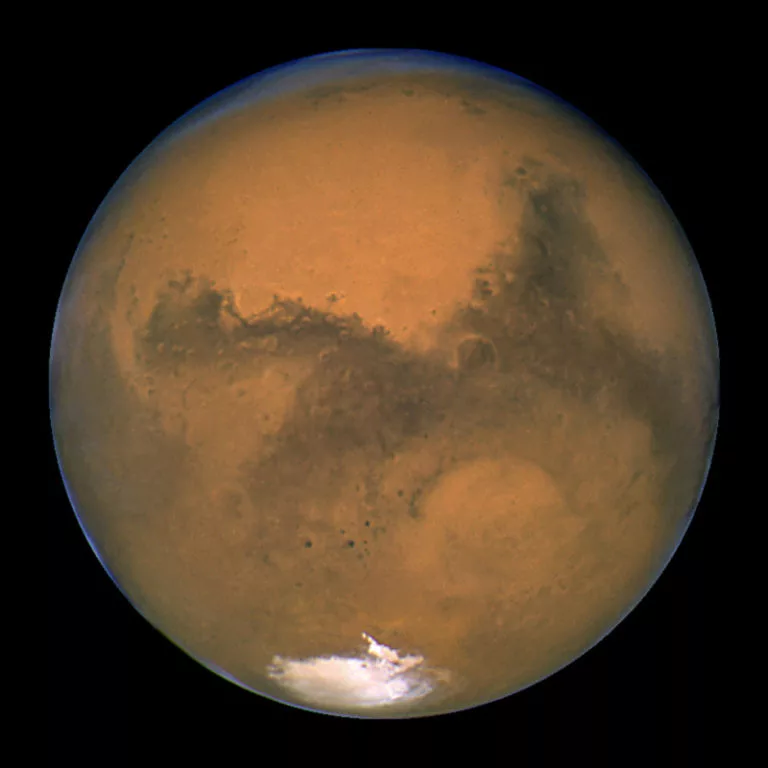
Opposition time for Mars, and several months of dancing with the stars
The Mars Express team showcases some of the best viewing opportunities of Mars in 2014, including how to spot Comet Siding Spring when it flies past Mars this October.