

 Explore Worlds
 Find Life
 Defend Earth


All
All
 Sun
Sun Mercury
 Venus
Venus Earth
Earth Mars
Mars Jupiter
 Saturn
 Uranus
 Neptune
 Small Bodies
Stories, updates, insights, and original analysis from The Planetary Society.

Lunar Farside Landing Plans
Phil Stooke describes a research trip to the Regional Planetary Image Facility at the USGS in Flagstaff, where he discovered Jack Schmitt's proposed plans for a farside landing site for Apollo 17.

Three bright planets: Portraits from the Pyrenees
It's a great time to go outdoors and look at planets. I have three glorious planetary portraits to share today, sent to me by amateur astronomer Jean-Luc Dauvergne.

New work with 35-year-old data: Voyagers at Ganymede and Saturn
The Voyager data set is a gift to Earth that keeps on giving. This week, I've seen three great new images processed from this old data set.

Lockheed Proposes to have Humans Orbiting Mars by 2028
Lockheed Martin proposed a system to send humans to orbit Mars in the year 2028—a concept that shares many core values with The Planetary Society's report, Humans Orbiting Mars, we released last year.

Akatsuki begins a productive science mission at Venus
Japan's Akatsuki Venus orbiter is well into its science mission, and has already produced surprising science results. The mission, originally planned to last two years, could last as many as five, monitoring Venus' atmosphere over the long term.

Pretty Pictures of the Cosmos: The Eye of Sauron
Astrophotographer Adam Block shares his latest image, this time of a menacing spiral galaxy.

Space Exploration: Leaving the Earth to Understand It
Looking back at Earth from beyond helps to give perspective on our place in the cosmos.
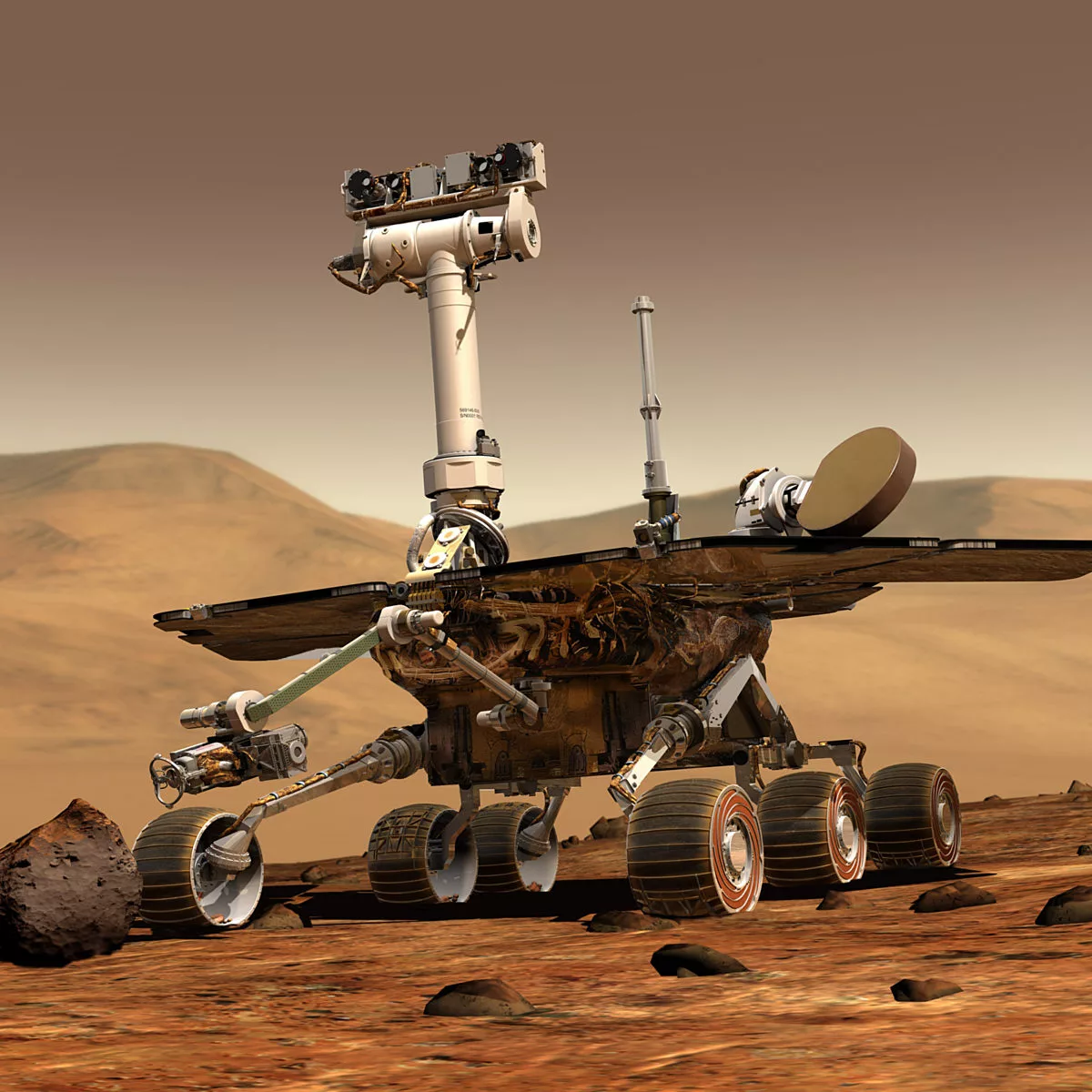
Field Report From Mars: Sol 4365 - May 5, 2016
Opportunity arrived at its current location on sol 4345 to begin investigation of an outcrop on the crest of a ridge near the west end of Marathon Valley.

State of NASA Earth Observation
Anna Scott gets us up to speed on NASA's Earth-observing missions nearly 60 years into the satellite age.

A feast of new OSIRIS photos from comet 67P
Last week, the Rosetta mission released a large quantity of science data to the worldwide public, including photos from the mission's close observation phase and the Philae landing.
Mars Exploration Rovers Update: Opportunity Sleuths New Site for Smectites
Opportunity and the Mars Exploration Rovers (MER) team pressed on through the Martian winter and spent April sleuthing for clay minerals at the mission’s new site on the southern wall of Marathon Valley.

New lunar mosaics emerge as Surveyor digitization project continues
A team of scientists at the University of Arizona continue their efforts to extract data from more than 90,000 images captured during NASA's Surveyor program. In the meantime, new first-look images and an animation have been released.

The what-o-sphere? An explainer
Why do we need to slice up atmospheres into classifications like the troposphere, stratosphere, mesosphere, and thermosphere?

The Giant Volcanoes of Mars
Justin Cowart shares some spectacular images showcasing Mars' volcanoes from Mars Express.

Dawn Journal: A New Angle on Ceres
Since April 11, instead of photographing the scenery directly beneath it, Dawn has been aiming its camera to the left and forward as it orbits and Ceres rotates to map more of the dwarf planet.

A Moon for Makemake
The solar system beyond Neptune is full of worlds hosting moons. Now we know that the dwarf planet Makemake has one of its very own.

Future High-Resolution Imaging of Mars: Super-Res to the Rescue?
HiRISE Principal Investigator Alfred McEwen explains an imaging technique known as Super-Resolution Restoration (SRR), and how it could come in handy for high-resolution imaging of the Red Planet.

What NASA Can Learn from SpaceX
SpaceX's announcement that it will send Dragon capsules to Mars demonstrates the advantage of having a clear plan to explore the red planet. NASA should take note.

The phases of the far side of the Moon
Serbian artist Ivica Stošić used Clementine and Kaguya data to give a glimpse of the phases of the lunar farside.
Field Report From Mars: Sol 4333 - April 1, 2016
Opportunity has climbed west and up Marathon Valley in one of the final campaigns before moving on and beginning the summer field activities to the south southward.