

 Explore Worlds
 Find Life
 Defend Earth


All
All
 Sun
Sun Mercury
 Venus
Venus Earth
Earth Mars
Mars Jupiter
 Saturn
 Uranus
 Neptune
 Small Bodies
Stories, updates, insights, and original analysis from The Planetary Society.
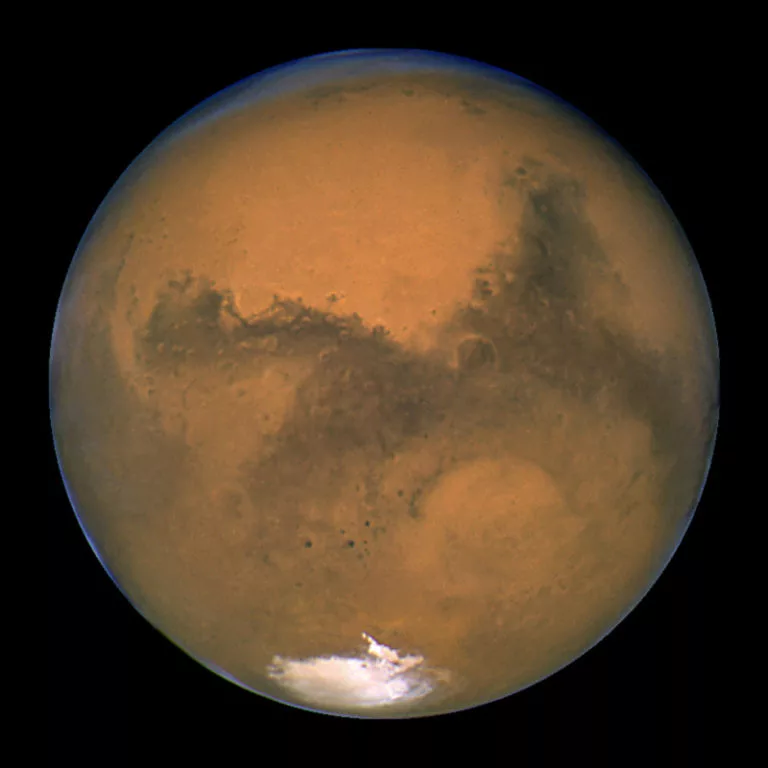
Opposition time for Mars, and several months of dancing with the stars
The Mars Express team showcases some of the best viewing opportunities of Mars in 2014, including how to spot Comet Siding Spring when it flies past Mars this October.

More excitement in the outermost solar system: 2013 FY27, a new dwarf planet
On the heels of last weeks reports of a second Sedna and a ringed Centaur comes a third cool outer solar system discovery: A new, likely large member of the Kuiper belt. With an absolute magnitude of about 3.0, the new object currently known as 2013 FY27 is the tenth brightest object beyond Neptune .

Comet Siding Spring Mars encounter: Cosmic bully spotted by ESA and NASA
Hubble has taken some great new images of our 'friend,' Comet Siding Spring, due to pass by Mars at less than 136,000 km on October 19 – less than half the distance between Earth and our moon.

Hangout on Air: Why yesterday was a good day for Solar System Science
On Wednesday, March 26, two important discoveries in the outer solar system were announced: the discovery of the second confirmed member of the Inner Oort Cloud (2012 VP113) and the discovery of rings around the planetesimal Chariklo. In a Hangout on Air, a rag-tag group of planetary scientists and astronomers active on Twitter talked about the discoveries.

A Centaur’s shadow reveals bright rings
Yesterday, a team of astronomers announced that they discovered a set of planet-like rings around Chariklo, an asteroid-like body that currently resides in the unstable region between the orbits of Saturn and Uranus.

Comet spotted! Rosetta's first sight of Churymov-Gerasimenko since wakeup
Rosetta has turned on its cameras and sighted its comet for the first time since waking from hibernation. Next activity: waking the Philae lander.

A second Sedna! What does it mean?
2012 VP113 is a new world that has been discovered on a Sedna-like orbit. What does that mean? It could imply the existence of a planet X, but doesn't prove it. It does suggest that a lot more Sednas are waiting to be discovered.

Comet Siding Spring Mars encounter: Ya gotta have a little ‘tude
In the latest update on how the Mars Express flight control team is planning to deal with Comet Siding Spring is all about attitude -- and hiding behind the biggest guy in the fight.

LPSC 2014: Water on...Vesta?
At the Lunar and Planetary Science Conference, Jennifer Scully discussed possible water-carved gullies in an unusual location: within craters on Vesta. Water-carved gullies on Mars I can accept; but on an airless lumpy body? I was intrigued.

Comet Siding Spring Mars encounter: How to determine the orbit of a comet?
In the quest to track Comet Siding Spring, the Mars Express team tells us how computing the orbit of a comet isn't as straightforward as science fiction would have us believe.

Postcards from Pluto
Amanda Zangari shares what it's like to be a scientist on New Horizons, and explains some of the day-to-day workings of the mission behind the scenes.

Pretty Picture: Three Wanderers
With all the excitement happening on missions criscrossing the solar system, I often forget to enjoy the views of our solar system that we can achieve from home. Amateur astronomers don't make the same mistake. Here's a lovely photo that Stuart Atkinson sent me, captured last night from Kendal, England, showing four special wanderers.

The Very Large Telescope sights Rosetta's comet target, sees activity beginning
Rosetta's comet target, 67P/Churyumov-Gerasimenko, has emerged from behind the Sun as seen from Earth, and the Very Large Telescope has photographed it. The new images show that cometary activity has already begun as Rosetta approaches for its August rendezvous.

[Updated] To Europa!...Slowly. First Impressions of NASA's New Budget Request
Europa may get a mission...eventually. We give our first take on the 2015 NASA Budget request. How does Planetary Exploration fare? Which projects were cancelled? Will NASA capture an asteroid? And most importantly, what can you do about it?

Hypervelocity Cratering and Riding Out the Risk
Today's update from the Mars Express team contains the realisation that, for some of the risks associated with October's Siding Spring flyby, there may not be much the team can do.

2015 will be the Year of the Dwarf Planet, and you need to tell people about it!
I am very excited about 2015, more so than I have been about any year since I started working at The Planetary Society. Dawn will enter orbit at Ceres, and New Horizons, which will fly past Pluto and Charon. But if we want this kind of exploration to continue, I'm challenging you, dear readers, to tell the world why such non-planetary worlds are compelling places to go exploring.

Space is really, really big – except sometimes it isn’t
Here's the next installment in the continuing story of how the Mars Express team is preparing for Comet Siding Spring flyby, 19 October 2014. This week: introducing the spacecraft's subsystems and structure – and wondering how we can absorb impacts.

Eyes and stopwatch are all that are needed to help measure an invisible asteroid
Would you like to be part of one of the largest citizen-science efforts in the history of astronomy? The International Occultation Timing Association (IOTA) invites you to join in the campaign to observe and time the best and brightest asteroid occultation ever predicted to occur over a populated area – and no telescope is required!
Comet Siding Spring Mars encounter: Why orienting Mars Express is the heart of the challenge
Today's post continues where we started last week with an update from the Mars Express Flight Control Team at ESOC on their preparations for the 19 October Comet Siding Springs flyby. Today: defining the challenge!

Mars Express team readies for Siding Spring
On Sunday, 19 October 2014, at around 18:30 UTC, comet C/2013 A1 – known widely as 'Siding Spring' after the Australian observatory where it was discovered in January 2013 – will make a close fly-by of Mars.