

 Explore Worlds
 Find Life
 Defend Earth

All
All
 Sun
Sun Mercury
 Venus
Venus Earth
Earth Mars
Mars Jupiter
 Saturn
 Uranus
 Neptune
 Small Bodies
Stories, updates, insights, and original analysis from The Planetary Society.

A theme song for IKAROS
JAXA's solar sail mission IKAROS is still hibernating, and there's no way of knowing if the spacecraft will reawaken or not. They try to raise contact with the spacecraft once a month, with the last attempt being made on March 10; we can only wait to see if they'll succeed. What better time to release a theme song for the mission? IKAROS has always been even more full of personality even than other JAXA missions (which is saying a lot).

Venus Express star trackers recovered
Just a quick note because I didn't want to let the weekend go by without telling people that Venus Express' star trackers are back online.

Pretty picture: A study in ringlight
Clearly, this is Saturn, and its rings, and if you look closer you can see a tiny circle, on top of the rings, which is Mimas, and two stars in the background. It should look weird to you that while the rings are bright, Mimas is a black dot. What is happening here? Nearly everything in this picture is lit by light that has not arrived directly from the Sun.

Good news, bad news: GRAIL science underway, Venus Express suffers storm damage
Two brief mission updates. First, the good news: NASA announced yesterday that the twin GRAIL spacecraft have begun the science phase of the mission, transmitting precisely timed signals to each other in order to map the Moon's gravity field. The bad news: according to ESA, since the recent solar storm passed Venus, both of Venus Express' star trackers are suddenly unable to detect stars.

"How Much Would You Pay for the Universe?"
NASA's Mars science exploration budget is being decimated, we are not going back to the Moon, and plans for astronauts to visit Mars are delayed until the 2030s -- on funding not yet allocated, overseen by a congress and president to be named later.

Solar storm in progress
Last night the Sun unleashed a large coronal mass ejection in our direction. Here is a compilation of images from SOHO's two LASCO cameras, plus a prediction from the new space weather prediction model that I learned about at the American Geophysical Union in December. The storm will arrive at Earth on March 8.

Planetary Society Statement on Proposed Cuts to Planetary Science Budget
The Planetary Society is deeply troubled with the priorities reflected in NASA's FY13 budget. If implemented, it will portend grave consequences for our nation's ability to conduct deep-space science missions and could irreversibly erode unique aspects of the space industrial base needed for such missions.

LeetUp Reconnaissance Report
A recap of the

You Can Hear Neil Tyson Testify
Neil DeGrasse Tyson, astrophysicist extraordinaire and Planetary Society Board Member, will be testifying to the Senate Committee on Commerce, Science and Transportation tomorrow, March 7.

New "Snapshot From Space": Defending Our Planet
A new installment of our

Venus' very pretty craters
Each Magellan images of Venus seems to be a work of abstract art.

Pretty pictures: Voyager 2 at Jupiter
Here are two perfect examples of Voyager 2's amazing untapped treasures.

Mars Above, Mars Below
With Mars at opposition once again, astronomers around the world will soon be looking up for our best telescopic views of the Red Planet. But next weekend, I and a group of scientists will be turning our gaze downward for views of that alien planet.
Third Rock Rocks!
Have you heard it?

BepiColombo's launch date has slipped to August 2015
ESA announced this morning that the launch of their BepiColombo mission, a cooperative effort with JAXA, has been delayed from its originally planned July 2014 to the backup launch window in August 2015.

Dawn Journal: Bonus time at low altitude
Dawn is continuing its exploits at Vesta, performing detailed studies of the colossal asteroid from its low altitude mapping orbit (LAMO).
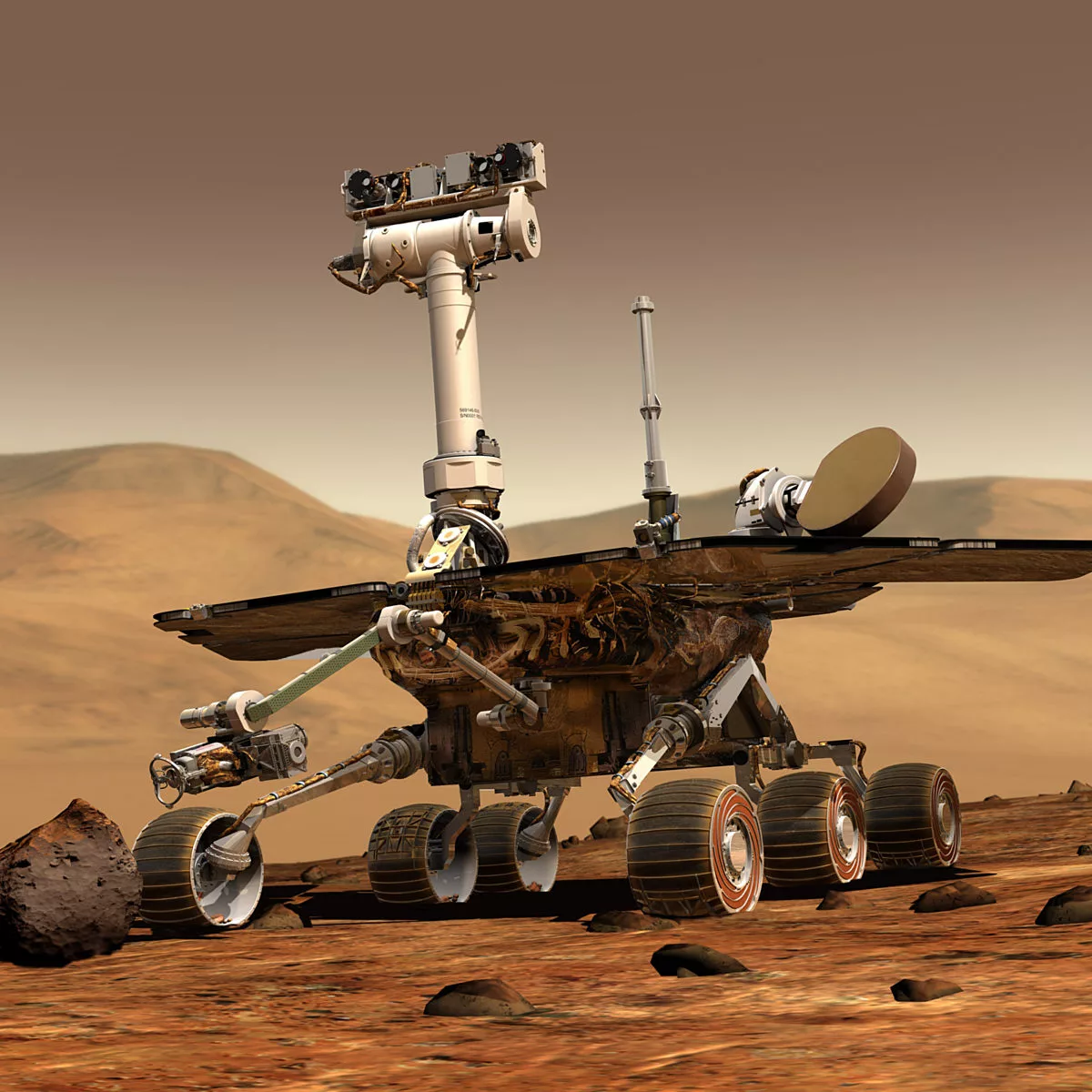
Mars Exploration Rovers Update: Opportunity Turns On, Tunes In, and Drops Panoramic Postcard to Earth
There's no hail or snow or sleet, though it is the depth of winter at Meridiani Planum and a cold unimaginable to us has gripped the landscape.

Snapshots From Space: NASA's Treasure Trove of Unprocessed Images
The second episode of Emily Lakdawalla's new video series reveals the gigantic library of solar system images captured by NASA spacecraft, and explains why we've seen so few of them. Emily says they're all online, waiting for space geeks to turn them into gold.
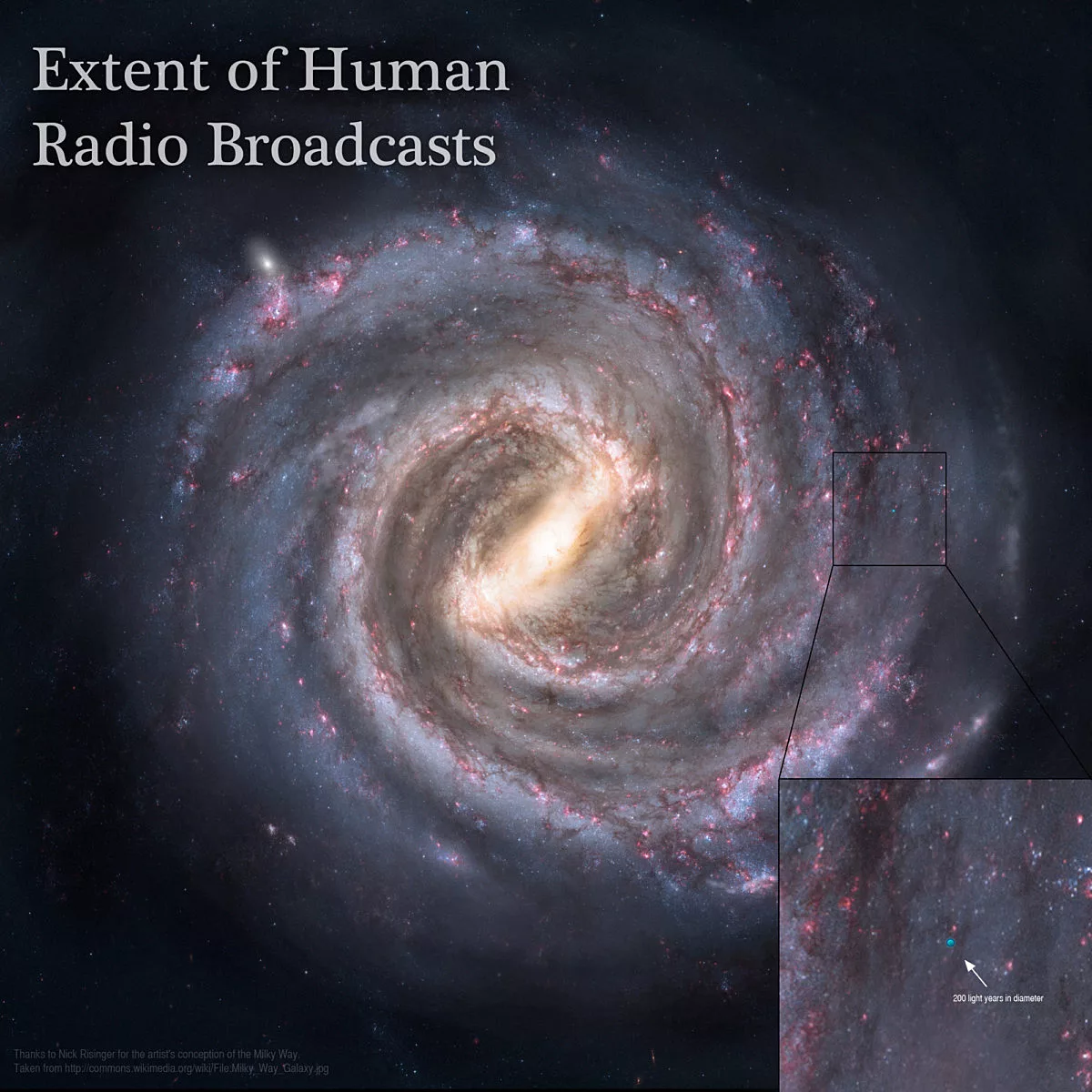
This is how far human radio broadcasts have reached into the galaxy
There is an ever-expanding bubble announcing Humanity's presence to anyone listening in the Milky Way.
Space, Available
Recent deep funding cuts by the Administration and Congress for NASA's space exploration programs are turning the final frontier into an ever-receding dream.