

 Explore Worlds
 Find Life
 Defend Earth


All
All
 Sun
Sun Mercury
 Venus
Venus Earth
Earth Mars
Mars Jupiter
 Saturn
 Uranus
 Neptune
 Small Bodies
Stories, updates, insights, and original analysis from The Planetary Society.

Meet two astronaut candidates who can help NASA do science on other worlds
Two of NASA's new astronaut candidates are particularly suited to conduct scientific research on other worlds: Zena Cardman, a geobiologist, and Jessica Watkins, a geologist.

Function over form: NASA's Space Launch System gets a new paint job
Last week, NASA revealed an updated design for the Space Launch System, featuring black-and-white checkerboards streaking down each of the vehicle's solid rocket boosters.

Cubes in Space
Aspiring astrophysicist Julie Seven Sage reports from the launch of student-designed CubeSat payloads at NASA's Wallops Flight Center.

Revisiting the ice giants: NASA study considers Uranus and Neptune missions
Only one spacecraft has ever visited Uranus and Neptune: Voyager 2, in the late 1980s. A new NASA report explores the reasons to go back, and what type of mission might take us there.

Did a Planetary Society citizen scientist help find one of Earth’s biggest impact craters?
Scientists have found what appears to be a 250-kilometer-wide crater near the Falkland Islands. Is it ground zero for Earth's largest-ever extinction event?

Recap: India's new GSLV-MK3 rocket completes successful test
The first operational launch of the Geostationary Satellite Launch Vehicle Mark 3 rocket, or GSLV-MK3, developed by the Indian Space Research Organization (ISRO), was successfully conducted on Monday.

India enters the big league with new, powerful rocket
The countdown has begun for the first fully operational flight of the Indian Space Research Organization’s most powerful rocket to date: the Geostationary Launch Vehicle Mark 3, or GSLV-MK3.

Here's what you need to know about the Electron rocket, which is set to launch from New Zealand
Rocket Lab's Electron, a light-lift launcher for small satellites, is ready to make its debut test flight from a peninsula in New Zealand.

The anatomy of a delay: Here's a timeline of twists and turns for NASA's SLS and Orion programs
The Space Launch System and Orion won't fly until 2019, and NASA is sticking with its original plan not to include astronauts for the maiden mission. Here is a timeline of some of the programs' major twists and turns over the years.

Learn the rocket equation, part 2
In the second and final chapter of our series, we’ll explore what the rocket equation has to say about travel through the solar system, using the example of launching a rocket to Pluto.

Learn the rocket equation, part 1
Have you ever wanted to learn the fundamental physics behind one of the most basic concepts of rocket science? In part one of our two-part series, we explore the foundations of the famous rocket equation.

The first Space Launch System flight will probably be delayed
NASA's new heavy lift rocket is currently scheduled to launch the Orion spacecraft on a test flight next year. But all signs are pointing to a probable delay.

Our asteroid hunters are trying to save the world. Here’s what they’ve been up to
Here are some recent reports from our NEO Shoemaker Grant program asteroid observers, who are quite literally trying to save the world.

Fossils or good-looking rocks? Why searching for life on other worlds is hard
If you find a structure that looks like ancient life, can you be really sure that it is ancient life?
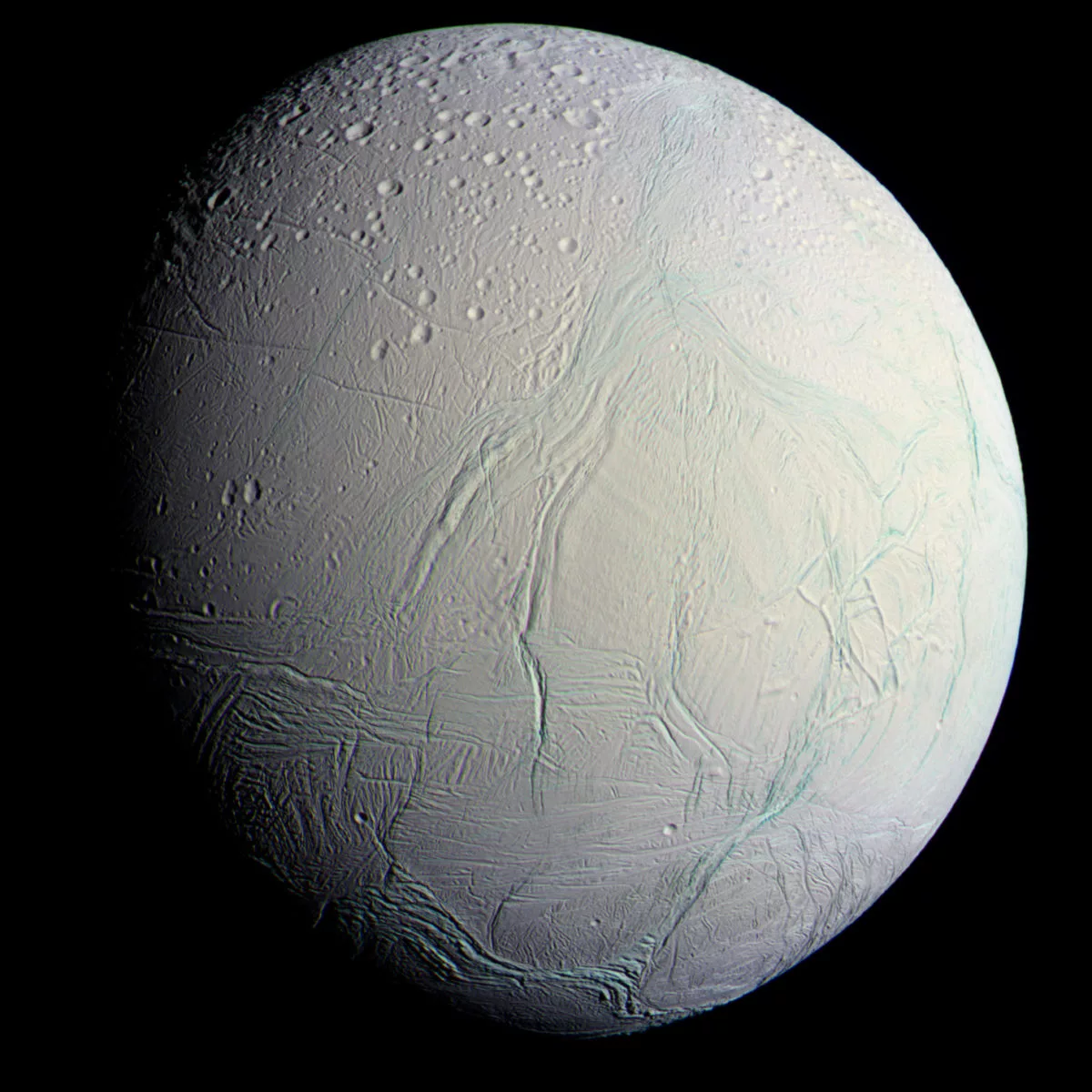
Another smoking gun in the search for life in Enceladus’ ocean
NASA's Cassini spacecraft sniffed out molecular hydrogen spewing from Enceladus' subsurface ocean. The discovery means Saturn's moon has all the basic ingredients needed to support life.

Expedition 50 had a fun and good ISS crew
I believe Expedition 50 had a fun and good ISS crew. I base this declaration solely on the moments they shared on social media. This logic is completely bulletproof and there's no point trying to prove otherwise.

NASA unveiled new plans for getting humans to Mars, and hardly anyone noticed
NASA revealed its most concrete plan yet for sending humans back into deep space, centered around a small lunar space station and a reusable transport ship to carry astronauts to Mars and back.

A repeat of the space shuttle's bold test flight? NASA considers crew aboard first SLS mission
NASA has only flown astronauts aboard a rocket's first flight once, when John Young and Bob Crippen took space shuttle Columbia on the boldest test flight in history. What are the risks of repeating the feat for SLS?

Microbes exist deep inside Earth’s craters. Could this be the secret to finding life on other worlds?
Earth possesses amazing biological diversity. Every corner of this planet—no matter how bizarre the place—is inhabited by microorganisms. This includes impact craters.

Let's talk about this whole Moon vs. Mars thing for human spaceflight
NASA's current human spaceflight goal is Mars, but the Trump administration could change that to the Moon. Is that a good idea? Here's an in-depth look at the differences in science gain, the arguments for and against a potential commercial market, and whether or not the technological and operational challenges required to reach the Moon apply to Mars.