

 Explore Worlds
 Find Life
 Defend Earth


All
All
 Sun
Sun Mercury
 Venus
Venus Earth
Earth Mars
Mars Jupiter
 Saturn
 Uranus
 Neptune
 Small Bodies
Stories, updates, insights, and original analysis from The Planetary Society.

Welcome to Carnival of Space #191
Welcome, everyone, to the Planetary Society Blog for the 191st Carnival of Space! Every week, a different webmaster or blogger hosts the Carnival, showcasing articles written on the topic of space.

Face-to-face with Curiosity
I had a once-in-a-lifetime opportunity today for a face-to-face visit with one of the biggest celebrities in my world: Curiosity, the next Mars rover. The Jet Propulsion Laboratory gave members of the media a chance to suit up in the white coveralls known as
What's up in the solar system in April 2011
April 2011 will see MESSENGER begin the science phase of its orbital mission at Mercury, and should, I think, also see the start of Dawn's approach observations of Vesta. At Mars, Opportunity is back on the road again, rolling inexorably toward Endeavour. At Saturn, Cassini will continue its focus on Saturn and Titan science.

Mars Exploration Rovers Update: Spirit's Silence Haunts, Opportunity Roves on to Endeavour
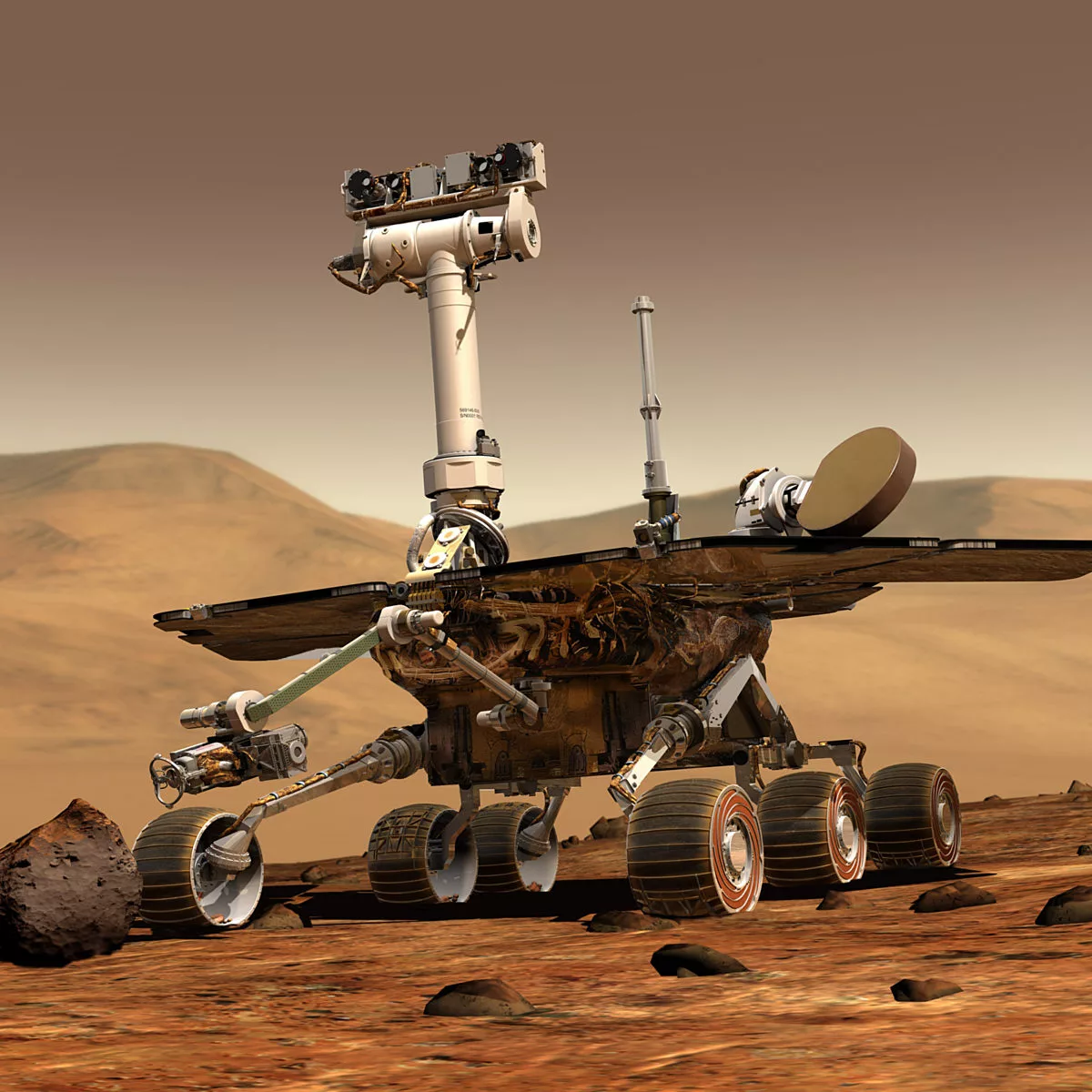
The Mars Exploration Rover mission experienced a month of highs tempered by one haunting low as it neared completion of its 87th month of a three-month tour this month. While Opportunity wrapped up its work at the youngest, freshest crater the rovers have explored to date, Spirit remained silent as the point of maximum sunshine for the Martian year came and went, further dimming once high hopes that the rover would phone home and rove on as summer settled on the southern hemisphere of Mars.
Images and data now pouring in from MESSENGER at Mercury
Today the MESSENGER mission held a press briefing to show off some of the first images and other data that are streaming in from the spacecraft, now that it has entered Mercury orbit.

MESSENGER delivers its first image from Mercury
This is MESSENGER's very first photo from Mercury orbit, a wide-angle view that reaches right to Mercury's south pole, exposing a very tiny sliver of territory not previously seen by spacecraft.

LPSC 2011: Lunar Layers
Some recent high-resolution images from the Lunar Reconnaissance Orbiter Camera (LROC) have revealed large blocks on the lunar surface that show evidence of layers. The layered blocks were seen near the crater Aristarchus, which is a bright crater in the northeast quadrant of the nearside Moon.

Saturn's storm: A quick turnaround from Hubble
Saturn's raging northern storm has been watched since it began by amateur astronomers, and now Cassini is getting in to the act too. Presumably once astronomers realized the magnitude of what was going on, some of Earth's great observatories were also occasionally pointed at the ringed planet to watch the storm grow.

Checking in on Jupiter: the belt is coming back
Since it's been several months since I last took a look at Jupiter, I thought it was time to see what's up with the South Equatorial Belt.

The end of Stardust
So, it's over. Stardust's last transmission to Earth was yesterday, March 24, 2011 at 23:33 UTC. Its final act was to burn up all of its last remaining fuel, a move intended to help engineers validate their guesses for how much fuel actually remained in the tanks.

In honor of Stardust: The Annefrank encounter
Since Stardust is being decommissioned today I thought it'd be fitting to take a look back at one of its data sets. I hadn't fiddled with the Annefrank data set before, and it was small and easy to deal with.
Tomorrow is Stardust's very last day
What's that in my eye? Must be a piece of stardust that's making my eyes water as I read that Stardust will be given its very last command tomorrow, a command that'll end its long life, but give its builders one more piece of valuable data in the process.

A zoomable MastCam is not going to make it to Mars
I hate being the bearer of bad news, but here it is. Amid all the building excitement for Curiosity -- the successes in testing, the delivery of the instruments, the fun of tuning in to Curiosity Cam to peek in on engineers doing their work in preparing the next rover for launch -- I've learned that a much-anticipated (but not required) feature is not going to make it on to the rover.

Evidence for rain on Titan
Last week, Zibi Turtle and Jason Perry and a dozen other coauthors published a paper in Science discussing evidence for rain on Titan.

Encouragement from space for Japan
I saw this posted by @Akatsuki_JAXA (the Akatsuki Venus mission's official Twitter identity) and thought it was cute so I'm sharing it here.

Dawn's instruments are being roused for Vesta approach
Today the Dawn imaging team released a photo from the main camera, the Framing Camera, symbolizing that they're preparing to start Dawn approach science; the other two science instruments, a spectrometer and a neutron detector, are also being turned on and checked out.

Neat video of Curiosity drive testing (plus a code-cracking challenge)
The Jet Propulsion Laboratory has posted a short video showing some recent testing of an engineering model of the Mars Science Laboratory in their outdoor Mars Yard; they're testing the performance of the rover's driving capability over slopes of varying steepness and covered with bedrock, compacted sand, and very loose sand.

MESSENGER successfully entered orbit at Mercury!
Just a brief post to announce that at 01:00 UTC MESSENGER completed a 15-minute burn of its main engines to enter orbit at Mercury!
How to follow MESSENGER's orbit insertion today
The day is finally here! In only five and a half hours, at 00:45 on March 18 (according to the spacecraft's clock), MESSENGER must ignite its main engine and run though a third of its fuel in only 15 minutes in order to enter its planned orbit around Mercury.

LPSC 2011: Day 4: Ted Stryk on icy moons and The Moon
Here are Ted Stryk's notes from the sessions he attended in the afternoon of Thursday, March 10, at the 42nd Lunar and Planetary Science Conference.