

 Explore Worlds
 Find Life
 Defend Earth


All
All
 Sun
Sun Mercury
 Venus
Venus Earth
Earth Mars
Mars Jupiter
 Saturn
 Uranus
 Neptune
 Small Bodies
Stories, updates, insights, and original analysis from The Planetary Society.
![Juno [DEPRECATED]](https://planetary.s3.amazonaws.com/web/assets/pictures/_1200x1200_crop_center-center_82_line/juno_art_at-jupiter.jpg.webp)
Yay for Juno! First major course correction complete
JPL issued a news note today that the Jupiter-bound Juno spacecraft has successfully completed the first of twelve trajectory correction maneuvers it'll perform between launch last year and Jupiter arrival in 2016. Its next maneuver will take place in August of this year. Go Juno!

GRAIL MoonKAM's first (released) video of the Moon
Here's the first release from MoonKAM, tiny cameras included on both GRAIL spacecraft whose only purpose is public outreach. Classrooms can sign up for opportunities to propose sites to image.

Akatsuki to try for Venus orbit in June 2016
Japan's Venus climate orbiter Akatsuki failed to enter orbit in December 2010 when a clogged valve caused catastrophic damage to its main engine. Since then, JAXA's engineers and navigators have determined that although the main engine is a total loss, there is the possibility of achieving Venus orbit on a future encounter, using only the attitude control rockets.

Official Phobos-Grunt Failure Report Released
Roscosmos, the Russian Space Agency, has released its official report concerning the failure of the Phobos-Grunt spacecraft, which fell back to Earth from orbit on January 15 after failing to ignite the engines that were to take it to the largest Martian moon.
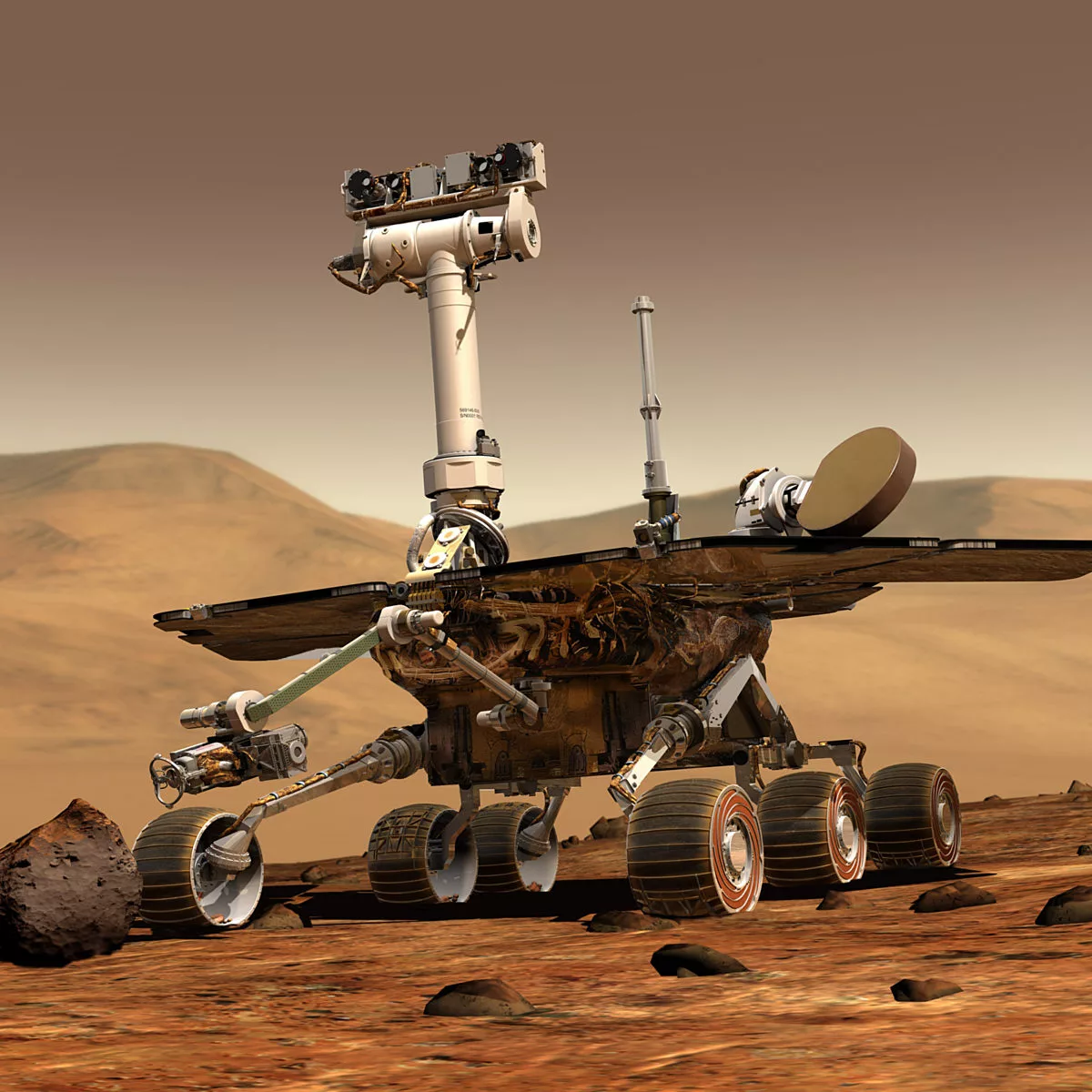
Mars Exploration Rovers Update: Opportunity Celebrates 8, Keeps on Rockin' into Year 9
As Opportunity worked away on its winter science campaign, the Mars Exploration Rover mission quietly completed its eighth Earth year of exploring the surface of the Red Planet last week, and is now roving on into Year 9 of its 90-day mission.

Dawn Journal: How does Dawn know where "down" is?
Since the last log, the robotic explorer Dawn has devoted most of its time to its two primary scientific objectives in this phase of the mission.

Geek craft: GRAIL twins Ebb and Flow in plastic canvas
Those of you who follow me on Twitter know that after beginning with Dawn last week, I've kept my fingers busy, stitching more spacecraft from plastic canvas. I now have prototypes for GRAIL, New Horizons, and MESSENGER.

At last: Rosetta's Mars flyby photos have been released!
On February 24, 2007, the Rosetta spacecraft passed by Mars, the second of four planetary gravity-assist flybys on its long route to a 2014 rendezvous with comet Churyumov-Gerasimenko. At the time, they released two photos from the main science camera, OSIRIS.

Dusty girl
Today Opportunity sent back to Earth the last few frames of the

Blast from the past: The Galileo Messenger
From 1981 to 1997, the Galileo mission published an approximately quarterly newsletter called the Galileo Messenger. It eventually ran to 45 issues, until the end of the Prime Mission. The first 20 were published before Galileo ever got off the ground. That period is the subject of this post.
Watch this week's Google+ Space Hangout
This week's lineup is a largely astronomical crowd so most of the conversation concerned dark matter and boiling exoplanets and imaging the black hole at the center of our galaxy.
The Dawn spacecraft, modeled in an unlikely medium
Last week when I joined the new weekly Space Hangout (a webcast video conference call of sorts), I realized I would need a 3D model of Dawn in order to explain what's going on with the mission right now.

Phobos-Grunt is no more
Phobos-Grunt has returned to Earth, a lot sooner than it should have. Yesterday, at approximately 17:45 UT, the Russian spacecraft and its passengers, including a Chinese orbiter and the Planetary Society's LIFE experiment, descended into Earth's atmosphere.

News brief: Phobos-Grunt has fallen to ground
The Russian military is stating that at 17:45 UT, Phobos-Grunt fell into the Pacific Ocean.

Reflections on Phobos LIFE
We explore space for the noblest goals of science and exploration, and we often persevere in spite of challenges. But space exploration is fraught with bad things happening, or, to use the technical term, ouchies. The Planetary Society's Phobos LIFE biomodule will re-enter the Earth's atmosphere in the next few days with the rest of the Phobos-Grunt mission.

Phobos-Grunt's upcoming demise: What we know and what we don't
I'm not looking forward to spending the weekend sitting deathwatch on Phobos-Grunt. It's not science, and it's a sad event, so my instincts would lead me to other subjects. But it contains the Planetary Society's Phobos LIFE experiment.

A Tale of Two Martians
It's the best of times for Mars exploration because we've got three orbiters and a rover studying the Red Planet. It's also the worst of times for my Russian, European, and Chinese colleagues who were part of the Phobos-Grunt mission.

Pretty picture: Saturn, a big moon, and a teeny one
A recent view from Cassini of Saturn with its largest moon (Titan) and one of its small ringmoons, Prometheus.
Dawn Journal: The Om of Orbit Adjustment
The Dawn mission's Project System Engineer Marc Rayman reports that Dawn concluded 2011 more than 40 thousand times nearer to Vesta than it began the year. It is now at its lowest altitude of the mission, conducting a detailed exploration of the protoplanet and continuing to make new discoveries.
Mars Exploration Rovers Update:Opportunity Climbs to Greeley Haven for Winter, and We Look Back at 2011
As New Year's Eve moved from time zone to time zone across planet Earth, the Mars Exploration Rover (MER) team looked to 2012 and wrapping its eighth Earth year of exploring, while up on the Red Planet Opportunity settled into the