

 Explore Worlds
 Find Life
 Defend Earth


Save NASA Science Action Hub
SAVE NASA SCIENCE
THE WHITE HOUSE WANTS TO SLASH SPACE SCIENCE BY 46% in 2027.
HELP STOP THIS THREAT, AGAIN.

Messages from constituents are proven to have a significant impact on how representatives in Congress prioritize issues like space exploration.
Spread the Word
Share this with your friends and post online to increase awareness and drive more civic action.
Donate to our advocacy program
Make a charitable donation to The Planetary Society's Space Policy & Advocacy program to help mobilize space advocates around the country.
NASA science is facing a 46% cut in the president's budget request for 2027.
If implemented, upwards of 53 science missions would be terminated, nearly half of NASA's entire science fleet. Thousands of jobs would be lost, billions of dollars of taxpayer investments would be wasted, and more than a dozen international partnerships would be broken.
This is an extinction-level event for space science.
Last year, we mobilized and stopped draconian cuts to space science. We need your help to do it again.
Latest Updates
Fiscal Year 2026 comes to a close today

By Jack Kiraly
Chief of Advocacy
As Fiscal Year 2026 comes to an end and FY 2027 begins tomorrow, the future of NASA's budget remains uncertain. Recent reports have shown that NASA's research programs are down as much as 30% in buying power from a decade ago and the agency still faces an additional 46% to its science missions.
Thankfully, NASA is beginning FY 2027 with a flat budget. Congress passed and the President signed H.R. 6500 earlier this month, averting a government shutdown. However, this temporary funding patch expires on December 11th. Congress will only have a short window of opportunity to act on the budget before this deadline.
Urge your representatives in Congress to reject the proposed cuts and fully fund NASA Science.
House passes Senate CR, delaying implementation of OMB grant changes
By Jack Kiraly
Chief of Advocacy
In a vote of 370 to 38, the House of Representatives voted to pass H.R. 6500, the Senate-led Continuing Resolution that – in addition to funding the government through December 11th – pauses implementation of OMB's proposed changes to federal grant rules for the duration of the CR. These proposed changes drew the opposition of more than 160,000 people, hundreds of organizations, and a bipartisan cohort of Members of Congress. The President is expected to sign the bill into law in the coming days.
The House and Senate are expected to be in session for the latter half of September before going on a month-long recess through the November midterm elections. Congress will then have just a few short weeks before the CR expires, likely requiring another CR that extends funding through the holidays and into the new year.
Substantial action on the FY 2027 budget is unlikely through the remainder of the 119th Congress, though the Senate Appropriations Committee may release their proposed funding bills at some point this month.
For NASA, this is good news as it prevents a disruptive government shutdown, provides flat funding for the first two months of the new fiscal year, and postpones the implementation of politically unpopular regulations on federal grants.
Senate passes CR, White House backs the bill
By Jack Kiraly
Chief of Advocacy
Over the weekend, the Senate voted 90 to 6 to advance H.R. 6500, the upper chamber's Continuing Resolution. In addition to extending government funding through December 11, this bill includes a temporary pause on implementation of the Office of Management & Budget's proposed changes to grant-making rules through that same deadline. The White House issued a Statement of Administration Policy supporting H.R. 6500, functionally endorsing the Senate's CR over its House counterpart, which does not include the pause on the new grant rules.
This marks a major defeat for OMB Director Russ Vought's efforts to make significant changes to science policy and funding, following the dismal response to the FY 2027 budget request submitted to Congress earlier this year.
But until this bill becomes law, the threats of the proposed rule changes and a government shutdown still loom. While Congress is on August Recess, contact your Representative and encourage them to support these important provisions of H.R. 6500.
House passes first FY27 CR, holds Appropriations Committee hearing on shutdown reform
By Jack Kiraly
Chief of Advocacy
Last night, the House of Representatives passed H.R. 9770 in a vote of 220-205 to preempt a government shutdown starting on October 1st and fund federal agencies through December 4th. The bill is considered a "clean CR" because of its lack of guardrails on how OMB can influence federal spending during this lapse. The Senate now must either take up H.R. 9770 or propose their own CR, which Majority Leader John Thune (R-SD) has said he intends to do next week.
The House Appropriations Committee convened a hearing this morning to discuss ideas for reforming the annual appropriations process. Witnesses include Senator James Lankford (R-OK), Congressman Tom McClintock (R-CA), and former OMB Director Shalanda Young. The hearing is ongoing and can be viewed here.
House advances rule to consider first Continuing Resolution for FY 2027
By Jack Kiraly
Chief of Advocacy
In a near-party-line vote, the U.S. House of Representatives passed a procedural hurdle to allow for consideration of H.R. 9770, a Continuing Resolution (CR) that would prevent a government shutdown and keep agencies funded from October 1st through December 4th. This is the first CR to be considered for FY 2027 and comes after Republican House Appropriators expressed concern over the lack of progress on FY 2027 funding bills in the Senate. The CR does not address concerns over the Office of Management & Budget using the lapse of full-year funding to impound funding and enact the cuts proposed in the budget request. The full vote on H.R. 9770 is expected before the House adjourns for August recess later this week. The Senate has not indicated how soon after passage in the House it will take up the measure.
The Planetary Society submits official feedback to the OMB rules change

By Casey Dreier
Chief of Space Policy
Today, we submitted The Planetary Society's official feedback to the proposed rules changes to federal grants, which enable nearly all space science activity in the United States. We believe the changes would result in real harm to The Planetary Society (through the added costs of accessing scientific results, chilling effects on free speech by scientists receiving grants, and potential consequences for scientists associating with issue organizations like The Planetary Society) and to the public through the loss of access to scientific results they have already paid for through tax revenue.
We also included dozens of questions for the Office of Management and Budget (OMB) that were left unaddressed in their initial analysis of the impact of these changes.
We recommended that the OMB and participating agencies withdraw the rule entirely.
As of writing, there were more than 350,000 submissions, an astonishing response for something as esoteric and technical as federal regulations revisions. According to an independent analysis of the submitted feedback, public opinion is running roughly 95% against the proposed changes.
You can read our entire response here (pdf).
OMB's new rules on federal grants blows beyond 15,000 public comments
By Jack Kiraly
Chief of Advocacy
In less than two weeks since the Office of Management & Budget proposed their total overhaul of federal grant-making, more than 15,000 people have submitted comments in opposition to the new regulations that put ideology over peer-review in science. This underscores how deeply unpopular this rewrite of American science standards is among the public.
You can submit your comment now through July 13th. You can make the most impact by taking as little as 20 minutes to write at least 2 paragraphs about why you support NASA and peer-review, merit-based science.
The Planetary Society releases statement, resources in opposition to OMB rule changes
By Jack Kiraly
Chief of Advocacy
In response to OMB's proposed changes that would undermine the foundation of the American scientific enterprise, The Planetary Society released the following statement:
"The Planetary Society strongly opposes the OMB’s proposed changes to federal grant-making rules. If implemented, the changes would isolate, suppress, and throttle American scientific activity by imposing burdensome new bureaucratic requirements and curtailing free speech, free association, and free inquiry. They would also enable partisan political control over grant awards and restrict the dissemination of scientific results.
"NASA's success depends on world-leading scientific capabilities. The nation’s scientific workforce, working closely with their international collaborators, has enabled historic discoveries such as past water on Mars, the accelerating Cosmos, the existence of exoplanets, and more.
"Science is the backbone of the American economy, generating a 3-to-1 return on the taxpayer’s investment. Our nation has always relied on merit-based, independent scientific review to select the best ideas and new technologies for development. The proposed rule changes would all but end the use of scientific merit in the selection of grants and programs across the government.
"The United States cannot be first in space if it is second in science. And the nation cannot lead the world in science if the systems are driven by politics rather than merit. The U.S. would cede the next generation of discoveries in space to other nations — including the potential detection of biosignatures or even life beyond Earth — if these rules are implemented.
"These rules are not final and the public has until July 13th to submit their comments on the proposed changes. We urge everyone who values science and supports the scientific exploration of space to participate in this important process and urge rejection of these reprehensible rule changes."
Also available are the following resources to help advocates write comments opposing these proposed rule changes:
- A tracked-changes dashboard comparing the current and proposed regulatory text, section by section: dashboards.planetary.org/rules-change/
- Our advocacy action, the quickest way for someone to submit a comment, with guidance on making it personal and effective: planetary.org/ombgrantrules
- A two-page briefing memo on what the rule would change, who is most affected, and how to write an impactful comment.
- An overview article detailing the impacts these regulatory changes would have on NASA Science: planetary.org/articles/when-science-answers-to-politics
Office of Management & Budget proposes major revision, dismantling of U.S. scientific enterprise
By Jack Kiraly
Chief of Advocacy
The White House Office of Management & Budget, the creators of the twice-failed budget proposals to gut NASA's science programs, announced a formal rule change to federal rules for grant-making. These proposed changes must stand public scrutiny for 45 days before being enacted.
Among the many changes proposed are new procedures whereby political appointees are given control over all new grants coming out of the federal government. Those appointees will have the ability to terminate existing and new awards, undermining the merit-based, peer-reviewed selection process that defines legitimate, scientific inquiry. The changes would also ease the ability for agencies to terminate awards "for convenience" and prohibits the use of award funding to enable researchers to present their findings at conferences and in academic journals. This is the most sweeping rewrite of American science standards in more than 75 years. The public can submit comments on these proposed changes until July 13.
An overview of the proposed changes is covered in this article in Ars Technica.
NASA submits reorganization, spending plans to Congress
By Jack Kiraly
Chief of Advocacy
According to reporting by POLITICO, NASA submitted a formal notice of its reorganization plans as well as its FY 2026 spending plan. Both are required to be approved by Congress, with the legislature having 30 days to approve or disapprove of the reorganization. The spend plan comes more than 80 days late with the submission 45-day deadline having passed on March 9th. Details about the spending plan are scant, but recent news about new elements of — including the renaming of three existing Commercial Lunar Payload Service missions and announcement of two vendors to provide the Lunar Terrain Vehicles for Artemis astronauts — reveals a focus by Administrator Isaacman on the Moon Base initiative announced two months ago at the Ignition event.
Despite "science" being included in many of the announcements, no new funding for instrument development and science investigations were part of any of the recent announcements, creating a cause for concern.
The destruction of Blue Origin's New Glenn rocket last night further complicates the planned acceleration of the Moon Base initiative.
Administrator Isaacman announces major NASA reorganization
By Jack Kiraly
Chief of Advocacy
This morning, NASA Administrator Jared Isaacman announced a sweeping reorganization of the space agency, the first in five years. The changes are expected to result in no layoffs, no canceled missions, and no facility closures. The major changes include:
- The Exploration Systems Development and Space Operations Mission Directorates are to be merged into a single Human Spaceflight Mission Directorate (HSMD) led by Dr. Lori Glaze, with Joel Montalbano and Kelvin Manning as deputies. This is a reversion of a change made under Administrator Nelson in 2021.
- Aeronautics and Space Technology are merged into a single Research and Technology Mission Directorate (RTMD) led by Dr. James Kenyon, returning to something resembling the pre-2011 configuration when aeronautics and space technology were managed together before STMD was carved out as a standalone directorate.
- Science missions in extended operations are proposed to be consolidated into a single agency-operated Science Operations Center, with the stated goal of reducing costs while continuing to produce valuable data, though the practical effect on missions across NASA's five science divisions remains unclear.
- Nuclear power is to be consolidated under a new Space Reactor Office within RTMD, which will hold procurement authority for all space nuclear activities across HSMD, RTMD, and SMD.
- The Jet Propulsion Laboratory management contract will be recompeted for the first time since the California Institute of Technology took over operations in 1958. The announcement stated this will not affect current projects or JPL's location, with terms of the competition yet to be released.
The full message and list of proposed changes, including the text of the policy directives instituting these changes, can be found here.
Statement from European space leader underscores uncertainty at NASA
By Jack Kiraly
Chief of Advocacy
In a post titled "Are we pilots or are we passengers?", the European Space Agency's Director General, Dr. Josef Aschbacher, outlines ESA's policy predicament caused by proposed cuts and major changes to NASA's programs. ESA has been a major partner of NASA, contributing instruments, launch vehicles, and talent to more than a dozen space missions. And ESA member countries also individually contribute to NASA missions.
The FY 2027 White House budget request proposes termination of NASA's involvement in several ESA missions, primarily the Laser Interferometer Space Antenna (LISA) and Rosalind Franklin Mars Rover. Additionally, changes to the Artemis program, largely done without consultation with NASA's commercial and international partners, has further strained the relationship between the United States and one of its largest allies.
House Appropriators advance NASA funding bill in party-line vote
By Jack Kiraly
Chief of Advocacy
In a party-line vote of 32-28, the House Appropriations Committee advanced their FY 2027 Commerce, Justice, Science, and related agencies appropriations bill. This legislation includes funding for NASA, proposing to keep the overall agency topline flat with the currently enacted FY 2026 level but reorganizing funding priorities under that. Science faces a 17% cut in this proposal. The bill now heads to the floor of the House, where it is expected to pass.
The Senate Appropriations Committee is expected to act in early June.
Read our summary of the bill and the path forward for FY 2027 appropriations.
House Appropriations Committee releases FY 2027 report
By Jack Kiraly
Chief of Advocacy
In advance of tomorrow's markup hearing of the House Commerce-Justice-Science bill that includes funding for NASA, the Appropriations Committee released the accompanying committee report. This supplemental document provides detailed information about the congressional intent for projects and programs under the topline funding levels provided for each major activity area of the space agency.
Overall, the House bill funds NASA at currently enacted levels but includes significant cuts to Science (17%). The report divides this $6 billion budget for Science in the following ways:
- Planetary Science Division $ 2,500.0 million
- Earth Science Division $ 1,325.0 million
- Astrophysics Division $ 1,485.0 million
- Heliophysics Division $ 625.0 million
- Biological and Physical Sciences Division $ 65.0 million
Science missions protected from the cancellation threats they face include Juno, New Horizons, OSIRIS-APEX, Chandra X-Ray Observatory, and more.
Space community rallies around efforts to Save NASA Science in FY27
By Jack Kiraly
Chief of Advocacy

In a major step in the Save NASA Science campaign, The Planetary Society and more than 20 partner organizations sent a letter to House and Senate CJS Appropriations leadership urging Congress reject the President's FY 2027 budget request and its proposed 46% cut to NASA's Science Mission Directorate. The signatories - representing a coalition of space organizations spanning professional societies, advocacy groups, labor unions, industry associations, community groups, and private institutions - warn that "if enacted, the FY 2027 request would end U.S. leadership in space science and needlessly damage the nation's scientific workforce." Under the OMB proposal, the smallest inflation-adjusted science budget since 1984, NASA would be forced to terminate more than 50 missions and eliminate 2,000+ civil service positions. The House has taken the first step by holding NASA's topline flat and early indications suggest the Senate will provide full and balanced funding. The prospects for the OMB request being enacted are dwindling as public and congressional pushback mounts.
House CJS Subcommittee advances spending bill
By Jack Kiraly
Chief of Advocacy
In a party-line vote, the House Commerce-Justice-Science Subcommittee voted to advance their budget bill that includes NASA funding to the full Committee. Significantly, the House CJS bill would keep the overall NASA budget topline flat with FY 2026 enacted, though it includes a 17% cut to the Science Mission Directorate and reorganizes other programmatic funding. Report text is not yet available, leaving many finer details unknown. The full Appropriations Committee is expected to take up this bill on May 13.
House of Representatives releases NASA budget bill
By Jack Kiraly
Chief of Advocacy
This morning, the House Appropriations Committee released their Commerce-Justice-Science appropriations bill. In it, they propose maintaining NASA's budget at the currently enacted $24.4 billion, a rejection of the Office of Management & Budget's request of $18.8 billion. NASA's Science Mission Directorate would still be cut in the House bill, just over 17%. A cut of that magnitude would have negative implications for U.S. leadership in the Earth and space sciences, though it is a significant improvement over the OMB's 46% cut. With the House now formally on the record proposing a flat budget, we now have the likely lower limit of the credible range of FY27 outcomes, making it considerably harder for OMB to justify implementing their disastrous request during a likely continuing resolution. The Senate, which held its budget hearing with Administrator Isaacman yesterday, is expected to release their CJS bill text in May or June. This is a full two months earlier than what happened last year.
You can view the House CJS bill alongside the OMB request and the currently enacted funding levels in our Historical NASA Budget Dataset.
Senate Appropriators hold hearing on proposed NASA budget cuts
By Jack Kiraly
Chief of Advocacy
Administrator Jared Isaacman took the witness stand for the second time this week, this time facing inquiries from the Senate Commerce-Justice-Science (CJS) Appropriations Subcommittee. As in yesterday's hearing with their House counterparts, the Senators on the panel were vocally frustrated with the Office of Management & Budget's FY 2027 funding proposal for NASA, noting its many inconsistencies, lack of transparency, and overall misalignment with public and congressional intent. "A budget that prioritizes exploration at the expense of science, technology and other core missions risks undermining the very foundation that makes that exploration effort possible," remarked panel Chairman Jerry Moran (R-KS).
Senator Chris Van Hollen (D-MD), the top Democrat on the CJS subcommittee, reiterated that the funding proposal amounted to a "staggering retreat" for the U.S. in the fields of Earth and space science, warning that "NASA cannot be first in space and second in science." Though Administrator Isaacman assured the committee members that the funding proposal was sufficient to accomplish the agency's long-term goals in science, technology, and exploration, the Senators were unconvinced and noted their incredulity at this claim.
The Senate will soon release their proposal for the CJS budget, likely including a full rejection of the proposed cuts to NASA.
Republicans and Democrats on the House Science Committee criticize proposed cuts to NASA
By Casey Dreier
Chief of Space Policy

The House Science Committee held a hearing on the 2027 NASA budget proposal today. It was not well-received. Chairman Brian Babin (R-TX), in his opening remarks, set the tone: "Many of the proposed budget cuts were rejected by Congress previously, and I am confident they will be rejected again.
Both the President and Congress have provided explicit direction for NASA to undertake a range of activities, from exploration and science to aeronautics research. We must ensure that NASA is funded at a level that allows it to pursue those missions."
To say this is a positive sign is quite the understatement. Similar remarks were made by Democrats and other Republicans on the committee.
Fresh off our Day of Action, The Planetary Society's government relations team, as well as members of our board of directors, were in attendance today. We also submitted our list of canceled missions and our perspective on the budget proposal in our input to the committee staff last week.
We are very pleased to see this clear sign by the House Science Committee that the OMB's proposal for NASA is out of step with congressional and national priorities in space exploration.
Next week we will see the first details of the House's proposed budget for NASA, when the body's CJS subcommittee marks up its appropriations legislation.
Space advocates from around the country rally for NASA science
By Casey Dreier
Chief of Space Policy
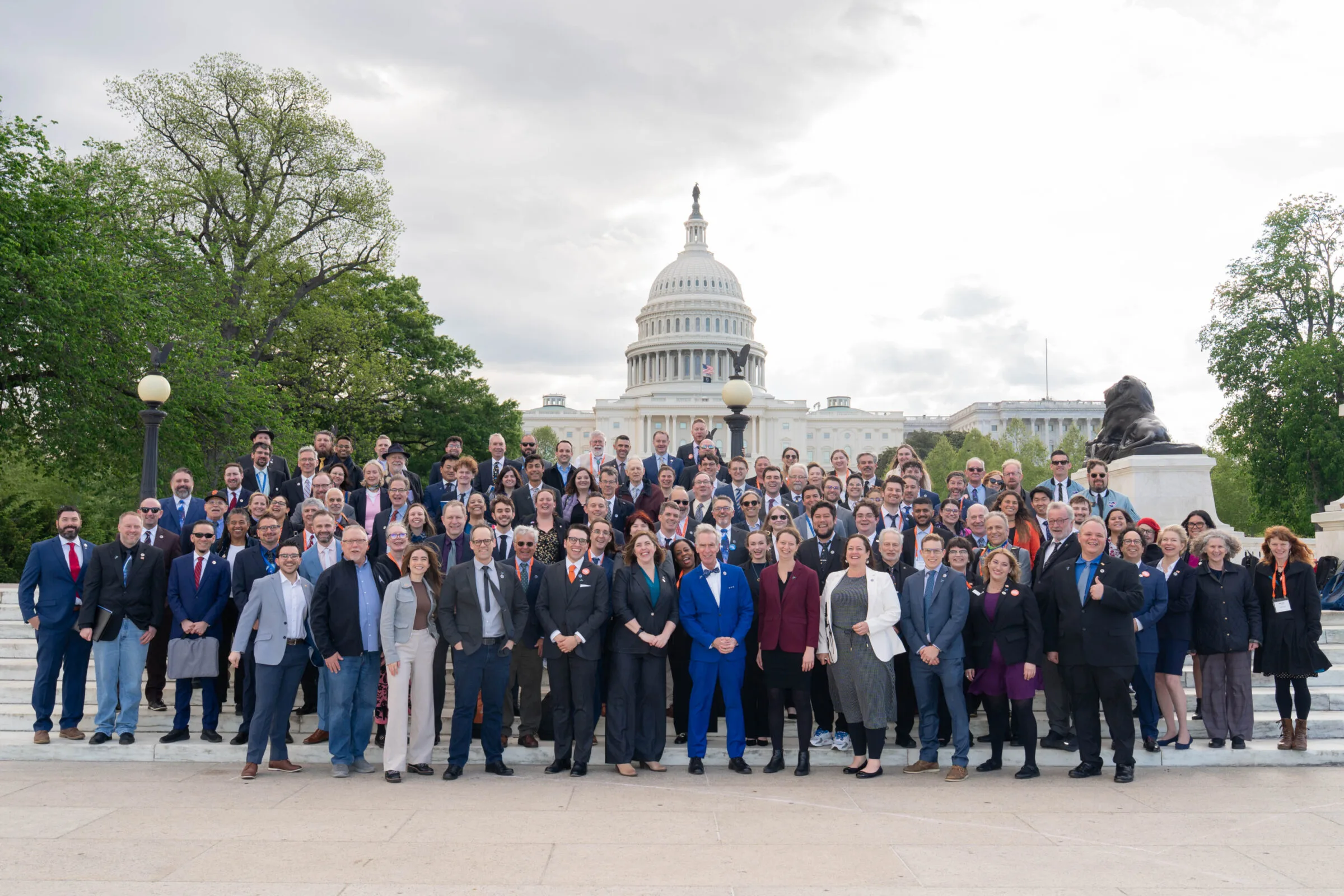
More than 130 Planetary Society members from 35 states and the District of Columbia visited their elected officials in Congress today to advocate for NASA science.
The timing couldn't have been better. Congress is moving quickly on appropriations this year, and has hearings scheduled on the 2027 budget request that once again proposed draconian cuts to NASA.
Senate leaders urge Congress fund NASA Science
By Jack Kiraly
Chief of Advocacy
A group of 22 U.S. Senators, led by former NASA astronaut and Senator Mark Kelly (D-Arizona), submitted an appropriations request letter to the Senate subcommittee in charge of NASA funding urging them to fully fund the space agency and its Science Mission Directorate.
The letter, complementing a House letter signed by a bipartisan group of 103 Representatives, requests that appropriators fund NASA Science at $9 billion in FY 2027. The request comes as the Office of Management & Budget's proposal to slash NASA and cut Science by 46% was verbally rejected by top appropriator, Senator Jerry Moran (R-Kansas).
Lead Republican appropriator rejects proposed NASA cuts
By Casey Dreier
Chief of Space Policy
Senator Jerry Moran (R-KS), the Chair of the Commerce, Justice, Science (CJS) subcommittee of appropriations that funds NASA, appeared to reject the draconian cuts proposed in FY 2027 to NASA science during a public event at the annual Space Symposium on April 12th:
“I'll work to make sure our subcommittee and our full committee in the Senate supports a robust and balanced NASA appropriations bill that is balanced between exploration, science, aeronautics and workforce...I think it would be a mistake to put money only in the missions related to exploration and not into science and the others."
Bipartisan congressional leaders signal opposition to proposed cuts
By Jack Kiraly
Chief of Advocacy

In the first bipartisan rebuke of the proposed FY 2027 budget cuts to NASA, the Co-Chairs of the Congressional Planetary Science Caucus - Rep. Judy Chu (D-California) and Rep. Don Bacon (R-Nebraska) - released the following statement:
“We are deeply alarmed that the Administration is once again proposing significant budget cuts to NASA and its science programs. NASA Science supports thousands of jobs and is essential to U.S. national security and leadership in space exploration, scientific discovery, and technological innovation. These drastic cuts would create enormous chaos and uncertainty for critical missions, the scientific workforce, and long-term research planning. At the same time, current funding for NASA Science has not kept pace with inflation, underscoring the need for more investment, not less. That is why, just weeks ago, we led over 100 bipartisan House Members in a letter to appropriators urging increased funding for NASA Science, and we will continue working on a bipartisan basis to ensure NASA receives the full, sustained funding it needs to lead the world in discovery and exploration.”
The Planetary Science Caucus and its Co-Chairs are a leading voice in Congress for advancing space science, research, and exploration in federal legislation and budgets. The Caucus represents Democrats and Republicans from across the United States, underlining the significance of this statement. Encourage your representatives to join the Caucus.
The 53 science missions targeted for cancellation
By Casey Dreier
Chief of Space Policy
The White House’s FY 2027 budget request for NASA would eliminate nearly half of NASA’s science fleet. The Planetary Society has identified 53 missions* across all major science divisions that would be terminated. You can view the list of missions here.
The budget request itself attempts to conceal these terminations. Instead of explicitly zeroing out a mission's funding line, the FY 2027 budget subtly omits any mention of terminated missions.
The only way to identify which science missions are proposed for termination is to compare programs line by line against prior-year budget documents and note which missions are missing from FY 2027.
The Planetary Society compiled this list based on our review of the budget documents in FY 2027, FY 2026, and FY 2025.
* This number was revised down, as we had incorrectly counted the TROPICS mission, which re-entered Earth's atmosphere in November of 2025.
13 former NASA astronauts release letter opposing cuts
By Jack Kiraly
Chief of Advocacy

In a letter to House and Senate Appropriations Committee leadership, a group of 13 former NASA astronauts urged Congress reject proposed cuts to NASA, warning that "cuts of this magnitude would surrender the future of space exploration to other nations willing to embrace the challenge and reap the rewards of global leadership." The signatories includes former NASA Administrator Charlie Bolden, former NASA Associate Administrator for Science Dr. John Grunsfeld. The collective spaceflight experience of the signatories is more than 647 days in space. The letter text can be found here.
The impactful letter comes as the White House Office of Management & Budget released a budget proposal that would slash the NASA budget by more than 23%, halve agency science funding, completely eliminate STEM engagement programs, and shut down more than 40 missions.
Early congressional pushback signals difficult path for budget request
By Jack Kiraly
Chief of Advocacy

Former NASA Chief of Staff and Congressman George Whitesides (California's 27th District) issued a statement in response to the release of the FY 2027 budget request.
In the statement, Congressman Whitesides indicated that the OMB-drafted request is "dead on arrival" in Congress, citing the overwhelming bipartisan support for NASA's mission of exploration and discovery in the FY 2026 budget.
Full budget request makes surprise debut
By Jack Kiraly
Chief of Advocacy
NASA's full budget request document, known as the congressional justification, was released just hours after the OMB posted their "skinny" budget. Typically, this document comes out days or even weeks.
Initial analysis shows the document lacking in significant details, including spending information for fiscal years 2025 and 2026 which is often provided to the public by these documents. There are few mentions of Administrator Isaacman's Ignition plans like the Moon Base, Space Reactor-1, and an accelerated Artemis Program. And the document makes the assumption that Congress had enacted last year's budget proposal, which did not happen. This inadequate document underscores how out of touch OMB is from the reality of space policy in 2026.
Stay tuned for updates about specific mission cancellations and other insights.
FY 2027 "Skinny Budget" released, proposes retread of last year's cuts
By Jack Kiraly
Chief of Advocacy
The Office of Management & Budget has officially released the FY 2027 "skinny" budget request, known as such because it only provides top-level details. More details are expected later in April, but the proposal looks shockingly familiar so far: 46% cut to NASA Science, elimination of the Office of STEM Engagement, cancellation of 40 or more space missions, and a retreat from deep space exploration ambitions.
Meanwhile, NASA is flying astronauts to the Moon for the first time in 50 years, major space projects are being constructed, and Administrator Isaacman has laid out an ambitious path forward for space science and exploration.
Take action now by writing your representatives and urge them to reject the cuts, just as they did in January.
FY 2027 Presidential Budget Request expected today
By Casey Dreier
Chief of Space Policy
The White House will share details of its fiscal year 2027 spending proposal for the U.S. government. We expect to see top-line NASA numbers, and possibly directorate-level values shared today. The Office of Management and Budget has already posted some highlights.
The release of the budget request kicks off the appropriations process in the U.S. Congress, which ultimately decides on spending allocations to NASA programs.
President Trump signs minibus, finalizing funding for NASA and NSF in FY 2026
By Jack Kiraly
Chief of Advocacy

Late in the afternoon on Friday, January 23, President Trump signed H.R. 6938, providing $24.4 billion for NASA and $8.75 billion for NSF through September 30, 2026. Next, the agencies will submit plans to Congress to detail how they plan to spend their budgets. But for now, advocates can breathe a sigh of relief knowing that their hard-won victory on federal space science spending is now law.
Resources

FY 2027 NASA Funding Charts
All charts and related data comparing the FY 2027 budget request for NASA and NASA science.
Talking Points
Stay up to date with the latest information in the campaign to Save NASA Science.
NASA Science Spending Dashboard
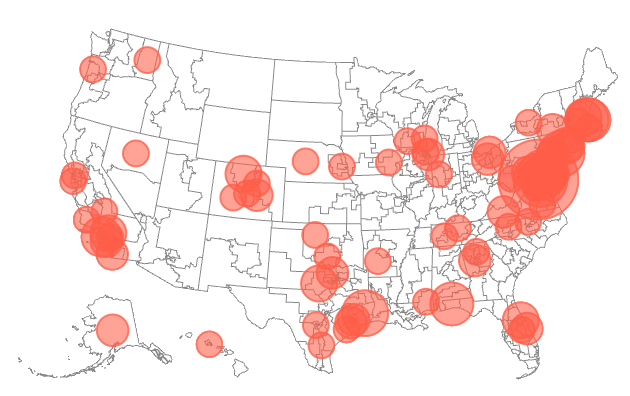
Explore real-time data about spending, contracts, and grants to see the economic impact of NASA science in every state and congressional districts.
Original Research and Analysis
We participate in the process of developing space policy by providing original analysis, releasing policy recommendations, and generating useful data for public and academic use.
Action Center
See all advocacy actions you can take.
