

 Explore Worlds
 Find Life
 Defend Earth


Planetary Radio • Apr 03, 2026
Space Policy Edition: Return to Launch — Cape Canaveral's unlikely history
On This Episode
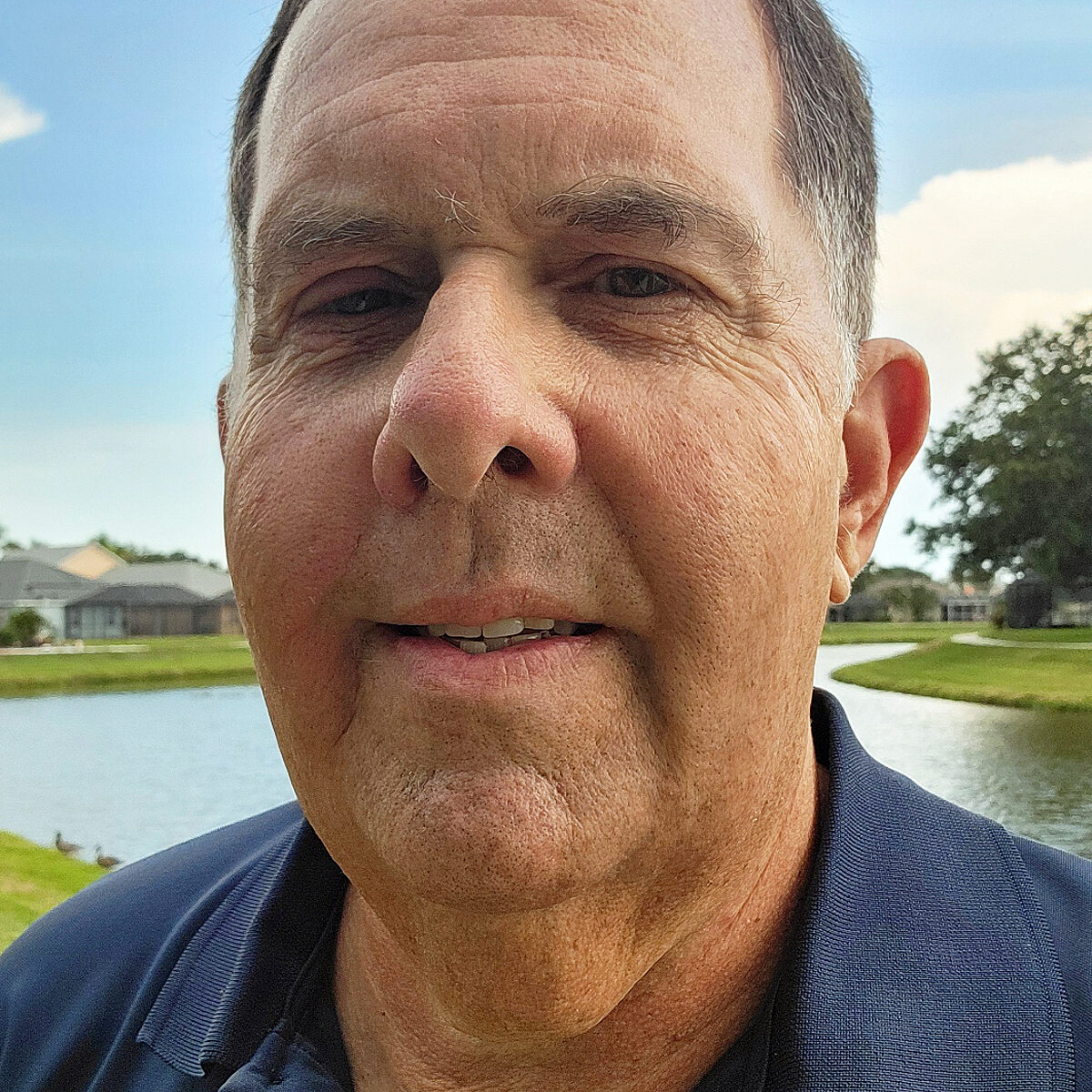
Stephen C. Smith
Author and Kennedy Space Center Visitor Complex Communicator; Writer for The Space Pundit

Casey Dreier
Chief of Space Policy for The Planetary Society
What makes Cape Canaveral the center of U.S. spaceflight? The answer is a fascinating mix of geography, military strategy, Cold War politics, and a fair amount of historical accident.
In this episode of the Space Policy Edition of Planetary Radio, host Casey Dreier, chief of space policy at The Planetary Society, sits down with Stephen C. Smith, author and writer behind the Substack The Space Pundit, to discuss his book Return to Launch: Florida and America's Space Industry. A longtime Kennedy Space Center Visitor Complex communicator and Merritt Island resident, Smith brings a unique perspective to the story of how a remote Florida peninsula became the gateway to the Cosmos.
The conversation spans the full arc of Cape Canaveral's history, from captured Nazi V-2 rockets fired off a concrete slab in 1950, the Apollo era's dramatic economic boom and bust, and the rise of commercial spaceflight. Along the way, Smith and Dreier explore why Mexico's president inadvertently shaped U.S. launch site selection, how eminent domain built a spaceport, and what Space Florida did to help break the region's cycle of economic dependence on government programs.


Related Reading and References
- The Space Pundit
- Return to Launch: Florida and America's Space Industry
- Kennedy Space Center Visitor Complex
- Cape Canaveral Space Force Station
- Vandenberg Space Force Base
- Starbase, Texas
- Spaceport America
- Project Apollo | The Planetary Society
- Artemis, NASA's Moon landing program | The Planetary Society
- Artemis II blasts off, sending humans back to the Moon
- Subscribe to the monthly Space Advocate newsletter
Transcript
Casey Dreier:
Hello, and welcome to the Space Policy Edition of Planetary Radio. I'm Casey Dreier, the Chief of Space Policy here at The Planetary Society, welcoming you to another episode of the show that dives into the policies and processes behind space exploration. This month, I'm excited to welcome Stephen C. Smith, who has a new book about the ongoing revolution at the Kennedy Space Center and Cape Canaveral Launch Complex in the United States, its history, how it has changed over the shuttle to now the more commercial and SLS era of exploration. And we really get into that history and background, and for me, fascinated the fates of geography that enable and support various locations for space exploration activities, plus whether or not local governments take an active role and can drive or enable that further. Very interesting conversation. He'll be joining us in just a minute. Before he does, I must pitch The Planetary Society to you.
If you're already a member, first, thank you. Thank you for being a member. The Planetary Society is an independent organization. That means our money, our income, our revenue is primarily from small donors across the world. Anyone can become a member. Planetary.org/join. I'll just add in the last year and change, that independence that is enabled by our membership model, because we don't take government money, we're not dependent on aerospace corporations approving in what we do in order to keep our doors open with their donations. We can say what we want, we can focus on the things that we want, and ideally be that unique voice for space science and exploration. We're actually raising money right now for the Advocacy and Space Policy Program, the program that I run at The Planetary Society, and that was so critical to pushing back and organizing a successful grassroots resistance to the massive Draconian cuts proposed in 2026 to NASA science programs. We got them functionally all reversed.
So again, if you're a member, thank you again. Consider upgrading your membership. There are different tiers of membership. And if you're not a member, consider joining us or donating to our advocacy appeal, our advocacy program. We're really putting that money to good work. We will now move on to our discussion with Stephen C. Smith, who is talking about his new book, Return to Launch: Florida and America's Space Industry. He also writes regularly at the Substack, The Space Pundit, which I find is one of my regular reads. And I encourage you to check it out too. Those links will be in the show notes. And now Stephen C. Smith. Stephen C. Smith, welcome to the Space Policy Edition of Planetary Radio.
Stephen C. Smith: Thank you for inviting me, Casey. And as we've talked about before, I'm an original generation Planetary Society member, so it's a real privilege to be on here.
Casey Dreier: I love hearing that. I really enjoyed your book, and I'll just do an early plug for your Substack as well, the spacepundit.com, which I enjoy reading regularly. You yourself though fell into this, I imagine, as a passion. You're not a professional aerospace engineer, nor am I, but how did you end up getting so fascinated enough to write a book about the history of Kennedy Space Center in Florida?
Stephen C. Smith: Well, always been a space geek, and my father actually was a space engineer. At one point, he actually was a facility manager at your propulsion laboratory, but I didn't inherit that gene. I have a political science degree, and I used to always tell people, "I have a PoliSci degree, so I know nothing useful, but if I can explain it to me, I can explain it to you." So when my wife and I moved here to Merritt Island in 2009, for people not geographically familiar with Florida, we live about seven miles south of Kennedy's Space Center. So when Artemis II launches, hopefully next week, I can walk out to my driveway and watch it go.
Casey Dreier: Did you move there intentionally to watch rocket launches?
Stephen C. Smith:
Not to see rocket launches. Although I will give some veteran advice, if you're thinking to come out and watch rocket launches, especially during the summer, bring a lot of mosquito repellent, because after about a month or two getting a lot of mosquito bites out in fields, we decided, "Well, we got enough of that." We moved here, one reason being that we were always coming here as tourists. And two, we wanted to find our own way to be involved. So we semi-retired thanks to the Great Recession in 2009, moved out here where Florida property cost about a third of California property. And eventually I wound up with a job at the Kennedy Space Center Visitor Complex as a communicator, which is a combination of education, lecturing, doing tours. Also, sometimes we escort the retired astronaut guest speaker of the day.
And so, as a result of that, over 10 years, I found there were a lot of questions that people were asking over and over, and they were not the technical engineering questions for the most part. They were the questions that the social science people like you and me would be asking over and over again. And one reason was, why is the Shuttle program coming to an end? And the more common and more important question was, what's next? And so, I think this book, and particularly the last chapter answers the question of what's next, which is always changing.
Casey Dreier: I'm going to ask neither of those questions next and ask the opposite, which is Cape Canaveral is in a sense the core of this book and the place. And it opens up with a very vivid scene of launching a captured Nazi V2 rocket in 1950, but it preexisted that. And obviously it preexists as a place, but why did Cape Canaveral become Cape Canaveral? Why do we launch rockets from there?
Stephen C. Smith:
The basic reason is that because Cape Canaveral is a peninsula of land that extends out into the ocean where there's nothing else nearby. When rockets are launched, they can go out over the ocean. So if they fail, which they did a lot in the early days, they fall into the water and they don't harm anybody. That happens very rarely today. But still, for safety reasons, you want to be someplace that's relatively isolated. There is a historical precedent and it's Peenemünde, Germany. A lot of our rocket heritage comes from Dr. Wernher von Braun and his engineers who were working for Nazi Germany in the 30s and 40s, and they were testing their V2 rockets at Peenemünde, Germany, which actually extends out into the ocean. It's a peninsula of land. It was for the same reason, nobody was thinking, well, I'm sure von Braun was thinking about it, but nobody at the time was looking at launching satellites to orbit the earth. Nobody was authorized to do anything for peaceful space exploration.
Von Braun had his overlords who made sure that he was only developing rockets for military purposes. But military or civilian, they were developing these rockets so that they could launch out over the water and head towards a military target. And if they blew up, they fell in the water. And their historical film out there, you can find out a lot of times if they managed to even get off the pad, they went straight up and straight back down.
But from those humble beginnings is where you can trace one branch of the American space program, because at the end of World War II, von Braun and most of his engineers surrendered to the US Army, some wound up with the Soviet Union. Soviets for the most part did not really rely on the German technology in the end, because they had Sergei Korolev. They kind of tended to go their own way, and eventually those Germans were repatriated if they wanted to go back home. Our lineage much more relies on von Braun, who was well aware of how the Cape reminded him of what he was doing at Peenemünde, stuck out into the ocean.
Casey Dreier:
I'm even going to go back to first principles though. You look at the United States, there's a lot of space, so to speak, a lot of land. And I'll maybe preface this by saying, well, something that struck me from reading your book was the thoughts on the destiny inherent in geography. And Florida is an interesting example of, it's already kind of a strange mismatch of geographies. It's an elongated state. You have going up into the panhandle, then you go down into the Keys and you have, it's a very interesting spot. And then a lot of it's really flat and it's all limestone, I think is the key thing there. But it's on the ocean and you have oceans on each side of it, not intrinsically the default.
You were just choosing from first principles where you would expect a 21st century kind of access to the heavens to come from, unless you knew that the earth was orbiting in a certain direction and that you got more kick flying up into space by being closer to the equator. And you were kind of bound by these artificial delimiters of the extent of the southern border of the United States. So it just seems like it, right? So Cape Canaveral is Cape Canaveral because it's far south. As you said, it goes over water in case your things blow up. And it's flat. It was populated, but not densely populated. So I mean, I'm just thinking about all these kinds of strings that came together to kind of randomly choose this spot on the coast and peninsula of being the core of America's launch complex and access to space.
Stephen C. Smith:
Well, one of the things that's talked about in the book is actually Cape Canaveral was not the first choice for the American military. And so, the whole issue of orbital mechanics and being close to the equator and launching with the rotation of the earth to get a big boost, that did not apply, because rockets were being developed after World War II into the 1950s, not to explore space, but to launch bombs at an enemy target, preferably nuclear bombs is what they had in mind. And rockets did not go that far. And most certainly, even if they were successful, they were not going to orbit a payload. At best, they were going to go 3,000, 5,000 miles to hit an enemy target, most likely in the Soviet Union.
So there was a committee put together by the Pentagon in the late 1940s that had chosen three locations in the United States for launching rockets for military test purposes. The number one choice was El Centro, California, which coincidentally is the place of my birth. So I begin life in El Centro and then looks like I'm going to end life one day in Cape Canaveral, so the irony of that. But the thinking was that they were going to launch to the Southwest over the Baja Peninsula where they could put tracking stations to track the progress of the rockets. They could transmit termination signals if they were failing. They could capture data being transmitted by instruments aboard. But they didn't foresee them going more than originally a couple 100 miles, maybe with the goal one day of going 3,000 to 5,000 miles to deliver a weapon, most likely a nuclear weapon. One of the reasons that they chose El Centro was that it was close to the American aerospace industry that was growing quite significantly in Southern California, along with the jet propulsion laboratory there in Pasadena.
So that was the initial choice, but the President of Mexico declined to give the United States overflight rights. And the reason was that a test launch from White Sands, New Mexico, which is where von Braun and his people were initially after they came to the United States, had a guidance package installed backwards. So instead of launching north on the White Sands missile range, it went south over the city of El Paso, over the Mexican border, into the city of Juarez, where it landed in a cemetery, so it only killed people who were already dead. But the president of Mexico remembered that and thought, "Well, do I really want these unreliable rockets flying over my territory and possibly going off course and landing on my people who are not in a cemetery?" So he said, "No."
The other two choices, one was the Aleutian Island chain, so they would probably be going up the Aleutian Island chain around Alaska, but the weather just was too cold and inhospitable for something like that. The third choice was Cape Canaveral. And there is a map in the book, which actually is a map from the military that ran in newspapers in the early 1950s when people were first learning about all of this, and it was showing specifically how rockets would launch from Cape Canaveral to the southeast, flying over either American or British-held islands where they could put tracking stations and where there were gaps in that line. They could put warships to collect the data as it went overhead. And the rockets, because again, their range was limited, would eventually land in the Atlantic Ocean. So the fact that they were going to go originally to the El Centro and go to the Southwest shows nobody cared about orbits, nobody cared about orbiting satellites. It was all about going a few hundred, if most, a few thousand miles to hit an enemy target with a bomb.
Casey Dreier: Yeah. Well, I think yes, the distinction of Cape Canaveral is the ordinance missile testing location versus a spaceport. But at the same time, you still want a spaceport closer to the equator. You wouldn't put a new one up in Maine unless you had very specific purposes to launch something into space, given your options.
Stephen C. Smith:
Not that certain states haven't tried. And when President Kennedy proposed the Apollo program, there were states all over the country that were lobbying him to have everything moved, including to Cape Cod in Massachusetts. And Kennedy basically said, "Back off and let James Webb decide." But when we first decided to start launching satellites as part of the International Geophysical Year, because we already had an infrastructure at the Cape, it was close to the furthest south point in the United States to get to the equator. There were no launch sites on the equator like ESA has now. So it was the closest available. And because it was a civilian program, not a military program, I don't think anybody particularly cared. It was just, we're going to do our part for the IGY and we're done.
If you know the history though, you know that the Eisenhower administration was working on the first spice satellites. It was a project called Corona. And when Sputnik happened, there was a lot of hysteria here in the United States. Eisenhower kept telling people there's no reason to be concerned, but he couldn't say why, because all this information he had about what was coming, he had to keep secret because it was classified. He knew we had better rocket technology and we had bombers that could hit the Soviet Union from Western Europe and Greece and Turkey and all of that, and he couldn't say that. And that was why the hysteria got worse and worse and worse. But again, the first satellites, of course, were going to be military applications with Corona until the IGY came along and our program was Vanguard.
Casey Dreier: You mentioned something that Cape Canaveral already had infrastructure. What was that?
Stephen C. Smith:
Well, the first infrastructure was what today has launched Complex 3. As we mentioned earlier, von Braun and his team were at White Sands, New Mexico originally with parts for about 100 V2s. They were starting to grow the limitations of the range at White Sands, and so they were looking for places that they could launch further than they could at White Sands, and that was why they were looking for different locations. And like I said, eventually they wound up at Cape Canaveral.
So in 1950, very simplistic, basically a concrete slab, they put up painter scaffolding. They had a round table, which actually had been brought from Germany with the parts of the V2. They used a crane to settle the V2 rocket down on top of this table, and then about 150 yards away, they ran cables to a guard shack that had been thrown together, which was the first launch control where they were setting the signals to launch those earliest rockets.
So if you look at some of the earliest maps and concepts for Cape Canaveral in those early 1950s, they were around where those first four launch pads were. The first Redstones were launched off of four, which was next to three, but basically the size of a modest parking lot, where Blue Origin is today at 36 with New Glenn that is just north of one, two, three, and four, for people to get an idea where we're talking about. But as we went into the early 1950s, that was when the military started investing significant money in developing launch sites to build more powerful rockets that could send bigger payloads further to hit enemy targets, US Army, Navy, and Air Force.
Casey Dreier: Am I remembering correctly though that there was a naval installation there specifically built out during World War II and for sea planes and there's a freshwater river and a port? Am I remembering all this correctly too, this pre-infrastructure that enabled it to be functional?
Stephen C. Smith:
Yeah, absolutely. Today it's known as Patrick Space Force Base. During World War II, it was Banana River Naval Air Station. And there's a map on the front of the book that tries to show you the geography of the area, because as you said at the beginning, we're basically a mess. And so, trying to explain it all verbally is really tough. But if you think of Atlantic Ocean, to the west of that is what we call the beach islands or the barrier islands. Then there's a river, which is really an estuary called the Banana River. Then there's Merritt Island, then you get to the Indian River, then you get to the mainland, so that's a mess. Cocoa Beach, just south of that is where they put Banana River Naval Air Station.
And that decision was made just before World War II. There was another military committee that was put together. They knew that with war coming soon, they were going to need a place where they could watch for German U2 submarines, and they decided that they would need a major naval installation in Jacksonville, but they also needed sea planes further south, because the range from Jacksonville was rather limited. So there were a lot of naval convoys in the early days of World War II that got sunk off the Florida coast until that station was ready to stand up with the sea planes that could direct naval worships to go in and protect those convoys and get them through.
There are still places, if you know where to look, where you can find remnants where the planes did practice bombing runs. There's a place that's in the Banana River. I recently had a talk with a historian who went out and digging around, because there were historical notes that there were test bombing sites north of where the Lighthouse is today. And he actually found craters and other remnants that led him to believe that he had found the location probably somewhere west of 37 where the Delta-4 used to be, that Starship will be in the future, maybe up towards 40 where SpaceX launches the Falcon 9.
So all of that predated what we were doing with rockets. And at the same time, in terms of the port there, one of the things that the Cape itself did by jutting out into the ocean is that it blocked or redirected the Gulf Stream, which as it comes out of the Gulf, it goes around the southern tip of the peninsula of Florida, comes up the eastern coastline. It juts out into the Atlantic Ocean because it hits the Cape and it pushes the stream out into the ocean.
There is a hypothesis, which I don't think anybody has proven, that the reason we don't get direct hits from hurricanes is that they're following the warm waters of the Gulf Stream. And because it twists out into the ocean, that the hurricanes follow their food and head out into the ocean rather than coming straight at us. And I think that's probably going to be considered true until we do get a direct hit. And then everybody say, "Oh, it's not a lot. No merit to that."
Casey Dreier: Didn't you guys get hit by a hurricane coming from the west last year or two years ago?
Stephen C. Smith:
We get hurricanes from all sorts of directions. You can get them coming up the coastline on the eastern side. They come across from the Gulf, which means by the time they get here, it's about 115 miles, so a lot of it has been spent. The first hurricane we evacuated from was Hurricane Matthew, I think in 2016. And when we left, it was forecast to hit Cape Canaveral head on as Category Four. And so, we evacuated to Orlando and I got up in the morning, 6:00 AM, I turned on the laptop, and guess what? Just as it reached the Cape, it jawed to the east 20 miles following the Gulf Stream. And so, we got it as a Cat Two instead of a Cat Four. So there was some moderate damage at Kennedy's Space Center and Cape Canaveral Air Force Station, but nowhere near what was forecast, which again tends to prove that that hypothesis was correct.
But the port itself, because the Cape Cod tends to create a natural harbor called the Bight, B-I-G-H-T, that there were land investors who were buying up land on the peninsula in the 20s and 30s that were looking to build a port there and they were trying to get the government, state, and federal to pay for it. World War II kind of intervened, but the military said, "Okay, when the war is over, we will put some money into building a port there for military purposes." But I think from day one, it has always been joint use.
So the Naval Ordinance Test Unit is still there. There still is a nuclear submarine port there. So I think it has been there since the early 50s, but it ran in parallel. And I don't think it really had anything in the early days to do with the rocket testing activities, what at the time was called the Missile Annex. I mean, now today you have SpaceX bringing Falcon 9 boosters in on the drone ships. You have Blue Origin with the Jacqueline barge, bringing that back to port. So if you come to Cape Canaveral as a tourist, if you go over to the port area, there's a restaurant row called The Cove, and across the canal from The Cove, you can see the SpaceX and Blue Origin docks. And more likely than not, you'll probably see at least one, if not two, Falcon 9 boosters sitting there being processed and getting ready to launch a few days later.
Casey Dreier: So I was going to ask if the Banana River Naval Station hadn't been selected, would you have a Cape Canaveral? It sounds like maybe. Or was that the predicate? Does that require that preexisting infrastructure to be a viable spot?
Stephen C. Smith:
I don't think the port itself had anything to do with it, but the committee that was looking at different locations and selected those three finalists, El Centro, the Aleutian Island chain, and Cape Canaveral, I think the Cape appealed to them because Banana River Naval Air Station was already there, but it was shuttered. As the war came to an end and everybody was sent home, there really was no reason to maintain that naval air station, no longer had to do some Marine patrols, because the U2s weren't out there anymore. And the threat from the Soviet Union at the time was thought to be coming over the North Pole, not from the Atlantic Ocean. And so, there really was no reason to continue operating Banana River.
So I think it appealed to the Pentagon that, "We do have some infrastructure sitting here already, this naval air station that we can reopen as a joint operations Army, Navy, and Air Force." Although the Air Force did have responsibility for managing it, but the Naval Ordnance Test Unit is still there, the NOTU, they do have a couple of pads out there, but they're typically used for testing submarine-launched missiles, which typically are solid fueled. So they have a very modest launch site off the old pier road. And if you were able to go down there, which you can't, because you need to have a badge, but there is a building there that has NOTU on the site, N-O-T-U, Naval Ordnance Test Unit just beyond that are the launch pads where they test those small solid rocket boosters.
We just had a test, I think yesterday afternoon. The military has not officially said what it was, but they have been testing hypersonic missiles out there and I have seen amateur footage that people had of something going as fast as you can, just a zoom taking off out over the Atlantic Ocean from around where 46 is. And that's typically where they're doing the hypersonic missile tests. So what military department that's in, it might even be with DARPA, the Defense Advanced Research Projects Agency. I don't know. It's still officially classified. So we still do classified launches from there, they're just not as common as they were in the 1950s.
Casey Dreier: Just out of complete curiosity, Starship launches from Boca Chica in the very southern tip of Texas. Do you know, was that ever considered among these at the beginning when these launch sites were being considered? And do you know why not, if it wasn't?
Stephen C. Smith:
One of the complications from launching from the Cape is that the United States government is your landlord. And not just any agency, it's the Defense Department. Specifically used to be the Air Force, now the Space Force, which can be very bureaucratic. So there were several efforts starting in the 1980s to build a commercial launch site north of Kennedy Space Center in what used to be a small farming town called Shiloh, which is encompassed within the Merritt Island National Wildlife Refuge. And for experts, when all of the land was bought up for Kennedy space in the early 1960s, it went all the way up to the northern border of Brevard County all the way to Volusia County. Because at the time they thought there would be a successor to the Saturn V called Nova, which was going to be nuclear-powered, and they were concerned if there was a blast that we'd have nuclear radiation going for miles and miles.
So they bought up all this extra land, but they never actually used it. So there was an agreement signed between the US Wildlife Service and NASA, that anything NASA does not use is managed by the Wildlife Service. So NASA to this day only uses about 10% of the land. The other 90%, while owned by NASA is managed by the Wildlife Service. So when they proposed building a commercial lawn site at Shiloh, NASA was certainly within its legal rights on paper to provide that land for a commercial launch site. But the environmentalists and also the local residents protested that area is not in its natural state, because it had been used for agriculture, for growing citrus crops, and raising cattle for probably about a century or so. And the Wildlife Services come in and tried to restore it back to its natural condition. But the reality is that migratory foul and other critters that live out here have adapted to the way it is now.
So that was a political third rail that NASA and the state stepped on in the late 1980s, and eventually they backed down on Shiloh and said, "Well, we'll go back down to Cape Canaveral, even though we will have to deal with the Air Force as a landlord." There had been two more times where they've tried to put a commercial launch site at Shiloh having forgot the lessons of history, and each time the same thing happened. And in fact, I was talking to a friend about this the other day, and I just said, "Instead of going through months and months of hand ringing and tears shedding and getting called names by the locals, why don't they just step on a land mine and get it over with, because it's not going to fly."
The point being that Shiloh was where the state agency, Space Florida, wanted to put a commercial spaceport either for SpaceX with Starship or Blue Origin with a New Glenn. And when they realized that wasn't going to happen, that was when Elon said, "You know what? I'm just going to get away from the government. I'm going to get away from the whole Shiloh thing." And so, the reason he went to Boca Chica was that he could buy up their land. The state government in Texas was far more friendly when it came to threats to the environment. And again, can launch out over water. They do have to thread a needle as they go to the Southeast, because they have to fly between the Florida Peninsula and Cuba. You may recall there was a starship failure last year or two years ago, which debris was found on some islands downrange in the Bahamas. So if they launch Starship from Boca Chica in the future as their technology matures, hopefully they're a little bit better at threading the needle and they're not going to go over land.
But now they are building a second, actually, two more Starship launch sites here. One at Kennedy Space Center at 39A. It's next to the traditional launch pad that goes back to the Apollo era, which is still being used for Falcon 9 and Falcon Heavy, but it's still within the perimeter of 39A, but it's just a flat slab with a lot of support equipment that's adjacent to that. And they are putting up a really tall tower that's going to have the Mechazilla grab it when it comes back to land.
And then also 37, which was used for the Delta-4, which is over on the Space Force station side, is in the early steps of being converted for Starship as well. There are once again concerns here among the locals is that it's going to be so big and so noisy that it is going to pose lifestyle concerns. I've heard the legends, I don't know if it was true that Saturn V launches allegedly broke windows around here. I don't know if that's true or not. We invested in having impact-resistant windows installed in our house a couple of years ago.
Casey Dreier: Wonder how many people in the Titusville area have that compared to the standard population?
Stephen C. Smith: Yeah, it helps with your insurance if you get impact-resistant windows because of the hurricanes. But it also helps if you have the occasional space launch system or Starship launch too.
Casey Dreier: Exactly.
Stephen C. Smith: So there is that extra benefit. So we'll have to see. But Elon eventually, I think it tends to move Starship here, at least for operations.
Casey Dreier: Is there any evidence that the government considered Boca Chica back in the day though? Because that's what I was wondering, is if that's a decent enough launch side for Starship, why Florida versus that southern tip of Texas?
Stephen C. Smith: Not to my knowledge, because I think getting back to what we talked about in the early 50s, they wanted to track rockets by tracking stations and ships at sea. And so, with the Cape going to the Southeast, you're going over islands that already exist that are either the property of United States or the UK. Well, even Cuba was friendly until Circa 1960.
Casey Dreier: Good point.
Stephen C. Smith: But back then, we didn't have infrastructure anywhere else. You'd have to replicate that structure at Boca Chica. When you get to the Apollo era, where to launch the Saturn V, they looked at a lot of places, including going out to the Pacific Ocean, launching from a floating platform. They were looking up in Georgia. There were a lot of places they look at.
Casey Dreier: That was going to be my question, was Cape Canaveral the defacto? Was that always going to be the spot or did they have to fight for that for the Apollo era launches?
Stephen C. Smith: Well, by Circa 1960, early 1960s, the Cape was pretty much built out when it came to launch sites. Most launch sites were still active, and the ones that were not active were the ones that were functionally obsolete, such as one, two, three, four, just little small [inaudible 00:34:04]
Casey Dreier: And these are primarily for ICBM's missile testing launch sites?
Stephen C. Smith: Correct.
Casey Dreier: Yeah.
Stephen C. Smith:
So the famous ICBM row or missile road, which you always see in 1960s documented a whole long row of Titan and Atlas launch sites. And then north of that were the slices that were set aside for the next generation Titans, the threes and fours, which are 40 and 41. So where 40 and 41 are were the only locations that were left for building anything the scale that was necessary for the Apollo program, but the Air Force already had that within its boundaries.
There is a piece of paper, if you really want to be a PoliSci nerd like me, but there was an agreement negotiated in '62 or '63 by James Webb and Robert McNamara, the Secretary of Defense, that specified what agencies were going to be responsible for which activities and also where the boundaries were going to be. And technically speaking, Launch Complex 41 is within the boundaries of Kennedy Space Center. They just said, "Well, 41 is an Air Force Station launch site within Kennedy Space Center." So if you look at a map, you will notice 41 is technically in the boundaries of KSC, but it's run by the Air Force.
So at that time, North Merritt Island was largely still very rural, largely agricultural. There were property owners who were buying up land along the shoreline looking to develop that for condos. And if NASA had not come in, all of that would be developed by now and it'd be worth quite a lot. But NASA used eminent domain in '61, '62, '63 to buy up all of that land. I think I recall the number, it's 144,000 acres. But like I said, NASAs today is only using about 10% of it.
Casey Dreier: There's a lot of history of the eminent domain usage in that area connected with Cape Canaveral. Is that true?
Stephen C. Smith: Well, and that's the same thing that happened with Banana Rivers. They used eminent domain down there to build the-
Casey Dreier: And clarify just what that is for folks who don't... Maybe not familiar with that term.
Stephen C. Smith: So one of the rare times when my PoliSci degree comes in handy. Eminent domain is a law that can be used by a government, local, county, state, federal, to seize privately held property with adequate compensation. So let's say, for example, your home is worth $500,000 and the government wants your home for some reason. They cannot give you $10 and say, "Go away." You will go to court and the court will assess what the value is of that property, probably in relation to what's nearby. Now, with the real estate market going up, you could argue and say, "Well, in five years, it's going to be worth a million dollars," but the government is not going to take that into account. They're going to say, "Today it's worth 500,000, so you get 500,000." So back in the early 50s when the Pentagon was seizing land on the Cape, there were lawsuits and those were largely investors who had bought up the land with the vision of building that port there and building a city next to that, and they were going to make a lot of money off of that, but they only got what the land was worth at the time, which was not much. And I found an article which is quoted in the book, and the article was Circa 1960, if I recall, where it was estimated that for every dollar those investors put in, they got back about a quarter, because the land never appreciated the way they hoped it would. With North Merritt Island, again, largely agriculture, so largely citrus farms, there were some very small housing tracks up there, but not a lot of people. But give it time, a couple of more decades and they might have changed.
Casey Dreier:
Yeah, I remember something similar happening in what's now Stennis, and when they're building out that area, I mean, there are people there. It's an interesting kind of just little... Not the happiest story for maybe some of those people or those investors, that the government basically is, "Sorry, we're building a spaceport or a missile launch complex. Here's some money. See you later."
It's part of that, again, maybe the other theme I kind of took from your book is that, and we'll start shifting now to the private sector kind of growth of space flight and how that has changed the area. But all of this started with, the eminent domain is almost like the most public sectory thing a public sector government can do is, "This is in the public good. Sorry, private land no longer, we have to seize this." And all the infrastructure comes in through national defense. And then of course, when NASA moves in, the infrastructure that is now enabling the private sector to launch things into space, to have these facilities was built by taxpayers ultimately through... Not that that was the intent of doing it in the first place, but it's interesting that there's that kind of dichotomy that they're building off of.
Let's jump very quickly, but give me the quick story between we've kind of gotten up to the point of Apollo with Cape Canaveral. Let's kind of just zoom past the story, give us the quick version up to the boom and bust cycle through the end of the Shuttle program, because that's kind of when the story becomes personal for you. But what changes in this area because of Apollo in terms of people, infrastructure, the self-identity of what is now going to be called the Space Coast?
Stephen C. Smith:
The second chapter of the book is called Something Old, Something New. And in my opinion, it's the one that's designed to kick over the ant hill, because I want people to think about the possibility that even though Apollo and the moon landing were the most significant achievement of the 20th century, that politically, at least for the interest of NASA, that maybe it was a mistake, because it turned NASA into something it was not intended to be. Prior to Kennedy, NASA was supposed to be the space version of the old National Advisory Committee for Aeronautics, which developed aviation technology, that had then turned over to the private sector, which kept the United States the leading commercial aviation industry in the world. And so, when NASA was created in 1958 due to the mistaken perception that our rocket technology was inferior to the Soviet Union, that was the thinking, that we're going to take the NACA people and put them in charge of rocket research so that we can once again be leaders.
President Kennedy proposes man moon end of decade not to build a star fleet, not to build moon bases, but to prove to the rest of the world we're better than the commies. If you were to suggest today that we spend, and I know there are different calculations, Planetary Society estimates what, $300 billion spent on Apollo in today's dollars? I've got a more conservative calculation in the book about 225 billion. In any case, it's a lot of money. If when Jared Isaacman gave his speech, his Ignition speech on Tuesday and said, "Let's spend $300 billion to put a base at the south pole of the moon to prove that we're better than the Chinese," he would've been laughed at. Instead, what did he say? He said, "We're going to do this with the existing budget."
Casey Dreier: Well, even he said they're even selling 20 billion, and that's the question I get every time I go on to a media appearance. It's not the lunar base, it's the $20 billion lunar base. NASA wants to spend 20 billion. So even 20 is the story.
Stephen C. Smith:
Yeah, and I'm working on Substack right now on this very topic. Anyway, so getting back to your question, is that it turned NASA into something it was not meant to be. Number one, it was a propaganda organ. But at the same time, James Webb came in with this grand vision of using NASA to uplift the engineering and technical economies throughout the Southwest. And so, one of the reasons that you see centers opening here in Florida and in Huntsville and at Stennis and in Houston is that Webb wanted to make sure that those areas were getting money to develop technologies to improve their economies.
Now, this is not the ports that we see today. It was just making it clear, "I want to uplift these economies." And going back to the 1960s, as you well know, NASA to this day always brags about the number of jobs it creates in each state, and anytime they go calling on a member of Congress, they will have a chart showing how many jobs are in your district or in your state, but that was not the [inaudible 00:43:13] in the 1960s. And the book talks quite a bit about what James Webb's thinking was back then. And even then in 1969, when he has left, already the job cuts are happening, because he says, "We were not to be a permanent employment agency. Our job was to stand up this program to put a man on the moon by the end of the decade, and that's it."
So it created this gold rush phenomenon here in the Space Coast where people came from all over the country for these jobs, but most of these were contract jobs, which means by definition, they are temporary. My father, before he worked at JPL, he worked for General Dynamics in Pomona where they built cruise missiles. When it got bought out by Hughes, he was the facility manager. His job was to turn the lights off and put himself out of business because they were a government contractor. So if you work for a government contractor, by definition, your jobs are temporary.
So with Apollo, that created the first economic depression around here when all those jobs went away. Nobody planned for it. There wasn't really any kind of government program in place to transition these people into other jobs. There were not other government jobs available. There was not another space program other than Shuttle, but that was going to be many years in the future. So those things came and went based on what government demand was. So when Shuttle came along, they ramped up again and started adding jobs. Again, jobs were being lost not only with NASA, but also over on the Air Force Station side, because we were signing peace treaties with Soviet Union. We were limiting the amount of missiles. So missile testing ended here in the early 1970s and moved to Vandenberg, and now all of a sudden we had a lot of abandoned launch sites and a lot of jobs were lost over there too.
So when shuttle came along, a lot of those jobs were added back, but then Challenger happened, and it was going to be two to three years before we started flying again. And so, a lot of those people were laid off because they weren't needed. So twice this happened and this deer got in red into the local economy around here, that because our economy is so tied to government programs, that anytime that the government starts to cut back, we're going to start to lose jobs, with the implication that if we want to save our jobs, we need to make sure that the government continues with the program, whether or not it's needed. And that gets us into what happened at the end of Shuttle, which is what much of the book is about.
Casey Dreier: We'll be right back with the rest of our Space Policy Edition of Planetary Radio after this short break.
Jenn Vaughn: Hello, this is Jenn Vaughn, your new CEO of The Planetary Society. I am deeply honored to be leading such an extraordinary organization. And one of the very first things I want to do while I get started is to get out to meet you, our members, in-person. That's why I'm hitting the road for our 2026 Member Roundtable Tour, a series of small members-only gatherings where we can sit down together face-to-face. I want to hear what's on your mind, your questions, your ideas, and what matters most to you. And while we're together, I'll also give you a preview of The Planetary Society's new five-year strategic vision. Our first stop will be Tempe, Arizona on Saturday, April 11th, and we'll be continuing on to Washington DC, the San Francisco Bay Area, Los Angeles, New York, Toronto, and more throughout the year. We're keeping these gatherings small, so space is limited. Register today at planetary.org/roundtable. I can't wait to meet you.
Casey Dreier: The end of the Shuttle is when you roughly moved to the Space Coast, right? If I remember correctly.
Stephen C. Smith: Correct. It was during the Great Recession. We had both lost our jobs, so...
Casey Dreier: Yeah, so I think that's part of the big context here, that when Shuttle ended and was winding down, there was no clear succession program.
Stephen C. Smith: Correct.
Casey Dreier: And so, people were losing their jobs amidst a lot of other people losing their jobs. And so, I imagine it was a particularly dire feeling. So talk to me about what that was like moving there and seeing the community reflect that experience. What did you note? What surprised you?
Stephen C. Smith:
Well, at that point, I was not well-informed. I was a space geek, watched the rocket go up, watch the bombs bursting in-air, the rocket's red flare, have a good time. Boy, that was fun. I did not understand a lot of the politics behind it. I did know Shuttle was coming to an end due to the Columbia accident. So I was roughly aware of that. I was aware there was a successor program called Constellation, but I didn't know a lot about it. But my concern at the time was we needed to find jobs, we needed to buy a house, we needed to establish ourselves here. And the goal was to find myself some sort of an interpretive job somewhere at Kennedy Space Center, ideally at the visitor complex, talking to people about space, evangelizing space, what you do every day. So I was looking to do something like that, but nobody was hiring.
So I did volunteer at the Cape Space Museum for a while to get some experience. At the same time, people were looking at how they could transition into other jobs with technical skills, which I had none. And so, in Southern California, if you had social science skills, pretty easy to find a job. If you have social science skills here, you're working at a restaurant, because everything out here is technical. So there were programs that the county and the state and the federal government tried to put in place to help people transition into other jobs in the economy, but there were no jobs to be found.
And so, as a result of that, what local politicians were trying to do was try to find ways to pressure NASA, to try to pressure the Pentagon to continue programs, whether they were needed or not, to protect people's jobs, which was not what, in my opinion, those agencies are for. They're not work fair. They're there to perform some government service. If you're going to turn into something that's work fair and says, "I'm going to be paid whether we're doing something or not," well, as a former municipal budget analyst, I'm going to have a problem with that. But in the end, it's up to your elected officials to make those decisions, but those are decisions that are way above our pay level.
Casey Dreier: There's a organization called Space Florida that starts to become relatively prominent around this time. It kind of agglomerated together from several other state organizations, but lay the ground of Space Florida and the role it's about to play from this kind of point of transition from the classic kind of NASA model into something new.
Stephen C. Smith:
One of my personal heroes, and I don't have many heroes, so if I call somebody a hero, you know I mean it, is a gentleman named Steven Morgan, and he and some fellow space evangelists who lived here in Brevard County in the late 1980s created an East Central Florida space business round table. And what they were trying to do is they were trying to help midwife the birth of a commercial space industry. So they were involved with some of the early space advocacy groups. So obviously Planetary Society, National Space Society, Space Frontier Foundation. Back then there were a lot of them. So they were involved with some of those, and they were trying to get the local business community to wake up to the fact that we cannot be reliant on government programs.
One of the ideas they got was they sent a letter to the governor of Florida, Bob Martinez, suggesting the creation of a "space chamber of commerce" that would be responsible for encouraging "space enterprise" in the state of Florida. Out of that idea came a commission and out of that commission came the creation of what's called a public-private partnership, semi-public semi-private government agency that originally was called the Spaceport Florida Agency or SFA for short. And so, what that was trying to do was to initially create a commercial launch site out here that private companies could launch their rockets from. So hopefully it would attract jobs and attract industry here, but also it would reduce the cost, because the government would no longer be your landlord, now you would launch from a Spaceport Florida Agency launch site. And one of the early sites they looked at was Shiloh.
Casey Dreier: Yeah. I mean, they're projecting the future here. There's not a ton of private rocket launches yet at this era.
Stephen C. Smith: Well, they were private companies, but they were manufacturing rockets, launch vehicles for the government, civilian or military. So going back to Project Mercury, everything was built by private companies to government standards. So for example, when we had the Apollo 1 fire, NASA and North American Rockwell arguing back and forth. NASA is saying, "You put too many flammable materials in the capsule." And North American Rockwell is saying, "It was your standard you told us to follow. You told us to use pure oxygen. That wasn't our idea, it was your idea." So the novel concept that comes out of the space chamber of commerce, and this was something that was being advocated by a lot of the new space area people in the '70s and '80s, was to make it more like the way that commercial airlines operate. As Lori Garver, the former NASA deputy administrator during the Obama administration often says, "If you're going to fly an airplane from Orlando to Houston, you're not going to have the government build you a plane, and once you land, you throw the airplane away. You reuse it, you just buy a ticket, and you buy that transportation service." And that's what it is that they wanted to do. That's what SpaceX and Blue Origin do today.
Casey Dreier: The government doesn't directly, for the most part, control the airport. It's usually some sort of this public-private partnership also that runs the runways and the infrastructure that they land in for commercial airlines.
Stephen C. Smith: It depends on the airport. There are some that are joint operations. They share operations with military airfields. Orlando airport here used to be McCoy. So if you're ever wondering when you come into Orlando why the airport code is MCO, it used to be McCoy Airfield, but now it's strictly privately owned by the City of Orlando. But there are other airports that are jointly operated, and of course, the air traffic controllers are with the FAA, so...
Casey Dreier: I guess it seems like more that that's kind of what they're going for with a private spaceport, that there's going to be range operators that are part of the government, but it's just that the overhead should be lower, they're business-oriented in trying to attract customers rather than serve the specific needs of government operations that then would tolerate companies using those facilities.
Stephen C. Smith:
And there is another hero in the book, his name is Christopher Shove, S-H-O-V-E, and he actually worked for the State Department of Commerce that developed the language for the legislation based on the legislation that created the New York and New Jersey Port Authority, and also for the legislation that created the Public Utilities District for Walt Disney World, I think it's called Reedy Creek, if I recall correctly. Those were his two models.
So there has been look at studies at privatizing Kennedy Space Center, Cape Canaveral Space Force Station. There has been a term Cape Canaveral Spaceport that has been in use out here for a while. So for a potential private customer, you wouldn't say to them, "Launch at KSC or launch at the Space Force." You say, "Launch at Cape Canaveral Spaceport. And you don't care which site it's on, you're just here purchasing a service from Space Florida."
So in any case, Space Florida Authority was created to start that whole ball rolling. Unfortunately, the state did not put a lot of money into it. And at the same time, the commercial launch industry was struggling. And again, this involves some past history dealing with Challenger, because when Shuttle came along, the government mandated that all government launches, civilian or military would be on the shuttle. The shuttle's payload base, 60-feet by 15-feet, was designed for a projected future military reconnaissance satellite. Whether it was ever used for that, we don't know. There were classified military emissions in the early days, but that all but put out of business companies building private expandable rockets like Lockheed Martin and McDonald Douglas and General Dynamics, because they had very few customers.
Once Challenger happened, then the Reagan administration reversed that and said that, "Unless it has to fly on the shuttle, you go on expendable commercial satellite." And in fact, in 1984, the Reagan administration passed an amendment to the NASA Act, the Space Act, which made development of the commercial space industry agency priority. So Challenger was an excuse to reverse all of that, and those companies started to revive their Atlas and Delta and Titan rockets for launching non-human government payloads, reconnaissance satellites, communication satellites, weather satellites, and also for commercial satellites. But the problem was that, that industry was kind of dying at the time. They didn't have a lot of customers. So in the early '90s, you saw a lot of consolidation, and the few that were left were more than happy with what they already had at the Cape, and they were not really interested in going to a generic commercial launch site. They had their launch sites designed for their technologies that were specific to their launch vehicles.
And so, Spaceport Florida Authority struggled for a lot of years to find customers. They did spend money on education, because one of their early findings was that the educational institutions in Florida were not up to equivalence with California and some other states. So one of the things they've worked on to this day is trying to improve our technical programs in our universities and our high schools, even down to our grade schools. So I've had even grade school students who came into the visitor complex or robotics competitions, which shows that we are grooming them for the next generation. They're not going to do [inaudible 00:59:08]. But in those early days, the SFA really struggled. And in fact, they went through a name change in 2003 to the Florida Spaceport Agency, but the name change didn't really make much of a difference. So it was finally abandoned in 2006 and replaced with a new version called Space Florida, and that's the agency we have today.
Casey Dreier: So how critical has Space Florida been to the changes that you've seen at the Cape?
Stephen C. Smith:
Space Florida basically, I think, saved Cape Canaveral Spaceport. They were not in a position to do anything at the time of the Great Recession, because they were just trying to stand themselves up at the first place. But the formula that they finally hit on was not to try to convince NASA or the Pentagon to base their programs here. Instead, What they did was they looked for private customers who might be willing to take over legacy facilities and invest some money in them in helping them to refurbish them and use them for new programs.
So for example, outside the vehicle assembly building are three hangars originally built for the space shuttle orbiters to process them. Two of them are now used by the Pentagon's X37B, which was built by Boeing. That's the somewhat classified military program. If you've seen one, it looks like a little baby space shuttle orbiter. If you're not familiar with it, Google X37B and take a look at it. Sometimes the Pentagon will tell us it's flying certain types of experiments, long duration exposure to radiation or microgravity.
Other than that, other programs we don't know, there was a former secretary of the Air Force during the first Trump administration. When she left office, she was speaking at a conference and she said, "Oh, we bounce it off the atmosphere to change its orbit." That was supposed to be classified, but she said it, so it's out in public.
The third hangar was leased by Space Florida to Boeing for the Starliner Crew Capsule. And so, in all three, Space Florida puts some money in to help refurbish them and acts as a property manager for NASA for those three properties. Same thing happens over on the Cape side. There are a lot of launch sites such as 40 where SpaceX is with the Falcon 9, where Space Florida puts some incentive money in and refurbish that launch site for Falcon 9.
Casey Dreier: So basically they're drawing in these private companies. Was that a novel idea? I mean, I think Texas now does this, but did this predate the Texas equivalent of that space commission?
Stephen C. Smith:
California was doing some commercial in the '70s under Jerry Brown, but that seemed to have only been he wanted to send up a State of California satellite that was going to have all sorts of utilitarian functions. Once Prop 13 passed, there was no money for that, and that was the end of it. But it doesn't appear he ever beyond that proposed anything along the lines of a state agency. Steve Morgan, who I mentioned earlier, he left here around 1991 to go to Virginia to stand up their own space authority. And they already had a state technological authority, the name of it escapes me, but it was there to help educational institutions. So rather than having to go through the political sausage grinding, they just expanded that entity to try to attract space companies to come use wallops out there. So the Mid-Atlantic Regional Spaceport where Northrop Grumman launches their Cygnus or Antares rockets and their Cygnus commercial cargo ships, that's at MARS, Mid-Atlantic Regional Spaceport, which is operated by Spaceport Virginia.
New Mexico stood up something for Spaceport America. That was because Richard Branson said he was going to locate Virgin Galactic out there, and that is a particular cautionary tale in the book, because he promised he'd be flying in 18 months and he'd be serving drinks on board and he's still not flying 20 years later. I know Alaska, Hawaii, there's some others out there.
Casey Dreier:
Are these responsive to what Space Florida was? Or is this... I guess that's why I'm curious. Is this a novel combination to... I mean, Florida had the advantage of a lot of preexisting infrastructure and workforce. And not many other states can say, "We have a bunch of leftover hangers and facilities that were used for space engineer requirements that we can just refurbish and give you for your space project requirements." That seemed to give them this particularly unique advantage. And maybe even stepping back as we need to wrap up here, the growth in this commercial and private contributions to Cape Canaveral, that as you argue in your book, smoothed out this boom and bust cycle of government funding in the local economy there, it's not an accident, that it's an active effort that, particularly in this case, the local governments tried to do in order to serve the local economy through jobs.
And I think that's an interesting thing to me. I go back to this of, is space the only sector that's embarrassed about how many jobs that we make? And I take your point completely, that NASA's primary purpose is not to give jobs in Florida, but it is an interesting... The motivating aspects, things that unlocks this energy, whether it's at the federal or state level, is to provide economic opportunities and to offer, functionally through jobs, to their constituency. So it's an interesting, whether it's government or private sector providing them, the state is trying to create jobs in the space sector.
Stephen C. Smith:
And there was just an article in the Tampa Bay Times a couple of weeks ago, and so wow, this is, to quote Yogi Berra, "Deja vu all over again." There was somebody from State of Florida was speaking at an event in Tampa and was talking about a disconnect between the State of Florida and NASA and the military when it came to what was going on out here, because the infrastructure continues to age out here. The underground pipes, not just the water, but the delivery of RP1, kerosene fuel, liquid methane now, et cetera, et cetera, all of that is continuing to decay. The roads need to be rebuilt, et cetera, et cetera. The federal government will not provide money for that. The State of Florida needs to provide money for that. Space Florida does have revenue that comes in for some of the services they provide, but they still rely on the State of Florida's annual budget to put some money into their attracting and keeping businesses here.
And so, I thought, "Wow, here we go again. They haven't learned their lesson." They see everybody being so successful out here, and so they're saying, "Well, we're not going to put the money into them anymore." Well, guess what? Elon has already gone to Boca Chica where he can use his hundreds of billions to do what he wants out there. Other states are learning the lesson. And like I said, Steve Morgan went to Virginia and took the existing infrastructure there and did that. California now is standing something up. It's not a state agency, it's a county regional agency around Vandenberg. I know there has been talk about a California space authority. I don't think that has happened yet. New Mexico is constantly struggling on what to do with Spaceport America, because it's not paying for itself. But Texas seems to have finally got the message and is lavishing money on Elon and anybody else who will come to the Lone Star State.
So they do cite us as a model. And I know California specifically has called out Space Florida as a model, but you have to sustain the model. And what happens there is the next time there's a great recession and there isn't state money to put into this and these companies can't survive. The two that are going to be left standing, so long as their owners are willing to continue spending their untold billions, are SpaceX and Blue Origin. They succeed because those are two of the richest people on the planet. All the other companies are little startups with capital investors or corporately owned like United Launch Alliance and they expect a profit every quarter. So what happens when the next Great Recession comes along?
Casey Dreier: So to wrap this up, looking at the history of what has changed and coming in, having this active attraction towards outside investment, not just the government, what is the lesson that you have taken from the story of Cape Canaveral and the spaceport and the Space Coast in Florida? It seems like at the end of the book you kind of identified, "It's almost like they finally cracked the code." And you kind of hinted here, is it sustainable or what's the lesson going forward even for them?
Stephen C. Smith:
Well, I think having served in government off and on over the years, there were certain patterns I saw that seemed very familiar. One was the siren song of a private company or investor coming in and promising you untold number of jobs if only you will give us a tax cut. So I think there's a cautionary tale there that before, if you as a government staffer or as an elected official commit a lot of money into something that a private company offers you, make sure that it's legit and that you protect your interest and your community's interest.
The other thing is diversification. And the city I worked for back in California, the 70s and 80s had a monopoly developer, and when they chose not to develop, we lost city jobs left and right. So we learned to diversify our economy, finding other ways to bring revenue into the city budget that did not rely on the developer. So one of the lessons that we learned here on the Space Coast was to diversify. So we're no longer reliant on what NASA does or what the military does out here. We are becoming increasingly reliant on SpaceX. There are a lot of Teslas on the road around here, but there's no sign that Elon is going to pull the plug anytime soon, but he always could. Or at some day when he decides to leave this realm and who knows who the company is going to fall to, maybe their priorities change. Their priorities just change, now we're not going to Mars anymore, we're going to the moon. Maybe they decide we're all in now on-
Casey Dreier: Well, that has already happened.
Stephen C. Smith: Yeah. So those things can happen. And if they feel that their landlords at NASA and the Space Force are not being all that cooperative, well, who says you can't launch Starlink from Boca Chica? They don't need here. It's about as far south to the equator as the Cape is. The lesson is just don't get seduced by a lot of promises. Do your homework and have some sober understanding of what the consequences of what you're doing, diversification being very important.
Casey Dreier: Said like a true political scientist major. That is good, timeless advice. Stephen C. Smith, thank you so much for speaking with us on the Space Policy Edition today. Your book is Return to Launch: Florida and America's Space Industry. There's probably half of this book we didn't even get to talk about. So if you're curious about that, I recommend you all pick it up. It's on sale now at wherever books are sold online, I believe. We'll link to it in the show notes. And of course, your Substack, the spacepundit.com that I enjoy reading as well, I look forward to your future posts.
Stephen C. Smith: Thank you very much, Casey. And it's always fun to reconnect with The Planetary Society. Always visit you guys when I'm in Pasadena.
Casey Dreier:
Wonderful. We've reached the end of this month's episode of the Space Policy Edition of Planetary Radio, but we will be back next month with more discussions on the politics and philosophies and ideas that power space science and exploration. Help others in the meantime learn more about Space Policy and The Planetary Society by leaving a review and rating this show on platforms like Apple Podcasts or Spotify or wherever you listen to this show. Your input and interactions really help us be discovered by other curious minds, and that will help them find their place in space through Planetary Radio. You can also send us, including me, your thoughts and questions at [email protected], or if you're a Planetary Society member and I hope you are, leave me a comment in the Planetary Radio space in our online member community.
Mark Hilverda and Rae Paoletta are our associate producers of the show. Andrew Lucas is our audio editor. Me, Casey Dreier, and Merc Boyan, my colleague, composed and performed our Space Policy Edition theme. The Space Policy Edition is a production of The Planetary Society, an independent nonprofit space outreach organization based in Pasadena, California. We are membership-based, and anybody, even you can become a member. They start at just $4 a month. That's nothing these days. Find out more at planetary.org/join. Until next month, ad astra.