

 Explore Worlds
 Find Life
 Defend Earth


Planetary Radio • Sep 04, 2026
Space Policy Edition: The Long Space Age with Alex MacDonald
On This Episode
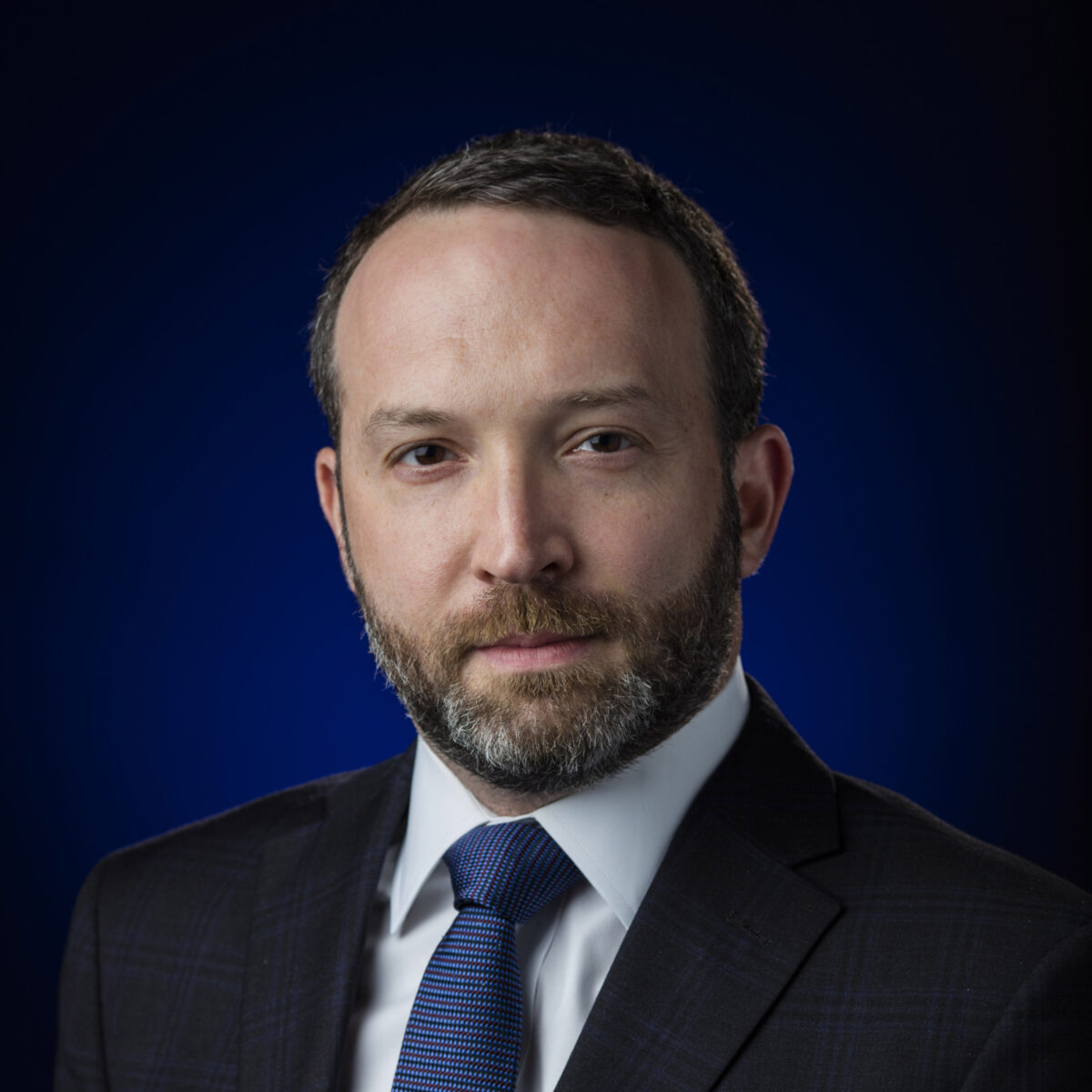
Alexander MacDonald
Former Chief Economist, Office of the NASA Administrator

Casey Dreier
Chief of Space Policy for The Planetary Society
We tend to think of private space exploration as a recent phenomenon. But as Alex MacDonald, former Chief Economist at NASA, argues in his book "The Long Space Age," privately funded space exploration has deep roots in American history, stretching back more than two centuries.
In this 2017 conversation with The Planetary Society's Chief of Space Policy Casey Dreier, originally aired on the Space Policy Edition of Planetary Radio, MacDonald traces the economic history of American space exploration from the 1769 transit of Venus all the way to the present day, and makes the case that the government-dominated model we grew up with may actually be the historical anomaly.

Transcript
Casey Dreier:
Hello, and welcome to the Space Policy Edition of Planetary Radio. I'm Casey Dreier, the chief of Space Policy here at The Planetary Society, welcoming you to another episode that explores the policies and processes behind space exploration.
I just got back from the launch of the Roman Space Telescope. I think I got a cold, and it has been a busy month. So this month we are rerunning one of my favorite interviews, which I think is actually quite relevant in the intervening years since I first recorded it all the way back in 2017.
My guest is Alex MacDonald. He was at the time the chief economist at NASA. That position no longer exists after restructuring last year. But we were talking about his book, The Long Space Age, which if you haven't read it, I strongly recommend you do. I think it's actually one of the most important and contextual pieces of information about how the private era of space exploration, if you can call it that, from ground-based observatories in the United States developed before government intervention in fundamental research and exploration in the US: privately funded observatory building, crowdfunding observatory building in some cases, contrasted against the royal observatories and state-funded activities in Europe and elsewhere.
This is a fascinating look at the extent to which some very wealthy individuals spent the equivalent of billions of dollars building out capabilities and tools to explore space and, notably, rarely funded the ongoing scientific work in them once the hardware itself was built. We are in a situation now where NASA science, of course, is facing cuts of nearly 50% again, and NASA and others in the White House are casting about looking for private funders, philanthropy, to help fill in the difference. We've seen Eric Schmidt, the former CEO of Google, come forward and actually serve as one of the first very serious funders of a potential space telescope. We've seen others attempt to do that unsuccessfully.
So we will see how much the private sector through philanthropy can come in. I think we have the lessons of history to say we should be welcoming of any additional activities, but they certainly probably won't replace, at a fundamental level, investment from the public sector from what NASA does in a sense, I think the unique thing that NASA does. So until I recover next month, please enjoy this discussion with Alex MacDonald on The Long Space Age.
Alex McDonald, thank you for joining me on the space policy edition of Planetary Radio.
Alex MacDonald: Thanks, Casey. It's really great to be here.
Casey Dreier: So the classic story about the US role in space exploration is that after Sputnik was launched in 1957, this kicked off this era of government investment and space exploration. We went through the Apollo program, government exploration pulled back, and then we did the shuttle. We kind of brought humans back to low Earth orbit, and science kind of trucked along within these constraints. But now we have this brand new era of private investment coming into space flight. We have billionaires like Elon Musk and Jeff Bezos dumping their own personal money into space exploration, and now we have this glorious or exciting new future ahead of us. Tell me why that classic narrative is wrong.
Alex MacDonald:
Well, yeah, I think it's not so much wrong as it is incomplete. What really started me on trying to investigate the economic history of space exploration was, in 2004, I was a grad student in economics and I watched the SpaceShipOne flight that won the initial Ansari X Prize. As an economist, I got thinking, what just happened here? Did a bunch of guys just build a spacecraft in their garage? Of course, it turned out it's not quite that simple. It was one of the leading aerospace engineers in the US, Burt Rutan, who'd built the vehicle. Of course, it wasn't really funded in the garage. It was run by Paul Allen at about $30 million.
But it led me to think: how long have individuals been funding space exploration essentially out of their own pocket? That led to looking at all the different private sector projects I could find that were economically significant in history of space exploration. The ones that you come across that are the most economically significant are actually, at this time, not really these current ones that we're seeing, although they're very exciting as well. They're actually large astronomical observatories in the late 19th century, which were funded by, in many respects, the kind of Elon Musk and Jeff Bezos over their days, Andrew Carnegie, John D. Rockefeller. They were funding, in many cases, billion-dollar observatories or billion-dollar equivalents if you convert the costs to modern day dollar terms. So that really, for me at least, puts into a different context what we're seeing today. It's not that we're seeing a new phenomena emerging with these private sector actors, but we're actually seeing the re-emergence of a trend that long predated NASA and was actually the original economic force, if you will, for American space exploration.
Casey Dreier: So let's jump back then to the early 19th century, or even if you'd like, the late 18th century in the United States. What kind of context was there in terms of economic context and a political context for support for what was considered space exploration at the time, which was collecting photons coming from the universe? Was there an established role of government for scientific observation of the universe in the United States at this period?
Alex MacDonald:
Right. Yeah, there's this really fascinating history of the first governmental support for space exploration activity as you describe it, collecting photons and trying to discover something new about the universe in the cosmos above, so to speak. The first telescopes that came into the country were essentially imported by individuals. John Winthrop, an early governor of Massachusetts, his heirs would be the first to import some of the large telescopes, and you'd have individuals who would be studying the heavens.
But then something happened around the transits of Venus in the late 18th century. There's one particular case, the second transit of Venus from that era was in 1769. This, of course, at the time was, in many respects, a type of a space race. The reason it was a space race was that if you could calculate how long it took for Venus to transit across the sun at different points on the earth, you would then see it transit for different lengths of time, and you could then use those differences to calculate the distance of the earth to the sun and thereby calculate the size of the solar system.
So governments around the world, monarchs really, were trying to win this prestigious race to calculate the size of the solar system and using the transit of Venus as a method. America, at this point, colonial America, decides that it's going to enter this race, so to speak. The very first legislation that we have, evidence of giving for exploratory kind of scientific astronomical research, was the Pennsylvania legislature, which gives money to support a number of astronomers to go and observe the transit of Venus from a number of different spots along the eastern seaboard of the colonies. That then leads to the first collected transactions of the American Philosophical Society, which when that particular document makes its way over to Europe, the European science community really sees that as a signal and as a sign of American intellectual development.
The astronomers were involved with this, particularly David Rittenhouse, was actually held up as one of the great Americans by Thomas Jefferson. When Jefferson was asked to describe who the three great living Americans who spoke to the new independent nature of the United States of America, he named three individuals. He named Benjamin Franklin and George Washington, and he named the astronomer David Rittenhouse.
Casey Dreier: Something I really love about your book and its treatment, particularly in the early context of American investment space exploration, is these recurring themes that just sounds so familiar to anyone who's really followed the more recent era of space exploration. You mentioned it right there, the idea of national prestige and finding the operative presented by some celestial event that drives some sort of investment, either public or private. The country, or, as you point out in your book, really intrinsically motivated, highly passionate individuals, find an opportunity to leverage that celestial event to get investment for their passion that then drives this idea of prestige. There's nothing new about that, it seems like, going back even to the 18th century.
Alex MacDonald:
Well, that's exactly right. You've described it particularly well because that's the bottom line for looking at these 200 years that the book looks at. But there's a relatively simple model at play, relatively simple economic model at least, which is that intrinsically motivated individuals who have a passion for exploring the heavens, for whatever particular psychological reason, want to go do that. If they have their own funds and their own source of support, they will often self-finance their own astronomic observatories or, in some people's cases, their own rocket companies. If they don't have their own resources, well then they need to enter into an exchange with somebody in order to receive those resources to pursue their goal. They will do exchanges with many different types of institutions. They will do exchanges with governmental institutions. They will do exchanges with military institutions. They will do exchanges with commercial institutions.
The particular type of exchange value that has been, at least as far as I can tell, the most robust, the most robust across centuries is this signaling value, this idea that in achieving something first or achieving something particularly difficult, you can signal to the world really a vector of characteristics, your ability to take on large technological projects and succeed at them, your ability to muster resources and organize them. And then that is a very valuable thing. That was really the principle value of Sputnik. It signaled to the world a capability in the Soviet Union that the world was not really aware of. It was arguably the principle political value of the Apollo program as well. It signaled that the US was able to achieve something that no one else in the world was able to achieve. Frankly, to this day, no one has achieved still. So it still serves as a very credible signal, and is arguably one of the reasons why countries around the world are increasingly looking at the possibility of lunar landings because it has attained that type of prestige signal.
Casey Dreier: Signaling comes in at a really deep level throughout your book. I think that was actually one of the most interesting aspects of the book. You make a really good argument about the difference between the idea of prestige as the driver of investment in space exploration and the idea of signaling, as signaling is actually the real framework or a really useful framework to look at this. So can you talk about, tease apart the difference here between signaling and prestige? Where I think most people think about the prestige aspect.
Alex MacDonald:
Right. So the traditional idea of prestige actually comes from the word prestidigitation, this idea of an illusion. It was kind of used politically around Napoleon's hundred-day effort because it seemed that he was able to just, through almost illusion and magic, get a huge amount of support. So that word maintained its use, but the challenge with it is that it suggests a kind of ability to just impress people with almost illusory activities that's not really valuable, that at the core of it is a type of illusory value.
Signaling is something very different. Signaling is actually a concept that's used in economics and in biology, which is essentially the idea that through costly action, you can credibly transmit information. In economics, this is often looked to in terms of higher education; that's a costly signal to send to the market. In biology, it's often used in terms of describing the utility of the peacock's tail. The reason that these male peacocks have these very elaborate and fancy tails is not because they're helpful in terms of gathering resources, but actually they're so superfluously expensive in terms of energy that they signal that this is a particularly healthy specimen. So signals are used in cases of asymmetric information, cases where not everyone has access to the same information. You want to signal the type of characteristics that you think are positive and that you think other people should essentially know about.
Space exploration serves as a good signal because it is costly. It is difficult to make and it's difficult to fake. So what that means is that people can look to the types of achievements in space as essentially sources of credible information. The example that I often give is, if you can imagine yourself in 1957 in, say, Ghana or in Thailand. This is pre-jet age, so you've probably never been to the Soviet Union or to the United States. Any information that you get about these countries comes essentially through newspapers or radio broadcasts, but these things can be relatively easily propagandized. So you don't necessarily really know much about these countries. But if you can actually visibly see something that is orbiting the Earth or you can pick up the radio transmission from that vehicle, you know something meaningful about that country, especially if one of them has achieved something the other has not.
So it took on a very significant importance in terms of alliances, but the benefit that the signaling framework has over something like prestige is that it can also explain these quirks of space policy history that things like prestige have a difficult time explaining. One of the best examples of this is Kennedy's offer to Khrushchev in their meeting in Vienna to actually do a moon landing cooperatively. If the explanation is just that the objective of space exploration is prestige, then it's hard to understand why he would do that. But if you understand that its actual value is signaling because of its costliness, then it's easier to see that what Kennedy was really trying to do there was to signal through something that was particularly costly, a genuine willingness to cooperate. We've seen that ability of space exploration to serve as a signal in different ways used many times.
Another example is, of course, the decision to pursue the International Space Station. The International Space Station essentially became a cooperation project between the United States and its allies and what had previously been the Soviet Union and had become Russian. It was a credible commitment, a credible signal of willingness to cooperate between what had once been two competing superpowers to a new future of cooperation. Because it was costly, it served as an effective signal. So I think that's kind of one of the benefits of the difference between signaling and prestige.
Casey Dreier: Do you think signaling, the fact that it is expensive, just to postulate just a little bit here, does that actually help keep the cost of space exploration high? Is that a requirement that it has to be expensive and so there's a lot of maybe subtle motivations to keep the cost high, particularly in the US system?
Alex MacDonald: Well, that's a very interesting question, and I refer to it somewhat in the book, although relatively obliquely because, of course, it's a particularly difficult question to examine empirically. But what I think is fairly obvious is that if the cost of space exploration stays high, then it's going to be very hard for the people with the intrinsic motivations to go explore space to do more of that. So what I think is very interesting is that there isn't necessarily a incentive for, let's say, institutions or governments that want to use space exploration primarily as a signaling device to try and reduce the cost of space access and to increase the volume of space exploration activities. But the intrinsic motivation of the individuals who want to go explore space and do more of that themselves, that's the real driver for bringing down the cost of space access.
Casey Dreier: This is probably why you see reusability being a real focus on the private investment side more than government investment side historically.
Alex MacDonald: I think that's probably one reason. Another reason, of course, is that government programs have actually gone through many decades of funding reusable rocket programs and have actually had a hard time of it.
Casey Dreier: Yeah. We shouldn't ignore the space shuttle. It was a reusable spacecraft, just not an affordable reusable spacecraft.
Alex MacDonald: Right. There were many other attempted programs, the X-33 program. So it's not just as simple as the motivations, but I think it's really important to look at the motivations nonetheless because unless you have a motivation to decrease the cost of space access, you are probably unlikely to do so given its complexity and difficulty.
Casey Dreier:
We've defined signaling, which I think our listeners should just keep in mind it's going to come up as a recurring theme here throughout the rest of our discussion.
Let's jump back a few hundred years to early US post-colonial history now. Let's move into observatories, and maybe lay out this idea and the role of astronomical observatories and the popular consciousness at the time, particularly in relationship to the continent, to Europe and its role with those. And then what was the US's role and understanding of the value of astronomical observatories at this period?
Alex MacDonald: So here we get to possibly my favorite story in the whole history of 19th century American space exploration, which is the story of the first political space advocate in the United States, which was the sixth president, John Quincy Adams. John Quincy Adams was such an advocate for science and the development of astronomy in the US that he used his inaugural address to Congress to advocate for a federal astronomical observatory.
Casey Dreier: What year was this?
Alex MacDonald:
This was in the 1820. He advocated for astronomy specifically because he believed it was a signal of a nation's capabilities and it was a signal of the willingness of its people to contribute to science. He noted that in Europe there were literally dozens of sophisticated astronomic observatories at the time that he gives the speech. There were none in the US. So he gives a very impassioned speech to Congress, suggests that this become something that the appropriate funds for, and Congress thoroughly rejects them.
Congress in fact was so unamused by his idea of what became derided as lighthouses in the sky. He used the term lighthouses of the sky, but his phrase was willfully misinterpreted. It was so derided that decades later they would still use that as a phrase to kind of insult a particular project that they thought did not have merit for public tax dollars. He only served, of course, one term as president. But he had another opportunity because he was the only president who actually returned to the House of Congress, or I should say he was the only president to return to the House of Representatives after having been president because he considered serving constituents directly to be a higher honor than just being an executive.
So when he was back in the House of Representatives, he served as chair of the committee on the Smithson Bequest. The Smithson Bequest was essentially a multi-billion dollar gift from a British chemist. He left all of his money for the progress of knowledge and the diffusion of that knowledge amongst people to the US. And there was a big debate about what to do with this funding. Essentially, John Quincy Adams convinced Congress to use that funding to set up a permanent endowment that would perpetually be used to fund new institutions that would advance knowledge. And that became the Smithsonian. There's a particularly rich interest in the fact that the first funding for rocketry development that Robert Goddard ever got was from the Smithsonian. So there's this direct connection to the founding institutions of American space exploration that goes from John Quincy Adams right to Robert Goddard and, of course, right to the present day.
While John Quincy Adams was not successful in getting a astronomical observatory set up in the Smithson at the start, he started something that was essentially thought of as the observatory movement. This happens in the 1840s when, across the country, a number of different cities set up civic observatories. These are observatories that are funded by the individual citizens of these cities in order to have their own astronomical observatory. Particularly interesting is that they're not all doing this for scientific reasons. They're doing this because they want their own access to best-in-class telescopes to explore the heavens.
The very best example of this is the Cincinnati Observatory. This has a very colorful history. A man with a marvelously 19th century name of Ormsby MacKnight Mitchell comes to town, and he has what are called lantern slides, which are the equivalent of a PowerPoint deck today. He gives a series of lectures about the wonders of the heavens, showing these pictures that had been drawings from what had been seen through the Dorpat Observatory over in the Russian Empire. He makes a call to the citizens of Cincinnati that essentially says, "We have to show the czar of all the Russians that here in a free Republican country," small Republican, of course, "that the people will become patrons of science," that will rival any money that he could ever raise through his feudalist model.
They try to raise enough money to build the largest telescope in the world in Cincinnati. They succeed in raising enough money for the second-largest telescope in the world. They set it up in Cincinnati, and for a brief period of time, the citizens of Cincinnati had personal access. Whoever had put their subscription money in essentially like a Kickstarter program in the 19th century, whoever had given in their funds were able to look through this very, very large telescope and explore the heavens themselves.
Casey Dreier:
I'd like to come back to Cincinnati, but let's jump back even to John Quincy Adams because I think that's a really fascinating example of this repeated story of space exploration politics, which was lofty. I mean, you quote really nicely some of the speeches from John Quincy Adams and also his later reports when he was in the House working on the Smithson request.
But the rhetoric, I mean, you could just replace telescopes with sending humans into space in those speeches, and it would read like a Kennedy speech or it would read like a Ronald Reagan speech or any other kind of modern-day presidential declaration of the importance of space exploration and the importance of scientific exploration. And then same sort of reactionary from Congress of, "No way, we're not going to pay pony up for that." This dynamic of what is the public's role in investing in these high-cost signaling activities that really do advance scientific capability, but also particularly, I'd say, back in the early days of the American system, there's just such a different conception of what the role of government was for this, right?
Alex MacDonald:
Absolutely. Yeah. Back in the mid 19th century, the idea that the United States government would fund the institutions of science for reasons other than essentially national defense was not an idea that was readily accepted. There were two governmental observatories, but they were within the military: the West Point Academy Observatory and the US Naval Observatory. They were there essentially to assist with navigational problems and with coastal survey issues because those had direct application to national defense.
The idea that you would have governmental support of advanced science technology for broader economic and social reasons really has to wait until the mid 20th century with Vannevar Bush, of course, being the kind of primary proponent of that idea, of establishing that source of support for science and technology within the federal government as a perpetual and reoccurring set of programs. That would take a long time to mature.
In the mid 19th century, none of that was really established or appreciated. So it really was entirely reliant on the patronage of wealthy individuals and the patronage essentially of individual citizens within the cities that set up these observatories. It happened in a number of cities. It wasn't just Cincinnati. As soon as the citizens of Boston had heard that the citizens of Cincinnati had set up a large observatory, well, they were not going to be outdone, and they rapidly raised enough money to build the largest telescope in the world. The same thing happened in Detroit, in Albany. It happened in states. The Alabama legislature appropriated funds for what would have been the largest telescope in the world at the time, but it had to be actually canceled on account of the Civil War.
The way in which space exploration institutions as astronomic observatories were funded in the US really actually had a very strong grassroots element. It started with individuals who were passionate about space exploration. They would find other people within the local communities who wanted to also invest in these projects. Occasionally, as I would say, the wealth inequality increased throughout the 19th century, they would go to the particularly wealthy individuals who had very large sums of money. It was that kind of transition of patronage that allowed the very largest observatories to emerge.
Casey Dreier: It was fascinating reading your accounts, particularly the civic observatories, particularly starting with Cincinnati. As an employee at a public nonprofit that is funded by individual small donors, it was resonating with the amount of work it takes to do that, but also with the same motivation of getting people excited or leveraging kind of this existing public level of support for astronomy, and astronomy as itself is signaling part of this elite culture of a respectable way to pursue an intellectual effort at the time. That's something I wanted to actually have you talk about too. Why observatories at this point in early American history? Why were people willing to spend so much money on observatories? Why other scientific institutions? Why not other efforts? What about the culture allowed this to be that source of effort and funds?
Alex MacDonald: Yeah, that's a really good question. Frankly, I think that's a question deserving its own independent PhD in social history.
Casey Dreier: Well, you can sum it up in three minutes then pretty easily then, right?
Alex MacDonald:
Right. I would say that one of the underappreciated factors in the sport of early astronomy in the United States was actually the largely religious context in which astronomy was pursued. When people in 18th century America would look up at the stars and see the patterns and see the kind of wondrous objects they could see, they would pretty unilaterally see that as also being evidence of God's handiwork, in their words. You can look at the writings of Benjamin Franklin who would always essentially quote Isaac Newton, who himself saw these types of patterns in the skies as being evidence of a deity.
This actually was a very strong source of support all through the 19th century. You can see individuals who would often write about their spiritual motivations for astronomy. In that sense, astronomy has a unique position in the sense that it is an observational science that everyone could participate in. Buying new instruments allows people just to explore that a little bit further and also to be subjected particularly to wonder. That was one motivation.
Another motivation was obviously the physicality of these objects. They were physical monuments and physical buildings. In many respects, that actually became a problem in a number of cases where the patrons of these observatories, the Albany Observatory being a particularly notable example, would spend so much money on the building before they'd even decided what instruments they were going to buy. And then they'd have to redesign the whole building to now accommodate the scientific instruments because they didn't actually ask the scientists what they thought would be valuable until very late in the process.
Another example of the monumental nature of these observatories is one of the later ones of James Lick, who essentially decided that he was going to make this his personal monument, and he is buried underneath the Lick Observatory. That was part of his stipulation of his providing essentially about a billion dollars in today's terms of funding for that observatory.
There was another force that I think is worth thinking about. It's particularly important to try to remember that in the 19th century, when people were looking out into the heavens, into the nearby planets, the plurality of world's hypothesis was something that people pretty much believed was true. When they looked at the moon in the 1840s, people thought it would be inhabited. There was a particular set of books by a writer named Reverend Dick who wrote about essentially the multiplicity of living beings that were expected to be in our near environment, on the Moon, on Mars, on Venus, on Jupiter. All these places were expected to be inhabited.
The very famous case of the Great Moon Hoax really shows how broadly applicable this belief was. This came from a newspaper, the New York Sun, which decided to increase its circulation by printing essentially a hoax story about a very large observatory in South Africa manned by John Herschel having discovered living beings on the moon. When they printed this story, it was widely believed. So widely believed that John Herschel, who was a real astronomer, he would receive these notes from his European colleagues wondering if the story coming out of New York was true, because people really believed that the solar system was inhabited.
That was actually motivation all the way up until the early part of the 20th century. Until we actually started to investigate the nearby planets with robotic probes, the general public tended to believe that these planets would have some form of life. That belief in looking for life was also a core motivation, personal level, and his search for the canals on Mars being only the most famous example.
Casey Dreier: Would you say this was a unique confluence that happened in America at this point? Or was this happening elsewhere in the world in the 19th and 20th century as well?
Alex MacDonald:
The particular phenomena of, I would say, civic observatories, communities coming together to fund their own telescopes, national observatories, that was quite unique. I would also say that large philanthropic funding for telescopes was also unique in the United States.
What you saw elsewhere in the world was usually one of two phenomenon: either the monarch or the state would fund a state observatory, which is what the Royal Greenwich Observatory was, or the Paris Observatory in France, or the Pulkovo Observatory in Russia; or you would have what were referred to as the grand amateurs. These are people who had their own money and would kind of pursue their investigation of the heavens at their own leisure on their own estate. That was much more common to the rest of the world. The phenomena of endowed philanthropic institutions for space exploration really was quite unique in the United States in the 19th century.
Casey Dreier: Would you say there was an observatory gap? Was there the sense that the United States had to catch up with European capability in the early 1800s? Was that a cognizant... Were they aware of that? Was that a pitch that people were making?
Alex MacDonald: Yeah. I mean, that's a great point. I really should have used that phrase in the book. Now you're making me regret that I didn't. There was a sense. I mean, that's certainly exactly what John Quincy Adams was talking about. I mean, he didn't use that term exactly, but he would count the number of observatories that other people had, and he would make references to reports that people would make about the Russian observatories and the French observatories. He would really try to impassion people with this notion that the United States needs to catch up in its contributions to science. By the late 19th century, however, I would say that that gap had fully closed. And by the late 19th century, the US observatories were not unilaterally necessarily the first and foremost, in all cases, in the world, but they were certainly among the most well financed and the most scientifically productive.
Casey Dreier: So in the early 1800s, your book describes the first investments in observatories and telescopes seem to happen at universities mainly through, I'd say, relatively small scale, through very personal passions of key professors or presidents. And then you identify something I had never heard of, and I think probably most of our listeners would be unfamiliar with, as an inflection point, of being the Philadelphia High School Observatory. I've never thought of that as an inflection point as you describe it in the history of American space exploration.
Alex MacDonald:
Yeah. I mean, it's a fascinating example. Essentially, the citizens of Philadelphia had gotten some tax back from the government, and they got together to figure out what they were going to do with it. They decided that they were going to build an observatory and attach it to the Philadelphia Central High School. It was an inflection point for a couple of reasons. One, it was kind of the first example of a broader community coming together to essentially use their tax dollars to build an institution of space exploration. In this case, a large telescope. All the previous ones, as you'd said, had been really part of universities. This was civic. This was a broader community than just an educational institution.
It was also an inflection point because they imported a German refractor and actually took a lot of scientific input in the design of the observatory. This was something that hadn't really been done. Usually, the president of university would design his own telescope. He'd go off personally to Europe, and he'd go buy the instruments and come back, and that would be the observatory. This had input from members of the American Philosophical Society who gave suggestions as to what could be done to make this most useful.
It was an inflection point in another matter, which is this series of connections that you find amongst these institutions. At the Philadelphia Central High School was educated a young Charles Yerkes. Charles Yerkes would later go on to endow the largest refractor in the history of the world at that time in the 1880s when he gave the money to George Ellery Hale to build the Yerkes Observatory. Now, he wasn't necessarily a particularly avid supporter of science. The reason he gave his funding for the observatory is largely accepted to have been that he was a particularly unpopular robber baron and he needed to ameliorate his reputation. But it's hard not to imagine that potentially his early observations of the skies in the Philadelphia High School Observatory might have nudged him in one direction towards funding a telescope.
Casey Dreier: We'll be right back with the rest of our Space Policy Edition of Planetary Radio after this short break.
Kirby Runyon:
Hi, I'm Kirby Runyon, planetary geologist at the Planetary Science Institute and founder of Planetary Experience Consulting.
Think of your favorite photograph from the Moon or Mars. Have you ever wanted to read the stories recorded in those rocks? You can learn how. This October, I'm co-leading a three-day expedition to some of New Mexico's finest planetary geology analog sites. And I'd love for you to join me. From October 15th through 19th, we'll explore tube-fed lava flows at Carrizozo, soak in the volcanic desolation of Kilbourne Hole volcanic crater, and stand at sunset over the sublime White Sands National Park. These are some of the same landscapes where Apollo and Artemis astronauts have trained. We'll also visit Spaceport America, the New Mexico Museum of Space History, and the Las Cruces Challenger Learning Center.
Space is limited to just 20 people. For every person who registers, The Planetary Society will receive a donation. Head to planetary.org/travel to learn more and save your spot. I hope to see you there.
Casey Dreier:
The example in Cincinnati was just such an interesting and vivid way of doing things. To me, it just really struck as such an American concept at the time, and particularly in contrast to all of these comparisons I made to these autocratic investments in Europe.
You mentioned this quote, but I want to quote exactly as you had in the book, from Ormsby MacKnight Mitchell. Ormsby is my favorite name. Here's his quote. So he went around, he was literally walking through the streets of Cincinnati, right? 25 bucks for a share of this observatory, and he needed to raise something like $7,500. It was quite a bit of money at that time. He engaged this new burgeoning middle and middle upper class society that was growing as a consequence of growth American economy. This is a quote from him, "I am determined to show the autocrat of all of the Russians that an obscure individual in this wilderness city in a Republican country can raise here more money by voluntary gift on behalf of science than his majesty can raise in the same way throughout his whole domains." That's the Kickstarter program. Even the $25 subscription, that would only kick in if they met their goal. That is literally the Kickstarter example here. Here it is in what, like 1843, happening in Cincinnati, and they raised the money.
Alex MacDonald: They did. They raised the money to build the second-largest telescope in the world. Yeah, that is one of my favorite quotes in the whole book because it's so symbolic of the type of civic passion that was driving some of these projects. It's just kind of wonderful really to think about the type of life of the mind that these guys would have been living back then. 1840 Cincinnati, sixth-largest city in the US at the time, was kind of a boom town on the frontier, and they decided that they were going to try to build up a world-class institution of space exploration, and they effectively did. Again, one of these connections, it was John Quincy Adams who makes the last major speech of his life at the observatory's inauguration.
Casey Dreier: And this idea, too, that the role of science as the signal that we are establishing ourselves as a country and as a civic polity really.
Alex MacDonald: Exactly.
Casey Dreier: As a grown up or as a mature nation, this is a part of what we do, but because we're not autocrats, we then depend on individuals to fund this. I mean, just even having that expectation is kind of uplifting in a way to see people thinking like that. Well, what do we do as an established community? Well, we fund science, and we fund particularly a relatively esoteric branch of science that has no direct feedback or research and development consequence into our daily lives, but we want to observe the heavens.
Alex MacDonald: Yeah, that's exactly right. Of course, that is the model that exists today.
Casey Dreier: Exactly. You just carry that forward and you just see the same styles of rhetoric, the same motivations, and the same intrinsic motivation or personal passions, almost religiosity to this belief that this is our role and this is what we should do as a society.
Alex MacDonald: Right. We have that today not just because of individual benefactors of private sector projects, but because the largest patrons of space exploration and history of the world are the American taxpayers. And that model really was established in my mind in that kind of Cincinnati Observatory moment.
Casey Dreier: We have, as you pointed out, a number of the civic communities that went and followed a similar model and made these observatories. A lot of them had a hard time ultimately paying for the science once they built them, just like any... Again, the same old story, easier to get the funds to build something than it is to operate and maintain it. But let's enter this world, this new era of rich individual patrons using the observatory as a signal itself to either rehabilitate their image or to demonstrate their role in history, as you said, Lick's monument. When did that begin to change, when you started to move away from this group civic subscription to an individual bequest to these observatories?
Alex MacDonald:
Right. Yeah. You start to see the shift in the late 19th century as you enter the Gilded Age, essentially. You start to really see it around the 1870s, and you start to see a number of characters kind of emerge on that scene of the Lick Observatory in 1876. Lick is the richest man in California and makes his money in property speculation before the gold rush. Great time to be speculating on property values. He is writing his will, and he decides that he wants a monument, and he first thinks he's going to build maybe the world's largest pyramid in the middle of downtown San Francisco. People get onto him and say, "Maybe that's not such a great idea." "How about," say some astronomers, "the world's first mountaintop observatory?" He says, "Can I be buried underneath it?" "Absolutely, sir. If you pay for it, you can be buried wherever you want."
So Lick funds, at that time, the most expensive telescope in the world. He spent 17.5% of his entire estate on that project. If the richest man in California today gave the same portion of his estate to a single project space exploration, you'd be looking at about a $9 billion project. The amount of money that Lick gave was roughly equivalent about a billion dollars in the share of GDP today. He really kicks off this trend, which then continues with McCormick Observatory at University of Virginia and then starts reaching its apex with the three observatories of George Ellery Hale.
George Ellery Hale himself was kind of a beneficiary of the Gilded Age. He was the son of an elevator magnate in Chicago. He was fascinated by solar astronomy in particular. And at a very, very young age, he becomes a professor at the University of Chicago and works with the president of the university, Charles Yerkes, to give enough money for this very, very large refractor, largest refractor in the world, at the University of Chicago, creating the observatory.
Hale then goes on to build two other successive world largest telescopes: Mount Wilson funded by Andrew Carnegie, then the Palomar Observatory funded by the John D. Rockefeller Philanthropic Organization, General Education Fund. So at that point, as you need to keep buying bigger and bigger telescopes, you need to get more and more money. By the late 19th century, early 20th century, the place you need to go for that funding is wealthy individuals and their philanthropic organizations.
Casey Dreier: Once you get up to the multi-hundreds of millions, you're talking about an actual spacecraft equivalent at this point. In terms of just pure cost, that's just astonishing to see that. But also, as you point out, the complexity of designing these incredibly large telescopes, it's a really interesting comparison to really ultimately see that you're having... When we talk about now, "Oh, could an individual fund a spacecraft?" well, if they want to spend a billion dollars, which Jeff Bezos is actually doing every year at this point, you can actually get quite a bit of that. And there's real historical precedent for that. I mean, hundreds of millions of dollars, these observatories, right?
Alex MacDonald:
Yeah, absolutely. That really for me is the economic core of this idea of The Long Space Age, because it suggests that there's not just kind of motivational continuity, there's economic continuity as well. People were funding multi-hundred-million-dollar space exploration projects a hundred years before NASA even existed. They weren't doing it very often. I mean, that's the other side of this, right? That these types of multi-hundred-million-dollar and billion-dollar projects, they didn't come along every single year. Billion-dollar project in the Lick Observatory. There's a billion-dollar project certainly in the Wilson Observatory, sorry, the Mount Wilson Observatory. But these are a couple decades apart. And in between, you've only got a few multi-hundred-million-dollar observatories, but it certainly is within the realm of historical precedent for there to be privately-funded multi-hundred-million-dollar space exploration projects.
As the cost of space access goes down and as the cost of space satellites, space instruments, and research also goes down, I think it's going to be very plausible to imagine private individuals funding space science projects that are not just derivative, but actually first in the way that the Palomar Observatory and Mount Wilson Observatory were first of that kind as well.
Casey Dreier:
I mean, just now we're seeing that Yuri Milner, one of the biggest patrons of SpaceX investment at this moment, is studying a private mission to Enceladus, which a billionaire could maybe feasibly attempt to do for hundreds of millions of dollars. Just strikes me to see this history. It's so much in keeping with the same tradition here, and it actually gives me a lot of hope too with space science because I think recently, we've seen a lot of investment in rocketry, and we'll get more to rockets with Goddard here in just a minute, but space science itself has always seemed harder and harder to actually get personal investment from because of the same problems that you mentioned with building observatories. The science itself is actually less exciting to fund because it's not as visible. It's more interesting to build the thing, the physical object that everyone can see and connect with, and harder to get people to dole out the funding for that.
There is something I do want to touch on before we move on to Goddard, which is the role of inequality. You brought this up in your book a little bit and you just mentioned it now. As the Gilded Age basically entered into American history, you saw, would you say, an increase in the number of patrons or single giving large amounts of money to observatories. And you can kind of connect that to today where you're seeing a very large growth in economic inequality. Is it a coincidence? Or would you say there's a correlation between the fact that we now have multiple private billionaire-funded efforts or even just the Yuri millionaire effort that I just mentioned? Are these related? When we see large amounts of private investment in space, is that itself a sign of growing economic inequality?
Alex MacDonald:
Well, I tend to think of it from a pretty statistical perspective. So the more you're concentrating wealth in fewer hands, or you should say the wealth concentration that happens in a certain percentage of society, the more likely it is that one of those individuals who has an interest in space exploration activities is going to be able to fund it. So as you're concentrating wealth within a particular segment, it's just kind of a natural outcome that those who already have that existing interest in space exploration are just going to be able to fund more of it and be able to fund it more extensively. We certainly saw that in late 19th century and we're seeing it now.
The Yuri Milner one, I think that's a really great example in terms of someone who's starting to fund the science aspect, not just funding the rocketry development part, but really trying to fund some of the science missions. I can take a little bit of particular happiness out of that one because, of course, Pete Worden, who's now the chairman of the Breakthrough Foundation, was the guy who originally brought me to NASA. He was interested in my research because this was my doctoral dissertation, and he was interested, "Alex, figure out how we can get more money for the space exploration thing. Figure out if we can figure out these commercial models." After doing all this research, I kind of said, "Hey, Pete, I got to say, it looks like the money's in billionaires." So I like to think that Pete kind of took that advice to heart and has managed to find himself a billionaire.
Casey Dreier: Do you get like a 1% cut for that?
Alex MacDonald: Yeah, no finder's fee within the federal government.
Casey Dreier: Let's move in to the 20th century. So we start to see a decline in the 20th century of observatories funded by individuals and you start to see more shift to a consortium model. Is that a driver just of that they're getting more and more expensive, that they're even pushing the limits of a very wealthy single person's ability to fund these institutions?
Alex MacDonald: I think that's part of it. I think the other major one is that around the Second World War, you have the emergence of that Vannevar Bush, Science, the Endless Frontier, model of government-funded R&D and science. By the end of the Second World War, you now have a wide variety of institutions, AURA, that's been set up on the astronomy side that are now really taking the lead in funding new observatories. And you don't really see the emergence of privately-funded observatories at a major scale really until the Keck Observatories again in the 1980s.
Casey Dreier: Now, where did Robert Goddard fit into this concept of private investment, intrinsic motivation, but also this alignment of priorities with a broader national thing? He seems to really strike me as having a foot in both of the historical angle of a single individual finding wealthy patrons, but also beginning to engage in public finance of this research for more practical means.
Alex MacDonald:
Yeah. So Robert Goddard is the father of rocketry in the US. He is one of these amazing characters who has a vision as a teenager in what's called his cherry tree moment. He's chopping a cherry tree on his family farm, and he has a vision of a spacecraft that can travel to Mars, about 16 at the time. At that moment, he decides to dedicate his life to the development of space flight technology, and he stays committed to that vision for the rest of his life.
From an economics perspective, that's really an inelastic supply of labor. That inelastic supply of labor by dedicated individuals is really the core and originating resource for pursuing these kind of ideas in their mind. But he also doesn't have enough money to really take that beyond a certain level, so he needs to enter into relationships with patrons. After getting his PhD and getting a postdoc at Princeton, he writes off to the Smithsonian, saying that he's got this idea for a long-range rocket. At the time, it's actually a solid fuel rocket concept and would like some funding to go develop it. Smithsonian writes back and actually provides him some funding and also provides him some connections to the military, which by the late 1910s is starting to gear up for the First World War.
Robert Goddard actually gets funding from the US Army Signal Corps to try to develop this long-range bombardment rocket. He actually moves out to the Mount Wilson workshop in Pasadena where he works on his concepts so that he could be as far away from the Germans as possible, and makes a fair amount of progress. But he doesn't really make enough progress to kind of lead to an operational vehicle. So he goes back to Massachusetts where he's from and continues to work now on his liquid fuel vehicle because he'd noticed through the First World War that his solid concept didn't really work out.
There he starts to do experiments funded by the university that he was a professor of, Clark University. In one particular case, he launches the rocket and it explodes. This sends the reporters coming to figure out what happened. This story that gets written up, of his secret development lab, makes its way to Charles Lindbergh and Harry Guggenheim who read about this and had already been talking about what the next frontier flight was going to be. And that really takes Goddard into what becomes the major patronage relationship of his life, which is with the Guggenheim family. The Guggenheim family funds about half of his research. Overall, he had about $40 million in terms of R&D funding. At the time about half of that came from the Guggenheims.
But he also believed that the real source of money was going to have to be the military. So he also spent his whole life working to try and develop relations with military patrons, and he ultimately ends his life actually while working for the US Navy in the Second World War to try to develop jet assist to take off rockets. In summary, he's really one of these entrepreneurial characters who is dedicated to space exploration for his whole life and tries to essentially get funding wherever he can, and place where he finds the most funding are from dedicated private individuals, Guggenheim family and Charles Lindbergh, and from the US military.
Casey Dreier: So do you think that Goddard was kind of the last era for a while? That it basically become completely consumed by public investment after this period of basically at the beginning of what we consider maybe the active space exploration age in the Cold War and this whole transition of what the role of government was in terms of R&D in the United States, and particularly with its relation to a signaling value, as you go into it at a really nice length in your book, about having to establish technological and capability preeminence over the entire world. Was Goddard the last of this kind for the rest of the 20th century?
Alex MacDonald:
Well, he wasn't actually. He's the last one in my book because I focus on digging into his history, because he was the most prominent of any of the individuals. But there were others. The other one who's particularly interesting is Edmund Sawyer, who was the head of something called Crescent Engineering. I haven't written anything up on this, but I did a bunch of other research for the book aside from what made it into the book. He was one of the most interesting characters because he was funding his own rocket development efforts in the Mojave Desert, in exactly the kind of place where we're seeing a lot of the commercial space development today. And he was doing that in the early part of the 20th century. That was on the West Coast.
On the East Coast, you had the American Interplanetary Society, which was at the start a collection of essentially science fiction enthusiasts who got together to fund a new society, a private society, to try and advance space flight. That society becomes the American Rocket Society, which then combines with the American Institute for Aviation to become the AIAA. So even something like the AIAA has a legacy that dates all the way back to these private societies of individuals who are trying to advance space exploration on their own resources, because out of the American Rocket Society also came the very first space startup, Reaction Motors Incorporated, which received venture capital funding from one of the Rockefeller family in the 1940s. So all of these kind of themes that we think are so new today, they really have echoes in the past. And you had people trying in various different places at various different levels to advance the technology with the private resources at hand.
Casey Dreier: We're kind of at the period where most of our listeners are most familiar with, which is the beginning of the classic government-funded space age, Cold War space age, and as you put it in your book, the Apollo anomaly of just orders of magnitude of more funding coming into this field for a very different set of purposes. Well, actually no, not really, actually a magnified importance of the same reasons.
Alex MacDonald: Right. Exactly.
Casey Dreier: The consequence of Apollo obviously was really disrupting a certain balance, right? We had this huge amount of money come in and then a large amount of that money left, but not all of it. Compared to the past, there is a massive amount of public investment still out there for space exploration, for space science. And you talk about this in the context of negative signaling. Let's just mention negative signaling as a really, maybe at this point, a very useful thing to consider in the context of what we already talked about with signaling. Why do we still have all this funding for space, particularly human space flight?
Alex MacDonald: Yeah, that's really great case. You're picking up on all my favorite concepts from the book.
Casey Dreier: I do my best.
Alex MacDonald:
Negative signaling is essentially kind of summarized by the old colloquial phrase: "A luxury once acquired becomes a necessity." Once you've started to do something, that is quite costly. If you stop doing that thing, that will also send a signal. It'll send a signal to the world or your community that you no longer can afford to do that or that you had a reason to stop doing it, but now what was the reason?
That constant negative signaling came in directly with Nixon's decision to extend the space shuttle. When you look at the records and the memos from why they decided to continue with the space shuttle, he actually reportedly said to one of the NASA officials who was at the meeting with him that even if this wasn't a good investment, we would have to continue to do it anyways because people are now in space, and they're going to continue to be in space, and we'd best be part of it. So at that point, removing support from that endeavor would send a negative signal to the world that the United States was no longer committed to leadership.
So we're now in this position, in general, where the world has developed space faring, space exploration, human space flight capabilities. That capability set is actually pretty widely dispersed. It's dispersed in people and the countries that pursue International Space Station. It's also extant in China, and it's increasingly becoming extant in the private sector. So it's going to continue. So then the question is, will we be part of that? Whoever we is, whether it's a nation or an individual or a group, will we be part of that? If one is part of it already and one removes oneself from it, then that sends a negative signal. I think that is a quite important phenomena in terms of explaining why we continue to pursue this because you have individuals who have created the technology and are going to continue to pursue it, and they will pursue it wherever they can find the support and the funding. So are we going to support it and pursue it ourselves?
Casey Dreier: Is there a reason that the idea of private space has become more, at least, increased in awareness in public consciousness now? Is that a consequence purely of policy decisions that government decided to blow on those embers or bring them into the fold through the COTS program? Or is this a natural consequence of overall declines in public funding for space and the same intrinsic motivators still acting and just forcing the new world to develop? Why are we hearing about this more now than we have in the past? Or is that really just a perception? Do you even agree with that?
Alex MacDonald:
Well, I think what we're actually seeing is the result of cultural importance of space exploration in the mid 20th century and some of the private societies that sprang up around that. When you really trace back the personal motivations of Elon Musk and Jeff Bezos, Elon will trace it back to being inspired by the early NASA programs and Jeff Bezos will trace it back to being inspired by the high frontier and the space movement that originated around Jared O'Neill. So those were really outcomes of that early space exploration program.
Now as you have more concentrated wealth in some of the individuals who are passionate about that project and as some of the technologies now have been transferred to a wider set of society and as some of these technologies are becoming cheaper and more easy to implement, you now have an increasing ability for individuals to enact their own space programs. So those people who've been inspired by all the space exploration activities in the United States over the last 50 years are now having the ability to just do exactly that. I think that's one of the most exciting parts of it. It's a combination of wealth being in the right places for some of these individuals and the technology becoming increasingly accessible.
Casey Dreier:
I'm just going to give you one more quote out of your book that I really liked at the very end. You say that the American space community would do well to accept this historical fact, and that was the rise of new institutions and the transformations of old ones, and perhaps spend less time and energy worrying about how to preserve and rehabilitate old institutions and more effort on encouraging the emergence of new institutions of American space exploration. That really resonated with me as an argument. Obviously in the context of this long historical story of the American relationship with space exploration writ large, but also understanding that sometimes you can create, and what we're starting to see now, is this new, I think, ecosystem of opportunity for both private and public funding to really encapsulate and to really pull out this energy of these intrinsically motivated people.
So I don't really have a question around that. I just wanted to point that out. That really just interesting way to consider this long history. So I don't know if you wanted to expand on that a little bit. Do you see a lot of people trying to return to this old Apollo era? I don't think it's ever going to come back, but you may differ on this.
Alex MacDonald:
Well, actually, these days I would say I don't so much. I mean, I wrote the book really over almost an embarrassing long period of time, almost a decade, because it was my doctoral dissertation and it got kind of put into a book. I would say I saw more of that desire to return to the past, so to speak, over half a decade ago.
Today, I think pretty much people are really trying to figure out how to combine these different historical forces, the passion and the drive, and in some cases, the funding of intrinsically motivated individuals, as well as the force of public institutions that implement the will and the desire of American people through their taxes. How do we combine those things? I think that idea, as you mentioned, of the regular creation of new institutions as being an important feature of American space history is something that we really should keep in mind and we should be on the lookout for. How do we create some of the new ones? Because you're right, it really is this ecosystem.
American space exploration has been the product not just of a few institutions, but of a multiplicity of people and projects, not just over decades, but over centuries. They've all evolved over time into a network of different public and private interests and institutions and nodes. And that sometimes the private sector has been the strongest influence within the network, such as in the late 19th century, and at other times, the public sector has been dominant, such as in the mid 20th century. So the question isn't really which one is more important or which would be more dominant since that will always change over time with external circumstances. The real question is, how do we ensure that we're constantly adding new nodes to that network, and that we're increasing the connections within it, and that we're working to ensure its overall robustness?
Casey Dreier: What are you going to be paying attention to going forward in terms of this new old era of private investment with space and particularly NASA's role with it? In the next 15, 20 years, do you see markets emerging or do you see a constant relationship between public and private? Do you think they're able to be independent from each other at this point?
Alex MacDonald:
Well, I don't think we'll ever be completely independent. I mean, I think one of the interesting phenomena will be, if we have private capabilities for human space flight, how do people end up using those capabilities? There's the obvious case of suborbital space activities, sometimes called space tourism. And I think that will be a significant change. I think watching how society adapts to that particular space product should it emerge will be very interesting because the potential exists for there to be very rapidly more "private sector astronauts" than traditional mass astronauts. And that can happen very quickly if the flight rates we're talking about emerge. Now, they may not, but with Blue Origin's capabilities and Virgin Galactic's flights, it's certainly within the realm of plausibility.
In thinking about orbital human space flight, there are a bunch of missions out there that people don't talk about as much because they don't have the same type of science return or the same type of contribution to development. Missions like a human flyby of Apophis in 2029, you'd only be having that flyby for literally seconds, but it's flying within the GEO-belt. The delta you're required to get out there for that is not that high. If you had a small satellite in the right place, you could take a picture of a human vehicle flying by that asteroid. Maybe it might not make sense to have a government agency pursue the type of mission, but maybe some individual, if they can actually access human space flight capabilities, would want to go do that.
Other missions like missions to orbit Venus also kind of fall into that category. It may not quite meet the metrics required for public funding, but if individuals have their own spacecraft and they can pay for them and launch them and modify them, you're going to have the potential to do things that are outside of the usual kind of debate channels of Moon, Mars, et cetera. So I think that's, for me, one of the most interesting and exciting potential futures that we might see emerge out of this long history.
Casey Dreier: Alex, I want to thank you for joining us on Space Policy Edition today.
Alex MacDonald: Well, thanks, Casey. It's been a real pleasure.
Casey Dreier:
Alexander MacDonald is a senior economic advisor at the Office of the Administrator at NASA and the author of The Long Space Age.
We've reached the end of this month's episode of the Space Policy Edition of Planetary Radio, but we will be back next month with more discussions on the politics, philosophies, processes behind space exploration. In the meantime, help others learn about this great show by leaving us a review, rating us on platforms like Apple Podcasts or Spotify or wherever you listen to the show, even on YouTube. Your input and interactions and feedback really help us get discovered by other curious minds and that help them find their place in space through Planetary Radio and this show. You can send us, including me, your thoughts and questions at [email protected]. Or if you're a Planetary Society member, and I certainly hope that you are, leave me a comment in the Planetary Radio space in our online member community.
Sarah Al-Ahmed is our producer. Mark Hilverda and Rae Paoletta are our associate producers of the show. Andrew Lucas is our audio editor. Me, Casey Dreier, and Merc Boyan, my colleague, composed and performed the theme to the Space Policy Edition.
The Space Policy Edition is a production of The Planetary Society, an independent nonprofit space outreach organization based in Pasadena, California. We are membership-based, and anybody, even you, and I hope you, can become a member. Membership starts at just $4 a month. Find out more at planetary.org/join. You can also upgrade your membership there if you are already a member. Thank you. Until next month, Ad Astra.