

 Explore Worlds
 Find Life
 Defend Earth


Planetary Radio • Jun 24, 2026
Tianwen-2: China closes in on Kamoʻoalewa
On This Episode

Andrew Jones
Science Communicator for The Planetary Society
Bruce Betts
Chief Scientist / LightSail Program Manager for The Planetary Society

Sarah Al-Ahmed
Planetary Radio Host and Producer for The Planetary Society
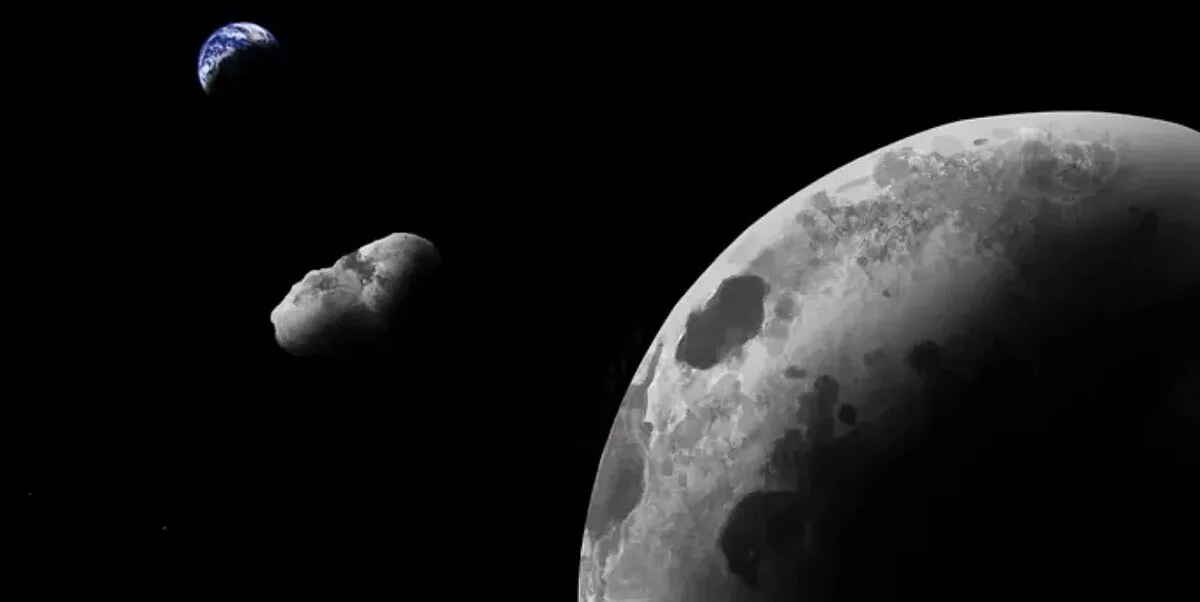
China’s Tianwen-2 spacecraft has successfully arrived at Kamoʻoalewa—a tiny, enigmatic "quasi-satellite" that dances along with Earth on its trek around the Sun. A fascinating scientific debate is heating up over this object's true identity: is it a standard, heavily space-weathered asteroid, or is it a long-lost chunk of our own Moon, violently blasted into space by an ancient impact? Tianwen-2 is on a mission to solve this cosmic identity crisis, and it is happening right now.
This week, we sit down with Andrew Jones, a contributing editor for The Planetary Society and a freelance space journalist covering China's rapidly accelerating lunar and planetary exploration programs. He takes us inside the mission to reveal how Tianwen-2 will attempt to hover and snatch samples from this mysterious world, what those pieces could teach us about our Solar System's history, and where China’s planetary ambitions are targeting next.
Then, Chief Scientist Bruce Betts joins us for What’s Up to look ahead at asteroid missions and moments on the horizon through the end of this decade, from a Hayabusa2 flyby of asteroid Torifune next month to the 2029 close approach of asteroid Apophis.

Transcript
Sarah Al-Ahmed:
China's Tianwen-2 intercepts a bizarre companion world, this week on Planetary Radio. I'm Sarah Al-Ahmed of The Planetary Society with more of the human adventure across our solar system and beyond. Earlier this month, China's Tianwen-2 spacecraft arrived at Kamoʻoalewa, a tiny mysterious quasi-satellite of Earth. It may be a piece of the Moon itself or something else entirely. I sat down with Andrew Jones, a freelance space journalist who covers the China National Space Administration, to talk about Tianwen-2, what we hope to learn from the samples it returns to Earth and where China's planetary exploration ambitions go from here. Then Bruce Betts, our chief scientist here at The Planetary Society, joins me for What's Up. With Asteroid Day just around the corner, we're going to be looking at some of the most exciting asteroid moments through the end of this decade, from a flyby that's happening just next month to 2029 when the asteroid Apophis passes closer to Earth than our geostationary satellites.
If you love Planetary Radio and want to stay informed about the latest space discoveries, make sure you hit that subscribe button on your favorite podcasting platform. By subscribing, you'll never miss an episode filled with new and awe inspiring ways to know the cosmos and our place within it.
Happy almost Asteroid Day, everyone. June 30th marks this annual global event. It's observed on the anniversary of the 1908 Tunguska impact when a small asteroid or comet exploded over a remote region of Siberia with the energy of a large nuclear weapon. It's a day to celebrate our growing understanding of these ancient travelers and to reflect on why finding and studying them matters so much. Right now we're living through the most extraordinary chapter in the history of asteroid science. In just the last few decades, humanity has done something that would've seemed like science fiction just a generation ago. We've actually brought pieces of asteroids back to Earth. In 2010, Japan's original Hayabusa probe overcame massive solar flares, fuel leaks, and a near fatal communications failure, but eventually brought home humanity's very first asteroid samples. About 1,500 microscopic dust grains from the stony asteroid Itokawa. That gritty proof of concept paved the way for a massive sample return that followed.
In December 2020, Japan's follow-up mission, Hayabusa2, returned pristine rocky material from a carbon-rich asteroid called Ryugu. The results were absolutely stunning. Scientists found amino acids, organic molecules, and water-bearing minerals, chemical clues about the conditions that gave rise to life in our solar system. Then in September 2023, NASA's OSIRIS-REx delivered samples from asteroid Bennu. An asteroid with a name that was actually chosen through a student naming contest run by The Planetary Society. And Bennu's samples told a very similar story. A world rich in carbon and the chemistry of life's building blocks and evidence that water-bearing minerals were once widespread in the early solar system. These samples aren't just rot collections. They're time capsules, four and a half billion years old and they're fundamentally changing how we understand where we came from.
And now China has entered this extraordinary chapter. On May 28th, 2025, the China National Space Administration launched Tianwen-2, its first asteroid sample return mission. On June 7th of this year, the spacecraft completed its first rendezvous maneuver and is now closing in on Kamoʻoalewa ahead of a sample collection attempt. After it completes its work there and drops the samples back at Earth, it's going to go visit a comet, making it a really ambitious mission. Kamoʻoalewa takes its name from a Hawaiian creation chant, the Kumulipo and translates to the oscillating fragment. It's a nod to the way that it appears to dance around the Earth as both it and the planet orbit the sun. It was first discovered in 2016 by the Pan-STARRS survey and it's just 40 to 100 meters wide and spins about every 28 minutes.
Unlike the Moon, Kamoʻoalewa isn't gravitationally bound to the Earth. Instead, it orbits the sun on a path so similar to ours that from Earth's perspective, it appears to loop around us in a slow, stable waltz, what astronomers call a quasi-satellite. It's not a moon, but it's not quite a typical asteroid either. It's a companion. And here's the mystery at the heart of this mission, although it is also very much a tech demo. Nobody is entirely sure where Kamoʻoalewa came from. Some scientists think it's a fragment of the Moon that was blasted off into space by an impact. Others argue that it's a heavily space-weathered asteroid. Tianwen-2 is going to help us figure it out.
To get some perspective on this mission, I spoke with Andrew Jones, a freelance space journalist based in Finland who covers China's rapidly growing space program. He's written a bunch of space related publications including for space.com, Space News, National Geographic, Sky and Telescope, New Scientists, and, of course, The Planetary Society. Here's my conversation with Andrew Jones.
Hey, Andrew. Thanks for joining me.
Andrew Jones: Hey, Sarah. Thanks very much for having me.
Sarah Al-Ahmed: I am such a fan of your work. It's so infrequent that there's an English language source that goes in depth on these China National Space Administration missions and I'm so grateful that you do the work that you do because there's so many amazing things they're doing at that space agency right now.
Andrew Jones: Yeah. At the moment, there's so much going on across all areas of the space industry. It's really staggering. It's very hard to keep up with everything that's going on, especially in the last few years of the acceleration of the commercial program on top of everything else. But also, we're seeing interplanetary missions. We're seeing a whole new batch of space science missions. It's really a fascinating time.
Sarah Al-Ahmed: Well, I've been really curious for a while. How does a Finland-based journalist end up becoming the world's leading English language voice on China's space program? How did you get into this job?
Andrew Jones:
Well, first of all, that's a very kind characterization, so thank you for that. But my kind of personal story with space is kind of a bit long and unmixed. I mean, it goes back to like I was three or four years old and saw pictures of the planets from, I don't know, maybe Pioneer or Voyager. I mean, that blew my mind at the time that there was these other planets, places, worlds out there. So that for some reason just really got ahold of me. But the thing is growing up in Mid-Wales, which is kind of the middle of nowhere, nice as it is, I ran out of ways to kind of explore my passion for space and also had a lot of people like teachers and stuff telling me that this is nonsense. Why you keep talking about space? Why are you drawing spacecraft and planets when everyone else is drawing cows and cars and things like that.
So it wasn't like the easiest kind of passion to have in some ways back then. And so I kind of fell out of touch with this passion for space, which I clearly had. And that actually came back to me a bit when my first child was on the way and I was thinking, okay, what was important to me and made me who I am and how I think and see the world. And I realized, oh, actually space was actually fundamental to a lot of things the way I think and what I'm interested in. And so I was already working as a journalist and I found some freedom to start reporting on space. After that, having lived in China for a while and had some studies in the political system and so on. So I had an interest in China.
I got the opportunity to kind of merge these two interests, found out that there wasn't that much dedicated coverage. I mean, you had Emily Lakdawalla who was doing a great job in covering some of the, back then the infrequent lunar missions that China was doing. So I mean, that helped me get back into space as well. And actually Planetary Radio played a role in that as well. It's very accessible, but also in depth as well. So not just like the odd documentary you come across on TV or something like that. It actually takes you into the missions and the people behind them. So I mean, that was actually very important as well, believe it or not, that I'm saying it on Planetary Radio, but still.
Sarah Al-Ahmed: Wow. I mean, that's a huge honor to play a role in that. That's amazing.
Andrew Jones: Well, I won't start naming names. But I mean, there's publications and podcasts out there which helped me get back into it and realized, okay, there's lots going on in China. There was kind of a perception like a decade ago that a lot of what China was doing was merely for prestige and I could see that that's not the case. So ,okay, maybe I can make myself useful and just start covering this and find out what's going on to the best of my ability. And I'm just very, very grateful that all these years later I'm still doing this and I hope it's helpful.
Sarah Al-Ahmed: It's very helpful and there's so much more to write about every single day. I mean, it feels like just yesterday we were talking about Tianwen-1 and the Rover landing on Mars and that being a huge moment for that space agency and now we're looking at a whole timeline of upcoming missions in this Tianwen series. Can you talk a little bit about where Tianwen-2 fits into China's broader goal with this set of missions?
Andrew Jones:
So I think that a lot of the time when you have someone on here from certain missions, that a lot of it is kind of ground up science driven kind of missions, right? They come up with a question and then they find a way to form missions and find out to answer this particular question or set of questions. I think what we're seeing with Tianwen-2 is it's very much an engineering led mission. So they have particular engineering goals. They want to demonstrate particular capabilities and technologies building on towards different missions. I think that Tianwen-2 is relevant for the Mars sample return mission, Tianwen-3, which they plan to launch in late 2028 in the sense that this would be a first sample return at the second cosmic velocity. So hitting the atmosphere at 12 kilometers per second.
So they've already done this twice with their Chang'e 5 and Chang'e 6 missions, but that was slightly slower speed at like 11.2 kilometers per second. So it doesn't sound like much of a difference, but that change in velocity is another challenge which they have to overcome and demonstrate. And the other thing is that they're using ion propulsion and long-term operation in deep space and that's relevant for the Jupiter mission Tianwen-4, which is scheduled for around 2030 and that would be an orbiter to go to the Jupiter system and then eventually go into orbits around the Galilean moon Callisto and possibly land or use an impactor. So the last person I spoke to who was fairly senior was like Lander was the kind of thing that was still the main proposal. So there's still a degree of uncertainty despite that date getting closer. So yeah, Tianwen-2 is very much engineering driven, but at the same time, the science behind it is also quite fascinating as well.
Sarah Al-Ahmed: It's interesting because this is one of those missions that's going to be going to multiple small bodies and it's going into orbit around them. And when I read that, I was like, "This sounds a bit like the Dawn mission, NASA's Dawn mission that went to Ceres and Vesta." So I was like, "How are they pulling that off? I wonder if they're using ion propulsion," and they are. And that absolutely blew my mind. That's really clever and definitely a very useful technology for this kind of thing. So I was very excited to read that.
Andrew Jones: Yeah. Every mission is fascinating in its own right, but there's also these subplots and these developments which go on towards future possibilities. Yeah, absolutely.
Sarah Al-Ahmed: Well, this mission is going to be going to two separate bodies, one's an asteroid and one's a comet. How did they come up with this mission and why did they pick these targets?
Andrew Jones:
So the actual formulation of the mission I can't really give much background into how on the engineering side decided that, okay, we're going to go to a neo-Earth asteroid and then the main belt come afterwards. It's quite difficult. I think one thing that we've seen with Chinese missions is if you look at their lunar missions, they'll have a primary mission and then they'll pull off the primary mission and whether that be orbiting the Moon or collecting samples from the near side or the far side. But then what's happened is the service module has gone and done something different and it's been after that happened the first time, the second time, we're all kind of waiting, okay, where are they going to go next? Where's the service module going to head off to? Because for Chang'e 5-T1, which was a test for the reentry of the sample capsule, that service module ended up in Earth-Moon Lagrange point 2 and that was like, "Huh. Why would they be going there?" And then it was like, "Well, maybe they're thinking of landing on the far side of the Moon." And so it was.
So I think that this time they've just formalized everything and won't go and say, "Yes, we're going to go here. We're going to drop off the samples, but then we're going to go to a comic afterwards and make the most of the mission." So why particularly these bodies, I can't say. What I would say is that Kamoʻoalewa is one of seven known quasi moons of Earth, so in this kind of resonance orbit, and these have been discovered relatively recently. So that's maybe opportunistic in the sense that, okay, we've got something which is relatively low energy to get to and come back. It might even be a chunk of the Moon, which we'll probably talk about later. So it gives us an opportunity to do some serious science and head off and do something else in a deeper part of space as well. So I think it checks off a lot of boxes.
Sarah Al-Ahmed: So it's going to be rendezvousing with this asteroid and then it's going to be gathering a sample and then it has to go on to this comet. So at what point in this process is it going to be delivering these materials to Earth?
Andrew Jones:
Just ahead of the launch of Tianwen-2 back in late May 2025, there was kind of a list of these different mission milestones. And so of course we don't know that this is official, but it's matched up with everything that's happened so far. So what we just seen over the weekend on June 7 was what we expected to be the rendezvous with Kamoʻoalewa. So I'm going to pronounce that very differently to you and I'm sure you know how to say it much better than me. But, the China National Space Administration hasn't officially confirmed that this rendezvous maneuver to kind of put this into a similar orbit to the asteroid has taken place, but AMSATL, which is like nonprofit tracking of objects, they used their telescopes in Bochum in Germany and Dwingeloo in Netherlands and they pretty much confirmed that, okay, this maneuver took place looking at the doppler signals and everything like this. So it seems that everything went well.
So from this point, looking at the kind of mission papers that have been put out there, what I'm kind of expecting is that the spacecraft is about 2,000 kilometers out from the asteroid at the moment and that what we're going to see over the next few weeks, or rather we're not going to see it, we're going to imagine that this is happening, that the spacecraft's going to begin this approach to the asteroid. It's going to move from a couple of thousand kilometers out down to around about 20 kilometers. And I think that the schedule for that is that it arrives in a 20 kilometer. It's not really in orbit because the body's too small, but around 20 kilometers altitude out from Kamoʻoalewa and hopefully then we get the first images. I mean, probably now we're too far out to see much given that this is a football pitch sized kind of object and it's just too far out.
So hopefully then July 4, we get the confirmation that yes, Tianwen-2 is in its desired orbit, here's an image. And from there they're going to spend, I think it's from July until April 2027, they're going to start mapping the asteroid to using, I think I've got LiDAR, the cameras, they've got a sounding radar. So they're going to find out as much as they can about the surface, about the topography and everything like this and try and find some landing points for sampling. So they're going to be learning about this from July onwards, take the samples using three different sampling techniques. Well, at least two and then if possible, they'll try to anchor and attach to the asteroid depending on what the surface turns out to be. And the departure then all being well, they will depart from the asteroid on the 24th of April 2027, which also happens to be China's National Space Day, which celebrates the anniversary of the first launch of a satellite by China back in 1970.
And then I think it's 29th of November that year, so like in a year and a half, the reentry capsules should come through the atmosphere and land safely and then we'll have a full set of samples from an asteroid.
Sarah Al-Ahmed: It's going to be really cool to have samples from one more body, but this is like a smaller kind of weird shaped asteroid with huge question marks on how it was formed. And you alluded to this earlier. Some people think that it might be a chunk of the Moon and then there are other comparisons to things like LL chondrites and really low iron type meteoritic material. What can we learn about this that'll give us some clue into say solar system formation? Why is this an interesting object?
Andrew Jones:
When I've been speaking to people about this, I think one of the first things that the scientists say is like, "Every time we go to an asteroid, it's completely unknown. What we see is just a complete surprise." Whether it's the surface, the shape, whatever, it's just everything is just like, "Huh, really?" It's like they build different models and ideas or something and then we actually get closer like, "Oh, wow, okay." And then you learn so much more. So just going to another small world, if you will, is just going to be fascinating and illuminating.
On the science side, I mean, there are lots of papers out there about the origin, so this is of keen interest in the science community. So on idea is that this was sent into orbit by an impact of which hit the Moon in the last 10 million years, hitting the far side, I think was the Giordano Bruno crater according to some models. And that was because they were looking at the spectra from this quasi-moon and so it was really red and it kind of looked like lunar material. So then they kind of look at the orbits and then look, okay, what kind of impact could possibly have sent something like this out into orbit? So trying to put these clues together.
On the other hand, there were some saying that it's more likely based on the orbits that this came from a particular family of main belt asteroid and it kind of migrated inwards and ended up there and kind of the reddening that they were seeing in the spectra is maybe due to extreme space weathering. So there's very different ideas of what's going on here. So getting an answer to that, that's going to be fascinating. There's probably a few bets between people as well, no doubt.
Also, I mean, if it turns out that this is a chunk of the Moon, which ends up in a resonance orbit, I mean, that would tell us something about how these objects, this kind of population of objects and how different bodies can end up similar or bit to the Earth. And then conversely, it would tell us lots about the evolution of the solar system and kind of the impacts and collisions and everything like that. So it's going to be very interesting. Yeah.
Sarah Al-Ahmed: You mentioned a specific impact crater. How do they try to figure out that this object might be from that exact impact?
Andrew Jones:
Well, that's what I asked them exactly as well. I had the same question in my mind. But yeah, my understanding is that they were looking at the orbits of Kamoʻoalewa and this is kind of a short term orbit that it's in relatively. So I think it's been in something like this orbit for about a hundred years according to the model, since it's going to be there for another 300 years and then things change after that. So I think that what they were doing, they were looking at the spectrum coming from the subject and seeing that, okay, this looks like something silicate heavy kind of thing similar to the Moon maybe.
And then they're thinking, okay, well, if so, if it's in this orbit, it would have had to have been recent. And then they kind of go and look at the models that they have for the age of impacts and things like this and try to find something which would be in kind of the same time zone, I guess, like the same kind of timeframe rather for an impact and look at something big enough which might be able to chuck out something that big into space. So one of the candidates they came up with was Giordano Bruno on the far side of the Moon. So that sounds like really, really specific, right?
Sarah Al-Ahmed: Yes.
Andrew Jones:
That you can narrow it down to this. But I mean, yeah, it's hard for me to talk about this because I mean, people have done whole papers on this with all their methodology and models and everything, which is a bit beyond me. So yeah, try to be careful talking and misrepresenting this. But I mean, I think that's the basic idea where they were trying to constrain things based on the information that they had and this is the hypothesis that they came up with. So it might sound really kind on first hearing, it's like, okay, that's oddly specific that you can come up with that crater, but I guess that there's not that many options when you kind of drill down into all the different factors.
So yeah, but still very interesting. And the thing is that some of the people on the other side of the debate in the sense of saying, "Well, okay, if you look at the energy that needs to be generated to throw out this big a chunk of stuff out of the Moon and out into a separate orbit, it's a lot." So the interesting thing is it would be like if it does turn out to be a piece of the Moon and they can trace it back to that particular crater, that would tell scientists something very interesting about the impact dynamics and the energies involved. So it's not something that because we don't observe these things happening, then this would be another way to try and learn about what's going on and how these collisions affected or played a part in the evolution of the solar system. So, very fascinating questions.
Sarah Al-Ahmed: Yeah. And happily China has returned samples from the far side of the Moon. So without that, we wouldn't have as much to compare to really validate whether or not it comes from that region, which is fascinating in and of itself. And maybe we can with that kind of specificity say, yeah, it came from that actual impact and that would be something wild.
Andrew Jones: Yeah, yeah. Yeah, it would be. So I think that my understanding is that if they can get the ... I mean, getting close up to something like this, you might be able to tell something extra that we can't tell from the ground, but I think that they can tell a lot from the ground in terms of able to come up all these different hypotheses. But yeah, if they can get the samples safely onto Earth and then they find that the isotopic composition is similar to those moon samples, then there you go, you've answered the question. Or then conversely, it's something which is much more like an asteroid. So yeah, that's how they find out.
Sarah Al-Ahmed: And to have samples of this thing, I'm also very interested to see what kind of organic compounds are on there given all the results we've seen from Hayabusa2 and OSIRIS-REx. So it'll be really interesting when we get there. But again, it's going to be a mystery up until we see the images of this object up close and it's interesting that they're trying multiple sampling techniques. We've seen previous missions try to do a kind of tag maneuver and you mentioned the anchor and attach. But what's the third sampling method they're going to be trying to use on this?
Andrew Jones:
That would be a hover approach where they kind of match the rotation of the asteroid. And this is spinning really fast by the way, this spins once every 28 minutes, which is really fast. And there's an idea that there's like a spin barrier. So if there's something spinning faster than say two, two and a half hours, then this can't be just like a rubble pile which is coalesced. It's probably like monolithic something. So they would try to match the rotation of the asteroid and then descend and use a robotic arm to kind of, I don't know, scoop to try and take some samples from it. So I mean probably looking to get small grains. And I mean, that's very challenging to match this rapidly rotating body and then try to deal with the kind of reaction forces and everything like this. So this is kind of a pioneering approach.
So the idea is that, I mean they're doing ... Or they went equipped with three different sample techniques as kind of redundancy in the sense that we don't know what the surface of this asteroid is like. So if we have different options, then there's more chance of getting samples. The other view to that would be that this is more of an engineering demonstration, they want to try different things rather than being overly concerned with how much samples they're getting. From the outside at least, there's different perspectives of is this adding risk or redundancy? Why are they being ambitious with so many different techniques?
But yeah, I think that just speaks to the kind of engineering driven side of this mission. And it's going to be very interesting to see if they can make these work. And I think the other thing is that the reason that they'd want to do this is because they have an interest going forward in small bodies in the solar system and potentially what they learned from this mission could also be applicable for say resource mining in the future.
Sarah Al-Ahmed:
But so we've got the kind of more classic sampling techniques where you kind of get close to this object and just kind of scoop something up. We've seen other missions have troubles with this in the past because they were rubble asteroids. The whole thing would break apart or you would just bury the sampling arm into this object. But it sounds like given its rotation speed, we might have some clue that this might not be as rubbly as objects like Bennu, say, which might enable them to do this anchor and attach maneuver. Otherwise, the whole thing might just blow itself apart trying to pull off that technique.
So how does anchor and attach work?
Andrew Jones:
Looking at the papers that they've put out on this, I think if they go ahead with it and we actually see some footage from it, that would be the most illuminating thing. But I think they've got like a tripod mechanism for kind of dampening the descent and the touchdown onto the surface. And if they're able to do that, then the robotic arm would have like a spike and a claw in which they would then attach the spacecraft to the asteroid. And then I imagine that the robotic arm would then be involved in the sampling. Or maybe they will then use the touch and go apparatus to take further samples. So I'm not quite sure on the specifics of that, but that would be quite something to see.
I mean, yeah, as you say, I mean with Bennu, I mean that was a surprise where you go in to sample the asteroid and then it's like, "Oh, we're actually inside the asteroid. Okay, this is a shock."
Sarah Al-Ahmed: Oops.
Andrew Jones: So the surface itself, it's going to be interesting to see if there's enough cohesion among this regolith, which is probably going to have for actually to attach. So it'd be quite spectacular if we get to see this.
Sarah Al-Ahmed: Yeah. And hopefully it's a situation where it's easy enough to get attached, but also easy enough to separate from this object because then it has to come back to Earth to deliver all these materials. So if things go a little wrong, what if the spacecraft gets stuck there?
Andrew Jones: Yeah, yeah. It'd be interesting to see what their CONOPS is for this, what kind of risks and everything. But yeah, I mean, I think that the things that we've just been talking about there just go to show how ambitious and exciting this kind of mission is, both on the science side and the engineering side. So it's great that we get to see these things playing out in the solar system.
Sarah Al-Ahmed: We'll be right back with the rest of my interview with Andrew Jones after the short break.
Ambre Trujillo: There's so much going on in space science and exploration and we're here to share it with you. Hi, I'm Ambre, digital community manager for The Planetary Society. Catch the latest space exploration news, pretty planetary pictures, and Planetary Society publications on our social media channels. You can find The Planetary Society on Instagram, Facebook, LinkedIn, and YouTube. I hope you'll like and subscribe so you never miss the next exciting update from the world of planetary science.
Sarah Al-Ahmed: It's not super far away from Earth. I mean, it's a quasi-satellite of Earth, so it can't be super duper far away, but even given that there is going to be some kind of communication delay between Earth and this spacecraft. So, what degree of autonomy does the mission have for making decisions, especially when it's dealing with an object that's so small and rotating so rapidly?
Andrew Jones: Yeah, that's another aspect which they're looking to test and push forward with this mission is autonomous operations out in deep space. So yeah, it's not the longest light delay, of course. So I can't remember. It's probably between 0.1, 0.3 astronomical units that they're dealing with. So it's significant in terms of wanting to actually send commands real time, it's not possible. So yeah, this has been designed with a fair degree of autonomy as a test for future missions.
Sarah Al-Ahmed: Where would you say this kind of ranks technologically versus other asteroid sampling missions? We've had some things that have had some autonomy in the past, but with an asteroid that's a little more predictably shaped like something like Bennu, it's not quite as dicey as going toward a tiny object like this.
Andrew Jones:
In terms of mission design and everything like this, I mean, there's so many different variables and factors that I can't get my head around. But yeah, I mean, looking at it, I mean, this is the smallest asteroid that humanity's going to have visited so far. I think Hayabusa2 is going to reach a smaller one in 2031 on its extended mission. But yeah, so far it's really small. It's rotating really fast, which has implications for reaction forces and what the surface should be like and everything like this. So sampling risks and also just how much we don't know about it so that there's unknowns. So I really can't rank it, but other than to say, yeah, this is ambitious and I think it has challenges that some of the other missions don't have.
I mean, thinking about it, the interesting thing is that if there's more smaller asteroids than there are larger asteroids. So if you're going to a smaller one, which is rapidly rotating, then if you're looking to do this again and again in the future, then this is a good test bed. So it's really hard to say.
Sarah Al-Ahmed:
It is absolutely amazing what they're trying to accomplish right now and they've been knocking it out of the park. So I'm really glad to hear that this rendezvous, at least we think so far, has gone well with this object. We're going to have to wait to see what happens when the samples return, but then it's going to be moving on to another comet, a periodic comet.
Can you talk a little bit about the second target for this mission?
Andrew Jones:
Well, I can try. So the target for this is 311P, which is a main belt comet. And to be honest, I mean, I've been working over the last week or two to get my head around Kamoʻoalewa and all the different kind of theories of the origins of this and what the operations for Tianwen-2 will be with the next few weeks and going forward as they move towards sampling. So the comet side of this, particularly because they're not going to be arriving until 2035, it's been very much at the back of my mind. So that's no disrespect to the comet scientists or anything like that. Yeah, it's just been a really busy period and been focused on the asteroid side of things.
So yeah, I mean, that spacecraft's got 10 or 11 different science payloads. So the cameras and LiDAR and signing radar that I talked about before. It's got dust detectors as well, which will be working interplanetary space as well. So they have some payloads which will be kind of more useful for the comet side of this mission as well, as well as generally for both of these objects. But basically what we're going to see is when Tianwen-2 returns to Earth in November 2027, it will use its kind of rendezvous for a gravitational slingshot to send it on its path towards this comet. So it's going to be in deep space for eight years by itself after that. So sounds kind of boring, but also it's verifying that China can do long-term deep space missions and builds towards even more ambitious missions in the future.
Sarah Al-Ahmed:
I mean, that is one of the downsides of using ion thrusters, right? Like you can get a good gravity assist off of Earth, but ion thrusters take a long time to kind of get you to a place that can help you change your trajectory so you can go into orbit. But it makes sense, it's going to take them a while to get out there to this object.
They're not actually going to be trying to sample the comet, right? They're only doing the sampling on the asteroid side?
Andrew Jones: Well, they haven't said so. The way that they describe it in the mission papers is that the goal of that is to rendezvous with the comet and perform studies on this. So whether or not they ... If once they've done the global study of 311P, maybe if they want to experiment with the sampling, I mean, maybe, why not? So maybe you could learn things about the surface dynamics and everything like this by just messing around with those things. So maybe as an extended part of that mission, we might see something like that.
Sarah Al-Ahmed: That would be interesting. I mean, we'll at least get the dust analyzed off of this object, but if they could return to samples, I mean, how would you return the second sample without the plan to return to Earth. You'd have to completely change the trajectory of the spacecraft and then it would take just as long almost to get back to Earth, right? So that's a really long term mission.
Andrew Jones:
Yeah. And then you would assume that they've used their reentry capsule as well. So unless you want to park it in an orbit and go up and fetch it. I mean, exactly. I mean, that's a lot of fuel and this is still relatively a small spacecraft. So yeah, I think those are beyond the realms of possibility, but certainly, yeah, China has certainly looked to get absolutely everything that they can out of every mission they do. I mean, maybe we see some surprises.
I mean, for example, when we went back to Chang'e 6, we knew quite a lot about the mission. They landed on the Moon, they were doing the samplings and then suddenly the small rover turns up and takes a picture. It's like, "Huh, they got a rover." And I think that that first turned up I think that when we saw an actual picture of the launch stack, it was like, "Huh, what's that on the side there?" So it was kind of like just a surprise. And then with Tianwen-1, on the way to Mars, they just released this kind of wifi camera, which took these spectacular deep spaced images, right? Yeah, surprises. There could always be surprises with these missions and lots of cameras as well. So hopefully we're going to see some great views of this asteroid and who knows what else that they managed to add in there too.
Sarah Al-Ahmed: See, that's an interesting thing. I've always wondered if it's, because I live in the United States and there's not as many people who are reporting on these emissions as you are, I've always wondered if the secretive nature of things going on with these missions is just like, I'm surprised as an English speaker that there was say Zhurong rover on Tianwen-1 or if that's something that people in China experience as well if they're also surprised and delighted when these things happen with their space missions.
Andrew Jones:
Yeah, with the surprises in particular, it's a completely different kind of information environment which China operates in. I mean Western Mission, you're dealing with taxpayers, money and there's a certain amount of transparency and kind of openness that has to, you can't just like bolt on an additional part of a mission and go surprise. You can't do that. But in China, I mean the way that their kind of space and defense sector works, it's a lot more secretive to reporting about it is they have embedded reporters from different kind of news and media, but I mean what they're able to report would maybe be a lot more controlled. So yeah, it's just very different. Different kind of relationship with the public in terms of information and when it's released.
If everything goes well with Tianwen-2, I'm sure we'll see lots of images and everything like this, but it's like only after they've made sure that everything's going well. Unless it's a really big mission with a live stream, with live coverage, we don't really get to see a picture of the rocket or the payload or anything like that until after mission success has been declared. So that even happened with Tianwen-1 too. So I think the first image we saw of the spacecraft was like one of its solar arrays, which kind of looked like, I think it was the Lucy spacecraft, it kind of looked like that kind of circular ones and we only got to see one of them. And then later on we got a picture from one of the engineering cameras showing the spacecraft when it was already on its way. Yeah, the way that they trickle out information is very different.
Sarah Al-Ahmed: But it will be really cool to get these images back. We've never seen anything this tiny, this close up before and especially if it isn't the same kind of asteroid like rubble pile that we're seeing with a lot of these other objects. Who even knows this might be one of those classic asteroids that we imagined in science fiction where it actually just looks like a solid surface. I don't know if I've seen that up close before.
Andrew Jones: Yeah. It's just going to be fascinating. I can't wait. Yeah, it's just really frustrating. Yeah. It's a few weeks and then waiting to know what's going to happen, when will we actually get to see the images and the confirmation, everything like this. So I mean, on one hand it's kind of frustrating when you don't know what milestones can be covered in terms of planning to report things. But on the other hand, this kind of makes it more exciting and interesting to try and work out what's going on. Yeah.
Sarah Al-Ahmed: We're going to have to figure out more about these. I mean, it's a very small population of quasi-satellites, but they're very interesting objects and maybe not as interesting for planetary defense necessarily, but who knows how many of these little quasi-satellites are hiding out all around the solar system in these interesting orbits, right? It'll be a good thing to learn more about them.
Andrew Jones: Yeah, absolutely. And it's kind of great that Kamoʻoalewa was discovered in 2016 and then 10 years later it's been visited. It's like, that's quite remarkable. So yeah, just to think even a decade ago, these things were still in these quasi-moon orbits, but still not being detected. Yeah, it's fascinating.
Sarah Al-Ahmed: Was the asteroid detected by Pan-STARRS like the comet was? Was it all part of the same survey?
Andrew Jones: Yes, Pan-STARRS. And hence the Hawaiian name.
Sarah Al-Ahmed: Is there any international collaboration in the Tianwen-2 mission?
Andrew Jones:
Yes, there is. There's a payload from the Russian Academy of Sciences. I think it was the particle dust detector. I think there was a payload from Italy as well, the name of which escapes me, but that was another kind of post-launch surprise. I think that was something that I personally missed. I think there was kind of evidence of it out there, but not very much. And it wasn't maybe in the main announcements from CNSA. But yeah, there is international cooperation.
And also on the modeling side and the science side as well, you have Chinese teams who are working on both ideas in terms of, is this a chunk of the Moon? Is it an asteroid? So you have teams that instead of just ... It seems that they have like a competitive process in terms of the science and trying to work out what's going on and they were also working quite openly with experts from around the world as well on these papers.
So I mean, the science side of it's been collaborative as well, which is good to see
Sarah Al-Ahmed: Absolutely. I had a similar situation when I was learning more about the DART mission where I didn't know that Italy was involved and then LICIACube became a thing and took all those beautiful images of the impact. So again, Italy coming in strong on these asteroid missions. I really enjoy
Andrew Jones: That's going on. And then Hera, of course, which is turning up with the two cube sets as well also from Italy. So that's another thing to be excited about. And then of course we've got Apophis approaching in three years, so many things going on with these comics and asteroids and planetary defense, it's an exciting time.
Sarah Al-Ahmed: Well, it makes me feel very relieved. When I was a young person, I was convinced we were going to go the way the dinosaurs because we weren't paying enough attention to these objects. And now we've got samples back from multiple small bodies. We've got a mission like this that's visiting multiple small bodies. We're going to learn so much more. And maybe it is really future thinking, but what if in our lifetimes we see something like asteroid mining? I mean, it's not inconceivable, right? Especially after what we're going to be learning about Psyche. There are so many cool small bodies out there.
Andrew Jones: Yeah, it's fascinating. Yeah, my inner child who had his mind blown by images of just the planets and now getting to see closeups of these small worlds and everything like this, it's brilliant. Yeah.
Sarah Al-Ahmed:
And this is really ambitious. We've seen some space agencies. I think the UAE is the one I'm thinking of that has an upcoming mission they're planning that wants to go to multiple bodies. I think it's like seven separate asteroids. But no one has attempted to try to go by all these different objects and attempt to sample at the same time. So if they can pull this off and then make it all the way out to 311P/PanSTARRS, it's going to be great. So I'm just going to be sitting here waiting for the first images to come back.
Around what time should we expect these pictures to start flowing in?
Andrew Jones: The indications are that kind of the approach phase will be completed on July 4th, that should be 20 kilometer altitude. So maybe we see something before then, but that would be kind of a mission milestone which would match the timing for an official announcement and some images. So yeah, maybe we see something as it gets closer. I think we're still too far away if we are as expected about a couple thousand kilometers away, but as we get closer, as we hit some of those milestones, then yeah, I think July four is a good day to look for.
Sarah Al-Ahmed: Only just a few days after Asteroid Day. So we've got a lot of asteroid stuff to look forward to in the coming weeks and months, honestly. And years you brought up what's going to be happening with Apophis. I feel like this is going to be a theme that we're going to be touching on a lot over the next few years as we learn more about this.
Andrew Jones: Yeah, it's a fascinating time to be witnessing all of this.
Sarah Al-Ahmed: Well, thank you so much for joining us on the show to talk about this. There are so many amazing missions coming out of China that I want to celebrate and am really excited that we could talk about this one as it's happening because I love asteroid sampling missions. This is so cool.
Andrew Jones: Yeah, there's so much going on. So I'm always happy when people are paying attention to what's going on and the advances that China's space program has made in terms of capabilities and kind of ambition over the last decade, it's staggering.
Sarah Al-Ahmed: And thankfully we'll be able to look to you when we can to see some of these missions coming out and read your articles. It's wonderful to speak with you for the first time after reading your work for so long and I really appreciate you coming on the show to share about this mission so we can all celebrate it together.
Andrew Jones: Yeah, thanks very much for having me. Always happy to talk and thank you for a great job that you've done with the show.
Sarah Al-Ahmed:
Coming up next, I'm joined by Dr. Bruce Betts, chief scientist of The Planetary Society for What's Up. We're going to be taking a look at some of the most exciting asteroid missions and moments on the horizon through the end of the decade.
Hey, Bruce.
Bruce Betts: Hello, Sarah.
Sarah Al-Ahmed: Hello. So-
Bruce Betts: Talking asteroids?
Sarah Al-Ahmed: Talking asteroids. Happy early Asteroid Day.
Bruce Betts: Happy early Asteroid Day?
Sarah Al-Ahmed: Well, by the time people listen to this, it'll be approximately six days-
Bruce Betts: No, it's the happy that I question. It's important because it raises awareness of the asteroid threat. So I've just never figured out if happy is ... If we do our homework, it'll be happy.
Sarah Al-Ahmed: That's fair, honestly. I like to think of it as not just like a doom and gloom day of asteroids may be killing us, but more so a celebration of our understanding of them.
Bruce Betts: It's on the anniversary of the Tunguska impact.
Sarah Al-Ahmed: I mean, that's fair, but to our knowledge, no humans were killed, although a whole forest was flattened. So I do think about all those poor animals living in that forest. That's terrifying.
Bruce Betts: Yeah. That's kind of ... I mean, yeah.
Sarah Al-Ahmed: But yeah, I mean, Asteroid Day is a cool moment to think about all the things that we've learned about asteroids.
Bruce Betts: Yes.
Sarah Al-Ahmed: But right now, honestly, is the coolest period for asteroid understanding in the history of humankind because we've locked down most of the world destroying ones. We've seen so many of them out there. It's mostly like the smaller city killer size asteroids that we haven't all detected yet.
Bruce Betts: You say that in passing, city killer.
Sarah Al-Ahmed: I know, right? But I mean, this is why we're doing this kind of science, right?
Bruce Betts: Tunguska would have ... The area flattened was 50% larger than the city of Los Angeles.
Sarah Al-Ahmed: Right.
Bruce Betts: So I just thrown out random space fact out there.
Sarah Al-Ahmed: Just throwing things out there. But also, we have seen growing concern from people over the last few months as we've seen more and more fireballs come down to Earth. And a lot of that is just the fact that people have cameras everywhere. So now we're being able to see these things and record them and put them online. But I think now is a unique time people are a little more aware of the asteroid threat, really.
Bruce Betts: Fireballs are fun.
Sarah Al-Ahmed: As long as they don't land or hurt anyone. I mean, Chelyabinsk, that was terrifying.
Bruce Betts: Yeah, no, that was beyond Fireball.
Sarah Al-Ahmed: Yeah, definitely. But we've got all of these asteroid moments coming up. We just talked about what happened with Tianwen-2. Next month we've got Hayabusa2 making a rendezvous. And then from there to the end of 2029, there's just a bunch of asteroid stuff happening. So we don't need to name everyone, but I would love to give people a little timeline of what we can look forward to.
Bruce Betts: All right. Well, as you say, in less than a month, Hayabusa2 still out there doing stuff. It dropped off its samples, but it's still flying around. It'll go visit Torifune. How'd I do?
Sarah Al-Ahmed: That's good.
Bruce Betts:
Okay, the Japanese pronunciation, Sarah's the expert. So that'll be cool. And they plan on getting within, I guess, within 10 kilometers. It sounds like a pretty close flyby, so that should be groovy. And then we've got in November, Hera from the European Space Agency reaches Didymos and Dimorphos, which is what DART slammed into a few years back to demonstrate that we could change the orbit of an asteroid and they'll be able to actually go and look at the crater and do measurements of how things have changed and get the details that allow us to better understand the process of so called kinetic impactors when you slam a spacecraft into an asteroid to change its orbit.
But wait, don't order yet. We've got Lucy, which is just a crazy going all over the place. It's already done some asteroids in the main belt. But it's doing four Jupiter Trojan asteroids in '27, most of that's in '27 and '28. That's 2027, '28. That's neat because that'll be our first Trojan asteroids, they're ones that are morbid 60 degrees or 60 ahead or behind Jupiter in its orbit and stable Lagrange points, or sort of stable L4-L5. And it'll visit one of those places during the next few years. And then after that, this is just so weird, they fly back from Jupiter by Earth and then go to the other camp of Trojan asteroids later on.
Sarah Al-Ahmed: Yeah, that is weird. Clever.
Bruce Betts:
Tianwen-2, which I said I guess you were just talking about, is that what you said? We'll do a sample return drop from the weird little quasi-satellite beast that I guess you discuss hanging out and we'll get to figure out more about it and where it came from, what its story is, what it likes to do for fun. And [inaudible 00:51:35], now we've been having planetary defense conferences since the beginning of the 2000s, more than 25 years since the beginning everyone wanted this as the top priority thing and not necessarily the specifics of the mission, but the concept of a infrared space telescope inwards of Earth orbit dedicated to finding asteroids because then you lose fewer in the sun, you have a wider field of view. You can use infrared more effectively above the atmosphere, the thermal infrared and see even dark asteroids because you're actually measuring their temperature. You can also measure their brightness. You can get a better idea of their mass. It's just good stuff. And the community of people who worry and think about asteroid threat and asteroid science have won this forever. So I am so excited about that.
The UAE doing planetary again, hoping to do six main belt asteroid flybys starting, they launch in 28 and then they go out there and party around for a while. Apophis, this is the big deal, depending on how you define its Egyptian God purview, Apophis, the destroyer, God of chaos, it'll pass inside our geostationary orbit satellite orbits, 32,000 kilometers from Earth. It will not hit. But it is a three football field long asteroid. So it will be actually visible to the naked eye. It'll just appear like a star moving across the sky. But that star is this pretty big asteroid that was concerning when it was first discovered because we were still in the uncertainty of the target zone, but we're very much not now. And so it's just a real reminder that that is the kind of thing that can ruin a lot of people's day and really screw up countries, economies. The word is bad. It would be bad if that hits. So learning more about it.
We got OSIRIS-APEX. We'll pick it up after it flies by. That's the OSIRIS-REx spacecraft that like Hayabusa2 dropped off at samples and now doing more science. ESA, European Space Agency is building Ramses to actually get there before it flies by. The University of Maryland, a student group is trying to do if they can pull things together, they'll have a small spacecraft flying by. And finally, all of this before 2030, and it's 2026, August of 2029, NASA's Psyche mission arrives at Psyche, a metal asteroid.
Sarah Al-Ahmed: Metal.
Bruce Betts: Which I'm very excited about that may or may not be the exposed core of an early planet. And so that's a new weird place we'll be looking at that could be super weird and groovy or may look like something else. But science-wise, it's all good stuff. It's good stuff. Sorry, I went on so long. But I'm so excited about it, Sarah. Even I'm excited about this.
Sarah Al-Ahmed: I mean, it's amazing. There's so many missions back to back to back plan for the next few years. And at least from what we've seen from sample returns and other missions that have gone out to these objects over the last decade or more, each one of them returns stuff that we didn't even imagine would be there, what the chemical composition is or just the weird shapes of these asteroids or the fact that some of them are rubble piles versus mostly solid. There is so much that we have learned and it's the prime example of like, well, what do we think we're going to find when we go there? We don't know. That's why we're doing it. It's beautiful.
Bruce Betts: Yep. It's a wonderful thing and weird thing throughout the solar system, every time we go anywhere, we usually come away going, "Wow, didn't see that coming." Hopefully we don't do that with an asteroid.
Sarah Al-Ahmed: Oh, fingers crossed. But if anybody is interested on actual Asteroid Day, which is June 30th, I'm going to be going on Twitch with Moohoodles, which you've probably heard from on the past in the show. We're going to be doing a whole show with Casey Dreier and me and her and we're going to be talking about all things Asteroid Day and about all of these missions. So if anybody wants to learn a little more and hang out with us, we'll be doing that. So come say hi.
Bruce Betts: Well, that will be a happy Asteroid Day for you.
Sarah Al-Ahmed: Right? I'm going to make it happy, even if it's about something terrifying.
Bruce Betts: But it's the on giant natural disaster that we actually, if we keep doing our work, eventually we'll be able to prevent when one of these comes because there is a 100% chance that a dangerous asteroid will cause humanity, destruction of parts of humanity unless we do something. We don't know whether it's tomorrow, it's not very likely, or 100 years from now or 1,000 years from now, but it will happen, but it doesn't have to because we're cool and we'll develop cool stuff, mostly Sarah and it'll be great.
Sarah Al-Ahmed: We'll send Sarah to space. She'll punch it in the face for the dinosaurs.
Bruce Betts: Wow. Remind me not to cross you. Speaking of which-
Speaker 5: Random space fact.
Bruce Betts: Mariner 10. Mariner 10 was the first spacecraft to encounter two planets besides Earth flying by Mercury after it flew by Venus and gave us our first and only spacecraft views of Mercury for a few decades until Messenger got there and it did it in the early 1970s. Of course, there've been many that have been doing that now that were masters of gravity assists and the like, but that was the first time they partied with that at two different worlds besides Earth or the Moon.
Sarah Al-Ahmed: I'm so looking forward to BepiColombo getting into its mission around Mercury and learning more about that because I mean, this is another example of a world that we just need more emissions to explore.
Bruce Betts: It's true. And I spent much time wondering what that other half looked like because we didn't know and Messenger told us and then others, and then BepiColombo's going to do some great science. Both Bepi and Colombo, I'm just kidding, that was the name of a person, but there are two who will break into two spacecraft with the Japanese led one and the European led one. So much good stuff. Yay.
Sarah Al-Ahmed: Yay.
Bruce Betts: All right, everybody, go out there, look up the night sky and think about what you're looking forward to today, possibly involving ice cream. Thank you and good night
Sarah Al-Ahmed:
We've reached the end of this week's episode of Planetary Radio, but we'll be back next week with more space science and exploration. If you love the show, you can get Planetary Radio T-shirts at planetary.org/shop along with lots of other cool spacey merchandise. Help others discover the passion, beauty, and joy of space science and exploration by leaving a review or a rating on platforms like Apple Podcasts and Spotify. Your feedback not only brightens our day, but helps other curious minds find their place and space through Planetary Radio. You can also send us your space thoughts, questions, and poetry at our email, [email protected]. Or if you're a Planetary Society member, leave a comment in the Planetary Radio Space in our online member community.
Planetary Radio is produced by The Planetary Society in Pasadena, California and is made possible by our members. You can join us at planetary.org/join. Mark Hilverda and Rae Paoletta are our associate producers. Casey Dreier is the host of our monthly Space Policy edition and Mat Kaplan hosts our monthly Book Club edition. Andrew Lucas is our audio editor. Josh Doyle composed our theme, which is arranged and performed by Pieter Schlosser. My name is Sarah Al-Ahmed, the host and producer of Planetary Radio. And until next week, ad astra.