

 Explore Worlds
 Find Life
 Defend Earth
Planetary Radio • Apr 01, 2026
Artemis II’s AVATAR and a sungrazing comet
On This Episode

Lisa Carnell
Director of Biological and Physical Sciences Division at NASA
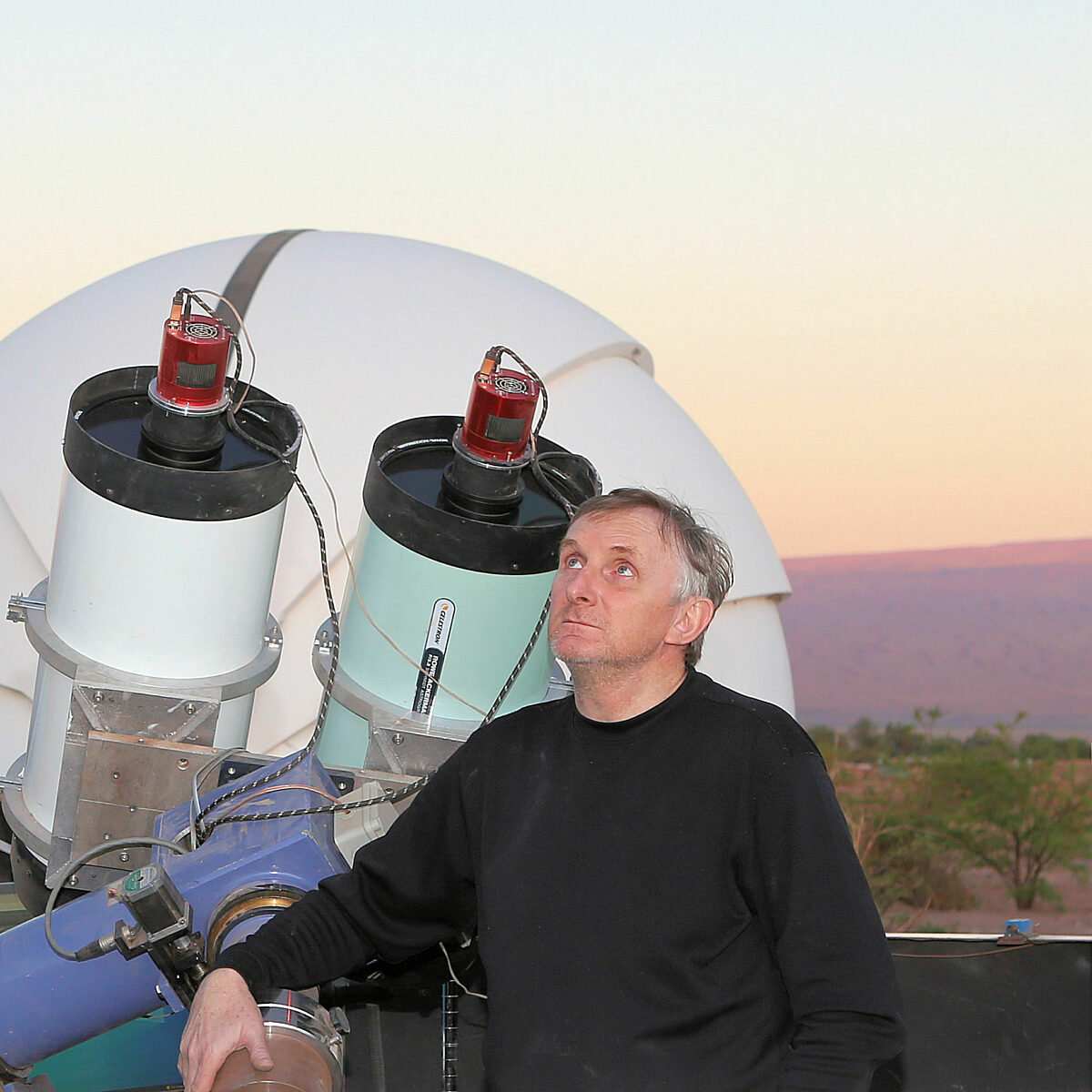
Alain Maury
MAP Survey in Chile’s Atacama desert
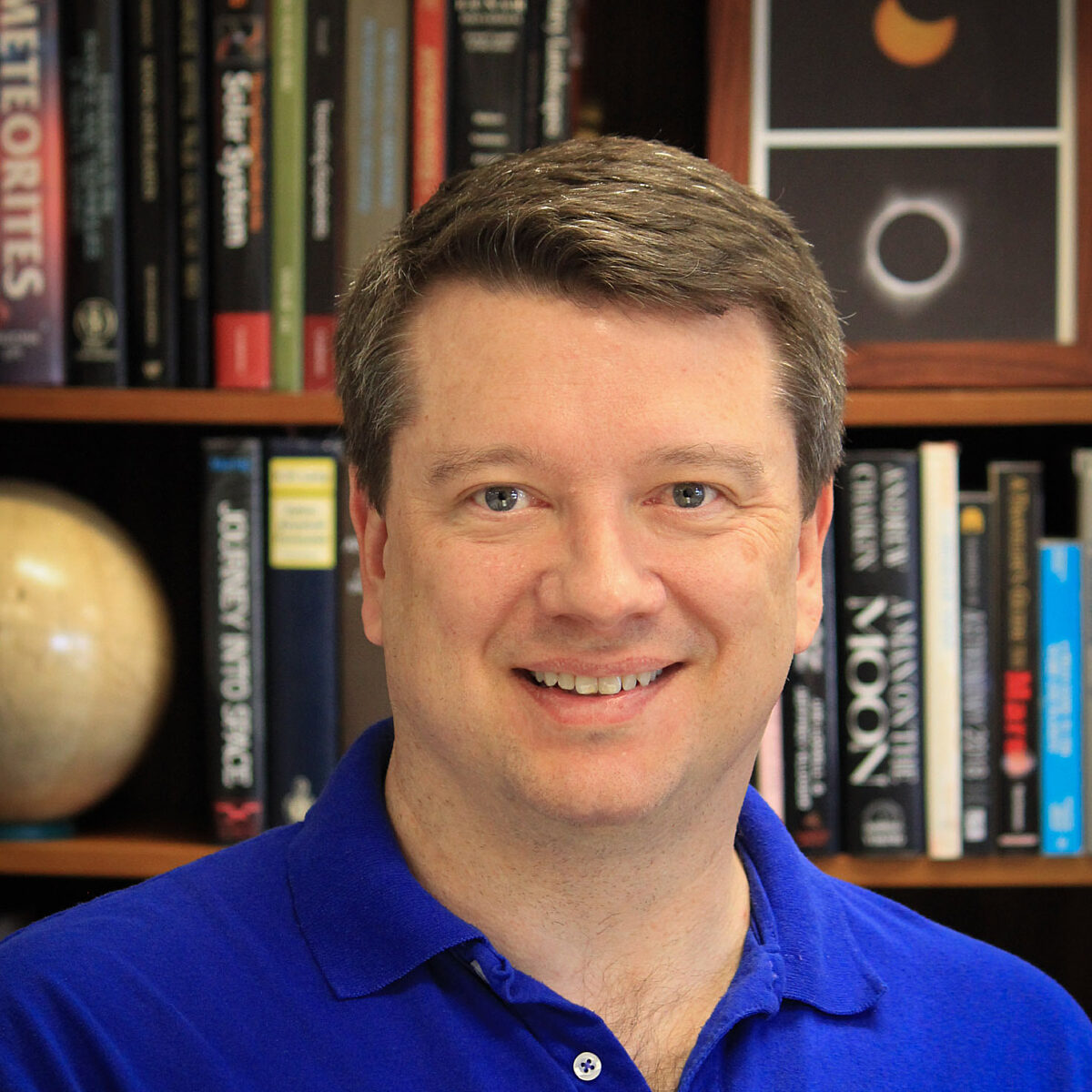
Bruce Betts
Chief Scientist / LightSail Program Manager for The Planetary Society
Sarah Al-Ahmed
Planetary Radio Host and Producer for The Planetary Society
Artemis II is the first crewed lunar mission since Apollo 17, and riding alongside the crew is one of the most ambitious biology experiments ever sent to space. It's called AVATAR, short for A Virtual Astronaut Tissue Analog Response: tiny organ chips grown from the astronauts' own cells, flying the same trajectory around the Moon, exposed to the same deep-space radiation and microgravity as the crew themselves. Lisa Carnell, director of NASA's Biological and Physical Sciences Division, explains what this experiment could mean for the future of human exploration.
Then, Alain Maury, asteroid hunter and Planetary Society Shoemaker Near-Earth Object grant recipient, tells the story of how his MAPS survey in Chile's Atacama Desert spotted a faint, fuzzy object that turned out to be something extraordinary. C/2026 A1 (MAPS) is a sungrazing comet now falling toward the Sun on a path that will bring it within 162,000 kilometers (100,000 miles) of the solar surface on April 4th. If it survives that encounter, it could become one of the most spectacular comets in decades.
And finally, Planetary Society Chief Scientist Bruce Betts joins us for What's Up, including how to spot the comet yourself, if it makes it through.


Related Links
- AVATAR (A Virtual Astronaut Tissue Analog Response)
- Avatars for Astronaut Health to Fly on NASA’s Artemis II
- Artemis, NASA's Moon landing program
- The Artemis II mission: What to expect
- Artemis II Science - NASA
- ARCHeR - NASA
- Artemis II Crew Both Subjects and Scientists in NASA Deep Space Research
- Artemis II Crew to Advance Human Spaceflight Research - NASA
- Immune Biomarkers - NASA
- Risk from Inadequate Sleep and Irregular Schedules - NASA
- Risk of behavioral changes and psychiatric disorders - NASA
- Risk of inadequate teamwork - NASA
- Planetary Radio: The astronaut health experiments of Artemis II
- Planetary Radio: Artemis II and III: The science that brings us back to the Moon
- San Pedro de Atacama Celestial Explorations
- The discovery of comet C/2026 A1 MAPS
- Will a bright comet adorn our early spring sky? Why astronomers are getting excited about Comet C/2026 A1 (MAPS)
- Planetary Radio: Saving the world one telescope at a time: The Shoemaker NEO grant winners
- Gene Shoemaker Near-Earth Object Grants
- 2026 Rountable Tour
- Buy a Planetary Radio T-Shirt
- The Planetary Society shop
- The Night Sky
- The Downlink
Transcript
Sarah Al-Ahmed:
Organ chips on their way to the moon and a sungrazing comet just days from perihelion. This week on Planetary Radio. I'm Sarah Al-Ahmed of The Planetary Society with more of the human adventure across our solar system and beyond. This may well be the week that humans leave earth orbit for the first time in half a century, but we won't know until the moment that Artemis II takes to the sky. Lisa Carnell, who's the director of NASA's biological and physical sciences division, joins us to talk about AVATAR. It's an experiment flying on Artemis II that uses tiny chips grown from astronaut cells to study how deep space affects human biology. And then Alain Maury, who's an astronomer and founder of the Map Survey in Chile, discusses the sungrazing comet his team discovered earlier this year. And what might happen when it passes within 162,000 kilometers of the sun on April 4th?
Then Bruce Betts, our chief scientist at The Planetary Society, joins me for what's up to let you know how you can observe this upcoming comment. That is, if it survives, it's close past by the sun. If you love Planetary Radio and want to stand informed about the latest space discoveries, make sure you hit that subscribe button on your favorite podcasting platform. By subscribing, you'll never miss an episode filled with new and aw inspiring ways to know the cosmos and our place within it.
On April 1st, 2026, Artemis II enters its next set of launch windows. This is the moment that NASA has been building toward for years. The first crude learner mission since Apollo 17 more than 50 years ago. Whether the crew is already lifted off or a launch day is still ahead of them by the time you hear this, one thing is definitely certain. The science that's riding aboard the Orion capsule is about to make history. This is part two of our look inside the human science experiments flying on Artemis II. Last week, I spoke with Dr. Steve Platz, the chief scientist of NASA's human research program. We spoke about the broader effort to monitor and protect astronaut health on this mission, but today we're going to be focusing on one of the most ambitious biology experiments ever sent to space. It's called AVATAR, not like the last airbender or the Na'vi, but AVATAR stands for a virtual astronaut tissue analog response.
Basically, scientists have taken cells directly from the Artemis II astronauts and used them to grow tiny functional replicas of human tissue. In this case, bone marrow, inside devices that are roughly about the size of a USB drive. These are called organ chips, and they work by mimicking how living tissue actually behaves inside the body. The AVATAR chips are flying alongside the crew on this 10-day journey around the moon, so they'll be experiencing the same deep space radiation and microgravity that the astronauts will. When the mission returns from the moon, researchers are going to be able to compare what happened to the chips in space against identical chips that stayed here on earth.
This will give scientists the most detailed look yet at how deep space affects human biology at the cellular level. The person leading the division at NASA that's making all of this happen is our guest today, Dr. Lisa Carnell. She's the director of NASA's biological and physical sciences division. Lisa got her PhD from Duke University where she studied stem cell behavior. Then she spent years at NASA working on radiation countermeasures before she stepped into her current leadership role overseeing the agency's biological and physical sciences portfolio, including AVATAR. Hi, Lisa. Thanks for joining me.
Lisa Carnell: Hi, thank you for having me.
Sarah Al-Ahmed: Your career has been so interesting and you've studied everything from stem cell differentiation at Duke and led radiation countermeasures work at NASA's human research program, and now you're directing NASA's biological and physical sciences division. It's almost like all the little bits of your career came together and specifically led toward AVATAR. What has it been like seeing all this come together in a single experiment that is now going to be flying around the moon?
Lisa Carnell: Oh my gosh. It's so hard to put into words how incredibly exciting it is in this moment in time. And as you said, every one of these elements and aspects of my career has built up to this moment. You know what's really funny too. In graduate school, I designed and built my own device, if you will, like a 3D version that would help to coax the stem cells into nerve cells in a 3D format. And if you saw a picture of it, you would just smile and laugh. We'd come a long way. They're so beautiful and eloquent now. And the AVATAR is one of those. And I look back at the history of where I came from back then and where we are now, and it's just the way that we are moving forward in medicine and how we're going to be able to help people here on earth and on the ground and in space. It's just the most incredible feeling. That's all I can say. I love that I get to be a part of this here now.
Sarah Al-Ahmed: I keep sounding like a broken record about this, but the amount that we've learned in the past few decades is absolutely startling. And I can't even imagine what we're going to be doing in a hundred years, especially if we can use technologies like AVATAR and this organ on a chip device kind of technology in combination with space exploration to accelerate this kind of research. I can't even imagine what's going to happen.
Lisa Carnell:
Oh, I know. We have so many big plans for this science and technology. So on Artemis II, this is the verse of its kind. This is the first time that we've ever sent organ chips out beyond the [inaudible 00:05:40], and we're matching them to the crew members, which is incredibly exciting itself. But being able to do that and we validate these models and now we have confidence. So think about what doors that opens. We can now take these models and we could send them out to deep space ahead of time if we knew who the crew members were going to be and we could understand what's going to happen to each one individually.
And then we could create personalized medical kits for them to make sure that maybe Victor's more sensitive to radiation than Christina or Jeremy. And just make sure that we can address each one just to make sure that we bring our astronauts back healthy. I mean, that is the ultimate goal. We want to ensure that as we send them out into deep space, that we have given them all of the best possible benefits that we can to get them home safe and healthy.
Sarah Al-Ahmed: Astronauts take on so much risk when they go up there. And the last thing we want to do is put them at unnecessary risks, especially as we try for longer deep space missions. So something like AVATAR is very useful, but for people who are unfamiliar with this kind of organ chip technology, why is this such a powerful research tool for understanding specifically the impact of deep space on human bodies?
Lisa Carnell:
These are organ chip models that really recapitulate and mimic the organ inside the body itself. For example, with the heart, it beats like a heart, literally like it does inside of your body or a lung, it breathes. And so in this case, we're using bone marrow. And I get a lot of questions, why? Because bone marrow is very radiosensitive. It's also linked back to the immune system. And so we always see immune function changes almost immediately when the crew go to space. You hear a lot about that in the news, about even going to space station. And so thinking about, okay, if we send a bone marrow model that's radiosensitive, we can really understand the impact of the deep space radiation on that, correlate that to each of the individual astronauts, and then also understand where the impact began to alter the immune function right there as it starts in the bone marrow.
So it's a really beautiful experiment, but like you said, these organ chip models are being used everywhere. So I would love to say NASA really paved this path. We paved the path for space, but these organ chip models are being used worldwide. They're really popular because they're human and they translate well. The Food and Drug Administration uses them now. You can replace them and they will take that data for drug toxicity testing and countermeasure efficacy because animal models haven't been shown to translate well to humans. And so we are leaning in on all of the data and science that's been paving this path on the ground here across the world and taking advantage of that to really help our astronauts and understanding how we bring them home safely.
Sarah Al-Ahmed: The applications for even just pulling away from animal testing is one thing. But I think about all the people with cancers or autoimmune diseases. And as it stands, in a lot of cases, we give them treatments we know will help most people, but we don't know how they're going to affect their bodies until they're actually experiencing it. So if we can test that on their actual cells beforehand, imagine how many lives could be saved. It's wild. How prevalent is this technology in that kind of research currently?
Lisa Carnell: Oh my gosh, it's groundbreaking and it is the future. I consider this technology to really be the future of medicine and how we pave the path forward for individualized treatment, or we call it personalized health. So wouldn't it be great if you went to the doctor's office and you were diagnosed with some sort of a cancer or a disease and they were able to draw blood from you or take a sample of a tumor and be able to identify the exact treatment that's going to work for you, not for the person next to you, but what works on your specific ailment. So that's where we're going with this technology and we're really leaning into it. That's happening all over the world. We have researchers at almost every institution, I have to say, working on this for cancer, understanding how cancer progresses, metastasis and what kind of treatments we can address, but then also aging and age associated diseases. Neurodegeneration is huge. Can we use these to really understand the early stages and what kind of treatments might work before we actually give them to people?
Sarah Al-Ahmed: In the case of the people who are flying on Artemis II, how are we actually collecting the bone marrow cells and how are they processed for this?
Lisa Carnell: So I love that because we're not using bone marrow. So we actually did a blood draw on the crew and they were fantastic about it, by the way, and enthusiastic, I have to say. So the crew, we did the blood draw, we did a collection called apheresis where it collects cells in this collar and then the actual blood is basically put back into the astronauts and the platelets that come out of it and then the cells that are captured, the stem cells that are captured inside of this collar are used to create the bone marrow models. So painless, it's about an hour process and we can create a model from each of the crew members that simple.
Sarah Al-Ahmed: Yeah, it's much better than having to directly draw the bone marrow from their backs. I have heard from people I know who have undergone that process that it is quite painful. So knowing that we can find a way to do this on mass without actually hurting anyone, just taking some of their blood, that's absolutely amazing.
Lisa Carnell: I know it's so interesting because in the blood you have a lot of peripheral blood mononuclear cells, they're called PBMCs floating around. And back in the early 2000s, they were able to show how they could take cells and convert them into what we call induced pluripotent stem cells and use that technology to then create any kind of cell type that you want. So from a blood draw, I could take a blood draw from you, simple, just like you do in a doctor's office, take a blood draw, sort out those PBMCs, create your very own personalized organ chip model. Say we wanted to create the brain. We would literally use the right growth factors to generate a brain model of you from your blood cells or a heart or any other type of tissue. We can then take that tissue model and then use it to actually understand a disease progression and aging, or in this case, the exposure of radiation and microgravity.
Sarah Al-Ahmed: Well, you mentioned this earlier that this is the first time personalized organ chips that are matched directly to the actual crew are going to be flying beyond low earth orbit. What does that personalized aspect add scientifically that a generic cell sample couldn't?
Lisa Carnell:
Yeah. So it goes back to, I think exactly what you were saying is that people are individual. So even if you take a Tylenol or some sort of an aspirin or therapeutic, it affects you different than say your mother or your child. So the individual part is really important because no two people respond the same. And so this allows us to really hone in at the same time rather than doing the stepwise where we do a pooled experiment of just random cells that go up there and understand, we leaped and did a combination of the individualized aspect coupled with the whole notion of the pooled element, if that makes sense.
And so now we can really say, "Okay, I'm seeing these changes and Victor, but I don't see this changing Christina or Jeremy or Reid. What was it about that that we saw that maybe it means there's more radiosensitivity or maybe we need to bolster their immune system before they go?" So it really allows us to hone in on how we protect each individual as they go rather than trying to do one of those like they do now in the doctors and mass. Everybody takes the same dose for something. This is really getting down to where medicine should be going in the future.
Sarah Al-Ahmed: I imagine though that trying to keep a group of cells on a chip alive on earth is a little easier. You can interface with it. So what are the biggest kind of logistical challenges in keeping these chips alive to the moon and back for 10 days?
Lisa Carnell:
Oh my goodness. What a great question. I have to say, that was an absolute amazing engineering feat taken on by Space Tango, our partner. They have been flying tissue chips and organ chips to the International Space Station for some time. They have an autonomous system that they've developed that is continuously perfusing these like your blood going through. So it's running through these organ chips, but to be able to do this inside of Orion and make it so that we just return it home and it lasts for the entire duration, really took a lot of incredible talent and engineering on their side through the pumping mechanisms. We needed to have power associated with this to have the pumps running and maintain the thermals so your body likes a certain temperature. So did the organ chips. They like the same temperature as the body. So how do we maintain that thermal environment?
And they had to design and develop the capability of having our own battery pack and power in there. And they did this. It was really a quite impressive feat that they accomplished, but it's all contained and it's continuously perfused. There's bags of media inside that each chip has its own bag that rotates and perfuses through it as if it's your own blood going through and super excited about the results that will come from that.
Sarah Al-Ahmed: Yeah. We're going to need it not just to go to the moon, but I'm thinking long term, if we're going to be trying to send humans to Mars or at least test our potential astronauts cells in space before we send them to Mars, we're going to need those to last a little more than 10 days. What do you think is like the uppermost bound on how long we can keep these chips alive before we have to really worry about it?
Lisa Carnell:
Oh my goodness. I love this question. And it's funny that you, because not a lot of people think about the fact that we really have to have that longevity in the organ chip itself, but we were thinking ahead several years back. So within NASA, we partnered with many other government agencies, NIH, FDA, and we all came together and funded nine different institutions and different types of organ systems to demonstrate that they could maintain their health and have sensors incorporated for a minimum of six months. And so that duration would get us a really decent amount of time in the deep space environment.
Most of the organoid systems and tissue chip systems only last for a few weeks, but now most of the performers we've had because of when we issued this are almost done and have reached that six month mark that you're talking about. We're going to send them out, like you said, deep space. We absolutely need to ensure that they're going to live long enough. What's really cool, believe it or not, and honestly I was going to dig into this why, but brain organoids themselves have been shown to live for years, literally. And so we were really digging into why and how functional are they? Do they maintain all of the physiological and functionality? And so that's one that we're really leaning in towards right now.
Sarah Al-Ahmed: Wow, that's really interesting. Why would they last that long? There's so much we could learn about the human body through this. It's absolutely mind-blowing. But I think about this all the time. People have asked me, would I go to Mars if I had the opportunity to do so? And I'm going to be the crazy person that says yes. I would absolutely love to do that, but there's so many logistical issues in the way. And one of the biggest ones is going to be this radiation shielding. As people go out into deep space, it's going to take a lot to protect them. And we've had ways of creating like analog dummy bodies in the past. We even put some on Artemis I. But I really want to know that we're going to be able to test this on biological, actual human biological substances and organs before we actually send humans. And this gives us a real way to test this. I mean, this is a far future, but I would love to see this kind of thing happen.
Lisa Carnell: Well, I don't think it's as far in the future as you might think. We've already been working on this notional aspect because we need to know before we go. Like you said, we are really leaning into sending humans to Mars and there's so much we don't know. We haven't even really studied biology outside the Van Allen belts. We don't even know what that radiation's going to do, let alone now send humans out there. So this tool right here, having this capability of sending these human organoid or organ chip models out ahead of time is going to give us so much valuable insight and information before we send the humans out there. We have been working on a mission concept that would actually send human organoid models out to Mars would allow us to obtain in real time data on the system from the effects of the microgravity and radiation during transit. And we have chosen a model that would actually live long enough for us to obtain data on the surface of Mars. How cool is that?
Sarah Al-Ahmed: That's so cool.
Lisa Carnell: And we are not talking decades down the road. This is something that we are prepared to do in a very short turnaround timeline. So if you can imagine how powerful this would be to really start to enable, as many people talk about, we want to be an interplanetary species. I believe this is one of the first steps we need to take to understand that, and then we can build on it from there, but really powerful science and technology.
Sarah Al-Ahmed: Another thing I really think about as we go out into space is the fact that we're very limited in how much mass we can send up in each one of these situations. A few years ago, I was at NASA's Innovative Events Concept Symposium, and they were talking about the issue of sending medicine with astronauts to the ISS and how troubling it is because you can't send every drug ever invented. So you either have to be able to save them if they encounter a medical issue, which we saw recently on the ISS, or we have to anticipate their medical issues ahead of time. So is this the case where we can test all this kind of stuff, create a personalized medical kit just for them and make sure that they'll be safe personally on their way to Mars?
Lisa Carnell:
Absolutely. That is one of the long range goals. So understanding, sending these out ahead of time, which we're really poised to do in the very near future, send it out ahead of time, get that biological data back. So what's happening if we have a radiation damage marker in there or other effects we're seeing, how do we now prepare the right medical kit for treatment of the crew members? So again, as you just mentioned, like a personalized medical kit that ensures that each astronaut has what they need individually to ensure that they stay healthy on these exploration missions.
I'll be honest, I think this is going to be important for these long duration stays on the lunar surface as well. I mean, return trips are not that quick. It's a lot faster than Mars, granted, but if we're going to go and live on thrive on the lunar surface for extended periods of time, we need to be leaning into that as well and understanding how we ensure astronaut health and safety for the duration of the mission then after they return home because when they come back, they want to continue to thrive and have the robust lifestyle that they want to enjoy with their families. And we want to ensure that we have done everything in our power to make that happen.
Sarah Al-Ahmed: You're so right. This would be useful for any permanent settlement we put on the moon. I think this is one more example of why people should be excited about Artemis II. I know so many people are just waiting for that moment that we see humans bouncing on the surface of the moon again, but I think people should take the time to really learn about the kind of science like AVATAR that we're putting on Artemis II. It might give them a much deeper appreciation for why we're taking the stepwise process as we return people to the lunar surface.
Lisa Carnell:
I would agree. I mean, the Artemis II mission, and I will tell you, I love this mission because the number one priority is really checking out Orion, how the crew interact with that and the vehicle and systems, the actual rocket itself, and all of the integration of that. And so what's really amazing and what I love about NASA is that we said, "Okay, you know what? We're doing this." And the important part is really understanding how the vehicle and systems integrate for the crew member. But you know what, guys, we have some space. Let's use every aspect we can to do amazing science on top of all of this other critical activity that we need to check out the spacecraft. So I mean, NASA is one of the most amazing places to be because we maximize every inch we can and every dollar that we can in order to accomplish the most science.
And so I love that we were actually able to be part of this mission. They have a lot of priorities, but they were able to embrace science and ensure that we had a space on there to be part of it. I did want to mention too, going back to your personalized medicine part, one thing I always reflect on, Jeremy Hansen did a video and in one of his videos, he actually mentioned AVATAR and he said, really, it's like there are eight astronauts going because there's an AVATAR of each of us riding along and they really valued that this is for them. We're doing the science, but this is really all about them and that they really embraced it and appreciate it. It just really means that much more to us. So really, really grateful for the opportunity through NASA to do this.
Sarah Al-Ahmed: I'm just going to have to give each and every one of those chips some cute little nickname derived from the astronaut names.
Lisa Carnell: I love that. That's a great idea. And this is something that we've done yet, but I will make a note.
Sarah Al-Ahmed: Here's little chip Christie and little chip Jerry.
Lisa Carnell: I love it. When we talk about the value of this science and the capability, this is something that's being really embraced worldwide. This is adopted internationally. People are really working hard to advance the science capability so that we can lean towards this more improved precision health for people right here on the ground. And what's powerful is that in our study, going around the moon, we have government agency partners like BARDA and NIH that are saying, "We are really interested in what happens at the individual level." And so we're excited that NASA is doing this and we want to be part of it.
Sarah Al-Ahmed: Yeah. It speaks to the fact that collaborations between all these different facets of human knowledge, whether it's government or industry or research, academic institutions, when we can all collaborate together effectively, the things that we can accomplish are absolutely, just absolutely mind-blowing. And this is one of the peak examples of the ways that space exploration not only enhances us through our ability to know more about the universe, but literally makes our lives better down here on earth. It's a perfect example of why when people learn more about space exploration, they understand why it's so important for the future of humanity.
Lisa Carnell: Oh, I could not agree more. And you know what I love as you were talking about this collaboration angle, which is something we do so much of in our division in biological and physical sciences. But one thing I have such a great appreciation for with our administrator now, he really leans into this. So Administrator Isaacman has really been emphasizing that we should be partnering more, collaborating more, whether it's, like you said, whether it's more with industry and bringing in other government agency partners because these are big missions. These are big lofty goals for our country, for the world, and we can't do it alone. And so I love his lens on that and that we're able to demonstrate that through AVATAR. So thank you for highlighting that.
Sarah Al-Ahmed: And thank you for coming on the show to talk about this. There are so many interesting things going on with Artemis II, and I wish we had time to explore each and every one of them, but AVATAR is one that I really, really wanted to highlight because I believe that this is one of those future technologies that could really help us. So thank you to you and everyone who's working on this. It could help so many people down here on earth.
Lisa Carnell: Absolutely. Thank you so much for having us on the show so that we can share more about AVATAR and just go Artemis.
Sarah Al-Ahmed: Go Artemis. Good luck on the way to the launch. When it happens, we wish the crew on board and everybody who's been working on these things all the luck.
Lisa Carnell: Oh, thank you again.
Sarah Al-Ahmed: Thanks, Lisa. We'll be right back after the short break.
Jennifer Vaughn: Hello, this is Jenn Vaughn, your new CEO of The Planetary Society. I am deeply honored to be leading such an extraordinary organization and one of the very first things I want to do while I get started is to get out to meet you, our members in person. That's why I'm hitting the road for our 2026 Member Roundtable tour, a series of small members-only gatherings where we can sit down together face-to-face. I want to hear what's on your mind, your questions, your ideas, and what matters most to you. And while we're together, I'll also give you a preview of The Planetary Society's new five-year strategic vision. Our first stop will be Tempe, Arizona on Saturday, April 11th, and we'll be continuing on to Washington DC, the San Francisco Bay Area, Los Angeles, New York, Toronto, and more throughout the year. We're keeping these gatherings small, so space is limited. Register today at planetary.org/roundtable. I can't wait to meet you.
Sarah Al-Ahmed:
I'll be honest, I'm going to be on the edge of my seat this whole week, not just because of what's happening with Orion and the Artemis II crew, but as it turns out, this is also a remarkable week for a completely different space reason. As I record this, there is a comet that is hurdling toward the sun, and whether or not it survives that close past by our star might mean a lot for next week's observing. Most of the world's serious asteroid and comment hunting takes place in the Northern Hemisphere. Large surveys sweep the sky night after night, but in the Southern Hemisphere, that task of hunting for these near earth objects has classically fallen on a small number of southern observers, one of whom is Alain Maury, our next guest. Alain is a French astronomer based in San Pedro de Atacama, Chile, one of the driest and darkest places on earth.
That's where he runs the maps program. Working with his collaborators, Georges Attard, Daniel Parrott, and Florian Signoret. Alain and his team scan the southern sky for near earth objects. These are asteroids and comets whose orbit brings them close to our planet. As of early 2026, NASA discovered 335 near earth asteroids and eight comets. Their discovery rate for NEOs or near earth objects is the highest of any non-professional, non NASA funded observatory in the world. The Planetary Society has supported their work through Eugene Shoemaker Near-Earth Object Grants. That's our program that funds amateur and small observatory astronomers that are doing planetary defense work. With that funding, Alain purchased four new cameras for the survey. Two of them are already online and the other two are being integrated into operations, which is going to expand their survey even further. And then on January 13th, 2026, the MAPS program detected a faint, fuzzy object.
Its extended coma of outgassing ice indicated that it was a comet. Within days, it was officially designated at C2026 A1 maps. But what made this discovery remarkable wasn't just that it was a comet. It was where that comment came from and where it was headed. Comet maps is a Kreutz sungrazer. That puts it in one of the most dramatic families of comets in the solar system. The Kreutz group is named for a 19th century German astronomer named Heimrich Kreutz. He noticed that there are certain spectacular comets, ones like the Great Comet of 1843 and 1882 that shared this nearly identical orbit. It turned out that they, along with many other bodies, are all fragments of a single enormous comet that broke apart ages ago. Its pieces are strung out along the same path and space, falling toward the sun one by one across the centuries.
On April 4th, comet MAPS will pass within 162,000 kilometers of the sun's surface. That's about 1/3 of the distance from the earth to the moon. Because comet MAPS was discovered further from the sun than any other Kreutz sungrazer before it, more than 300 million kilometers out with nearly 82 days before perihelion, which is its closest past by the sun. That lead time has allowed astronomers worldwide to study it as it brightens and evolves. Early indications suggest that it might actually have a nucleus large enough to survive the journey past the sun. And if it does, and I know that's a big if. It could become bright enough to see without a telescope and potentially even visible to the naked eye during the daytime, just days after perihelion. Alain Maury joins us now from the Atacama Desert in Chile. Thanks for joining me, Alain.
Alain Maury: Thank you.
Sarah Al-Ahmed: As with many astronomers, I know that you're a night owl and I thank you for taking the time to talk to me in broad daylight. Now, I keep telling people I love my job, but if I wanted to start working early in the morning, I probably wouldn't become an astronomer.
Alain Maury: Well, the thing is, you have to be there. The thing most astronomers have office working hours and when they observe, it means they send a lot of paperwork to request observing time and they never see telescopes. Then some people like me, yes, we are at the feet of the telescopes and we work during the night mostly. So right now it's like local time is like 4:00 in the afternoon. For a normal person that would be in like 7:00 in the morning. I'm starting my day.
Sarah Al-Ahmed: Everyone knows that space people really love their acronyms. But as I was looking into your MAPS program, I realized that the acronym is actually named for your different team members. So what does MAPS stand for? And how did your team come to work together even though you live in places all around the world?
Alain Maury:
When I started my business, I didn't have the money to buy telescopes and camera and so on. The truth is it costs money. There is no surprise. When things started to go a little bit better, I said, "Okay, let's see what we can do." I started a survey, but using the typical software, like most of the other survey use, that mean you make a field, another one, another one, so again, again, again, and you detect the moving objects there. The type of software was invented in 1982. So it's like antiquity for computers, but still a lot of people work like that, but good for them. And I thought there had to be better ways. Then there's a group at JPL around Mike Shao who started to develop this technique of synthetic tracking where basically if the object goes slowly, it stays on the same pixel during the exposure, life is beautiful.
But if it goes, then it's going to go from one pixel to another pixel. And in the end, it stays a very short time on the same pixel and your detection is not very good. So the idea is to make very short exposure and you follow the object like this so that in the end, all the light of the object stays on the same pixel and you get to much deeper magnitude. You see fainter objects. The problem is when you want to recover an object that you know the motion and everything, that's perfect. If you search for an ancillary, you don't know if it goes like this, like this, like this, if it moves this way, this way, this way. And so all the technology came together around 2015, starting in 2015. It's really a convergence of hardware things. First, Celestron, so from Toronto, California, Taiwan actually, right now they have been bought by Taiwan.
They started to make widefield telescopes, which really allowed to cover a lot of sky. Then people started to develop CMOS cameras. So CMOS cameras are, at least for the amateurs, much more sensitive. They read almost instantly. The very early cameras we had, you made an exposure, you had to wait 45 seconds for the camera to be read, so you lose a lot of time. And then we started to have GPU cards by Nvidia in order to make a lot of computing things. And then going on YouTube and so on, there was a review about the Bresser telescope that we are using. I commented that I was using them to search for [inaudible 00:36:25]. Then Daniel Parrot, who works in Oklahoma City, contacted me and say, "I'm just writing a software and so on." Now, it's very good because I've started to, this computing board, you need to have a special programming language to paralyze everything.
So I've started to read the book and started to make some programs and so on. And then suddenly I had somebody who had the program working. So we started to talk together and so on. And in my old astronomic club in Antibes, so most people will know maybe if they know a little bit of Southern France is Nice, Cannes, where there is a Cannes festival on TV is just in between. So I used to work in this area and I used to go to this club and so on and so on. So I made a conference about searching for Astroid and so on. And then Georges Attard with the A of MAPS, so Maury, Attard, Parrott. And so at first it was the map program and then Florian with another computer with from the same club joined us. And so now it's called MAPS. The thing is, it came progressively.
During the pandemic, I had more time anyway. We started to develop all the software and there is a huge amount of software that means first you have to have a software that move the telescopes and select the fields and do the observation and so on and so on. Then there is a software to take the pile of observation and calculate all the vectors. That means what I just told you is that we stack the images like this, but what you don't know, the motion of the asteroid, the length, we do like 30,000 stacking of 36 exposures and each of them is 120 megabytes. So it's like a huge amount of data.
Sarah Al-Ahmed: It's a lot of data.
Alain Maury:
A really type of thing that could have not have been done 10 years ago. Then when you have the observation, when Tycho Tracker, that's the software that Daniel developed, you would need to see if the object is known. You need to calculate the orbit, you need to know the probability that it's a near earth object. You have a software, you have a button and you prepare the email to be sent to the minor planet center. You have a confirmed button because when the object is obviously a bright object, it exists. There is no doubt that it's there. We can send directly to the minor planet center. When it's really faint at the limit, it could be like some pixels that are doing some tricks. So we send the observation to another bigger telescope that I have here. And so if there are three observation, the other ones should find it in the same line.
So then when we have the confirmation, then we know it's a faint object, but it's real. So there is a lot of software to be written. I'm like most astronomers, I learned programming because I had two, but I was not taught programming and so on and so on. And so the software we have now is much more reliable and it works alone. And that's very important because if you are paid to do that, you can be there all the time. If you're not paid, it's a lot better if the Dome opens alone, observes alone, the reduction is done automatically and so on. Then we just have to check every half an hour if there is something new. The software, Daniel's software, Tycho Tracker, we were among the first heavy users, I would say, and now it has become really the standard program. And even a lot of professional use this software is really very good because Daniel is very good as well.
Now the thing is if you scan in the ecliptic, you can detect thousands of known asteroids. You might have a hundred fake detection, unknown detection, and in there you can have like one, two, three, four nearest objects. Of course, the very big programs, the ones financed by NASA were using 1.5, 1.8 meter telescopes, they go much fainter and they can discover 20 new near access, but they miss a lot. And the point is when you have one single camera like we have, like the Mount Lemmon Survey has, you go like this, like this, you don't miss anything. When you have a Matrix camera like Pan-STARRS, like the LSSC, if they ever work one day has, you have a lot of interstities and you may lose things. They also use CCD, which today is really all technology and CCDs work with chart transfer. So if you have a one bad pixel, all the other pixels behind are bad, you have a lot of bad columns, and then progressively your detector becomes less and less efficient.
CMOS, so the newer technology, the pixels are read one by one. So if there is a dead pixel, it's just one dead pixel. So the image quality is much better with the newer technology that unfortunately all the big programs do not use and good for us. So that's the thing. And so we started to... It was very fair because we made some tests with Tycho and so on, and then we discovered an asteroid and we say, a nearest acceleroid. And it was like, wow, we were lucky. And then we started to discover more and more and more. And in the end, well, you have the big programs.
So in Arizona, they use a 1.5 meter, 2.2 meter telescope. Pan-STARRS has two telescope of 1.8 meter. But right now weather has been quite bad in Hawaii. Seems like there've been a lot of floods and stuff. Then there are lesser program like ATLAS. So ATLAS views is also a small telescope, 20 inch, 550 centimeter. There are four of them in different regions of the world. They tend to cover the whole sky, but then because they do that, they don't go quite deep in magnitude. So we cover less sky, but we go one magnitude further. So there are things we find they don't find and reverse.
Sarah Al-Ahmed: Yeah. And your team is outperforming many of the professional programs with much larger telescopes, but you also received two of The Planetary Society's Shoemaker Near Earth Object Grants, which are helping you expand your fleet of telescopes. And I wanted to ask how that funding has changed the capability of the MAPS program.
Alain Maury: A lot. Now clearly the thing is early CMOS camera, I didn't say, talk about this, we started to develop a lot of problem where the camera would not work and so on and so on. And so The Planetary Society Fund just came right in time to have new cameras while the others were sent to repair to China. So right now, two of these camera are used. The problem is you have cameras, you need telescope, you need the PC with the GPU, and you need electricity. And so the cameras were very useful, but in the meantime, I had to join the money to build the other things. So now I'm really ready. Everything should work very soon and we should go from four to eight cameras because the other cameras were repaired. Next month we should start to use the full system. But no, clearly it's a game changer.
Sarah Al-Ahmed: Even before these new cameras that you got, and in part through the help of The Planetary Society, you made a discovery recently that is beginning to hit the news and I think may become a bigger news story in the coming weeks depending. But your team recently discovered this comet, Comet C2026 A1 maps, which I'm just going to call comment maps going forward for ease. But it's a type of comet. It's a Kreutz sungrazer, sometimes known as a Kamikaze or as Americans would say, a Kamikaze comet. What makes this upcoming comet so special?
Alain Maury:
First, comets are a pain in a neck. An asteroid, you can create the orbit, you know where it's going to be, you can calculate probability of impacts and so on. In fact, I was doing a special tour for a person who worked at JPL with an amateur astronomer. So we have special tool for amateur astronomer. I mean the normal tool, we talk about constellation and stuff and so on. A matter astronomers know all that. They want to use, we have a 45-inch telescope. They want to observe the 12,000 object and so on. I finished with him. He came here. I said, just a moment. I checked the computer and that thing was a little bit fuzzy and that's a comment. So I showed him, it looks like we have a comment. So he was quite excited also. But the thing is you have a comet, that's it.
Then it takes three, four, five days to get the orbit. And then we started to see that it was part of this Kreutz group. The Kreutz group, I mean, Kreutz was Einrish Kreutz was a 19th century astronomer who studied the former comets and he discovered that a lot of the very, very bright comet had the same orbital characteristics. That means when you measure an orbit of something, you have to define six numbers. One is the size of the orbit. The eccentricity is like how circular or elongated is the orbit and the inclination in the solar system. And all these comets have an inclination of 144 degrees. When you have an orbit like that, you have a single point, you can calculate quite a lot of very different orbits. So it's very uncertain what the object is. You know you have a comment, that's it. But no, most of the time we had discovered seven comments before, and all these comments now were 18th magnitude going away.
So they don't make the news. And so the following day we had 90 degrees of inclination and then more observation were added because it's really a community of people who are following all these discoveries and we ended up 144. Then there are people who started to get exciting. The thing is whether or not we're going to have the super-duper comet of the year and so on or the century comment and people make extrapolations, models and so on. And some models were completely ridiculous giving a magnitude of minus 40. The sun is minus 27. A comet minus 40 means it's the end of the world. So the model was stupid, clearly. But the brightness of a comet depends on the closeness, the distance from the earth because if it's far away, it's faint. If it's close to you, it's... In 1996, we had a comment called Hyakutake.
There was a really small comment, but it came very close to the earth. And for a few nights, it was like, wow, 90 degrees in the sky was very impressive. The second thing is, of course, closer to the sun. It gets hotter. It has more activity. It outgasses and much more. We saw the comment regarding brighter, brighter, brighter. One of the good thing is that it was the first comment of this group that we discovered so far away, so much in advance, and we could observe how the comet is evolving and so on and so on, what it outgasses compared to the temperature and so on and so on. Then it's going to go close to the sun. And we are two weeks from perihelion. That means it's going to go very, very close to the sun. It's going to be very hot. And so one scenario is the commit just disappears.
One scenario is emits a lot of gas. The head of the commit disappears, but there is still a tail that you can see a couple of days later or it survives and then you have gas super comet and everything, but still it will be only mostly observable in the Southern Hemisphere. So right now we are like two weeks away from the close approach to the sun and we still don't know what's going on. So this comment is, even if it just dies, it will have been a lot of fun. The comet was observed by the James Webb Telescope. And so that tells you it's very important because you don't get observing time on the James Webb for so so observation.
And it was the first time we could see a comment like that very far away. The thing, the James Webb cannot... Well, it's good. Cannot observe very close to the sun. They are not stupid. They don't want to burn the telescope. And so it was limited. We could observe the commit until the 9th of February. And so some astronomers, the PI is from Flaxa from Loyal Observatory Kishenzong. It's been an exciting time. Whether or not it will be very exciting or just like we will see.
Sarah Al-Ahmed: Time will tell.
Alain Maury: The comets are like that. Comets are a pain in the neck because you cannot predict how it's going to work. You don't know. The fun part is like to know that it was a comet which in year three and minus 162 was observed by Plato and pieces of it have been observable. It's a long family of comets and so on. Also, there were very interesting scientific papers coming out of the comet. The one I liked the most was by Zdenek Sekanina. So he works at JPL and the guy is like the reference, the guy who knows. And he's 90 years old, he's still publishing. I mean, wow, very impressive.
Sarah Al-Ahmed: After you discovered this, a lot of people assumed that it was a fragment of this great comet of 1106. And then because you were able to with technology learn a bit more about its trajectory and because of the long time that we have to actually observe it before it passes the sun, you were able to figure out that it might actually be a fragment of an even older comet. Can you talk a little bit more about this family of comets and what we think the origin of this body might actually be? Well,
Alain Maury: One of the thing is, in fact, you can play with that. You go to the nearest object confirmation page, you see you take whatever object that just has been discovered, you look for the orbital elements and they are very, very, very wild. What I told you, you can calculate, if you have a single point, you can calculate a lot of different orbits. Most people believe, and I think Zdenek Sekanina knows what he's talking about. It's a comment that came, very big comment, like a hundred kilometer large that came close to the sun in minus 362. So it said that Plateau observed it and so on. And then of course it fragmented. It's fun because the SOHO telescope has discovered more than 5,000 comets of the same group. But of course, very small stuff, one meter, two meter, five meter, but you will see them coming from the same direction. And so basically that big comet spread out, but even today, there's still some fluctuation about the perihelion, but it looks like it's 1,900 years or something like that.
Sarah Al-Ahmed: But whether or not this thing survives, you guys are still doing an amazing amount of work. You are absolutely blowing away most of the other amateur astronomy surveys and with some really clever techniques and with a lot of love. I can tell that you absolutely adore what you're doing.
Alain Maury: Yeah. Well, I'll do it because it's fun. I'm not a masochist. If it was a pain in the neck, I would do something else. No, it's really fun. It's really fun to find things. In a way, we are quite surprised that we were doing so good.
Sarah Al-Ahmed: And I'm really impressed with the fact that your team has managed to accomplish so much with such a small budget. I think there's a lot to be learned from what you guys have accomplished. But seriously, thank you so much for your time talking about this and for your sake and everybody else. I hope that that comet survives its past by the sun and is absolutely spectacular.
Alain Maury: You know what? Me too. We will see. We will see.
Sarah Al-Ahmed: We'll see. Thanks, Alain.
Alain Maury: Thank you very much.
Sarah Al-Ahmed: One more thing worth mentioning is that Alain and his wife, Alejandra, run star tours from their observatory in San Pedro de Atacama. And it's not just a side project. The tours are part of how they fund the research that you just heard about. If you've ever wanted to experience one of the darkest, clearest skies on earth, while knowing that that visit helps keep a world-class planetary defense survey running, this might be a trip for you. I'll add links to Alain's website to this episode page. And if you're interested in going, please make sure to book ahead. Space is limited and the Atacama is not exactly a quick detour. And now to learn more about how you can observe this comet if it survives its perilous journey, here's our chief scientist, Dr. Bruce Betts for What's Up. Hey, Bruce.
Bruce Betts: Hey, Sarah.
Sarah Al-Ahmed: Man, we got a lot to look forward to this week. We got possibly Artemis II launching, maybe, maybe. But also, man, one of our shoemaker near Earth Object grant-winning programs found potentially one of the coolest comments. We'll see if it survives.
Bruce Betts: Yeah, I know. It's a gambling thing. It's a high risk, high reward. Not that we had anything to do with it, but it'll either burn up and go away and be boring, or it'll be delightful in the sky. That's delightful in the sky for playing the home game.
Sarah Al-Ahmed: I really hope so. I mean, it was really cool learning about the Kreutz group of comets just as a basic concept and the history of people viewing these things over hundreds of years. So I hope we get really lucky and this adds to that legacy of really spectacular comets. But if people do want to watch it, how do they do that?
Bruce Betts: Look, up in the sky, it's a comet. Okay, seriously. But seriously, folks, April 2nd through the 4th, it's getting really close to the sun and the sky, so not something you want to even try to look at because of sun burning your eyes out. Don't do that. But spacecraft will be able to take a look at it, particularly SOHO. We'll be able to check out and we'll get a better idea probably whether it's going to vaporize or not. But we'll really get a better idea when it hits perihelion on the 4th, so closest point to the sun, a mere 162,000 kilometers, which if you're going next to the sun is closer than you want to be to the sun.
Sarah Al-Ahmed: Really though.
Bruce Betts:
If it is, it's going to lose some weight one way or the other with sublimating ice to gas. But if it does survive, it may be visible in daylight, even on the fourth, but it'll move away from the sun, get probably easier to see if it... Assuming it survives, which is not a good assumption, but it's an exciting assumption. It'll be closest approach to the earth on April 5th. And then the second week of April, it'll be probably prime viewing time for earthbound people. You want to look low in the evening west. So think of it as the near... It's near the sun.
And if you've seen pictures of Kreutz comets that have survived and done well, you get potentially a beautiful long tail as the sun has set and the sunset glow and it's faboo. So hopefully that'll happen. The Southern Hemisphere is actually in a better place. It's a better place, at least for this event, and it'll be higher in the sky. And Northern Hemisphere, it'll be better to wait to that second week, whereas Southern Hemisphere can dive in a little sooner. And everyone look western horizon after sunset. Again, don't stare at the sun. That hurts.
Sarah Al-Ahmed: Yeah, there's a bunch of things. We're just sitting here waiting to see whether or not it happens, whether or not this comet breaks apart, whether or not Artemis II launches. I have no idea what the rest of this week is going to bring. So I'm sitting on the edge of my space heat.
Bruce Betts: You have a space seat? Oh my gosh, you do. That's so cool. All right, shall we move on to random space vac rewind? So this rocket, this SLS thing, big, big rocket, it carries for its main engines, liquid hydrogen and liquid oxygen. If you took those two combined liquids and do something that you wouldn't do, you could overflow an Olympic sized swimming pool with the combination. So think of a 50-meter by 25 yard, at least in the US. That's the typical weird dimension pool and you make it deep and you have all that liquid that you're trying to launch and using that liquid to launch. Oh, by the way, and you have to keep it really cold. But yeah, more than Olympic swimming pool, if you combine that, that's what that big old central tank mostly contains.
Sarah Al-Ahmed: Man, that's a lot. No wonder this rocket is so heavy and hard to get off the ground. I mean, honestly, what they're trying to accomplish technically is just startling. I wish everybody involved with the Artemis launch, all the luck in the world, and good luck to all the people who are going to be trying to view this comet as well. It's going to be an exciting week, you guys.
Bruce Betts: Best wishes to all of you. All right, everybody, go out there. Look up in the night sky and think about being in a spacecraft that's on its way to the moon and you look over and hey, there's a comet. Thank you. And goodnight.
Sarah Al-Ahmed:
We've reached the end of this week's episode of Planetary Radio, but we'll be back next week with more space science and exploration. If you love the show, you can get Planetary Radio t-shirts at planetary.org/shop, along with lots of other cool spacey merchandise. Help others discover the passion, beauty, and joy of space science and exploration by leaving a review and a rating on platforms like Apple Podcasts and Spotify. Your feedback not only brightens our day, but helps other curious minds find their place and space through Planetary Radio. You can also send us your space thoughts, questions, and poetry at our email, [email protected]. Or if you're a Planetary Society member, leave a comment in the Planetary Radio Space in our online member community.
Planetary Radio is produced by The Planetary Society in Pasadena, California, and is made possible by our members all over the world. You can join us as we celebrate humanity's next steps into space and help support the people that are defending earth at planetatary.org/join. Mark Hilverda and Rae Paoletta are our associate producers. Casey Dreier is the host of our monthly Space Policy Edition, and Mat Kaplan hosts our monthly Book Club Edition. Andrew Lucas is our audio editor. Josh Doyle composed our theme, which is arranged and performed by Pieter Schlosser. My name is Sarah Al-Ahmed, the host and producer of Planetary Radio. And until next week, who knows what's going to happen? Hopefully it's awesome. Ad astra.