

 Explore Worlds
 Find Life
 Defend Earth


All
All
 Sun
Sun Mercury
 Venus
Venus Earth
Earth Mars
Mars Jupiter
 Saturn
 Uranus
 Neptune
 Small Bodies
Stories, updates, insights, and original analysis from The Planetary Society.

Atlanta Students Bring Mars to Earth
A group of students from Georgia, USA, were able to explore Mars through the Mars Express #VMCschools campaign, with a little help from The Planetary Society's image processing tutorials.

Curiosity Rover: Design, Planning, and Field Geology on Mars
Emily is back to work on her Mars Science Laboratory book, which has a new publication date and a new title.

Pretty pictures: Cassini views of Titan's poles (with bonus Enceladus)
Image processing enthusiast Ian Regan produced a pretty view of Titan's lake-filled north pole, now visible to Cassini's cameras in the summer sun.

One-year ISS mission draws to a close
Scott Kelly and Mikhail Kornienko are set to return to Earth next week after their record-breaking, year-long mission aboard the International Space Station.

Rapid Unscheduled Disassembly alert: SpaceX doesn't expect to stick upcoming rocket landing
SpaceX is launching the SES-9 communications satellite to geostationary transfer orbit. But the company says a successful first stage drone ship landing is

UPDATED: ESA activates a new old space camera
Inspired by the Mars Webcam on Mars Express, ESA's Cluster mission has turned on a camera on the Cluster spacecraft for the first time since their launch more than 15 years ago. UPDATE: It has now acquired images of Earth.

Virgin Galactic Unveils New SpaceShipTwo
Nearly 16 months after Virgin Galactic’s SpaceShipTwo was destroyed in a fatal accident, the company is getting ready to fly again.

In Pictures: Cygnus Takes out the Trash
Early this morning, Scott Kelly and Tim Kopra released a trash-filled Cygnus cargo spacecraft from the International Space Station. Orbital ATK flight controllers will send Cygnus into Earth's atmosphere for a controlled reentry Saturday morning.

NASA's New Budget Would Gut Europa But Otherwise Support Planetary Exploration
It’s clear that the President’s budget officers really don’t want to fund a mission to Europa. Other than that, the proposed Fiscal Year 2017 budget submitted by the President last week to Congress would be great for planetary exploration.

SLS Mockup Finds Path through Southern U.S.
The SLS core stage pathfinder is a 65-meter-long, full-size mockup of the actual rocket's main section. Just like SLS, building, assembling and utilizing the pathfinder involves multiple contractors and NASA centers around the southern U.S.

Data Dump: NASA's Planetary Science Program By the Numbers
We provide you the gritty budget breakdown by program and mission for NASA's Planetary Science Division.

Light plays on a Martian crater rim
Recently, space image processing enthusiast Thomas Appéré noticed that Curiosity had taken five photos of exactly the same spot on the rim of Gale crater, identical but for being taken at different times of day. That spot was due north of the rover, so the rising and lowering Sun illuminates the rounded hummocks of the crater rim differently from early morning to early afternoon.

A new hope for a microphone on Mars: Enhancing Mars 2020 science with sound
When the Mars 2020 rover lands, we may finally hear the first audio recordings from the Martian surface.

“Upside Down & Inside Out” - OK Go Makes Art at Zero-G
OK Go just dropped their most spectacular - and daring - music video yet, “Upside Down & Inside Out.” Filmed in microgravity over many parabolic flights in Russia, “Upside Down & Inside Out” sets a new precedent for what’s possible as artists consider our future in space.

The Sea That Has Become Known
Artist Porter McDonald describes his latest painting, Mare Cognitum, which features NASA's Ranger 7 spacecraft.

Winter 2016 Issue of The Planetary Report is Here!
The winter issue of The Planetary Report is at the printer and will be in your mailbox soon if you're a member of The Planetary Society. (And if you're not, join now!)
Field Report From Mars: Sol 4284 - February 11, 2016
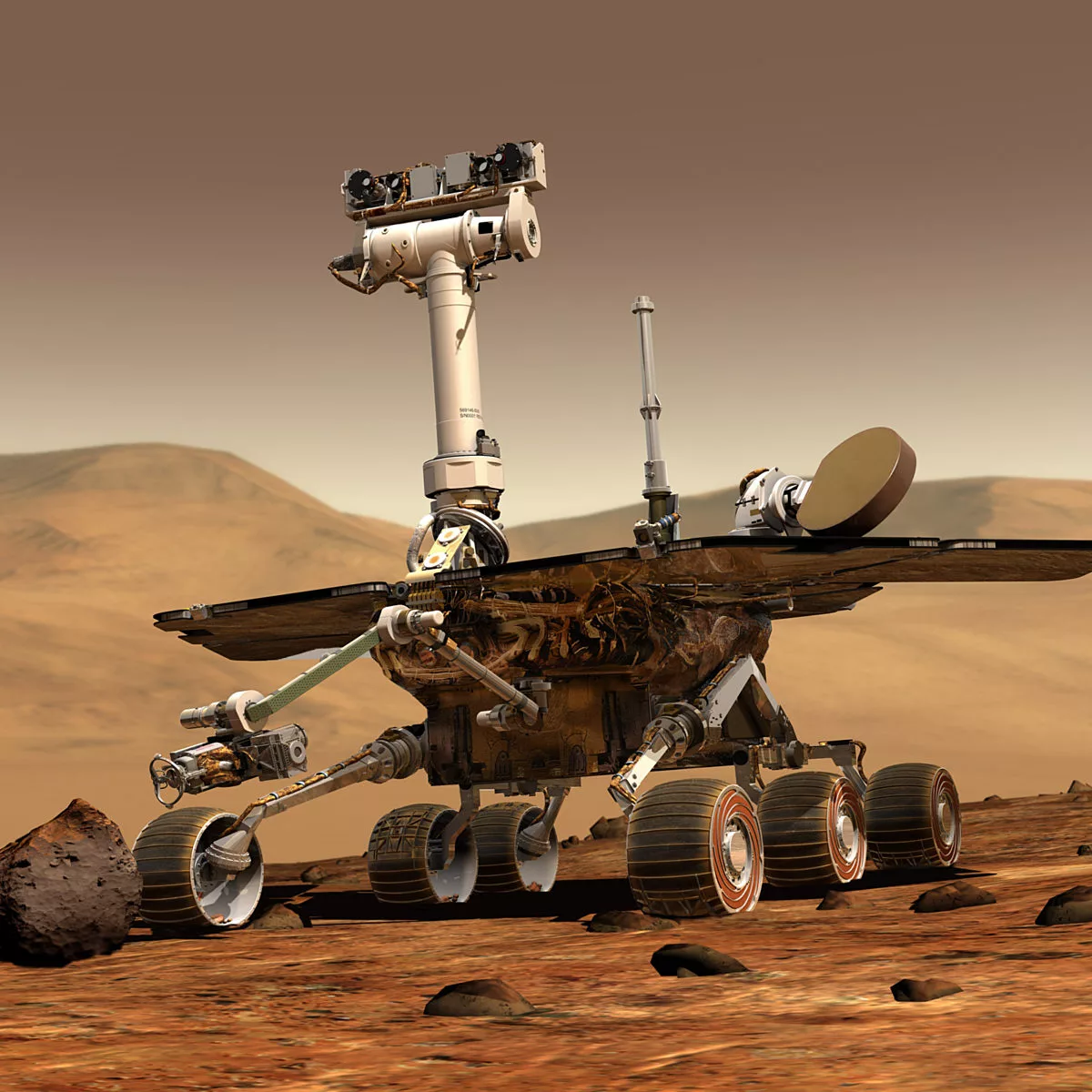
Opportunity is continuing to explore the outcrops Marathon Valley, on the west rim of Endeavour crater.

Curiosity update, sols 1218-1249: Digging in the sand at Bagnold Dunes
Curiosity has spent the last month sampling and processing dark sand scooped from the side of Namib Dune. The rover has now departed Namib and is preparing to cross the Bagnold dune field, while working to diagnose an anomaly with the CHIMRA sample handling mechanism.

SLS CubeSats to Set Sail for Deep Space
When SLS launches Orion to the moon in 2018, a fleet of deep space CubeSats will come along for the ride, including a solar sailing spacecraft similar to LightSail.
First Details of the 2017 NASA Budget Request
There are few surprises in the Obama Administration's final budget proposal for NASA, though some progress is made in critical areas like science funding and NASA's overall funding.