

 Explore Worlds
 Find Life
 Defend Earth


All
All
 Sun
Sun Mercury
 Venus
Venus Earth
Earth Mars
Mars Jupiter
 Saturn
 Uranus
 Neptune
 Small Bodies
Stories, updates, insights, and original analysis from The Planetary Society.

Photos and Video of India's Mars Orbiter Mission, proceeding toward October 28 launch
Indian media reported over the weekend that the Mars Orbiter Mission has passed some senior review, and has been approved to proceed toward a launch date of October 28, a week later than previously planned.

The Deep Impact Mission is officially over
Efforts to regain contact with Deep Impact have been ended. The last contact with the spacecraft was on August 8, 2013.
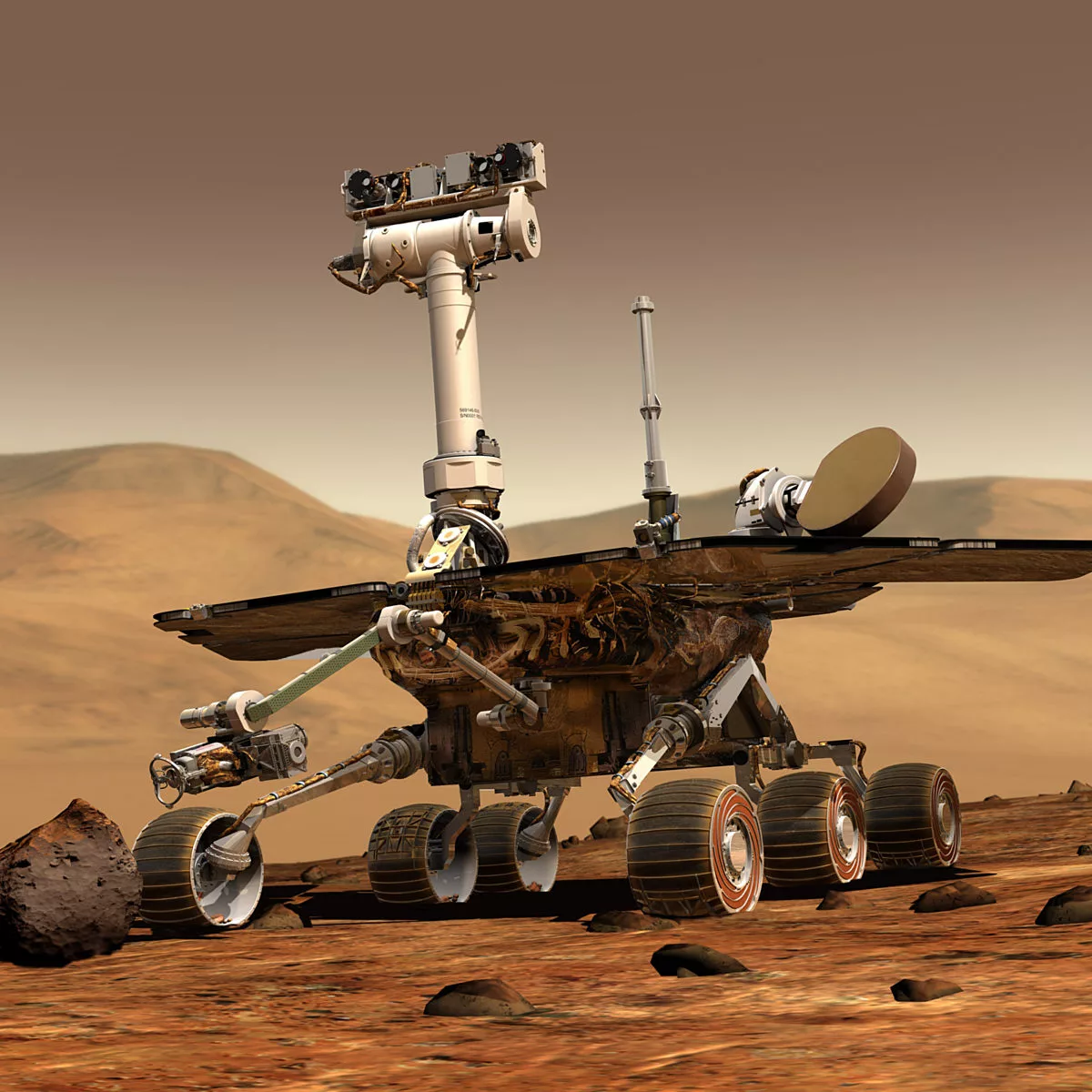
Field Report From Mars: Sol 3431 - September 18, 2013
On sol 3425 Opportunity

Mission Leader Bruce Jakosky's MAVEN Prepares for Mars
Pay attention! This Mars orbiter, headed for launch in November, is a terrific science mission, as Mat Kaplan learned in a recent workshop, and in this week's Planetary Radio.

Two new ways to browse Vesta: 1. Vesta Low-Altitude Mapping Orbit (LAMO) Atlas
Last week was the European Planetary Science Congress in London, and there's been a lot of science news. One thing that caught my eye Friday was the publication of a new atlas for Vesta.

Two new ways to browse Vesta: 2. Vesta Image data browser
A few weeks ago I received an email pointing me to a really cool new map-based browser to Dawn's Vesta image data.

Riding Along With Mars Express
Take a spin around the Red Planet with the trusty orbiter.

LADEE checkout phase successfully completed!
Some good news to start your weekend: the newest member of our deep-space fleet, LADEE, has successfully completed its checkout phase and is now officially in its cruise phase. It is still in Earth orbit, headed for Lunar Orbit Insertion on Sunday, October 6.

Taking a close look at MAVEN assembly and testing videos
I noticed something funny while examining MAVEN assembly and testing videos.
Still no contact with Deep Impact
Oh, that dreaded phrase,

Go LADEE!
Listen to or watch the recording of our live celebration for LADEE as the spacecraft blasted off for the moon.

Mars' valley networks tell us of a dry, then wet, then dry Mars
Was there rainfall on Mars? Recent work mapping valley networks suggests there probably was -- but only for about 200 million years. What does this mean for life, and the Curiosity mission?

New Messages from Mercury
We have new pictures from planet one.

LADEE safely on its way to moon
The LADEE spacecraft lifted off at 11:27 p.m. EDT on Sept. 6 from Pad 0B at the Mid-Atlantic Regional Spaceport, at NASA's Wallops Flight Facility, Wallops Island, Va.

Watch LADEE Launch to the Moon with The Planetary Society
Starting at 7:30pm PDT/10:30pm EDT, we will webcast a special event around the launch of NASA's next lunar spacecraft. Watch our special coverage with lunar scientists and live video from the launch site, as well as NASA TV footage of the launch itself.

NASA's Europa Mission Concept Rejects ASRGs -- May Use Solar Panels at Jupiter Instead
The Advanced Stirling Radioisotope Generator (ASRG) is no longer an option for powering a potential Europa mission. The ASRG uses Plutonium-238 to generate electricity, but is far more efficient than past RTGs.

In his own words: Mike Massimino on how he "nearly broke" Hubble
In an enthralling article for Esquire magazine, astronaut Mike Massimino writes about nearly failing to repair the Hubble Space Telescope, and how the people of Earth came to his rescue.
LADEE prelaunch facts
I glean all the important facts about NASA's next Moon mission from their prelaunch press kit. Launch is scheduled for September 6, 2013 at 8:27 p.m. PDT (September 7 at 03:27 UTC).

Curiosity update: AutoNav toward Mount Sharp, sols 373-383
From sols 373 to 383 (August 23 to September 3, 2013), Curiosity traveled about 250 meters toward Mount Sharp over five drives, trying out her new AutoNav capability.
Deep Impact in trouble: last heard from August 8
Communication with the Deep Impact spacecraft was lost some time between August 11 and August 14. The team has determined the cause of the problem, and is trying to figure out how to restore communication.