

 Explore Worlds
 Find Life
 Defend Earth

All
All
 Sun
Sun Mercury
 Venus
Venus Earth
Earth Mars
Mars Jupiter
 Saturn
 Uranus
 Neptune
 Small Bodies
Stories, updates, insights, and original analysis from The Planetary Society.

What changed with space directive #1?
President Trump signed Space Directive #1, formally implementing as policy what Vice President Pence had announced at the first meeting of the National Space Council in October: that NASA will focus its human spaceflight efforts on a return to the Moon, and then onto Mars. What really changed?

Congress rejects graduate student tax
The Planetary Society was proud to join dozens of other scientific organizations in standing against this unnecessary and detrimental tax increase on the future scientific workforce of the United States.

After Cassini, What’s Next for the Outer Planets?
The Planetary Society likes to look ahead, and in that spirit we organized a reception at the Library of Congress to bring scientists, legislators, and their staff together to honor Cassini and get excited about our future in the outer planets.

Space Policy & Advocacy Program Quarterly Report - October 2017
As a service to our members and to promote transparency, The Planetary Society's Space Policy and Advocacy team publishes quarterly reports on their activities, actions, priorities, and goals in service of their efforts to promote space science and exploration in Washington, D.C.

We choose to go to the Moon and do the other things
Vice President Mike Pence kicked off the National Space Council's first meeting today by declaring Americans will return to the Moon. Casey Dreier and Jason Davis analyze this new direction for NASA's human spaceflight program.

A future comes into focus for the Mars Exploration Program
Casey Dreier says NASA's decision to pursue a Mars sample return mission is good news for Mars fans, Mars scientists and supporters of the decadal survey process.

Five Earth Years on Mars
Five (Earth) years ago today, the Mars Science Laboratory Curiosity landed in a dramatic fashion on the surface of the Red Planet. We look back at a mission that advanced humanity's understanding of Mars and provided a priceless return on a modest investment.

The Senate Makes Its Move: Nearly $200M less for NASA in 2018
The proposed $19.5 billion would be less than the agency received in 2017, and substantially less than that proposed by the House for the coming year.
Space Policy and Advocacy Quarterly Update - July 2017
The Space Policy and Advocacy team has released its first in a series of regular program updates on our activities, actions, and priorities in our effort to promote space science and exploration in Washington, D.C.

From Member to Member
When a Society member met with his member of Congress, he told us about it, and we followed up.

Announcing a New Paper on NASA's Mars Exploration Program
NASA’s robotic Mars Exploration Program is on a troubling path of decline—and decisions must be made now in order to stop it. A new report by the Society explains why.

Planetary Science Just Got Its Best Budget in Years
The President signed the Consolidated Appropriations Act of 2017, funding the U.S. government for the remainder of the fiscal year. NASA got a boost to $19.65 billion, and its Planetary Science Division saw a budget increase to $1.846 billion—its best budget in more than ten years.

A Tribute to Nathan Bridges
Last week, the planetary science community lost Nathan Bridges, a leading scientist whose work studied how wind sculpts the surface of Mars. Nathan was a prolific scientist involved in many Mars exploration missions, a charter member of The Planetary Society, a friend, husband, and father.

Here's our exhaustive guide to Trump's 392-word NASA budget
We break down every sentence from Trump's new NASA budget, so you don't have to.
Congress Delays Action on NASA's 2017 Budget
Congress stands ready to punt on NASA's budget, meaning the space program will have to operate on a short budgetary leash until April of next year.
NASA Under Trump
NASA under a Trump Administration will be hard times for Earth Science, and human spaceflight to the Moon will likely get renewed focus. However, NASA won't go anywhere if massive cuts to spending are enacted as promised.

SpaceX and the Blank Slate
SpaceX's plans to colonize Mars differ considerably from NASA's Journey to Mars ambitions. But direct comparison is difficult. SpaceX is able to wipe the slate clean and start fresh with a bold new approach to humans in space. NASA has no such luxury, and must use existing pieces and people to make their goals a reality.

New Findings are Conclusive: Europa is crying out for exploration
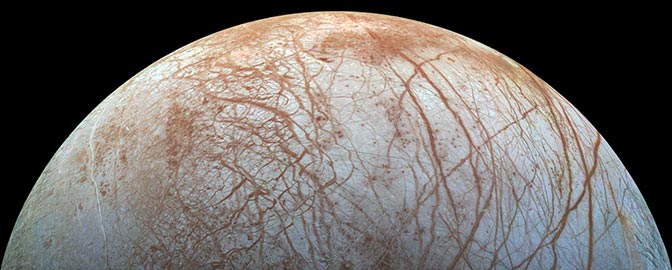
New scientific findings add to the evidence that Europa is spouting its liquid ocean into space. NASA has a mission to Europa in the works, but it wouldn't launch for at least a decade. Congress can make it faster, but it all depends on whether they can pass a budget this year.

Promise, Transition, and Transformation
After 10 days, four NASA centers, two contractors, and hundreds of miles, Casey Dreier shares his initial reflections on the state of NASA's Space Launch System rocket and its future.
The House Makes its Counteroffer on NASA's Budget
Commerce, Justice, and Science—the House of Representatives’ subcommittee that oversees NASA spending—just released details on how they would fund the space agency in 2017. Overall, the news for the space program is very good.