

 Explore Worlds
 Find Life
 Defend Earth


All
All
 Sun
Sun Mercury
 Venus
Venus Earth
Earth Mars
Mars Jupiter
 Saturn
 Uranus
 Neptune
 Small Bodies
Stories, updates, insights, and original analysis from The Planetary Society.

LightSail presented at Aerospace Mechanisms Symposium
Chris Biddy from Stellar Exploration Inc. presented information about our LightSail project at the 2012 Aerospace Mechanisms Symposium.

More Evidence for Impact Origin for Colombia’s Vichada Structure
Evidence continues to pile up that the Rio Vichada structure in Colombia is indeed the largest impact structure in South America.

Planets around Alpha Centauri?
Do planets circle our closest stellar neighbors, the system loved by science fiction: Alpha Centauri? We don’t know. But, Debra Fischer, Julien Spronck, and their colleagues at Yale University, in part with Planetary Society support, are trying to find out.

Pioneer Anomaly Solved!
With the latest piece of the puzzle just published in a scientific journal, a solar system mystery that has perplexed people for more than 20 years has been solved, truly thanks to the support of Planetary Society members.

Reflections on Phobos LIFE
We explore space for the noblest goals of science and exploration, and we often persevere in spite of challenges. But space exploration is fraught with bad things happening, or, to use the technical term, ouchies. The Planetary Society's Phobos LIFE biomodule will re-enter the Earth's atmosphere in the next few days with the rest of the Phobos-Grunt mission.

Phobos-Grunt and Phobos LIFE, with Yinghuo-1, have launched!
I am ecstatic to report that at 20:16 UTC, millions of passengers on board the Planetary Society's Phobos LIFE biomodule launched into space inside the Phobos Sample Return (also known as Phobos Grunt or Phobos Soil) spacecraft.
Phobos LIFE Ready to Launch
Years in the making, our Phobos LIFE (Living Interplanetary Flight Experiment) is nearing launch this November. Phobos LIFE will send millions of passengers on a 34-month journey to Mars’ moon Phobos and back.

Launch Window Approaching!
We are super excited that the Planetary Society’s Phobos LIFE (Living Interplanetary Flight Experiment) is about ready to launch to Mars’ moon Phobos and back. We have been working for years preparing this unique test of the effects of long term exposure to deep space on a wide variety of life.

Shuttle LIFE Organisms Return from Space
In the middle of the night on June 1, 2011, millions of passengers returned safely to Earth as part of the great conclusion to space shuttle Endeavour's last flight, STS-134. Many of those millions of passengers were part of the Planetary Society's Shuttle LIFE experiment. Five different kinds of creatures from all three domains of life are part of Shuttle LIFE.

NASA Selects Next New Frontiers Mission
NASA has selected the OSIRIS-REx mission as the next New Frontiers mission. OSIRIS-REx (Origins-Spectral Interpretation-Resource Identification-Security-Regolith Explorer) will be the first U.S. asteroid sample return.

Shuttle LIFE is go for launch with Endeavour!
The Planetary Society's Shuttle LIFE experiment is now go for launch on Endeavour's STS-134 mission. I came down to Florida for the loading of our tiny sample tubes into the CREST-1 (Commercial Reusable Experiments for Science & Technology) payload block.
LightSail 1 on NASA Short List for Upcoming Launch
NASA announced that the Planetary Society’s LightSail 1 solar sail mission is on their short list for upcoming launch opportunities. The missions selected are CubeSats destined for piggyback launches as part of NASA's CubeSat Launch Initiative.

The 2010 Gene Shoemaker NEO Grant Recipients
In 2010, The Planetary Society awarded $33,285 as part of its Gene Shoemaker Near Earth Object (NEO) Grant Program. The grants were made to a group of international researchers to find, track, and characterize potentially hazardous NEOs.
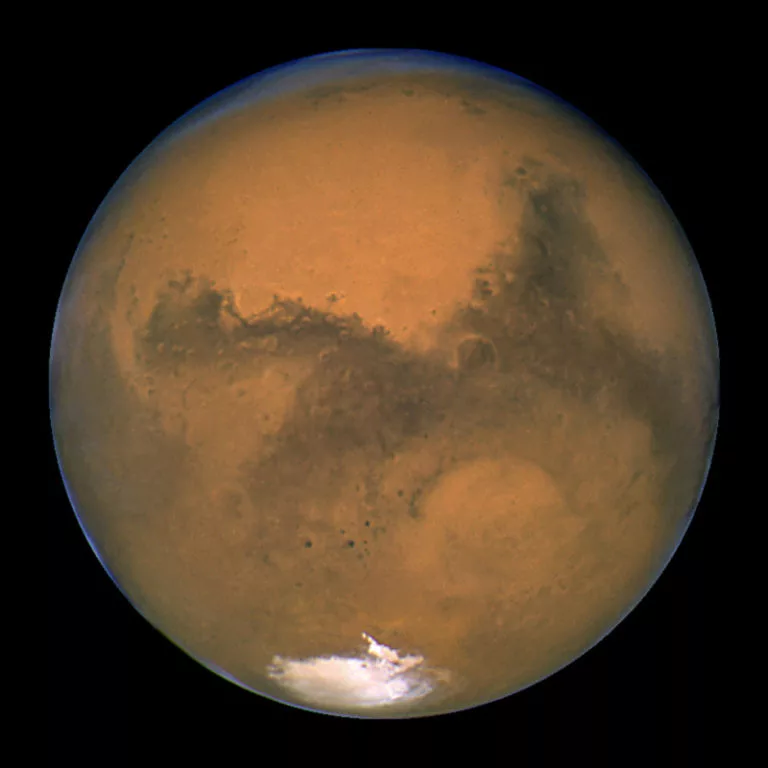
Tracing the Big Picture of Mars' Atmosphere
One of the instruments on a 2016 mission to orbit Mars will provide daily maps of global, pole-to-pole, vertical distributions of the temperature, dust, water vapor and ice clouds in the Martian atmosphere.

Phoenix is dead...long live Phoenix!
The latest HiRISE images of the Phoenix polar lander, taken near Mars' northern summer solstice, show why we haven't heard from the spacecraft since it fell silent on November 2, 2008: it appears the solar panels have collapsed.

Updates on Shoemaker NEO Grant Recipients (18 March 2010)
Our past Shoemaker NEO grant recipients have once again shown themselves to be a hardworking and enterprising group.

Inside the U.N.'s Near Earth Object Working Group
This week Bruce Betts is attending a U.N. meeting in Austria, in particular the parts focused on international considerations of the near-Earth object threat.

Kepler discovers its first five exoplanets
Congratulations to NASA's Kepler mission team on their announcement of the discovery of its first five exoplanets (planets around other stars).

NASA selects three new missions for New Frontiers studies
NASA has selected three finalists for the next New Frontiers mission: a Venus lander, a near Earth asteroid sample return, and a lunar Aitken basin sample return mission.

Apophis is less scary than it used to be
Based on analyses of previously unstudied telescopic data, NASA scientists have released new predictions for the path of the 300-meter-diameter asteroid Apophis.