

 Explore Worlds
 Find Life
 Defend Earth


All
All
 Sun
Sun Mercury
 Venus
Venus Earth
Earth Mars
Mars Jupiter
 Saturn
 Uranus
 Neptune
 Small Bodies
Stories, updates, insights, and original analysis from The Planetary Society.
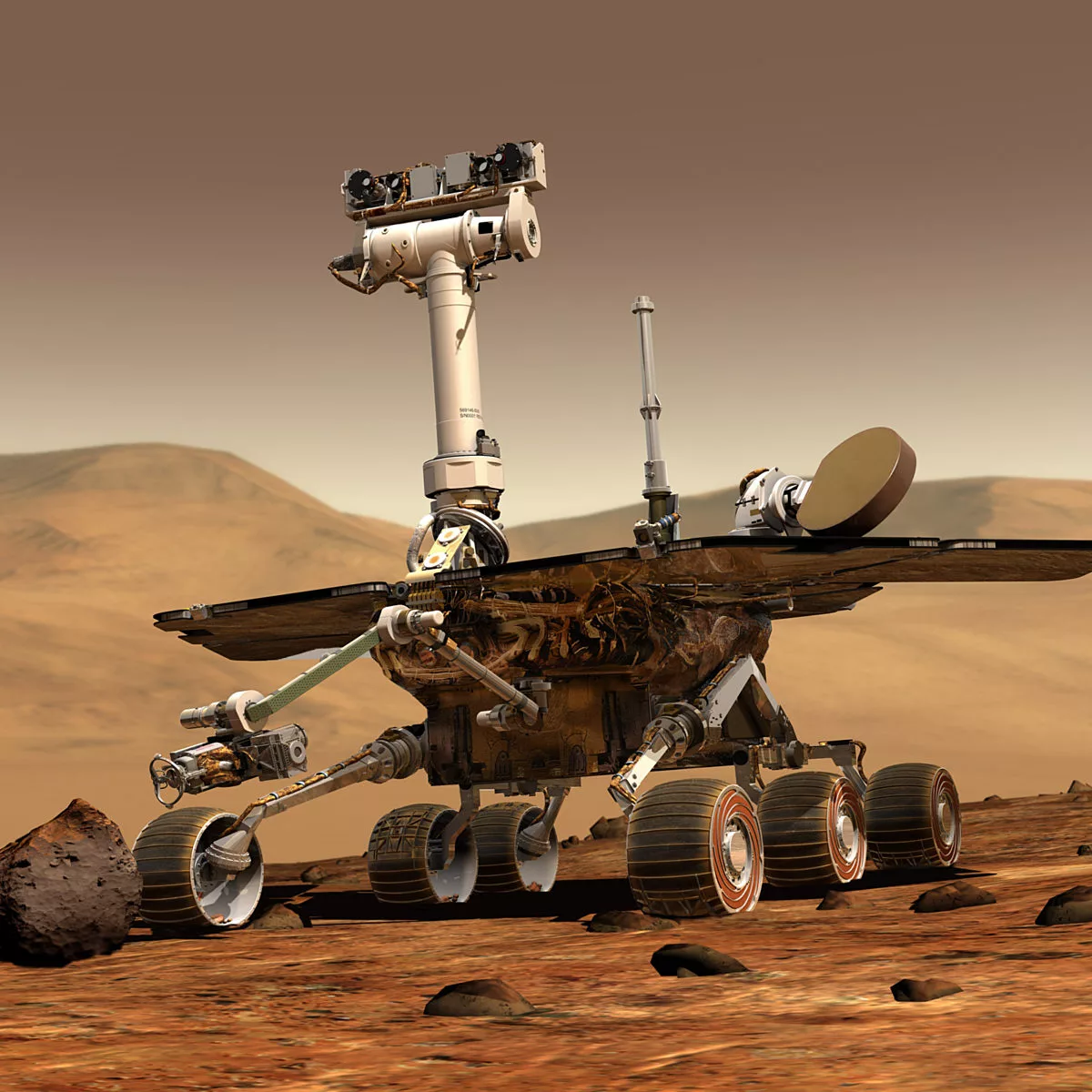
Endeavour on Opportunity's horizon: Are we there yet?
Last week the Mars Exploration Rover team dumped another 90 sols' worth of data from Mars into NASA's Planetary Data System, the national repository for space mission data. As I did once before, I dove into this fresh pile of data to pull out Opportunity's color views of the distant rim of Endeavour crater.

Map the world's light pollution by participating in GLOBE at Night
Now in its sixth year, GLOBE at Night is a citizen science program that marshals the eyes of thousands of people around the world once a year to assess the degree to which light pollution diminishes our views of starry skies.

Explore the Moon in 3D through the Chandrayaan-1 TMC image data set
Data from two of the cameras aboard Chandrayaan-1 are now available through the ISRO Science Data Archive (ISDA), a new(?) site that is being established to host the data from ISRO's deep-space missions.

365 Days of Astronomy Podcast: Stardust at Tempel 1
Yesterday the 365 Days of Astronomy podcast aired my contribution, Stardust at Tempel 1: The First Second Trip to a Comet.
Announcing the winners of the "Are We There Yet?" contest
I'm pleased to announce the winners of the Planetary Society's

What's up in the solar system in March 2011
I don't think there's any question what the big event of this month will be: MESSENGER is finally, finally entering orbit at Mercury on March 18 at 00:45 UTC (March 17 at 16:45 for me).

Stardust update: last image taken today
According to the Stardust website, the spacecraft has continued taking navigational camera images of Tempel 1 since last Monday's flyby. But

New website full of color versions of Opportunity rover's microscopic images
There is a fascinating new page on the Mars Exploration Rover Pancam science team's website, full of color versions of Opportunity's microscopic images. The Microscopic Imager is one of the tools on the end of the robotic arm, and serves as a hand lens for the robot geologist to explore the rocks and sands of Mars in great detail.

A dog-bone-shaped asteroid's two moons: Kleopatra, Cleoselene, and Alexhelios
Asteroid (216) Kleopatra has been interesting to astronomers for a long time because its brightness is highly variable, but it seems to get more interesting every time somebody looks at it with a new instrument. This week a paper was published in Icarus revealed that it's 30 to 50% empty space.

Rosetta Update: 98% of rendezvous burn achieved, more detail on the safing event
ESA's Rosetta comet chaser has achieved 98% of the velocity change that it needed to accomplish in order to set itself up for the final leg of its cruise to comet Churyumov-Gerasimenko. The original plan was to perform this velocity change in a series of five rocket burns at the end of January, but the plans were interrupted by a scary event: the spacecraft went into safe mode during the second burn, on January 18.

The Solar System from the Inside Out - and the Outside In
Space probes grant us perspective, the ability to see our place within the vastness of the solar system. But opportunities to see all of the solar system's planets in one observation are rare. In fact, there's only been one opportunity on one mission to see the whole solar system at once, until now.
Sounds of Stardust, and a cool morphed Tempel 1 video
Here's two more items from Tuesday's flyby of comet Tempel 1 by the Stardust spacecraft to add to my previous roundup of Tempel 1 data. The first represents data from a dust counting instrument, portrayed as sound, and the second is a terrific morph animation of the flyby produced by Daniel Macháček.

Conjunction season is over, and Opportunity is back to work
It's always a relief when conjunction passes. Opportunity has gotten right back to work, sending down data acquired just before the moratorium, which spanned from January 27 to February 11.

Some early scientific impressions of Stardust's Tempel 1 flyby
I've spent a day with the Stardust images from Tempel 1, and had a chat with co-investigator Jessica Sunshine, so here are a bunch of images with some preliminary scientific commentary.

Highlights from today's Stardust Tempel 1 press briefing
It was a very happy science team at this afternoon's press briefing following the Stardust encounter with Tempel 1.

First image from Stardust! ...but a delay for the close-approach ones
Here it is, the first image from Stardust of Tempel 1 during the close-approach phase!

High-res images of Tempel 1 from Stardust now arriving
I really didn't expect these images to look so good! I'd prepared myself for blurry images and a lot of squinting to try to match up features in pictures between Deep Impact and Stardust views of Tempel 1, but in fact the resemblance is obvious and you can clearly see that they successfully imaged the area in which Deep Impact's Impactor craft collided with the comet.

Quick-and-dirty animation of Stardust Tempel 1 images through closest approach
Here's a quick-and-dirty animated GIF of the 39 images of Tempel 1 that have arrived on Earth so far from Stardust. I've put a big watermark on this animation because it's not a final product.
All Stardust data is now on Earth
A status update from Stardust posted this afternoon contained welcome news.

Happy Valentine's Day from Mars
I dug around and found something unique: this cool heart-shaped feature on Mars -- my Valentine to you all!