

 Explore Worlds
 Find Life
 Defend Earth


All
All
 Sun
Sun Mercury
 Venus
Venus Earth
Earth Mars
Mars Jupiter
 Saturn
 Uranus
 Neptune
 Small Bodies
Stories, updates, insights, and original analysis from The Planetary Society.

Dawn Journal: Closing in on Ceres
Dawn's chief engineer Marc Rayman gives an update on the mission as it gets ever closer to its next target: The dwarf planet Ceres.

Camera now measuring even fainter Near-Earth Objects
Camera purchased with the support of a 2009 Shoemaker NEO Grant is now on a new telescope providing follow-up measurements for even fainter near-Earth objects.

A second ringed centaur? Centaurs with rings could be common
Chiron, which is both a centaur and a comet, may also have rings.

Ceres: Just a little bit closer (and officially better than Hubble)
Last week's Dawn images of Ceres were just slightly less detailed than Hubble's best. This week's are just slightly better.

At last! A slew of OSIRIS images shows fascinating landscapes on Rosetta's comet
The first results of the Rosetta mission are out in Science magazine. The publication of these papers means that the OSIRIS camera team has finally released a large quantity of closeup images of comet Churyumov-Gerasimenko, taken in August and September of last year. I explain most of them, with help from my notes from December's American Geophysical Union meeting.

Addressing some common questions about Comet Lovejoy
Lowell Observatory's Matthew Knight addresses several points of confusion that have repeatedly come up in the coverage of Comet Lovejoy.

Fountains of Water Vapor and Ice
Deepak Dhingra shares some of the latest research on Enceladus' geysers presented at the American Geophysical Union (AGU) Fall Meeting in San Francisco last month.
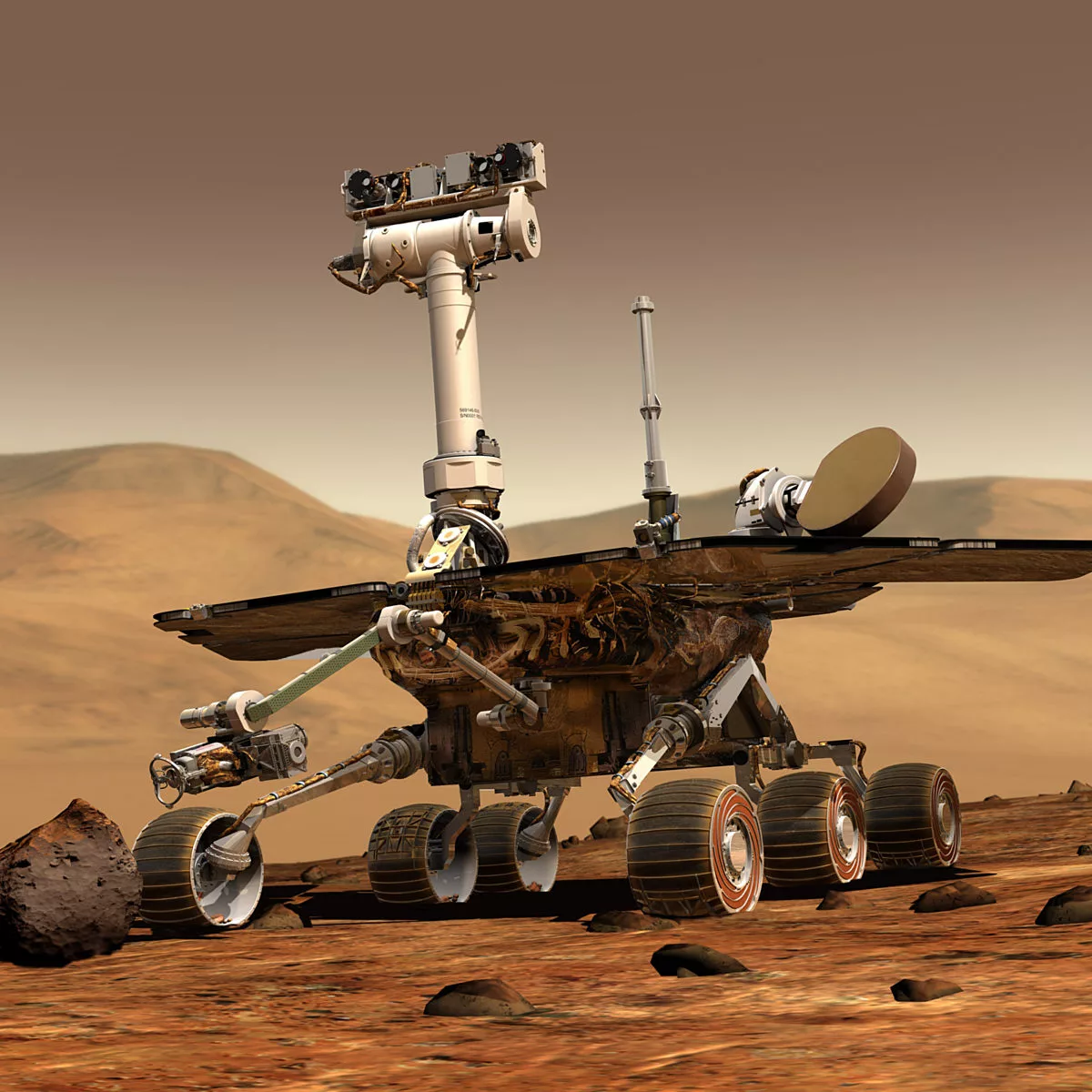
Field Report from Mars: Sol 3902 - January 15, 2015
Larry Crumpler gives an update on the status of Opportunity's traverse toward Marathon Valley.

Curiosity update, sols 814-863: Pahrump Hills Walkabout, part 2
Curiosity has spent the last two months completing a second circuit of the Pahrump Hills field site, gathering APXS and MAHLI data. The work has been hampered by the loss of the ChemCam focusing laser, but the team is developing a workaround. Over the holidays, the rover downlinked many Gigabits of image data. The rover is now preparing for a drilling campaign.

Pretty Picture: Comet Lovejoy
Astrophotgrapher Adam Block shares an image of Comet Lovejoy, which is currently visible with binoculars.

The Moon, In Depth
Explore a new collection of 3D lunar landscapes.

New Dawn images of Ceres: comparable to Hubble
Dawn has captured a series of photos of a rotating Ceres whose resolution is very close to Hubble's, and they show tantalizing surface details.

Sky survey grant helps lead to a space science career
Quan-Zhi Ye was an 18 year-old college student and the principal investigator of the Lulin Sky Survey when he won a 2007 Shoemaker NEO grant. He's now a Ph.D. candidate and provides an update on his work in meteor studies.

Beagle 2 found?
What happened to Beagle 2? It's been a mystery for 11 years. That mystery appears to have been solved.
Ten years after the Huygens landing: The story of its images
The landing of Huygens on Titan was a significant moment for planetary science and a great accomplishment for Europe. But the Huygens landing also stimulated the development of the international community of amateur image processors that does such great work with space images today. I was in the midst of it all at the European Space Operations Centre in Darmstadt.

Year of the 'Dwarves': Ceres and Pluto Get Their Due
This year we achieve the first exploration of these curious but fascinating objects. Paul Schenk explains what we may learn about them.

Pretty Pictures of the Cosmos: Overlooked
Astrophotographer Adam Block showcases some stunning images of lesser-known galaxies and nebulae.

JUICE at Europa
Europe's JUICE spacecraft will provide us with a detailed regional study of this icy moon of Jupiter.

Tracking a Ghost Mission 238 Million Km Away
Daniel Scuka describes the impending demise of the Venus Express spacecraft.
Mars Exploration Rovers Update: Opportunity Closes in on 11th Anniversary and We Look Back on 2014
With a wonder year of discoveries, historic feats, and bummers in the rear view mirror – and plenty of mettle to continue exploring – Opportunity ended 2014 quietly working in a temporary back-up mode, as her colleagues on Earth ramped up for the mission's marathon adventure to come in 2015.