

 Explore Worlds
 Find Life
 Defend Earth


All
All
 Sun
Sun Mercury
 Venus
Venus Earth
Earth Mars
Mars Jupiter
 Saturn
 Uranus
 Neptune
 Small Bodies
Stories, updates, insights, and original analysis from The Planetary Society.

Your Guide to the OSIRIS-REx sample collection
NASA's OSIRIS-REx successfully collected a sample from asteroid Bennu on 20 October 2020.

Sample Return Roundup
It's a banner year for sample return missions. In 2020, China, Japan, and the United States are all scheduled to have sample return missions in flight, seeking to retrieve material from near-Earth asteroids, the Moon, and eventually Mars.

The Next 10 Years
Six scientists share the major planetary science discoveries of the past decade, and the questions that will drive the next 10 years of solar system exploration.

Hayabusa2 Lander Mania: Results from MASCOT, Plans for MINERVA-II2
Japan's sample return spacecraft only has about 3 months left at asteroid Ryugu. Its next action will be to drop more stuff on the surface.

OSIRIS-REx Team Picks 4 Candidate Sample Sites on Asteroid Bennu
The sites each have unique characteristics that would advance the field of asteroid science.

Hayabusa2 Nailed its Second Touchdown on Asteroid Ryugu
JAXA's sample collection spacecraft touched down just 60 centimeters away from its aimpoint.

Hayabusa2 makes second touchdown on asteroid Ryugu
Japan's Hayabusa2 spacecraft has touched down on Ryugu for a second time, bagging samples which hopefully contain material from the subsurface of the asteroid.

ESA to Launch Comet Interceptor Mission in 2028
With Comet Interceptor, ESA plans to meet a comet on its first trip into the inner solar system. The mission was selected yesterday after a fast-track proposal process and will be developed on a rapid (for ESA) timeline, with a launch planned for 2028.

OSIRIS-REx Sets Low-Orbit Record, Enters New Orbital B Mission Phase
Last week, NASA’s OSIRIS-REx asteroid sample-return mission announced that they had achieved an orbit above asteroid Bennu with an altitude of only 680 meters. Now they are surveying for landing sites and have invited the public's help.
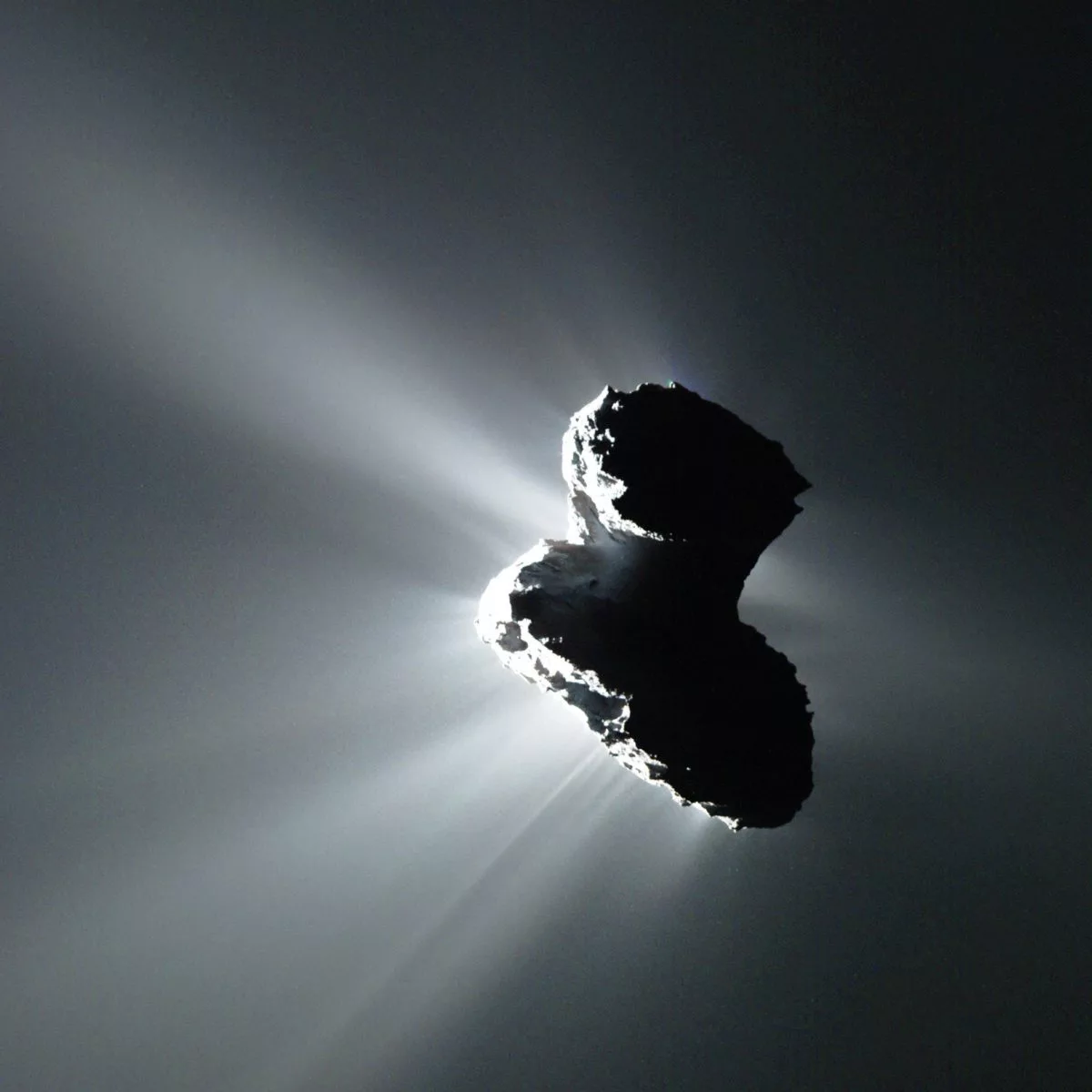
Rosetta’s Ancient Comet
Rosetta is a European Space Agency mission with contributions from its member states and NASA. Operating such a complex mission with its 11 instruments and Philae lander is a success story in itself, but Rosetta’s greatest success is the science it delivered.
The June Solstice 2019 Issue of The Planetary Report Is Out!
Two feature articles bring you the excitement and science of exploring two very different representatives of the solar system's smaller worlds.

Treasure Hunting With Hayabusa2
IN THE EARLY hours of 22 February, light was just beginning to brighten the campus of JAXA’s Institute of Space and Astronautical Sciences (ISAS) in Kanagawa, Japan. It should have been a quiet time, but the Hayabusa2 control room was packed with people. We were about to land on an asteroid.

Hayabusa2 drops second target marker, targets artificial crater for sample collection
The reflective softball-sized sphere will give the spacecraft a visual guide during a second potential sample collection.

Hayabusa2 Encounters Snag Trying to Drop Second Target Marker
The spacecraft is healthy and safe, but time is running out to collect a second sample from asteroid Ryugu.

Here's a Roundup of Recent OSIRIS-REx Postcards from Bennu
NASA's OSIRIS-REx spacecraft is currently sweeping arcs between the asteroid's north and south poles.

Here’s an Update on Hayabusa2’s Crater-Creating Explosion
Hayabusa2's SCI experiment fell toward Ryugu for 40 minutes before detonating about 300 meters above the surface.

Hayabusa2 Safe and Sound after Blasting New Crater on Ryugu
Hayabusa2 successfully used its explosive-packed SCI experiment to create an artificial crater on asteroid Ryugu.

First Science Results from Hayabusa2 Mission
The Hayabusa2 team held a press briefing last week at LPSC to report newly published results on asteroid Ryugu.

What to Expect When Hayabusa2 Blows a Hole in Asteroid Ryugu
The Hayabusa 2 spacecraft will deploy its Small Carry-on Impactor experiment, SCI, on 5 April.

OSIRIS-REx sees Bennu spewing stuff into space
The asteroid's rotation rate is also increasing, and scientists continue refining the plan to collect a regolith sample next year.