

 Explore Worlds
 Find Life
 Defend Earth


All
All
 Sun
Sun Mercury
 Venus
Venus Earth
Earth Mars
Mars Jupiter
 Saturn
 Uranus
 Neptune
 Small Bodies
Stories, updates, insights, and original analysis from The Planetary Society.

According to Nature News, Curiosity is going to Gale
Nature News is reporting that the Mars Science Laboratory mission has made its recommendation for the landing site for the next great Mars rover, and it's Gale crater.

How to Wrap a Mars Rover, redux
All right, I'll admit it: JPL's video is way, way cooler than mine. Four days of packing Curiosity up for shipping, condensed into under a minute.

The most exciting citizen science project ever (to me, anyway)
A guest blogger here recently rounded up the large number of participatory research projects that are collectively known as citizen science. I think these are all very cool and I encourage you to check them out but none of them has yet inspired me to spend my precious time as grunt labor on a gigantic collective project. Until now.

Cassini finally catches Helene
Cassini has finally achieved gorgeous global imaging of Helene with a spectacular flyby on Saturday, in which they got Helene to pose prettily for the camera from beginning to end of the encounter. And what a wacky, wacky world Cassini has revealed Helene to be!!

Update: Phobos and Jupiter and its moons!
Remember that neat picture and movie of Phobos passing by Jupiter that I posted last week? Several people asked me where Jupiter's moons were, and I just assumed that they weren't visible. I was wrong; Mars Express spotted Jupiter's moons along with the planet and Mars' moon!

Vesta, now better than Hubble!
Closer and closer! Vesta is still fuzzy, but as Dawn inexorably draws closer it's beginning to come into focus. The view is now better than anything Hubble has ever returned to Earth.

Watching Phobos pass by Jupiter
Here is a really cool view of Phobos in the foreground with gigantic (but very distant) Jupiter sitting in the background, a fortuitous alignment that the Mars Express High-Resolution Stereo Camera team took advantage of on June 1.
How to Wrap a Mars Rover
It's not easy to wrap a ginormous rover for shipping. I was glued to the feed from the Curiosity Cam all day yesterday, as they prepared Curiosity for shipping to Kennedy Space Center. Here's a low-budget time-lapse of the rover being wrapped.

Early MESSENGER science results: Mercury is its own planet, not Moon or Earth
There was a press briefing today giving some early science results from MESSENGER and it was surprisingly meaty. I'm going to focus on just one set of the results that they presented.

Chang'E 2 is on its way to Sun-Earth L2
According to an article published a week ago by the Xinhua news service, Chang'E 2 departed the Moon on June 9 at 09:10 UTC. It's now headed toward a Lagrangian point in space, but not the one I thought it was headed for.

Historic Final Flight of Space Shuttle Endeavour
After a 16 day journey of more than sixteen million miles, Space Shuttle Endeavour and her six man crew glided to a safe nighttime landing at 2:35 a.m. EDT on June 1 at NASA's Kennedy Space Center in Florida. I watched from close by the shuttle landing strip as the ghostly ship flew past, preceded by shocking twin sonic booms.
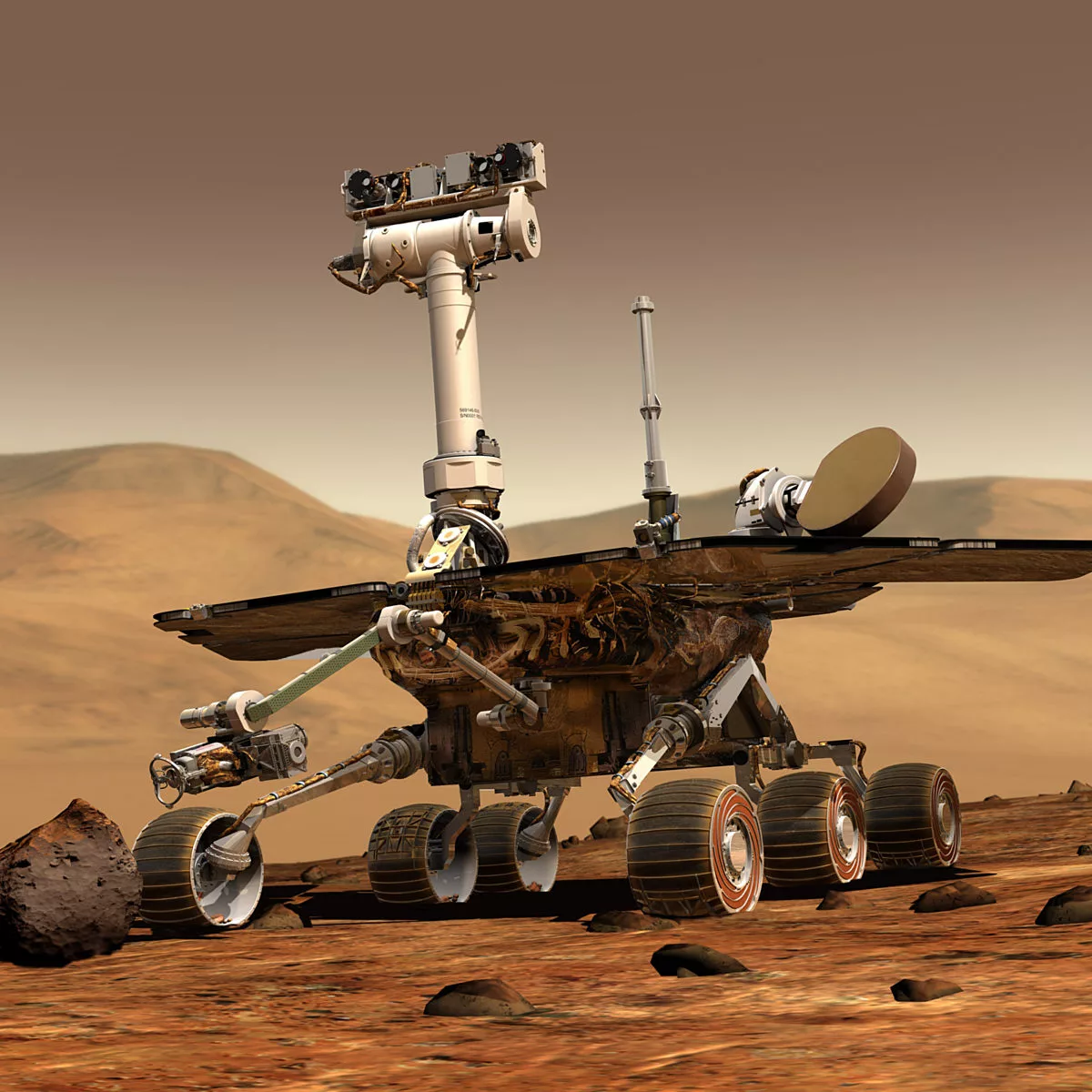
The Spirit Rover, and Why Cuteness Matters
There is something about the Spirit Mars rover, something that tugs at our hearts. I finally figured it out: it's cute.

URGENT: Call Appropriations Committee members to support Pu-238 production
I just got the following email from the American Geophysical Union (AGU), requesting anyone whose Congressperson sits on the Appropriations Committee to place a phone call to support the production of Plutonium-238, the isotope of plutonium that powers spacecraft that cannot run on solar power.

Rosetta has entered its long sleep
One big space event that I missed while I was on vacation was Rosetta's entry into hibernation. Rosetta is the biggest interplanetary spacecraft that has been launched by ESA, and it has the groundbreaking goal of entering orbit around a comet and dropping a lander onto it.

A Vesta rotation movie from Dawn!!
What do you know! I spend my last pre-vacation post whining about the lack of image releases from Dawn as it approaches Vesta and what do I find in my Inbox on the morning of my return to work but: an image release from Dawn!

Europa on the Ropes
For now, Mars continues to eclipse Jupiter's moon Europa (shown here to scale) in NASA's flagship mission plans, but not in its appeal to many planetary scientists.

Shuttle LIFE Organisms Return from Space
In the middle of the night on June 1, 2011, millions of passengers returned safely to Earth as part of the great conclusion to space shuttle Endeavour's last flight, STS-134. Many of those millions of passengers were part of the Planetary Society's Shuttle LIFE experiment. Five different kinds of creatures from all three domains of life are part of Shuttle LIFE.

Observing at the WIYN
On May 5 and 6, I had a run on the WIYN (Wisconsin-Indiana-Yale-NOAO) telescope, a 3.5 m telescope, the second largest telescope on Kitt Peak in Arizona.

Summer Sights of the Solar System
What can you expect to see if you look at the night sky this summer (2011)?
