

 Explore Worlds
 Find Life
 Defend Earth


All
All
 Sun
Sun Mercury
 Venus
Venus Earth
Earth Mars
Mars Jupiter
 Saturn
 Uranus
 Neptune
 Small Bodies
Stories, updates, insights, and original analysis from The Planetary Society.

Don't Miss Voyager Head Scientist Ed Stone on the Colbert Report
Voyager Chief Scientist Ed Stone was the featured guest on the Colbert Report to celebrate the spacecraft's entry into interstellar space.

What's Going on With Planetary Science Research?
Budget cuts mixed with a new way to fund science could disproportionately impact the next generation of planetary scientists.

Pretty picture: newly processed high-res view of a fractured icy moon, Dione
Here's a lovely new view of Dione, one of the lovely mid-sized icy moons of Saturn, assembled by Daniel Macháček.

Planetary Dirt Sampling Success
We present an update and a video about the successful design, construction, and testing in a vacuum chamber by Honeybee Robotics of a prototype PlanetVac system, a new planetary surface sampling technique, sponsored by The Planetary Society. PlanetVac is a reliable system that effectively vacuums up planetary surface materials.

Cosmos with Cosmos Episode 7: The Backbone of Night
We return to the big idea of the series – that the universe can be known and we better ourselves in our efforts to understand it – in the best episode of Cosmos so far.

SpaceX’s Upgraded Falcon Delivers Satellite to Geostationary Orbit
SpaceX's Falcon 9 rocket delivered a communications satellite to geostationary orbit, marking an important milestone for the private spaceflight company.
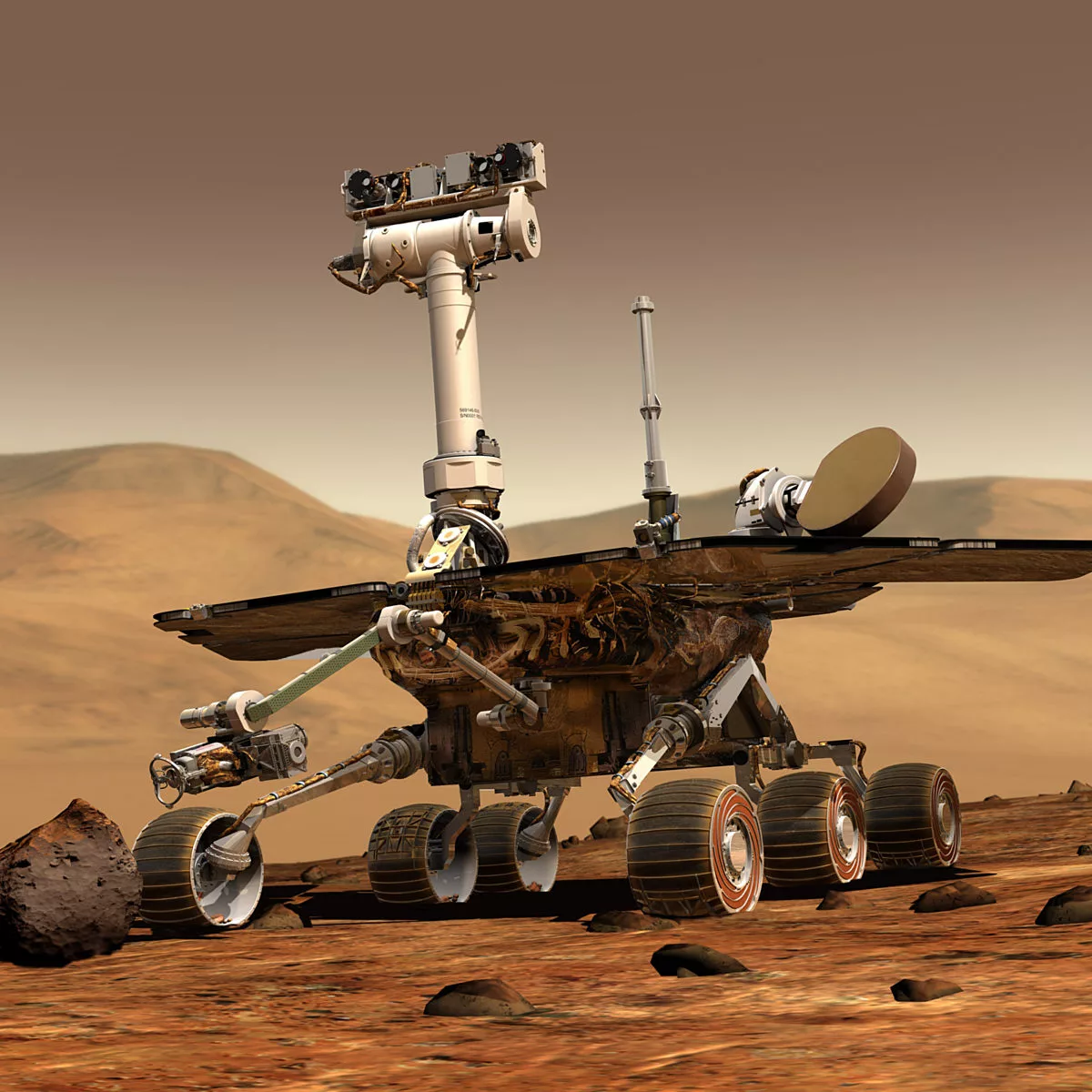
Mars Exploration Rovers Update: Opportunity Ascends Murray Ridge into Clay Mineral Grounds
Although winter took hold at Endeavour Crater in November, Opportunity pressed on, climbing up Murray Ridge and driving into a clay mineral hunting ground as the Mars Exploration Rovers mission cruised another month closer to celebrating its 10th Earth year of surface operations with myriad events throughout January 2014.

Somewhere Over the Bay of Rainbows
Pay a visit to the Chang'e 3 lunar landing site.

Multiple views of comet ISON from solar-observing spacecraft
When comet ISON passed through perihelion last week, solar observing spacecraft had a ringside view. Here are several animations of ISON's perilous passage from the SOHO and two STEREO spacecraft.

Chang'e 3 departs for the Moon, with amazing images and video
On December 1 at 17:30 UTC, Chang'e 3 launched atop a Long March 3B rocket on a direct lunar transfer trajectory. It is scheduled to enter orbit December 6 and land December 14. The rocket was equipped with cameras that recorded thrilling video of the launch and final departure of the probe.

Comet ISON Hangouts November 25 and December 2
Two Hangouts bookended comet ISON's perihelion, hosted by Chuck Beuter of Comet Festival South Bend. On November 25, it was I and Ron Kaitchuck. On December 2, Alex Filippenko and I discussed what happened to the comet over Thanksgiving.

Mars Orbiter Mission ready to fly onward from Earth to Mars
Today is the day when India's Mars Orbiter Mission will fire its rocket to depart Earth and begin its 300-day journey to Mars. The rocket burn begins on December 1 at 00:49 IST (today at 19:19 UT / 11:19 PT).

Chang'e 3 ready to launch to the Moon
A brief update on Chang'e 3, which is scheduled for launch December 2 at 01:30 China time, or December 1 at 17:30 UT / 09:30 PT.
Congratulations due to India: Mars Orbiter Mission is on the way to Mars!
Today I am delighted to welcome India into the ranks of interplanetary travelers: Mars Orbiter Mission has successfully propelled itself onto an interplanetary trajectory, departing Earth forever and setting sail for Mars. Congratulations to India, to the Indian Space Research Organisation, to the mission's scientists and engineers, and to the people of India.

The Mariner Mars Globe
In 1971 I was being trained to work with the airbrush by the map artists at the U.S. Geological Survey's Branch of Astrogeologic Studies in Flagstaff. However, the project I ended up spending about a quarter of a man-year on was a hand-painted map globe of Mars.
Schrödinger's Comet
After impressing us yesterday, comet ISON faded dramatically overnight, and left us with a comet with no apparent nucleus in the SOHO/LASCO C2 images. As the comet plunged through the solar atmosphere, and failed to put on a show in the SDO images, we understandably concluded that ISON had succumbed to its passage and died a fiery death. Except it didn't. Well, maybe...
Chang'e 3 may launch December 1 with Yutu rover, will not harm LADEE mission
Yesterday the Chinese space agency held a press briefing about the Chang'e 3 lunar lander. They announced that the rover has been named Yutu (or

A case of the measles for Jupiter?
Amateur astronomer Christopher Go has found Jupiter to be putting on a fun show for observers: it's sprouting little red spots

Comet ISON: Your Half-time Report
I am heading out to Kitt Peak to join my fellow CIOC-ers Matthew and Casey for perihelion observations of Comet ISON, and I find myself having an early moment of reflection.

Planetary Radio: Rise of the Europa Underground?
This week's PlanRad talks to one of the creators of a new effort to build support for the Europa Clipper, a spacecraft that would tell us far more about what's going on under that icy moon's surface.