

 Explore Worlds
 Find Life
 Defend Earth


All
All
 Sun
Sun Mercury
 Venus
Venus Earth
Earth Mars
Mars Jupiter
 Saturn
 Uranus
 Neptune
 Small Bodies
Stories, updates, insights, and original analysis from The Planetary Society.

Philae landing preview: What to expect on landing day
Earth's first-ever landing on a comet is a week away. On November 12 at 8:35 UT, Philae will separate from Rosetta. Seven hours later, it will arrive at the surface of the comet. Hopefully, Philae will survive the landing, and begin to return data.

The Consequences of the 2014 Midterm Elections for NASA
A Republican Senate will not drastically change the course of the nation's space program, though it will likely see less funding for NASA and a difficult path forward for the Asteroid Retrieval Mission.

Undeniable Commitment to Education, Empowerment & Understanding the Cosmos
Today, The Planetary Society celebrates our CEO Bill Nye’s latest science education feat: the release of his book, Undeniable: Evolution and the Science of Creation. Erin Greeson, The Planetary Society's director of communications, tells us about it.

Fall Issue of The Planetary Report is Here!
The fall issue of The Planetary Report has mailed and is on its way to our members’ doors. Those of you who prefer an electronic file, or a preview of the printed copy, can pick it up online.
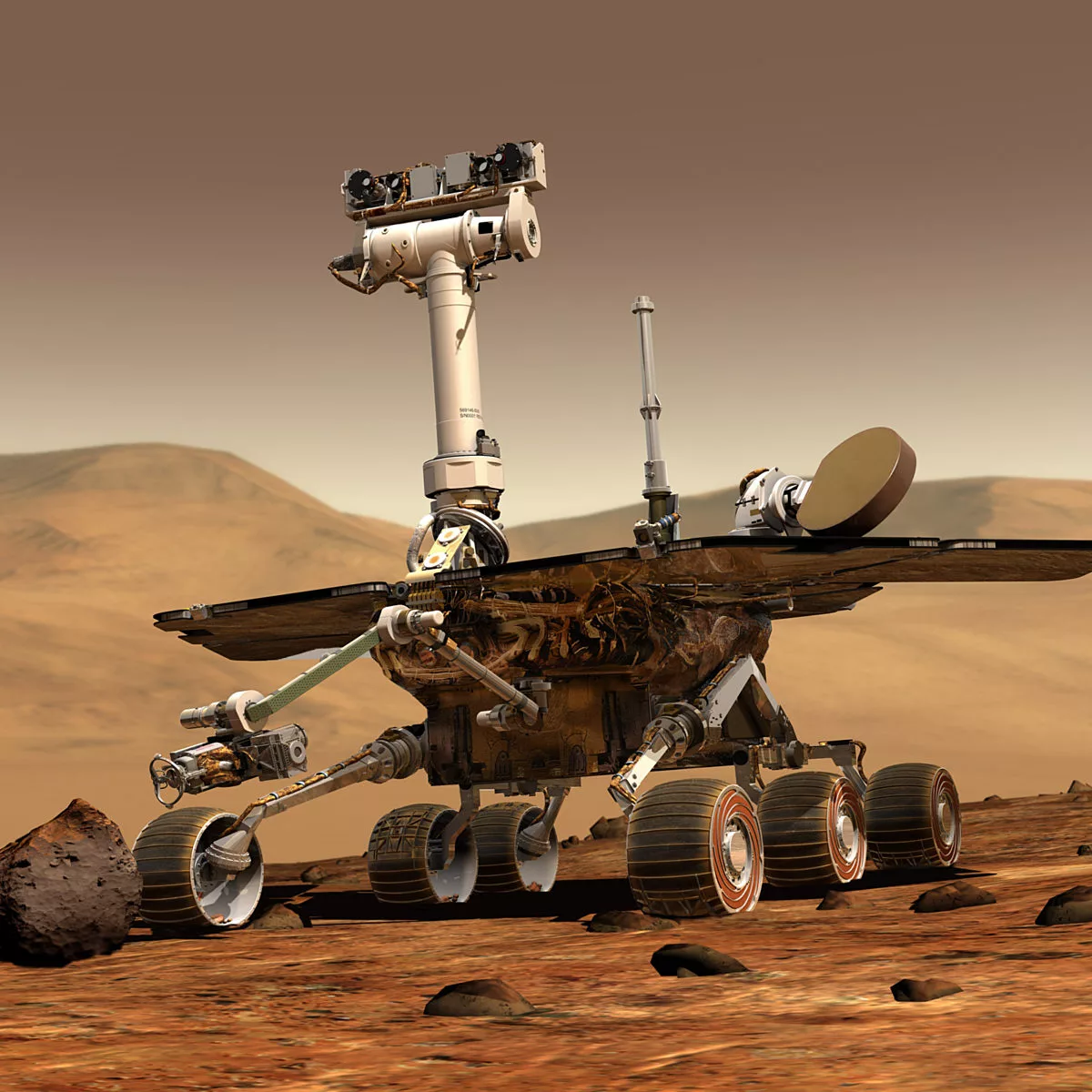
Mars Exploration Rovers Update: Opportunity Images Comet, Ducks Storm, Departs Ulysses
As winds whirled and converged to the west of Endeavour Crater, Opportunity's power dropped dramatically in October, but the Mars Exploration Rover (MER) pressed on. By month's end, the robot field geologist had completed her assignments – including capturing the first close-in shot of a comet from the surface of the Red Planet – and was roving onward through the darkness, driving the mission into the 130th month of what started out more than 10-and-a-half years ago to be a 3-month tour.

Chang'e 5 test vehicle flying on to Earth-Moon L2
The Chang'e 5 test vehicle service module did not follow the sample return capsule into Earth's atmosphere. Instead, it successfully performed a divert maneuver, and is now on its way to the Earth-Moon L2 point

Seven Mars spacecraft attempted observations of comet Siding Spring. How did they go?
It's been two weeks since comet Siding Spring passed close by Mars, and six of the seven Mars spacecraft have now checked in with quick looks at their images of the encounter. I round up all the results.

SpaceShipTwo Feathering System Prematurely Deployed before Fatal Breakup
Virgin Galactic's SpaceShipTwo disintegrated shortly after the space plane's tail stabilizers prematurely deployed, according to the National Transportation Safety Board.

Dawn Journal: Ion thrusting (or not)
Marc Rayman gives the latest update on the Dawn mission, focusing this time on the performance of its ion propulsion system.

The Art of Planetary Science
On October 17-19, 2014, the Lunar and Planetary Laboratory on the University of Arizona campus hosted the second annual Art of Planetary Science exhibition. This exhibition featured works of art inspired by the solar system, alongside works by scientists created from their scientific data.

[Update 1] Virgin Galactic's SpaceShipTwo Destroyed in Testing Accident, 1 Dead, 1 Injured
The private spaceflight company's spaceplane was destroyed in an accident over California's Mojave Desert.
Chang'e 5 test vehicle "Xiaofei" lands successfully
The Chang'e 5 test vehicle landed successfully in Inner Mongolia today after an 8-day mission. It demonstrated technology that China plans to use for automated sample return by the Chang'e 5 mission in 2017.

The Antares Accident: Whose Rocket Was It?
Despite some in the media declaring it a NASA rocket disaster, Antares represents a new way of doing business. It's owned by a private company providing a service to NASA to resupply the space station. How is this different from other rockets NASA uses?

Hayabusa2 nearly ready for launch: Photos from Tanegashima, and new artist's renderings
On October 27, JAXA provided media with an opportunity to view the Hayabusa2 spacecraft at the Tanegashima space center, where it's making final preparations for launch. Koumei Shibata was there, and took several photos. And artist Go Miyazaki has shared several terrific new renderings of the spacecraft in flight.

A (Difficult) Day in the Solar System
After a bad day on the launch pad, some perspective.
LightSail Vibration Test Shakes Loose New Problems
LightSail's random vibration test, meant to simulate the stress of an Atlas V rocket launch, shook loose new problems that the team will have to address.

New Planetary Deep Drill Project
The Planetary Society has a futuristic new project: the Planetary Deep Drill with Honeybee Robotics to develop a prototype of a drill that could allow drilling hundreds of meters to even kilometers through planetary ices.

Chang'e 5 T1 rounds the lunar farside, returns lovely photo of Earth and the Moon together
The Chang'e 5 test vehicle's short mission is more than half over. It has rounded the far side of the Moon and is on its way back to Earth for a planned October 31 test of lunar sample return technology. It's not a science mission -- it's an engineering mission -- but it has managed to return an absolutely iconic photo of its distant home, seen across the very unfamiliar far side of the Moon.

When Nixon Stopped Human Exploration
Society Board Member John Logsdon describes how the decisions made by Richard Nixon in late 1969 and early 1970 effectively ended human exploration beyond Earth orbit for the indefinite future.

[Update 2] Antares Rocket Explodes Seconds after Liftoff
An Antares rocket fell back to the launch pad shortly after liftoff, exploding in a fireball that destroyed the vehicle.