

 Explore Worlds
 Find Life
 Defend Earth

Momentum October 2026
A Philanthropy Report for Members of The Planetary Society

Written by
Richard Chute
Chief Advancement Officer, The Planetary Society
October 21, 2026
Space: The long game
Einstein taught us that time and space are inextricably woven together — the warp and weft of our vast Universe, stitched with points of light and specks of dust that gravity has shaped into galaxies, planetary systems, and worlds. The distances between them are almost incomprehensible. If ever there were a case for playing the long game, space exploration is it.
It may be no surprise, then, that more than two years after its October 2024 launch, NASA’s Europa Clipper mission will fl y by Earth this December, still less than halfway through its journey to an icy moon of Jupiter. That long voyage follows an even longer one: a decade-plus of advocacy, funding battles, and engineering before the spacecraft ever left the ground.
On December 3, Europa Clipper will streak past Earth just 3,200 kilometers above our Southern Hemisphere, grabbing a gravity boost for the journey ahead. It was you, the members of The Planetary Society, who helped make this moment possible. More than 400,000 messages to Congress helped secure this mission, making it one of our most successful advocacy campaigns ever. Without that grassroots effort, a spacecraft now searching for the conditions for life on Europa might never have launched.
Space exploration is a multigenerational act, optimistic, generous, and patient. It is our gift to the future. We have the privilege of funding discoveries that may unfold in a world we won’t live to see. I hope you feel, as I do, that this is one of the most meaningful things we can do together.
Finally, thank you to those who shared feedback on our first issue. This one already reflects some of your suggestions—let’s keep up the dialogue.
Still outbound: A member's mission
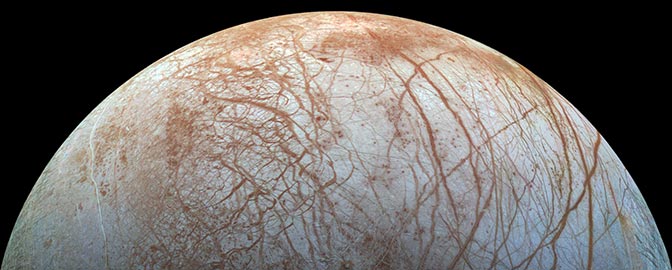
In 2024, NASA’s Europa Clipper left Earth on a journey to one of the most tantalizing destinations in our Solar System — Jupiter’s icy moon Europa, where a vast subsurface ocean may hold conditions for life.

NASA’s Jet Propulsion Laboratory’s Bob Pappalardo has been waiting longer than most. As Europa Clipper’s project scientist, and a Planetary Society member since 2006, Bob has spent two decades bringing this mission to life. “Europa is one of the key targets in understanding whether there might be other life in our Solar System today,” he told Planetary Radio nearly 20 years ago.
If Europa’s ocean harbors life, scientists say, it would offer historic proof that life in the Universe is not a miracle, but a pattern. Members like Bob — and like you — helped secure this mission.
On December 3, look up as the Clipper ship skims our atmosphere. That spacecraft overhead is, in part, yours.
Before Dec. 31: Two ways to give more wisely
Unlike Clipper on its long journey to Europa, December has a way of arriving faster than expected. If you’re considering a year-end gift to the Society, two giving strategies are worth knowing about — and acting on — before the calendar turns.
Qualified Charitable Distributions (QCDs) If you are 70½ or older and have a traditional IRA, a QCD may be the most tax-efficient gift you can make. A QCD allows you to transfer up to $111,000 directly from your IRA to a qualified charity — without the distribution counting as taxable income. It also satisfies part or all of your Required Minimum Distribution. Unlike a standard cash gift, a QCD reduces your adjusted gross income whether you itemize or not, making it valuable under the new 2026 deduction rules. The deadline is December 31st. Act before year-end to ensure your QCD counts for the 2026 tax year.
Donor-Advised Funds (DAFs) If you’ve already funded a DAF, year-end is an ideal time to recommend a grant to the Society. The process is straightforward — log into your DAF account, select The Planetary Society as the recipient, and submit your grant recommendation. A DAF gift can even cover your membership dues, with one important step: because membership can include tangible benefi ts, you’ll need to decline those benefi ts for the gift to qualify. You can do this through a note in your DAF manager’s system or by sending us a brief email at [email protected].
If you have any other questions or concerns, visit planetary.org/giving. We’re always happy to help.
Member spotlight: Lorne Trottier
I’ve been fascinated by science and the wonders of the universe since I was 11 years old. I grew up during the dawn of the space age and have followed it closely ever since. I’m a big fan of Carl Sagan and greatly enjoyed the Cosmos series. I joined The Planetary Society as soon as I heard about it. I enjoy sharing my enthusiasm for space exploration with others. It’s been exciting to participate in Planetfest and other Planetary Society events.

The search for life beyond Earth is the main mission I’m committed to today. The Universe is vast and there are many places to look. Within the next 50 years we will have the means to find evidence for life past or present on Mars and other Solar System bodies, and even on exoplanets using powerful space telescopes. A human landing on Mars with safe return would be the greatest voyage in history.
To any new members - as a new member, you will have a front row seat on the quest to understand the Cosmos and to answer the question: are we alone in the Universe? The Planetary Society also has a strong voice in influencing space policy. Your membership allows you to be part of this journey
New Tax Rules for Charitable Giving
Last year’s One Big Beautiful Bill Act of 2025 introduced meaningful changes to how charitable gifts can be deducted, with some good news for non-itemizers and some new limits for those who do itemize. If you haven’t reviewed how these changes affect your giving, check out our plain-language summary at planetary.org/taxwise.
We'd love to hear from you
Momentum is how we share our progress toward the goals of our strategic vision, Together, We Explore — including practical tips for tax-wise giving and stories about the impact of your support. Your feedback on our fi rst issue helped shape this one. Keep the conversation going at: planetary.org/momentum-feedback.
Momentum is a quarterly newsletter that is mailed to our charter members. In addition to this web version, you can also view a PDF of the print version of this issue.
You Power the Next Great Discovery!
Fund future scientific research that advances space science and exploration with your gift today.
Donate