

 Explore Worlds
 Find Life
 Defend Earth

Astronomers thought JWST might find signs of life. Now they have a new plan.


A few weeks ago, scientists unveiled the results of studying a planet light-years away using the James Webb Space Telescope. They found the world, called LHS 3844 b, has no detectable atmosphere. It seems to be a bare, uninhabitable rock, like a larger version of Mercury.
Half a dozen versions of this story have played out over the past few years. Despite astronomers’ hopes for JWST, humanity has found no solid evidence of another world with Earth-like conditions, one that could host life similar to us.
But we are closer to that goal than the headlines of desolate planets suggest. Lessons from JWST are helping uncover what makes worlds like LHS 3844 b end up so barren, and it’s changing how and where scientists search for life beyond the Solar System. Two efforts are taking shape — one on Earth and one in space — that focus on different kinds of stars and face distinct obstacles. Both offer what, to many astronomers, is our first substantial chance of discovering evidence of life around another star.
Fighting for air
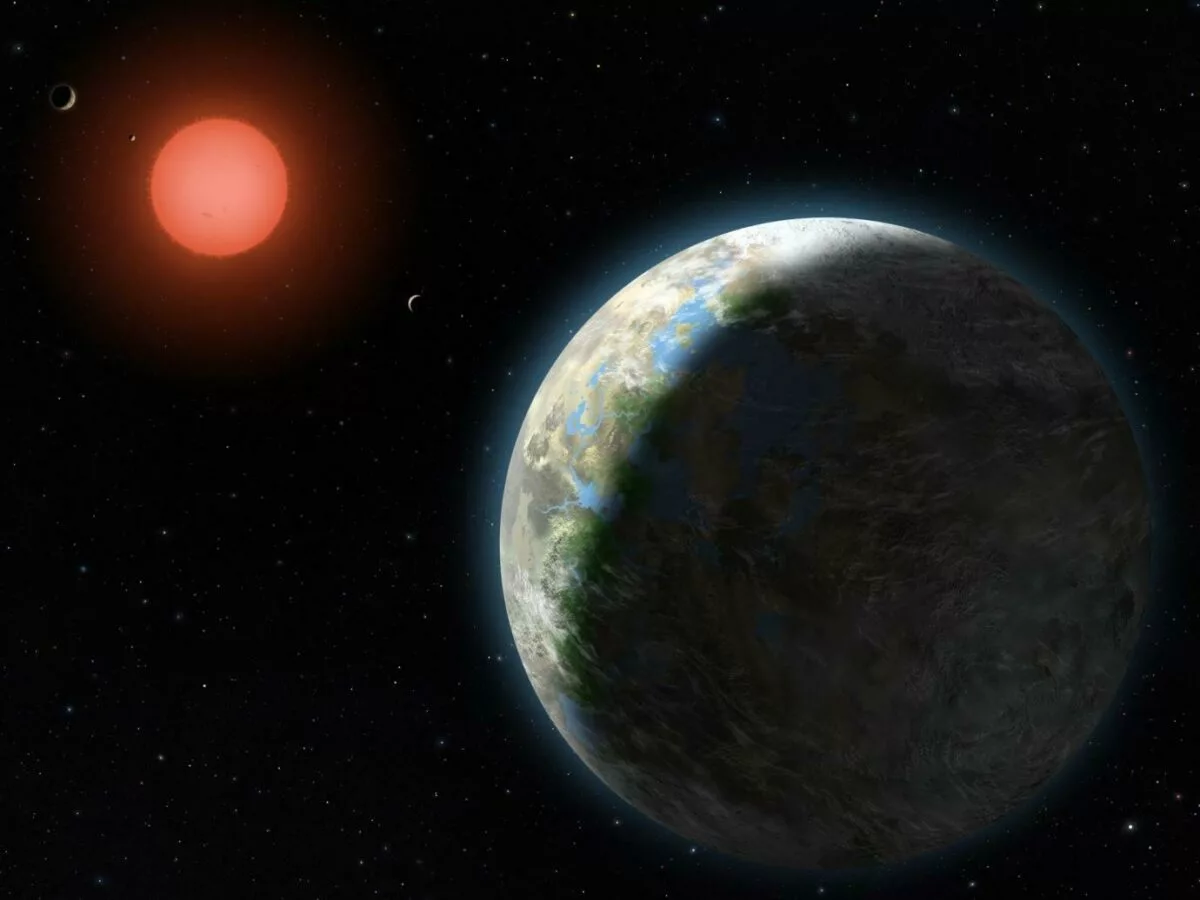
Back in 2021, the prospects for finding life on a planet beyond the Solar System, or “exoplanet,” looked very different. The James Webb Space Telescope had just launched, and although finding extraterrestrials was not its main goal, astronomers had grand plans to use it to peer into the atmospheres of distant worlds and look for the chemical hints of life. But so far, JWST has found no hints of atmospheres, let alone life, around most of the rocky exoplanets it has studied.
“It’s making people very concerned,” said Evgenya Shkolnik, professor at the School of Earth and Space Exploration at Arizona State University. “We were all hopeful early on.”
The issue seems to be with the kinds of stars JWST is exploring planets around: M dwarfs, the most common kind of star in the galaxy. M stars are cooler and dimmer than the Sun, which means a planet would have to orbit much closer to them to be at the right temperature to host life as we know it. In some ways, that’s a boon, because JWST has an easier time observing planets closer to their stars. But M dwarfs are also active, throwing off more flares and high-energy radiation than the Sun. Over time, that can strip away any atmosphere from a close-in world like LHS 3844 b.

Since most planets in the galaxy likely orbit M dwarfs, that could bode poorly for the search for life. Yet JWST is also only sensitive to the sorts of big, puffy atmospheres that M dwarfs are most likely to erode. According to Shkolnik, a thinner atmosphere more similar to Earth’s could still exist on some of the exoplanets JWST has studied.
But to spot them, we need a bigger telescope.
Extremely large, incredibly close?
Enter the European Southern Observatory’s Extremely Large Telescope (ELT), which will be the largest optical/infrared telescope on Earth upon its completion in 2029. Unlike JWST, which is mostly limited to studying exoplanets as they happen to pass in front of their stars, the ELT will search for life by studying worlds directly. That will let it target different planets than JWST. Over months, or perhaps years, it could build up clear enough views to spot a telltale sign of life.
“The ELT may be our only avenue for this [search for life beyond the Solar System] for the coming decade,” said Jayne Birkby, professor at Oxford University, in a presentation to the European Astronomical Society.

Such a discovery is not guaranteed, though. The ELT may be able to spot thin atmospheres that JWST cannot, but it will still be looking at planets around M dwarfs. Even if those stars don’t strip away the atmospheres, their activity can mimic or drown out signals from their planets. That could slow a future discovery of a sign of life with the ELT, or make one less definitive.
“It will be possible, but very difficult,” said Ignas Snellen, professor and scientific director at Leiden Observatory, in an interview with Scientific American. Snellen says that, though he is in his fifties, he hopes to observe one possible sign of life (oxygen) during his career.
A new look
For the next decade, then, humanity’s prospects of finding life on exoplanets depend on how M dwarfs behave. But in the more distant future, a mission will expand humanity’s search to another kind of star — one that offers no such uncertainty.
“We only have one sample in this whole Universe at this moment about where life exists, and it's on an Earth-like planet around a Sun-like star,” said Heidi Hammel, Vice President for Science at the Association of Universities for Research in Astronomy and Vice President of The Planetary Society’s board of directors. “That's why we need the Habitable Worlds Observatory.”
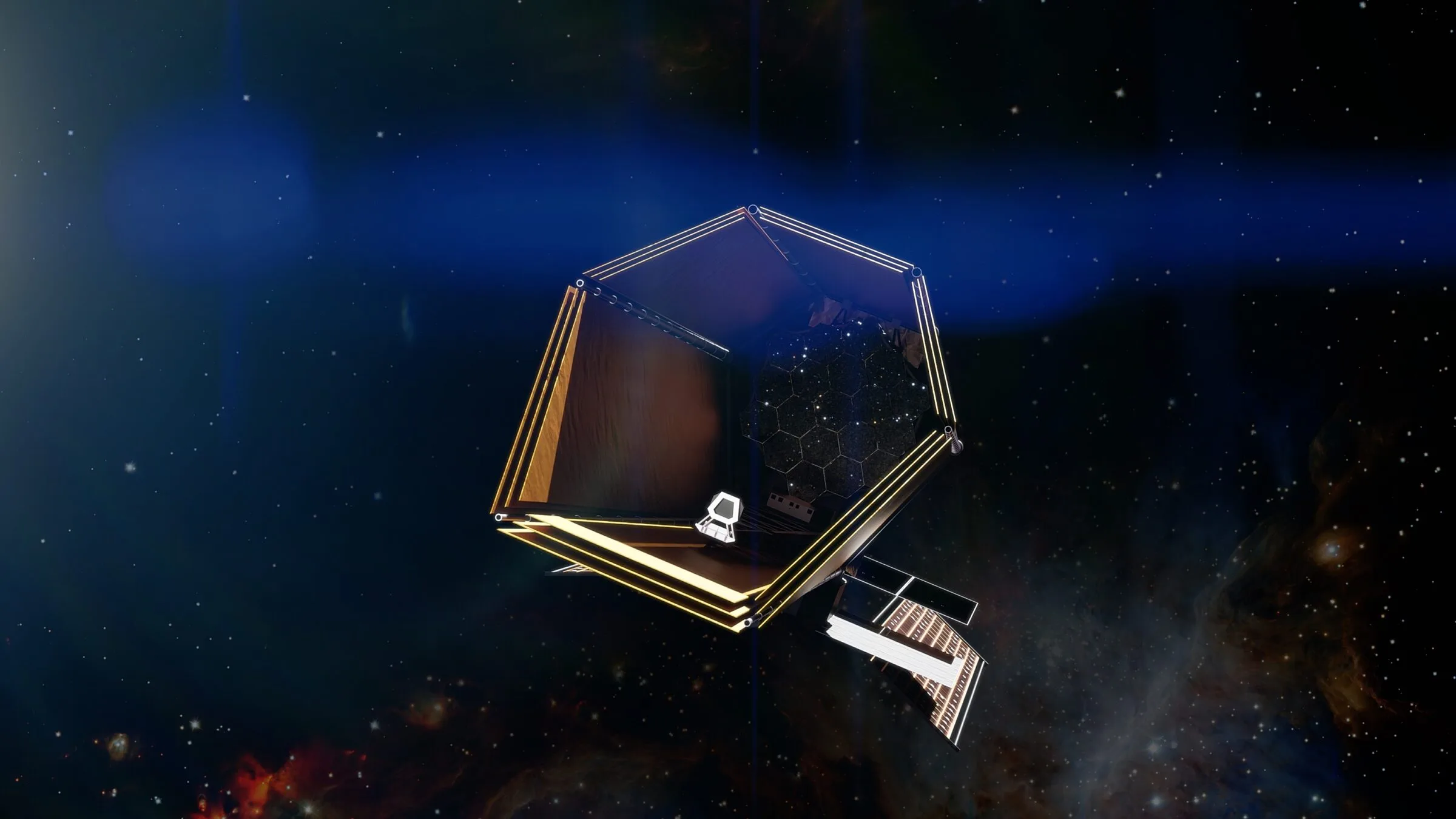
The Habitable Worlds Observatory (HWO) will be NASA’s next flagship space telescope for astrophysics and is now under development for launch in the 2040s or possibly earlier. As the name suggests, HWO is specifically designed to find Earth-like exoplanets and search for evidence of life on them. It would survey stars like the Sun, aiming to explore dozens of true Earth “twins.”
This comes with two major added benefits. Even if HWO found no signs of life, the telescope could survey enough planets to put the first strong limit on how often detectable life arises on Earth-like worlds. That would bring humanity one step closer to an ultimate sense of how common life is throughout the galaxy.
At the same time, the observatory would usher in a broader “golden age” of planetary science, Hammel says, because any telescope that can discover Earth twins would also turn up larger, easier-to-spot worlds. “You're going to clean up on Jupiters,” Hammel adds. “You're going to clean up on Neptunes.”
HWO might not stop at finding life on one exoplanet, either. As Shkolnik puts it, astronomers rarely “discover just one of anything.” Instead, when they find something like a new kind of planet or star, they almost always spot more examples of it. Whether with HWO or some other way, she says, if humanity uncovers alien life one time, you could bet on finding more.
No done deals
Still, HWO will have its work cut out for it. Even if it is lucky enough to detect a promising signal from a planet, Hammel says, the mission’s science team will need to be able to tease out all the relevant information they can to build up a complete picture of what the signal might mean in its context.
“You know there's methane on Neptune, too, but that doesn't mean that there's cows there, right?” she said.
Focusing on stars like the Sun also comes with a tradeoff. While we know from our own experience that an Earth-like planet around a Sun-like star can host life, astronomers aren’t sure how common such worlds actually are. Current estimates range from roughly one potentially Earth-like world existing for every six stars, on average, to at least one such planet existing around every star. Though HWO is being planned with this range in mind, if Earth twins turn out to be rare, HWO could have too few targets for its survey to mean much.
Shkolnik, who is co-chair of the Community Science Instrument Team that helps guide HWO’s design, still says our “fastest bet” to finding life on exoplanets is through the mission.
“If I didn't think HWO could do it, I wouldn't be working on it,” she said.
Always tell me the odds
So, how close are we to finding life on exoplanets?
“I'm betting that we're going to need Habitable Worlds to really answer the question, ‘Are we alone in the Universe?’” Hammel said. And yet, she adds, every planet JWST explores has the potential to surprise us.
“It's always possible that something crazy happens,” Hammel said. “We could be one observation away.”
You Power the Next Great Discovery!
Fund future scientific research that advances space science and exploration with your gift today.
Donate