

 Explore Worlds
 Find Life
 Defend Earth


Are we ready to send humans to Mars?
The physiological challenges of a mission to the red planet

Written by
Mark Shelhamer
June 8, 2026
Around the time of Apollo 11, when Wernher von Braun was asked about what stood in the way of sending humans to Mars, he reportedly answered, “political will.” But recent events (including a medical evacuation from the International Space Station in January) suggest that politics might not be the greatest impediment. Instead, it may be the ability to maintain human health and performance at a level sufficient to make the trip worth the effort.
Could we send humans to Mars today? Yes, given the right rocket capability and spacecraft. Would the crew survive and return to Earth to tell the story? Probably — but not certainly. Would they be able to engage in a vigorous program of exploration and discovery worthy of the personal and national effort and sacrifice that it took to make the mission possible? Almost certainly not.
To understand why, consider the scale of what we are attempting.
The ISS orbits about 400 kilometers (250 miles) above Earth, protected from deep-space radiation by our planet’s magnetic field, within easy and rapid abort distance, and with instantaneous communication with mission control. ISS missions are typically six months, with occasional journeys of up to a year.
Lunar missions — Apollo and now Artemis — are at least an order of magnitude more challenging. The Moon lies roughly 1,000 times farther away than the ISS, so radiation protection is minimal, and abort options take days, not hours. Communication with mission control is delayed, though only by seconds. Missions last a few weeks at most. Apollo was extraordinarily ambitious — and incredibly dangerous.
Mars is another leap entirely. On average, it is about 500 times farther from Earth than the Moon. There is no abort capability and little to no assistance from Earth due to distance and communication delays of up to 20 minutes one-way. A Mars mission would last roughly three years. It is most assuredly not just “more of the same” of what it took to get people to the Moon.
Various specific aspects of this type of mission are already under study. ISS missions provide data on long-duration weightlessness. Extended time in closed habitats, such as NASA’s HERA or CHAPEA, mimics the isolation and confinement of spaceflight. Antarctic winter-overs simulate these same conditions, with the added factor of an extreme environment. Weeks or months of bed rest with the head tilted down by 6 degrees can even replicate some of the effects of extended weightlessness, such as muscle atrophy and fluid shift toward the head.

But an actual trip to Mars will be the first time all of these stressors are present at the same time, for a long period of time, with no way to exit early, and with no chance for help from mission control. A Mars mission has the additional factor of extensive deep-space radiation, which is not a factor in other spaceflights. It is the interaction of multiple stressors across multiple body systems and spacecraft systems that defines the true challenge of sending humans to Mars and demands new ways of thinking.
Many of the medical risks are understood, even if not fully solved.
The body is efficient and clever. If it does not need a certain capability, the body will shed that capability and the metabolic cost of maintaining it. In the weightlessness of space, the body does not have to fight against gravity to stand upright, maintain blood flow to the head, and keep strong bones and muscles. So, bones lose calcium and get weaker, muscles atrophy, and the heart weakens. Astronauts aboard the ISS exercise for about two hours daily, partially off setting these effects, but a Mars spacecraft may not accommodate that level of exercise. Even on the planetary surface, it’s not yet known whether Mars’ 0.38g gravity would sufficiently mitigate these same medical issues.
The immune system also changes in space, as does the human microbiome (the microorganisms that live on our skin and in our gut). Immune changes include “viral shedding” — the reactivation of latent viruses like chickenpox and shingles. Studies show that spaceflight stressors such as workload, isolation, and confinement can lead to similar effects; it is not spaceflight per se that causes the problem. Even though viral shedding has not yet led to serious illness in space, extrapolating from six-month missions to a three-year Mars expedition is not comforting.
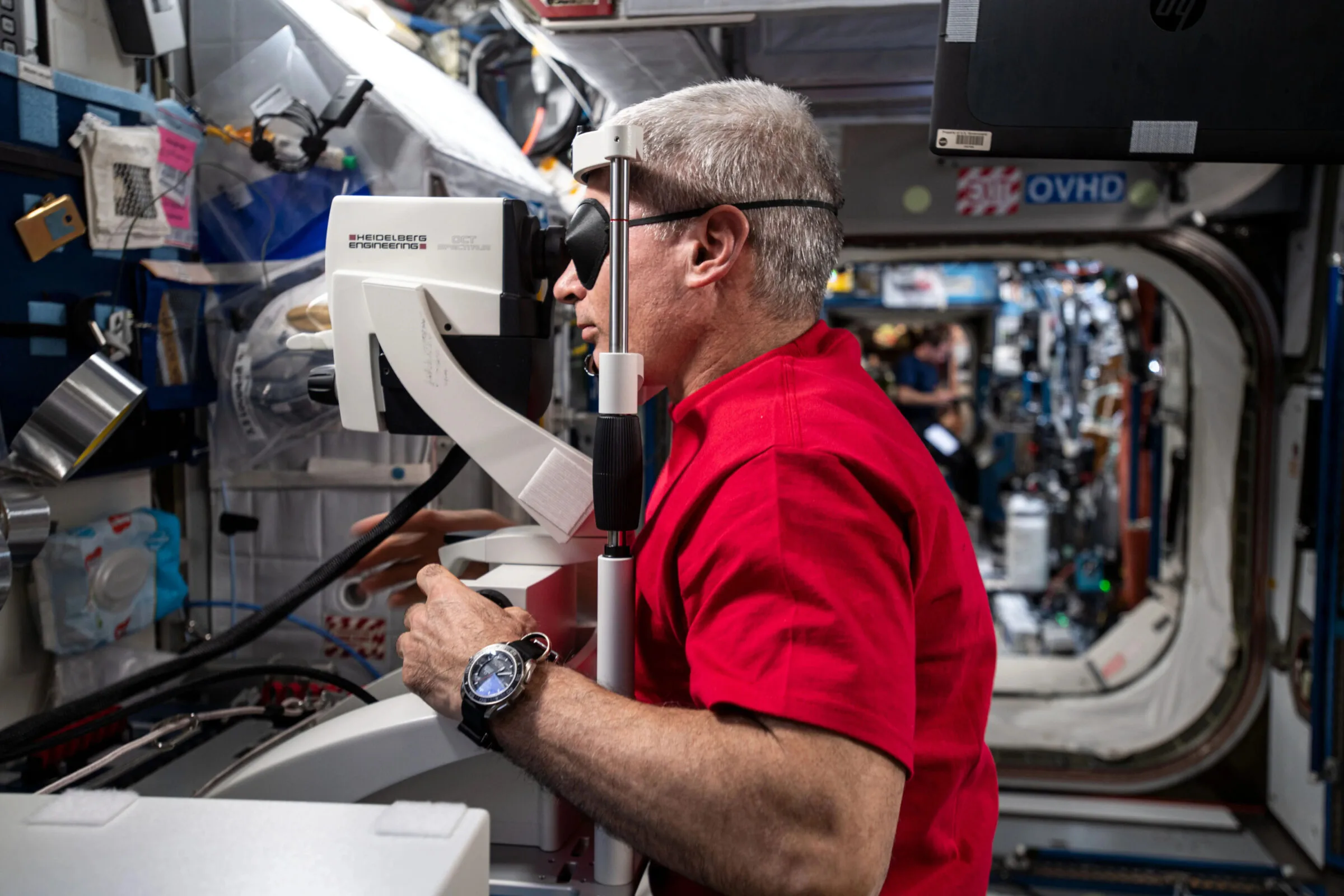
Vision changes present another concern. Since around 2011, astronauts returning from the ISS have reported altered visual acuity. In weightlessness, body fluids such as blood and cerebrospinal fluid tend to shift toward the head, which increases intracranial pressure. Some research suggests that cerebrospinal fluid can flow down the optic nerve from the brain to the eye, pushing on the back of the eye, distorting it, and even damaging the retina. This is an alarming situation for high-performing individuals in a demanding environment far from home. More alarming is the possibility that after three years, this increased fluid pressure might cause damage to brain tissue. In fact, some slight but (so far) reversible changes like this have been seen in ISS astronauts after flight. No body system is unaffected.
There are also cognitive and psychological impacts. Astronauts are very special people — rigorously screened and trained, highly motivated, mission-oriented — yet they are still people. Even rigorously selected, highly trained astronauts experience periods of depression, loss of motivation, and interpersonal conflict. Astronauts might be different in their ability to work through these problems in support of the mission no matter how challenging, but the effects of these psychological burdens can still take a toll on health and well-being.
Some astronauts describe the “space stupids,” where concentration and task performance in space become generally harder. Interestingly, standardized in-flight cognitive tests often fail to capture these perceived deficits. Nevertheless, given the many stressors inherent to spaceflight, even subjective effects can make it hard to perform normal work. And none of this would be any better on a mission to Mars.
Dealing with these known medical effects is hard enough, and there are countermeasures for some. But there are also unpredictable issues, and we don’t know how to deal with those yet.
Take a recent example: an episode of deep-vein thrombosis (a blood clot in the jugular vein) in an astronaut on the ISS. After 60 years of sending people into space, this was the first time this phenomenon happened, and it was discovered by accident. The condition was managed through consultation with medical experts and rapid delivery of medical supplies to the station, but on Mars, that would not have been an option; the situation could have been fatal.
What can we learn from this? No matter how well prepared, the unexpected will happen. Mars crews must be ready to not only deal with known problems but to develop new approaches to unforeseen emergencies in real time with no immediate help.
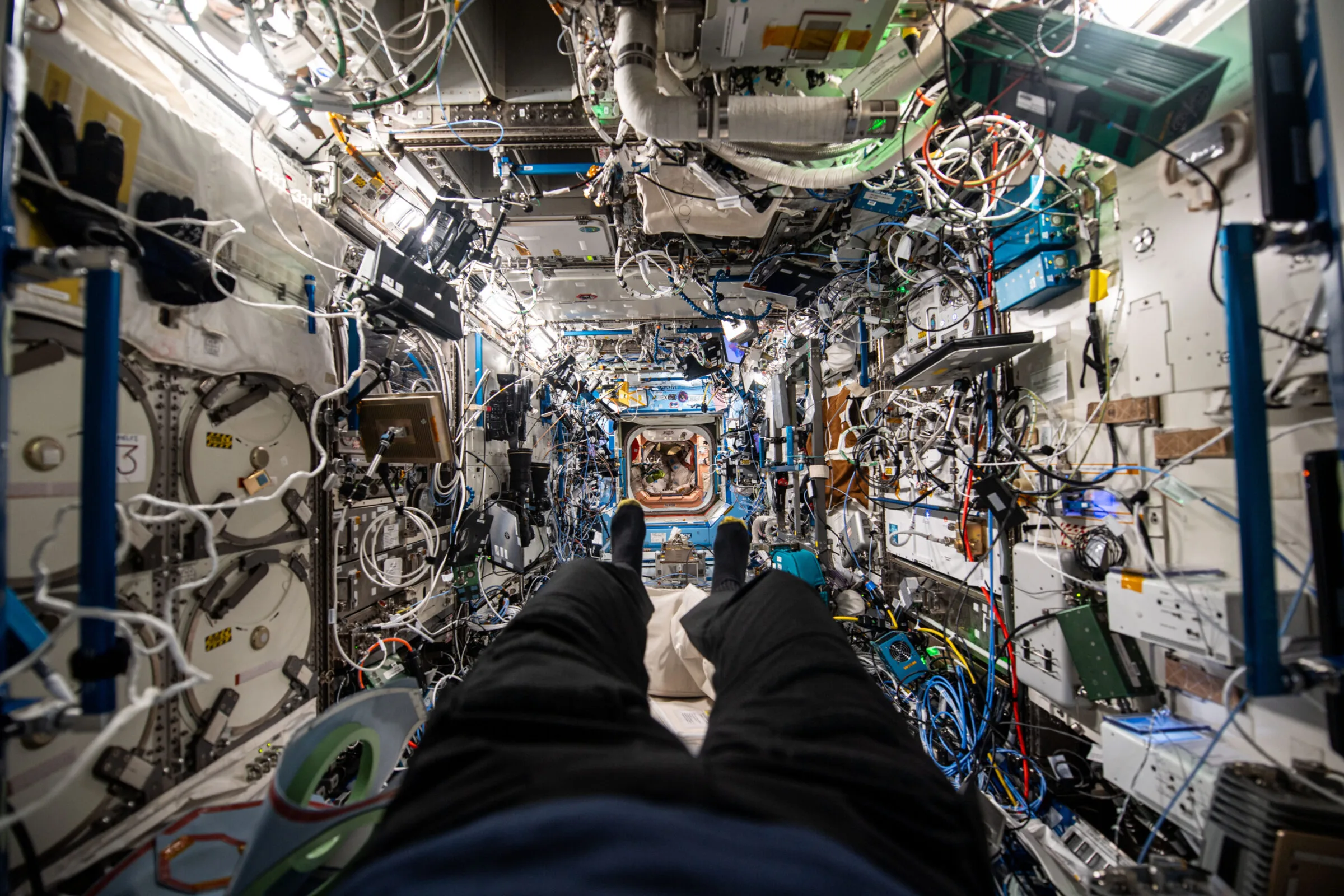
This challenge extends beyond medicine. A Mars expedition is a complex, interdependent system of systems: crew, spacecraft, procedures, operations, and mission goals. The mission must be resilient. When things start to break down, when the crew faces the unexpected, and when anomalies that were not anticipated occur, the mission must go on, even with reduced capability and changed goals.
That means developing onboard systems capable of detecting when subsystems are not working properly and when they are not working together in harmony. Artificial intelligence and machine-learning tools can detect anomalies, alerting the crew and, if possible, diagnosing the problem, providing early warnings of later, larger problems.
Such approaches push beyond the traditionally conservative culture of spaceflight planning and engineering. But this is not grounds for despair. Building multisystem resilience for Mars will not only enable safer exploration; it will deepen our understanding of complex human systems on Earth.
Designing missions to promote this type of multisystem resilience is not easy. It depends on, among other things, understanding the functional interplay among the many mission subsystems — not only how different body systems interact but how the crew interacts with each other, with mission control, with the spacecraft, and with the mission plan. There are, unfortunately, all too few organizations making efforts to break down the disciplinary silos that impede this type of thinking. NASA is not there yet, but hopefully, recognizing the need for this in human spaceflight will provide the impetus for a more rigorous and widespread approach across many fields where we depend on complex human-machine systems: air traffic control, nuclear power, and medical infrastructure.
NASA likes to highlight the terrestrial spin-offs from space travel, such as microelectronics and biomonitoring. Still, astronauts don’t risk their lives for mere technological advancements. They do so for exploration, including, just perhaps, a mission to Mars that would push the boundaries of not only planetary science but also human knowledge — about physiology, psychology, resilience, and what it truly takes to live and thrive beyond Earth.
Protect Our Shared Future
You help us defend humanity and prevent asteroid impacts. Donate now to become a Planetary Defender!
Donate
The Planetary Report • June Solstice
Help advance space science and exploration! Become a member of The Planetary Society and you'll receive the full PDF and print versions of The Planetary Report.