

 Explore Worlds
 Find Life
 Defend Earth
Planetary Radio Episodes
Since 2002, Planetary Radio has visited with a scientist, engineer, project manager, advocate, or writer who provides a unique perspective on the quest for knowledge about our Solar System and beyond. The full show archive is available for free.

After a special message we present highlights of the successful arrival at the International Space Station of the Crew Dragon spacecraft, followed by a visit to chilly Mars with planetary scientist Edgard Rivera-Valentin.

Astrophysicist and former astronaut John “Hubble Repairman” Grunsfeld looks back over three decades of beautiful science and inspiration delivered by the Hubble Space Telescope.

JPL scientist Kevin Hand is endlessly fascinated by the possibility of life in the hidden oceans of the outer solar system’s moons, and now he has written a great book about the quest to discover it.

Philosopher James Schwartz shares his thoughts about the ethics of space exploration, commercialization, and settlement.

The search for life on Mars is at a critical stage. What will come next if we find it?

Physicist and author Paul Davies returns to talk about his new book that explores the defining role information plays in life on Earth and perhaps elsewhere.

Casey and his guest discuss a bill working its way through the US House of Representatives that challenges the Artemis plan adopted by NASA for human exploration of the Moon and Mars.

We talk with two of our 2019 Shoemaker NEO Grant winners, who received funding to help find, track, and characterize potentially hazardous asteroids.

As the 2010s come to a close, Marcia Smith, the founder of Space Policy Online, rejoins the show to explore the most significant and impactful space policy decisions of the 2010s.

How can a simple report—just words on a page—lead to creation of a spacecraft? We explore how a 2019 report on the need for a dedicated, space-based telescope to find threatening near-Earth asteroids motivated NASA to pursue that very mission.

Planetary scientist Vishnu Reddy studies space objects ranging from satellite debris to planet-killing asteroids. He shares the status of our effort to avoid the fate of the dinosaurs in a conversation with host Mat Kaplan. Did you know fruit flies were first in space? That’s just one of the random space facts you’ll absorb in this week’s What’s Up segment with Bruce.

As NASA struggles to return humans to the Moon by 2024, it's worth asking: why did it stop in the first place? Space historian John Logsdon joins the show to discuss the politics behind the decision to abandon the Moon in 1972. Casey and Mat also discuss the proposal to offer a $2 billion prize for sending humans back to the Moon and establishing a base there, and why that's not good public policy.

Rick Davis is the perfect person to co-lead NASA’s Mars Human Landing Sites Study. No one is more devoted to putting human bootprints on the Red Planet. He returns to Planetary Radio for this inspiring and informative conversation about our progress. Bruce Betts leads off What’s Up with another brief LightSail 2 update. The Planetary Society’s solar sailing cubesat continues to raise its orbit.

Host Mat Kaplan in a long and fascinating conversation with Nicholas de Monchaux, author of Spacesuit: Fashioning Apollo. This great book is about much more than creation of the suits that allowed humans to walk and work on the Moon. Jason Davis shares pointers on looking for LightSail 2 overhead, while Bruce Betts provides a solar sail update in this week’s What’s Up. And you might win a Planetary Radio t-shirt!

Did the public support Project Apollo? Dr. Emily Margolis joins the show to explore the domestic politics and cultural impact of the space age throughout the 1960s. Despite the success of the lunar landings, there was more opposition to Apollo than we generally remember.

Join us as the little cubesat successfully unfurls its solar sail! You’ll hear from members of the LightSail 2 mission team on the morning of July 23, 2019, when the critical command was sent to the spacecraft.

Poppy Northcutt was a pioneer—the first woman to work as an engineer in Apollo Mission Control. The program she helped to create got the astronauts back to Earth. Fifty years later, she sits down with Mat Kaplan for a look back.
Space historian Dr. Roger Launius joins the show to explain why Apollo happened the way it did, how a moonshot briefly became a solution to a national security problem, and why it is unlikely to happen again.
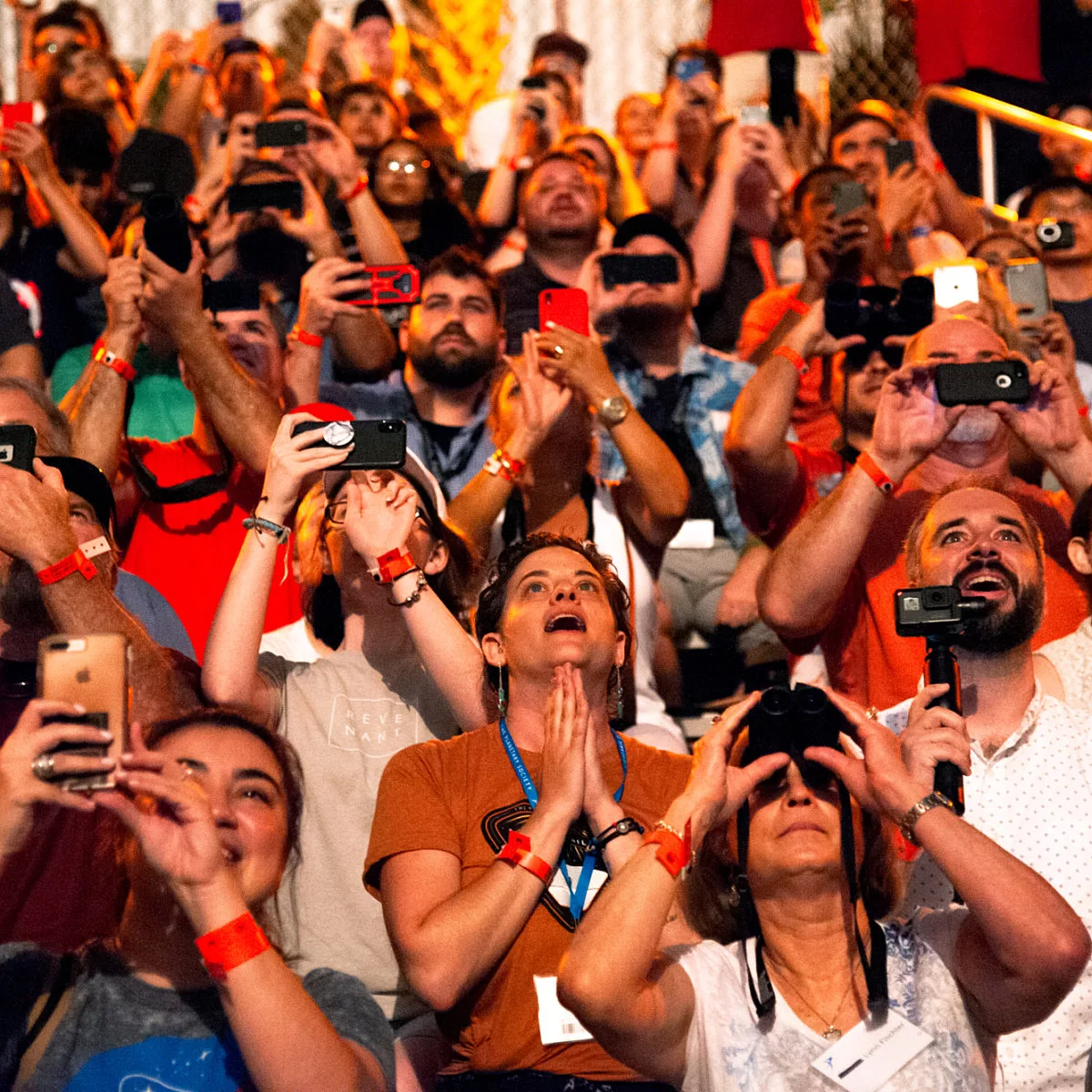
A giant SpaceX Falcon Heavy lifted off in the early hours of June 25th. One week later, the LightSail 2 solar sail was released to begin its epic mission. You’ll join the thrilling launch, meet LightSail team members and leaders of other missions, and get a solar sail update in this very special episode.

The day is almost here. With the launch of a Falcon Heavy rocket, The Planetary Society will begin its mission to prove that a tiny, orbiting spacecraft can be propelled by the light of the Sun.