

 Explore Worlds
 Find Life
 Defend Earth


Planetary Radio Episodes
Since 2002, Planetary Radio has visited with a scientist, engineer, project manager, advocate, or writer who provides a unique perspective on the quest for knowledge about our Solar System and beyond. The full show archive is available for free.

Thirty years ago, Dr. Mark Albrecht led the National Space Council when President George H.W. Bush announced the Space Exploration Initiative, an ambitious effort to send humans to the Moon and then on to Mars.

There appear to be more mini-Neptunes (also known as Super Earths) across our galaxy than any other type of planet. Hannah Wakeford wants to learn if some of them support life, and she’s doing this by exploring their skies.

A rare alignment of planets and other objects will enable the solar-powered Lucy spacecraft to examine seven asteroids, six of which are among the thousands of Trojan asteroids that orbit ahead of and behind Jupiter. The mission team, include Hal Levison, Cathy Olkin and Mike Sekerak, hope to unlock secrets of our solar system’s origin through these ancient artifacts.

The Beresheet lunar lander failed in the last few kilometers of its descent to the Moon. Two days later we learned that its team would try again.

Can NASA return astronauts to the Moon by 2024? Vice President Mike Pence shocked the space community by announcing this ambitious new goal just weeks after the Trump Administration proposed a half-billion dollar cut to the space agency.
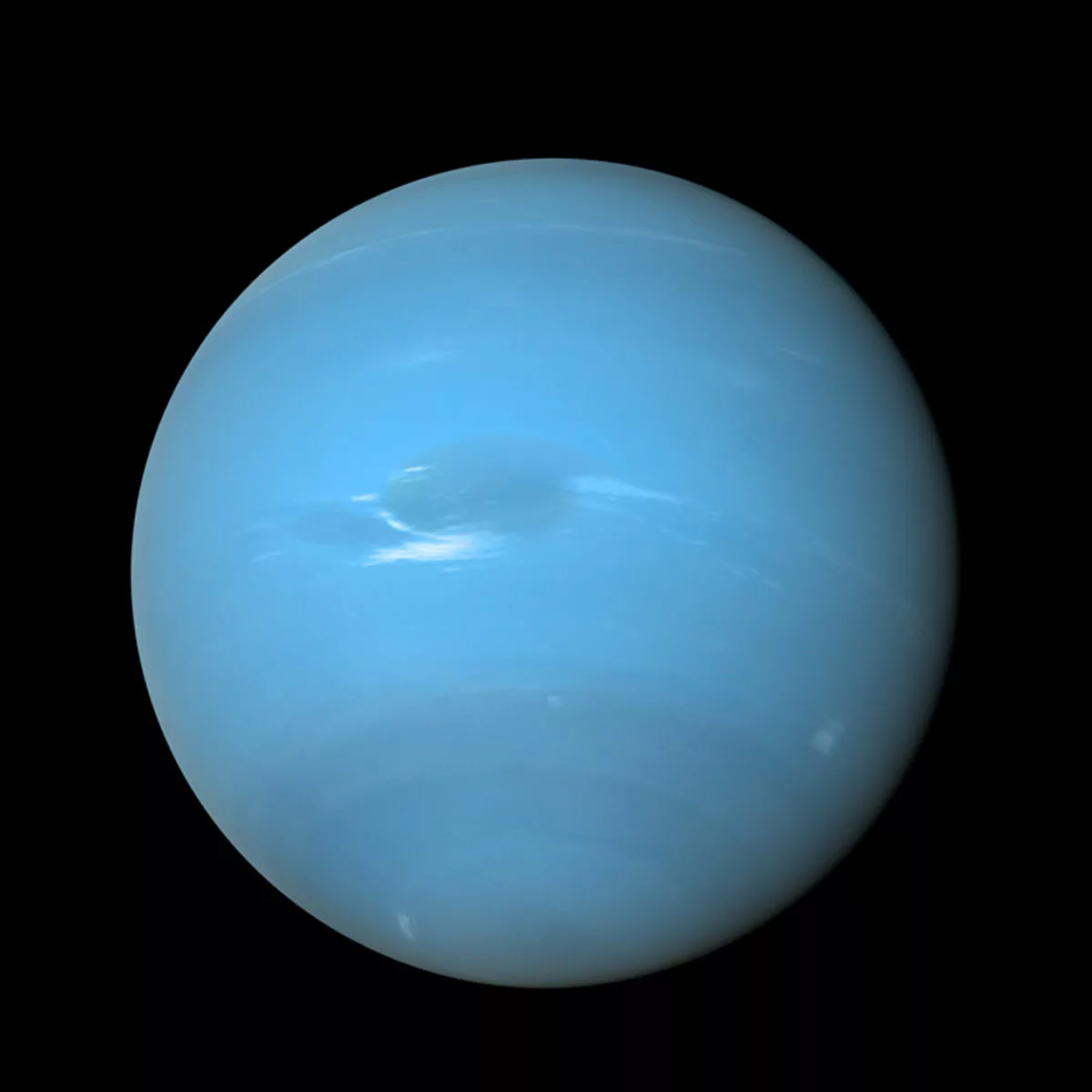
When will we return to Uranus and Neptune? Planetary scientist Amy Simon explains why a mission to the so-called ice giants is a high priority as she tells us about these mysterious, blue worlds.

With missions like Chang’e 4 on the far side of the Moon, China has firmly established itself as a leader in space exploration. Space journalist Andrew Jones helps us explore the nation’s ambitious near and long-term plans.

Historian John Logsdon discusses his new book, Ronald Reagan and the Space Frontier It explores the legacy of the 40th president’s major space policy decisions. We look at four major topics: early efforts at commercializing space, the survival crisis for planetary exploration, the Space Shuttle, and the decision to build the space station.

Non-profit SpaceIL’s Beresheet is on its way to the Moon. Only China, the Soviet Union and the United States have safely landed there before. Host Mat Kaplan talks with SpaceIL Senior Systems Engineer Yoav Landsman, while MaryLiz Bender hears from a team member who attended the launch.

magine soaring over what may be the solar system’s most Earth-like world, if you ignore the chill. If funded, the nuclear electric-powered Dragonfly will do exactly this. Principal Investigator Elizabeth “Zibi” Turtle shares her enthusiasm.

Join us at the Applied Physics Lab in Maryland for the New Horizons encounter with the most distant object ever visited. You’ll meet mission leaders, friends and even a rock and roll star as we dive deep into this triumph of exploration.

The New Horizons spacecraft will reach faraway Kuiper Belt object 2014 MU69 in the first minutes of 2019. Will the body informally known as Ultima Thule be as mysterious and exciting as Pluto?

You haven’t seen the best pictures from the Apollo era and other great space achievements till you’ve seen them in 3D. Queen guitarist and astrophysicist Brian May is also mad about stereoscopic imagery.

Host Mat Kaplan begins a two-episode visit to Huntsville and the Marshall Space Flight Center, recorded this week at the US Space and Rocket Center with astronaut Don Thomas, 94-year-old Apollo engineer Alex McCool, and Alabama Senator Doug Jones.

Pluto passed in front of a star on the evening of August 14. Mat Kaplan joined pro and amateur astronomers on a mountain to observe this rare event. It may reveal more about the dwarf planet’s tenuous atmosphere and other properties.

We have so much to learn about Venus, says JPL scientist Sue Smrekar. What we learn will help us understand our own world and Mars.

There’s so much more to Freeman Dyson than the Dyson Sphere. The mathematician, physicist, futurist and author is one of the greatest and most original minds of our era.

After taking over 10 million images of more than 30,000 solar system objects, the NEOWISE mission is finally in its last months. Principal Investigator Amy Mainzer returns with an update on this phenomenal success and a look ahead toward a much more powerful asteroid and comet hunter called NEOCam.

The longtime editor of outstanding online space news source Universe Today has just written about nine robotic missions of exploration in

OK Go has gone where no band has gone before to make a music video. Mat talks with Damian Kulash and Tim Nordwind about the hazards, thrill and promise of making art in free fall.