

 Explore Worlds
 Find Life
 Defend Earth


Planetary Radio • Apr 17, 2026
Book Club Edition: Founder and CEO Peter Beck on The Launch of Rocket Lab
On This Episode

Sir Peter Beck
CEO and Founder of Rocket Lab
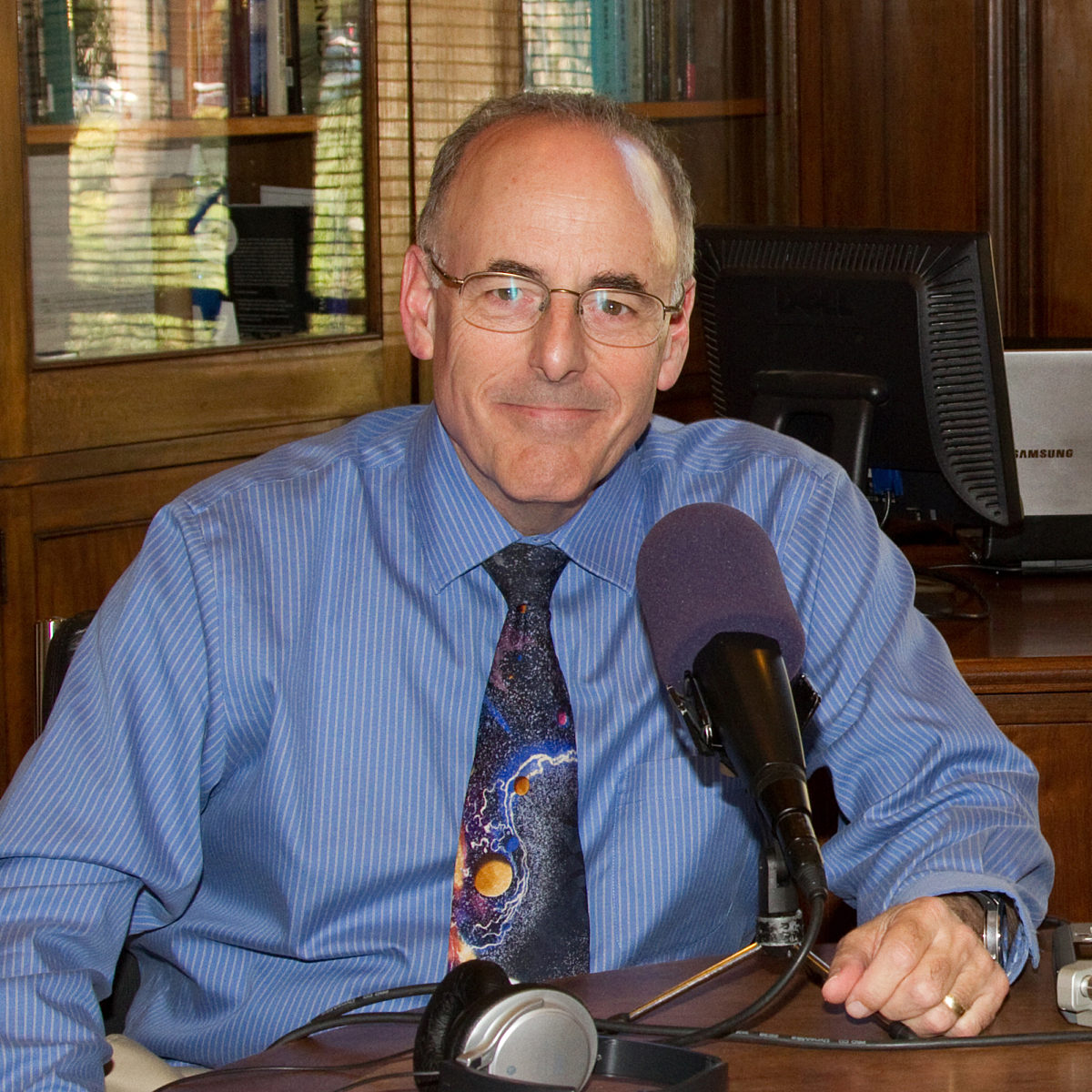
Mat Kaplan
Senior Communications Adviser and former Host of Planetary Radio for The Planetary Society
He built a rocket-powered bike when he was a kid. Now he leads the company that has made New Zealand number three among nations that launch big rockets, following the United States and China. Sir Peter Beck joins us for a deeply revealing and entertaining conversation about “The Launch of Rocket Lab,” the beautiful book that tells his and Rocket Lab's inspiring story. His dedication to advancing planetary science missions will make members of The Planetary Society proud!


Transcript
Mat Kaplan: Rocket Lab founder and CEO, Peter Beck, this time on Planetary Radio Book Club edition. Hello again, everyone. I'm Mat Kaplan with more of the human adventure across the solar system and beyond. Which nations launch the most rockets? The answer is the US followed by China, followed by New Zealand. That third place performance is entirely thanks to a company called Rocket Lab. This amazing organization's birth and success are documented in a wonderful book by Peter Griffin called The Launch of Rocket Lab. It was our February selection in The Planetary Society's member book club, and it's why I welcome the company's leader for the conversation you're about to hear. Sir Peter, yes, he has been knighted, will tell us about his earliest adventures with Rockets, including his rocket powered bicycle, how he and a dedicated team have built and launched more rockets than just about anybody but SpaceX.
How Rocket Lab has become much more than a rocket builder and his dedication to exploration of the solar system. As always, the video of our livestreamed event is available at planetary.org. Are you new to Planetary Radio? You'll open up so much more of the cosmos when you subscribe in your favorite podcast app. In addition to the weekly show with host Sarah Al-Ahmed, you'll catch our monthly space policy edition. I'm here with the book club every third Friday. Okay, let's get started with Sir Peter. My first task was just to hold up the book. It's hard to pick up with one arm, as I told Peter a moment ago. There it is, the launch of Rocket Lab. What a gorgeous book and what a fascinating tale it tells. And we will dive into that tale over the next hour or so as we welcome our special guest, Sir Peter Beck, the CEO and founder of Rocket Lab. Peter, thank you so much for joining us. We're honored.
Peter Beck: Oh no, my absolute pleasure.
Mat Kaplan: You are coming to us, I think, from your studio in New Zealand, correct?
Peter Beck: Correct. Yep. No, today I'm in New Zealand.
Mat Kaplan: You get around, I'm sure, bouncing back and forth-
Peter Beck: Yeah, sure do.
Mat Kaplan: Between continents. Here's a quote from the beginning of the book. "Somewhere between unlikely and impossible is where magic happens." That's your quote. I think you found the sweet spot there, it appears to me with Rocket Lab.
Peter Beck: Yeah, no, it's true. And I think that sums up the company quite nicely.
Mat Kaplan: So here's another quote, and I think that this is from author Peter Griffin, who put the book together in collaboration with you and others at the company. "Its tale is not just about rockets and satellites, it's a narrative of human ingenuity, perseverance, and the unyielding drive to push beyond the boundaries of what's possible." I couldn't agree more. I mean, that is very much how the book impressed me. It is absolutely gorgeous. The images, the print quality. And because of the story it tells and those images, I think that space fans who may not even have heard of Rocket Lab, there must be one or two left on the globe, will still enjoy this book. And I know that our members have because we've been hearing glowing comments about it for the last more than a month now. So are you happy with the way it turned out?
Peter Beck: No, that's great. Yeah, no, that's fantastic. That's true. I mean, it was a project that initially started off as a relatively small thing and an idea where we thought, "Well, it would be nice to have a coffee table book of just images of beautiful hardware." And then as we started to kind of fill that out, and as you mentioned, Peter Griffin wrote the book and as Peter interviewed me and other members of the team, the book sort of just grew legs and ended up in that, as a weightlifting ornament that you just proved there. So it's like any good project, it starts off small and then just ends up much bigger than you expected.
Mat Kaplan: Like rocket science.
Peter Beck: Yeah.
Mat Kaplan: Here's an astounding fact from the introduction to the book, your introduction. At the top of rocket launching nations is the United States, China, and then New Zealand with that last entirely, thanks to your complex on the, am I pronouncing it correctly, the Mahia Peninsula?
Peter Beck: That's correct. Yeah, yep. No, that little spit out the side of New Zealand throws up a lot of rockets, that's for sure.
Mat Kaplan: It has to be the most beautiful spot on earth from which big rockets are launched. I really would love to visit someday. I hope to knock on the gate someday.
Peter Beck: Yeah, no, it is a truly, truly gorgeous launch site. Even on a rough weather day, it still has a certain magic to it.
Mat Kaplan: I got that from the book. It can only be better in person. I noticed as I was finishing my research, just checking in again on the company yesterday, that Rocket Lab is one of the sponsors of this year's American Astronautical Society Robert Goddard Space Science Symposium, which happens to pretty much coincide with the 100th anniversary of Robert Goddard's first successful launch, the first flight of a liquid fueled rocket. And I just wonder, do you draw a line between that event 100, a century ago and the work that you do now?
Peter Beck: Yeah, no, it's quite funny because you look back in history, and as all good rocket geeks do, you look back at history and you look at [inaudible 00:06:04] and von Braun and Goddard and all of those kind of folks. The history of the space industry, I find quite fascinating as well. So no, there's definitely a pretty straight lines between it all.
Mat Kaplan: Your passion for this stuff definitely comes across in the book and certainly in the work that you've done. I want to go way, way back because this is also documented in the book. Our members who've read it already know. Do you still have that rocket powered bike that you built as a kid lying around someplace?
Peter Beck: Yeah, I do. I do. It's hanging up in the rafters of my brother's workshop actually. But yeah, no, no, I still have that. I'm not sure that I would get on it again, to be honest with you. I think that was a different time, but my son started hounding me to ride it and I'm like, "Well, I'm not so sure we'll do that. I think you can go on and have your own misadventures, don't relive mine."
Mat Kaplan: I suspect that your board would not be thrilled to see you on a rocket powered [inaudible 00:07:02].
Peter Beck: Yeah, probably not. Yeah, probably not.
Mat Kaplan: It's clear though that you had this passion and this dream from very, very early on. And in the book, you give a fair amount of credit to your dad. Could you describe him a little bit? He obviously provided inspiration.
Peter Beck: My entire childhood sort of upbringing, it was never constrained by whatever you thought you could or couldn't do. I remember I would come home with something I wanted to build or something I wanted to do, and it was never constrained. If I came home and said, "I want to build a rocket engine." My parents wouldn't go, "Well, you be careful and maybe that's not a good idea." They would like, "Well, if you're going to build a rocket engine, make sure you build a really good big one." So I was surrounded in an environment where no idea was too big. And looking back, we had a lot of trust from our parents to go and do these kind of things. And you find yourself as a parent these days having to check yourself. It's like, wow, you've got to live a little bit because then the natural propensity is to protect. But the reality is, I was just lucky to have that environment where all of us kids could go and experiment and the expectation was that you do so even.
Mat Kaplan: Thinking about them just from the angle of engineering rather than what you can accomplish with them, why were, and I assume, why are rockets so appealing to you?
Peter Beck: It's the conversion of energy, to be honest with you, that I find very attractive. So if you look at like an internal combustion engine and you can convert some energy there and put it to work, that's great. But as a teenager, I sort of putzed around with internal combustion engines and cars and turbocharged stuff and did that kind of thing. And it quickly became very obvious that if you wanted to go really fast or harness really great power, then a rocket engine is really just skip right to the end. The engineering challenge also, like a rocket engine in particular is a very challenging thing to build a high performance and reliable one. So I really like hard engineering problems to solve, but even today, if I go to an engine static fire or something like that, and it's just the raw conversion of energy is just, it's something pretty cool.
Mat Kaplan: Yeah, I'll say. Your first time in the United States, you visit Edwards Air Force Base and you almost get arrested as a suspicious foreign national with a camera. But I'm more interested, there's one line on that page. I mean, say whatever you like about that, but the line that I was most interested in, because I love going out there to the Mojave, and it used to be there was this collection of startups there, all of whom we're hoping to build, get to orbit, meant some of them single stage to orbit, which we'll come back to. I read that one of the things you discovered as you wandered around there, if you avoided being arrested, is that a lot of these companies weren't that far ahead of what you were doing in your spare time, really?
Peter Beck: No, no, that's right. I mean, sitting in a small island nation on the other side of the world, and you see these amazing things, it's very easy to kind of position yourself as being very far away. There was a couple of major learnings in that trip, and that was indeed one of them, is I can remember going to visit one of these startups, and they developed an igniter, spark igniter engine, and they had an SBIR, and from memory, the SBIR was like a million dollars or something like that. And at that point in time, that was just the most insane amount of money I could possibly imagine.
I remember them showing me this spark torch igniter, and it was this poorly machine thing screwed to a piece of plywood, and I was like, "Really? For a million dollars, this is what you produced?" At that point, it was kind of experiences like that, that kind of realized that, "Hang on a minute, this beautifully machine spark igniter I've got at home that works nicely actually is better than this thing screwed to a piece of plywood costing a million dollars." So it was a real aha moment, really a real level up. It's like, "Hang on a minute, we're not as far away as we thought."
Mat Kaplan: So you realize, according to the book, that you're going to have trouble getting hired by NASA as a foreign national. So you go back home and work starts on that first rocket. Is it Atea, Atea-1?
Peter Beck: Correct, yep.
Mat Kaplan: Your first successful suborbital rocket, which was very successful. I mean, my goodness, it went above the Karman line on the first try. Pretty cool. I wonder, beginning with that experience, which was more difficult, designing and building a successful rocket or finding the team and the backers you needed to have a business that could create such things?
Peter Beck: It's funny because at the very beginning I used to worry about engineering problems and they used to be like the peak source of worry. It didn't take that long for me to sort of lose that as the peak source of worry because actually those engineering problems we could always solve. And even today, of course, you're always worried about them, but they're always solvable. And maybe with time comes a bit of arrogance in that respect, there's just never a problem we can't solve. But building a startup company in a country that had no space industry on the other side of the planet, and to your point, raising funding and building the company, I would say that that kept me awake at night much longer and much more often than solving technical issues, because I could always rely on the fact that there's technical issues, you can grind all you want. If you can't raise capital, then all that work goes away. Over the years, in reflection, I've equally enjoyed building the company as well as building the products. And they're two completely different skill sets, but still both you're creating things.
Mat Kaplan: And the company has certainly grown a great deal. We'll come back to that as well, but I have to ask again, I'll come back to where I started with that question. When you saw that first rocket with its hybrid engine, I'm fascinated by hybrid engines, the combination of liquid and solid fuel. When it rose into space, I mean, that must have told you, "We may be on the right track here."
Peter Beck: Yeah. I mean, I was very happy at the time because it had just been a couple of years of just solid work and setback. And it was many times in the company history where it was all on the line. And if something went poorly, that would have been it. And that was one of the earliest moments where if that had gone poorly, our ability to go and raise funding and do other work after that probably would have been pretty well diminished. Happy or relieved, probably relieved is the better emotion than happy because I knew that I could take that win and then go and use that to sell that for other projects and create investment and keep bootstrapping the company along.
Mat Kaplan: This suddenly made me think of something that's not in my notes, but I remember reading that nowadays you don't like to be in mission control during the launch.
Peter Beck: I hate it. I hate it. Yeah. No, I hate it. The thing is that it's both a superpower and a curse I've come to learn and is that I just care so damn much. When a launch is on the pad and I know that there's a customer satellite in the nose and they are 100% and completely reliant on us executing our job perfectly, the weight of that rests very heavy. There has not been a single launch that I've ever sat there, and I've watched every launch, that I've sat there and been relaxed about it. I'm always on the edge of my seat and the night before I'm not sleeping, which is a challenge because when you're launching every couple of weeks, it's just like this constant drain of adrenaline out of your body, just making sure that all these launches are successful.
Mat Kaplan: It sounds like your body is a victim of your own success.
Peter Beck: Very much so. Yeah. I have to say though, but it has got slightly better because my smartwatch would, after a launch, it would indicate, it would warn me that there's been strenuous physical activity and that I had a resting period required. So I don't do that anymore, so maybe there is some relief. But no, like I say, it's just when someone entrusts you, whether it's for a spacecraft or a launch or whatever, I take that incredibly seriously.
Mat Kaplan: All right. You have that initial great success. And then you take on this very ambitious effort to develop the rocket that we now know as the Electron. Very interesting to read that I guess it was at roughly that stage of development, you had not even heard of something called SpaceX?
Peter Beck: Yeah, no, it's bizarre at the time. I mean, maybe I was in my own little world.
Mat Kaplan: That was just about the time that I got to talk to Elon when they were working hard to make the Falcon 9 a working rocket. And little did I know that this amazing company, New Zealand was headed in the same direction. So you're looking for the investments you need because this is a big, big project and somebody gives you this advice that you have to stop being such a nice guy.
Peter Beck: Yeah. Well, I mean, it's in the context, I guess, is you have to understand in the New Zealand culture, it is, well, it's a very conservative self-denigrating culture. So when I went to Silicon Valley, the one thing that I learned very quickly is a good Silicon Valley entrepreneur is incredibly boisterous and positive and confident. And those are not natural qualities for either me, nor I would say your typical New Zealander where it's very down to earth, slightly pessimistic culture. So I had to learn to back myself a little bit. That was certainly an early learning because an investor said, "What happens if this doesn't go well?" I'll naturally default to the worst case scenario possible no matter how unlikely it is. And that's not very conducive to inspiring confidence.
Mat Kaplan: I kind of like that you've at least started from being maybe the opposite of fake it until you make it.
Peter Beck: Yeah, very much so. Yeah. Yeah, very much so. Yeah.
Mat Kaplan: Let's talk about the Electron, this workhorse rocket that you have had such tremendous success with. First of all, it's just such, There's so much about this and other things that you have developed at Rocket Lab that are just works of art to me. I mean, the book certainly does them justice, but I've seen a fair number of rocket engines in my life. And when I looked at the photo of the Rutherford engine, it just looked so clean and even elegant compared to most rocket engines. I mean, I know, for example, that you used electric pumps instead of turbo pumps on that engine and so on, but it just... I mean, did you get that? Do you have that same kind of sense and is that something that you strive for as you're building something-
Peter Beck: Oh, absolutely. Yeah, absolutely. I mean, it is a core value within this company and everybody is expected to build beautiful things and I believe it takes no longer to build a beautiful thing that works than something that's thrown together and ugly and doesn't work. And I expect everybody to have tremendous pride in everything they do. And if you go and have a look at any rocket lab hardware, it's always beautiful. But I can say that if you go and crack some code, it's also beautiful. If you go and sit in the boardroom, it's a beautiful carbon fiber boardroom table. Everything around you and every part of this company should be beautiful. And it's not just aesthetics. I think aesthetics are a byproduct of just doing things right. And if something is designed right and manufactured right, then it naturally looks beautiful. It's just such a core fundamental part of the company. And if you ask people in the industry, what does Rocket Lab stand for? It stands for beautiful stuff that just works. And it is, like I say, it's just like number one.
Mat Kaplan: I've never had reason to mention this before, but I remember once, I've never mentioned it in thousands of interviews actually, now that I think of it, but I was interviewing once a guy who studied the history of industrial design and had an engineering background, and we were talking about beautiful examples of engineering. And one of them, are you familiar with the DC-3 airplane, the C-47?
Peter Beck: Yeah, yeah, yeah, very much so.
Mat Kaplan: Just a gorgeous airplane because it did what it was supposed to do.
Peter Beck: Yeah. No, I mean, and there is an extraordinary difference between a piece of nice design and something that is not just purely functional. And I think you can have something that is purely functional, but also looks gorgeous along the way.
Mat Kaplan: And it's far from just that rocket engine. And all this stuff is in the book, which is wonderful, because the book makes a point of saying that there's so much more to Rocket Lab than rockets that'll get people up into low earth orbit or increasingly beyond, the solar panels that you guys do, the star trackers, the reaction wheels. But there's one in particular, which is just, I stared at this photo for the longest time, you call it the Motorized Lightband satellite separation system, and it just blows me away. It is truly a work of art.
Peter Beck: Yeah, yeah. No, and like I say, that was part of the reason for writing the book and the original concept of the book was just photos because there's so many beautiful pieces of hardware buried deep within satellites and rockets that we build that I was, the design element in me, we just wanted to get some of those designs out into beautiful imagery for other engineers to enjoy looking at.
Mat Kaplan: The technologies also that Rocket Lab has been so innovative with in creating these things, I'm thinking of just as one great example, the fact that you print your rocket engines, just about 100%. And that's not only with the Rutherford, but with the new engine for the Neutron.
Peter Beck: That's correct. Yep. And I would say that we started doing that when, if you went to a 3D printing conference or metal 3D printing conference, the main use case was medical and [inaudible 00:22:33] prosthetics and bottle openers and all of those kinds of stuff. And at that point, nobody had actually taken something that is incredibly highly stressed both mechanically and thermally such as a rocket engine thrust chamber and went and 3D printed it. So we took a big bet on that technology, but I was really keen to be able iterate really, really quickly and also develop engines that as you point out, the Rutherford has almost nothing hanging off the side of it and eventually Archimedes will do as well. That process just enables so much of that to occur.
Mat Kaplan: I think right in line with this portion of our conversation is Humanity Star, that polygon covered mirror in space, I think really an inspired and very inspiring project. And I think even the people who criticized it should be kind of grateful because it awakened us to an aspect of having not one, but tens of thousands of reflectors in lower earth orbit. But I'm sorry that I didn't catch it when it was up there shining down on us.
Peter Beck: Yeah, no, I've got a love hate relationship with that project because it was the first time that New Zealand was going to put something into orbit and I wanted basically everybody to be able to experience it without equipment. If you think of Sputnik, you had to have a ham radio or something to be able to experience Sputnik. This geodesic sphere that we put into a Texas tumble sort of flashed across the night sky. So you could pick it out amongst the other stars because it would flash as it transited across the night sky. And I can understand in hindsight why some people were upset about it, but on the flip side of it, just thousands and thousands of people took their kids outside and looked up at the stars for a decent period of time looking for this thing and really, really enjoyed it.
And the whole point of it was, the whole thing that got me into space was my father took me outside into the night sky one night and he was pointing to the stars and he educated me that those were suns and there was most likely planets around those sons and there could be somebody standing on one of those planets looking back at me. And that was kind of the moment that I'm like, "Wow, I'm going to have to make this my career." So I guess I was trying to share that moment that I had with my father for the rest of the world, and we were very successful in doing that.
But yeah, there was some people took umbrage that a commercial entity could put something like that in orbit. But I have to say that I still have beef that Elon put a Tesla into orbit, into an orbit that's a very, very long-lived orbit. My orbit was only lived for three months, a very long-lived orbit and there wasn't quite the backlash, I didn't feel that he got for a Tesla that I got for a Humanity Star, but I'll take that one to my grave.
Mat Kaplan: Yeah, I think you're right. But I also think that as apparently you do, that the inspirational value far outweighed anybody who might have been bothered by a few flashes in the night sky. Let me come back to Electron. That very first launch from the site in New Zealand, which came so close to acing it, which is almost unheard of. And really, I mean, you can go into it if you like, it's documented in the book, but I suspect you were pretty confident that if things had been left alone, it would have been entirely successful.
Peter Beck: Oh no, absolutely. Absolutely. But it was a real lesson for the team that even though you have other folks who were expert at their job, they can also make mistakes as well. So you have to check everybody's work, not just your own. What brought that vehicle down was one tick box not ticked in a piece of software in the flight destruct system that we were having provided to us. And it was basically an error correction and the dishes started accumulating error until they pointed to the center of the earth. And of course, when there was no connection with the flight termination system, then the vehicle was terminated or the vehicle terminated. And I've actually, I printed that tick box out on the screen and framed it and it's in the boardroom. It is a reminder that it takes absolutely nothing to have a failure in this industry. Absolutely nothing. And yep, you need to check your own work, but you also have to check everybody else's work also.
Mat Kaplan: But what a record of success since then. There is a wonderful graph in the book that shows the progress of various launch vehicles toward 50 launches, and you are way up there with this. You guys must be very proud of that growing collection of mission patches.
Peter Beck: Yeah, absolutely. The Electron has been the fastest rocket, commercially developed rocket to get to 50 launches. And as long as we continue what we're doing, we'll be the fastest to achieve 100 launches as well. That is a true measure because it's one thing, it's crazy difficult to put one rocket on the pad once, irrespective of whether or not it's successful or a failure. And any company that ever puts just a rocket on the pad, I always send tremendous congratulations to because that is ridiculously hard even just to put something on the pad irrespective of whether it works or not because you've had to raise money, you've had to develop engines, you've had to develop tanks and avionics and you've had to do so much to get a rocket on the pad.
The next hardest thing, which is an order of magnitude harder than that is actually getting to orbit. And then the next thing that's in order of magnitude harder than that is doing it over and over and over again at some sense of scale. So we're very proud of that statistic because actually what it represents is the hardest thing to do. I think a lot of people think the hardest thing to do is to go to orbit once. Honestly, it's not. It's like 10 times harder to do it 10 times than it is to do it once.
Mat Kaplan: And not just getting to orbit all those times, but having paying payloads on all of those rockets or almost all of them anyway. Why was it so important to have a launch site in the United States that you now have at Wallops?
Peter Beck: Yeah. I mean, some customers have a very specific trajectory requirements and also for national security reasons, having that site in sovereign soil of the United States is super important. So that launch site services a number of commercial missions, but also it's a really important number of government and defense missions.
Mat Kaplan: Just one more thing that comes to mind about the Electron. 10,000 channels of telemetry coming back from those rockets, is that still accurate or was that just early on?
Peter Beck: Well, no, it was more than that initially. Look, I mean, if you don't measure it, you don't know what's going on. And it's really important for kind of statistical gathering and enabling you to make smart decisions about margins and what things you can delete and what things have too much margin or not enough. So I mean, that's very typical Rocket Lab is, we're very analytical about things. We instrument things very heavily. We like to understand every little bit and very deeply, and it just comes down to building beautiful things. There's not a part on that Electron that's surplus, there's not a gram that's surplus, and that's what's required if you want to get to that point.
Mat Kaplan: When we return from a very brief break, Peter Beck will tell us why he wants to explore the solar system and about the huge new rocket now coming together at Rocket Lab.
Bill Nye: Greetings, Bill Nye here, Chief Ambassador of The Planetary Society. Last year you showed up and it made all the difference. Tens of thousands of you sent messages to Congress, you traveled to Washington, you made your voices heard, and together we stopped nearly 50% in cuts to NASA science. That victory, that was you. But the fight isn't over. New challenges are here. Your gift today keeps our advocacy efforts going strong so that next time we can act fast, fight hard, and win again. Together, we're not just saving NASA science, we're protecting humanity's greatest adventure. So please check out planetary.org/takeaction, and together we can carry on, keep exploring and change the world. Thank you.
Mat Kaplan: I want to pause for a moment to take a look at the chat and see what's coming in here. We got a lot of stuff that has. Like I said, lots of greetings for you. Arnold said, and I'm not sure there's a typo here, I think Arnold, "Will the Mars orbital mission," I think that's what he's talking about. "Provide Rocket Lab opportunities for logistics planning for sample return?" I assume he's talking here about those twin spacecraft that you put on their way to Mars successfully.
Peter Beck: Escapade, yeah.
Mat Kaplan: Escapade. Yeah.
Peter Beck: Yeah, yeah. Look, we're tremendously interested in interplanetary and both as a company, but I guess me personally, I have a great sense of passion. And look, it all comes back to that standing outside, watching the nights go with my father. It's like my view is that if you have the ability to go and learn and explore other planets, then it's your duty to, not just something that should be done, it's your duty to. And so we always have an interplanetary mission running at Rocket Lab at any point in time. Now, strictly speaking, they're not the greatest earners, but they're certainly, from a company perspective, we value them very importantly and they also really push your ability to be able to execute. And that I mean like building spacecraft to go to Mars is not a trivial thing. If you can build a spacecraft that can survive many years orbiting Mars and doing complex scientific missions, when it comes to building a low earth orbit communication satellite, it's really a dawdle. So we kind of force function the capability of the company by doing these planetary missions.
Mat Kaplan: And you can imagine, since we are the planetary society, that as you move out of low earth orbit, that's especially exciting to all of us. There's some description in the book of the CAPSTONE and Lunar Photon project, which the book said you actually lost money on, but it probably was what showed NASA and others that you were ready to go to Mars with Escapade to begin with, right?
Peter Beck: That's right. That's right. I mean, so the CAPSTONE project, if you ask people around the shop floor, they'll either have the biggest smile on their face because it was the most enjoyable thing they've done in their career or their eyes will start twitching and they'll become very uncomfortable because it was the most ridiculously challenging mission that we took on. It was a $10 million mission to build a rocket and a spacecraft that would transit all the way to the moon. And I think prior to that, nobody believed that you could go to the moon off a tiny little rocket like Electron. I mean, it has a throw mass of 320 kilograms. So to take a spacecraft all the way to the moon off a little rocket was, I think most people would conventionally think is not really practical. So it was a ridiculously challenging mission. I mean, the engine that we had to build the, called it the Curie, HyperCurie, it was just incredibly ingenious engine. I mean, that engine had a plus or minus margin of 20 degrees Southeast or 40 degrees total between exploding.
So it just ran so much on the hairy limit and had a separate tank of, we called it the 11 herbs and spices that we would inject into that engine to get the ISP right up through the roof. And every gram on that vehicle counted, like every gram. And there was like hour long debates about, can we afford the mass of the stickers on the side the rocket and things like that. And the crazy thing was that at the end of that, we finished and we did the TLI injection, we had like 15% margin left in that spacecraft, which is huge. When we Monte Carloed out everything, we were down and we could have been down in vapors, but everything was on the high side of all of the predictions. And we had 15% performance left in that vehicle. And subsequently, we were dreaming up all kinds of missions to see if we could get into a big heliocentric orbit and maybe do a fly by another planet or something with it.
Mat Kaplan: And now you're in the running for another mission that is very, very important for those of us who want to explore Mars with both robots and humans. And that's this Mars telecommunications orbiter, MTO. The orbiters that are there are getting awfully old and we lost MAVEN that had a communications package. This is going to be a really important mission and you guys would like to be the ones to shepherd it.
Peter Beck: Yeah, yeah, absolutely. I think we've been very consistent with this as well. I mean, it all stemmed actually from Mars sample return. So we had put a proposal in for Mars sample return. It was very painfully obvious to us that a telecommunication orbiter as part of that Mars sample return program was just absolutely required. And whether you want to service the assets that are already on Mars or put footsteps on Mars in the future, the one thing that is absolutely sure of is like pics or it didn't happen. You absolutely have to have that communication network. We are very supportive of that program. We think it's absolutely critical, not just like I say for the asset there, but for future asset.
And I think a lot of people don't realize two-thirds of Rocket Lab is spacecraft, one-third is launch. And there isn't a spacecraft just that was built in America that doesn't have some kind of Rocket Lab thing on it that's at Mars today. So whether it's one of our solar cells or other components, we've got stuff on Mars all over the show. And Escapade was an important mission for us to really get properly inducted to the red planet. So when we look at Mars telecommunication orbiter, I mean, we're obviously very excited to participate in that if we can.
Mat Kaplan: I did not know that those are your gigantic solar panels that on the James Webb Space Telescope, the JWST, which are now bringing back astronomical images that are changing our view of the entire universe. The liquid cooled panels that are on Parker Solar Probe. And Ingenuity, that little helicopter on Mars that we all love so much, truly amazing.
Peter Beck: Yep. And look, I love talking to the solar team and geeking out. I mean, I remember I was there a couple of years ago at the factory and I was walking past this giant steel rig that was sort of mothballed out the back and it had all these cooling pipes and all this sort of crazy stuff. And I'm like, "Guys, what on earth is that thing?" And that was to simulate some of the thermal load of the Solar Parker Probe. And the development of those cells that were just like the craziest thing you could imagine because they're so stinking hot. And then yeah, like the Ingenuity helicopter cell is like super high performance cell and the team changes all the chemistry of the cell because obviously the light spectrum on the Mars surface, once it's filtered through its atmosphere is totally different to Earth. So it's just super cool stuff, super cool stuff.
Mat Kaplan: Yeah. If there is any downer in this conversation at all, it's probably that I'm a little sad that you had to put the Venus Life Finder mission aside, though I totally understand the priorities. First of all, it speaks to your passion and fascination with learning about the solar system and learning if we're alone, that you wanted your company to take on a mission to Venus on its own. Is it going to come back someday maybe?
Peter Beck: Oh no, don't count it out. It is happening. I'm the chief funder of that project these days, but no, that project is absolutely happening, but we just keep winning work and big projects and it's really difficult to convince people that actually, well, it's not actually, it's super easy to convince people to work on the Venus mission program. It's challenging. We understand where we have to deliver to our customers first, but look, but certainly do not count that mission out. That is not a downer in any respect. I would say that that mission is alive and well and continuing to press forward.
Mat Kaplan: I am delighted to hear that as will all of our members. Let's talk about Neutron, which speaking of works of art, I think it is a particularly pretty rocket and it's a lot bigger than Electron, isn't it? And presents its own challenges.
Peter Beck: Sure is. Sure is. I guess the biggest thing, it's pluses and minuses. So the biggest thing that we had to adapt to is with Electron, everything you can do, you can pick up. So two people on either side of the tank can pick up a whole stage one of Electron and you can just put a Rutherford engine under your arm and just walk it across the shop floor. I mean, I need a crane to like put the injector on the top of Archimedes. So like everything, everything is just enormous. Now, so that's been the biggest kind of adaptation, if you will. Now the advantage to that is the thing that makes small rockets so ridiculously difficult and hard is you just, the mass margins you have are just so tight. And we call it like the pressure transducer quandary because if you take a pressure transducer and you put that on an Electron rocket, it's a measurable, meaningful amount of payload reduction.
It's like 100 grams of payload reduction on something that can lift 320 kilograms. So you know that it's there. Now you take the same pressure transducer and you put it on Neutron that lifts 13,000 kilograms to orbit, it's completely irrelevant. So a lot of the things that were very, very difficult for Electron become really, really simple for Neutron because you're no longer having arguments about how do we do triple redundancy on pressure transducers without putting three pressure transducers? Instead of doing crazy smart stuff using other sensors, you can literally just bolt three pressure transducers on the side and it's an irrelevant amount of mass. So some things become really, really simple and some things, just a scale of things I'd say makes it the hardest.
Mat Kaplan: So what is the status of the development of that big rocket, that medium lift rocket, which will be a direct competitor with Falcon 9?
Peter Beck: Yeah, yeah. No, look, we're absolutely flat out and we're going to try and get it launched by the end of the year. Look, it is a reusable rocket, so it's much more complicated than just a straight disposable vehicle. And one of the things that I would say that we did really, really well with Electron is when Electron, we put the first Electron on the pad and we were successful with the first flight, we moved straight into serial production. It wasn't like a prototype or a minimum viable product or anything. The whole production machine was behind that vehicle ready to go and the design was unchanged. Honestly, if you take an Electron vehicle off the production line today and took like serial number three, there's a few less parts, but really it looks pretty much the same. And that is because we put a lot of thought in the beginning into how we're going to produce it, how we're going to scale it and how we're going to fly it.
And we've done exactly the same with Neutron is nobody remembers that Electron was like two and a half years late, that first flight of Electron. Nobody even remembers that. What they remember is that it's a reliable, successful launch vehicle. And yeah, Neutron's taking it a little bit longer than we'd first anticipated and hoped, but I would argue that in a couple of years, nobody will ever remember that it was even late because it'll be once again a reliable and successful launch vehicle. That's the balance you have to make is making sure that what you put on the pad is the thing that is going to scale and be successful, not some minimum viable product because the demand for Neutron is extremely high. So we have to come out swinging with that vehicle in full rate production.
Mat Kaplan: Point out a launch vehicle to me that didn't take longer to develop than the creators first expected.
Peter Beck: Yeah, the rocket gods have a way of throwing that at you pretty decently. Yeah.
Mat Kaplan: They can be pretty cruel or mischievous anyway.
Peter Beck: Yeah.
Mat Kaplan: We got to stick with the design a little bit because it is essentially or very close to a single stage to orbit design and it all comes-
Peter Beck: Yes. It's funny. When we started designing Neutron, basically it devolved or evolved whichever way you want to look at it into basically a traffic cone. And not surprisingly, if you look at all the single staged orbit attempts, they pretty much dissolve into a traffic cone. And now obviously it has a bit more shape than that, but there's a couple of really, really key design elements in Neutron, which I think a lot of people get, but maybe not everybody. The first kind of design constraint is that the part of the success with Rocket Lab is we have an equal dose of engineering and an equal dose of commercial sensibility. It's very easy to go off and design a beautiful thing that's just unaffordable to produce or difficult to produce. So both those things carry equal importance in anything we do. So when we were concepting Neutron, we just looked at every single input and having the advantage of readily flying Electron, we know all the pain points.
We know all the bits that kind of suck, the bits that cost money and all these things. So we really just undressed it completely to provide the most cost-effective platform because to your point, we're going up against a Falcon 9 that has a lot of heritage and a great price point. So we have to be better than that. We can't just be as good as a Falcon 9, we have to be better. So as we looked at the design, it became very obvious. There's a couple of things that are important. And one of the key elements is, I think you're alluding to is like, the second stage is hung like a potato sack in the first stage. And the reason why it is, if you think about, if you actually analyze what is the most demanding load case for a second stage, it's not actually when it's pressed up for flight, it's when it's unpressed and sitting there fueling and you have all these buckling moments.
So the strongest way to make a tank is to make it super, super thin and basically hang it in the structure so you completely eliminate the most demanding load case on a vehicle. And the second stage especially has competing requirements. It has to be the most high performance stage because you have a payload mass fraction of one to one, but because you're throwing that bit away, it has to be the cheapest thing you build. So once again, it comes down to raw material and the less raw material you have in that stage, the cheaper you can make it. And the upper stage of Electron is one of the things that we developed first because in many sense it was the most challenging thing to achieve. It's like, how do we achieve this price point in this performance? With anything in a rocket, it's a giant engineering compromise, but that was one of the areas that we compromised less on and purely from the economics.
So you see that we have these fairings that open up, we call the Hungry Hippo because we don't want to be fishing fairings out of the ocean because that just requires more boats and you've got to amortize more boats and you've got to have more captains and so on and so forth. So just let's best not throw them away. Those fairings open and we eject out the second stage, then the fairings close and we land back the first stage and it's indistinguishable, the first stage landing, what it looks like from what it took off. Open up the Hungry Hippo fairing, drop in another second stage and payload, close the fairing, go and launch again. So there's a lot of design elements there that were really first principles, but I would say that it was a rocket designed from first principles of both engineering and economics.
Mat Kaplan: And I'm really glad that you mentioned Happy Hippo because we have a question here from Devon who was curious about how that fairing, the integration and the testing are going, says Devon. That's one of the things coming together?
Peter Beck: Yeah, no, they're going super well. Yeah. So that system is qualified. So it's been through all the barrage of testing that you might expect. So those are both nominal and off nominal. So during the qual program, we did really nasty things like fail an actuator and have [inaudible 00:47:58] symmetric kind of openings and all of the things that as an engineer, you just sort of put your head down in your hands and cringe because you're basically abusing this. But that's a qual program. We certainly test for all these corner cases, but no, that's completely qualified and we're really happy with the performance. It's a funny story, but so when we were doing the qualification testing near the end of it, it opens really quick, like it opens in about a second. So these are big structures, like the size of boats and these things zip open and then we hold them open, eject the payload and then zip close.
And we're just doing this, this testing, opening, closing, opening, closing, opening, closing. I'm like, "Man, that'd be super cool to get inside that. I wonder what that feels like to stand in there and have that thing open." And so anyway, I said, "Oh, I'm going to go and stand in there." And everybody's like, "No, Peter, I'm not sure that's the best idea." I'm like, "Well, what can happen? It's perfectly safe." And anyway, so I snuck around and climbed up in the structure and then was standing right in the middle and zip it open, it's like, "Oh, this is cool." And then zip it's closed and then I thought that was really cool. And there's actually some videos out there that you can see me standing inside it while I was zipping and opening and closing. But what there's not a video of is that I thought, "Oh, this is going to be really funny." Because there's a whole team watching it and I thought, "Oh yeah, I'm going to get these guys good." So I turned around with the intention of pulling my pants down and I turned around and I got my hands in the top of my pants and then I realized, "Hang on a minute, Pete, maybe this is too far." So when the fairing open was just me standing with my back to everybody, but the intention at least, the younger Pete may have done this, but the more mature one kept his pants up because I thought that would have been hilarious, but probably would have caused some HR issues in hindsight.
Mat Kaplan: Yeah. I think that's probably another one your board might have had some conversations with you.
Peter Beck: Yeah, yeah, yeah.
Mat Kaplan: We are very near the end of our time together. Thank you for being so generous with it, first of all. So we can start to wrap up. I got a question here from Adrian who says, "This is likely known, but will Rocket Lab ever go manned? Taking humans up there into..."
Peter Beck: Well, yeah, no, that's a great question and certainly, look, I made, as I think it's well known, I proclaimed that we would never build a bigger rocket and I had to gum down a hat because of it. So after that, I've kind of realized that this thing, you can never really be sure of what you will end up doing and how big this thing will go. So as we thought about Neutron, the actual sweet spot for payload mass was 10 tons rather than 13 tons, but we did 13 tons because that opens the aperture for human space flight. And with 13 tons capability, you can fit three men in a can. So right now, there's not really a market opportunity. I mean, I think there's one destination with one customer and one and a half suppliers, so it's well served, but I honestly believe that in the future there's going to be a lot more manned infrastructure in orbit.
So we certainly didn't want to limit ourselves from being able to play in that market when it became a less served or a bigger market in the future. So Neutron is 100% man ratable. It's not man rated straight away, but it's 100% man ratable and where that kind of manifests itself is safety factors and tanks and things like that. So we've built that all in those margins in today. My personal view is I think we want to make sure that we have the ability to be able to service that market too.
Mat Kaplan: I'm going to take one more or share one more comment from one of our members with you and then we'll wrap up. It's from Ethan who says, and I haven't pre-read this, it's a long one, "I'm so grateful that you're here speaking with us, Peter. There's a part of the book that discusses how you forged your earlier partnership with the Indigenous Maori over the use of the Te Mahia Peninsula. I thought it was incredibly powerful how you, your company found common ground with the Indigenous people there over shared appreciation and connection with the stars and celestial entities. This first brought to mind the adversarial situation created by telescope construction on Mauna Kea, Native population there as well, also Polynesian descent. Do you think this could inform other science tech developers who seek to build on Indigenous land on how to more constructively reach agreements with their Native inhabitants by finding similar common ground over shared reverence of nature?" Interesting.
Peter Beck: It's a very kind and great comment. However, I would say that I would put that less down to me and more down to the local iwi and the people of that land because they saw an opportunity. It was really them that enabled us to be able to launch there and share that really special space, which is the Mahia Peninsula. So like I said, I certainly wouldn't take credit for that. I would rather comment that it's really their vision. I mean, they were running a farm out on that piece of land and looking to diversify and the diversification included rocket launches. So that takes much more credit than anything there really.
Mat Kaplan: In talking with Peter Griffin, the author, you apparently told him that you don't want this to be the Peter Beck show. Okay. There wouldn't be a show without Peter Beck and there wouldn't be a Rocket Lab certainly, right?
Peter Beck: Yeah, I guess so. But I mean, this is why this book is important to include other people's stories because everybody always fixates on the CEO and the founder and all the rest of it. But as anybody who's ever started and run a business knows, it's the entire team. And especially in the early years, it's everybody else as well that builds a company and makes a company. It's never one person. If I look across all of the leadership team and, or the whole team at Rocket Lab really, everybody shares the same passion. It is not an easy place to work. We work like dogs and we push really hard, but the culture we've created here and the team we've created is like, we're just enabled to do hugely big things. So yeah, it's not the Peter Beck show. A company is a collection of a whole lot of brilliant people all kind of pulling in the same direction.
Mat Kaplan: And anybody who reads the book, and you should if you have not, and as far as I know, it's still available all over the place, discounted, is going to learn about many of the members of the team that Peter and Rocket Lab have assembled. And it is quite a wonderful collaboration. May the success continue. Just one more. This is your last quote in the book, "Everyone thinks you are crazy until you do it, then you were just called a visionary." Our guest has been Sir Peter Beck, the founder and CEO of Rocket Lab, that New Zealand based company that now has a huge presence in the United States, including in my old hometown of Long Beach, California, and has reached tremendous successes. May you continue to find those successes as you head out across the solar system, particularly with that new rocket Neutron. I cannot wait to read about its first launch, Peter. Thank you so much. This has really been-
Peter Beck: Awesome. No, my pleasure. And thanks for the time.
Mat Kaplan: Thanks for joining us for the Planetary Radio Book Club edition. Our next visit is set for May 15 when we'll welcome author and poet Diane Ackerman, creator of The Planets: A Cosmic Pastoral. This more than 50 year old delightful collection is available in a brand new edition. As always, Sarah will have another regular episode of the show for you this coming Wednesday. Admit it, you want a Planetary Radio T-shirt. You need a Planetary Radio T-shirt, and you can find it at planetary.org/shop, along with all of our other great merch. You can also help others discover the PB&J, the passion, beauty, and joy of space science and exploration by leaving a review and a rating on Apple Podcasts, Spotify, and many other podcast providers. You can also send us your out of this world thoughts, questions, and even poetry to [email protected]. Or if you're a Planetary Society member, leave a comment in the Planetary Radio space that's in our member community.
Planetary Radio is produced by The Planetary Society in Pasadena, California, and is made possible by our single stage to orbit members. You can become one of us at planetary.org/join. Sarah Al-Ahmed is host and producer of Planetary Radio, Mark Hilverda and Rae Paoletta are our associate producers. Casey Dreier is the host of our monthly Space Policy edition. Andrew Lucas is our audio editor. Josh Doyle composed our theme, which is arranged and performed by Pieter Schlosser. I'm Mat Kaplan, ad astra.