

 Explore Worlds
 Find Life
 Defend Earth
Planetary Radio • Apr 08, 2026
Artemis II launches to the Moon
On This Episode
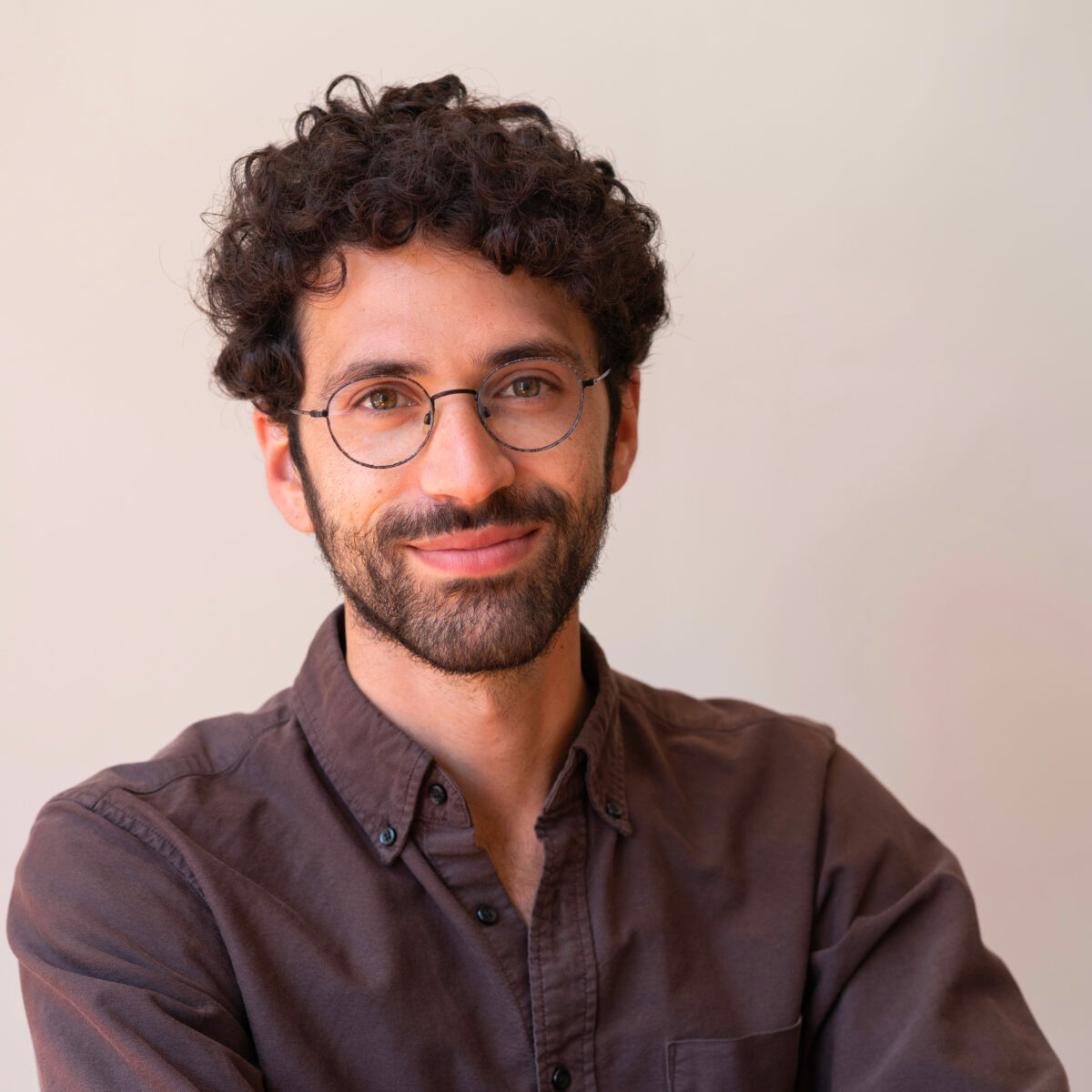
Asa Stahl
Science Editor for The Planetary Society

Ambre Trujillo
Digital Community Manager for The Planetary Society

Lisa Carnell
Director of Biological and Physical Sciences Division at NASA
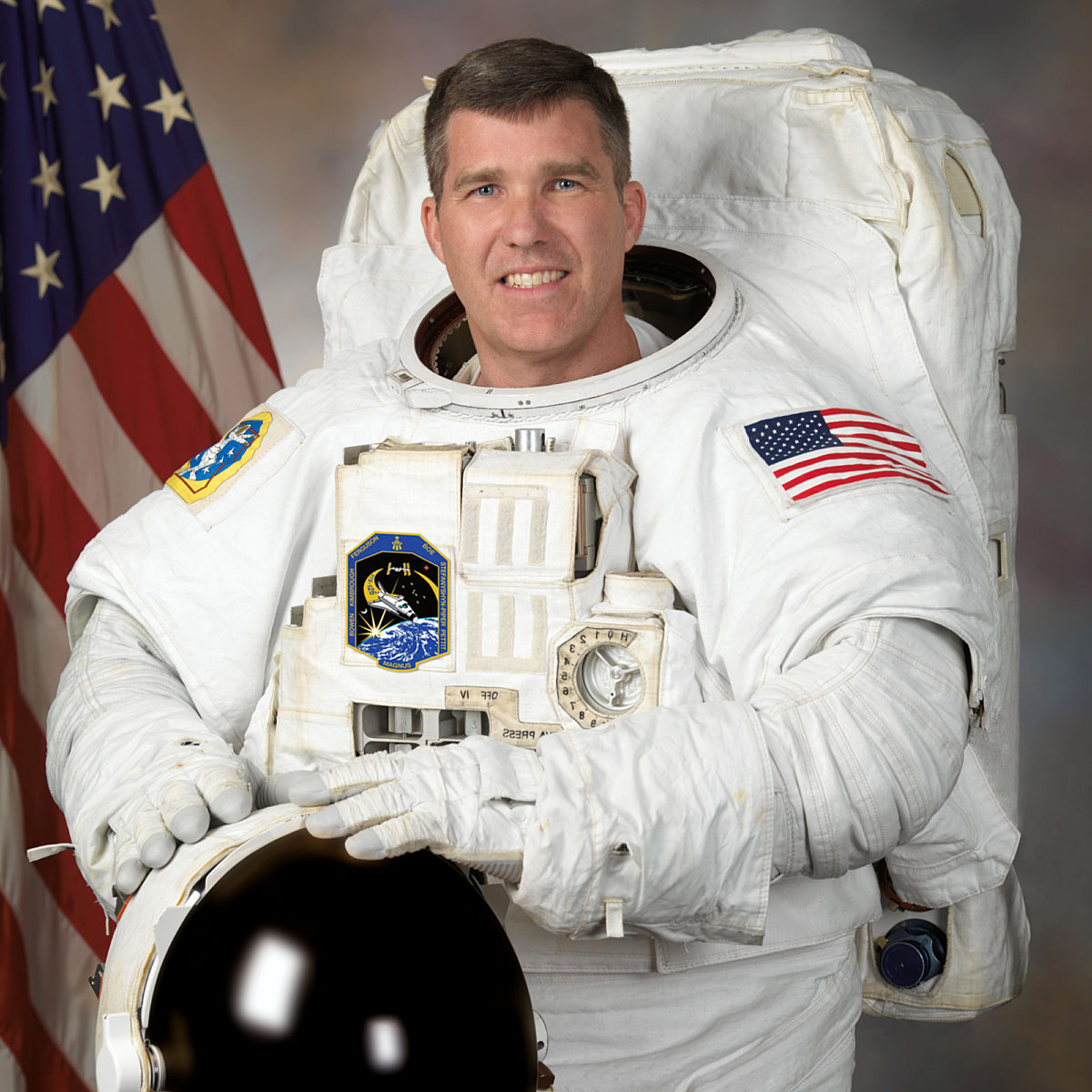
Stephen Bowen
Astronaut for NASA
Bruce Betts
Chief Scientist / LightSail Program Manager for The Planetary Society
Sarah Al-Ahmed
Planetary Radio Host and Producer for The Planetary Society
Also in this episode:
- Mark Tobias, Chief Engineer, Northrop Grumman
- Jan-Henrik Horstmann, European Service Module Team Leader, ESA
- Debbie Korth, Deputy Manager, Orion Program, NASA
- Joshua Kutryk, Astronaut, Canadian Space Agency
- Jake Bleacher, Chief Exploration Scientist, NASA
- Joel Kearns, Deputy Associate Administrator for Exploration, NASA
- Charlie Blackwell-Thompson, Artemis Launch Director, NASA
- Reid Wiseman, Commander, Artemis II
- Victor Glover, Pilot, Artemis II
- Christina Koch, Mission Specialist, Artemis II
- Jeremy Hansen, Mission Specialist, Artemis II
- Mike Haridopolos, U.S. Representative, Florida's 8th Congressional District
- Mark Kelly, U.S. Senator, Arizona
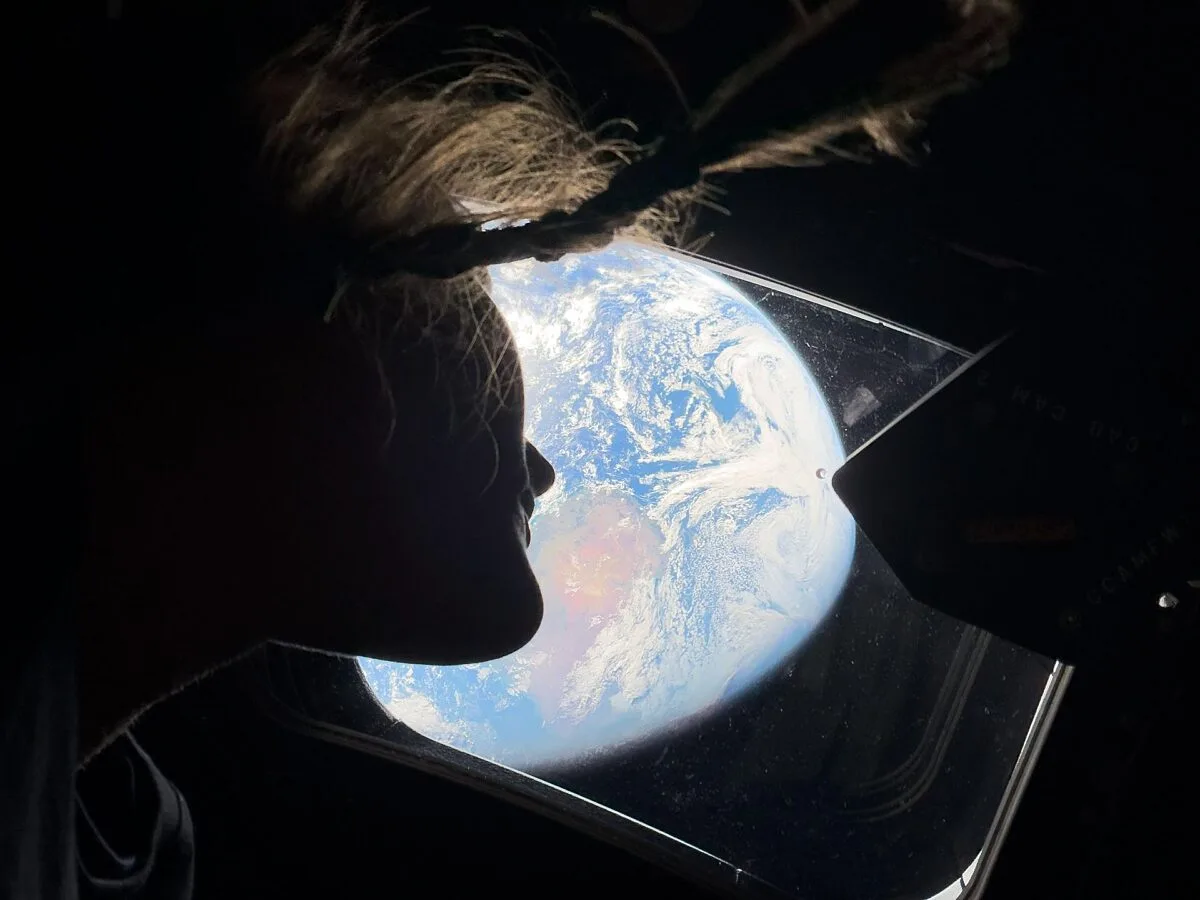
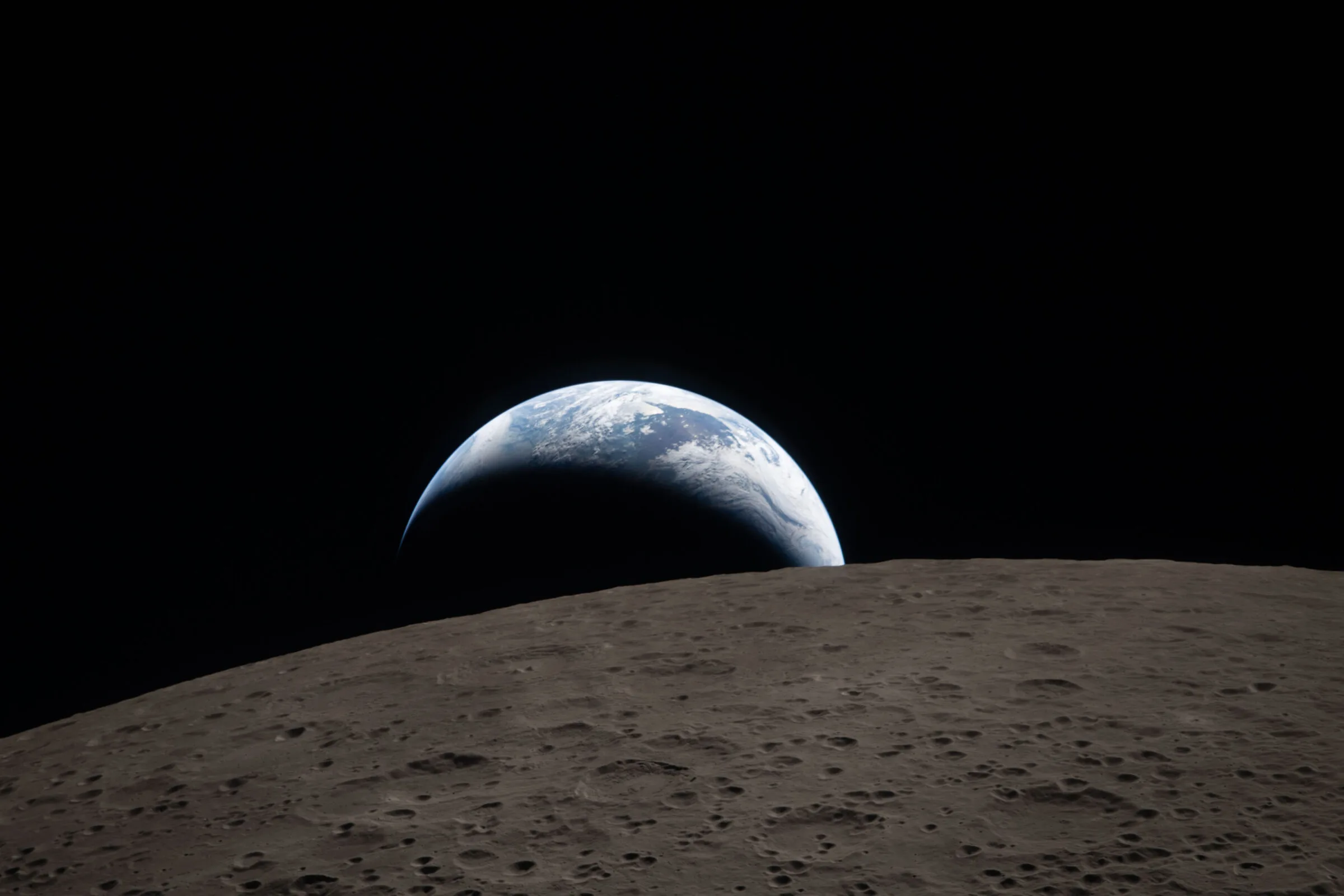
Four astronauts — Commander Reid Wiseman, Pilot Victor Glover, Mission Specialists Christina Koch and Jeremy Hansen — are on their way around the Moon, on a journey that will take them farther from Earth than any human has gone before. This week on Planetary Radio, we bring you the sounds of launch day and the voices of the people who lived it.
You’ll hear from the engineers who built the spacecraft, including Mark Tobias, chief engineer at Northrop Grumman, Jan-Henrik Horstmann, European Service Module team leader at ESA, and Debbie Korth, deputy manager of NASA's Orion Program. U.S. Representative Mike Haridopolos and Senator and former astronaut Mark Kelly share their perspectives from the ground. Canadian Space Agency astronaut Joshua Kutryk reflects on what it means for Canada to have one of their own heading to deep space for the very first time. NASA Chief Exploration Scientist Jake Bleacher and Lisa Carnell, director of Biological and Physical Sciences at NASA's Science Mission Directorate, break down some of the research happening on this mission. NASA astronaut Steve Bowen shares what it feels like to watch a crew launch knowing exactly what they're about to experience. And Joel Kearns, NASA's deputy associate administrator for exploration, reflects on what this moment means for the future of human spaceflight.
Plus, Planetary Society Science Editor Asa Stahl and Digital Community Manager Ambre Rose Trujillo, share what it was actually like to be there on launch day. And Planetary Society Chief Scientist Bruce Betts joins us for What's Up, with a look at what we've learned about the Moon since the Apollo era.



Related Links
- Artemis II blasts off, sending humans back to the Moon
- The best images from Artemis II
- Artemis, NASA's Moon landing program
- The Artemis II mission: What to expect
- What's keeping the Artemis astronauts safe?
- Artemis II Science - NASA
- ARCHeR - NASA
- Artemis II Crew Both Subjects and Scientists in NASA Deep Space Research
- Artemis II Crew to Advance Human Spaceflight Research - NASA
- Immune Biomarkers - NASA
- NASA Artemis II Science | AVATAR (A Virtual Astronaut Tissue Analog Response)
- Risk from Inadequate Sleep and Irregular Schedules - NASA
- Risk of behavioral changes and psychiatric disorders - NASA
- Risk of inadequate teamwork - NASA
- Planetary Radio: Artemis II and III: The science that brings us back to the Moon
- Planetary Radio: Artemis update: NASA reshapes the road back to the Moon
- Buy a Planetary Radio T-Shirt
- The Planetary Society shop
- The Night Sky
- The Downlink
Transcript
Sarah Al-Ahmed:
Artemis II launches to the Moon, this week on Planetary Radio. I'm Sarah Al-Ahmed of The Planetary Society with more of the human adventure across our solar system and beyond. And boy, did we go beyond this week.
Four astronauts, Commander Reid Wiseman, Pilot Victor Glover, and mission specialists Christina Koch and Jeremy Hansen are currently on their way to the Moon, farther from Earth than any human beings have traveled in over 50 years. This week we'll bring you the sounds of launch day and the voices of the people who lived it.
We'll hear from engineers who built the spacecraft: Mark Tobias, who's chief engineer at Northrop Grumman; Jan-Henrik Horstmann, European Service Module team leader at the European Space Agency; and Debbie Korth, Deputy Manager of NASA's Orion program. We'll also get the view from the ground with US Representative Mike Haridopolos and Senator and former astronaut Mark Kelly.
Canadian Space Agency astronaut Joshua Kutryk tells us what it means for Canada that one of their own is headed into deep space for the very first time. Jake Bleacher, who's NASA's Chief Exploration Scientist, and Lisa Carnell, Director of Biological and Physical Sciences at NASA's Science Mission Directorate, break down the cutting-edge research happening on this mission.
NASA astronaut Steve Bowen shares what it feels like to watch a crew launch knowing exactly what they're going through. And Joel Kearns, NASA Deputy Associate Administrator for Exploration, reflects on what this moment means for the future of human spaceflight.
Plus, Planetary Society science editor Asa Stahl and our digital community manager Ambre Rose Trujillo share what it was actually like to be there on launch day. And of course, we'll wrap up the adventure with Planetary Society Chief Scientist Bruce Betts, who joins us for What's Up with a look at some of what we've learned about the Moon since the Apollo era.
If you love Planetary Radio and want to stay informed about the latest space discoveries, make sure you hit that subscribe button on your favorite podcasting platform. By subscribing, you'll never miss an episode filled with new and awe-inspiring ways to know the cosmos and our place within it.
On April 1st, 2026, after years of engineering, testing, delays, and determination, the Space Launch System sat on pad 39B at Kennedy Space Center, fueled and ready to leave Earth. Inside the Orion capsule at the top of the stack were four astronauts, three from NASA and one from the Canadian Space Agency.
For the first time in human history, a woman, a person of color, and a non-American were leaving the safety of low Earth orbit behind. They were about to go faster and farther than any person from our planet had ever gone before.
On launch day, there were a few snags. Teams had a problem during the end-to-end test on the flight termination stage when they couldn't close the full signal loop between the range and the vehicle. They resolved it by switching to a different range receiver that they pulled from legacy hardware.
Then a temperature sensor on one of the launch abort system batteries came back with a reading that was so far out of range that the engineers determined that it was probably just a faulty sensor, not a real problem, so they voted it out of the system.
And late in the count, there was a brief dropout in telemetry from Orion, but each time the launch team assessed it, made the call, and kept going.
After a harrowing day, the countdown paused at 10 minutes, waiting for Launch Director Charlie Blackwell-Thompson to conduct her final poll.
Charlie Blackwell-Thompson: Attention on the net. This is the launch director performing the final poll for launch, verifying no constraints and go for launch.
Sarah Al-Ahmed:
One by one, every team from safety, weather, to propulsion said that they were go for launch. But the last people to report in were the crew themselves.
Reid Wiseman, who's the commander; Victor Glover, who's the pilot, you'll hear him announce himself as PLT; Christina Koch, mission specialist; and Jeremy Hansen, who's also a mission specialist representing the Canadian Space Agency.
Reid Wiseman: [inaudible 00:04:14] Charlie, PLT.
Victor Glover: Thank you, Charlie. This is Victor. We are going for our families.
Speaker 5: MS1.
Christina Koch: This is Christina. We are going for our teammates.
Speaker 5: MS2.
Jeremy Hansen: This is Jeremy. We are going for all humanity.
Speaker 5: All right, Charlie. Your Artemis II crew is go for launch. Full send.
Charlie Blackwell-Thompson: I copy that. Reid, Victor, Christina, and Jeremy, on this historic mission, you take with you the heart of this Artemis team, the daring spirit of the American people and our partners across the globe, and the hopes and dreams of a new generation. Good luck. God speed, Artemis II. Let's go.
Sarah Al-Ahmed: And with all the safety checks done, after decades of work and determination, Artemis II finally lifted off.
Speaker 7:
The rocket is on its own. Four brave explorers ready to ride the most powerful rocket NASA has ever launched. Sound suppression water is flowing.
And here we go. 10, nine, eight, seven. RS-25 engines lit. Four, three, two, one. Booster ignition.
And liftoff. The crew of Artemis II now bound for the Moon. Humanity's next great voyage begins.
Sarah Al-Ahmed:
Among the thousands of people watching from the ground at Kennedy Space Center that day were two members of our own Planetary Society team. Our science editor Asa Stahl spent the day before the launch conducting interviews that you're going to hear throughout this episode. And our digital community manager Ambre Rose Trujillo was there in her role as Lockheed Martin's Orion ambassador.
She co-hosted Tim Dodd's, better known as the Everyday Astronaut's, Artemis II live stream. Both of them watched the rocket climb into the sky together in person. I asked them what it was like to be there.
Hey, Ambre and Asa, welcome back.
Ambre Trujillo: Hi.
Asa Stahl: Hey, good to be back.
Sarah Al-Ahmed: I'm sure I'm not the only one out there who watched your reaction video, the two of you on the beach watching Artemis go up for the first time.
Ambre Trujillo: Yeah, this was my first rocket launch.
Sarah Al-Ahmed: What was it like actually being there and thinking to yourself, "There are humans on that rocket and we're going back to the Moon for the first time in over 50 years"?
Asa Stahl:
So many different thoughts and emotions raced through my head. I think at first, first it was just completely being in awe at the beauty of it. It was so much brighter than I anticipated, so much more fire just curtaining out of the bottom of this thing.
And then after, I think, maybe the first five or 10 seconds, then I started vacillating between being in awe of it and just impressed by what was physically happening in front of me, and then concern, like, "Oh God, I hope this goes okay, every single moment, that it works perfectly, that those astronauts are safe."
And then I think just a complete thrill that it worked, it actually works and that-
Sarah Al-Ahmed: It actually worked.
Asa Stahl:
Yeah. And that all of this optimism, I'd been interviewing people all day and the day before, all these people involved in the science and who knew these astronauts personally. I had gone to crew walkout earlier that day and saw these astronauts for myself, that these aren't just people on the screen, they're real people.
I saw them say goodbye to their families, and seeing that all of these people had such a sense of pride and excitement and accomplishment, and then to live that, to live the moment of that being realized, I just couldn't really contain myself.
Ambre Trujillo:
For me, very similar. It's actually really funny to watch a reaction video and just see our juxtaposition because Asa is a total golden retriever just watching it, and I was just on the verge of tears and ended up bawling my eyes out.
But very similar feelings there. I think for me, I had been working and interviewing and learning so much about the Artemis program around the workforce. And I had just interviewed Robert Lightfoot, who had... he was Associate Administrator and Acting Associate Administrator at NASA. He was there when the shuttle disasters happened, and he had to help to foster NASA through that.
Not only that, but being Lockheed Martin's Space President, he had his touchpoints with Orion. This is the capsule that is going to carry these humans to the Moon, and then also the SLS itself. He worked a lot on the SLS and the propulsion system.
So to see his emotion and his anxiety about it, and it was like that throughout the whole workforce. They had built such a connection to these astronauts. So to be around them and knowing that they had this weight on them, this responsibility, and then to see the rocket at the launchpad, and you're thinking about the astronauts in there.
In your brain, you know that they're anxious. Three of them, of course, have gone to space, the three Americans, Reid Wiseman, Victor Glover, and Christina Koch. They've all been to space. Jeremy Hansen from Canada had never been to space. That's not to say that our American crew were not nervous. They were also the first humans to be on the SLS.
So there's all that anxiety that I was thinking about for them, and then their families, how anxious they must be watching. So there's all of this collective emotion around the site.
And before the launch happened, Asa and I were sitting waiting for the launch. Both of us were pretty nervous. And I hear something. We heard the millions of people on the Space Coast start to cheer from the press site three and a half miles away. And that really was emotional.
And yeah, I think once the hold, the planned hold for the 10-minute clock, started to count down, started to get more and more real, and then the six-minute mark passed, and that's the point where it's going to go, we all started to feel, I think, a little anxious.
And then Asa started counting down, and I was just freaking out watching because I had built up all of this anxiety because I had so many people tell me, "Well, your wind is going to get knocked out because it's 8.8,000,000 pounds of thrust and it's going to be really, really intense."
It was completely different than I thought, and it was loud, oh my gosh, and bright. But yeah, watching the rocket take off and you're just thinking about how these four humans have put their lives on the line for humanity, for humanity to do their mission. To them, this is a mission.
And it was just overwhelming to be thinking about all those things. And it looks so slow and it looks surreal. It's hard to explain.
And then you watch it go farther and farther, and you start to think about all of these things about just, "Please keep going, please keep going, and please..." just disappear from the atmosphere.
And then we saw the booster separation, and I was just at that point a mess. My first rocket launch. You watch rocket launches on the screen and you think you understand how it's going to be. You know it would be more intense watching a rocket launch in person, but I did not expect how intense it was going to be.
It has stayed with me. I look at the Moon and I start crying.
Asa Stahl:
I think the difference between seeing it on screen and seeing it in person cannot be overstated, because when you see it on a screen, it's like watching a movie, and there's so many movies about space and about rocket launches, and it just feels like another dramatic episode.
But then when I actually went to crew walkout and saw the astronauts do the thing that should be in slow motion in any movie, the drama is real. You know how they say that fact is stranger than fiction? Fact is also more dramatic than fiction.
And to actually see the rocket leave the launchpad, and then you have to look back and see that it was still gone. It was as surreal as watching an entire building, as watching the Empire State Building or the Statue of Liberty just rise into the air and leave, except while you're watching that and being like, "Wow, this is happening," it's that you also know there are people on board.
Ambre Trujillo: Yeah. And I also feel like I'm, just like I'm sure a lot of people right now, I was feeling very uninspired lately. I knew that this was going to happen, but with everything going on in the world just on Earth, I was feeling really down, and gosh, did this invigorate my soul.
Sarah Al-Ahmed:
Millions and millions of people have seen your reaction now online, and you can tell that that raw emotion, the truth of it, is resonating with people in a time when we truly need to see what it is that we can do when we come together as humans.
I hope that this just comes to you in waves over the course of your lives. This is a moment that you guys are going to be telling stories about for the rest of your existence.
Ambre Trujillo: I'm so thankful for the waves that have been coming. To feel the waves of inspiration has been phenomenal because it's been hard to feel it. I forgot what it felt like. And now to get the gift of it coming over and over when I look at the Moon is just such a gift.
Asa Stahl:
Our CEO, Jenn, I reached out to her for comment for the article I published on just the day of launch itself, and I think she nailed it. She said, "For an entire generation, this is the moment where space exploration gets personal."
And yeah, I don't think I could put it better than that. It just feels like the stakes are different now. It feels like our relationship with the universe as a species is different now.
And I'm going to always be grateful to NASA, frankly, and to the crew for accomplishing that, and to The Planetary Society for having me go out and watch it, because yeah, that was the single most spectacular thing I have ever seen.
Sarah Al-Ahmed:
There are certain things in this universe that no screen can prepare you for. Standing in the path of totality as the Moon swallows the sun, pressing your eye to the eyepiece and seeing Saturn's rings for the first time, actually seeing them hanging there, real.
A rocket launch is like that. It's something you simply cannot understand until you've experienced it yourself.
Back on the ground at Kennedy Space Center, the crowd watching the launch included the people who fought to fund it, the people who built it, and the people who had simply waited a lifetime to see it.
The day before liftoff, our science editor Asa Stahl walked the grounds of Kennedy Space Center and spoke with many of them. One of them was Representative Mike Haridopolos, a Florida Congressman and chair of the Space Subcommittee in the US Congress. He was one of the key voices in Congress who fought to keep Artemis IV and V funded through the reconciliation bill after the White House proposed ending the program after Artemis III.
Mike Haridopolos:
Well, I think these missions really capture the imagination of the American public. I mean, when I talk to my parents' generation, they talk about one of the most memorable times of their life, just seeing an astronaut walk on the Moon back in July of 1969.
We've not been back since 1972, but there's a new mission now, not just landing on the Moon, but having this Moon colony, if you want to call it that. And one of the cool things about this as well is that unlike so many issues in Washington, space is bipartisan.
Asa Stahl: Absolutely.
Mike Haridopolos:
I really work hard to have a great relationship with our Democrat friends who serve on my committee, and we have a really good working relationship, and we just passed one of the big NASA bills unanimously.
Democrats and Republicans, I actually offered a few amendments the Democrats wanted, and we work hand in glove because whether it be Republican or Democrats, these American heroes that are taking off today, we want to make sure we support them.
Asa Stahl: If you could say any message to the astronauts on board right now, maybe just a few hours from leaving Earth and heading back to the Moon for the first time in over 50 years, what would you say?
Mike Haridopolos:
Well, first I'd say God speed. I mean, you talk about the best of the best. You talk about competition, trying to beat another guy out to get the seat on the astronaut, another gal out on the ride here today. And these are the best of the best of America.
And we have a Canadian on board as well. I mean, it's a true historic mission. And these folks have trained their entire life to do this.
It's funny, I got asked, "Will you ever take a ride on the Moon?" Of course, I'd love to do that, but I would never cut in line for a guy who's been working his entire life to go and do this.
So we're thrilled for them, and look, their lives are in our hands.
Sarah Al-Ahmed: Haridopolos wasn't the only member of Congress who made an appearance at Kennedy Space Center that day. Asa also spoke with Senator Mark Kelly of Arizona, a former NASA astronaut who flew four missions to space, including three on the space shuttle. He also spent time on the early design phase of the Orion capsule that was going to take these people to the Moon.
Mark Kelly:
I texted Reid and Victor yesterday, wishing them well, telling them if they need somebody to step in at the last moment, I'm ready. These guys are really excited. I'm a little jealous, I have to say.
It's a positive thing for our country. And we've got a bipartisan delegation here. Tim Sheehy's here. I mean, there's Democrats and Republicans from the House here, folks from the administration here.
We've got a lot of problems our country is trying to solve right now. This is a place that we all can often come together and unite around a common goal that's hard, but it's doable.
Sarah Al-Ahmed: The four people on board the rocket didn't get there alone. Thousands of careers spanning decades led to this moment. Mark Tobias is the chief engineer at Northrop Grumman. He spent 36 years in the aerospace industry helping build the solid rocket boosters that powered Artemis II off the ground. This mission was his last one before retirement.
Mark Tobias: This is my 36th year of doing this. And so this will be the last time that I actually get to see a piece of space hardware going to space. I'm going to retire after this.
Asa Stahl: Ending on a high note.
Mark Tobias: Ending on a high note, yes.
Asa Stahl: That's amazing.
Mark Tobias: Yeah. And the Artemis I flight was just glorious, and now we've got crew on this one. I'm going to drive around the Moon. It's going to be awesome.
Asa Stahl: Is there anything about the rocket or the boosters that you find just genuinely beautiful, like elegant from an engineering perspective?
Mark Tobias: Yeah. From an engineering perspective, it's how much raw thrust they put out for really, in general, how small they are. If you go look at the rocket behind us, the boosters are not that large compared to the overall vehicle, but each one puts out about 3.6,000,000 pound force of thrust. So that's a lot. And together, both boosters are roughly about 75, 80% of the initial liftoff thrust to get the vehicle up and going.
Asa Stahl: Wow.
Mark Tobias:
The rockets go through a very rigorous qualification program. It starts with components, and then they're built up in the sub-assemblies and tested, and then they're tested at the system level.
So for the boosters specifically, we actually go do full-scale, full-duration static firings out in Utah. And so we know exactly how they're going to perform based on the data we gather from those tests.
So that's really at the point, yeah, everything's working the way we think it should, and that's where the confidence comes from. It's those very large system-level tests.
Asa Stahl: Which I imagine are pretty loud and dramatic.
Mark Tobias: They are. They are. Anytime you've got that much thrust and 6,000 degrees flying out the back end of the rocket, the rocket plume is so intense that we actually pile up sand behind the rocket during our static test. We do that to protect the concrete of the test bay, but when that plume hits it, it actually turns it to glass.
Asa Stahl: Wow.
Mark Tobias: And you can actually go walk behind the test bay after a test and you can chip off really expensive low grade glass off the rocks.
Asa Stahl: Keep it as a souvenir?
Mark Tobias: Yep. And we do. We hand them out as souvenirs.
Asa Stahl: That's so cool. And so for here, in particular with Artemis, what emotions do you think are going to be going through you as you watch this last flight that you're professionally involved in?
Mark Tobias:
Yeah, for me, it'll be... I think I was one year old when we last went to the Moon, and my parents tell me a story about putting me in front of a TV and pointing. Obviously, I don't remember that.
So this will be the actual first trip of humans to the Moon that I actually remember and am intimately part of. So it's a great source of pride in supporting America's program, a great sense of accomplishment in what our company and our team does for NASA's rocket, and then just personal pride in being part of it.
Asa Stahl: Is there anything about this mission that you hope that the public gets the time to appreciate or that you think could easily be overlooked, but is significant?
Mark Tobias: I hope they appreciate that space travel's not easy. It's hard. It's hard work. It's unforgiving work and it doesn't tolerate mistakes. So there's a tremendous cast of folks behind the scenes that make this happen. Could be their neighbor, could be a friend that actually does it. Those folks are doing some great work for the country.
Asa Stahl: Yeah. I'm sure it takes all kinds and a whole space family.
Mark Tobias: It does. It does.
Sarah Al-Ahmed:
This mission doesn't just belong to United States. Attached to the Orion capsule carrying those four astronauts is the European Service Module. That's a piece of hardware providing their power, propulsion, and life support. It was built by the European Space Agency.
Asa spoke with Jan-Henrik Horstmann, ESA's European Service Module team leader.
Jan-Henrik Horstmann: I've been working with ESA, with European Space Agency, for two years and a half now, but I have a track record in industry. So I've been on the program in industry a little while back too.
Asa Stahl: And how's it feel to be finally here watching and seeing what could be all these years of work finally coming to fruition?
Jan-Henrik Horstmann: You've summarized it very well. It's a lot of pride, obviously, to be here for ESA, for the European Space Agency, with our service module now flying astronauts for the first time. This is what we've been working for for more than 10 years. So it's really, really exciting.
Asa Stahl: And how does it feel to hold that piece, that this is the part of the spacecraft that brings the crew home?
Jan-Henrik Horstmann:
It's a great honor for us. It's the first time that Europe, that the European Space Agency, provides really a mission-critical element to NASA, and we are very proud for the trust that NASA has put in us to provide that vehicle.
European Service Module provides electricity for the astronauts with the solar array wings. We provide water, drinking water, potable water. We provide oxygen for them to breathe. We make sure that they are cozy in their crew module with the thermal control system, and of course we have the propulsion system that gets them to the Moon and back.
Asa Stahl: Was there a particular moment when you were doing the integration, when you're putting this all together, where it really hit you, like, "Wow, this thing that I've been working on for years is actually going to fly to the Moon"? Or maybe it was with Artemis I, not with this one.
Jan-Henrik Horstmann:
So for me, it's a bit special because I was out of the program for some time. But I would say in January, when we rolled out the rocket and NASA obviously invited us to be there and celebrate, that was really overwhelming.
It was an overwhelming feeling of pride, of excitement, of seeing it all come together, the whole stack with the launcher, the whole spacecraft is just... Yeah, cannot put into words.
Asa Stahl: For those who are maybe getting that wake up call, who are going to see this launch and be like, "Oh whoa, we're doing this," is there any particular message you want to give them or anything you want them to take away that might more easily get lost in the shuffle?
Jan-Henrik Horstmann:
I think it's often underestimated how much of an inspiration these sorts of missions bring. When I look at myself, Apollo was done 25 years when I was a kid. Still, it inspired me so much to see the footage of the Moon landings and all of that. Inspired me to become an engineer and work in space ultimately. It could have been some other domain, but really to become an engineer.
For me, also, it's a symbol of what we can achieve when we really, really try. And yeah, it's standing there. And on a personal note, I have my family here visiting with two sons, so I really hope that I can inspire them.
Sarah Al-Ahmed: We'll be right back with the rest of our coverage of the Artemis II launch after this short break.
Jenn Vaughn:
Hello, this is Jenn Vaughn, your new CEO of The Planetary Society. I am deeply honored to be leading such an extraordinary organization, and one of the very first things I want to do while I get started is to get out to meet you, our members, in person.
That's why I'm hitting the road for our 2026 Member Roundtable tour, a series of small members-only gatherings where we can sit down together face-to-face. I want to hear what's on your mind, your questions, your ideas, and what matters most to you.
And while we're together, I'll also give you a preview of The Planetary Society's new five-year strategic vision. Our first stop will be Tempe, Arizona, on Saturday, April 11th, and we'll be continuing on to Washington DC, the San Francisco Bay Area, Los Angeles, New York, Toronto, and more throughout the year.
We're keeping these gatherings small, so space is limited. Register today at planetary.org/roundtable. I can't wait to meet you.
Sarah Al-Ahmed: The European Service Module may have provided the power and the propulsion, but the vessel carrying the crew was NASA's Orion spacecraft, which is more than two decades in the making. Debbie Korth is the deputy manager of NASA's Orion program. She's been with the program since 2008.
Asa Stahl: What does Orion smell like? I've heard it's kind of funny smelling and metallic. Is that true?
Debbie Korth: Maybe a little metallic. Didn't really notice any unique smell. There are a lot of people in there doing work. We're trying to do the final closeouts. We get powered up later this evening and stay powered up till we launch. And so I mostly just smell people there right now. It's pretty busy up there.
Asa Stahl: What's the first thing you want to learn about Orion itself after the crew splashes down and the capsule is back on the ship and everything?
Debbie Korth:
I think a couple things. First of all, we're going to be checking out our environmental control and life support systems for the first time. And so we'll be getting a lot of data back throughout the mission, but getting some of that data back when the spacecraft splashes down will be really telling.
We're looking at how we're removing carbon dioxide, how we're removing humidity, how the temperature control is. So I think those pieces of data are going to be really important for us to learn and make sure those systems operated the way we expected.
Also, we'll get a lot of the imagery that comes down. We won't get a lot of that during the mission. We'll get some, but not everything. And so one of the first things we get off of the vehicle at splashdown is all of the imagery that the crew members will be taking throughout the mission.
Asa Stahl: Is that just in SD cards from their cameras?
Debbie Korth:
Pretty much, yes. Mm-hmm, yeah. So a lot of it will be downloaded, but we're limited in what we can get down, so we'll get the majority when it comes back down.
I think also at splashdown, we're flying the heat shield and we're flying a different profile for this mission based on what we learned off of Artemis I. And so we'll get to see the heat shield for the first time after the mission and validate our models and our performance.
Asa Stahl: Yeah, I've talked to some folks about the heat shield and the thing that stuck with me most was how long it took even the independent review team to fully understand the problem. At what point in the process did you personally become confident that your team was managing the risk adequately?
Debbie Korth:
Yeah, it was definitely a thorough investigation. We spent, as you know, many, many months doing testing. We did about eight different test campaigns with about 121 different test conditions to make sure we understood the problem.
So for me, there was kind of this eureka moment when the test team was doing some testing, trying to see if we could duplicate this char condition that we saw, this release of char that we saw on Artemis I, and actually were able to duplicate it in the test chambers there at Ames Research Center.
So I think when that happened, it really gave us the boost of confidence we understand what's going on now. And then by doing that and duplicating it, we could then test how are we going to change our mission profiles to prevent this from happening for Artemis II.
So I think that was the big... Once you can recreate it, then you have confidence that we now understand it much better.
Asa Stahl: And is there anything about this mission that you wish the public had more time to appreciate, just taking a step back for a second?
Debbie Korth:
I'd say from a technology standpoint, the environmental control system, this regenerative ecosystem that we have, is really, really unique. And so we're able to remove carbon dioxide, remove hydrogen from the crew module, and regenerate the air. And it can last for 21 days for four people.
So you can actually have much longer missions than we're flying for the 10 days on this mission. I think, stepping back more holistically, I think that this shows us what... If we can have a bold vision and we put the resources to it, we can accomplish anything.
And so this mission, I hope people are taking away from this, is just the first step. We have grand plans to return to the Moon to stay. And this is our first step. So I'm hoping the public recognizes it's a great mission, but it's just the beginning.
Asa Stahl: Yeah, yeah. And I mean, how does it feel personally to see your work hopefully carry people further than humans have been in over 50 years?
Debbie Korth: Yeah, it's very overwhelming. I have been on this program since 2008, so it's been a long time. So we've got to see a lot of the test flights building up to this point. Of course, flying crew for the first time is just very momentous, and I just can't wait for Wednesday.
Sarah Al-Ahmed:
Among the four astronauts on board the rocket was Jeremy Hansen of the Canadian Space Agency. He's the first non-American to travel into deep space, and that didn't happen by accident.
Asa spoke with Hansen's colleague and fellow Canadian astronaut, Joshua Kutryk. He was there to watch his friend launch.
Joshua Kutryk:
So I work exclusively almost with the Space Station side of the house right now, and I'm preparing to fly Canada's next long-duration space mission to the International Space Station, which we're going to do pretty soon.
This week, today, I'm here to cheer on my friend, colleague Jeremy Hansen, and to cheer on Canada. Obviously, I'm very interested in this mission. It's a historic mission. It has profound implications for Canada and for what we hope to do in the future.
So I'm here talking about what we do at the Canadian Space Agency. I'll be touring some guests around, that kind of thing. But mostly I'm here to cheer on Canada and watch the mission just out of personal interest.
Asa Stahl: And what do you think it will mean for your country when it's done this thing that only one country has done before?
Joshua Kutryk:
Yeah, you're right to point out that significance. I mean, this is a historic mission to begin with. These four humans are going farther, faster, than any human being's ever gone. They're the first crew to go back to the Moon, of course, since Apollo, but it's added in importance to us from Canada because, as you point out, the first time that a non-American is going to go into deep space, it's going to be on this mission, and it's going to be a Canadian.
And what I like to say is that that's not a coincidence. That's the result of what we've done in Canada with careful investment over decades in space, careful policy. It's a result of, frankly, building things in Canada that aren't built anywhere else in the world, technologies that are important to NASA and our partners in human spaceflight missions.
So that's how we got here. That's something that has brought a lot of benefit to Canada in terms of innovation and discovery, but it's also something that we're very interested in continuing.
If Jeremy was here, he would tell you that his hope is that when we look at that mission, we look at that stack and watch it fly here in a couple of days, he hopes that none of us see that as the end achievement. We want to see that as just the very beginning, the very beginning of what Canada can do.
Our history in space got us to this point, but we want to be dreaming about a future where we have Canadians with NASA, with our partners here in the United States, living, working, doing science, on the surface of the Moon. That's what we're aspiring to.
Asa Stahl: Well, what do you see as the future for it moving forward to keep Canada on this adventure to this exploration?
Joshua Kutryk:
It's a good question. I am entirely optimistic about the future for Canada and Canada in space. Certainly, you're right to point out there's no shortage of uncertainties right now. There's no shortage of challenges. There's no shortage of pivoting, transitioning. But I also think that it's always been that way.
If you go back to the '90s when we were contemplating Space Station, I'm not sure there was any less uncertainty at that time. And it's really neat to look back and think forward to now, 25 years later, and look at this amazing thing that we built in low Earth orbit, a crowning achievement of human technology.
I think, I believe, I certainly hope that the Moon is going to be similar. There is a lot of uncertainty right now, but the fundamentals haven't changed. Fundamentally, in Canada, we have a historical proven ability to build and innovate space technology that's unique in the world and that is critical for enabling the next-generation space exploration missions.
Yes, we might have to pivot, we might have to transition, but we have that capability. We have that industrial base, that scientific base, that engineering base, and I think that if we're careful, there's no reason for why that doesn't continue to carry us forward.
So I'm quite optimistic about the future, which is, I think, what space is so good for.
Asa Stahl: Yeah.
Joshua Kutryk: It shows us a future that people can be excited about in a world where sometimes there's no shortage of things to be pessimistic about here on Earth.
Asa Stahl: For people who are just tuning in for the first time, what would your message be?
Joshua Kutryk:
I would tell them you live in a very unique time. If you just look around this place, the Cape here in Florida, just in the last couple years, we've seen the first crewed flight of a number of different vehicles, Dragon, the Starliner. We're now about to watch the first crewed flight of SLS and Orion.
Times in terms of human space flight are without parallel in the past, and that's especially true for a small country like Canada. So I tell them if you are interested in this, if you're a young person in Canada, for example, in the United States, wherever you are, and you're interested in space exploration, working in spaceflight, the future really has never been brighter and you should be able to get excited about that.
Sarah Al-Ahmed: Many people have spent decades working on the vehicle that made this mission possible, but once they actually get to the Moon, what do they do there? Jake Bleacher is NASA's chief exploration scientist, and he's been thinking about this question for a really long time.
Asa Stahl: What single question, if you had to pick one, would you most want to know the answer to scientifically about the Moon that you think Artemis might help us answer?
Jake Bleacher:
Well, I think if we can back way up, one of the reasons we want to go to the Moon is to help understand questions about ourselves, about life. Why is life here? How did it form? Life is on Earth because we have an atmosphere and wind and rain and plate tectonics, but those processes also have erased all of our history of the time period when life got that foothold.
So if we want to understand ourselves, the big questions, the type of questions that NASA is asked to tackle, we actually need to leave Earth. We need to go somewhere else. And the great thing is the Moon, our celestial partner, has been watching the whole time that all these things have happened to the Earth, and it's been recording it, and those records are in the rocks.
So that's why we need to go to the Moon if we want to understand ourselves. And it's kind of the Rosetta Stone for us to interpret then the rest of the solar system.
Asa Stahl: Is there anything in particular that you're hoping that they do manage to see and that you'd be curious to see the first image of?
Jake Bleacher: Well, I'm actually really curious about, we have a unique opportunity. If we launch on April 1st or 2nd, the Artemis II crew will actually experience an eclipse. So from their vantage point in the Orion, the Moon will block the sun.
Asa Stahl: Wow.
Jake Bleacher: And so they will have an opportunity to be the first people ever, if that were to occur, to see the solar corona off the edge of the Moon. So that's just a really unique and really cool opportunity based on the timing of our mission. So I think that one's got my interest the most piqued right now.
Asa Stahl: Is there anything that has changed for you personally as a result of being a part of this historic mission? I mean, do you feel like your relationship with the Moon itself is different or even just with humanity as a concept?
Jake Bleacher:
That's a really good question. I think the thing that has impacted me the most is flying our friends, our NASA family, on this mission. We flew Artemis I already, and it was robotic, we didn't have anyone on board, but now it gets real when you know the people personally who are on board.
I think just the way our NASA family is integrating and working together to ensure that the mission is safe and, in particular, our astronauts are safe and bringing them home. I love to see that as the positive qualities in humankind, and it stretches beyond NASA because that involves partnerships with other countries globally. That's really my favorite aspect of this work that we do.
Asa Stahl: It seems like the people who are involved in space exploration, space science at NASA, talk about often how these activities for us as a species bring out the best in us. And it's hard not to be optimistic about all of humankind when you do them, but also it seems like separately from that, in their personal experience, just the act of working on these missions together with these brilliant people who put their all into them just kind of gives you faith in humankind.
Jake Bleacher: Yeah, I think that's exactly right. I like the way you said it. It brings out the best in humankind, working together to solve hard problems. So we challenge ourselves or we are given hard challenges as NASA, and so we lead the way and we bring partners in to work with us and bring that best out of everybody.
Sarah Al-Ahmed:
You may remember Lisa Carnell from last week's episode. Lisa is the director of biological and physical sciences at NASA's Science Mission Directorate, and she spent five years trying to get her experiment on Artemis II.
It's called AVATAR, a tiny organ-on-a-chip, the size of a thumb drive, built from each astronaut's own cells, flying alongside the crew to experience everything that they experience. Asa met up with her the day before launch with the experiment replica in her hand.
Asa Stahl: I see you have something cool in your hands. What is that?
Lisa Carnell: I do. This is an exact replica of the AVATAR experiment, the organ chip that is flying around the Moon alongside the crew in the Orion capsule. So incredibly exciting.
Asa Stahl: I'm so glad you brought that because I was going to ask you as my first question, what does it actually look like? And then here you brought... So can you just explain what's the blue and the pink? What leads to that color?
Lisa Carnell:
So this is fabricated by Emulate. It's a company in Boston, and we have the blue in here to show this is where we populate the cells that were taken from the astronauts. So we have a stromal cell bed, basically everything that's in your bone marrow. So these are bone marrow models that are going alongside with the crew.
So we drew blood from the crew members, and we separated out different cell types, their stem cells and PBMCs, and we're able to recreate the bone marrow inside of these chips. And so the blue you can see will be the bone marrow side. And as you can see, a pinkish red color, this is where the media will be passing through.
There's a membrane in the middle that feeds the cells the nutrients and such, just like your blood would. And then it also removes waste from the cells. And so this is functioning literally like your bone marrow does inside of your body.
Asa Stahl: Wow.
Lisa Carnell:
This is going to revolutionize medicine for us in space, but it's happening right here on Earth. This is groundbreaking across the world. They are using this to replace animal models in so many areas.
The human translates, right? If I'm making one of you, I can make this of you. I can make it of you, anybody out there. It translates, right? So when I get the data, I understand what's happening to you personally.
So the difference when you're using a model system, the data doesn't always translate. And we see that in a lot of failed clinical trials with 80 to 90% failure rate in different drugs. And so this is incredibly exciting for medicine here on Earth as well.
Sarah Al-Ahmed:
The science was ready and the spacecraft was ready, but what is it actually like to sit on top of a rocket and go? NASA astronaut Steve Bowen has done it four times, three Space Shuttle missions and a Crew Dragon flight in 2023.
The day before the launch, he was there to watch the crew that he knows personally get ready to go further than any of them ever had.
Asa Stahl: When it comes to the actual physical sensations of being up there, or say during reentry, what does that feel like? Do you feel hot? Is it loud?
Steve Bowen:
Yeah. Well, each experience is a little bit different. So what was interesting for me, since I did the Shuttle missions and I did the Dragon missions, the Space Shuttle is sort of like the SLS. It has solid rocket boosters. And so the main engines would come on, and they give a little bit of rumble, but then the solid rocket boosters light, and that's a lot more exciting, and you're definitely going someplace.
So that's an exciting ride the first few minutes the solid rocket boosters are burning for a Shuttle. And then as soon as they went away, it got really smooth, but then you really started accelerating. And so in the Shuttle, we peaked out about three Gs.
Dragon was different. Once you get off the pad, it's liquid fuel the whole way. It's a very smooth ride. The fact that you don't have any engines running between first and second stage was disconcerting for an old person like me. Second stage lights, and then you start accelerating. You actually peak out higher than we did on the Shuttle. And so coming back, profile was similar in a sense that you're going to peak out on higher Gs.
The thing about the capsule landing, and they'll experience this as well, I liked having wings and landing on a runway and walking off the vehicle. Having spent a lot of time wallowing around in the ocean, not looking forward to being in high seas and a capsule, but that turned out just fine.
But it's a series of explosions that get you down from... Every time the drogue chutes have to come up, the main chutes come out, you get all the different accelerations. On the Dragon, we could hear the sounds pretty well. It wasn't really loud. I mean, you get layers of protection, hearing protection. You get your comm, you get your helmet on, but it's pretty amazing to see.
And then the view out the windows as the plasma burns off over the top. So in the Shuttle, basically the front windows would be orange. As you're coming in on the Dragon, you could see it going orange, and then they would just turn black from being charred on the outside. And we landed at night on my Dragon landing, and it took a while for us to see the lights of the people coming to get us because the char was thick enough. It was pretty cool.
Asa Stahl: Wow.
Steve Bowen: Yeah.
Asa Stahl: It sounds like being in the microwave.
Steve Bowen: It was nice. We do pre-cool the vehicle before it comes back in, so we do the best we can.
Asa Stahl: I couldn't help but overhear the story you were telling when you're on the Space Station, and I just think that our listeners would love... It's exactly the kind of thing that makes us fall in love with space, I think.
Steve Bowen:
Well, yeah. So the story is, and it's true, I don't think I embellish it too much because I experienced it, but we were doing space walking. It must have been the first space walk on my second mission. We were installing an antenna on top of the International Space Station, and we got done installing it with as much as we could do for that EVA, and they took Garrett away, who was my other EVA crew member.
So I'm sitting there on top of the space station, getting ready to move on to the next thing, and ground calls up and tells me, "Stand by, Steve, we're looking at something." And having been around for a while at that point, I kind of attached myself to the top of the antenna on the boom and sat there as we're circling the Earth. I'm on top of the space station, overlooking the Russian segment as we're circling the Earth for 30, 40 minutes as they were resolving problems on the ground.
And all I could think of is, what kind of civilization is this? Literally, I grew up carrying buckets of cement. My dad laid tile for a living. How do we get here? What kind of civilization allows us to build this vehicle, this laboratory in space where we're really learning things we never could have learned elsewhere? We're solving problems we never would have asked that help us here on Earth to live a better life.
And it's absolutely amazing. The view was unbelievable. And like I said, I don't think I had to go to space to learn that, but really it hit home. If you look at what we're able to accomplish when we all work together, it's absolutely amazing.
Sarah Al-Ahmed: We'll give the last word to Joel Kearns, NASA's Deputy Associate Administrator for Exploration. He spoke about how historic this moment really is.
Asa Stahl: How do you think you'll feel watching this particular mission launch?
Joel Kearns:
Well, it's incredibly historic to have people go back to cislunar space for the first time since 1972. I used to watch the Apollo missions on TV, but I never got to go to a launch. I remember going to the Artemis I launch, where we had investigations on Artemis I, and thinking, "Wow, the next time I see this powerful rocket launch, we're going to have people on the top of it." And that is really emotionally compelling.
And of course, I also know what investigations are going to do, so I really want to get them into cislunar space so they can do that, so we can get our science return from it.
Sarah Al-Ahmed: The people back home at Kennedy Space Center wished them well and promised to follow up as they continued on their 10-day mission around the Moon and back.
Speaker 17:
We're going to continue to follow the crew of the Artemis II mission. They are beginning their journey around the Moon to verify the systems that will take us to its surface. An incredible ascent. Artemis II is underway.
Reid Wiseman, Victor Glover, Christina Koch, and Jeremy Hansen begin their journey to the Moon. Still milestones to come up. We'll keep tabs on Integrity and its crew from here in Mission Control Houston.
Sarah Al-Ahmed:
Integrity is the name that the crew gave the Orion spacecraft. And as with all first crew flights of a new spacecraft, the early hours brought a few things to sort out.
There was a brief communications dropout during a satellite handover that left Mission Control unable to hear the crew for a few minutes, although the crew could hear them from the ground the whole time. And there was a controller issue with the toilet that needed some troubleshooting. This is the first toilet to go beyond low Earth orbit as well, but mission specialist Christina Koch took care of it.
A crossover valve connecting the water tanks had been shaken closed during the launch and needed to be reset, and a piece of electronics took a radiation hit, the same kind of transient issue that was seen on Artemis I. But they caught it, and it was handled by onboard fault detection.
All of the issues were sorted out. And as I record this, the crew is healthy, the spacecraft is performing, and Artemis II is headed for the Moon. All of us here at The Planetary Society wish them safety, wonder, and the deep satisfaction of going where no one has gone before.
They carry with them the labor of thousands, the dreams of billions of us, and the oldest human instinct of all, to discover what lies beyond the horizon.
For a look back at some of the things that we've discovered about our closest neighboring world, I'm joined by Bruce Betts, our chief scientist here at The Planetary Society, for What's Up. Hey, Bruce.
Bruce Betts: Hello.
Sarah Al-Ahmed: We went to the Moon, or I guess they're on their way, but it worked.
Bruce Betts: Road trip.
Sarah Al-Ahmed: It totally worked.
Bruce Betts: Oh, it's super exciting. Very, very cool. Very, very cool.
Sarah Al-Ahmed: See, it's because we weren't there to see the launch. That's why it went up on time this time.
Bruce Betts: Exactly.
Sarah Al-Ahmed: Yep.
Bruce Betts: You've learned. I'm very scientific about everything. I don't believe anything that's pseudoscience, but after I attended my fifth or so launch where it didn't launch, I started to wonder.
Sarah Al-Ahmed: Yeah.
Bruce Betts: I'd leave and then they launched the next day. That's typically it. Everyone made sure I didn't go to this one.
Sarah Al-Ahmed: Yeah. At least we got to be there to go see Artemis I try to launch, but oh man, watching Ambre and Asa's reaction to seeing their first rocket launch was one of the most heartwarming things I think I've ever seen.
Bruce Betts: That was their first rocket launch?
Sarah Al-Ahmed: That was their first rocket launch, Bruce.
Bruce Betts: Oh, no. I mean, it was really heartwarming anyway. I just assumed there were humans on it, which we haven't done in so long.
Sarah Al-Ahmed:
I know, right? I think I'm going to be on an emotional rollercoaster for the next 10 days until the astronauts come home safely. I don't know, man. We did it. After all this time, finally, humans are going back to the Moon. Maybe not to land, but eventually.
But yeah, there's a lot that's happened in the last 50 years since we went to the Moon, clearly. So I feel like we should take a little moment to talk about some of the things that we've learned about the Moon in the last 50 years since humans last set their boots in that lunar regolith. 1972? It's been so long, Bruce.
Bruce Betts: I know, I was there.
Sarah Al-Ahmed: Yeah.
Bruce Betts: Well, not on the Moon, but I watched the Apollo 17 launch.
Sarah Al-Ahmed: That's so cool.
Bruce Betts:
Now I've watched this launch, so I feel like my life's been bookended. I'm a little worried. So anyway, we've learned a bunch of stuff about the Moon, particularly... I mean, I think that the big one, which was really tied into using what Apollo learned, particularly in the rocks that were brought back, was that it distinguished between hypotheses of where it came from.
And the one that just seems totally whack turns out to be the one that's true, which is the giant impact. So you had proto-Earth chilling, getting hit by little stuff, and then along came something not little, like possibly Mars-sized, and slammed into the Earth, stripped off outer layers, threw them up into space. And most of the stuff fell back to Earth, but some of it formed the Moon, and you end up with this magma-ocean-covered Moon. And that's been the theory that seems pretty wacky that actually makes sense and fits with what they found.
We're finding some rocks that appear that maybe there was volcanism a little not that long ago, just 1,000,000,000 years ago instead of two or 3,000,000,000 years ago. Still, most of the place is three and a half, 4,000,000,000 years old. But that's why the Moon, as I ramble on, the real significance of the Moon for broad planetary science is that it preserves all these craters and the history of the early solar system, whereas Earth does that erosion thing and plate tectonics and makes things change over time.
Sorry, I got excited.
Sarah Al-Ahmed:
Well, we were just talking on the show maybe two months ago, I want to say, about how the Moon has kind of preserved this record of things that have hit it before and what that's taught us about how water came to Earth. There's a lot that we can learn from those things.
So I'm looking forward to people returning once more, collecting more samples. It's a complicated thing, but can you imagine if we actually managed to build a lunar base and actually build a permanent presence on the Moon? I don't know. I feel like now that I've seen Artemis II go up, I've got hopes we're going to do this, Bruce.
Bruce Betts:
We'll see. They've got some hard tasks ahead of them and some currently rough timeframes and limited budgets. And so we'll see, but it's certainly noble intentions and goals, and they may, because I mean, Artemis II, it's doing great. And there's still a lot of great people working on these projects, making things happen.
And it's pretty darn impressive, that football-field-length rocket going up. Did you see that launch yesterday?
Sarah Al-Ahmed: I mean, not in person, but I watched it. I watched it and cried. That was such a cool moment. And now I just keep thinking, as we're talking right now, there are four people in the Orion capsule hurtling around the Earth, getting ready to go to the Moon. Right now that's happening. What a time to be alive.
Bruce Betts:
All right, should we move on? I'll keep us in the same general place, but I will still call this rewind. The Apollo command module. Have you thought of that with three people in it relative to Orion with four people inside it?
Orion is bigger. It has a five-meter biggest diameter as opposed to Apollo command module at 3.9 meters, and Orion has about 30% more habitable volume, but one more astronaut. But most importantly, the real upgrade, I think, is they put a toilet in it.
Sarah Al-Ahmed: I was going to say, I think the toilet is nice quality of life improvement.
Bruce Betts: It is. And I believe there's even a curtain, a tiny curtain. And of course that's happening in the volume of a minivan or two equivalent. So they'll really get to know each other even more than they have, but they get a great view.
Sarah Al-Ahmed: Bet it will smell a little weird in there. Anyway.
Bruce Betts: That's all I got. That's what I got.
Sarah Al-Ahmed: Yep.
Bruce Betts: So I will be boring and say look up at the sky and think about the astronauts on the way to the Moon and coming back from the Moon and space. Thank you and goodnight.
Sarah Al-Ahmed:
We've reached the end of this week's episode of Planetary Radio, but we'll be back next week with more space science and exploration.
If you love the show, you can get Planetary Radio t-shirts at planetary.org/shop, along with lots of other cool spacey merchandise. Help others discover the passion, beauty, and joy of space science and exploration by leaving a review or a rating on platforms like Apple Podcasts and Spotify. Your feedback not only brightens our day, but helps other curious minds find their place in space through Planetary Radio.
You can also send us your space thoughts, questions, and poetry at our email, [email protected]. Or if you're a Planetary Society member, leave a comment in the Planetary Radio space in our online member community.
Planetary Radio is produced by The Planetary Society in Pasadena, California, and is made possible by our members, from the ones who cheered as the Apollo astronauts walked on the Moon to the new generation only seeing their lunar dreams made real for the first time. You can join us at planetary.org/join.
Mark Hilverda and Rae Paoletta are our associate producers. Casey Dreier is the host of our monthly Space Policy edition, and Mat Kaplan hosts our monthly Book Club edition. Andrew Lucas is our audio editor. Josh Doyle composed our theme, which is arranged and performed by Pieter Schlosser.
I'm Sarah Al-Ahmed, the host and producer of Planetary Radio. And until next week, we're going to the Moon, everyone. Ad lunam and ad astra.