The best images from Artemis II

Kate Howells

Written by Kate Howells
Public Education Specialist, The Planetary Society
April 7, 2026

The Artemis II mission is currently underway, carrying a crew of four astronauts around the Moon and back to Earth. The mission launched on April 1, 2026, with the lunar flyby on April 6 and splashdown back on Earth expected on April 10. Here are our favorite photos from the mission so far.

Launch

The Artemis II launch up close
The Artemis II launch up close A close-up view shows the immense power of NASA’s Space Launch System rocket as it took off, beginning the Artemis II mission to the Moon.Image: NASA/John Kraus
Cameras capture Artemis II's launch
Cameras capture Artemis II's launch The world was watching as NASA's Artemis II mission launched on April 1, 2026, thanks to the work of science communicators and journalists from around the planet. Here you see cameras set up to capture the launch.Image: NASA/Aubrey Gemignani
Watching the Artemis II launch
Watching the Artemis II launch Guests at the Banana Creek viewing site watched the launch of NASA’s Artemis II mission to the Moon.Image: NASA/Keegan Barber
Artemis II's launch plume
Artemis II's launch plume A dramatic view of the SLS rocket taking off, carrying a crew to the Moon aboard the Orion spacecraft for NASA's Artemis II mission.Image: NASA/Aubrey Gemignani

En route to the Moon

Earth from Artemis II, day 2
Earth from Artemis II, day 2 A photograph of Earth, taken by Artemis II commander Reid Wiseman shortly after the mission completed its engine burn to send it around the Moon.Image: NASA / Reid Wiseman
The Moon from Orion's window
The Moon from Orion's window The Artemis II crew took this photo of the Moon through the window of the Orion spacecraft at the tail end of the fifth day of their mission. At this time, the Moon's gravity had begun to exert a stronger pull on the spacecraft than Earth's.Image: NASA
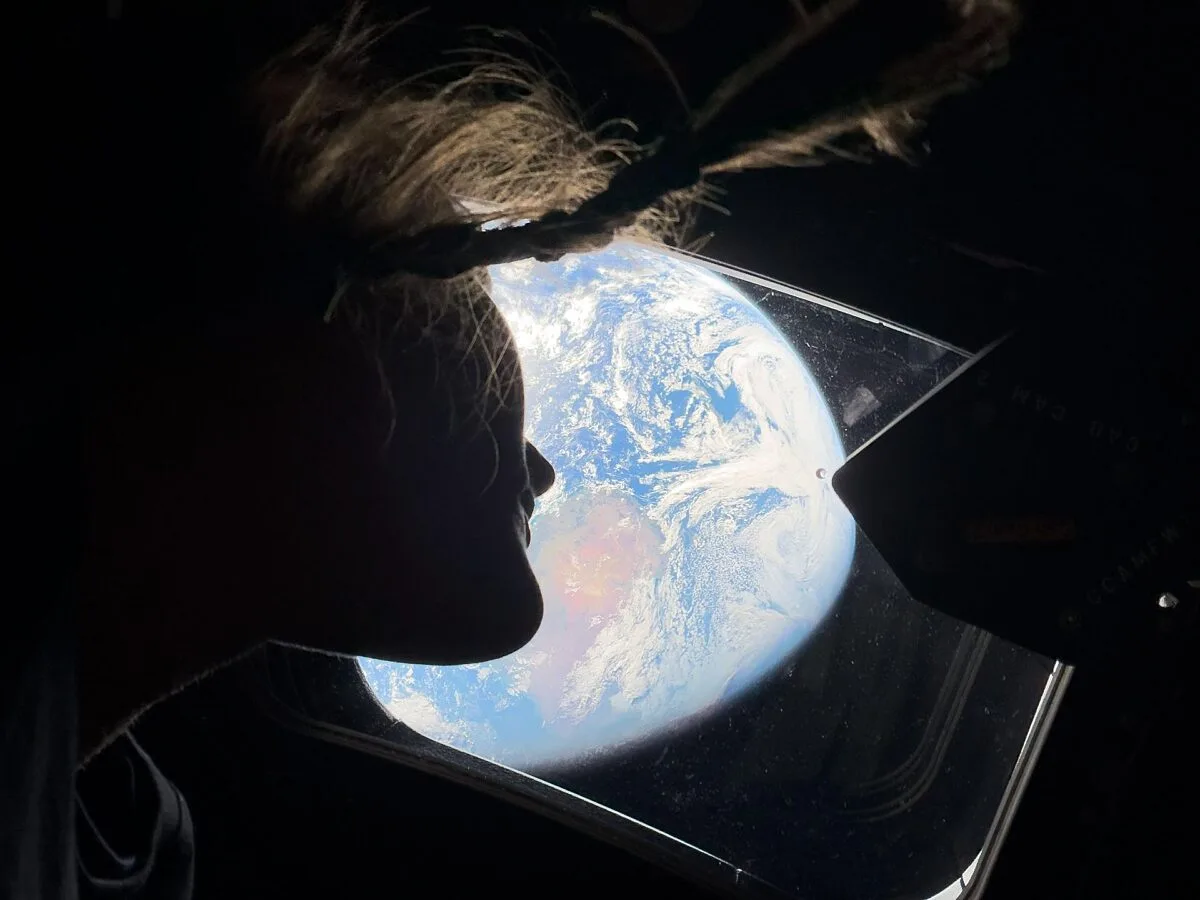
Christina Koch views Earth from Orion
Christina Koch views Earth from Orion NASA astronaut and Artemis II mission specialist Christina Koch looks at Earth from the window of the Orion spacecraft on its way to the Moon during the Artemis II mission. At the time, Christina was already farther away than any woman has ever been from our planet.Image: NASA
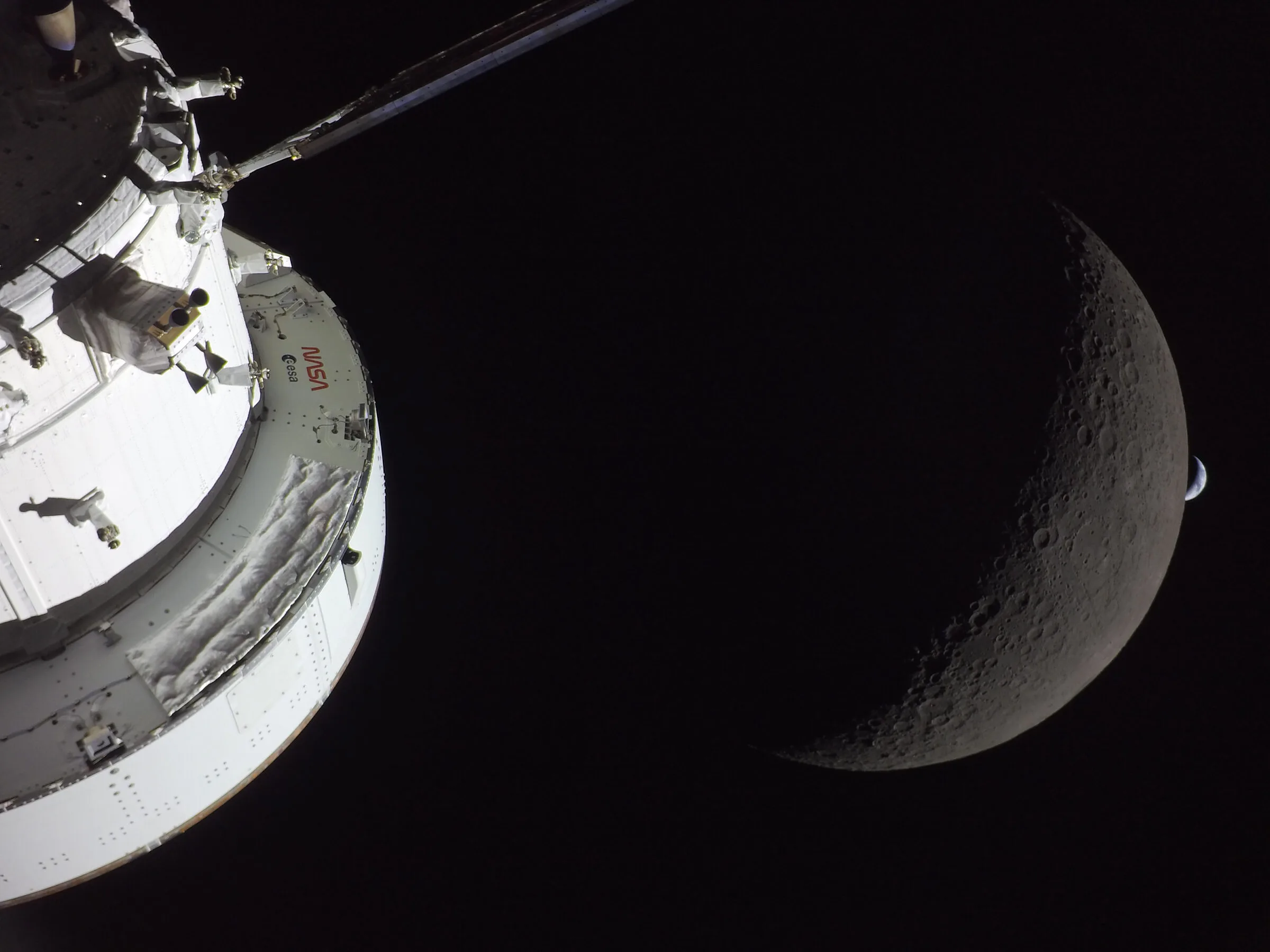
An Orion spacecraft selfie
An Orion spacecraft selfie The Orion spacecraft snapped this selfie while on its way to the Moon, using a camera mounted on one of its solar array wings during a routine external inspection.Image: NASA
Lunar nearside from Orion
Lunar nearside from Orion A view of the near side of the Moon, the side we always see from Earth, as seen from the Orion spacecraft.Image: NASA

Lunar flyby

The Moon and Earth from Orion
The Moon and Earth from Orion Earth sets over the Moon’s curved limb in this photo captured by the Artemis II crew during their journey around the far side of the Moon.Image: NASA
Earthset
Earthset Earthset captured through the Orion spacecraft window at 6:41 p.m. EDT, April 6, 2026, during the Artemis II crew’s flyby of the Moon. A muted blue Earth with bright white clouds sets behind the cratered lunar surface.Image: NASA
Shadows Across Vavilov Crater
Shadows Across Vavilov Crater The Artemis II crew captured this close-up view of Vavilov Crater on the rim of the older and larger Hertzsprung basin on the Moon during their lunar flyby on April 6, 2027. The right portion of the image shows the transition from smooth material within an inner ring of mountains to more rugged terrain around the rim. Vavilov and other craters and their ejecta are accentuated by long shadows at the terminator, the boundary between lunar day and night.Image: NASA
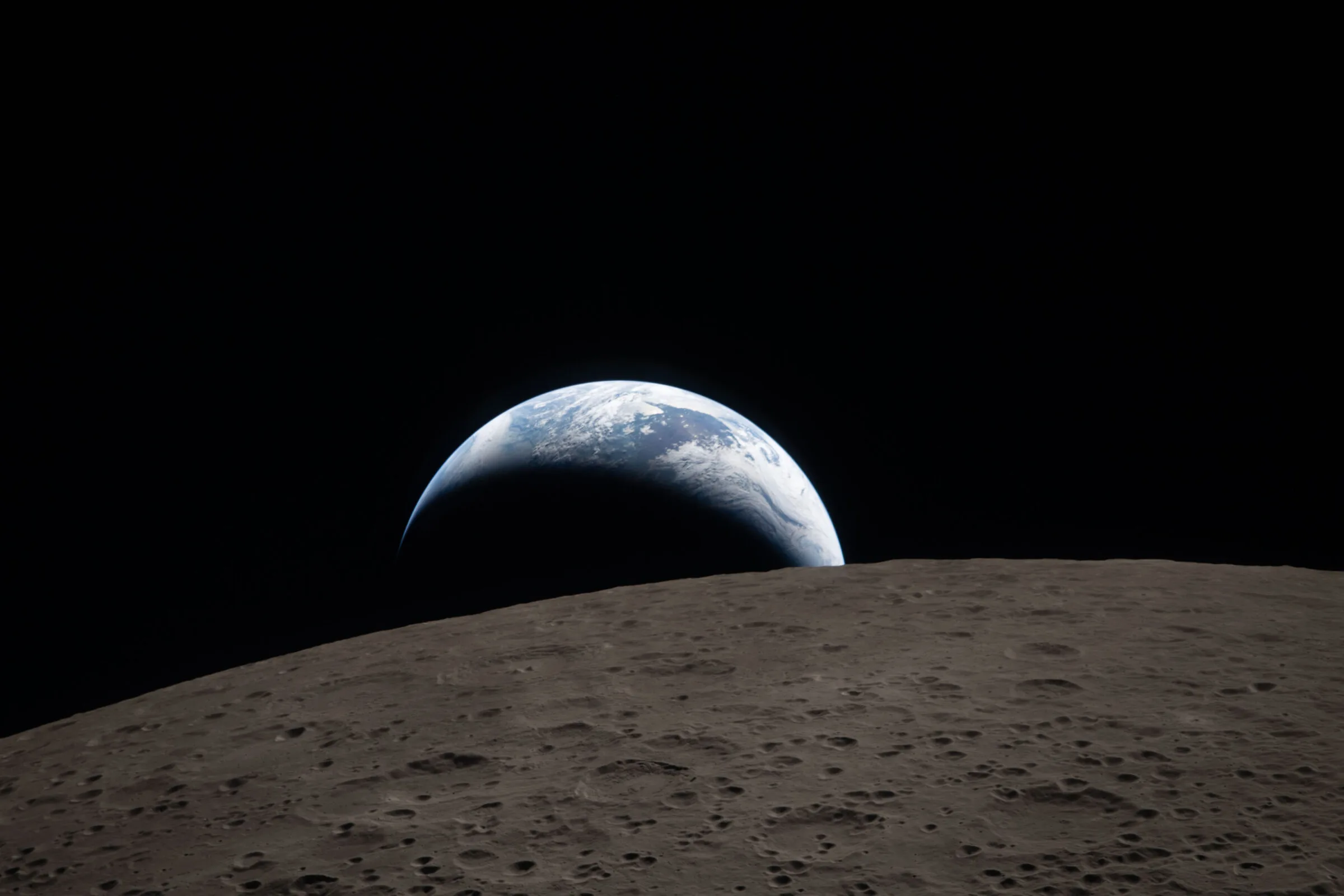
Artemis II Earthrise
Artemis II Earthrise The crescent Earth emerges as the Artemis II crew completes their pass behind the Moon.Image: NASA
Solar eclipse from Orion
Solar eclipse from Orion Captured by the Artemis II crew during their lunar flyby on April 6, 2026, this image shows the Moon fully eclipsing the Sun. From the crew’s perspective, the Moon appeared large enough to completely block the Sun for nearly 54 minutes of totality, extending the eclipse far beyond what we experience on Earth. The corona forms a glowing halo around the dark lunar disk, revealing details of the Sun’s outer atmosphere typically hidden by its brightness. Also visible are stars, typically too faint to see when imaging the Moon. The faint glow on the left side of the Moon is Earthlight — sunlight reflected off our planet.Image: NASA
Venus and the Moon during the Artemis II eclipse
Venus and the Moon during the Artemis II eclipse During the Artemis II crew’s lunar flyby on April 6, 2026, their position put the Moon between the spacecraft and the Sun, creating a total solar eclipse. Here, the Sun’s faint corona remains visible as a soft halo of light around the Moon’s edge. The bright silver glint on the left edge of the image is Venus. Faint lunar features are visible because of light reflected off Earth.Image: NASA

SAVING NASA Science

Your donation powers our advocacy when it matters most.

Donate