

 Explore Worlds
 Find Life
 Defend Earth


All
All
 Sun
Sun Mercury
 Venus
Venus Earth
Earth Mars
Mars Jupiter
 Saturn
 Uranus
 Neptune
 Small Bodies
Stories, updates, insights, and original analysis from The Planetary Society.

Cheat sheets for Vesta's craters and Dawn's Vesta timeline
I made myself a cheat sheet to many of Vesta's distinctive-looking craters, and also wrote down a list of the major dates in the timeline of Dawn's exploration of Vesta.

Pretty pictures from Cassini's weekend flybys of Enceladus and Tethys
Cassini flew past both Enceladus and Tethys on April 14. Here's a cool animation of its approach to Enceladus' plumes, and a pretty global picture of Tethys.

Pretty Pictures: Amazing Asteroid Lutetia
A long-awaited data set is finally public (well, long-awaited by me, at least). The Rosetta team has now published their data from the July 10, 2010 flyby of asteroid (21) Lutetia. This data set is absolutely stunning, and my friends in the amateur image processing community wasted no time in creating art out of it.

Nearly the last view of Endeavour with its life-blood flowing
After 12 years of photographing the space shuttle, and even getting to work for NASA as a photographer for the final three years of the program, I never had the privilege of going inside the cockpit until the program was over.

A possible nine-planet system
Someone on Twitter pointed me to a paper recently posted to ArXiv titled

Pretty picture: Janus and Saturn
In the last few days as it's rounded periapsis in its current orbit of Saturn, Cassini has taken a lot of great photos of Saturn's moons. One series of photos was taken from pretty close to Janus, a moon about a third the diameter of Enceladus that orbits between the F and G rings. And among those, several were taken with the moon sitting in front of Saturn.

An update on Opportunity, and a plea for some volunteer desktop publishing help
A. J. S. Rayl has just posted her monthly update on the goings-on at Meridiani planum, noting that the update recaps the 99th month of the Mars Exploration Rover mission. There's a lot of detail on how the radio-tracking campaign is going. While she's not driving, Opportunity's acting like a lander, with radio antennas on Earth performing Doppler tracking to allow very fine measurement of Mars' orbital motion.
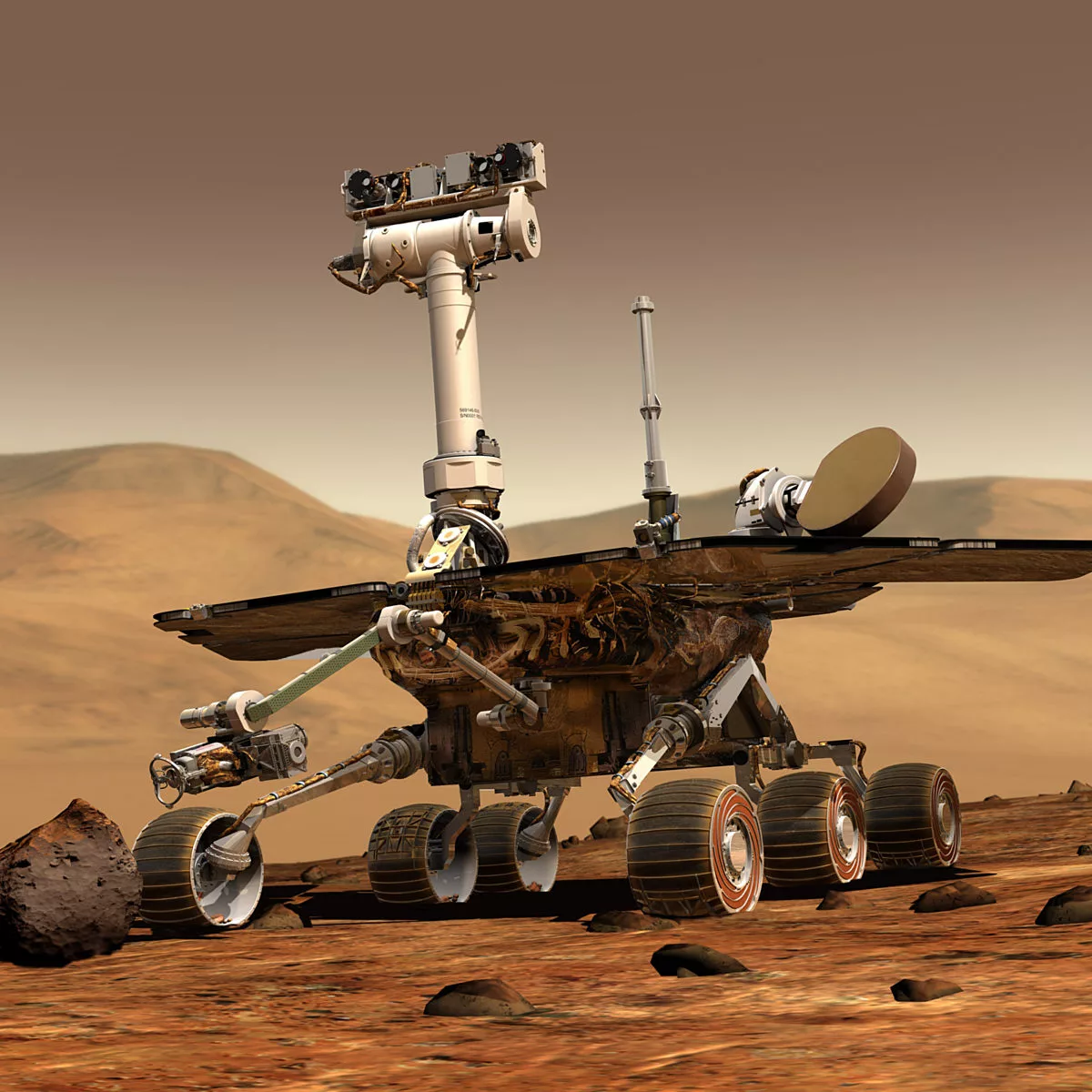
Mars Exploration Rovers Update: Opportunity Gets Energy Boost and Works Through Depths of Winter
March came in like a lion and went out like a lamb at Meridiani Planum, Mars: Opportunity felt the cold wind on her solar panels, then

Dawn Journal: Saluting the Sun
On April 18, Dawn will attain its greatest separation yet from Earth, nearly 520 million kilometers. Well beyond Mars, fewer than a dozen spacecraft have ever operated so far from Earth.

Hey amateurs! ESA's running an image processing contest: "Hubble's Hidden Treasures!"
Here's a newly announced contest that is right up my alley and, I hope, of interest to regular readers of this blog. ESA has just announced

Notes from the Lunar and Planetary Science Conference: Making Cassini's radar images prettier
One of the more exciting talks last week was given by Antoine Lucas about his work with Oded Aharonson

Notes from the Lunar and Planetary Science Conference: Is there ice at Mercury's poles?
Water ice at Mercury's poles? That's crazy, right? Mercury is so close to the Sun that it seems inconceivable that you could have water ice there. But Mercury's rotational axis has virtually no tilt (MESSENGER has measured its tilt to be less than 1 degree), so there are areas at Mercury's poles, most often (but not always) within polar craters, where the Sun never rises above the horizon to heat the surface.


Notes from Titan talks at the 2012 Lunar and Planetary Science Conference (LPSC)
One of the topics I found most exciting yesterday was a series of talks on Titan's climate. Bob West showed how Titan's detached haze has shifted with time. Zibi Turtle presented about how Titan's weather has changed with these seasonal changes. Jason Barnes followed up Zibi's talk -- which was based on Cassini camera images -- with a study of the same regions using data from Cassini's imaging spectrometer, trying to figure out what was going on with that brightening. Ralph Lorenz talked about rainfall rates on Titan. Jeff Moore asked: what if Titan hasn't always had a thick atmosphere?
Snapshots From Space Video: Revealing Jupiter's (Mostly) Unseen Treasures
Tens of thousands of Jupiter images were taken by the Voyager spacecraft, but relatively few have been processed to reveal their true beauty and wonder. The latest Snapshots video from Emily Lakdawalla explains why.

New views of Lunokhod 1 and Luna 17 from Lunar Reconnaissance Orbiter
It is always thrilling to see relics of human exploration out there on other worlds. Today, the Lunar Reconnaissance Orbiter Camera team posted some new photos of two defunct spacecraft: the Luna 17 lander and the Lunokhod 1 rover. I've posted images of the two craft before, but the ones released today are much better.

Pretty Picture: A snapshot of Voyager 1's departure from Jupiter
In this week's Snapshots from Space video, I talk about the Voyager 1 images of Jupiter -- how many there are (tens of thousands), and what a challenge they represent for image processors. But, I promise, the effort is worth it. Here's just one example: it's a color, crescent view of Jupiter, taken by Voyager 1 as it departed.

A theme song for IKAROS
JAXA's solar sail mission IKAROS is still hibernating, and there's no way of knowing if the spacecraft will reawaken or not. They try to raise contact with the spacecraft once a month, with the last attempt being made on March 10; we can only wait to see if they'll succeed. What better time to release a theme song for the mission? IKAROS has always been even more full of personality even than other JAXA missions (which is saying a lot).

Venus Express star trackers recovered
Just a quick note because I didn't want to let the weekend go by without telling people that Venus Express' star trackers are back online.

Pretty picture: A study in ringlight
Clearly, this is Saturn, and its rings, and if you look closer you can see a tiny circle, on top of the rings, which is Mimas, and two stars in the background. It should look weird to you that while the rings are bright, Mimas is a black dot. What is happening here? Nearly everything in this picture is lit by light that has not arrived directly from the Sun.