

 Explore Worlds
 Find Life
 Defend Earth


All
All
 Sun
Sun Mercury
 Venus
Venus Earth
Earth Mars
Mars Jupiter
 Saturn
 Uranus
 Neptune
 Small Bodies
Stories, updates, insights, and original analysis from The Planetary Society.

How radio telescopes get "images" of asteroids [DEPRECATED]
Every time I post a radio telescope image of a near-Earth asteroid, I get at least one reader question asking me to explain how radio telescopes take photos, so I'm hereby writing a post explaining the basics of how delay-Doppler imaging works.

Arecibo saves us from another potentially hazardous asteroid
That's a bit of an overdramatic title, but it's true that the most efficient way for us to reduce the risk we face from asteroids that have a very small chance of hitting Earth in the future is to determine their orbits more precisely.
Spirit: Schrödinger's Rover
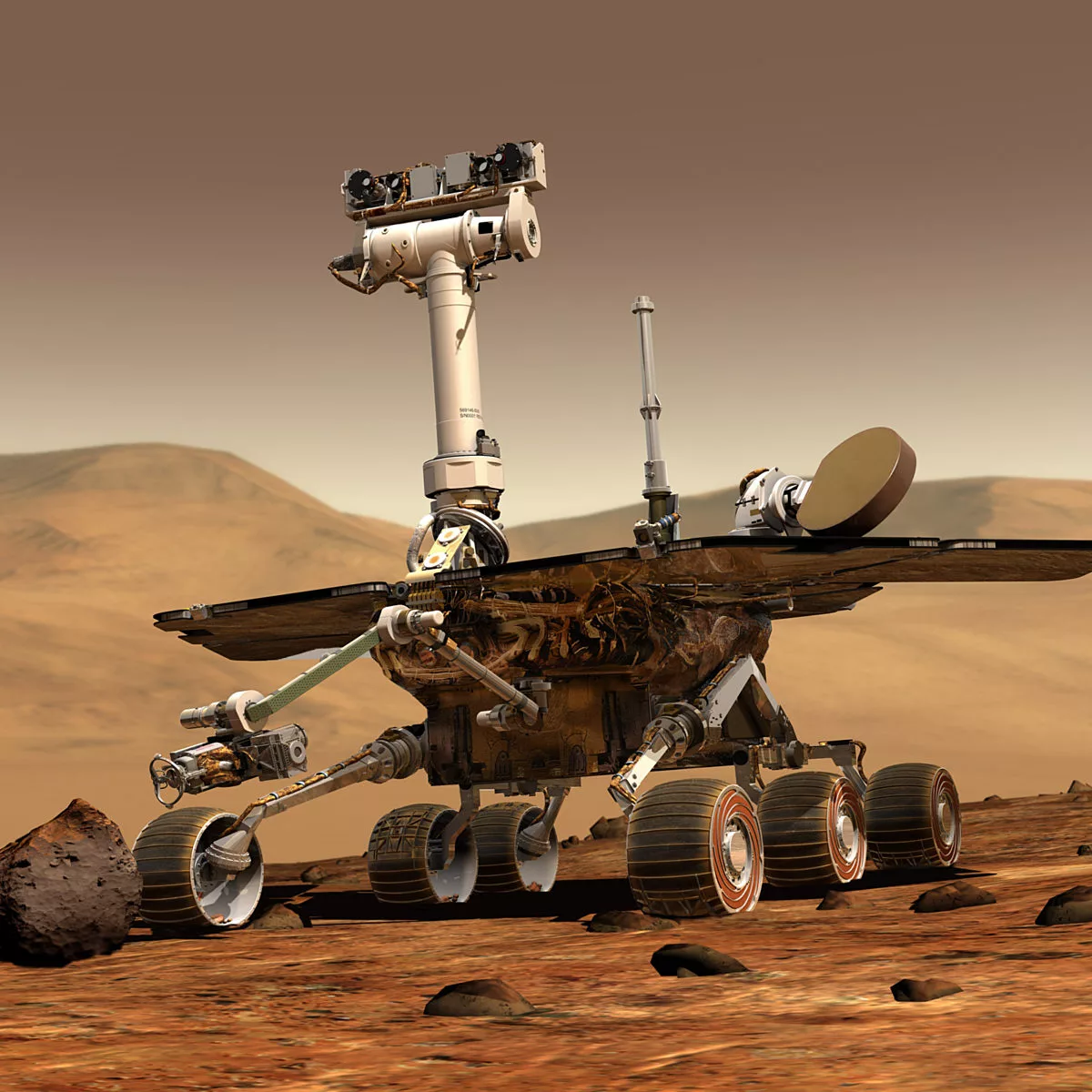
Either Spirit is the longest-lived landed Mars mission ever, or she is not. We won't know for certain unless we manage to observe a radio signal from her.

New names for Rhea
I learned today from Jason Perry that 42 new crater names have been approved by the International Astronomical Union for Rhea, the second largest of Saturn's moons.

APOLLO program pinpoints location of Lunokhod 1 retroreflector
With the recent Lunar Reconnaissance Orbiter imaging of the Lunokhod 1 rover, scientists on the APOLLO project were finally able to do something that scientists have been dreaming of for more than three decades: shoot the rover with a laser.

3D Anaglyph: Weird channels of Olympica Fossae
Got some 3D glasses handy? Check out this awesome view of a very strange feature on Mars, courtesy of Mars Reconnaissance Orbiter's Context Camera (CTX).

Hubble turns 20
Tomorrow is the 20th anniversary of the launch of the Hubble Space Telescope. It's hard to believe it's been going strong for so many years.

Anticipating the end of Hayabusa
A successful sample return for the Hayabusa mission will mean the fiery death of Mr. Hayabusa himself. The poignancy of this is not lost upon the people in Japan who are following the mission.

Titan and Dione: The same, but different
Here's a new lovely color composition of Titan and Dione captured by Cassini. This one was taken on April 20, 2010; a set of 15 raw images taken of the two moons just showed up on the Cassini raw images website.

More detail on the Hayabusa return timeline
JAXA has issued a notice with a little bit more detail on the timeline for Hayabusa's return to Earth.
Solar Dynamics Observatory unveils "first light" movies
Solar Dynamics Observatory unveils "first light" movies

Hayabusa's coming home
It really looks like Hayabusa is going to make it home. Hayabusa's sample return capsule will be returning to Earth on June 13, 2010, landing in the Woomera Prohibited Area, Australia at about 14:00 UTC.

Hey, I'm on APOD today!
A big thanks to Bob Nemiroff, editor of NASA's Astronomy Picture of the Day website, for picking my composition of a set of Cassini photos of Dione and Titan for today's offering.

Volcanism across the solar system: Earth
Yesterday I asked for suggestions for topics to write about, and you readers seem to have volcanoes on your minds!

A calming Titan
Usually I like Mondays, but today I'm feeling a bit overwhelmed. When I get overwhelmed, I look at pictures from Cassini.

Bill Nye on Planetary Radio, and Space Carnival #150
This week on Planetary Radio, Mat Kaplan talks with Bill Nye, who was one of the 200 invited to hear President Obama's speech on space at Kennedy Space Center last week.

21 Lutetia, Rosetta's July target
While I was waiting for President Obama's speech yesterday, I read over a paper by I. N. Belskaya et al titled

Some Pictures from President Obama's Florida Space Conference
Bill Nye, Jim Bell, Scott Hubbard, Neil deGrasse Tyson, and Lou Friedman -- all members of The Planetary Society's Board of Directors -- attended President Obama's Space Conference at the Kennedy Space Center today.

Programming note: Florida space conference
As I write this I am watching President Obama walk down the steps from Air Force One to attend the Florida space conference and deliver a speech at 14:40 EDT (18:40 UTC) about the future of American space exploration.

What it looks like when a CME explodes toward us
The animation I posted yesterday, of a huge coronal mass ejection exploding away from the Sun, caused several people to ask if it could do Earth any harm.