

 Explore Worlds
 Find Life
 Defend Earth


All
All
 Sun
Sun Mercury
 Venus
Venus Earth
Earth Mars
Mars Jupiter
 Saturn
 Uranus
 Neptune
 Small Bodies
Stories, updates, insights, and original analysis from The Planetary Society.

Comet PANSTARRS from the other side of the Sun!
Comet PANSTARRS is delighting northern hemisphere viewers right now. But it's also big, bright, and beautiful to the STEREO spacecraft.

Checking in on Jupiter
We don't have any spacecraft at Jupiter right now, which is a pity. Until we do, we have to rely upon Earth-based astronomers to monitor the changing face of the largest planet.

Yes, it was once a Martian lake: Curiosity has been sent to the right place
The news from the Curiosity mission today is this: Curiosity has found, at the site called John Klein, a rock that contains evidence for a past environment that would have been suitable for Earth-like microorganisms.

Atacama Diary for March 10, 2013--Pisco Sours and Liquid Helium
Great dinner and great conversation with staff of the National Radio Astronomy Observatory, topped by Chile's national drink.
Atacama Diary for March 8, 2013-Noon at LAX
Another audio blog post, with excerpts from the National Science Foundation briefing on the ALMA Observatory, edited while I was waiting for my planet to Chile at LAX.

Instruments for the JUICE Jovian Mission
The European Space Agency (ESA) announced the list of instruments selected for its JUICE mission to explore the Jovian system for three years starting in the 2030 following a 2022 launch.

Sea Salt
Ever wonder what it would taste like if you could lick the icy surface of Jupiter’s Europa? The answer may be that it would taste a lot like that last mouthful of water that you accidentally drank when you were swimming at the beach on your last vacation.
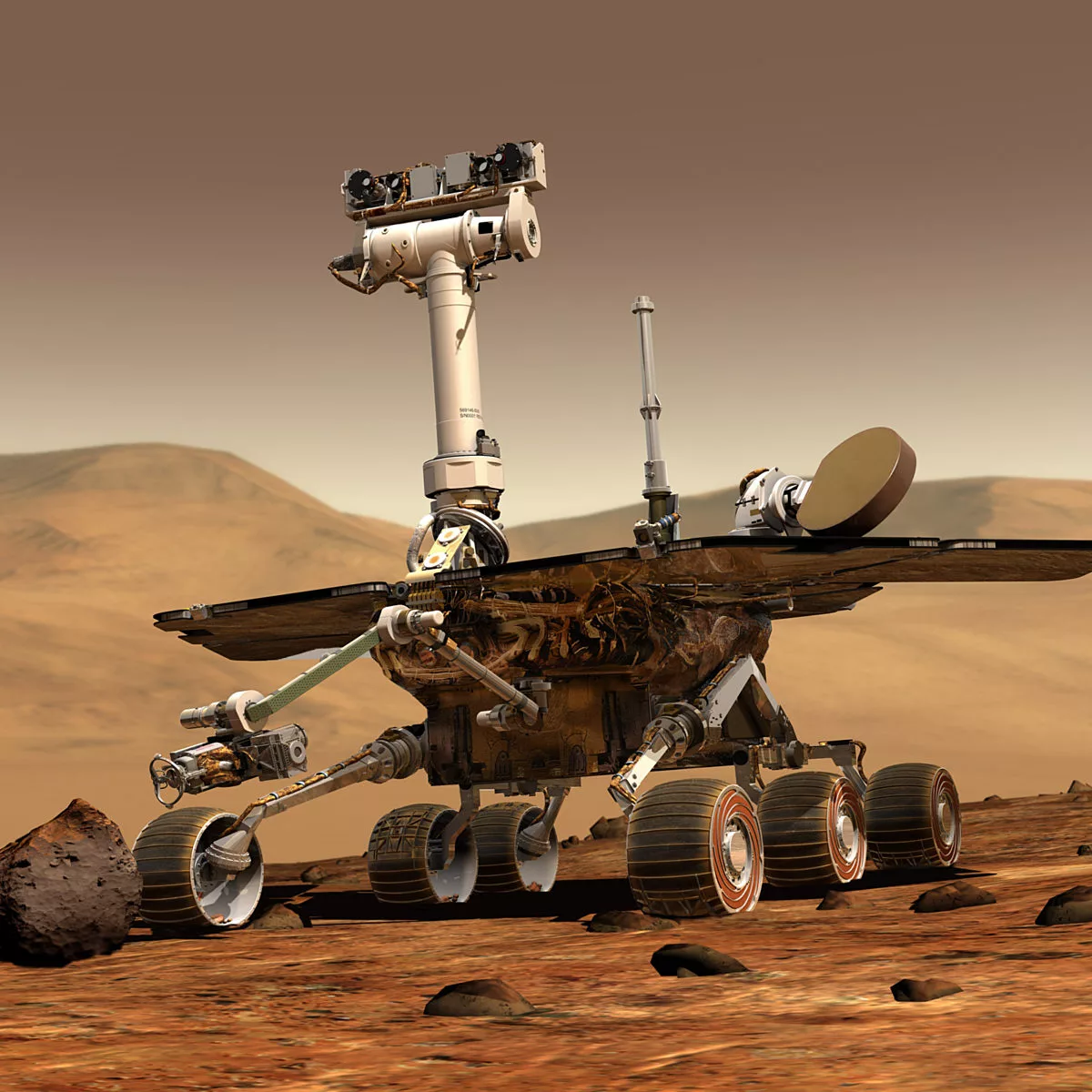
Mars Exploration Rovers Update: Opportunity Begins Wrapping Science on Matijevic Hill
As February turned to March, Opportunity was conducting some of its final science investigations on Matijevic Hill, the MER team was making preparations for the robot field geologist's trek south for the next winter, and the Mars Exploration Rovers mission was checking off another month of exploration.

Browse Curiosity's data in the Analyst's notebook
Last week the Curiosity mission made its first data delivery to the Planetary Data System. The bad news: none of the science camera image data is there yet. The good news: there are lots and lots of other goodies to explore.

The Stormscapes of Saturn
Look past the rings, and Saturn is even stranger--and more breathtaking.

Very brief Curiosity update, sol 205: Memory anomaly and a swap to the "B-side"
Over the last few days the mission has been working its way through its first major (not life-threatening, just really inconvenient) anomaly: a memory problem in its main computer.

Atacama Diary for March 2, 2013--ALMA Explained
The second in a series of audio blogs chronicling my trip to the driest spot on Earth, Chile's Atacama desert, to see the inauguration of the ALMA Observatory. Al Wootten and Alison Peck tell the story of ALMA.

Galileo's images of Gaspra
Last week I trawled the archives to find all of Galileo's images of asteroid Ida; this week, I turned to Gaspra.
Field Report From Mars: Sol 3220-3236 - March 1, 2013
Opportunity completed the observations of the outcrop noted in the previous report and has now moved back down slope.

Dawn Journal: Revisiting orbital mechanics
Now that Dawn has changed its speed by nearly eight kilometers per second, Marc Rayman revisits the concept of orbital velocity.
Planetary Society Weekly Hangout: Studying Asteroids from Earth with Andy Rivkin
Emily Lakdawalla's guest this week was Applied Physics Laboratory asteroid astronomer Andy Rivkin. We talked about the menagerie of rocks in the asteroid belt, how many of them travel in pairs and triples, how some of them are surprisingly wet, and how much you can learn about asteroids using Earth-based telescopes.
Mysterious Umbriel
Presenting a newly-processed version of Voyager 2's best images of Uranus' moon Umbriel.
Atacama Diary
The first in a series of audio blogs chronicling my trip to the driest spot on Earth, Chile's Atacama desert, to see the inauguration of the ALMA Observatory.

Galileo got so many more images of Ida than I realized
While writing up the cruise-phase issues of the Galileo Messenger a couple of weeks ago, I came across a fuzzy montage of images of Ida that I had not seen before. So I decided to spend some time digging into the Planetary Data System to see if there were more images to be found. I found lots and lots pictures that I'd never seen before!

Pretty picture: a moon transit
A reader comment inspired me to dig up an oldie but a goodie: a sequence of photos of the Moon transiting Earth, seen from a very long way away,