

 Explore Worlds
 Find Life
 Defend Earth


All
All
 Sun
Sun Mercury
 Venus
Venus Earth
Earth Mars
Mars Jupiter
 Saturn
 Uranus
 Neptune
 Small Bodies
Stories, updates, insights, and original analysis from The Planetary Society.

They released the entire Cassini RADAR swath across Xanadu!
Following immediately on the heels of the release of the

Europa on Earth: The Sulfur Springs of Borup Fiord Pass, Ellesmere Island
From June 21 to July 6, 2006, a four-person team traveled to Borup Fiord Pass to perform geological field studies to compare with satellite images.
Updates from Past Recipients of the Shoemaker NEO Grants (18 July 2006)
Using the Shoemaker NEO Grant funds, Minor Planet Research has purchased a 1.7-terabyte data server for our Asteroid Discovery Station (ADS) education outreach program Through the generosity of Dr. Philip Christensen, this server is housed at the Mars Space Flight Facility (MSFF) at Arizona State University in Tempe, Arizona.

Cassini's T7 RADAR view of southern Titan; northern swath coming soon
Cassini's T7 flyby of Titan occurred on September 7, 2005. They've now released the full swath of RADAR image data to the Planetary Data System; here it is for your enjoyment.

Telescope shows its Amazing Capabilities
During a few observation sessions in late April, the new Optical SETI Telescope was already demonstrating its amazing capabilities. Over three nights, the telescope completed 17 hours of observation, under the direction of Paul Horowitz and his team of Harvard graduate students. During that time, the telescope observed 1% of the sky, looking for the briefest flashes of light coming from outer space.

Searching for E.T. and the Cure for Cancer:The Planetary Society Helps Trigger a Computing Revolution
Planetary Society members truly have helped pioneer new techniques in the conduct of science. Our initial investment has returned amazing results that will continue to deliver benefits over years to come.

The Borup Fiord Field Site
The Sulfur Springs of Borup Fiord Pass, Ellesmere Island, offer an excellent Europa analog.
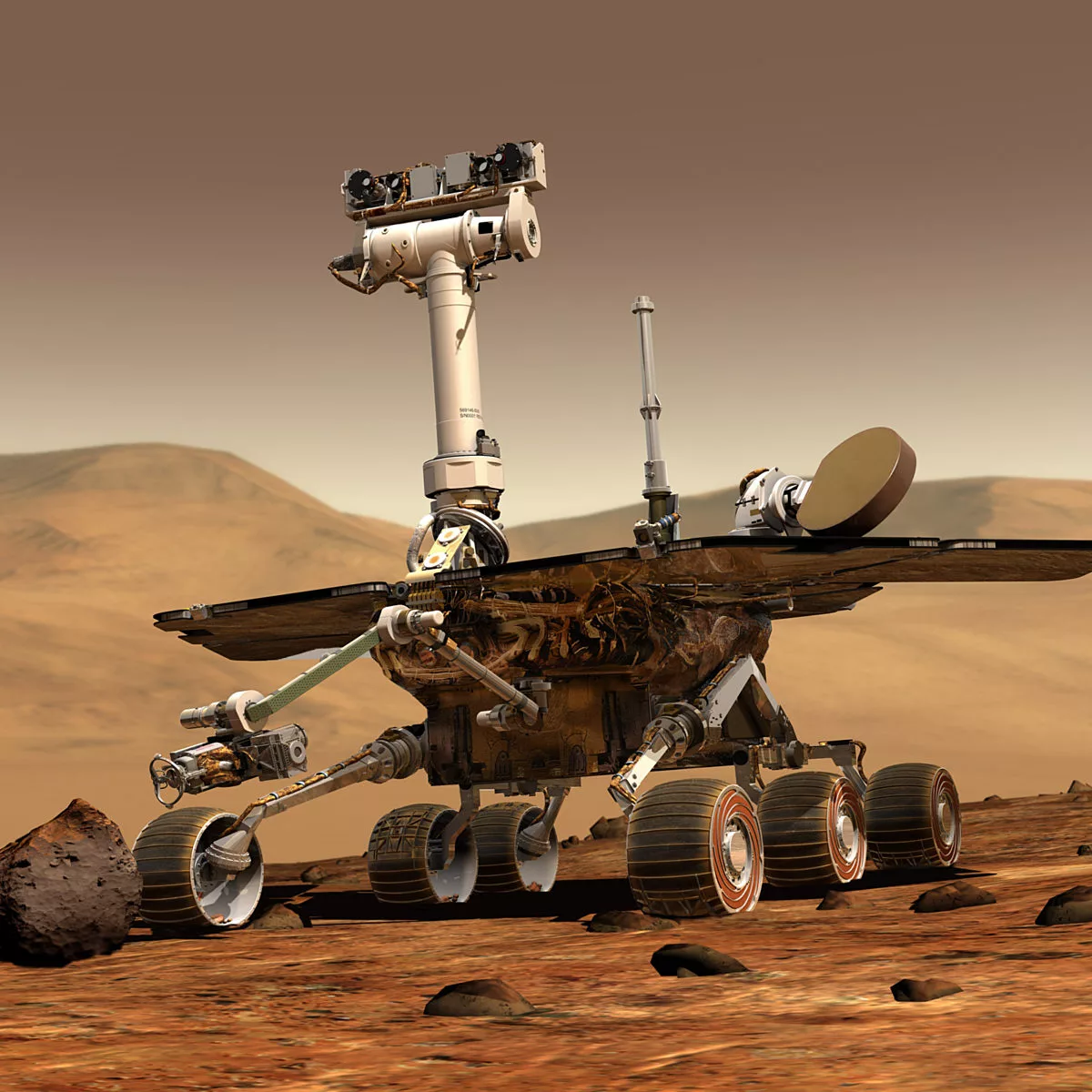
Mars Exploration Rovers Update: Spirit Discovers More Meteorites as Opportunity Closes in
The Mars Exploration Rovers (MER) are wheel deep in winter, and still faring well, working hard, and sending home interesting new finds despite the below freezing Martian temperatures. The next month or so will bring the season's coldest temperatures to the rover's present habitats, but so far, no one on the team is losing any sleep over whether or not they'll make it through, because these rovers just keep going and going . . .

MESSENGER has flipped for the last time
I just received a MESSENGER mission news update stating that the MESSENGER spacecraft, en route to Mercury via two Venus flybys, has passed another milestone on its long journey: it has, for the last time, passed from Earth's environs toward the inner solar system.

New Horizons tracks an asteroid
New Horizons is spending the summer traversing the asteroid belt. I haven't written a lot about New Horizons lately because the mission has been going so uneventfully well. But now I've got something to write about: data!!

The official publication on the second Titan RADAR swath is out
Today Nature published an article titled
Mars Exploration Rovers Update: Spirit Works Winter Campaign as Opportunity Roves Adrift on way to Victoria
The Mars Exploration Rovers are now well into their second Martian winter and, all things considered, both Spirit and Opportunity are faring pretty well for being, essentially, aging Baby Boomers on bitter cold, dusty alien planet some 50 million miles away from home.

A couple of neat artist's conceptions of ExoMars
With the Aurora program under way, the next European mission to Mars will be a rover named ExoMars, to be launched in 2011.

An Odyssey THEMIS image of Gale Crater, Mars
This week's releases from the Mars Odyssey THEMIS team included a gorgeous one of the layered interior of Gale crater.

Europe goes ahead with Aurora
This item is a little bit old -- I missed it when it was announced last Monday. ESA issued a press release stating that

Cassini RADAR: Another Flyby, Another Completely Different View of Titan
OK, I finally got a story written about the latest and greatest of the Cassini RADAR data based upon a conversation I had with with Ralph Lorenz late last week.

Cassini RADAR images of the surface of Titan
Since the last Titan flyby on April 30, the Cassini RADAR team has been releasing quite a large number of pieces of the swath to the Web.

A play-by-play of the Cassini scare on Mayday
Last week's Cassini Significant Events Report included a detailed play-by-play of the frightening morning of Mayday. I thought it was a very interesting read on how a mission deals with an

OPAG, Day 2: Update from the NASA Advisory Committee meetings this week
During the first day of OPAG, the chair of the group, Fran Bagenal, was not present because she was participating in some rather important discussions taking place in Maryland.

OPAG, Day 2: Ground-based study of the small bodies in the outer solar system
After the political discussions of the morning, Mike Brown stood up to give the