

 Explore Worlds
 Find Life
 Defend Earth


All
All
 Sun
Sun Mercury
 Venus
Venus Earth
Earth Mars
Mars Jupiter
 Saturn
 Uranus
 Neptune
 Small Bodies
Stories, updates, insights, and original analysis from The Planetary Society.

Looking Back at MU69
A crescent view of MU69 reveals its bizarre shape. Let's look at lots of other fun-shaped space crescents.

A few new images of MU69
New Horizons is back in action after going quiet for a period of solar conjunction following the 1 January flyby of 2014 MU69 (informally nicknamed

MU69 appears as a bi-lobed baby comet in latest New Horizons images
The latest images downlinked from New Horizons show MU69 to be a textbook example of a contact binary. How do contact binaries form? Updated with images released on 3 January.

Happy New Year! The New Horizons flyby was successful!
New Horizons has

New Horizons fast approaching 2014 MU69
Unaffected by the shutdown of the U.S. government, New Horizons is still on course for its New Year’s encounter with 2014 MU69 (nicknamed “Ultima Thule”). This post collects the latest images from New Horizons' approach to the tiny Kuiper belt object and will be updated regularly.

What to Expect When New Horizons Visits 2014 MU69, Ultima Thule
New Horizons is rapidly approaching its New Year’s encounter with the most distant world ever visited, 2014 MU69. Closest approach will be at a distance of 3,500 kilometers at about 05:33 on 1 January UTC.

NASA Then & Now
A collection of before and after slider images showing how views of planets in our solar system have changed over the years since NASA was created.
'Everything about this flyby is tougher': New Horizons just over 100 days from Ultima Thule
On Jan. 1, NASA's New Horizons will perform a high-risk, high-reward flyby of an ancient world on the outskirts of the solar system.
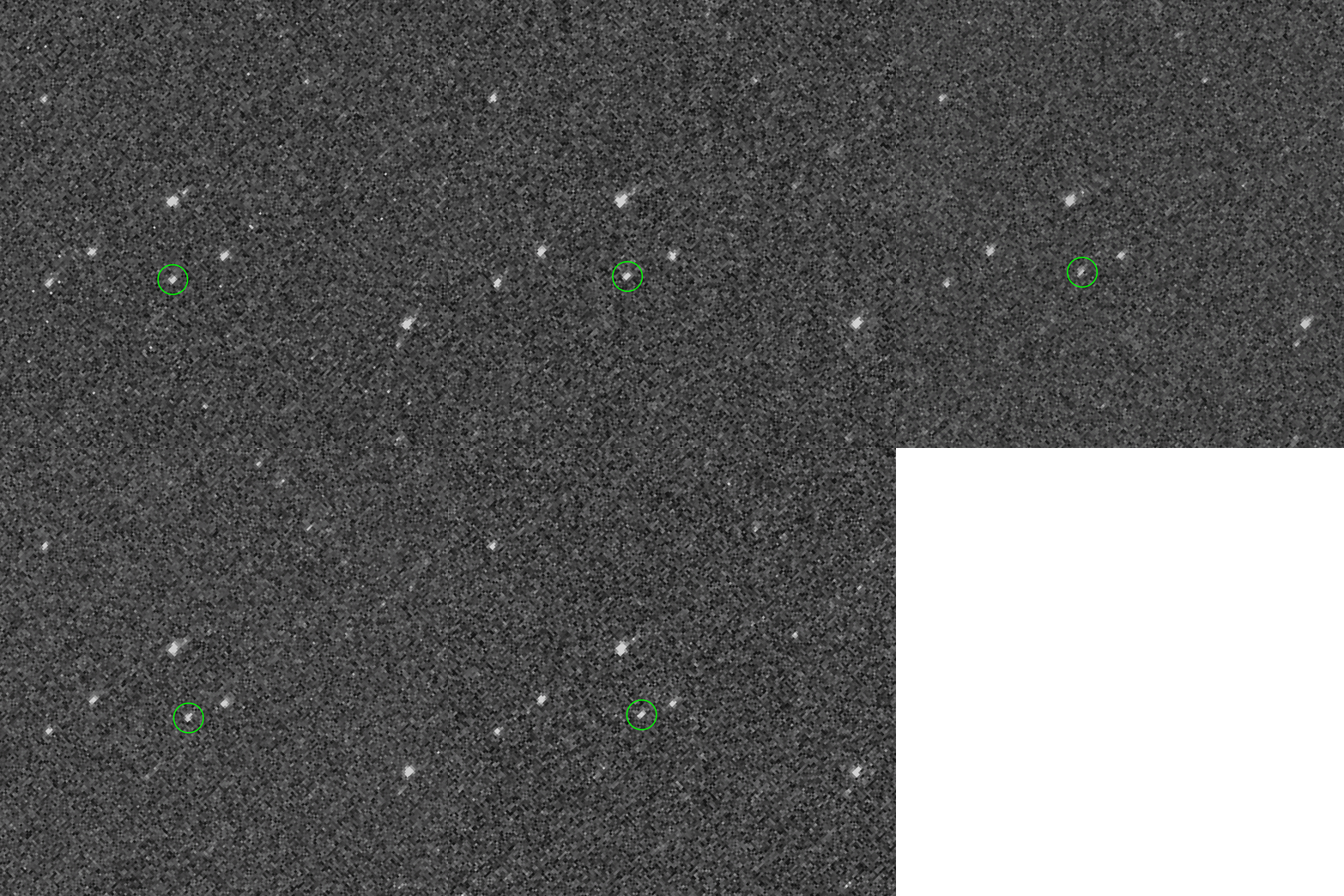
OSIRIS-REx and New Horizons catch first sight of their targets
Both OSIRIS-REx and New Horizons achieved first light on their still-distant targets this week. Between now and the end of 2018, Bennu and 2014 MU69 will turn from points of light into places.

Sketching a science meeting
The Planetary Society has always enjoyed the connections between science and art, so when I saw Leila Qışın's sketches pop up on her Twitter feed during the recent New Horizons team meeting, I knew I had to share them with you.

Some big moons in the Kuiper belt
In a new preprint, Mike Brown and Bryan Butler show evidence that two Kuiper belt moons are even bigger than we used to think. They are Eris' moon Dysnomia, and Orcus' moon Vanth.
New Horizons prepares for encounter with 2014 MU69
Throughout 2018, New Horizons will cruise toward its January 1 encounter with 2014 MU69. Preparations for the flyby are nearly complete.

Explore spinnable Saturn and Jupiter moons with Google Maps
Google Maps released several new map products that allow you to see the locations of named features on many solar system planets and non-planets, spinning them around in space with your mouse.

Planetary Society-funded telescopes help find ring around Haumea, a distant dwarf planet
Haumea has a ring! Two telescopes used in the discovery—one in Slovenia, and one in Italy—received funding from The Planetary Society's Shoemaker Near Earth Object (NEO) Grant program, which helps amateur astronomers find, track and characterize near-Earth asteroids.

In total eclipse of a star, New Horizons' future flyby target makes its presence known
The team reported two weeks ago that the first attempts at observing 2014 MU69 were unsuccessful. But in their third try, on July 17, astronomers in Argentina saw the telltale sign of MU69's presence: a stellar wink.

When New Horizons' next target passed in front of a star, this scientist was watching from Argentina
A team of scientists recently traveled to rural Argentina in the hopes of catching New Horizons' next target—Kuiper Belt object MU 69—crossing in front of a distant star.

DPS/EPSC update on New Horizons at the Pluto system and beyond
Last week's Division for Planetary Sciences/European Planetary Science Congress meeting was chock-full of science from New Horizons at Pluto.

DPS/EPSC update: 2007 OR10 has a moon!
The third-largest object known beyond Neptune, 2007 OR10, has a moon. The discovery was reported in a poster by Gábor Marton, Csaba Kiss, and Thomas Mueller at the joint meeting of the European Planetary Science Congress and the Division for Planetary Sciences of the American Astronomical Society (DPS/EPSC) on Monday.

Rapidly Rotating Regular Satellites and Tides
Pluto’s small moons have unusual rotation rates and states. Now we know a moon of another dwarf planet does as well. Is there a connection?
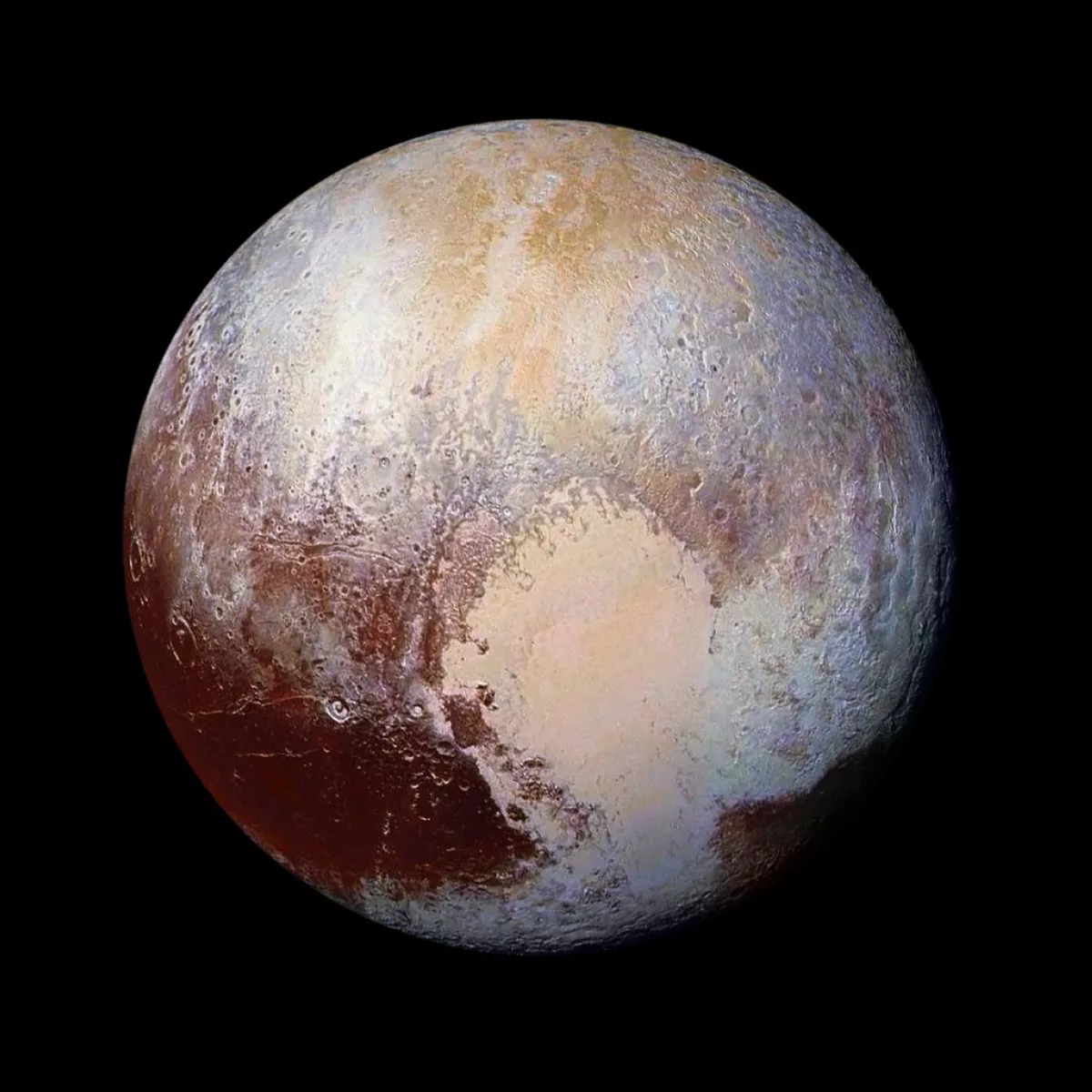
Pluto is not the end
One year after the New Horizons Pluto flyby, Emily reflects on its significance.