

 Explore Worlds
 Find Life
 Defend Earth


All
All
 Sun
Sun Mercury
 Venus
Venus Earth
Earth Mars
Mars Jupiter
 Saturn
 Uranus
 Neptune
 Small Bodies
Stories, updates, insights, and original analysis from The Planetary Society.

A plea for more pictures from Dawn
If you had asked me last year what I was most looking forward to in space in 2011, my answer would have been unhesitating: Dawn's approach to Vesta. Never in my adult life have I been able to follow a space mission as it discovered a large new world for the first time.

Dawn Journal: Vesta to choose Dawn's arrival time
Dawn remains healthy and on course as it continues to approach Vesta. Thrusting with its ion propulsion system, as it has for most of its interplanetary journey so far, the spacecraft is gradually matching its solar orbit to that of the protoplanet just ahead.

NASA Selects Next New Frontiers Mission
NASA has selected the OSIRIS-REx mission as the next New Frontiers mission. OSIRIS-REx (Origins-Spectral Interpretation-Resource Identification-Security-Regolith Explorer) will be the first U.S. asteroid sample return.

Citizen Science projects for Planetary Science: Get Involved! Do Science!
Citizen Science projects let volunteers easily contribute to active science programs. They're useful when there is so much data it overwhelms computing algorithms (if they exist) or the scientific research team attempting to process it.
Land ho!
It's hard to convey just how excited I am to see Dawn's first image of asteroid Vesta.
Dawn's Vesta phase timeline, a summary
Now that Dawn has finally begun its science mission at Vesta, I thought it'd be useful to go back through Marc Rayman's Dawn Journals to collect a summary of the plans for Vesta.
Dawn Journal: On the threshold of a new world
Dawn is on the threshold of a new world. After more than three and a half years of interplanetary travel covering in excess of 2.6 billion kilometers (1.6 billion miles), we are closing in on our first destination. Dawn is starting its approach to Vesta.

The scale of our solar system
Space.com has taken advantage of the infinitely scrollable nature of Web pages to produce a really cool infographic on the scales of orbital distances in the solar system.

Place names on Lutetia
Whenever we explore someplace new -- a new island, a new continent, a new cave, a new world -- there's a necessary activity that explorers must perform before they can sensibly tell the world about their discoveries: name things.
Dawn Journal: Calibrating instruments and thrusters on Vesta approach
Three and a half years after launch, Dawn continues its travels around the Sun, maneuvering to take the same orbital path as Vesta. The spacecraft has spent most of the past month gently thrusting with its ion propulsion system. Some of the thrusting this month, however, was not designed to propel Dawn to Vesta.

365 Days of Astronomy Podcast: What's up in the second quarter of 2011
Regular readers of this blog will find the content of today's 365 Days of Astronomy Podcast familiar, because it's an update on what the solar system exploration spacecraft are up to, based on my monthly
What's up in the solar system in April 2011
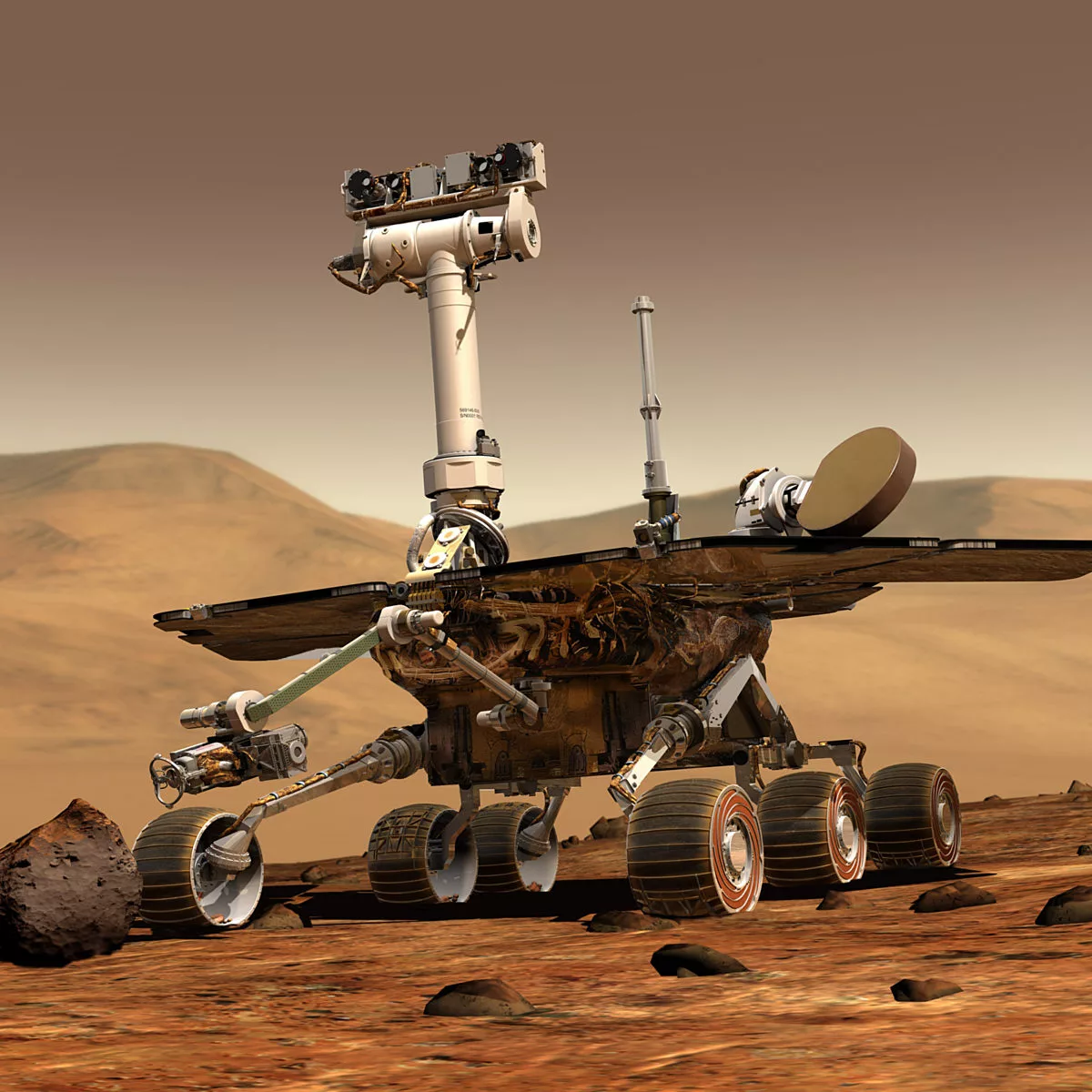
April 2011 will see MESSENGER begin the science phase of its orbital mission at Mercury, and should, I think, also see the start of Dawn's approach observations of Vesta. At Mars, Opportunity is back on the road again, rolling inexorably toward Endeavour. At Saturn, Cassini will continue its focus on Saturn and Titan science.

The end of Stardust
So, it's over. Stardust's last transmission to Earth was yesterday, March 24, 2011 at 23:33 UTC. Its final act was to burn up all of its last remaining fuel, a move intended to help engineers validate their guesses for how much fuel actually remained in the tanks.

In honor of Stardust: The Annefrank encounter
Since Stardust is being decommissioned today I thought it'd be fitting to take a look back at one of its data sets. I hadn't fiddled with the Annefrank data set before, and it was small and easy to deal with.
Tomorrow is Stardust's very last day
What's that in my eye? Must be a piece of stardust that's making my eyes water as I read that Stardust will be given its very last command tomorrow, a command that'll end its long life, but give its builders one more piece of valuable data in the process.

Dawn's instruments are being roused for Vesta approach
Today the Dawn imaging team released a photo from the main camera, the Framing Camera, symbolizing that they're preparing to start Dawn approach science; the other two science instruments, a spectrometer and a neutron detector, are also being turned on and checked out.

Stardust: Decommissioning planned for March 24
Stardust (probably) has only a week remaining in its operational lifetime, according to a status report just posted to the mission website.

LPSC 2011: Analysis of the grains returned by Hayabusa
I'd been despairing of finding a good source for a writeup of the presentations in the Hayabusa session at last week's Lunar and Planetary Science Conference, but am happy to report that I've finally found an excellent one.

LPSC 2011: Kirby Runyon on Mars, the Moon, Hartley 2, and Ganymede
Kirby Runyon, a second-year grad student at Temple University, offered to send me some writeups of selected presentations from last week's Lunar and Planetary Science Conference, and I enthusiastically agreed.

LPSC 2011: Day 3: Deep Impact at Hartley 2
Wednesday's sessions at the Lunar and Planetary Science Conference (LPSC) on the Deep Impact flyby of Hartley 2 were one of two that I was most looking forward to, the other being this morning's talks on Hayabusa's samples from Itokawa, about which I don't yet have any notes. I am again grateful to Franck Marchis and Andy Rivkin for sending me their notes on Hartley 2.