

 Explore Worlds
 Find Life
 Defend Earth

All
All
 Sun
Sun Mercury
 Venus
Venus Earth
Earth Mars
Mars Jupiter
 Saturn
 Uranus
 Neptune
 Small Bodies
Stories, updates, insights, and original analysis from The Planetary Society.

Dunes on Tatooine
The fictional world Tatooine, scene of action in the Star Wars movies, is named after a town in Tunisia, where parts of the movies were filmed. The desert backdrops against which the movies were filmed are real terrestrial landscapes, which prove to be perhaps unexpectedly dynamic.

A new HiRISE view of Opportunity (sol 3361)
The HiRISE camera on Mars Reconnaissance Orbiter has snapped a lovely color photo of the rim of Endeavour crater, catching Opportunity midway between Nobby's Head and Solander Point.

Spacewalk ends early following helmet water leak
A spacewalk outside the International Space Station Tuesday ended early after a water leak inside astronaut Luca Parmitano’s helmet created a potentially dangerous situation.

The Peak of Discovery
This week's Planetary Radio goes on tour at the Mount Wilson Observatory with descendants of its founder.

Congress Rejects NASA's First Operating Plan
NASA's plan to raid Planetary Science funding to pay for sequester cuts in other science programs was rejected by Congress earlier this month. NASA is now working on a new plan that has yet to be submitted for approval.

New names for Pluto's little moons Kerberos and Styx; and a new moon for Neptune
Pluto's moons, formerly known as

A New Dimension for Mercury
There's a cool new way to explore the first planet.

House Committee Approves Smallest NASA Budget Since 1986
This budget, if enacted, would be the smallest budget NASA has seen since the mid '80s, when adjusted for inflation.

A rare clear day in Alaska
NASA recently shared a gloriously detailed image of an unusual clear day in Alaska as seen from the Terra satellite.

Dueling Op-Eds on NASA's Asteroid Redirect Mission
NASA Administrator Bolden and the Chairman of the House Science Committee published opposing op-eds in The Hill newspaper today, illustrating the uphill battle NASA faces to sell Congress on this mission.
Programmable Mars Watch for $50
Time is kept differently on Mars. This is because Mars itself rotates a little slower than Earth. This proves to be a pain when it comes to timekeeping.

Laser Bees Papers
For those wishing to bore into more details of our Laser Bees project itself, graduate student Alison Gibbings from the University of Strathclyde has sent their technical paper that resulted from the 2013 Planetary Defense Conference.

The Goal is Mars
Today, The Planetary Society submitted our white paper to the National Research Council's call for

Scale comparisons of the solar system's major moons
A few presentation slides with pretty pictures, sized to scale, of the large moons of the solar system.

The Summer Solstice 2013 issue of The Planetary Report is out!
I’m happy to tell you that the Summer Solstice 2013 issue of The Planetary Report is hot off the presses and Is in the mail.

Uranus or Bust (and on a budget)
New plans may make a mission to Uranus affordable within NASA's new, constrained budget.

In-flight entertainment: cameras aboard the Space Launch System
When the Space Launch System lifts off on its inaugural flight in 2017, eight engineering cameras will collect crucial in-flight data while providing breathtaking views for the public.
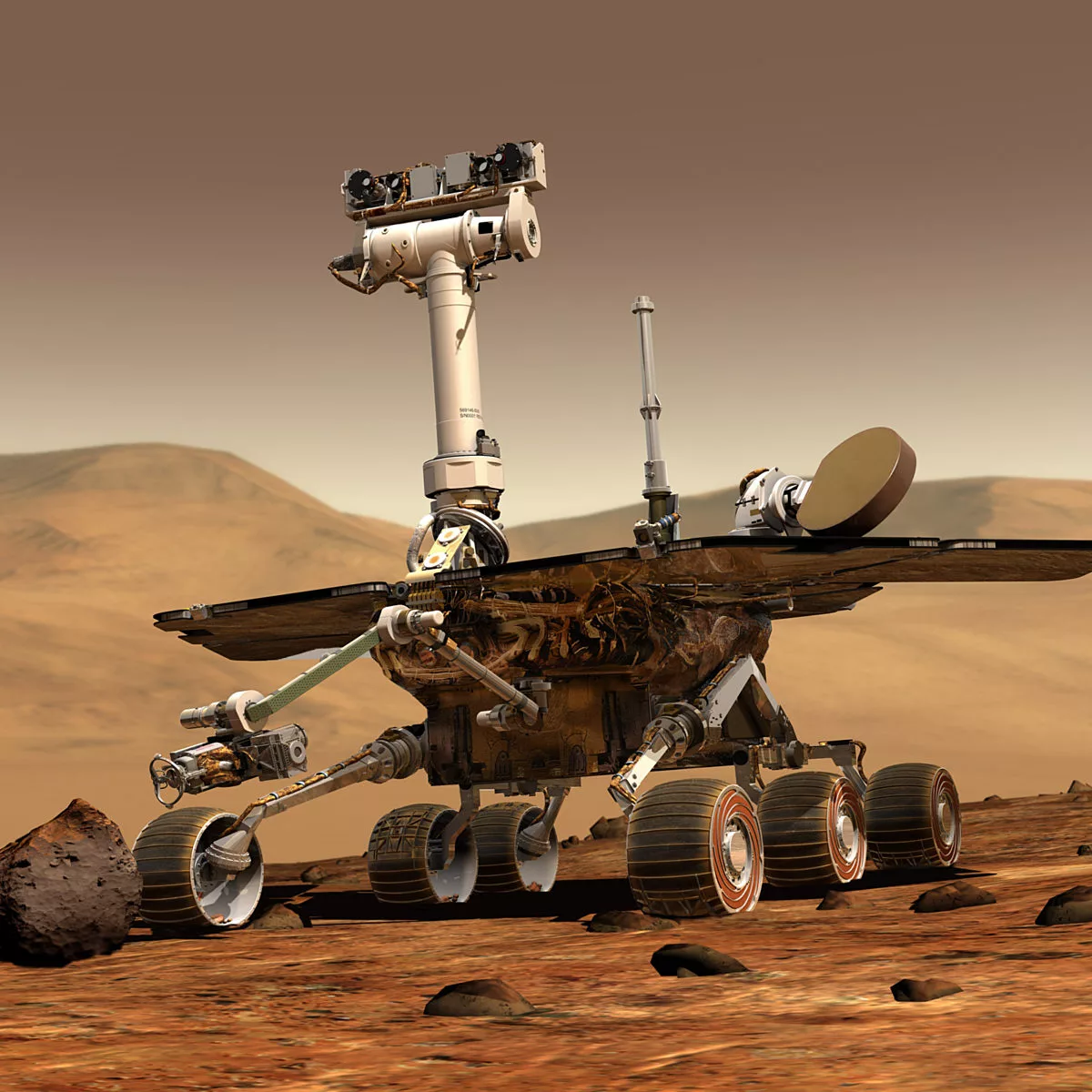
Field Report From Mars: Sol 3355 - July 2, 2013
By Sol 3325 Opportunity has driven up onto the next

Found a Killer Asteroid? Who Ya Gonna Call?
Astronomer Timothy Spahr directs the Minor Planet Center, the global clearinghouse for asteroids, comets and other relatively small objects in the solar system, including moons. He also coordinates the Society's Shoemaker NEO grant program.

The Ice Pits of Mars
The south polar cap of Mars is riddled with strange landscapes.