

 Explore Worlds
 Find Life
 Defend Earth


All
All
 Sun
Sun Mercury
 Venus
Venus Earth
Earth Mars
Mars Jupiter
 Saturn
 Uranus
 Neptune
 Small Bodies
Stories, updates, insights, and original analysis from The Planetary Society.

Watch that front wheel spin!
Holy cow, look at that right front wheel spin. I am alternately amazed and horrified by this animation.

Hayabusa on the home stretch
Hayabusa is still 100 million kilometers from the Earth, less than an astronomical unit away but still with months to travel. But according to an update posted to their websitethis morning by project manager Junichiro Kawaguchi, Hayabusa is on the home stretch.

Planetary Society Advent Calendar for December 17: Proteus
Proteus is a weird name for this world. It's the second-largest moon of Neptune, and so it's named (as are all of Neptune's moons) for deities associated with the sea.

Planetary Society Advent Calendar for December 16: Mimas
Mimas is the anti-Enceladus.

Two cool discoveries today: icy-hot exoplanet and smallest ever Kuiper Belt object
There are two cool stories circulating today on the theme of discovering new places in the cosmos.

Downloading the "How to work with Mars Express VMC images" class
Here's the information on how to watch the class on how to work with Mars Express VMC images, which I conducted to a small audience this morning.

Class announcement: How to play with Mars Express VMC images
Those of you who follow me on Twitter know that I've been fiddling with images from the Mars Webcam, more officially known as the Mars Express Visual Monitoring Camera (VMC), for the last couple of weeks.

Planetary Society Advent Calendar for December 15: Mars
We have three orbiters and two rovers currently exploring Mars, each of which returns breathtaking photos on a daily basis.
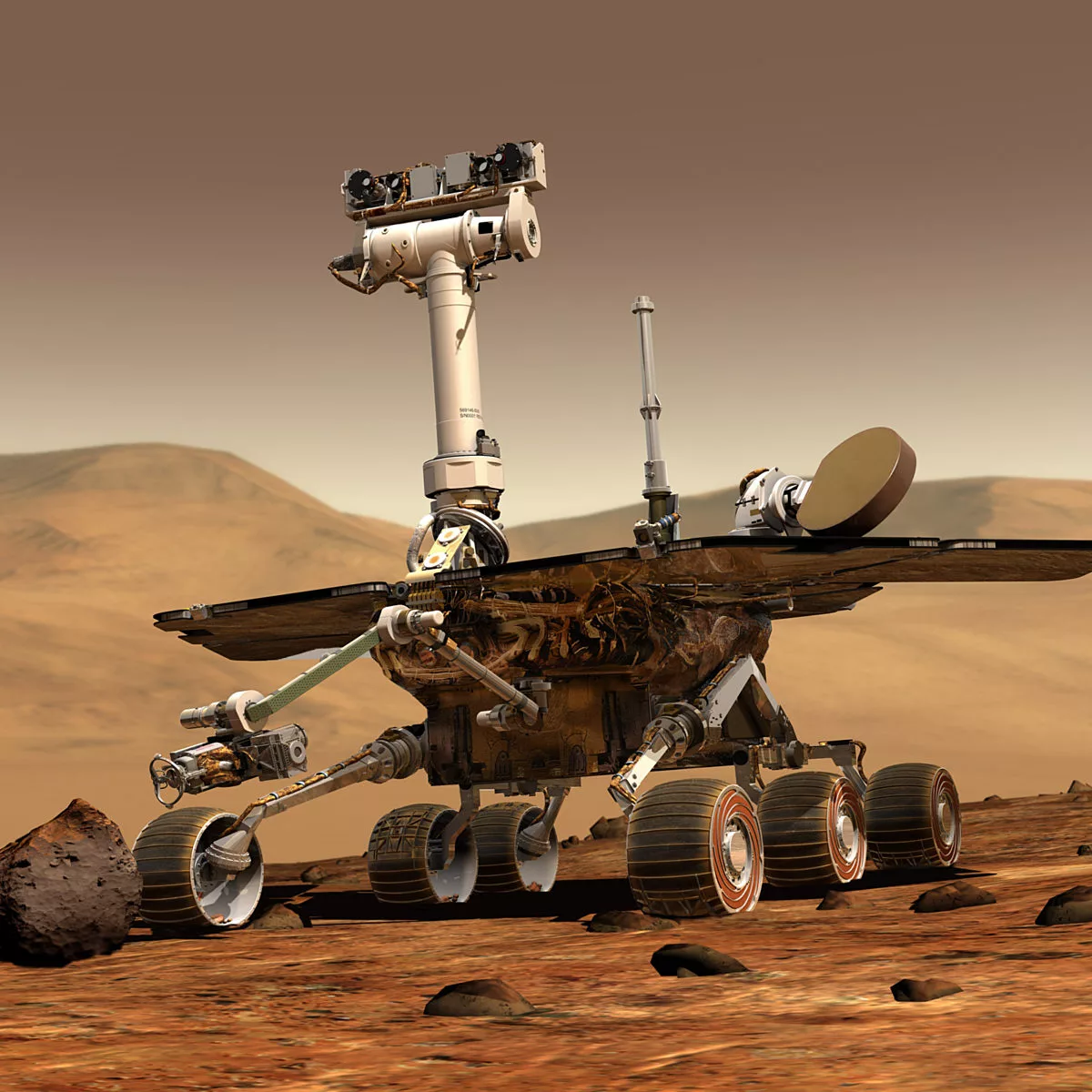
No, they can't push with the arm to free Spirit
I've gotten this question about once a week since Spirit got stuck, but yesterday, two different readers asked the same question within an hour of each other, so I figured it was time for a blog entry.

Planetary Society Advent Calendar for December 14: The Moon
The Moon is the most familiar of the objects in the heavens.

Congratulations to the WISE team on a successful launch!
It was worth my while to get up at 5:15 my time this morning -- I saw a flawless launch of a Delta II from Vandenberg Air Force Base, carrying the Wide-field Infrared Survey Explorer (WISE) into orbit.

A teeny weeny bit of movement in Spirit's right front wheel
The ever-vigilant Doug Ellison just posted this animation, which really actually does show a teeny tiny bit of motion in the right front wheel. If you don't notice any motion, look closer.

Planetary Society Advent Calendar for December 13: Dactyl
If you don't think Pluto gets enough respect, just imagine what it's like to be a satellite of an asteroid.

Copenhagen Needs More Space, Part 2 The Orbiting Carbon Observatory Must Fly Again
In our continuing saga of the Orbiting Carbon Observatory (OCO), the scene now switches from Copenhagen to Washington, D.C.

Planetary Society Advent Calendar for December 12: Saturn
Cassini's amazing cameras have set a new standard for the quality, sharpness, resolution, beautiful color, and all-around spectacularness of images returned from the outer solar system.

Planetary Society Advent Calendar for December 11: Io
This is a special post for all of my readers who are lighting the first candle on their menorot this evening.

Awesome Mars Express view of Phobos and Deimos together
My inbox was exploding this morning with messages about a tremendously cool animation released this morning by ESA's Mars Express team. It shows Phobos crossing Deimos, in what's known as a

Planetary Society Advent Calendar for December 10: Triton
Welcome to the tenth post in my

Copenhagen Needs More Space - Space Science Has Critical Role to Play in Climate Science
Climate change and Copenhagen are dominating the world news this week, as politicians, diplomats, scientists, and protesters gathered in the Danish city for the 2009 meeting for the U.N. Framework Convention on Climate Change.

Planetary Society Advent Calendar for December 9: Atlas
Here's another weird-looking one, though it's less weird from this particular, polar point of view than it is when viewed from the side.