

 Explore Worlds
 Find Life
 Defend Earth


All
All
 Sun
Sun Mercury
 Venus
Venus Earth
Earth Mars
Mars Jupiter
 Saturn
 Uranus
 Neptune
 Small Bodies
Stories, updates, insights, and original analysis from The Planetary Society.

Deep Impact's last images
Today I received an email notification of new public releases of some image data sets. I always love seeing new public space image data, but this notification was bittersweet: it included the first public release of the very last image data returned to Earth by Deep Impact, of a distant comet ISON.

The Planetary Society Supports NASA's Asteroid Initiative
The Planetary Society strongly supports NASA's asteroid initiative, including the goal of redirecting an asteroid to the vicinity of the Moon. But an independent cost estimate is needed, and needed soon.

Will we find signs of tectonics on Pluto? And what would that mean?
Joseph O’Rourke summarizes a recently submitted paper on tectonic activity on Pluto after the Charon-forming impact.

New orbital images of Curiosity landing site from Mars Express and HiRISE
Mars Express and Mars Reconnaissance Orbiter are keeping their eyes in the sky on Curiosity. There's a nice newly public color image of all of Gale Crater from HiRISE, and two new HiRISE images within the Curiosity landing site.

The value of a Guest Investigator program for Dawn
NASA selected 21 Participating Scientists to join the Dawn team in 2010, prior to Dawn's arrival at Vesta in 2011. Since that time, Dawn Participating Scientists have made enormous contributions to the mission, as they do for most other NASA missions. But the status of a Participating Scientist program for Dawn at Ceres has been in doubt.

No, Russia Did Not Just Kick the U.S. Out of the Space Station
A top Russian official announced a ban on Russian engines in U.S. military launches and questioned Russia's long-term commitment to the International Space Station. We cut through the hype and try to understand what was actually said and the immediate consequences facing NASA.

Lovely, live, continuous, high-definition video of Earth
Have you ever wished you could enjoy the astronauts' view of Earth from the Space Station? Now, you can. Just go to the live feed from the High Definition Earth Viewing (HDEV) experiment, crank it up to its highest resolution, let it take over your monitor, and watch Earth spin by.

Behind the scenes: Our spring Board of Directors meeting
Twice a year, the Board of Directors of The Planetary Society gathers for a face-to-face meeting. Jennifer Vaughn reports on the meeting.

Dust on, dust off: Before-and-after comparisons of rover decks on Mars
Curiosity and Opportunity self-portraits show one rover accumulating dust, the other losing it. Check out these cool before-and-after comparisons.

Venus Express science mission ends; aerobraking experiment beginning
Venus Express, currently the only spacecraft orbiting our nearest planetary neighbor, will soon meet a fiery end in Venus' atmosphere. But its work isn't over yet. ESA will maneuver Venus Express to dip into the uppermost Venus atmosphere and study how the spacecraft responds to atmospheric pressure, giving ESA valuable experience in aerobraking.

Pretty pictures: Rosetta's comet is now acting like one!
New photos from ESA's comet-chaser show its destination comet, 67P/Churyumov-Gerasimenko, developing a coma.

Curiosity update, sols 610-630: Drilling work at Windjana
Finally, a new drill site! For the first time in nearly a year, Curiosity has put drill bit to rock and acquired a new sample of Martian material for her analytical instruments to chew on. Scientific data collection at Windjana is now complete; Curiosity drove away last night, on sol 630.

The Case of the 5-Millisecond Cosmic Radio Burst
Everyone loves a good mystery. In astronomy, there is nothing more exciting than an unexplained signal.

A Reluctant Dance Towards Europa
For the last two years, NASA has been the shy partner refusing to get on the dance floor, and Congress has been the aggressive partner insisting on a dance now. The dance is the continuing attempt by Congress to have NASA commit to a mission to explore Europa, and NASA’s attempts to delay a mission well into the 2020s.

A new Earthrise over the Moon from Lunar Reconnaissance Orbiter's pushframe camera
Earth's brilliant colors shine above the drab lunar horizon in this new

What’s Seeping on Mars? Recurring Slope Lineae
HiRISE team member Matt Chojnacki tells us about the discovery and formation of these mysterious features forming on Mars in the present day.
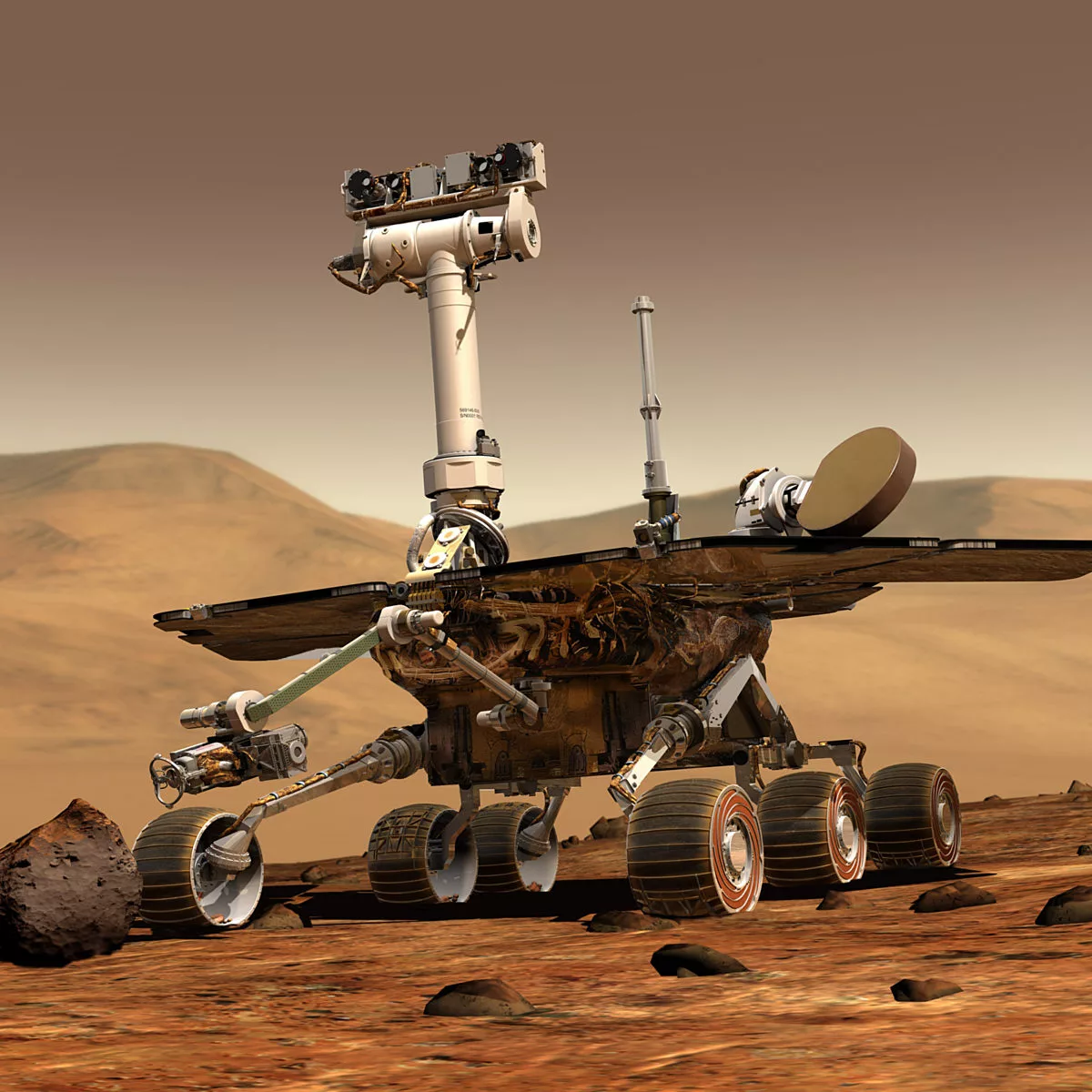
Field Report From Mars: Sol 3650 – May 2, 2014
Opportunity is closing in on the next important outcrop area on the rim of Endeavour crater.

Another Day in the Solar System
One day, five worlds.

Upcoming public appearances: Spacefest and ISDC
Updates on upcoming appearances in southern California at Spacefest tomorrow, and the International Space Development Conference next week.

Rosetta update: Final orbit matching phase has begun
Rosetta is in the final stage of its approach to comet 67P Churyumov-Gerasimenko. Yesterday, the spacecraft successfully performed the first of ten burns it needs to match velocity with the comet.