

 Explore Worlds
 Find Life
 Defend Earth

All
All
 Sun
Sun Mercury
 Venus
Venus Earth
Earth Mars
Mars Jupiter
 Saturn
 Uranus
 Neptune
 Small Bodies
Stories, updates, insights, and original analysis from The Planetary Society.

Seeing the old in a new light
Old stars may offer a rainbow of color, while a Mars rover sets a new record, and a JWST image gets an artistic makeover.
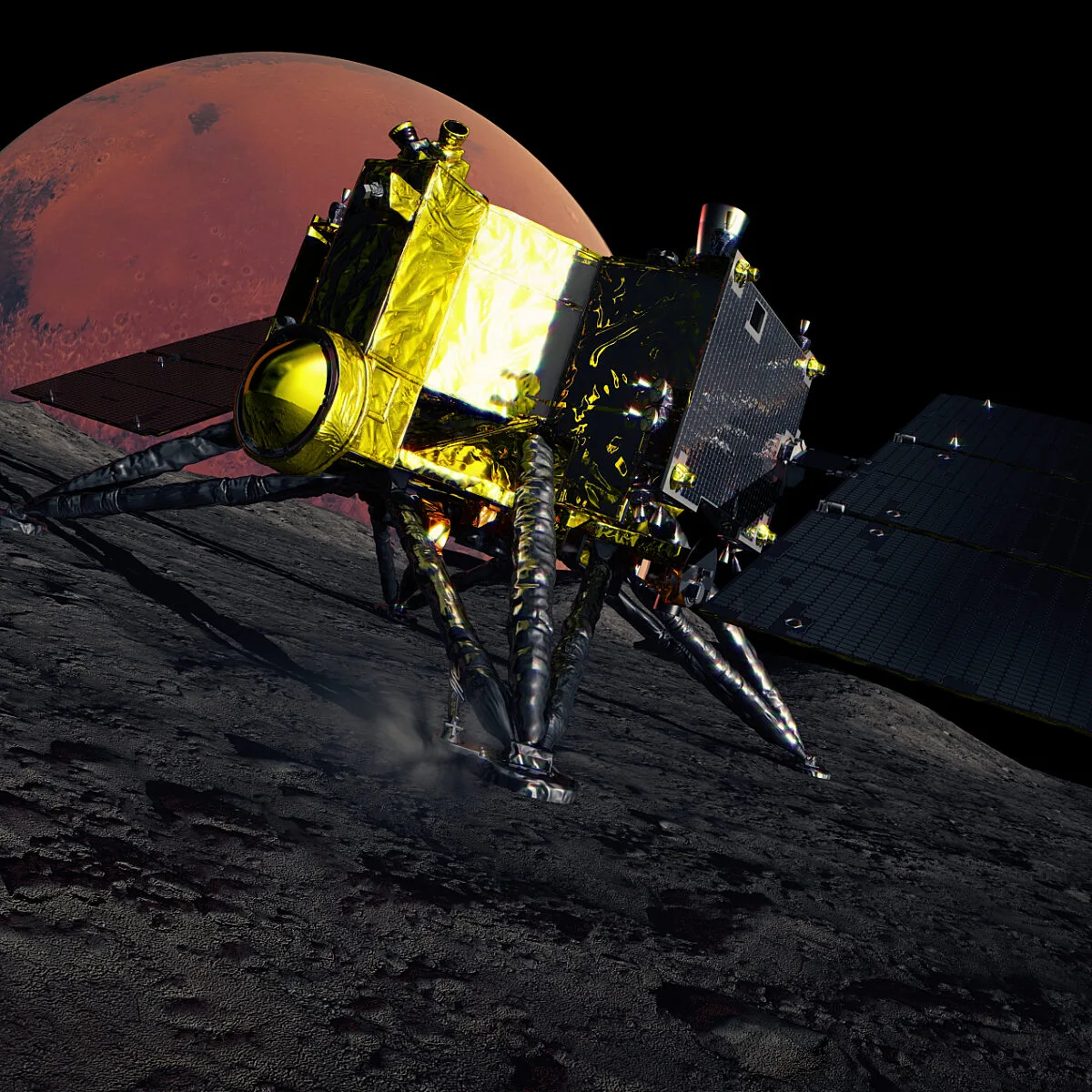
Mars moon mission set to launch with tech funded by Planetary Society on board
The first mission to land on a moon of Mars could launch as soon as Oct. 19, carrying with it a sample collection instrument that The Planetary Society helped develop.

Born from fire
A NASA spacecraft bakes in a furnace, a planet possibly forms from its dying star, and a cloud arises by a Mars volcano.

A guide to sidewalk astronomy
Our top tips on hosting your own sidewalk astronomy event.

Flying by and diving deep
NASA looks into drones to dive through caves on Titan and the Moon, while the Juice mission flies by Earth, and the ISS flies overhead.

Amoebas and anniversaries
A new crater on the Moon, super-hot amoebas, and Hubble marks an orbital milestone as well as one of your own.

The Space Advocate Newsletter, September 2026
When funding isn’t enough.

Announcing our new STEP Grant winners: A Solar System shadow-tracker, a new telescope tool, and an asteroid database
Three groups of scientists will receive crowdfunded support to further the scientific exploration of space.

Newborns and old-timers
While Roman doubles its lifetime and Artemis astronauts retire, a new discovery may be the youngest exoplanet ever.

SWAP, PEPSSI, and the secrets of the Solar System
NASA's New Horizons is poised to make discoveries about the farthest reaches of our Solar System, but two of its key instruments are in danger of being shut down prematurely.

The next generation
A new shape on Saturn, new Artemis spacesuits, and a new look at Star Trek.

Meet the next generation of Mars exploration
Countries around the world are planning missions to Mars, including rovers and a sample return from the moon Phobos.

An insider's look at the Nancy Grace Roman Space Telescope
Dr. Jason Rhodes, Jet Propulsion Laboratory project scientist for the Nancy Grace Roman Space Telescope, shares what to expect from NASA’s next great observatory.

Who knew there were so many more moons?
Roman is on its way to make discoveries, including more Solar System moons than you might expect.

The Nancy Grace Roman Space Telescope has launched
NASA’s next flagship orbital observatory will reshape what we know about planets throughout the galaxy.

Size is in the eye of the beholder
From Mars’ tiny Phobos to NASA’s mammoth Vehicle Assembly Building, apparent size depends on where you’re looking from.

What could the Artemis IV astronauts discover on the Moon?
NASA is already planning what the crew will do on their lunar landing mission.

The Space Advocate Newsletter, August 2026
The Sun shines brightly until it doesn't.

Cosmic neighborhood watch
Observing our celestial neighbor (and something much farther away).

Total solar eclipse edition
Europe’s stunning eclipse, plus a political victory for science.