Emily Lakdawalla's blogs from 2013
Chang'e 3 undergoing thermal vacuum testing
Posted by Emily Lakdawalla on 2013/05/09 10:48 CDT | 2 comments
China's lunar lander and rover are undergoing some of their last major tests and so are nearly ready for launch.
DSS 35: Watch the construction of the next big dish!
Posted by Emily Lakdawalla on 2013/05/08 11:23 CDT | 1 comments
You can watch via webcam as the next Deep Space Network radio antenna -- DSS 35, in Tidbinbilla, Australia -- gets its dish.
Thoughts on Kiera Wilmot: Mentor curiosity to create future scientists
Posted by Emily Lakdawalla on 2013/05/03 12:30 CDT | 30 comments
Please bear with me -- this blog entry has nothing to do with planets but a lot to do with society. For the last two days, my Twitter feed has been roiling with outrage about the story of Kiera Wilmot.
New Deep Impact Hartley 2 data set
Posted by Emily Lakdawalla on 2013/05/03 09:59 CDT | 4 comments
Just messing around with a recently released processed version of the Deep Impact Hartley 2 data set.
Posted by Emily Lakdawalla on 2013/05/02 07:00 CDT | 2 comments
Note the special time! In this week's Planetary Society hangout at 5pm PDT / midnight UTC, I'll talk with MESSENGER deputy principal investigator Larry Nittler about what MESSENGER has accomplished in its prime and extended missions at Mercury, and what it stands to do if awarded a mission extension.
Pluto's seasons and what New Horizons may find when it passes by
Posted by Emily Lakdawalla on 2013/05/02 03:42 CDT | 2 comments
New Horizons might see a Pluto with a northern polar cap, a southern polar cap, or both caps, according to work by Leslie Young.
Planetary Society Hangout: Naming Bennu, with Mike Puzio and Dante Lauretta
Posted by Emily Lakdawalla on 2013/05/01 09:51 CDT | 2 comments
In this week's Hangout, Emily Lakdawalla hosted Mike Puzio and Dante Lauretta in a discussion about the naming of OSIRIS-REx' asteroid target.
We have a winner! The OSIRIS-REx asteroid's name is: Bennu!
Posted by Emily Lakdawalla on 2013/05/01 09:37 CDT
We received more than 8000 entries from all over the world in the Name That Asteroid contest, and we can finally announce the winner. The asteroid formerly known as 1999 RQ36 is now formally named (101955) Bennu, for a heron associated with the Egyptian god Osiris.
Supersonic flight for SpaceShipTwo
Posted by Emily Lakdawalla on 2013/04/29 12:48 CDT | 6 comments
Virgin Galactic achieved a major milestone today with the first supersonic flight for its SpaceShipTwo suborbital vehicle. The rocket fired for a total of 16 seconds.
Curiosity on Mars - Design, Planning, and the First Mars Year of Operations
Posted by Emily Lakdawalla on 2013/04/26 04:14 CDT | 13 comments
Last month, I formally entered a new phase of my career: I signed my first book contract. I'll be writing a book about the Curiosity mission through its prime mission, for Springer-Praxis.
Awesome interactive solar system exploration history infographic
Posted by Emily Lakdawalla on 2013/04/25 11:26 CDT | 2 comments
Check out this absolutely wonderful infographic, produced by Olaf Frohn, that summarizes the entire history of solar system exploration.
One of my favorite image processing tricks: colorizing images
Posted by Emily Lakdawalla on 2013/04/23 02:11 CDT | 2 comments
An easy image processing trick -- using lower-resolution color data to colorize a black-and-white photo -- is relied upon by many space missions to keep data volumes low. Here's how to do it.
Mars One astronaut selection announcement
Posted by Emily Lakdawalla on 2013/04/21 08:29 CDT | 25 comments
Today I am on my way to New York City, where I will be serving as the moderator for Mars One's first press briefing.
A walk among the mesas of Deuteronilus Mensae
Posted by Emily Lakdawalla on 2013/04/19 02:17 CDT | 4 comments
Enjoy some pretty pictures of some bizarre terrain on Mars: the mesas of Deuteronilus Mensae.
Tides of light and ice: Water and rock made from snowmelt on Mars
Posted by Emily Lakdawalla on 2013/04/17 01:29 CDT | 4 comments
A recently published paper proposes that much of the sedimentary rock on Mars formed during rare, brief periods of very slight wetness under melting snow.
Help Wanted: Web Editor Intern
Posted by Emily Lakdawalla on 2013/04/16 10:56 CDT
The Planetary Society is looking for a bright, motivated person with superb attentiveness to detail who wants hands-on web editing experience.
Planetary Society Weekly Hangout: The Ice Giants, with Heidi Hammel
Posted by Emily Lakdawalla on 2013/04/11 02:00 CDT | 5 comments
My guest this was Planetary Society Board vice president Heidi Hammel. We discussed two planets near and dear to our hearts, Neptune and Uranus. What's new on these icy worlds since Voyager 2 passed by, and what are the prospects for their future exploration?
Blast from the Past: Spirit's tracks at the "End of the Rainbow"
Posted by Emily Lakdawalla on 2013/04/09 09:05 CDT | 3 comments
Doug Ellison shared this lovely panorama via Twitter over the weekend. It's from the Mars Exploration Rover Spirit, taken back in 2004. The drunken path in the foreground is a visual record of just how exciting it was for Spirit to have finally made it to the Columbia Hills, and to rocks that were not fragments of basalt.
Pretty pictures: Gliding flight for SpaceShipTwo
Posted by Emily Lakdawalla on 2013/04/05 12:46 CDT | 8 comments
Some beautiful photos of a recent gliding flight test of SpaceShipTwo.
Posted by Emily Lakdawalla on 2013/04/04 11:37 CDT | 27 comments
I've been to a lot of conferences and seen a lot of talks and it's amazing to me how a bad presentation can get in the way of really exciting science. Here are my recommendations for how to approach a talk, and tips and tricks to make your talk better.
Posted by Emily Lakdawalla on 2013/04/03 11:14 CDT | 2 comments
Some silly fun to brighten your Wednesday.
Book Review: Cosmochemistry, by Harry McSween and Gary Huss
Posted by Emily Lakdawalla on 2013/04/02 01:43 CDT | 1 comments
This very accessible textbook begins at the beginning, explaining how all the things in the solar system were made from star stuff.
Posted by Emily Lakdawalla on 2013/04/01 02:36 CDT | 1 comments
India's Mars Orbiter Mission has been much in the news in Asian media over the last week as a result of the release of ISRO's Annual Report 2012-2013. Also, ISRO and NASA issued a joint statement from Washington a week ago endorsing interagency cooperation in the space sciences
Curiosity update, sol 227: Some sharpshooting and a dusty deck
Posted by Emily Lakdawalla on 2013/03/29 10:50 CDT | 4 comments
Curiosity is back to science operations, though the activities are limited in scope by the fact that conjunction is fast approaching. Here's a couple of neat images from sol 227.
Planetary Society Weekly Hangout: Reports from the Lunar and Planetary Science Conference
Posted by Emily Lakdawalla on 2013/03/28 02:00 CDT | 5 comments
On Thursday at noon PDT / 1900 UTC I'll report on some of my favorite findings from LPSC, and answer your questions about the latest planetary science.
LPSC 2013: watery Martian minerals
Posted by Emily Lakdawalla on 2013/03/28 12:26 CDT | 3 comments
Some interesting results from the Lunar and Planetary Science Conference on clay minerals on Mars and what they might mean about ancient water.
An editorial on the LPSC 2013 oral sessions
Posted by Emily Lakdawalla on 2013/03/28 12:26 CDT | 6 comments
In which I complain just a little bit about talks at the Lunar and Planetary Science Conference.
LPSC 2013: License to Chill (or, the solar system's icy moons)
Posted by Emily Lakdawalla on 2013/03/27 11:52 CDT
Reports from the March 19 session at the Lunar and Planetary Science Conference covering eight icy moons in the outer solar system: Ganymede, Europa, Dione, Rhea, Mimas, Tethys, Enceladus, and Miranda.
LPSC 2013: The Smaller They Are, The Better They Shake
Posted by Emily Lakdawalla on 2013/03/25 08:04 CDT | 1 comments
Really cool movies from Jim Richardson propose to explain how the same physics of impact cratering can produce such differently-appearing surfaces as those of the Moon, large asteroids like Eros, and teeny ones like Itokawa.
LPSC 2013: Do we have a meteorite from Mercury?
Posted by Emily Lakdawalla on 2013/03/21 06:14 CDT | 7 comments
Before yesterday, my answer to this question would be "no." Now my answer is "probably." But it's not clear if we know which of the meteorites in our collections is from the innermost planet.
LPSC 2013: Sedimentary stratigraphy with Curiosity and Opportunity
Posted by Emily Lakdawalla on 2013/03/20 04:19 CDT | 4 comments
A mind-boggling quantity of information is being presented at the Lunar and Planetary Science Conference. In my first report from the meeting, I try to make sense of the Curiosity and Opportunity sessions.
Reports from the Lunar and Planetary Science Conference
Posted by Emily Lakdawalla on 2013/03/15 04:38 CDT | 5 comments
I depart tomorrow for Houston and the annual Lunar and Planetary Science Conference (LPSC). Here's a look at how to follow the meeting on social media, and where to find me if you're also attending.
Posted by Emily Lakdawalla on 2013/03/14 02:00 CDT
This week I'll be talking with NEOWISE principal investigator Amy Mainzer about moving objects that the WISE mission has spotted both inside and outside our solar system.
Yes, it was once a Martian lake: Curiosity has been sent to the right place
Posted by Emily Lakdawalla on 2013/03/12 05:36 CDT | 7 comments
The news from the Curiosity mission today is this: Curiosity has found, at the site called John Klein, a rock that contains evidence for a past environment that would have been suitable for Earth-like microorganisms.
Posted by Emily Lakdawalla on 2013/03/12 01:57 CDT | 2 comments
We don't have any spacecraft at Jupiter right now, which is a pity. Until we do, we have to rely upon Earth-based astronomers to monitor the changing face of the largest planet.
A post about International Women's Day
Posted by Emily Lakdawalla on 2013/03/08 11:22 CST | 7 comments
Today, March 8, is International Women's Day, about which I have conflicting feelings.
Meteor showers on Titan: an example of why Twitter is awesome for scientists and the public
Posted by Emily Lakdawalla on 2013/03/06 12:48 CST | 5 comments
I use a variety of social networking tools to perform my job, but there's one that's more important and valuable to me than all the rest combined: Twitter. Yesterday afternoon there was a discussion on Twitter that exemplifies its value and fun: are there visible meteors on Titan?
Will comet Siding Spring make a meteor shower on Mars?
Posted by Emily Lakdawalla on 2013/03/05 04:34 CST | 7 comments
JPL's Solar System Dynamics group shows that there is still a possibility that C/2013 A1 (Siding Spring) could hit Mars. But the uncertainty in its position at that time is large -- the closest approach could happen an hour earlier, or an hour later -- so we're a long way from knowing yet whether it will or (more likely) won't impact.
Browse Curiosity's data in the Analyst's notebook
Posted by Emily Lakdawalla on 2013/03/05 01:29 CST
Last week the Curiosity mission made its first data delivery to the Planetary Data System. The bad news: none of the science camera image data is there yet. The good news: there are lots and lots of other goodies to explore.
Very brief Curiosity update, sol 205: Memory anomaly and a swap to the "B-side"
Posted by Emily Lakdawalla on 2013/03/04 06:48 CST | 2 comments
Over the last few days the mission has been working its way through its first major (not life-threatening, just really inconvenient) anomaly: a memory problem in its main computer.
Posted by Emily Lakdawalla on 2013/03/01 06:43 CST | 2 comments
Last week I trawled the archives to find all of Galileo's images of asteroid Ida; this week, I turned to Gaspra.
Planetary Society Weekly Hangout: Studying Asteroids from Earth with Andy Rivkin
Posted by Emily Lakdawalla on 2013/02/28 01:25 CST | 5 comments
Emily Lakdawalla's guest this week was Applied Physics Laboratory asteroid astronomer Andy Rivkin. We talked about the menagerie of rocks in the asteroid belt, how many of them travel in pairs and triples, how some of them are surprisingly wet, and how much you can learn about asteroids using Earth-based telescopes.
Comet to whiz past Mars in October 2014
Posted by Emily Lakdawalla on 2013/02/27 05:36 CST | 17 comments
A recently discovered comet, C/2013 A1 (Siding Spring), is going to be passing very close to Mars on October 19, 2014. Does it pose a risk to spacecraft?
Galileo got so many more images of Ida than I realized
Posted by Emily Lakdawalla on 2013/02/22 04:14 CST | 1 comments
While writing up the cruise-phase issues of the Galileo Messenger a couple of weeks ago, I came across a fuzzy montage of images of Ida that I had not seen before. So I decided to spend some time digging into the Planetary Data System to see if there were more images to be found. I found lots and lots pictures that I'd never seen before!
Pretty picture: a moon transit
Posted by Emily Lakdawalla on 2013/02/21 05:52 CST | 5 comments
A reader comment inspired me to dig up an oldie but a goodie: a sequence of photos of the Moon transiting Earth, seen from a very long way away,
Curiosity update, sol 193: drilled stuff is in the scoop, ready for analysis
Posted by Emily Lakdawalla on 2013/02/20 06:36 CST
There was a press briefing today to announce that Curiosity has completed her last major first-time activity: powder drilled from inside a rock at John Klein successfully made its way into the CHIMRA sample handling mechanism in the turret. Sol 193, then, marks the day that Curiosity is finally ready to start the science mission.
Why don't we have any photos of asteroid 2012 DA14 if it came so close?
Posted by Emily Lakdawalla on 2013/02/19 03:13 CST | 2 comments
A frequently-asked question last week was: if asteroid 2012 DA14 is coming so close to Earth, why hasn't anyone taken any pictures of it? Now that 2012 DA14 has whizzed past us, we do finally have some radar pictures of it, but they still may not satisfy everyone.
When will New Horizons have better views of Pluto than Hubble does?
Posted by Emily Lakdawalla on 2013/02/18 04:22 CST | 7 comments
Last week, I posted an explainer on why Hubble's images of galaxies show so much more detail than its images of Pluto. Then I set you all a homework problem: when will New Horizons be able to see Pluto better than Hubble does? Here's the answer.
BREAKING: Meteor fall causes damage in Russia [UPDATED]
Posted by Emily Lakdawalla on 2013/02/15 01:44 CST | 10 comments
A large meteor streaked through the skies above Russia on the morning of Feb 15th, causing a deafening sonic boom that shattered windows and injured hundreds.
Planetary Society Weekly Hangout, Thu Feb 14 1200PT/2000UT: Courtney Dressing
Posted by Emily Lakdawalla on 2013/02/14 01:40 CST | 3 comments
Emily Lakdawalla and Courtney Dressing talked about just how common Earth-sized exoplanets may be in our neighborhood. Watch the replay here.
Why can Hubble get detailed views of distant galaxies but not of Pluto?
Posted by Emily Lakdawalla on 2013/02/14 12:37 CST | 13 comments
How come Hubble's pictures of galaxies billions of light years away are so beautifully detailed, yet the pictures of Pluto, which is so much closer, are just little blobs? I get asked this question, or variations of it, a lot. Here's an explainer.
A forgotten image of Earth and the Moon
Posted by Emily Lakdawalla on 2013/02/13 07:45 CST | 4 comments
While researching another story, I came across an image I don't remember ever seeing before, of a moonrise from an unexpected source.
New Contest: Name the Moons of Pluto!
Posted by Emily Lakdawalla on 2013/02/11 11:41 CST | 15 comments
The discoverers of Pluto's fourth and fifth moons are inviting the public to vote on (and write in candidates for) their formal names. Voting closes in two weeks.
Browsing Landsat data is a lot easier than I thought it was
Posted by Emily Lakdawalla on 2013/02/08 05:05 CST | 2 comments
With the Landsat Data Continuity Mission scheduled to launch on Monday, there's been a lot of Tweeting about Landsat, and through one such Tweet I learned about a resource that I hadn't known existed before: the LandsatLook Viewer. This is a graphical interface to more than a decade worth of Landsat data, a tremendous resource for anyone interested in Earth's changing surface, natural or manmade.
Pretty picture: tessera terrain on Venus
Posted by Emily Lakdawalla on 2013/02/07 04:18 CST | 1 comments
In which I dive into the Magellan radar data set and come up with some images of an unusual and possibly unique solar system terrain: tessera.
Venerable Deep Impact spacecraft has photographed comet ISON
Posted by Emily Lakdawalla on 2013/02/05 05:24 CST | 6 comments
Deep Impact has made the first space-based observations of comet ISON.
Galileo Messengers: Cruise to Venus, Earth, Gaspra, Earth, Ida, and almost to Jupiter
Posted by Emily Lakdawalla on 2013/02/05 08:40 CST | 2 comments
It's taken me a year to face the emotionally draining task of reading and writing about Galileo's cruise phase as chronicled in the mission's newsletters.
A new rover self-portrait and a new color image of Curiosity from orbit
Posted by Emily Lakdawalla on 2013/02/04 05:40 CST | 7 comments
Curiosity is inching her way through her first use of the drill on a Martian rock. She paused in the proceedings to capture a second Martian "selfie."
Posted by Emily Lakdawalla on 2013/02/04 03:52 CST | 1 comments
Asteroid astronomer Andy Rivkin has posted to YouTube his own awesome version of "We Didn't Start the Fire" -- with planetary science lyrics.
Posted by Emily Lakdawalla on 2013/02/01 11:47 CST
Remembering Rick Husband, William McCool, Michael Anderson, Kalpana Chawla, David Brown, Laurel Clark, and Ilan Ramon on the tenth anniversary of the loss of the space shuttle Columbia.
Pretty picture: Neptune and Triton
Posted by Emily Lakdawalla on 2013/02/01 12:29 CST | 6 comments
On a lonely evening, what is one to do but to dip into archival space image data and surface with a gorgeous photo of a crescent Neptune and Triton?
One of my favorite space images of all time: Rosetta was here
Posted by Emily Lakdawalla on 2013/01/31 04:58 CST | 10 comments
A conversation on Twitter today reminded me of this photo, which is one of my all-time favorite space images: the view from Rosetta during its Mars flyby.
Posted by Emily Lakdawalla on 2013/01/31 02:00 CST
We welcomed Sarah Noble to our weekly Google+ Hangout. Sarah is a lunar geologist and a civil servant working in the Research & Analysis program at NASA Headquarters, and has recently been named Program Scientist for the LADEE lunar mission.
Enceladus: A problem of contrast
Posted by Emily Lakdawalla on 2013/01/30 07:00 CST | 6 comments
Time for my quarterly foray into the Cassini archival science data! The very first image I downloaded from the January 1, 2013 data release presented an interesting challenge to my image processing skill. I'll show you the pretty picture of Enceladus and then explain how I processed it.
Scientists: Register to be a Lunar and Planetary Science Conference Microblogger!
Posted by Emily Lakdawalla on 2013/01/30 01:20 CST
Hey planetary scientists! Many of you know that the Lunar and Planetary Science Conference (LPSC) is a great meeting in a venue that is perfect except for one thing: Internet access is positively lousy. So I'm really excited that a solution that I advocated to conference organizers is being adopted.
Curiosity update, sol 171: Placing the drill
Posted by Emily Lakdawalla on 2013/01/29 11:11 CST | 1 comments
They're getting closer and closer to drilling. Curiosity now seems to be positioned in the spot where they plan to be when they execute that long-awaited first drill.
"Sand" means something different to me than it does to you, probably
Posted by Emily Lakdawalla on 2013/01/24 01:28 CST | 2 comments
I had one of those "A-ha" moments last week where I suddenly realized that I had run afoul of a common problem in science communication: when the words I'm using mean something different to me than they do to almost everyone I'm talking to. The confusing word of the week: "sand."
Posted by Emily Lakdawalla on 2013/01/24 10:21 CST | 3 comments
Zach Weiner's new collection of geekily awkwardly smart web comics will include a story I contributed!
Stars, and stars, and stars: pretty pictures from the European Southern Observatory
Posted by Emily Lakdawalla on 2013/01/21 03:39 CST | 4 comments
My solar system chauvinism is well-established, but I am as much a sucker for beautiful astrophotos as the rest of you. Once in a while I get a media advisory from the European Southern Observatory about a new pretty picture posted on their website, and then I inevitably lose an hour following links to one stunner after another.
More Chang'E 2 Toutatis flyby images
Posted by Emily Lakdawalla on 2013/01/20 09:52 CST | 6 comments
Last week at a meeting of NASA's Small Bodies Assessment Group (SBAG), Han Li of the Chinese Academy of Sciences gave a lengthy presentation on Chang'E 2. Her presentation included a new sequence of photos from the December 13 Toutatis flyby.
Pretty picture: new HiRISE view of Curiosity, sol 145
Posted by Emily Lakdawalla on 2013/01/16 04:58 CST | 2 comments
Mars Reconnaissance Orbiter captured a new view of Curiosity on Mars on January 2 (sol 145). Curiosity was in the same location as the one from which it shot the sol 137 panorama I posted earlier. You can see the rover's tracks leading all the way back to the landing site!
Curiosity update, sol 157: Glenelg isn't just a test site anymore; it's a scientific "candy store"
Posted by Emily Lakdawalla on 2013/01/15 05:30 CST | 5 comments
The Curiosity mission held a press briefing this morning for the first time since the American Geophysical Union meeting, and it was jam-packed with science. The biggest piece of news is this: it was worth it, scientifically, to go to Glenelg first, before heading to the mountain.
Posted by Emily Lakdawalla on 2013/01/14 06:31 CST | 4 comments
Video views shot by two doomed spacecraft take us flying across the Moon.
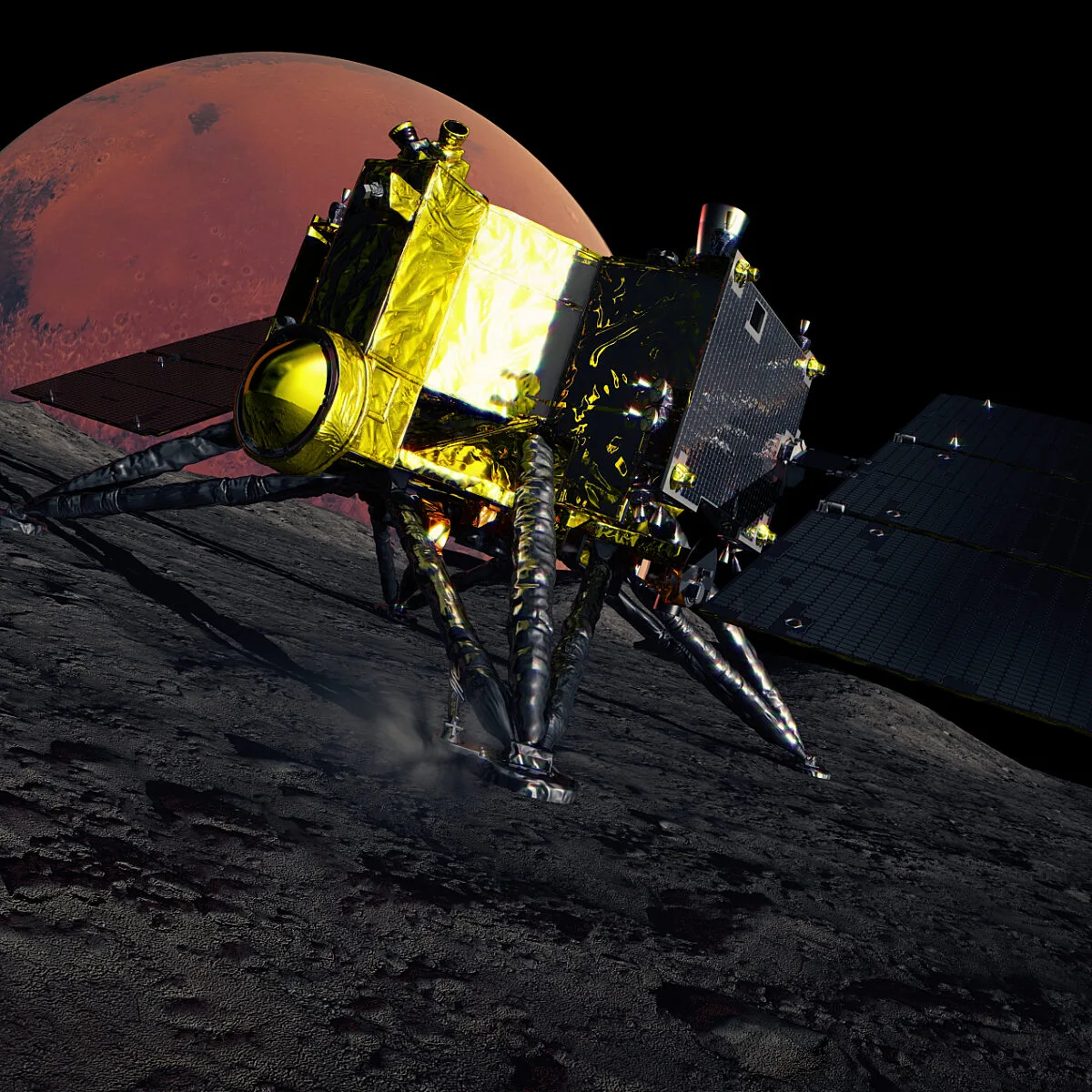
The Chang'e 3 lunar lander and rover, expected to launch late this year
Posted by Emily Lakdawalla on 2013/01/09 03:46 CST | 8 comments
All of the information I could track down on China's planned Chang'e 3 lunar lander and rover, including videos and a brand-new artist's concept of the rover rolling across the Moon.
Report from AAS: Exoplanets (and exo-asteroids, and exo-comets) everywhere
Posted by Emily Lakdawalla on 2013/01/08 06:52 CST | 7 comments
This year's American Astronomical Society meeting featured tons and tons of news on exoplanets. They're everywhere! And not just planets, but also asteroids, comets, and more....
Posted by Emily Lakdawalla on 2013/01/08 04:22 CST | 1 comments
Join me, Mike "Plutokiller" Brown, Mario Livio, Jason Kalirai, and others in a Space Fan Hangout broadcast from the American Astronomical Society meeting happening this week in Long Beach, California.
Looking ahead to spacecraft activities in 2013
Posted by Emily Lakdawalla on 2013/01/04 01:09 CST | 3 comments
2013 is going to be a busy year in space exploration. Two missions launch to the Moon (LADEE and Chang'E 3), and another two to Mars (MAVEN and India's mission). Curiosity should drive to the Mountain, and Opportunity to the next site on Endeavour's rim. Cassini will be seeing rings and Titan. Others should continue routine operations, except maybe MESSENGER, whose fate after March is not yet decided.
Updates on ISRO's Mars Orbiter Mission: five instruments to be delivered in March
Posted by Emily Lakdawalla on 2013/01/04 11:27 CST | 2 comments
Several news articles appeared in Indian media today about the upcoming launch of ISRO's Mars Orbiter Mission. Five instruments have been selected, and their delivery is expected in March.
Planetary Society Weekly Hangout, Thu Jan 3 1200PT/2000UT: Jim Bell
Posted by Emily Lakdawalla on 2013/01/02 12:32 CST | 3 comments
Join Emily Lakdawalla and Casey Dreier for a chat with Jim Bell, a scientist who wears many hats. He's the team lead for the Pancam color cameras on the Spirit and Opportunity rovers; he's a member of the Curiosity science team; and he's the esteemed President of the Planetary Society's Board of Directors. We'll talk about the great science being done by both Curiosity and Opportunity, and about what's in store for the future.
Support our Asteroid Hunters
They are Watching the Skies for You!
Our researchers, worldwide, do absolutely critical work.
Asteroid 2012DA14 was a close one.
It missed us. But there are more out there.
Save Our Science
Become a Space Advocate
We are at a crucial turning point in the history of planetary exploration.
You can help.
Together, we can get the budget we need to support our planetary endeavors and Save our Science.
We've done it before. Let's do it again.