

 Explore Worlds
 Find Life
 Defend Earth


Planetary Radio Episodes
Since 2002, Planetary Radio has visited with a scientist, engineer, project manager, advocate, or writer who provides a unique perspective on the quest for knowledge about our Solar System and beyond. The full show archive is available for free.

It’s back to Alaska, this time to the Poker Flat Research Range, where former Director Neal Brown and his staff launched sounding rockets into the heart of the Aurora Borealis. Emily Lakdawalla explores newly-discovered and very distant dwarf planets, and Bill Nye the Science guy has the latest on NASA’s planetary science budget.

Join Mat Kaplan and other Aurora “virgins” as they seek the Northern Lights in Fairbanks, Alaska, and meet retired rocketeer and Director of the Poker Flat Research Range, Neal Brown

SETI Institute researcher and member of the Kepler team Jason Rowe helps us dig into the latest big announcement about hundreds of planets in solar systems like our own.

NASA scientist Harley Thronson tells us about a new initiative that is figuring out how we will get men and women to the red planet at a reasonable price. You can read their initial report. Emily Lakdawalla reports on Curiosity’s passage over dunes that made engineers nervous. Bill Nye reveals NASA’s plans for a lunar rover that may launch in 2018. Mat Kaplan joins Bruce Betts in a TV studio to record this week’s What’s Up segment. You can watch!

Principal Investigator and physicist Bruce Macintosh joins astronomer Franck Marchis to celebrate first light from the most powerful instrument for imaging exoplanets.

24 spacecraft are either busy exploring the solar system or speeding toward an exciting destination. The Planetary Society's Senior Editor takes us on a whirlwind advance tour.
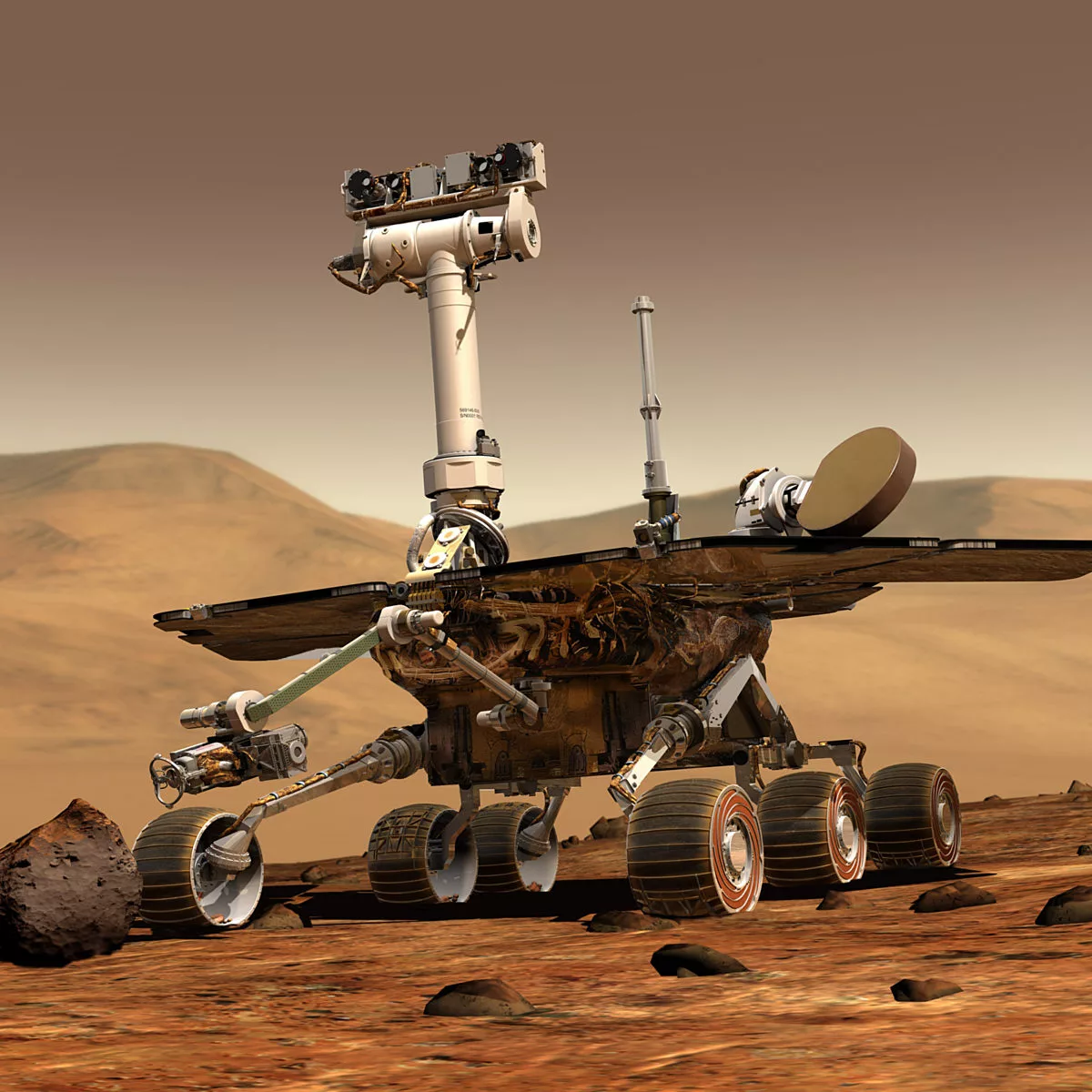
What a long, wonderful trip it has been for Spirit and Opportunity, the Mars Exploration Rovers. Planetary Society reporter A.J.S. Rayl has been writing about their adventure every month for ten years. She looks back on this week’s show.

The annual fall meeting of the American Geophysical Union revealed lots of science, some of it astounding. Emily Lakdawalla was there with Advocacy and Outreach Coordinator Casey Dreier, whose news was not quite as good.
The life of explorer and teacher Dr. Bruce Murray was celebrated last November 10th at Caltech. This week we present a few excerpts from the tributes paid to the former JPL Director and co-founder of the Planetary Society.

What would YOU do with an extra $10 Billion for space exploration and development? That’s what Mat Kaplan asked the passionate space enthusiasts at the 2013 SpaceUp LA Unconference.

Casey Dreier tells the winding tale of Plutonium 238, the radioactive isotope that is vital for exploration of the solar system. The US came dangerously close to exhausting its supply. Even with production restarted, there are major challenges facing explorers.
“Starship Century—Toward the Grandest Horizon” is the new collection of fact and fiction assembled by Gregory and James Benford. The brothers are among the leaders of a renaissance in research and thinking about interstellar travel. They have returned to Planetary Radio to talk about this story of human destiny among the stars.
Planetary Radio returned to the Crawford Family Forum for live coverage of the LADEE launch on September 6th.

Leonard David has been writing about space exploration for more than five decades. Now he has turned his attention to China’s ambitious plans.

Two missions are coming together in a high bay clean room at the Jet Propulsion Laboratory. SMAP and ISS RapidScat went on display for a visit by NASA Administrator Charles Bolden. Mat Kaplan and Emily Lakdawalla provide special coverage.

When she was learning to forecast the weather in Hawaii, Brown University grad student Kat Scanlon didn’t suspect it would help her uncover evidence for rain or, more likely, snow that helped shape the surface of Mars billions of years ago.
Amanda Hendrix looks for and studies water in our solar system, where it has been found in surprising locales. Earth's moon, for instance. She talks about Luna’s ice and the weathering of its ancient surface.
Alan Stern is back to tell us about Golden Spike, his new company that plans to put human clients on the surface of the moon by the end of this decade.

Planetary Society experts review the challenges and triumphs of 2012 and look forward to a new and exciting year. You’ll hear Bill Nye the Science Guy, Emily Lakdawalla on new missions, Casey Dreier on “Saving our Science,” and Bruce Betts’ review of great projects, as well as a musical rendition of “Random Space Fact.”
The 44th Annual Meeting of the AAS Division of Planetary Sciences hosted hundreds of researchers and revealed volumes of scientific results. Join us at the conference.