

 Explore Worlds
 Find Life
 Defend Earth


Planetary Radio • Oct 17, 2025
Book Club Edition: Space Craze by Margaret Weitekamp
On This Episode

Margaret Weitekamp
Department Chair, Space History and Curator, Social and Cultural History of Spaceflight at the Smithsonian Institution National Air and Space Museum
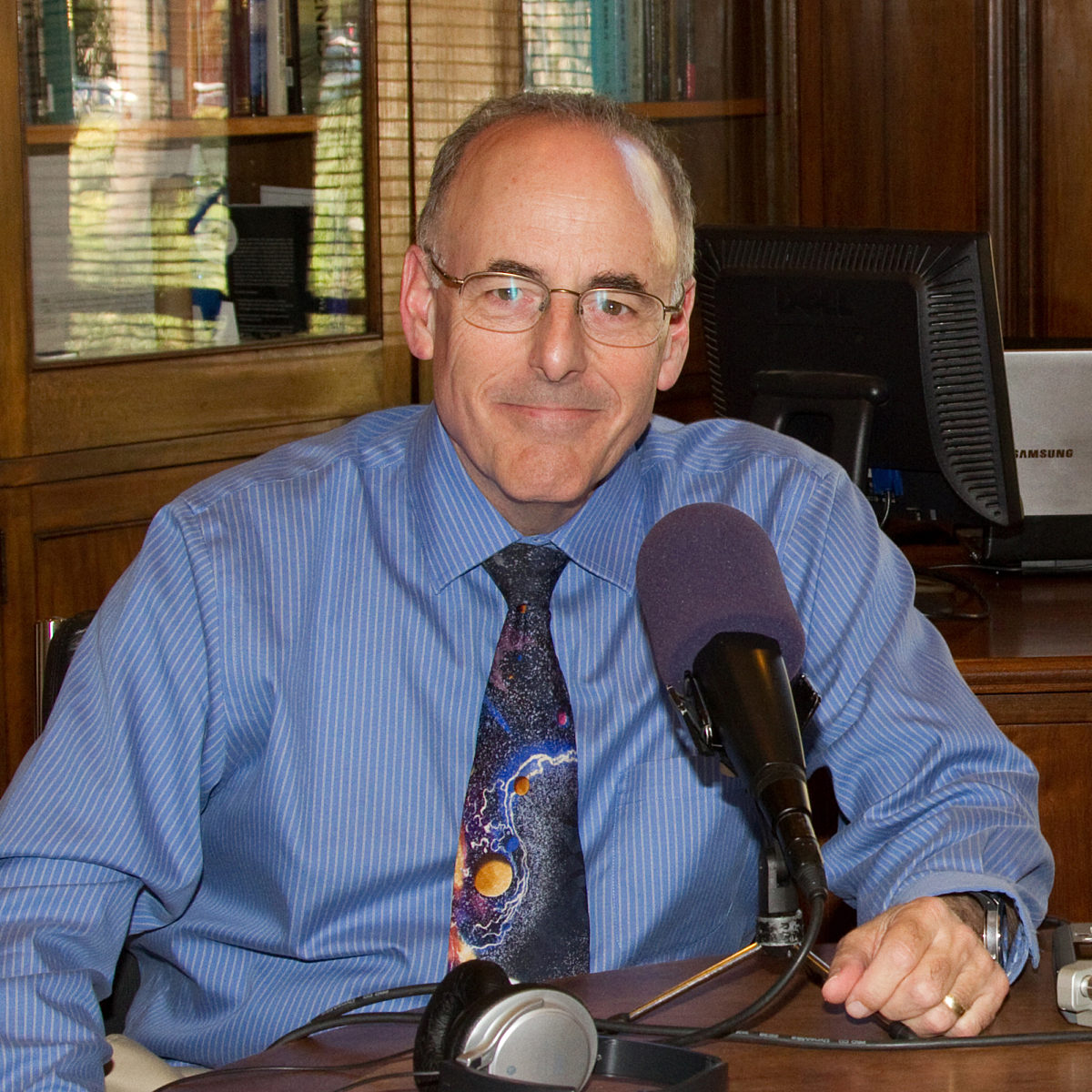
Mat Kaplan
Senior Communications Adviser and former Host of Planetary Radio for The Planetary Society
The American fascination with spaceflight and what we might find out there began long before any human left Earth. It’s Dr. Margaret Weitekamp’s job to collect, document, and preserve the cultural artifacts that display our deep attraction to all things spacey. Her book, Space Craze, explores how these objects, ranging from 1930s Flash Gordon ray guns to Mercury space capsule cookie jars, have represented our Earthbound fears and hopes. She joined the Society’s space-crazed Mat Kaplan for a live and lively conversation.

Transcript
Mat Kaplan: Are you crazy for space? Welcome back to Planetary Radio Book Club Edition. I'm Mat Kaplan. Senior Communications Adviser and former host of Planetary Radio. Members of the society get to participate in our conversations with authors of the wonderful books we select each month. Our August selection took us deep into the popular culture that has surrounded space flight and space exploration for nearly a century. I'll introduce you to Space Craze writer Dr. Margaret Weitekamp in a moment, but I first want to invite you to also watch the video of my interview with Margaret at planetary.org/live.
That's where you can see the wonderful artifacts you'll hear us sing the praises of over the next few minutes, but I think you'll enjoy this fascinating revealing conversation regardless. Let me tell you a little bit about our guest. That's Margaret Weitekamp, the author of Space Craze: America's Enduring Fascination with Real and Imagined Spaceflight. I highly recommend it. It is a great cultural review of why we, especially Americans in our culture have been crazy for space, both real and imagined for so long. The book was awarded the 2024 Gardner-Lasser Aerospace History Literature award from the AIAA, the American Institute of Aeronautics and Astronautics.
In 2004, she published Right Stuff, Wrong Sex: America's First Women in Space and it was awarded the prestigious honor by the American Astronautical Society. She also worked with her colleague, our past book club guest Matt Shindell on the second edition of Spaceships: An Illustrated History of the Real and the Imagined. She's speaking to us from her home either in or near Washington DC, I assume. Margaret, thank you so much for joining us here in the book club and you already told us that you weren't lucky enough to run into Carl Sagan when you were earning your PhD at Cornell.
Margaret Weitekamp: No, I was not, but I was very aware of his presence on campus and his influence throughout spaceflight.
Mat Kaplan: You made your way, I've made that walk from NASA headquarters over to the National Air and Space Museum. You really are pretty much neighbors.
Margaret Weitekamp: Yeah, it was a wonderful experience. I had an opportunity when I was doing my doctoral work to be a fellow at NASA headquarters in their history office, and so I got to know the historians over at the Smithsonian and what I had said earlier is that my predecessor, who was the curator of rocketry acquired because he was a fan of Buck Rogers and Flash Gordon, a collection from a single collector of over 2000 pieces from a gentleman named Michael O'Harault and brought that to the museum and then was curating both the complete rocketry collection at the National Air and Space Museum and this burgeoning social and cultural collection.
And so, as he was nearing retirement, my colleagues realized that they were going to need two curators to replace him. And so, I had the opportunity to come in and I curate what we now call the social and Cultural History of Spaceflight collection, which includes both memorabilia of the actual space program and our space science fiction objects.
Mat Kaplan: How many pieces are now in that collection?
Margaret Weitekamp: Just under 5,300. I did count this week and it's 5,299 and so I'm going to need one more to round that out. And I've got some things that are coming, so it'll be over 5,300 sometime soon. Now, the numbers are a little wonky. When you catalog things in a museum, every trading card gets an individual number, so every little piece, every separable piece. So, my colleagues, for instance, who work with our Saturn Fives, we have three in the collection that counts as one, two, three for them. I can put dozens of things in a shoebox. They have artifacts you have to build a building around in order to conserve them. So, the numbers are a little misleading, but there are just under 5,300 pieces in the collection as of this week.
Mat Kaplan: I think it makes perfect sense that you would have to very carefully curate each of those individual cards, trading cards.
Margaret Weitekamp: Yes.
Mat Kaplan: Thank goodness. As we get to the book, I want to start where you finished with the last paragraph in the book. Here it is, and it's fairly long. Over time, those big ideas have been reflected in small things owned by ordinary people. American spaceflight enthusiasm has been carried out via mass media, memorialized in souvenirs and literally played with via space-themed toys in bedrooms, dens, family rooms and backyards. These seemingly ephemeral artifacts represent the physical talismans of memories, whether of a real space achievement or a beloved science fiction show or film.
This history has real consequences tracing how space was popular at particular times, deepens the inside into how and why space exploration found fertile soil in American culture. Together, this material accumulation tells a story about the history of how Americans have participated in an evolving conversation, one that remains vital to current debates and concerns and one for which change has been a constant, the source of its persistence and power. Beautifully done by the way. Just-
Margaret Weitekamp: Thank you.
Mat Kaplan: ... a lovely paragraph and a lovely ending for the book and a great place for us to start in talking about the book. When you say that change has been a constant and the source of its persistence and power, expand on that a bit.
Margaret Weitekamp: I think that sometimes that's one of the things that has confounded people as they remember. This often gets deeply imbued in childhood memories or formative memories of where people first fell in love with space flight topics and sometimes people have been frustrated with the ways that they see it changing and evolving and the more that I dug into the history of those ideas and to where they've come now, I think it's really in their power to depict social change, to react to, to anticipate social change, to be a part of that broad conversation about the United States, about who we are as explorers and thinking about where we're going next and where we want to be.
I think that space science fiction and space reality have been a part of that ongoing conversation and it's in the power to evolve, to depict different kinds of space explorers, to envision different kinds of vehicles that could be used in space, to really transport those ideas in fiction and in reality. The strength of it is the ability of that space flight imagination real and fantastical to evolve and to change and to really move those ideas forward. I wanted to write this book for a long time because I had this vision of the different ways that space flight was popular in the 1930s, space flight was popular in the 1950s, space flight was popular in the 1970s, but those didn't mean the same things.
And trying as a scholar to say, "Okay, how would I trace that out and what would that look like and how do I use the richness of the collection at the Smithsonian as the basis to really tell that story because I think that it strongly tell through those objects?" One of the things that struck me was I was reading a wonderful article that had been written about Korean science fiction and one of the things was that Korean science fiction often, because Korean culture is so based in place and family and rootedness tends, to imagine future Koreans in future Korea doing futuristic things, but very much staying where they were and being connected to that place, family, those kinds of connections.
And I just thought, oh, the first thing that happens in American science fiction is you put your band together of adventurers, you get on the ship and by the end of the first reel, you're off on some adventure. And that really then echoes this fundamental form that is also the American Western, the ways that Americans have figured themselves and understood ourselves as explorers, as adventurers, as interested in the next new thing and heading off on those adventures together. And I thought that really then started to crystallize the way that I needed to dig into the Americanness, not as some universal, but because it's really culturally situated.
And again, if we go back to the explaining the water to the fish analogy that I use in the book, it's something that's so ever present around us that I don't know that it's always explained and thought about and brought to people's attention. And so, I thought that that would be one of the things that this book can really do is by looking at these objects begin to get you to notice what's around you and the stories that we tell ourselves and that we've been told and how those are deeply rooted in these core values about who we believe we are as Americans.
Mat Kaplan: And a lot of the story really begins well before the dawn of the space age, but with those western movie archetypes flying around in their rocket ships hung by strings in some little special effects studio and sounding remarkably like propeller driven airplanes because of course, no one really had much idea of what a rocket should sound like, which has always been very entertaining to me. And they weren't carrying six shooters, but they did have things like this and this is our first little sample of what's in the collection, right? I mean you talk about ray guns and here are some of them.
Margaret Weitekamp: Yes, and this is a brilliant picture by one of my colleagues, Eric Long, who able to take the artifacts and really show them off. And I love this collection of these four because I feel like it really shows off the variety of sizes and shapes and different kinds of imagined technologies. So, a laser gun, the white one is a laser gun made very soon after the development of the laser and the yellow and red one is a Buck Rogers water gun that actually has a little leather pouch on the inside that would hold the water for that. And the one in the front then is a Flash Gordon gun.
And so, yeah, we go right back to comic strips and radio programs and really the beginnings of spaceflight imagining with Buck Rogers, which was arguably one of the very first adventure strips coming into the newspapers just within weeks of Tarzan, the Ape Man, which gets the credit, but the very same month that that comic started nationally, so did Buck Rogers. And those kinds of adventures I think really then create an archetype that then gets played with and against, right?
And I think we know that we recognize it because we also recognize when it's being disrupted. And so, you end up with something very current like The Expanse, which is very deliberately taking what the expectations are about who that band of adventurers is going to be and then blowing that up and creating lots of different female leads, for instance, or making it really leaning into the multi-culturalness of what those worlds would be.
Mat Kaplan: This archetype, the western archetype, Buck Rogers, Flash Gordon, and making it to the screen in those great old serials that are still pretty fun to watch, but so representative of how we knew the western genre from the heroic always white guy hero with his trusty six-shooter become an atomic ray gun or whatever. I actually thought that the lead woman, whether it was Wilma or what was her name, Dale, Dale Arden, that they showed some heroics, but they still...
Margaret Weitekamp: They tend to have a lot of moxie and a disturbing tendency to be captured. But there's an interesting, when you really start looking at the blonde hero with the avuncular sidekick, someone, the doctor scientist figure who advises the hero and then the kid sidekick and you add in the woman who is not only the love interest, but also a co-adventurer and then honestly on the Western, you knew not only Roy Rogers, but the name of his horse trigger and I think we end up with spaceships that have names and frankly personalities that the enterprise, the Millennium Falcon are as much a part of that band of adventurers and add personality and drama and even humor to the stories.
And so, the more I started looking at that, the more I really was seeing the power of that in terms of then the storytelling that gets done.
Mat Kaplan: There's something about the bad guys, of course Ming, the merciless, the amethyst of Flash Gordon with his literally Fu Manchu mustache that represented a different archetype that one would like to think that we've moved beyond, although I think maybe we have a ways to go still.
Margaret Weitekamp: It was very ever-present in the 1930s and done without any self-consciousness. It was a part of how the villain got othered. And I think that there's been a lot of scholars who have written about the ways that often in science fiction the villains are feminized, or they're othered in some way where they're racialized. And one of the things that I think will not surprise any of the viewers or readers is the ways that when we're telling these stories about a possible future, we're always then reflecting parts of who we are at the time, whether we're extrapolating some problem that we have or defamiliarizing some situation by setting it in a space context.
And that's part of where I think there's real power in these narratives about space imagination because they're both about space, but they're also very often about whenever the now is of when they were created.
Mat Kaplan: I'm also thinking of how there are echoes of this much earlier time, nearly a century ago now that we're looking at in phrases we still use. You pointed out in the book, I've heard it from a lot of people in aerospace and at NASA, no bucks, no Buck Rogers.
Margaret Weitekamp: No Buck Rogers.
Mat Kaplan: So, it has stuck...
Margaret Weitekamp: Well, and that frontier narrative is from Kennedy's new Frontiersman and the call to then go to the moon moving into a new frontier space. The final frontier has I think a continual power as people are trying to explain why it is that we're so fascinated with going out and exploring and either sending our robot emissaries that allow us to understand other worlds as geographies that people know and can map and understand scientifically, or the real desire to have boots on the ground, standing on the moon, standing on Mars, imagining going even farther than that.
Mat Kaplan: This 1930s goes right on into up to the 1960s when I became aware of all this space van from the start. I'll show you another toy here that I absolutely love and I have a special reason for having a special love for this. I had a friend in elementary school who I think had this exact set, and I forget what year this goes back to. Do you remember?
Margaret Weitekamp: This is a 1950s superior space port and this is a toy that would've been created and then often, they were lithographed in different ways, so this could be sold with the lithography looking like a western fort. And you can imagine that looking like the logs that would create the outside of your western fort or in this case then really imagined as a space port and so a space fort. So, I've spent a lot of time in the book on this and I love that you mentioned that your friend had this. I thought as you were reading that last paragraph of the book, part of what I always enjoy about getting to talk about this material and talk about the book is how much knowledge people bring to it.
I remember having this toy or I remember watching that movie or I was a part of working on this space probe. And so very often in the audience, people have these deep connections and insights already, and part of the fun of that then is being able to get to hear from folks about what they already know about this, whether they remember having the toy or they remember a neighbor. It's often I remember the kid who had that down the block and I wished I had one.
Mat Kaplan: Yeah, for all the good and bad that it implies, I do go back to this era. I wasn't into science fiction until the Mercury program was well underway. We were probably into Gemini by the time I discovered Robert Heinlein, but that does bring up this thought that so much of science fiction, a lot of it that didn't make it into the movies or onto television was extremely popular before Sputnik, before we actually entered the Space Age. There were so many people dreaming of this era that seemed to be just around the corner.
Margaret Weitekamp: And I think that's a fascinating moment as people were trying to make that pivot to understanding space flight as something that was fundable, that was practical, that was something that was going to be a reality and not just the Buck Rogers vision of what space flight could be. So, it's interesting you go back to Wernher von Braun and the Collier's magazine series with Chesley Bonestell's wonderful illustrations of what Space flight could be bringing that to television with the Tomorrowland series and the specials that were done for the wonderful world of Walt Disney, imagining what it would be like to have a nuclear-powered space station orbiting a donut shape and envisioning what they hoped would be a hop skip and a jump from the very first flights to this really sophisticated space infrastructure.
Mat Kaplan: And it was a future that was so positive and so optimistic unlike a lot of the futures that we are treated to in science fiction and elsewhere today. Before we get into the actual space age, I think I told you that there is one artifact that you're missing as far as I know at the museum, which you really should have included, although you'd have to find space for it. It's a 1959 Cadillac. Look at those fins, look at those rocket engine exhausts. How could you not have one of these?
Margaret Weitekamp: Oh, it's gorgeous. Would love it. We'd have to be fighting with the folks over at American History who have a wonderful collection of historic cars. But yeah, the space influence there is undeniable, the streamlining and the rocket. I went to the beach one time and the people in the next beach house had one of those and I spent more time than I probably should have gawking at it in the parking lot. Wonderful to get to see in person. It really is a great artifact of the space age.
Mat Kaplan: Then we start to get into the space age. Yuri Gagarin makes his flight. The United States, which has been playing catch up since Sputnik of course goes into high gear. Mercury program, John Glenn comes around and the popularity that we saw of the Mercury Seven, they're all military guys, test pilots, most of them I believe, maybe all of them former combat pilots because these were the guys who had the right stuff, right? And this was how it started. They weren't that far from the image that we saw in the '30s with Buck Rogers and Flash Gordon.
Margaret Weitekamp: Absolutely. So, President Dwight Eisenhower decided that he wanted the first astronauts to be military pilots. He knew that they would have an engineering background, that they would be able to take orders, that they would be able to take on the risks that were involved with being a part of the early space program. And part of what I think is fascinating about that picture in particular, the homogeneity of that group of gentlemen who were all tremendously talented pilots, really extraordinary people, but they look so much alike that in that picture, they're lined up in alphabetical order so that the newspapers would make sure to get their names right.
Carpenter Cooper and you go across and it's through to Slayton and Chirac. That at the time would've really been seen as visual evidence of their selectedness, of how excellent they were, how they had come to basically the top of this military pyramid that weeded out folks as they were working their way up through military test piloting and then taking on this next thing, which would be the Mercury program and flying in space. Had a chance to meet Senator Glenn was a great friend of the museum and in fact our John Glenn lecture is named for him and so used to host that it is absolutely a tribute to their skill.
But I felt also in the book that I wanted to offer some context for understanding how it is that you end up with a group that is so alike that they need to line up in order, in order to make sure that their names are right and the ways that at the time would've been seen as a sign of their excellence.
Mat Kaplan: You mentioned Wally Chirac, one of my faves. You quote him in the book as saying he was directly influenced by those early Flash Gordon, Buck Rogers serials, I guess in the comics, but also on the screen. He grew up with those. It obviously played a role, I'm assuming very likely for more of the astronauts than him.
Margaret Weitekamp: I don't know that that's why he became an astronaut, but when he was becoming an astronaut and originating that role of that job, what it was going to be not just to be a pilot, but to be an astronaut. That's the cultural context that he's drawing on and everyone's drawing on is this is where they've seen that imagined, and then that becomes part of how they end up actually building what one of my colleagues has argued is this wonderful cohort that is they're really crafting a job description that is about this kind of risk taking, but also in a very measured way with all of the strength of all of the engineering. And so, really having to originate a new job category.
Mat Kaplan: When we return, Margaret and I will examine the deep cultural influence of Star Trek that's after this brief break.
Bruce Betts: For over 45 years, members of The Planetary Society have teamed up to crowd fund science and technology projects like LightSail, the Hundred Earths Project, PlanetVac and so many more. The step grant program continues that concept, but uses an open call for proposals to cast our net far and wide to find the best projects. The first two rounds of step grant winners have done great stuff, ranging all the way from developing a new technique for studying near-earth asteroids to doing a careful comparison of different ways to grow edible plants in space. We're once again going to invite the brightest minds worldwide to discover the next breakthroughs in our third round of grants, and we need your help.
This vital scientific research will be made possible with your support. Right now, funding cuts at NASA and the National Science Foundation are threatening scientific research. There's never been a more urgent time to support independent scientific funding. This is real space science and technology funded by you. Donations given today will go directly to the next round of step grant winners. Please join us in this crucial endeavor by making a gift today at planetary.org/step. Thank you.
Mat Kaplan: Welcome back to Planetary Radio book club Edition. I'm Mat Kaplan with more from Margaret Weitekamp, curator at the Smithsonian Institution's National Air and Space Museum.
A lot of what has happened with science fiction has influenced so many astronauts and engineers and scientists and other professionals who've gone into an aerospace field of one kind or another. And here is a little bit of a crossover there. I love this photo. I, a few times, stood next to Space Shuttle Enterprise, the one that never went into space, but was used in the approach and landing test at what was... well, it's still at Edwards Air Force, but is now the Armstrong NASA Center named after, of course, Neil Armstrong. There's the whole cast of Star Trek, the original series, Les William Shatner who I guess was busy riding horses that day or something.
But this kind of crossover, and I'm also looking for you to add your thoughts to how here they are exploring real space, but they inspired so many.
Margaret Weitekamp: So, two quick stories about that. NASA wanted to name that vehicle constitution, and the idea was that during the bicentennial, they would be unveiling it as they actually did in September, which would be on Constitution Day. And so, it would be a part of the bicentennial and Star Trek fans got the idea that the very first space shuttle should be named Enterprise and started this write-in campaign, which had been successful for reviving the television series. And Star Trek fans were in the 1970s beginning to find each other and find their power through conventions and also through this letter writing.
The story is also that they got the ear eventually through these letters of President Gerald Ford who had served on the enterprise as an aircraft carrier and had a fondness for that name. And so, NASA then ended up not only naming the vehicle enterprise, but really leaning into it with the public event that you saw there. And Nichelle Nichols, the African-American actress who played Lieutenant Uhura then went on to play an additional role that when NASA was interested in recruiting their first class of astronauts for the space shuttle program, they really wanted to tap into the pools of people with PhDs with medical degrees who were going to be the mission specialists who would be doing the experiments on the space shuttle.
And they knew that that was a more diverse pool in recent years in the 1970s, because those professional fields had really been opened up as a result of the women's movement and the civil rights movement. And so, she did a public relations campaign for NASA with the idea that there's space for everyone. And so, we know that there were people like Dr. Mae Jameson who was directly influenced by that. She's becomes the first African-American woman astronaut and decided to apply for the Astronaut Corps because she saw Nichelle Nichols talking about this role that I've played in fiction is now possible for people in reality to actually be going into space and doing this great work.
Mat Kaplan: I'm very proud to have interviewed Mae Jameson several times and along with her Nichelle Nichols. And the first time I met Nichelle Nichols was when she was on the job for NASA. It was at that first landing at Edwards of Columbia, the space shuttle returning from orbit on its very first flight, a flight with two humans aboard, which was a pretty scary thing for a brand new vehicle. And she was there hanging out as many of us were all night with... I forget what the estimate is, I think it's in the book, hundreds of thousands of people. I can attest to that. I was out there among them when I wasn't on the dry lake bed. The excitement was so universal and palpable.
Margaret Weitekamp: Part of why it's fun to write about the memorabilia of the actual space program is that these really became massive cultural events, social events, gatherings of folks who just wanted to witness. And when you then add on all of the people who are following along on television and who want to memorialize that with a patch or a pin or a coffee mug or a T-shirt, I think you then start to be able to really document and make material what those important connections are that people have with this vision of space flight.
Mat Kaplan: Yeah, absolutely. I totally agree. I do want to share some more memorabilia, especially the memorabilia that started to appear as we entered the space age, the real space age and particularly humans in space. Here's a good example of that. It may look tiny, but it's not. Boy, do I wish I had owned one of these. What are we looking at?
Margaret Weitekamp: This is a McCoy pottery cookie jar in the shape of Friendship seven, which is John Glenn's spacecraft from the Mercury Program. Part of what I like about this is I had seen, honestly as a curator, I've seen more pristine versions of this where the paint wasn't quite so abraded from use, but this came from a gentleman who remembered that as a kid, his family really had space fever. They were very excited about this. So, he remembers not only the family being excited, but that his mother was a stay-at-home mom in the late '50s and into the 1960s.
So, he remembers this really being used, so full of her homemade cookies and it was something that he looked forward to when he came home. And as he got older, they retired the cookie jar to a place of honor in the family room. And when he was helping to clear out his parents' house, it was something that he thought, let me see if the museum would be interested. And I was very interested because we get to collect then not only the actual McCoy cookie jar, but also some of these stories that really tell us about the meaning that was made around that object.
Mat Kaplan: So, those stories are obviously documented along with the object.
Margaret Weitekamp: Yes, and that's part of what really makes my job a lot of fun is finding the places where I get to collect not only the thing, but to really think about the richness of an object and how it can tell multiple stories, right? So, if I am collecting something for the museum and I have to be very choosy when I do that because we're committing to it in perpetuity, then I'm really looking for something that is rich that allows me to tell multiple stories. So, John Glenn, friendship seven, the technologies, but also the way that Glenn's orbital flights really put the United States on parity with the Soviet Union and that first Yuri Gagarin orbit from 1961 and the just explosion of enthusiasm and the ways that found its way into even people's kitchens.
Mat Kaplan: So, here's another one that I probably would have really been a nag to my parents if I had known this existed. I'd have loved to have had this on my bed. Some of it's a little fanciful, but I mean there's some Mercury capsule again with an astronaut looking like he's doing a spacewalk, but I think he's just getting in. But there's Telstar, one of the first satellites that could carry television. I remember watching, good God, I'm old, the first television broadcast of coming from France of a singer, I think it might've been Jacques Brel, I'm not sure.
Margaret Weitekamp: Sounds about right.
Mat Kaplan: Okay, and there's the X15. Oh, this is so cool.
Margaret Weitekamp: It's really wonderful. Again, this was a gentleman who had that on his bed. He and his brother had matching ones. He remembered that his mother had gotten them. Both of we have the one, it's hemmed in on both sides because it was made for a slightly larger bed and he had a twin. And so, his mother rather cleverly hemmed in the sides and picked up a little bit of the slack. But that's a famous picture of John Glenn entering Friendship 7 in the middle. Although not, it was never quite as brightly colored. And I love the places where in order to embrace this, people add color to it, the vehicle is slightly distorted in terms of a little bigger actually than it would've been compared to Glenn.
But part of that excitement about the whole range of technologies that were coming online in the 1960s, the gentleman who gave this to the museum came with his family in order to present it to us, which was really wonderful and just remembered sleeping under this for years and then wanting to be able to see if it could have a place to tell that story at the museum.
Mat Kaplan: Here's just a tiny bit of space trivia that I can't resist sharing. If you look carefully at the bottom of the Friendship 7 capsule, you can see the straps that were there to in part hold on the retro rocket assembly. And of course, that was the great scare of John Glenn's fight because there was an indication that the retro rockets had come loose. They hadn't, it was a false reading apparently, but that I can faintly remember, I was awfully young at the time that that was a very scary moment for all of us. Real drama.
Margaret Weitekamp: The retro pack was supposed to separate, which would open the whole heat shield to reentry. And in the end, they made a decision to keep it in place because they were worried that there might have been damage done to the heat shield and what if the retro pack was essentially what was holding it on? So, yes, a tense moment in Glenn's flight, he came back as scheduled at the end of three orbits, but they were really having to make life and death decisions right off the bat.
Mat Kaplan: Here's one more from this era that I think you have to say something about, and I should have shown this when you talked about people going to see launches, people coming to see the shuttle land because this is really delightful, this little charm bracelet.
Margaret Weitekamp: So, this is actually, I think it speaks not only to the people going, but the workforce, the people who relocated their lives in order to make spaceflight happen. So, this is a section as you can see of a charm bracelet. It's missing its clasp. It wouldn't quite reach all the way around your wrist, but it has these two jewelers charms in addition to a charm for a Mercury spacecraft, a Gemini spacecraft, and then an Atlas and Redstone rockets on there. And this comes from a woman named Tony Foster and her husband Bob Foster worked for McDonald Aviation and the whole family moved to the Cape.
And so, you can see Cape View Elementary fifth grade class where she taught, gave her a charm for her charm bracelet in addition to the ones that her husband had given her as he worked on those actual spacecraft. And I love the way that this tells the story of that marriage, but also then of that whole family, this came from Sally Foster Chang from the daughter who gave it to the museum when her father's papers came to our archive, but also then a whole community that grows up because they need new grade schools. That was a space age era grade school that was created to educate the children of the engineers who had moved down to the Cape in order to support that mission.
So, whole towns spring up because you need a good grocery store, a good theater and a good schools and people relocated their lives to California, to New York, to Florida to be a part of the space program. And so, I love that object as a way to tell that small, small thing I think tells a very big story about the spaceflight workforce and all of the people who've dedicated not only their lives and careers, but their whole family being a part of the communities that support spaceflight work.
Mat Kaplan: Didn't you say that the part of the story was that because Foster was so deeply involved, he would spend long, long days and nights away from the family and adding a charm to this bracelet was one of the ways he tried to make it up to Mrs. Foster?
Margaret Weitekamp: Yep. So, it's a little bit of a gesture of as he finished a project, being able to make it up to his wife for quite how much she was carrying all the weight of the family and as a teacher who was also working in the community, taking that on at the same time. But I'm also interested in the kind of button that anyone could own, or a commercial copy of a mission patch that you might have because you were at a launch, or because you were at a space center or because you collect mission patches and you're interested in those astronauts visions of how they're depicting what they were doing in space. So, those ordinary ephemeral things that might not have seemed museum-worthy in the 1960s I think are eminently museum-worthy.
Mat Kaplan: So, space program memorabilia, no big deal for me. I mean just the forefront of your shoulder there. And at my mission patch tie, which I wore in your and the book's honor today. I want to get to some of the things that are coming in from some of our members here in the member community. Tim says, "Hi Margaret, love the book. I am a fellow Cornellian astronomy 90, amusingly was at the Udvar-Hazy Center just a couple of weeks before Mat named this book as our next book club pick." So, you do have a lot of fans out there and I'm going to bet that Tim is one of those who was influenced by what came before actual space exploration.
Margaret Weitekamp: Well, thank you Tim, go Big Red and we love that we have two centers at the National Air and Space Museum, not only our flagship building on the National Mall, but also the Steven F. Udvar-Hazy Center and the ability to really show big things out there. And there's also a wonderful case of space flight memorabilia and space science fiction objects out there that is right in the same space as the space shuttle discovery and the Mercury spacecraft and some of our rockets. So, it's a great place to be able to show off that interplay.
Mat Kaplan: Now I thought that the National Air and Space Museum was the clear winner in terms of the number of people who visit every year. You set a jockeys back and forth with the Museum of Natural History across the mall from you folks and is up there though with the Louvre and what was the other one? The other that is enormously popular internationally, but the
Margaret Weitekamp: Chinese National Museum does very, very well. The National Air and Space Museum's numbers have been down of late because we've been doing this massive renovation project. We've had different parts of the museum closed over time, and so we're just really working back up to... By July of 2026, we'll have the entire building on the National Mall open. We just reopened five galleries and the Lockheed Martin IMAX Theater. So, the big central hall of the museum is now reopened for the public, and we've been very excited at the response to that.
Mat Kaplan: I had your former director on Planetary Radio, one of her many appearances, Ellen Stofan talking about this just before it started happening. And this plan to still give people a place to go, but to close basically about half of the museum and finish that and then go on to the rest, it's great to hear the things are moving forward and that everything will be wide open again very soon. Let me throw a question at you that came in from Tim. He says, "When my wife and I were at the museum, we were absolutely gobsmacked to see a Babylon 5 jump gate pin on display as we both have those pins ourselves." He says, "How often have you run into people who have one or more of the artifacts that you've curated copies of?" And as we go back into science fiction, of course you do talk about these later examples of science fiction mostly on television, but in the movies.
Margaret Weitekamp: So, this was from a series created by J. Michael Straczynski in the mid-90s, creative bit of long form storytelling before everyone was doing long form storytelling. So, when episodic television used to reset all the time, there started in the 1990s to be an interest in telling a longer story across episodes or even across seasons. And Babylon 5 was a show that had a beginning and a middle and an end to the story that he knew where he was going with it. And I love the pin because it is a manifestation of the keyboard strokes that made the jump gate.
So, the two carrot symbols in the asterisks in the middle, there might've been something that you could, when we were all just working in characters and not yet necessarily in graphics when you were on Usenet or on your email, you could drop this little symbol at the bottom of your email signature and other fans would see that and recognize, I found a fellow fan of the show that I love. It's great to hear that those pins are still out there and that people love them and appreciate them. And I was very excited to work with one of my colleagues, actually Jeannie Whited was our donor for that, came to me and said, "I had this wonderful collection of Babylon 5 memorabilia. Would you be interested? Absolutely." We're professional nerds at the museum and many of us come to it because we were fans of this stuff in the first place. And then we bring all of our skills as museum people and as scholars to it as well.
Mat Kaplan: I regret that I was not into Babylon 5 as much as so many people that I knew. Fortunately, we can all go back now and this stuff is all still available to us. I was more of a Battlestar Galactica fan. And of course, Trek always, always, always. Here's another great question from Tim. Yes, live long and prosper to you, Margaret. "In the past five to 10 years, a lot of the cultural artifacts surrounding spaceflight and especially science fiction have moved from being physical objects into being digital ones. What challenges do you see in your role as this transition continues? Is it a challenge?"
Margaret Weitekamp: It is a challenge in terms of looking for props from television shows or props from movies that not necessarily as many physical props are needed. I think that there has been a turn to having some physical props, because it lends a gravity to them that shows up on screen very effectively. And there are folks also who have their own nostalgia in the movie business and the television business for creating a physical thing. I think that as a historian, I'm interested in following the culture where it goes. So, where there are places where some things are physical and some are not, we recognize the ways that that shifts what the emphasis is.
And one of the things I talk about in the book is that it is perhaps a little overly reliant on television and movies as the depictions of science fiction rather than say novels, which were very powerful, but there aren't that many Isaac Asimov action figures and the merchandising tends not to come from the novel series, but it tends to come from television or movies. And so, if I'm overemphasizing that, it's not because the visions of Heinlein or Carl Sagan or any number of writers aren't powerful, it's because it's one of the ways that when I want to have a physical thing that I can put on a stand, I need someone who's made the thing.
Mat Kaplan: Now you can't see all the stuff that's just above my head on the hot show of my desk behind the camera. Speaking of...
Margaret Weitekamp: I suspect if we saw any of the people watching, they would have things behind and around them as well.
Mat Kaplan: And in fact, I have a question for you or really more of a... well no, it is a question from Dave. "I may be able to increase your 5,000 plus artifacts by maybe a couple of hundred items when I start divesting my collection." Great question, Dave. "How can people like me who may want to donate to the National Air and Space Museum get in touch with you or the appropriate curator?"
Margaret Weitekamp: So, we have websites, if you look for the airandspace.si.edu is the National Air and Space Museum's website, and we have a button on there for donate an item. And so, you can send us a picture and a little description and the right curator will get in touch with you. My name and my bio are on there as well, as well as my email. So, if you know have social and cultural things, you can come straight to me and I will throw in the caution that part of curator's job is curating, right? So, I have to say no far, far more often than I get to say yes. And that I think is always one of the challenges of the job, is trying to figure out what tells the richest stories and what will work the best in the collection.
So, sometimes I get to say yes and a lot of times, I have to say no.
Mat Kaplan: So, back to action figures, maybe we'll get some out of the current foundation series that is airing on Apple Plus, which I think is absolutely marvelous. I'm so impressed by that show and I follow it religiously. We already mentioned Star Trek. We have to be fair. Here are the action figures I had in mind. May the force be with you, Margaret. Here we are with Star Wars.
Margaret Weitekamp: Wonderful. For a long time, no one merchandised a movie because movies came and went. So, it was television shows, radio programs, things like that that were things that got turned into toys. George Lucas really knew what he had right from the beginning and was interested in it. There's famous stories that some of the big toy makers passed on the opportunity to make Star Wars toys. And so, it was actually Kenner out of Cincinnati that made Star Wars toys and innovated this idea of these small action figures that would fit in a child's hand. So, that three and three-quarter inch size part of what was written about at the time was both boys and girls were very interested in this and you could play all kinds of characters.
You could be embodying the aliens, the droids, the Wookiees, the heroes, the villains, and acting out things as you wanted to. And I like also that we have the carrying case with it because it was an important part of how those toys were sold was the card backs, which have become collectible in their own right, had little visual catalogs on the back of them of here are all of the toys that have been made. And some of them even had little tick boxes next to them that you could tick off, like which ones do I have? But the action figure cases, the carrying cases tended to have spots that also came with little labels.
So, you could have a larger slot for your Darth Vader and a smaller slot for your Yoda or your R2-D2, and that then encouraged kids to buy more of them to create those complete sets. And I will say in terms of who had what, between myself, my brother, and our next-door neighbor, that we didn't have to have all the stuff because if Emily had it, then it was as good as if we had it because it would all end up out in the yard together.
Mat Kaplan: I see Lando Calrissian peeking through there between a couple of the figures, but don't you talk a little bit in the book about the choice of the original figures and who was left out? I don't see Princess Leia in that group.
Margaret Weitekamp: The very original set, I believe did include a Princess Leia. Part of what this is, a set subset from Empire Strikes Back, part of what was really striking was Kenner got so overwhelmed by the demand, nobody predicted what a blockbuster Star Wars was going to be and how popular these toys were going to be. And so, there was actually the episode that when they got to the winter holidays, they couldn't make enough toys and so they marketed an early bird certificate set and you could actually pay money and people bought and gave for Hanukkah or for Christmas, a gift certificate for in the spring, you will get action figures and here's a picture of what you'll get. And those have actually become very collectible as well.
So, I love the ways that this excitement about this extended not only to the toys, but even the idea of the toys, the promise of the toys.
Mat Kaplan: Yeah. Kareem, I will tell this story. He says, "Nichelle Nichols has a very special place in my heart. I met her on September 26th, 2017. I remember because it was the day my dear big brother died. I was in the airport and she was there in a wheelchair. I told her that my big brother had introduced me to Star Trek and that he had just passed away. She was so sorrowful, she gave me a hug. That was the first and only time I met her. I'll never forget her kind gesture on that devastating day." There are so many personal stories like this, where people like this who were playing parts really.
She went a little bit beyond that because of the work she did with NASA, but where we identify with so many of them as we identified even with those little action figures that you were just talking about.
Margaret Weitekamp: And that's such a wonderful touching story and so very her to reach out. I think folks who, the people who play these roles have often also enjoyed, sometimes been overwhelmed by, but then came to embrace the cultural power that they have and the power of those inspirational roles to really touch people's lives and to then extend that into being that person themselves. It's fascinating to get to work with this material and to try to trace this history, because you still see it continuing to evolve around us today.
Mat Kaplan: Margaret, I can't wait for my next trip to DC and re-exploring the National Air and Space Museum. I got to do a Planetary Radio live there in the solar system or Planetary Exploration Gallery. I forget the actual name, but it was such fun and it truly is a wonderful, wonderful collection thanks to people like you who have been bringing it together and protecting it for us, and I certainly hope that continues in the challenging times that we're now facing.
Margaret Weitekamp: Thank you very much for having me tonight.
Mat Kaplan: Again, everybody, thank you for joining us. Margaret, again, thank you so much for this. It has been a wonderful hour and thank you for this great book and the great work you're doing at the National Air and Space Museum.
Want to join the club and participate in our live interactions? Become a member of The Planetary Society. When you do, there's so much more you'll be helping us to create and accomplish. Visit planetary.org/join to learn more. Planetary Radio is production of The Planetary Society. Our associate producers are Ray Paletta and Mark Hilverda. Casey Dreier is the host of our monthly space policy edition, post-production by Andrew Lucas. The Society's member community is led by Ambre Trujillo. The producer and host of Planetary Radio is Sarah Al-Ahmed. Josh Doyle composed our theme, which is arranged and performed by Pieter Schlosser. I'm Mat Kaplan, your host of the Planetary Radio Book Club Edition. And until next time, ad astra.