

 Explore Worlds
 Find Life
 Defend Earth


Planetary Radio • Jan 16, 2026
Book Club Edition: The Little Book of Aliens by Adam Frank
On This Episode

Adam Frank
Popular Science Communicator and Astrophysicist at the University of Rochester
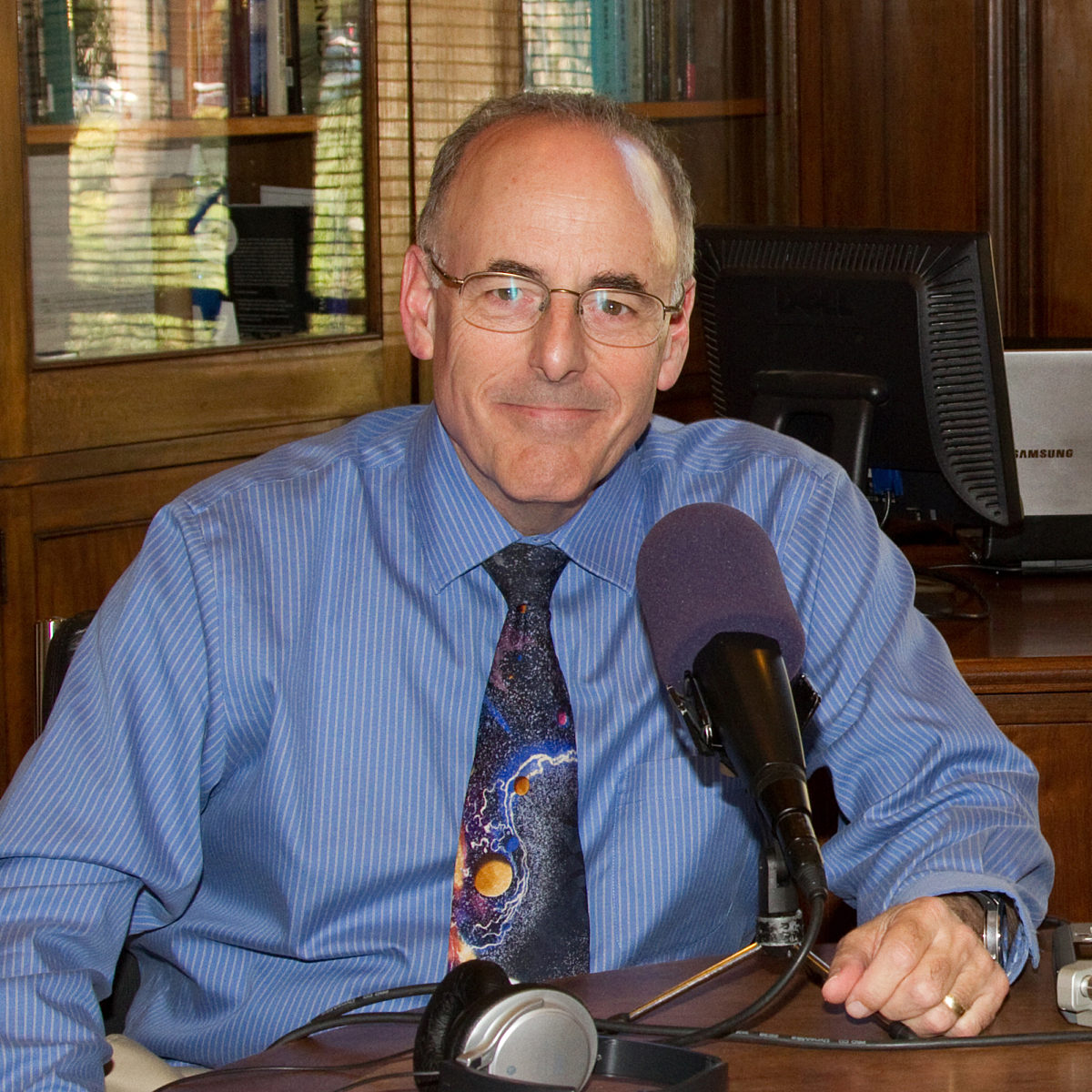
Mat Kaplan
Senior Communications Adviser and former Host of Planetary Radio for The Planetary Society
Famed astrophysicist and science communicator Adam Frank shares his sense of wonder and humor in a live conversation about his excellent new book, “The Little Book of Aliens.” Join Adam and host Mat Kaplan as they explore the origin of life, the search for extraterrestrial intelligence, and whether all those UFO sightings are worthy of deeper investigation.

Transcript
Mat Kaplan: The wonderful Adam Frank and his little book of Aliens, this time on Planetary Radio Book Club edition. Hello again, everyone. I'm Mat Kaplan with more of the human adventure across the solar system and beyond. Back for another visit with an author who captured the imaginations and minds of planetary society members in our online book club. This time, it's astrophysicist and astrobiologist Adam Frank, whose latest book is absolutely delightful. You'll hear more about Adam as we bring you my December 2025 conversation with him that was live streamed in the society's member community. You can also watch it on our website and YouTube channel. If you love Planetary Radio as I do and want to stay informed about the latest space discoveries, punch that subscribe button on your favorite podcast platform. When you do, you'll never miss a weekly episode filled with new and awe-inspiring ways to know the cosmos and our place within it. You'll also get our space policy edition and The Book Club. Let's get started with Adam. Adam Frank, welcome to The Planetary Society Book Club.
Adam Frank: Hello, everybody.
Mat Kaplan: Here's a bio. His very illuminating and entertaining blog is Every Man's Universe. Today's entry is about one of my new favorite shows, Pluribus. And whether being part of the hive mind is a good place, is a happy place. Remember that Captain Picard said resistance is never futile or was it [inaudible 00:01:53]. I forget. You can also check out his website, adamfrankscience.com. He's an astrophysicist, among many other things. He holds the Helen F and Fred H. Gowan chair in the Department of Physics and Astronomy at the University of Rochester. In 2021, he was awarded the Carl Sagan Medal for Excellence and Public Communications by the American Astronomical Society, and anything with our co-founder's name on it is great by us. Two years earlier, his book, Light of the Stars, was named the best book in science by the National Honor Society. I am especially impressed, Adam, that you were the science advisor to Marvel's Dr. Strange, which is if I had to pick a Marvel, my favorite Marvel character, he'd probably be it. So once again, welcome Adam Frank.
Adam Frank: Thank you. Great to be here and I look forward to our conversation.
Mat Kaplan: Do you still feel that passion, beauty, and joy for all this stuff?
Adam Frank: Yeah, no, that's the great thing about science is that I always feel it. Every day I wake up and I can't wait to get more science. And in a lot of the work I do now often is pushing back against so much of the pseudoscience and science denial that is happening, which drives me crazy. And the thing I'm always trying to tell people is that the real science is so much better than the "fringe science", of which there is no such thing. That if people took a minute to look at a leaf and consider what's going on with photosynthesis, that would be way cooler than whatever wackadoodle things they're thinking about in terms of conspiracy theories and UFOs.
Mat Kaplan: Which makes me all the happier that you have made it to places like Joe Rogan's show, and that you were able to treat the subject of UAPs and UFOs so well in this book, which I hope is something that we'll get to. We won't get to everything I have in mind. Well, let's talk SETI. Has it been satisfying to see SETI go in your professional lifetime from nearly pariah status to an accepted line of research?
Adam Frank:
Yeah, that was pretty interesting. And I also feel that the work that we did that really drove that forward. So I am the principal investigator on a grant that a group of us, I'm not the leader part of this group that in 2019 put in a grant to study techno signatures, which is really, to me, I like using the term techno signature rather than SETI because of the connotations STETI has. And we feel like a large part of our job was to convince the NASA brass to stop having that sort of knee-jerk reaction against anything to do with intelligence. NASA has been funding a beautiful program in astrobiology for decades, but we're still putting things literally in the grant application language of saying, "No, no, don't send us anything about intelligent life. We only do dumb life." And it was like, "Come on, this doesn't make sense anymore." So it's been since 2019, since that first grant happened that I think through a lot of the work that my colleagues and I did to sort of get NASA to see like, look, they're all the same thing.
You're going to be looking pretty much in the same wavelength bands for biosignatures and techno signatures. So why distinguish between them? So it's been very interesting to follow the transition in the community about the search for life to begin with, astrobiology at all, which when I was a graduate student wasn't even a field. And now the recognition that the search for intelligent life is no different than the search for biospheres, microbial life.
Mat Kaplan: You said that that [inaudible 00:05:49] of this search for technosignatures and this gathering, which has a number of our friends in it, like your friend, Wright. Oh God, it's just gone out of my mind.
Adam Frank: Jason Wright.
Mat Kaplan: Jason Wright, of course. You said it changed your life.
Adam Frank: It did, because before this, I wasn't really involved with SETI professionally. I had Woody Sullivan, one of the great pioneers in what I call the second generation of SETI.
Mat Kaplan: You were a mentor, wasn't he?
Adam Frank:
He was one of my... He was not my PhD advisor, but that was Bruce Ballack. But I taught a class with Woody and I loved Woody. I loved talking to him. I loved his broad thinking, but I didn't get involved with SETI at the time because I just sort of felt... Well, first of all, it was still during a period where it was career suicide, but I was not a fan of radioset. I felt that there was still too much anthropomorphizing going on because really it required that the aliens send a beacon, the power requirements were very... So we were very much trapped with beacons. And then you got into a sort of, well, if they know that we know, that they know, that we know kind of thing. The whole discussion's about 21 centimeter lines and such. It was trying to guess what their intentions were.
And so while I thought SETI was awesome, I didn't really get involved with it, but I did start getting involved with... I do a lot of work in climate change, and I started thinking about climate change as a astrobiological phenomena. Basically, maybe any civilization that rises to the level that we have gotten to in terms of our energy harvesting would trigger climate change. And so that was actually my entree into thinking about SETI or thinking about astrobiology and technosignatures in particular. And that's why I got invited to that amazing 2018 meeting where someone in Congress put in language in the budget that said, you shall give $10 million to technosignatures. And NASA was like, okay, what do we do with that? So they convened a meeting and it was three of the most amazing days because here are all these people who have been on the fringe, at least their interests have not been a part of the funding scheme.
And now suddenly NASA is saying, what would you do if we gave you this money? And we had so much fun in that meeting talking about everything. And out of that was born, not only our grant, but other programs as well. It was really, I think, the initiation of the modern era of technosignatures in SETI.
Mat Kaplan: And very exciting stuff as well. Do you see the search for technosignatures as replacing or just complimenting traditional radio and I suppose we should say laser visible light setting?
Adam Frank:
I think it's a compliment, but it's more than just a compliment. I feel it's a very powerful extension. You have broadened what you can do by quite a bit, and it's a difference in the strategy itself. Much of traditional study, as I said, was based on beacons, right? The initial idea was about communications. Someone is sending us a message, and that was both a strength and I feel a sort of weakness of traditional study. Now, this was just the brilliance of the original of Frank Drake, et cetera, because this is what you could do. In science, you answer the questions that you have the tools to answer and given power requirements, given what we understood, that was the way to do it. But the amazing thing about the exoplanet revolution, right? Now that we know exactly which stars have planets and which of those planets are in the habitable zone, it changes everything.
And now, rather than look for signals being beamed to us, we can do what I like to think of as being a stakeout. It's a cosmic stakeout. We're just going to sit with our cold donuts, our cold coffee and our crappy donuts, and we're just going to watch. We're just looking for signatures of a civilization going about its civilizationing business. We couldn't do that beforehand, and now we can. With optical infrared, all these different wavelengths, we can just stare at planets and look for evidence that there's a civilization going about its business there.
Mat Kaplan: In fact, you say, "Finally, we're ready. We're able, we're going to do it." I'm also thinking, we mentioned Jason Wright, and I know that his team at Penn State, you talked about the study they did of how much we've actually completed a survey so far. And the answer is kind of both shocking and encouraging if you're one of those who looks forward to finding that we're not alone.
Adam Frank:
Yeah. So the public has this idea that every night astronomers are taking their telescopes and searching the heavens for life. There's a version of the Fermi paradox called the cosmic silence, the great silence. And the argument will go like, look, we've been looking for signals from intelligent civilizations since Frank Drake in 1960. We haven't found any, therefore they aren't there. But the reality is, we haven't looked. So what Jason Wright and his students, it was actually a student project, they added up all of the study searches that have ever been done. And if the sky is the ocean, right? Let's use the metaphor that the entire sky and all the bandwidth that you have to look at is the ocean, how much of the ocean have we actually searched for in terms of life? Let's say instead of aliens, we're looking for fishes. How much of the ocean have we actually searched for looking for fishes?
It turns out it's a hot tub, right? That's how much ocean we've looked at. We pulled up a hot tub worth of water. We didn't find any fish. And now are we going to tell people like, oh, there's no fish in the ocean because we looked at a hot tub? So it really points to the fact that we just never really got started in that search during that early era or the first era of SETI. And so now finally we're really beginning the search and the entire sky is available to us.
Mat Kaplan: So in the words of Enrico Fermi, as we've talked about many times on Planetary Radio on this show, where is everybody? And what this takes me to, I was really pretty thrilled to learn that you were on this team that did one of my favorite simulations where you modeled one advanced technological civilization and let's say that its technology is what, not too far beyond ours and how quickly they could move across the galaxy. Talk about that.
Adam Frank:
Yeah, that was a great project. So that was led by my former graduate student, Jonathan Carroll, who's still the professor here at the University of Rochester. And we took what's called agent-based models and we made a model of the galaxy and we just allowed abiogenesis. We allowed one planet out of the entire galaxy to form a technological species and then we had it send out a spaceship. We had it send out a sublight spaceship not moving very fast and it crossed the distance. It shows the nearest star, crossed the distance to that star, colonized that star, and then after a certain amount of time, sent out another ship. And so we just watched, we allowed this to happen, and then I think every certain number of years it would send out another ship. And we just watched the settlement front propagate out from that initial site where a civilization had formed.
And what we confirmed was what had been known that Fermi realized in that moment of brilliance in 1950, that in a very short time, before the galaxy goes through one rotation, that every star in the galaxy is touched. Every star and every star system in the galaxy gets a visitor that colonizes a planet. So in that sense, the settlement front propagates very rapidly. And if that was all there was to the story, then you would expect that every planet in the solar system or in the galaxy had that civilization, a daughter of that civilization there. That's really what Fermi meant by the Fermi paradox, right? Why aren't they here now? And of course, if you believe in UFOs, then you're like, well, they are here now. But if you don't believe that, then you have to come up with an explanation, why aren't they here now?
And one of the things that we found was if you allow civilizations to die, which every civilization has a finite lifetime, then what happens is you end up with a steady state where civilizations are constantly dying, but then they are being replenished by new colony ships. And it turns out that for different sets of parameters, you can get big holes lasting for millions of years, tens, twenties, millions of years. So it may be that earth was visited and had a colony 50 million, a hundred million years ago, but there'd be no evidence of that colony anymore. So if all the assumptions that go into the Fermi paradox are true, that people want to colonize, that interstellar travel is relatively easy to do, still you end up with the possibility or with a condition where we are now, where we have no evidence of any aliens here now, and we don't see any in our near the neighborhood. So you can have big unoccupied holes for geological timescales.
Mat Kaplan: Well, let's hope that humanity beats the odds. Do you ever read that classic science fiction book from many, many years ago, A Canticle for Leibowitz? And it's civilizations that reach a certain level of technology and then destroy themselves and then go through another dark age and rebuild. A little bit like Foundation as well, which I think you're a fan of.
Adam Frank: Yes.
Mat Kaplan: Yeah.
Adam Frank: Well, Foundation. Yeah. I'm a huge fan of Foundation, but no, I have never read A Canticle for Leibowitz. So thank you for putting that into my head. That should be in the list because I've read all the other classic science fiction. I've read most of it. Yeah.
Mat Kaplan: It's way up there. It's a terrific book. As I remember, it's been a long time. So I want to follow up on the work that you're doing, which is in the book, but there's so much more I'm sure that you can say about it. And you said that you're working with climate change as a technosignature, but also a challenge that we are facing. The other podcast I do as a volunteer, we did a whole season on climate change and communicating it, and so that's near and dear to my heart. But I wonder, what would you rather find with our wonderful new capabilities to sniff the atmospheres of exoplanets? A lot of oxygen, a bunch of carbon monoxide or chloral fluorocarbon, CFCs?
Adam Frank:
I'm shooting for chlorofluorocarbons, right? So that was one of the first papers that our group did is we showed that chlorofluorocarbons, which are a chemical that we don't think there's any way for nature to produce. If you see chlorofluorocarbons in an atmosphere, that is going to be very strong evidence that there's a technological civilization there. And so what we showed was that even a planet that had 10 times the amount of chlorofluorocarbons that we have now, which is not that much, would be very detectable even by the James Webb Space Telescope. So that's a real nice example of a chemical technosignature that could be in a planet that would be detectable. And of course people say like, well, that's atmospheric pollution. What if they don't have pollution? But actually, you might put chlorofluorocarbons in your atmosphere on purpose, right? Because it's a great greenhouse gas.
So if you wanted, for example, to terraform Mars, if you wanted to make Mars warmer, you would pump the atmosphere full of chlorofluorocarbons. So terraforming is actually, and our group has done a couple of papers on this, terraforming is a very nice example of a potential technosignature. You should be able to see evidence for either terraformed planets or ongoing terraforming from hundreds of light years.
Mat Kaplan: Much more from Adam Frank is coming right after this break.
LeVar Burton: Hi, y'all. LeVar Burton here. Through my roles on Star Trek and Reading Rainbow, I have seen generations of curious minds inspired by the strange new worlds explored in books and on television. I know how important it is to encourage that curiosity in a young explorer's life. That's why I'm excited to share with you a new program from my friends at The Planetary Society. It's called The Planetary Academy and anyone can join. Designed for ages five through nine by Bill Nye and the curriculum experts at The Planetary Society, The Planetary Academy is a special membership subscription for kids and families who love space. Members get quarterly mailed packages that take them on learning adventures through the many worlds of our solar system and beyond. Each package includes images and factoids, hands-on activities, experiments and games and special surprises. A lifelong passion for space, science, and discovery starts when we're young. Give the gift of the cosmos to the explorer in your life.
Mat Kaplan: So what are some of the other things that we ought to be looking for in terms of technosignatures? I mean, you mentioned Dyson Spheres, and I know that there was that search a while back for the infrared that they would give off, right? And we apparently didn't find any. By the way, would you actually like to watch a Dyson sphere go off kilter and run into its star, as you said in the book? It would be quite a show, but no fun if you're on [inaudible 00:20:16].
Adam Frank: Yeah. Yeah. That would be awesome to watch, but that's why it's probably not a sphere. I think even Dyson acknowledged it's not a sphere, it's a swarm. It would be a swarm of not a rigid, rigid body. The other examples of technos, I'm not a huge fan of the Dyson sphere. I think it's possible, but it's not clear to me that everybody would build a Dyson sphere. I mean, what's interesting when you look at SETI is that the first generation of SETI theorists, Sagan and Kardashev and all, and Dyson, they were all sort of entranced by a certain kind of science fiction. They were all reading the same science fiction stories, the same ones you and I read, right?
Mat Kaplan: Yeah.
Adam Frank:
And it led to a kind of very particular way of thinking about what civilizations would do. And this is the most important, I think, work that we have to do right now in the community, is to get beyond sort of the physicists doing history or anthropology, right? Because something like a Dyson sphere, it's a giant project that would require decades, centuries. Would any civilization do that? Like do we have examples in our own history of civilizations doing that? I'll tell you a funny story. In the very famous Beckunan meeting in 1974, I think it was, Carl Sagan and the Russians organized a meeting, a SETI meeting in the Ukraine and they invited lots of people and they invited one historian. He was a historian from the University of Chicago and everybody's up there giving their talks, all these scientists talking about, "Well, civilizations will do this when they get more advanced and they'll do that when they get more advanced." And at one point the historian stood up and said, "No civilization in history has ever done anything like that.
" And they were like, "Oh, you're in the humanities. You don't know what's happening. Forget you. " And I think that's really something we need to sort of rethink. We need to really talk to our colleagues in history and anthropology to at least get an idea of like, "Okay, what have human civilizations actually done?" If we're going to try and generalize, let's at least be accurate about what human civilizations have been done. So that's why Dyson spheres, I'm not sure that anybody would build a Dyson sphere, but things like you would be able to see artificial lighting, right? If a planet, if you had a trantor-like planet, and I love this word, an echo monopolist, a city planet, then the artificial lighting would show up in the spectra from that planet.
If you're using a lot of solar panels, particularly if you take what we call a service world, if you take a world like Mercury, cover it in solar panels and then beam the radiation, the energy back, that would actually, you'd be able to see the glint off those solar panels for... Even after the civilization died, the civilization could die and the glint would still be there. So we've sort of tried to make a catalog of possible techno signatures that we should look for. That's been our job. So there's really a whole range of things that might tell us from a distance that there's a civilization on that planet.
Mat Kaplan:
You remind me of conversations we've had about the Mars craze of the early 20th century and the plans to light trenches full of oil so that we could signal the Martians from here. And were they trying to do that with us as well? I'll just mention in passing, one of the times that I got to interview Freeman Dyson, be still my heart, he did say, "Oh yeah, all these depictions of solid spheres, those are not what I had in mind." And I said, "By the way, did Star Trek the next generation, did the producers tell you that they were doing an episode where the enterprise is trapped inside a Dyson sphere?" He said, "No, no, no one contacted him even though they called it a Dyson'sphere, he didn't know until his family told him." You've mentioned Dyson, you've mentioned Frank Drake, what a wonderful soul that was or he was.
You also mentioned this Russian turned Soviet scientist, Vernatsky, Vladimir Vernatsky, who I had not heard of before I saw the book. And it seems like he was as much of a pioneer in some ways as Silkovski was for people who want to build rockets.
Adam Frank:
Right. So yeah, Vladimir Verdnatsky is the most famous scientist you've never heard of. And so he was the guy who invented geobiology. He was the guy who invented geophysics. He was the guy who invented so many different geophysical chemistry. And really what he's most important for is he is the one who came up with the idea of the biosphere. He was the first one to really recognize that life would hijack a planet. And so his work is absolutely instrumental to our understanding of biosignatures now because when we are looking for exoplanet biosignatures, we're not like... Obviously we can't take a picture of a kangaroo bouncing around on an alien planet. What we're going to be looking for is the effect of the biosphere on the atmosphere. So we're looking at how life reshapes its planetary environment. And it was Verdnatsky who first recognized in a series of lectures in 1924 that this was going to be the case.
And it was the basis for understanding climate change. It's the basis for understanding sort of the history of life, what's called earth system science, and it is now also the basis for bio and techno signatures. So he was really... It's hard to recognize or hard to grasp how far ahead of his time he was.
Mat Kaplan: I want to go to some of the questions that we're starting to get from our members as well. Here's one from Tim. Here's a question. I don't think you mentioned this in the book, which was wonderful, he says. "There's been a pretty big assumption over the years that confirmation of alien life, whether intelligent or not, would represent a huge societal change in humanity's outlook. "Something our boss, Bill and I also agrees with. Now that we've made a lot of progress towards actually being able to find real evidence one way or another and that we've seen 60 plus years of mass media aliens, do you still think that's true? In other words, when Hitis either phones us or we find life, I don't know, bacteria on Mars or something much more sophisticated, do you think it will be as big a deal as we sometimes have been told it would be?
Adam Frank:
Yes.
I think it would be one of the most important moments in human history, even if it's bacteria, because this is the weird thing or this is the important thing. Life is unlike any other physical system in the universe. We can talk about how crazy black holes are or how amazing galaxies are, but nothing compares to life. Life is the only physical system in the universe that innovates, that creates, that goes beyond itself. And as of right now, as far as we know, it was an accident that happened on one planet one time, right? But if we discovered just one other example of life, then we can say that it's happened lots of times, right? If we know it's happened again, then there's no reason to think that like, oh, this is uncommon. And because life is unbounded in the sense that you cannot predict what is going to happen with the evolution of life.
You don't know where it's going to go. You don't know what it's capable of. If we find another example of a Genesis, then it may be that the universe is teaming with life and that we are part of a community of life and that to what extent has life gone on to shape the galaxy in ways that we're not even aware of? I just think because of life's, and this is really part of my research right now is very much in what's called the physics of life. I'm very interested in understanding what makes a cell different from a rock on some very fundamental physics, philosophy level because life is so weird as a physical system that I think if we discover that we're not an accident, then we suddenly, the doors are blown open in terms of the possibilities. So that's why I still think that if we discover, if we have hard evidence that it has happened somewhere else, then we are truly deeply, not only not alone, but we're not unique and that has profound consequences.
Mat Kaplan: I'll say, boy, I just hope that I'm around and that all of us participating in this are around when that happens. And it does seem like we're getting closer. So you're working on this great question, which we consider all the time, what is life? Will we necessarily recognize it? Will we be able to develop a definition broad enough that it will help guide us if it doesn't look like Mr. Spock, if it looks like the horta, the silicon based life in that almost 60 year old episode of Star Trek.
Adam Frank: Great episode, by the way. I think that also is the frontier of the field. So what is called agnostic bio signatures and techno signatures. That's really where the field is at now. We spent 20 years really thinking about how Earth's evolution could imprint Signatures on it that if something similar happened somewhere else, we might be able to find. But now people really recognize we need to go beyond that and ask questions about not so much the particular instantiation of the biochemistry that happened here on earth, but what in general does life do that would leave imprints that we could recognize? So now we're starting to move to a more abstract level of thinking about life. So for example, Sarah Walker, who I don't know, maybe if you've had her on here, you should, her book We have had
Mat Kaplan: Her on planetary radio. Yeah, she's great.
Adam Frank:
Yes, she's great. And so I really love her work. Looking for what are called information theoretic measures of life or network theoretic measures of life. So for example, let's say you find a bunch of chemicals in a planetary atmosphere. You can try and go backwards and figure out the network of chemical reactions, like who's reacting with who, based on the chemicals that you find. And she did some work that showed that the chemical networks that biology builds are entirely different from those that geophysics builds. So it may be that you'll be able to look at a spectra from a planet, extract the chemical network from that and say, "Oh, this is clearly not a abiotic, a random network or a network, a chemical network that just rocks alone would form." This has got to be something that life has imprinted. We're also looking at things that are information theoretic.
We're looking for ways of looking at how the information measure in the biological signals that may tell you or in the signals of the chemicals that may tell you that there must have been biology going on. So this is really the frontier that we're working on now.
Mat Kaplan: What if it's machine life? Seth Schastak and a lot of other people are beginning to think that, well, that's the natural evolution. Either we're going to be replaced by the AIs by ChatGPT or we're going to upload ourselves into them. Doesn't that change the search parameters somewhat?
Adam Frank:
Well, let me say that I am an AI skeptic in the sense. I think these are incredible tools. They are very powerful, but the idea of being able to upload yourself into a computer, I think does vast injustice to our lack of understanding of what consciousness is. So I think just like I'm very interested in the study of life, I think part of the problem is that we have this machine metaphor for life. We think that life is just a bunch of biological machinery.
And I don't even think we're close to understanding the kind of organizational unity, that's a kind of a technical term that makes something alive. We're not just machines. We are not machines made out of meat. And so that's why this idea of uploading ourselves into a computer, maybe it's possible, but I really think the kind of ways that we think about it are not up to the task of really understanding what it is we are as sentient conscious beings. Nonetheless, clearly we are going to be building, we are building machines that are going to have incredible capacities. So it still is possible that, and of course I could be totally wrong. I've been wrong a lot in my life, so don't be betting on anything I say. But I do think that even if I am right, there's a strong possibility that what we will detect will be machines rather than organic life.
But that's okay. I mean, that's fine. We might very well find the machine avatars of a civilization. It'll still tell us that there was intelligent... Somebody built it, right? Whether it's fully sentient in consciousness or not, somebody built it. So it tells us that there is intelligence out there.
Mat Kaplan: With just a few minutes left that you've got for us, because we could go for hours and hours, I'm going to bring up, and I hope nobody will be critical of this, the portion of the book that you devote to those people who believe that they're already among us. We mentioned it earlier, those UAPs, now what we call unidentified flying objects, unidentified aerial phenomena. I really, I compliment you for taking this on and for your approach to it. You write, regardless of whether you believe this is what's happening or not, the explosion of UFOs as aliens in the global culture has had a profound and mostly negative effect on the scientific search for life beyond earth. So how do we move forward with this? Because there sure are a lot of folks who think that they're out there turning on a dime, ignoring inertia and momentum and
Adam Frank: Doing
Mat Kaplan: Stuff we can't.
Adam Frank:
Yeah. Well, I think, as I say in the book, I am completely open and I think it would be useful to have a transparent, open investigation of UFOs and UAPs. Let's go collect some data
And see what it says. And it would be useful because definitely pilots see stuff and we don't know what it is. My tendency is to think that it's what they call peer state adversaries, but either way it's there and we should do the study and also it'll show people how science does its work, right? There's so much science denial. Why not take a subject that everybody's interested in, do this big, open, transparent study and show people like, "Oh, this is how scientists know what they know. " That would work for everything for convincing people about climate change, teaching them how vaccines are made. And listen, I'm open to the possibility that UFOs are an actual techno signature. That could be true. There's no data right now that is anywhere close to the quality needed to confirm that, but it could be true. So I'm more than open to doing that investigation.
So I think being open-minded is part of what being a scientist is all about. We should put the biases behind us of the past and do this work. And like I said, it would be a great... No matter how it goes, it would be a great way to teach people how science works.
Mat Kaplan:
Yeah. I may come back to that theme, but I've got to use this opportunity. You have so many wonderful bits of humor in the book. And one of my favorites is on this subject. If the UAPs/UFOs are real, the question is, why are they so really, really terrible at hiding from us? And you say, "Have they sent us their D team?" The one that doesn't know which button engages the cloaking field? Are they just a bunch of Zorgovian teenagers who stole their parents' saucers and are out for a joy ride? Great stuff. I have to, because I want to credit a dear old friend of mine who passed away some years ago, John Donan, who used to do college radio with, and John Donan did a whole show once on his theory, Hot Rods of the Gods, which is that ancient alien teenagers use the primordial earth as a drag strip and life on earth evolved from their hydrocarmon emissions.
Is that not excellent?
Adam Frank: That's great.
Mat Kaplan: I'm sure you will agree that the search for life and intelligence also has this capacity to teach us about this way of knowing that we call science.
Adam Frank:
That's really what it is. I mean, I've been doing science communications as they call it for a long time. I mean, my hero growing up was Carl Sagan, right? That is who drove me into science. He's the one who drove me into wanting to communicate the beauty and joy of science because he was so his books, not only when you read a Carl Sagan book, not only did you learn about relativity, you learned about Venice in the Renaissance. It's like, "Oh, I didn't know that. Okay, great." The search for life in the universe is something that everybody has an opinion on. Everybody is motivated by it. Everybody is excited about it. The first line in the book is everybody loves aliens. And so what better way of showing people how science works? I've used this all the time. There's the great line from the X Files, "I want to believe." Well, the great thing is, no, I don't want to believe believing in $5 will get me a cup of coffee at Starbucks, right?
Believe is worth nothing in this case. I want to know, and there's only one way to know about the physical world, and that is through this process that collectively human beings came up with cult science. So yeah, we should use the search for life as a primary way of showing people how scientists know what they know.
Mat Kaplan: Here, here. Here is a line I absolutely love. The essence of good science is constrained imagination.That's right out of your mouth, off of your keyboard anyway. There's one other... Here's the line. The weirdest thing about being human in the early 21st century is that we know so much, and yet we're still so completely clueless. We really have a lot to learn still, don't we?
Adam Frank:
Yeah. And especially with this question, right? Because whether or not there's other civilization, whether there's any other life or other civilizations, it's such an important question that it's so weird to be alive when it's like, "Oh, we know how to ask the question. We know what the answer to the question might look like, and we're sort of pulling the team together to go answer the question, and yet I may die before the question's answered." It's like, "Oh, come on. " So it's kind of frustrating because think about it. The world right now seems like such a mess. And I talk to my kids about this all the time. I'm like, "Has anybody done better? Is it just us? Are we just a mess?" Human beings, I mean, that we can't get it together. And maybe every other civilization in the universe is like, nuclear weapons, you built nuclear weapons, what is wrong with you?
So it's like just having somebody else to talk to and some other history to compare would be so helpful. And it's so funny that we're that close, but we're still not there yet. I
Mat Kaplan: Don't know about you, but they can't build the habit of world's observatory soon enough. I want to be here, right?
Adam Frank: Yeah, absolutely.
Mat Kaplan: Here's your closing line in the book. You, me and every other person alive today, we're the lucky ones in spite of what you just said. We all carry the questions our ancestors asked about life in the universe, but we alone get to be there when the answers emerge. Enough waiting, enough talk. The time has come to find out for ourselves. Let's go. Adam, thank you for helping to take us there.
Adam Frank: Thank you. This was a really wonderful conversation. I'm glad you liked the book. When you write a book, you're hopeful somebody reads it. So thank you very much for your time and your consideration of the book. This was a great conversation. Thank you. Oh, and also, I love The Planetary Society. You guys are the best. You've always been the best. I'm so grateful for the work that all of you do.
Mat Kaplan: Much appreciated. That just may be heard that quote somewhere else because coming from you, Adam Frank, I think we can get some mileage out of that. Adam, I better let you go. Thank you so much. It is a pleasure and I hope we get to talk again. And there they go. Take care everybody. Wait peace.
Adam Frank: They're coming. Bye-bye.
Mat Kaplan:
Bye-bye. That's it for this month's Planetary Radio Book Club edition. I'll be back on February 21st with my friend, Planetary Society Chief Scientist, Bruce Betts. Bruce will talk with us about the latest additions to his Space Science Library for Kids. And Sarah will introduce another regular edition of the show this coming Wednesday. If you love Planetary Radio, you can get our t-shirt at planetary.org/shop, along with lots of other spacey merchandise that will make you the popular kid in your corner of the galaxy. Help others discover the passion, beauty, and joy of space science and exploration by leaving a review and a rating on platforms like Apple Podcasts and Spotify. Your feedback makes a real difference as we share the passion, beauty, and joy, the PB&J of Space Exploration. You can also send us your space thoughts, questions, and poetry to [email protected]. Or if you're a Planetary Society member, leave a comment in the Planetary Radio space in our member community app.
Planetary Radio is produced by The Planetary Society in Pasadena, California, and is made possible by our mostly human members. You can become one of us at planetary.org/join. Sarah Ahmed is the host and producer of Planetary Radio, Mark Hilverda and Rae Paoletta are our associate producers. Casey Dreier is the host of our monthly space policy edition. Andrew Lucas is our audio editor. Josh Doyle composed our theme, which is arranged and performed by Pieter Schlosser. I'm Mat Kaplan. Ad astra.