

 Explore Worlds
 Find Life
 Defend Earth


What we know about Artemis III: NASA announces crew

Written by
Asa Stahl, PhD
Science Editor, The Planetary Society
June 9, 2026
Artemis III is the next step in NASA’s plan to bring humankind back to the Moon. In 2027, the mission will launch astronauts into orbit around Earth, where they will dock with two test versions of lunar landing spacecraft. This dress rehearsal will set up Artemis IV to land people on the Moon as early as 2028.
Both of these missions are part of NASA’s Artemis program, which made headlines in April 2026 when the crew of Artemis II successfully flew around the Moon and back. Their goal is to build toward a sustained human presence on the south pole of the Moon. Unlike the Apollo program, Artemis aims to maintain human exploration of the Moon in the long term and eventually build a base there.
But first, Artemis III has to prove the spacecraft work.
Who are the Artemis III crew?
On June 9, 2026, NASA announced the crew of Artemis III: commander Randy Bresnik (NASA), pilot Luca Parmitano (ESA), mission specialist Frank Rubio (NASA), and mission specialist Andre Douglas (NASA).
Randy Bresnik is a native of Santa Monica, California. He graduated with a bachelor’s degree in mathematics from The Citadel Military College of South Carolina in 1989, followed by a master’s in aviation systems from the University of Tennessee-Knoxville in 2002. He served as a U.S. Air Force pilot, became a test pilot in 1999, and was selected by NASA as an astronaut in 2004. Bresnik served as Mission Specialist for the Space Shuttle mission STS-129 in 2008, then flew to the International Space Station in 2017 as flight engineer for Expedition 52 and as ISS commander for Expedition 53. Bresnik is one of two astronauts in history to have a child born while they were in space.
Luca Parmitano is a native of Catania, Italy. Parmitano earned a master’s in political sciences at the University of Naples Federico II in 1999, then joined a joint U.S.-Europe NATO pilot training program, and later earned a second master’s degree in experimental flight test engineering at the Institut Supérieur de l'Aéronautique et de l'Espace. The European Space Agency (ESA) selected Parmitano as an astronaut in 2009. He served as a flight engineer on ISS Expeditions 36 and 37 in 2013, as well as on ISS Expeditions 60 and 61 during 2018. Parmitano has an asteroid named after him. He was also the first DJ in space.

Frank Rubio was born in Los Angeles, California. He earned a bachelor’s degree in international relations at the United States Military Academy before serving as a helicopter pilot for the U.S. Army. He went on to earn a doctorate of medicine from the Uniformed Services University of the Health Sciences and became a flight surgeon. NASA selected Rubio as an astronaut in 2017, and in 2022, he flew on the Soyuz MS-22 mission to the ISS, where he broke the record for longest spaceflight by a U.S. astronaut (371 days).
Andre Douglas is a native of Chesapeake, Virginia. Douglas earned a bachelor’s degree in mechanical engineering from the U.S. Coast Guard Academy in 2008, then went on to earn master’s degrees in mechanical engineering, naval architecture and marine engineering, as well as electrical and computer engineering, the former two at the University of Michigan and the latter at Johns Hopkins University. He also holds a doctorate in systems engineering from George Washington University. In 2015, Douglas joined the Johns Hopkins University Applied Physics Laboratory, where he worked on NASA’s Double Asteroid Redirection Test (DART) mission and an instrument that will fly on Japan’s Martian Moons eXploration mission. In 2021, NASA selected Douglas as an astronaut. Douglas served as a backup astronaut for Artemis II. This will be his first spaceflight.

Why send people back to the Moon?
What can an astronaut do on the Moon that a robot can’t?
What will Artemis III do?
Artemis III will dock in orbit around Earth, testing out the spacecraft and spacesuits future astronauts will use when landing on the Moon.
The astronauts will lift off on NASA’s Space Launch System rocket aboard the Orion crew capsule, which are the same spacecraft that Artemis II used to fly around the Moon. Instead of traveling to the Moon, though, the Artemis III astronauts will stay in orbit around Earth. There, they will rendezvous with Blue Origin’s Blue Moon lander and SpaceX’s Starship V3 in turn.
These are the two lunar landers that NASA has contracted to bring astronauts to and from the surface of the Moon. The agency is using more than one lander to provide the Artemis program with redundancy, rather than depend solely on one spacecraft. Currently, both Blue Moon and Starship are under development, and neither has flown crew aboard. NASA is flying Artemis III to help make sure that the landers work as expected and that astronauts will be able to safely switch between Orion and a lander.
Starship and Blue Moon would each have to launch independently of Orion, on their own rockets, which means NASA will have to coordinate the timing of three launches.
Once all the spacecraft are in orbit, the Artemis III astronauts will attempt to dock with each lander in turn and test that it works as expected. First, up to two crew members will connect side-on with Blue Moon, open its hatch, and enter the lander's cabin while Orion's software controls both spacecraft. Later, the crew will dock nose-to-nose with Starship while its software also controls Orion, but no astronauts will enter the lander.
NASA did something similar to Artemis III during the Apollo program: the agency flew Apollo 9 as an orbital test run before its first landing mission, Apollo 11. By testing all systems closer to Earth, Artemis III will make it safer for future Artemis crews and give NASA a better chance of fixing any issues that may come up.
What’s happening with Artemis III right now?
NASA and private contractors are building the spacecraft. Orion and the SLS are being put together at NASA’s Kennedy Spaceflight Center in Cape Canaveral, Florida. SpaceX and Blue Origin are developing their Starship and Blue Moon landers, respectively, though neither is ready to fly crew yet.

If one (or both) of the landers is not ready in time for a 2027 launch, there is a chance that Artemis III may be delayed. Blue Origin, for instance, was recently set back when its New Glenn rocket exploded on the launchpad. Since Blue Moon needs New Glenn to launch from Earth, the lander is grounded until Blue Origin can rebuild its launchpad and fix whatever issue led to the incident. Meanwhile, SpaceX is continuing to test its Starship rocket, but has yet to demonstrate a flight with all of the rocket’s intended capabilities and without any issues.
The Starship and Blue Moon spacecraft tested in Artemis III will not be the same as the landers that fly later Artemis missions. They will instead be test versions. Artemis III's Blue Moon test lander, for instance, is expected to have the same life support systems, electronics systems, and crew cabin as the version of Blue Moon that ultimately lands on the Moon. In other aspects, though, the two craft may be different.
Lastly, Axiom Space is working to finish the Artemis spacesuits. These have to keep the astronauts alive in an extremely punishing environment: the lunar south pole, where temperatures can reach -54° C (130° F) during the day and -203° C (-334° F) at night. The fine layer of rock on the Moon’s surface is also abrasive, toxic, and often sticks to spacesuits.

Is Artemis III riskier than Artemis II?
The two missions carry different risks. Artemis II sent its crew into deep space, far from rescue, flying as the first-ever crew on a new spacecraft. Artemis III will stay in orbit around Earth, which means they will be closer to home. But the Artemis III crew will also be testing new spacesuits and spacecraft for the first time.
Before Artemis II launched, some people voiced concerns about Orion’s heat shield, which protects the crew capsule from the intense heat of reentering Earth’s atmosphere. After delaying the mission to get to the bottom of the issue, NASA came up with a solution — and the mission was a success, with the heat shield actually performing better than expected. Still, Artemis III will fly a redesigned heat shield that should avoid the issue entirely.
Did Artemis II go well?
Yes, Artemis II was a complete success. All of the spacecraft and systems worked almost perfectly, and the crew came home safe. While in space, Artemis II conducted science experiments and tested technology that will aid future space exploration. There were only minor issues, like a problem with a urine vent line.
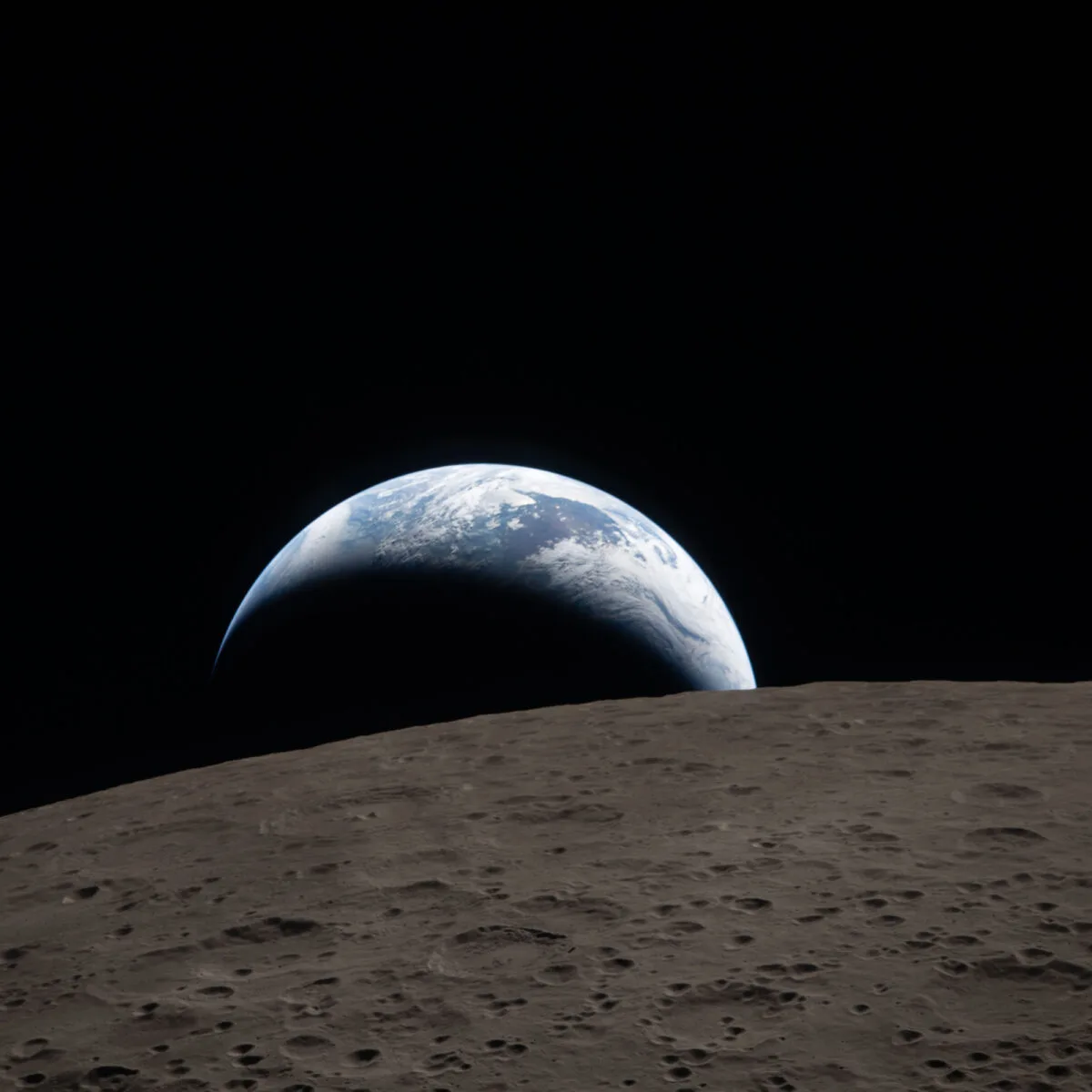
The best images from Artemis II
Our favorite images from humanity's return to the Moon.

Artemis, NASA's Moon landing program
Artemis is NASA's effort to send astronauts back to the Moon for the first time since the Apollo program.

Principles for Human Spaceflight
These principles lay out how The Planetary Society will evaluate, support, and critique proposed plans for human spaceflight.
Protect Our Shared Future
You help us defend humanity and prevent asteroid impacts. Donate now to become a Planetary Defender!
Donate